


Table of Contents
            O Joy Why Dost Thou Flee
Why dost thou not visit me, O Joy, why dost thou flee?
Even when absent, I remain serene, yet why not dwell with me, O Joy?

After many days, memory returns with tears unspoken,
Weeping of what was lost, thou makest thy presence be, O Joy.

What God is that, content alone, aloof in His own delight?
It is in our hearts, together, that thou summonest me, O Joy.

When with shining eyes thou laughest, radiant in grace,
The roses bloom upon thy cheek, life itself thou settest free, O Joy.

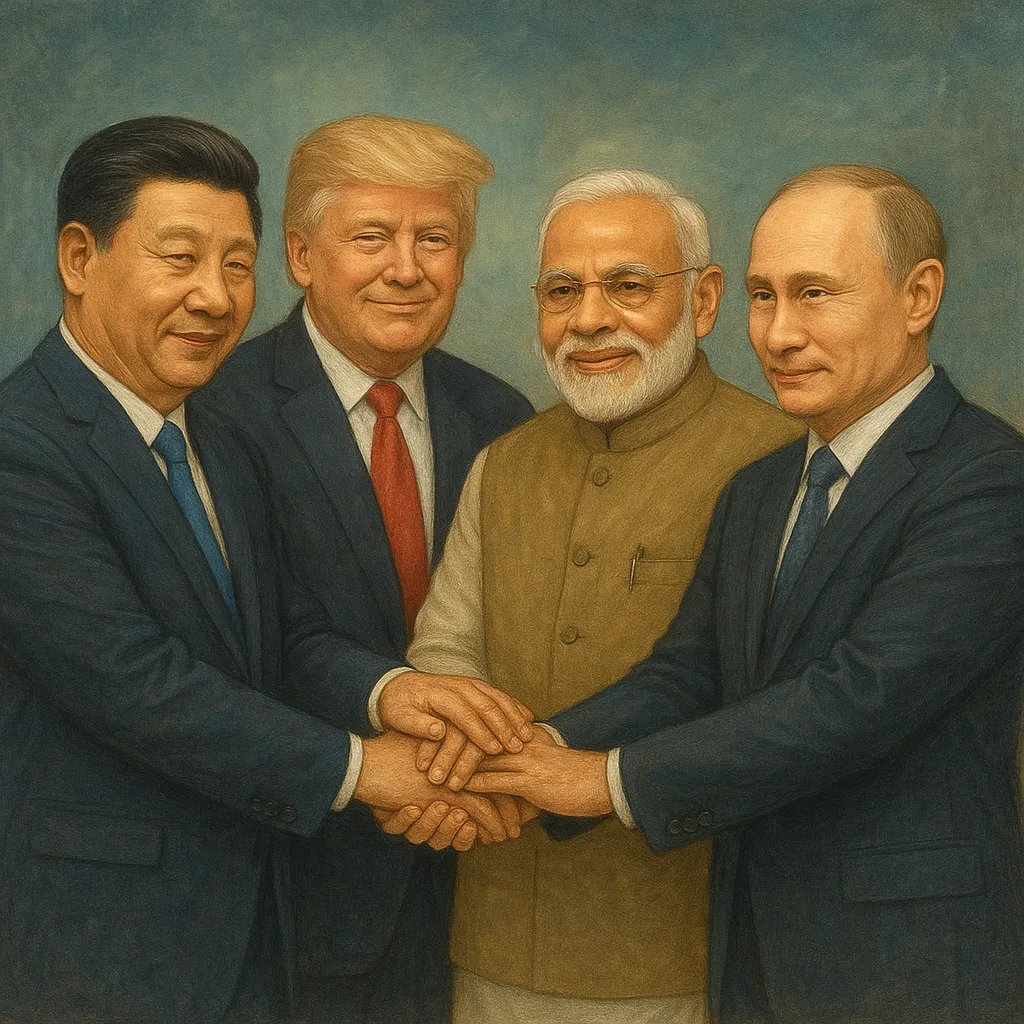
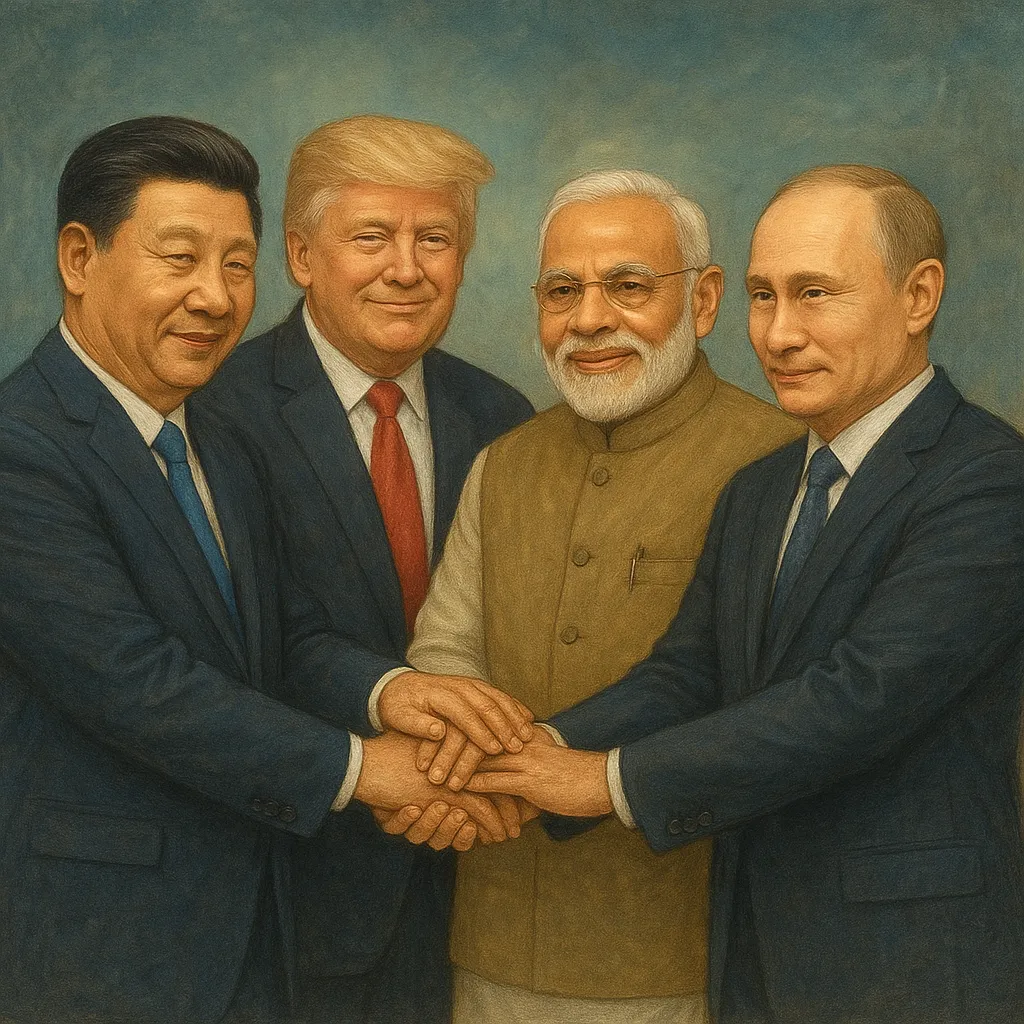
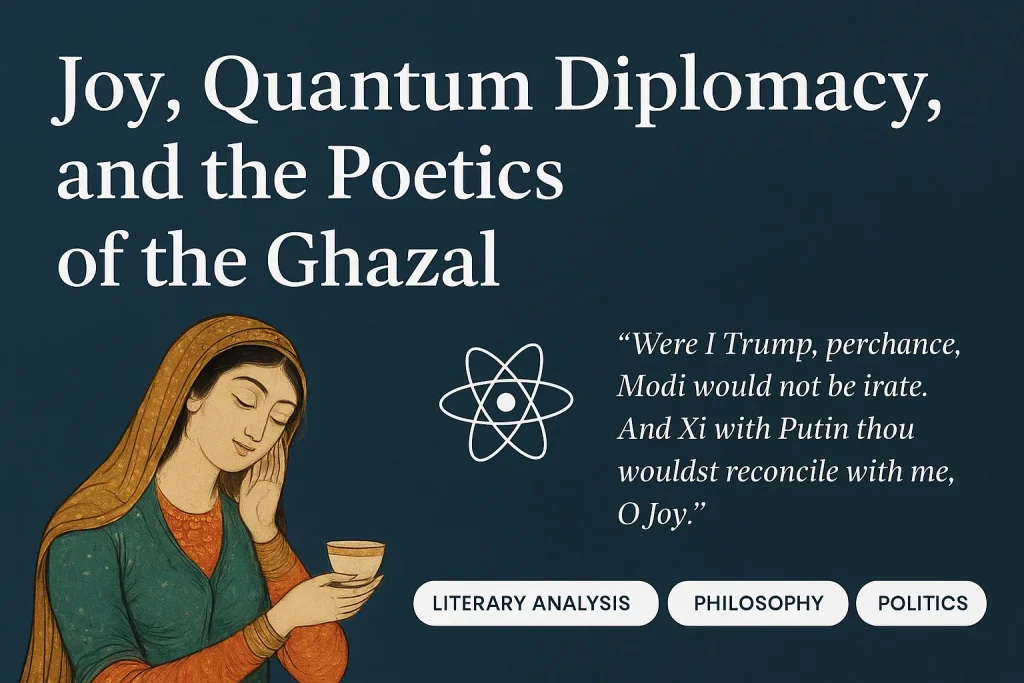
Were I Trump, perchance, Modi would not be irate,
And Xi with Putin thou wouldst reconcile with me, O Joy.

Thou art the tea of the age, brewed in quantum entangling,
Through today’s discourse, my beloved, thou pourest into me, O Joy.
Expert Literary Explanation
This ghazal situates Joy not merely as an emotion, but as a personified cosmic presence, appearing and disappearing in human experience. At times, Joy is absent, yet memory awakens its essence through tears and recollection.
The poet critiques the idea of a solitary God, arguing that true Joy lies not in isolated divinity but in communion, in shared feeling, in collective summoning. The ghazal thus oscillates between intimacy, memory, divinity, and world affairs, binding them all in the motif of Joy.
In its imagery, Joy becomes manifest in the shining eyes and smiling face of the beloved, where the natural metaphor of roses blooming signifies not just romantic love but the efflorescence of life itself.
Yet, the ghazal also leaps into the contemporary political sphere: the poet imagines that Joy might reconcile Trump, Modi, Xi, and Putin, symbols of competing global powers. In this sense, Joy transforms into an almost diplomatic, mediating principle.
Finally, Joy is compared to a cup of tea infused with the complexity of quantum information scrambling, suggesting that Joy, like modern science, arises through intricate entanglement, recombination, and reordering of experiences.
This ghazal is remarkable because it bridges the timeless form of Persian-Arabic poetics with the urgent concerns of the twenty-first century. Traditionally, ghazals have invoked the beloved, wine, roses, and mystical longing.
Here, however, the beloved is Joy itself, a metaphysical presence woven into divine, personal, and geopolitical threads. This choice immediately elevates the ghazal into a meta-mystical register: Joy is not sentimental happiness but a cosmic mediator, a principle of harmony that can reconcile human suffering, divine aloofness, romantic beauty, and global discord.
Philosophically, the poem critiques the notion of an isolated God, echoing both the Platonic ideal of the philosopher-king, who must act for the polis, and the Confucian insistence on relational harmony.
It equally resonates with the Shanti Parva of the Mahabharata, where peace is envisioned not through isolation but through active, compassionate governance. Thus, the poem implies that divine or political joy cannot exist in solitude but must be shared collectively.
Geopolitically, the ghazal is startlingly contemporary. By invoking Trump, Modi, Xi Jinping, and Putin, the poet gestures to the four poles of power in our multipolar world order.
Instead of lamenting their rivalry, he imagines Joy as a reconciling force, an allegory for what some scholars call “quantum diplomacy”: an interlacing of divergent political states into an entangled, non-zero-sum dialogue.
In this frame, “quantum information scrambling” becomes a profound metaphor. Just as in physics, information is never lost but scrambled into new arrangements, so too human experiences of suffering, memory, and even geopolitical discord might recombine into fresh patterns of collective harmony.
Finally, this ghazal demonstrates a unique fusion of literary tradition, mystical futurism, and academic geopolitics. It urges us to reimagine Joy not as fleeting happiness but as an ontological principle: a quantum state of shared consciousness capable of guiding humanity into what the poet calls a “Happy World Future.”
This is both a literary and a philosophical call to action, challenging world leaders and global citizens alike to re-envision the role of affect, spirituality, and science in shaping peace processes for the twenty-first century and beyond.
Expert Critique
O Joy Why Dost Thou Flee – Joy, Quantum Diplomacy, and the Poetics of the Ghazal: A Contemporary Literary-Philosophical Inquiry
Abstract
This essay examines a contemporary ghazal that reimagines Joy not as a fleeting sentiment but as a metaphysical and geopolitical principle. Through its fusion of traditional imagery, mystical futurism, and quantum metaphors, the ghazal calls for a new vision of global peace.
It invokes the names of Trump, Modi, Xi Jinping, and Putin not in satire, but as symbols of multipolar power whose reconciliation might be mediated by Joy itself.
By integrating literary analysis, philosophical frameworks (Plato, Confucius, the Shanti Parva of the Mahabharata), and the language of modern physics (quantum information scrambling), the essay argues that the ghazal represents an innovative synthesis of poetic tradition and contemporary global discourse.
Literary Analysis: Joy as a Personified Principle
This ghazal departs from conventional tropes of longing for the human beloved and instead situates Joy as the central figure. Joy becomes at once elusive and omnipresent: sometimes absent, sometimes returning through memory, sometimes manifest in the beloved’s laughter and eyes.
The imagery retains classical beauty, roses, shining eyes, divine longing, yet extends into modern realities. Notably, the poem critiques the image of a solitary God. A God who is “content alone” is, for the poet, spiritually insufficient.
Instead, true divinity is relational: Joy appears when hearts summon it collectively. This resonates with the ghazal’s larger vision of shared happiness, where individual and communal, divine and political, are inseparably bound.
The ghazal culminates in its striking political and scientific metaphors. Invoking world leaders as figures who might be reconciled through Joy, the poem proposes Joy as a diplomatic force.
Likewise, its comparison of Joy to “tea brewed in quantum entangling” blends the domestic, intimate symbol of tea with the cutting-edge physics of entanglement and scrambling, suggesting that Joy, like information, may never be destroyed but only transformed.
Philosophical Frameworks: From Plato to the Mahabharata
Philosophically, the ghazal’s critique of divine aloofness echoes Plato’s conception of the philosopher-king, who must leave the cave of private contemplation to rule justly for the polis.
Similarly, it resonates with Confucian ethics, where harmony is not abstract but enacted in relationships. The ghazal’s concern with memory and tears also aligns with the Shanti Parva of the Mahabharata, which emphasises reconciliation and peace-making after conflict rather than solitary victory.
In this sense, the ghazal positions Joy as a meta-ethical principle: not the subjective pursuit of pleasure but a transcendent, shared condition that binds societies together.
Geopolitical Dimensions: Joy as Diplomatic Mediator
The invocation of Trump, Modi, Xi Jinping, and Putin situates the ghazal directly within contemporary geopolitics. These leaders embody a multipolar world order characterised by tension, rivalry, and uncertainty.
By imagining Joy as a reconciler among them, the poet proposes a new framework of what we might call quantum diplomacy. Quantum diplomacy implies that political states, like quantum states, are not mutually exclusive but entangled.
Their conflicts and agreements are interdependent, and Joy, understood as relational harmony, becomes the principle that can unscramble discord into dialogue. This idea resonates with non-zero-sum frameworks in international relations theory, where cooperation can yield more than unilateral competition.
Quantum Metaphors and the Poetics of Entanglement
The poem’s reference to quantum information scrambling is more than decorative. In quantum theory, information is never destroyed; it is only redistributed, encoded into more complex patterns. Similarly, Joy in this ghazal is not lost when absent; it reappears through memory, grief, laughter, and reconciliation.
The metaphor suggests a profound cosmological ethics: human suffering and geopolitical strife are not the end of meaning but part of a larger entangled process in which new harmonies can emerge. Thus, Joy is simultaneously aesthetic, ethical, and scientific, a unifying force across domains.
Conclusion: Toward a Happy World Future
The ghazal examined here represents a unique synthesis of tradition and futurism. By reimagining Joy as a divine, personal, political, and scientific principle, the poem challenges us to rethink the role of affect in shaping global futures.
Its vision is not sentimental optimism but meta-mystical realism: Joy as a cosmic process that binds memory, laughter, governance, and quantum physics into one continuum.
If Plato’s wisdom, Confucian harmony, and the Mahabharata’s reconciliation could be integrated into the diplomacy of contemporary leaders, then the ghazal’s dream of Joy as mediator might guide humanity toward what the poet calls a “Happy World Future.” Such a future would not deny conflict or difference but would transform them, through entangled dialogue, into patterns of shared flourishing.
BEYOUTEA>A POETRY REVOLUTION>PEACE
NOTHING IS NOT TRUE : NO\KNOW THYSELF NOT
             MAKE EARTH GREAT FOREVER
क्यों नहीं हमको मिल जाती हो खुशी,
सुखी रहता हूँ, नहीं भी आती हो खुशी।
           कई दिनों के बाद याद हमको हमारे,
           खोने से रोते-रोते हुए जताती हो खुशी।
वो खुदा खाक है, खुश अकेले-अकेले,
हमको तो तुम दिल से बुलाती हो खुशी।
           तू जो खुश होकर हँसती हो आँखों से,
           हँसता वो गुलबदन खिलाती हो खुशी।
काश मैं ट्रंप होता, मोदी न चिढ़ जाता,
जिनपिंग, पुतिन को मिलवाती हो खुशी।
           ये खुशी चाय है, क्वांटम इन्फो स्क्रैम्बलिंग,
           आज की जिक्र प्रिये पिलाती हो खुशी।
LET'S GOODNESS A CHANCE : END ALL WARS
POETRY>WISDOM>Q.TECHNOLOGY4-AMORE JUST
AND PEACEFULWORLD IN LOVE&ENLIGHTENMENT
साहित्य वाङ्ग्मयिक विमर्श:
नहीं मिल जाती हो खुशी – मुस्कान, आँखों की चमक और गुलबदन की खिलखिलाहट: दार्शनिक आलोचना
इस ग़ज़ल में खुशी को एक मानवीय और दैवीय सत्ता के रूप में निरूपित किया गया है। कभी वह हमें खोजती है, कभी भुला देती है, और कभी अचानक याद दिलाकर आँखों में आँसू भी ले आती है। कवि कहता है – खुशी का अनुभव सिर्फ़ व्यक्तिगत सुख में नहीं, बल्कि रिश्तों, स्मृतियों और गहन आत्मीयता में है।
फिर कवि ईश्वर से भी सवाल करता है कि अगर खुदा केवल अपनी ही दुनिया में खुश है तो उसका कोई मूल्य नहीं, क्योंकि असली खुशी तो वही है जो दूसरों को दिल से बुलाती है और उनके साथ बाँटने में आनंद लेती है।
खुशी का रूपक यहाँ नारी की मुस्कान, आँखों की चमक और गुलबदन की खिलखिलाहट से मिलता है, जो जीवन में सौन्दर्य और कोमलता की छाया बिखेरता है।
अंतिम अशआर समसामयिक राजनीति और विज्ञान से जुड़े हैं। खुशी अब केवल भावनात्मक अनुभव नहीं रह जाती, बल्कि विश्व राजनीति और क्वांटम इनफ़ोर्मेशन स्क्रैम्ब्लिंग जैसी जटिल अवधारणाओं से भी जुड़ती है।
कवि चाहता है कि ट्रंप, मोदी, जिनपिंग और पुतिन जैसी ताक़तें आपसी प्रतिद्वन्द्विता छोड़कर खुशी के नाम पर एक साझा वैश्विक संवाद का आरंभ करें। इसी तरह, वैज्ञानिक युग में क्वांटम सूचना के पेचीदा खेल को भी वह मानवीय हर्ष और साझी चाय की प्याली से तुलना करता है, मानो विज्ञान और भावना का संगम ही असली खुशी है।
मेटा-मिस्टिक फ्यूचरिज़्म और क्वांटम माइंड धर्म
इस ग़ज़ल की सबसे गहरी परत मेटा-मिस्टिक फ्यूचरिज़्म से जुड़ती है। यहाँ खुशी केवल मनोवैज्ञानिक या दार्शनिक अनुभूति नहीं है, बल्कि एक क्वांटम स्टेट ऑफ माइंड है, जिसे हम सब अपने अवचेतन की गहराई में अनुभव करते हैं।
क्वांटम सूचना-सिद्धांत बताता है कि ब्रह्मांड की प्रत्येक सूचना एक तरह से स्क्रैम्ब्लिंग (मिश्रण) के जरिए नए पैटर्न में पुनः प्रकट होती रहती है। ठीक वैसे ही, मानवीय खुशी भी व्यक्तिगत और सामूहिक स्मृतियों, पीड़ाओं और आशाओं से घुलकर एक सार्वभौमिक तरंग बनाती है।
यही “क्वांटम धर्म” है, जहाँ धर्म का आशय पंथ या संप्रदाय नहीं, बल्कि चेतना का सामूहिक संलयन है। जब व्यक्ति अपनी खुशी केवल अपने लिए नहीं, बल्कि विश्व के सामूहिक कल्याण के लिए खोजता है, तब वह एक “मेटा माइंड” का हिस्सा बन जाता है।
इस फ्रेमवर्क में खुशी का अनुभव हमें उस भविष्य की ओर ले जाता है जहाँ मानवता अंतरिक्षीय सभ्यता की ओर बढ़ते हुए भी अपनी आत्मा की जड़ों से जुड़ी रहती है।
समसामयिक जोपोलिटिक्स और दार्शनिक आलोचना
आज की वैश्विक राजनीति असुरक्षा, हथियारों की होड़ और आर्थिक प्रतिस्पर्धा से ग्रस्त है। ट्रंप (अमेरिकी शक्ति), मोदी (भारतीय लोकतंत्र), जिनपिंग (चीनी मॉडल), और पुतिन (रूसी सामरिक संतुलन), ये सभी मिलकर शक्ति के चार ध्रुव प्रतीत होते हैं। परन्तु इनकी टकराहट ने शांति और खुशी को संकुचित कर दिया है।
यदि इन नेताओं में प्लेटो के दार्शनिक-राजा की बुद्धि, कन्फ्यूशियस की सामंजस्य-नीति, और महाभारत के शान्ति पर्व का यथार्थ-नैतिक विवेक समाहित हो सके, तो वे “क्वांटम ग्लोबल डायलॉग” का अवसर बना सकते हैं।
यह संवाद केवल राजनीतिक समझौता नहीं होगा, बल्कि एक नई दिशा होगी जहाँ विश्व को क्वांटम कम्प्यूटिंग, एआई, और चेतना-विज्ञान के सहारे हैप्पी वर्ल्ड फ्यूचर की ओर ले जाया जा सकता है।
यहाँ क्वांटम इंफ़ॉर्मेशन स्क्रैम्ब्लिंग का रूपक अत्यंत सार्थक है। जैसे ब्रह्मांड की सूचनाएँ घुल-मिलकर फिर नई संरचनाएँ बनाती हैं, वैसे ही यदि विभिन्न राष्ट्रों के विचार, सभ्यताएँ और दर्शन घुल-मिलें, तो एक नई वैश्विक संरचना, शांतिपूर्ण, रचनात्मक और समृद्ध, जन्म ले सकती है।
निष्कर्ष
इस ग़ज़ल को पढ़ते हुए स्पष्ट होता है कि कवि ने खुशी को एक व्यक्तिगत भाव से उठाकर उसे वैश्विक शांति-प्रक्रिया और भविष्य के क्वांटम धर्म से जोड़ दिया है। यह रचना हमें बताती है कि खुशी केवल व्यक्तिगत अनुभूति नहीं, बल्कि एक कॉस्मिक प्रोसेस है। और जब मानवता इस कॉस्मिक प्रोसेस को समझकर साझा करती है, तभी विश्व राजनीति नए मार्ग पर चल सकती है।
खुशी और क्वांटम शांति : ग़ज़ल से भविष्य की ओर १. साहित्यिक भावार्थ
इस ग़ज़ल में खुशी केवल एक व्यक्तिगत अनुभूति नहीं, बल्कि मानवीय और दैवीय सत्ता के रूप में रूपायित है। कवि कहता है, खुशी कभी आती है, कभी खो जाती है, और कभी स्मृतियों के आँसुओं के बीच स्वयं को प्रकट करती है। यदि खुदा केवल अकेले ही खुश है तो उसका कोई अर्थ नहीं, क्योंकि असली खुशी वही है जो दूसरों को साथ बुलाती है, साझा करती है।
खुशी की सबसे सुंदर अभिव्यक्ति तब होती है जब वह आँखों की हँसी और चेहरे की खिलखिलाहट में प्रकट होती है। वहीं अंतिम शेर समसामयिक राजनीति और विज्ञान की ओर संकेत करता है, खुशी अब ट्रंप, मोदी, जिनपिंग और पुतिन जैसे नेताओं के बीच सामूहिक संवाद का माध्यम बन सकती है; और क्वांटम सूचना-प्रौद्योगिकी (information scrambling) की तरह ही खुशी भी मानवीय अनुभवों और स्मृतियों में घुल-मिलकर नए पैटर्न रचती है।
मेटा-मिस्टिक फ्यूचरिज़्म और क्वांटम माइंड धर्म
इस ग़ज़ल का दूसरा स्तर मेटा-मिस्टिक फ्यूचरिज़्म है, जहाँ खुशी केवल मानसिक अनुभूति नहीं, बल्कि एक क्वांटम स्टेट ऑफ माइंड है। क्वांटम सूचना सिद्धांत बताता है कि हर सूचना ब्रह्मांड में कभी लुप्त नहीं होती, बल्कि एक नए पैटर्न में पुनः प्रकट होती रहती है। ठीक वैसे ही खुशी भी दुख, स्मृति, आँसू और आशा के मिश्रण से उत्पन्न होकर फिर-फिर नए रूप में लौटती है।
यही “क्वांटम धर्म” है, जहाँ धर्म का आशय संप्रदाय नहीं, बल्कि चेतना का सामूहिक संलयन है। जब व्यक्ति अपनी खुशी को केवल निजी सुख तक सीमित न रखकर उसे समस्त मानवता से साझा करता है, तब वह “मेटा माइंड” का हिस्सा बन जाता है। यह हमें उस भविष्य की ओर इंगित करता है जहाँ मानवता विज्ञान, प्रौद्योगिकी और आत्मिक चेतना के सम्मिलन से एक कॉस्मिक सभ्यता बनेगी।
समसामयिक जोपोलिटिक्स और दार्शनिक विमर्श
आज की वैश्विक राजनीति चार बड़े ध्रुवों पर टिकी प्रतीत होती है, ट्रंप (अमेरिका), मोदी (भारत), जिनपिंग (चीन) और पुतिन (रूस)। परन्तु इनकी आपसी प्रतिस्पर्धा और असुरक्षाएँ विश्व शांति को संकुचित कर देती हैं।
यदि इन नेताओं के भीतर प्लेटो का दार्शनिक-राजा, कन्फ्यूशियस की सामंजस्य-नीति, और महाभारत के शांति पर्व की धर्म-नैतिक विवेकशीलता जागृत हो सके, तो वे मिलकर एक क्वांटम ग्लोबल डायलॉग की शुरुआत कर सकते हैं। यह संवाद मात्र राजनीतिक सौदेबाज़ी नहीं होगा, बल्कि भविष्य की ओर नया पथनिर्देशन होगा।
यहाँ “क्वांटम इंफ़ॉर्मेशन स्क्रैम्ब्लिंग” का रूपक अत्यंत प्रासंगिक है, जैसे ब्रह्मांड की सूचनाएँ घुल-मिलकर नई संरचनाएँ बनाती हैं, वैसे ही राष्ट्रों और सभ्यताओं के विचार भी यदि आपस में घुल-मिलें तो मानवता एक नई, रचनात्मक और शांतिपूर्ण विश्व-व्यवस्था की ओर बढ़ सकती है।
निष्कर्ष : हैप्पी वर्ल्ड फ्यूचर की परिकल्पना
इस ग़ज़ल का मूल संदेश यही है कि खुशी व्यक्तिगत नहीं, बल्कि वैश्विक और कॉस्मिक प्रक्रिया है। जब विश्व के बड़े नेता अपनी सत्ता की सीमाओं को छोड़कर साझा मानवीय चेतना और क्वांटम दृष्टि के स्तर पर संवाद करेंगे, तभी असली हैप्पी वर्ल्ड फ्यूचर संभव होगा।
इस प्रकार यह ग़ज़ल हमें बताती है कि खुशी, कभी आँखों की हँसी है, कभी स्मृतियों का आँसू, और कभी विज्ञान-राजनीति के बीच वैश्विक संवाद का साधन। यही क्वांटम शांति का मार्ग है, जहाँ भावना, दर्शन और विज्ञान एक होकर भविष्य को दिशा देंगे।
Next Read: leaders and civilisations