



                 Fear Not the Divine Decree
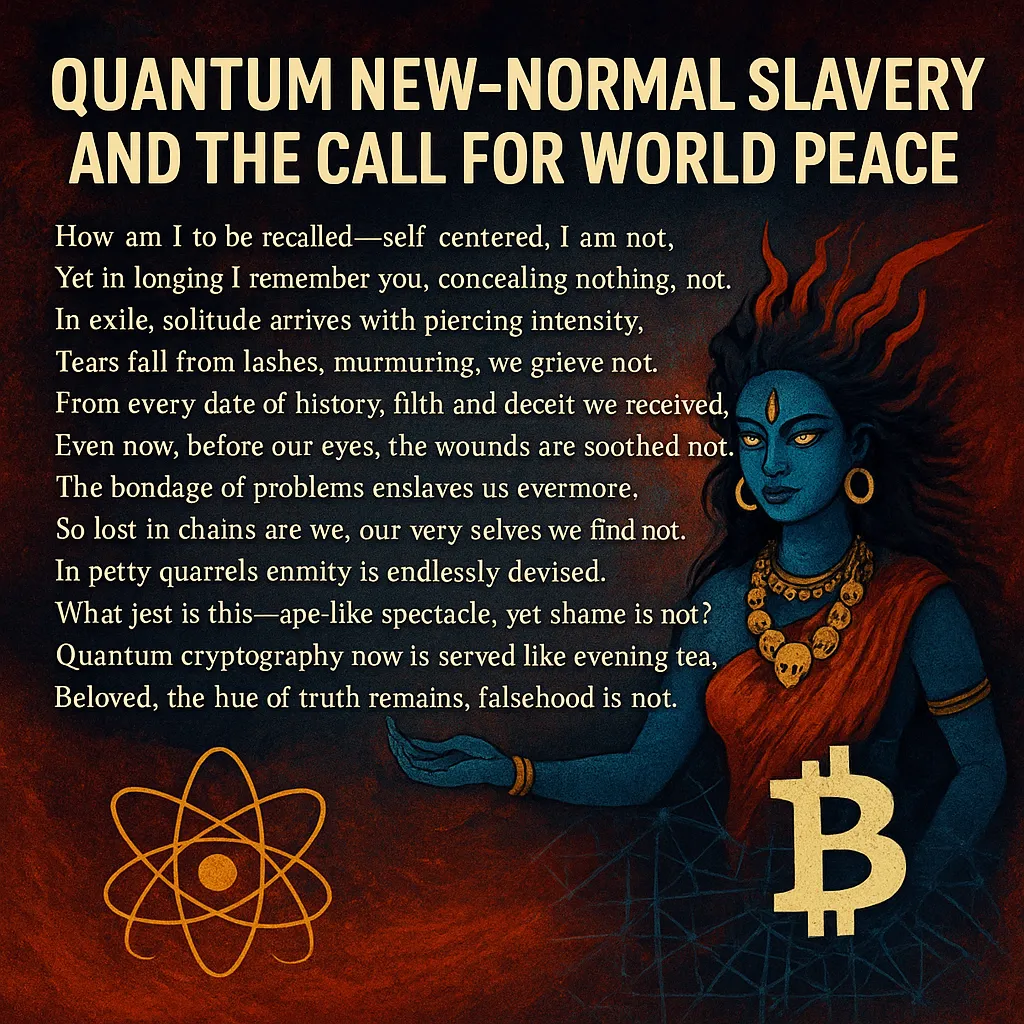
Those who cast down with their gaze, who fear not the Divine’s decree,
They seize the world with heart and marrow, enslaving humanity.

Ever perishing in silent gestures, yielding at each secret sign,
Behold thy beauty, O self-intoxicated, raise thy sight in clarity.

My beloved, to you I surrender, though unseen is the soul I give,
If enmity transforms to passion, strike the dagger of fidelity.

Take the world entire, I shall lay it all at your name’s altar,
One call, and the tumult of nations will bow in finality.

Frozen spectres of Hitler’s ghost return with tyrant breath,
Yet a new winter of consciousness forges humanity’s destiny.

Today’s tea is brewed of science, rigid with dogma’s tale,
What shall we sweeten it with, O beloved, sugar or jaggery?
Table of Contents

Expert Academic Critique an Article
(For a global audience of thinkers, diplomats, scientists, and seekers of peace)
Fear Not the Divine Decree – Power, Love, Tyranny, Science, and Consciousness into a Single Poetics
Introduction: The Ghazal as a Mirror of Our Age
The ghazal presented above is not merely a poetic indulgence but a sharp lens through which the contradictions of our modern world are refracted.
It juxtaposes power, love, tyranny, science, and consciousness into a single poetic field, forcing us to confront the paradoxes of our collective existence.
Leaders who rise in the name of justice yet act in cruelty; science which promises liberation yet risks devolving into rigid dogma; and the eternal human yearning for love, peace, and transcendence, all intersect here.
This work speaks at once of the Middle Eastern tragedy, the narcissistic drama of populist leaders, and the shadow of Hitler’s ghost haunting modern politics.
At the same time, it situates humanity at the threshold of a “consciousness winter,” a metaphor for the freezing of spirit beneath the weight of mechanistic science and authoritarian power.
The Tyranny of Sight:
Power, Fearlessness, and Domination The opening couplet unveils a chilling truth: those who lose reverence for the Divine and for the sanctity of others can seize the world through sheer will.
This is the archetype of authoritarian leadership, the one who “fears not God” but instead manipulates perception and gaze. In contemporary times, we witness this in the ways populist leaders control narratives through media, fear, and spectacle.
They claim the heart and marrow of society, reducing human beings into instruments of their ambition.
The poet’s voice calls us to awaken, reminding us that true vision must not be intoxicated by vanity but tempered with humility and reverence. Without this, sight itself becomes an instrument of oppression.
Love, Enmity, and the Weaponisation of Passion
The ghazal transfigures love into both devotion and danger. The beloved is not merely a partner in intimacy but a metaphor for political allegiance, collective devotion, or ideological obsession.
When enmity transforms into passion, it produces fanaticism, the dagger of fidelity. This has been the story of countless revolutions and wars where loyalty to a cause replaces genuine compassion.
In our age, we see it in the cult-like devotion to charismatic leaders, where love becomes an instrument of power rather than liberation. Here, the poet warns us: passion untethered from justice mutates into tyranny.
Hitler’s Ghost and the New Winter of Consciousness
Perhaps the most chilling image of the ghazal is the “frozen Hitlerian spectre.” This is no mere historical allusion; it is the recognition that the same destructive energies of fascism, xenophobia, and genocide re-emerge in new guises across the globe. From ethnic cleansing to ultra-nationalist rhetoric, the ghost breathes again.
Yet the poet juxtaposes this with “a new winter of consciousness.” This phrase operates on two levels:
Critique of Science as Dogma – Science, once a tool of liberation, risks hardening into its own orthodoxy. Quantum physics, artificial intelligence, and biotechnology promise a future beyond imagination, but when approached with arrogance and reductionism, they imprison rather than liberate.
Spiritual Stagnation – Humanity may enter a winter where consciousness itself freezes, unable to grow beyond materialism and power-hunger.
But within every winter lies the seed of spring. The poet intimates that this freezing is not final; it can herald a transformation if humanity embraces humility, compassion, and deeper integration of science with spirituality.
The Occidental and Oriental Philosophical Nexus The ghazal implicitly calls for dialogue between two great civilizational approaches:
The Greco-Occidental tradition emphasises rationality, order, and power, from Aristotle to Heidegger, from empire to modernity.
The Oriental tradition emphasises interiority, compassion, and transcendence, from the Upanishads and the Buddha to Sufis and Bhakti saints like Chaitanya.
Both traditions in isolation have led to extremes: one, cold rational authoritarianism; the other, passive spiritual escapism. But together, under the light of a “quantum religiosity,” they can converge into a philosophy that affirms both consciousness and justice.
A new meta-spiritual science is required, where quantum entanglement mirrors the entanglement of souls, and where Vasudhaiva Kutumbakam (“the world is one family”) becomes not a slogan but a global ethic.
Voices Restored, Voices Ignored
The ghazal’s concern with silenced voices and oppressive power finds a poignant resonance in the story of Sarah Ezekiel, an artist with motor neurone disease who lost her voice but regained it through the aid of artificial intelligence.
Here, technology did not act as a tyrant but as a liberator, restoring the voice of a person once silenced. This symbolic act of restoration demonstrates what AI and quantum science can achieve when guided by compassion rather than domination.
If AI can return a voice to an individual silenced by illness, can it not also amplify the voices of common people drowned by political propaganda and authoritarian structures?
Leaders must be reminded that every innovation carries the potential for either silencing or restoring. The moral imperative is clear: science must become an instrument for listening to the voiceless.
The Consciousness Winter and the Limits of Science
Philosopher and neuroscientist Erik Hoel has described our current moment as a “consciousness winter”, a period where AI research and cognitive science circle around models, algorithms, and materialist dogmas, yet fall short of addressing the true nature of subjective experience.
In other words, we have sophisticated systems that mimic thought but do not touch the essence of consciousness. This aligns with the ghazal’s warning of “science as dogma.” If leadership continues to pursue purely mechanistic objectives, it risks building a technological civilisation that expands outward at breakneck speed while collapsing inward in spirit.
A Call to World Leadership
The lesson is urgent: consciousness itself must be treated as the ultimate objectivity. The mind is not a by-product but the very condition of possibility for science, culture, and politics.
All universes we measure, all galaxies we chart, all AI we construct, arise within the unfathomable horizon of consciousness. Human science will never fully comprehend this ground, but humility before it can guide a new form of global ethics.
Leaders must therefore learn to listen, not only to the restored voices of individuals like Sarah Ezekiel but also to the silent cries of oppressed populations, the muted wisdom of ancient traditions, and the quiet intuition of the human heart.
Only then can we turn the “consciousness winter” into a new spring of justice, peace, and cosmic humility.
Towards a Just and Peaceful World:
Meta-Mystic Futurism The ghazal ultimately asks us to rethink humanity’s path forward. It points towards a meta-mystic futurism, a vision where politics, science, and spirituality are not opposing camps but interwoven dimensions of one reality. Its implications for peace are profound:
Ethics in Science and Technology – We must prevent quantum computing, AI, and biotechnology from becoming new instruments of tyranny. Instead, they should be infused with compassion and universal responsibility.
Transformative Leadership – Leaders must learn from both East and West, embodying humility alongside strength, justice alongside innovation.
Global Consciousness Movement – A new quantum religiosity could ground a planetary ethic that transcends nationalism and sectarianism.
If such integration is ignored, we risk repeating the horrors of history under the glittering mask of technological advancement. If embraced, humanity can move closer to the long-sought dream of a just, peaceful, and united world.
Conclusion:
The Ghazal as a Call Beyond Time This ghazal is more than political satire or spiritual reflection. It is a prophetic text, a mirror of our present and a call to our future. By invoking tyrants, lovers, and scientists alike, it reminds us that the struggle for justice is not confined to one arena but spans the entire spectrum of human endeavour.
To build a just and peaceful world, we must resist the intoxication of power, transcend the dogmas of science and ideology, and awaken to a higher consciousness that unites humanity in love and responsibility. In doing so, we can melt the “new winter of consciousness” and usher in a new dawn, where power bows before compassion, and science serves the song of the soul.
BEYOUTEA>A POETRY REVOLUTION>PEACE
NOTHING IS NOT TRUE : NO\KNOW THYSELF NOT
            MAKE EARTH GREAT FOREVER
नज़र से गिराने वाले, खुदा से न डरने वाले,
दिल-जिगर से दुनिया गिरफ़्त में करने वाले।
           इशारों में मरते हर दम, क़ुर्बान हर निकास,
           देखी रानाई तू खुद को तो नज़र से उठाले।
मेरे महबूब तुझे नज़र करूँ बेमौजूद रूह,
है दुश्मनी तब्दील आशिक़ी, खंजर चलाले।
           ले लो दुनिया जहाँ कर दूँ सब तेरे नाम पर,
           एक आवाज़ सारा ईजेकील-सी कर हवाले।
बर्फ़ जमा भूतहा हिटलरी रूह कहर ढाए,
एक नई और कॉन्शसनेस विंटर है गढ़वाले।
           आज का चाय वैज्ञानिकी रूढ़िवादी किस्सा,
           क्या करें सजनी मीठी सक्कर-गुड़ मिलवाले।
LET'S GOODNESS A CHANCE : END ALL WARS
Meta-Sufi/Cyber Poetics on MetaMystic Futurism in
MMQD>META MIND QUANTUM DHARMA GROUND
भाव विस्तार
यह ग़ज़ल सत्ता, प्रेम और आत्मा की उस द्वंद्वात्मक यात्रा को व्यक्त करती है जिसमें नज़र से गिराना, खुदा से न डरना और दुनिया को दिल-जिगर से क़ैद कर लेना आज की राजनीति और सत्ता का वास्तविक चेहरा बन जाता है।
नेतन्याहू का ग़ज़ा प्रेम हो या ट्रम्प का आत्ममुग्ध इश्क़, ये सभी शक्ति के असली स्वरूप को बेपर्दा करते हैं, जहाँ करुणा और दैवी भय का स्थान सत्ता और हिंसा की नशेड़ी मानसिकता ले लेती है।
कवि प्रेम और युद्ध के प्रतीकों को एक-दूसरे के भीतर पिरोता है। “हिटलरी रूह” वह सामूहिक हिंस्र चेतना है जो समय-समय पर पुनः जाग उठती है।
पर उसी के भीतर “नई कांशसनेस विंटर” का भी जन्म होता है, एक ऐसी बर्फ़ीली ऋतु जहाँ मनुष्य अपने रूढ़िवादी डोग्मा, वैज्ञानिक अहंकार और सत्ता की क्रूरता के सामने ठिठक कर आत्मा और चेतना के असली प्रश्नों से टकराता है।
यह ग़ज़ल केवल राजनीति का व्यंग्य नहीं है, बल्कि एक गहन अस्तित्ववादी सवाल है, क्या विज्ञान स्वयं धर्म की तरह डोग्मा बन चुका है? क्या क्वांटम युग के बीच चेतना की नयी खोज मानवता को बचा सकती है? या फिर यह हालात “आदमी होने का ही हालत” हैं, जहाँ इंसान अपनी सत्ता, वासना और हिंसा से ऊपर उठने में असमर्थ साबित हो रहा है।
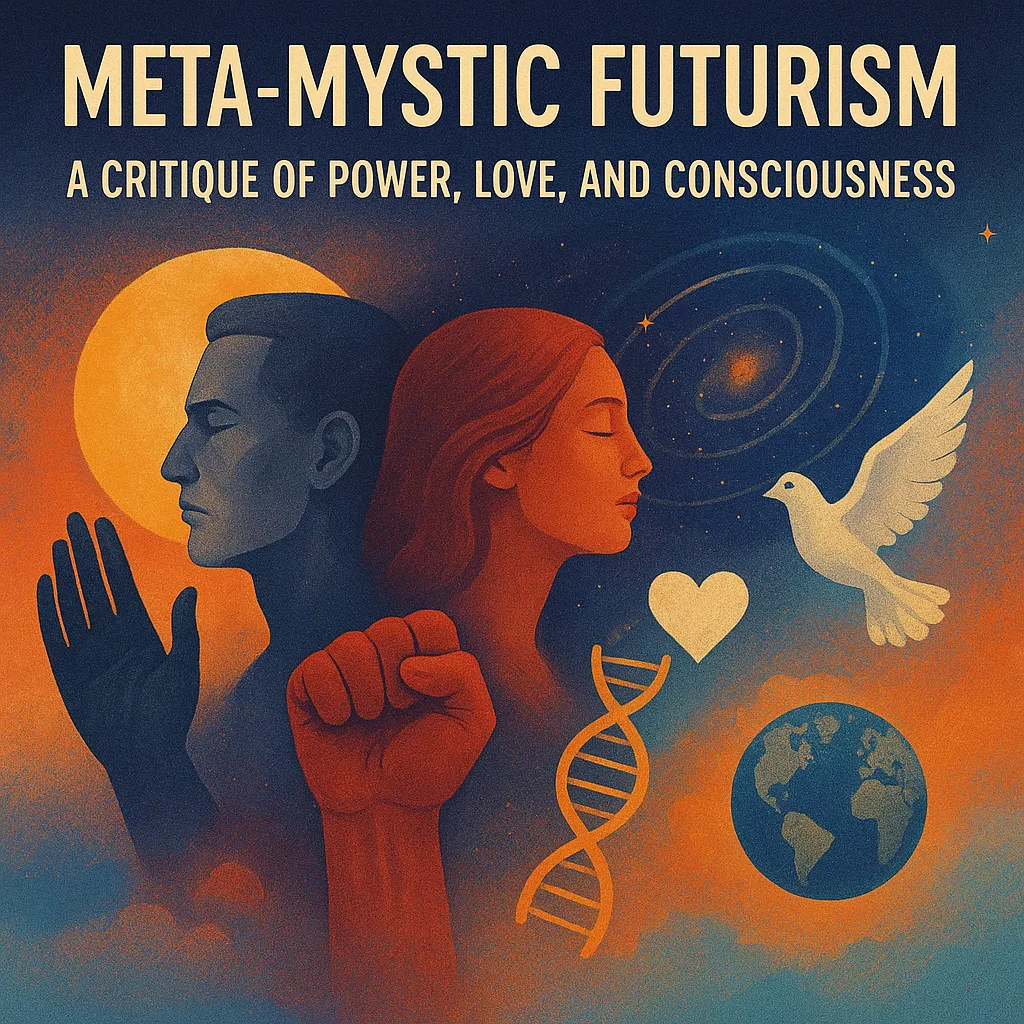
मेटा-मिस्टिक, फ्यूचरिस्टिक और क्वांटम धर्म की आलोचनात्मक विवेचना
खुदा से न डरने वाले – सत्ता, प्रेम और आत्मा की उस द्वंद्वात्मक यात्रा को व्यक्त करती है जिसमें नज़र से गिराना
परिचय
यह आलेख सत्ता, धर्म, विज्ञान और प्रेम के परस्पर संबंध को एक “मेटा-माइंड” ढाँचे में देखने का प्रयास करता है। ग़ज़ल के शेर केवल सामाजिक यथार्थ का बयान नहीं, बल्कि एक चेतावनी भी हैं कि पश्चिम (Occidental) और पूरब (Oriental) दोनों की फ़लसफ़ाई परंपराएँ यदि नए “क्वांटम धर्म” से नहीं जुड़तीं, तो सत्ता का हिटलरी चेहरा बार-बार लौटेगा।
सत्ता, प्रेम और हिंसा का मेटा-नाटक
राजनीतिक प्रेम, जैसे नेतन्याहू का ग़ज़ा प्रेम और ट्रम्प का आत्म-प्रेम, असल में सत्ता और हिंसा की वासनाओं को ढँकने का साधन है। यहाँ इश्क़ का रूपक केवल मोहब्बत का नहीं, बल्कि एक हथियार का है। प्रेम और हिंसा दोनों ही शक्ति के प्रदर्शन के औज़ार बन जाते हैं।
“हिटलरी रूह” इसी सत्ता-प्रेम का प्रतीक है जो बार-बार सभ्यताओं में जाग उठती है। आज भी हम देखते हैं कि सत्ता के आकांक्षी नेता अक्सर अपने भीतर वही रूह जीवित रखते हैं, कभी राष्ट्रवाद के नाम पर, कभी धर्म के नाम पर, कभी विज्ञान और टेक्नोलॉजी के नाम पर।
क्वांटम धर्म और चेतना का शीतकाल
कवि का सबसे महत्त्वपूर्ण तर्क यह है कि विज्ञान स्वयं रूढ़िवादिता और डोग्मा बन सकता है। “कांशसनेस विंटर” इसी तथ्य को उजागर करता है, यह एक ऐसा बर्फ़ीला युग है जहाँ इंसान विज्ञान के अहंकार और चेतना की ठहराव में फँस जाता है।
क्वांटम युग में हम देखते हैं कि भौतिकी के पार जाकर चेतना को भी एक “फील्ड” की तरह समझने की कोशिश हो रही है। परंतु यदि यह चेतना केवल प्रयोगशालाओं और समीकरणों तक सीमित रह गई, तो उसका धर्म-सदृश डोग्मा ही बन जाएगा।
हमें इसे “क्वांटम धर्म” के रूप में पुनःव्याख्यायित करना होगा, जहाँ विज्ञान और आध्यात्म, भौतिक और पारलौकिक, सत्ता और करुणा एक साथ संतुलित रूप से समाहित हों।
आवाज़ की वापसी, आवाज़ों की अनदेखी
ग़ज़ल में दबाई गई आवाज़ों और दमनकारी सत्ता की चिंता हमें सारा एज़ीकियल (Sarah Ezekiel) की कहानी से गहरी जोड़ती है। एज़ीकियल एक कलाकार हैं जिन्हें मोटर न्यूरोन डिज़ीज़ (MND) के कारण अपनी आवाज़ खोनी पड़ी, लेकिन कृत्रिम बुद्धिमत्ता (AI) की मदद से उनकी आवाज़ फिर से बहाल हुई।
यहाँ तकनीक अत्याचार का नहीं, बल्कि मुक्ति का साधन बनी, एक ऐसी आवाज़ लौटाई गई जिसे बीमारी ने छीन लिया था। यह पुनर्सृजन दिखाता है कि जब विज्ञान करुणा के साथ जुड़ता है, तो वह असंभव को भी संभव कर सकता है।
यदि AI एक व्यक्ति की खोई हुई आवाज़ लौटा सकता है, तो क्या यह जनता की उन आवाज़ों को भी नहीं लौटा सकता जिन्हें सत्ता और प्रचार मशीनें दबा देती हैं? यह विश्व नेताओं के लिए एक स्पष्ट नैतिक आह्वान है, विज्ञान को दमन का नहीं, बल्कि सुनने का साधन बनाना होगा।
चेतना की सर्दी और विज्ञान की सीमाएँ
दार्शनिक और न्यूरोसाइंटिस्ट एरिक होएल (Erik Hoel) हमारे समय को “Consciousness Winter”, चेतना की सर्दी, कहते हैं। उनका तर्क है कि कृत्रिम बुद्धिमत्ता और संज्ञान विज्ञान (Cognitive Science) अपने-अपने मॉडल और एल्गोरिद्म में उलझे हुए हैं, परंतु वे चेतना के असली रहस्य तक नहीं पहुँच पा रहे।
यानी हमारे पास ऐसे सिस्टम हैं जो सोच की नकल तो कर सकते हैं, परंतु चेतना के सार तक नहीं पहुँचते। यह वही चेतावनी है जिसे ग़ज़ल “विज्ञान का रूढ़िवाद” कहकर सामने रखती है। यदि नेतृत्व केवल यांत्रिक उद्देश्यों का पीछा करता रहा, तो हम ऐसी तकनीकी सभ्यता बना लेंगे जो बाहर की ओर तो तेज़ी से फैलेगी, लेकिन भीतर से आत्मा और करुणा में ठंडी और शून्य होती जाएगी।
विश्व नेतृत्व के लिए आह्वान
सबसे ज़रूरी शिक्षा यही है: चेतना स्वयं ही अंतिम वस्तुनिष्ठता (Ultimate Objectivity) है। मन केवल एक उपज नहीं, बल्कि विज्ञान, संस्कृति और राजनीति की मूल शर्त है।
जिन ब्रह्मांडों को हम मापते हैं, जिन आकाशगंगाओं को हम खोजते हैं, जिन AI प्रणालियों का निर्माण करते हैं, वे सभी चेतना की अनंत क्षितिज में ही संभव हैं। मानव विज्ञान शायद कभी चेतना के इस आधार को पूरी तरह नहीं समझ पाएगा, लेकिन उसके सामने विनम्रता दिखाना ही हमें नए वैश्विक नैतिकता की ओर ले जाएगा।
नेताओं को इसलिए सुनना सीखना होगा, केवल सारा एज़ीकियल जैसी व्यक्तियों की पुनःस्थापित आवाज़ों को ही नहीं, बल्कि उत्पीड़ित जनता की मौन पुकारों को, प्राचीन परंपराओं की दबी हुई बुद्धि को, और मानवीय हृदय की शांत अंतर्दृष्टि को भी।
तभी “चेतना की सर्दी” को एक नए न्याय, शांति और ब्रह्मांडीय विनम्रता के वसंत में बदला जा सकता है।
ऑक्सीडेंटल और ओरिएण्टल दृष्टिकोण
ग्रीको-ऑक्सीडेंटल परंपरा (Aristotle से Heidegger तक) सत्ता और तर्क को प्राथमिकता देती रही है, जबकि ओरिएण्टल परंपरा (उपनिषदों से लेकर चैतन्य और बुद्ध तक) आत्मा, करुणा और अनुभव को। जब इन दोनों को एक क्वांटम-आधारित मेटा-धर्म में जोड़ा जाए, तब एक ऐसा दर्शन उभर सकता है जो सत्ता की हिटलरी रूह को बाँध सके।
निष्कर्ष
यह ग़ज़ल केवल सत्ता की आलोचना नहीं, बल्कि भविष्य की दिशा भी सुझाती है। यदि हम “मेटा-मिस्टिक फ्यूचरिज़्म” को अपनाएँ, तो प्रेम और चेतना विज्ञान और सत्ता से ऊपर उठ सकते हैं। “क्वांटम धर्म” इसी दिशा में एक प्रयास है, जहाँ मनुष्य अपनी आत्मा को नए सिरे से परिभाषित करता है और सत्ता की हिंस्र रूह पर प्रेम की ऊर्जा से अंकुश लगाता है।
Next Read: Sufi Deep Mysticism