



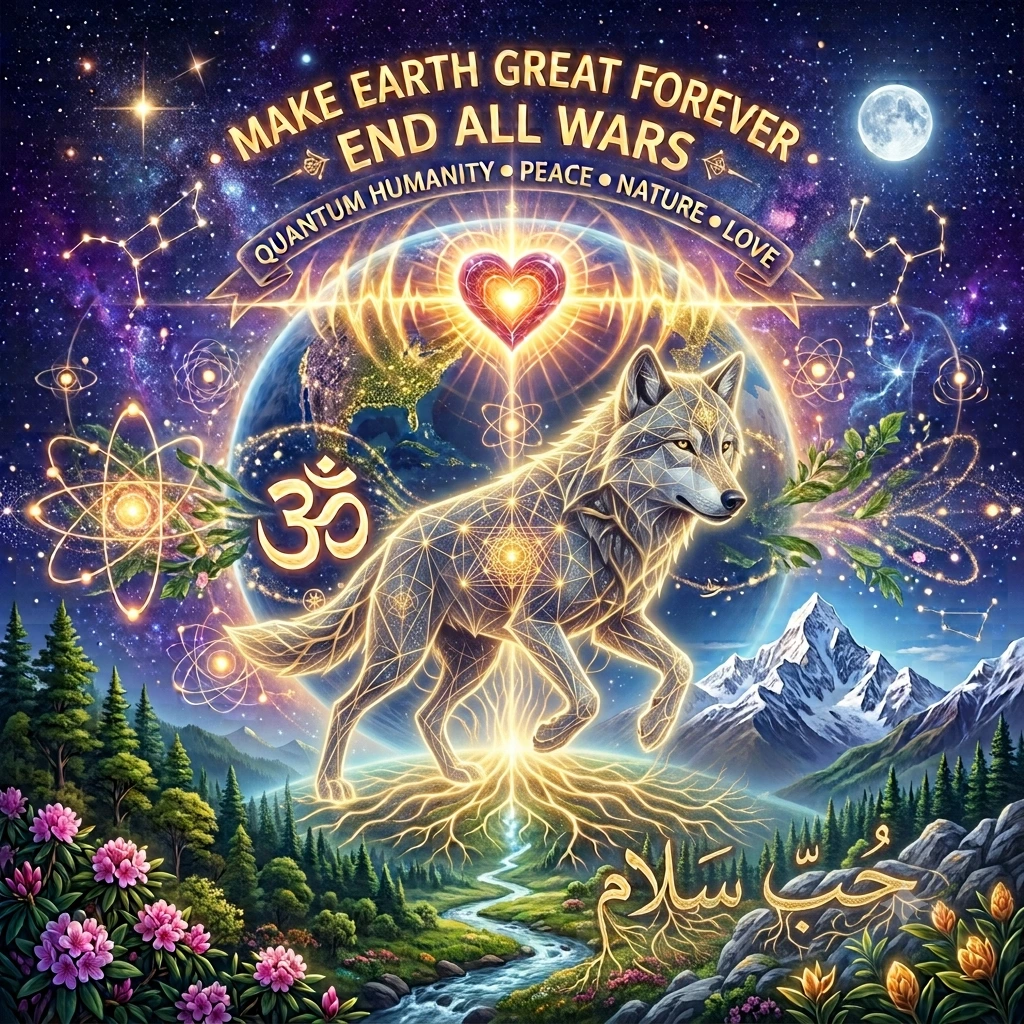
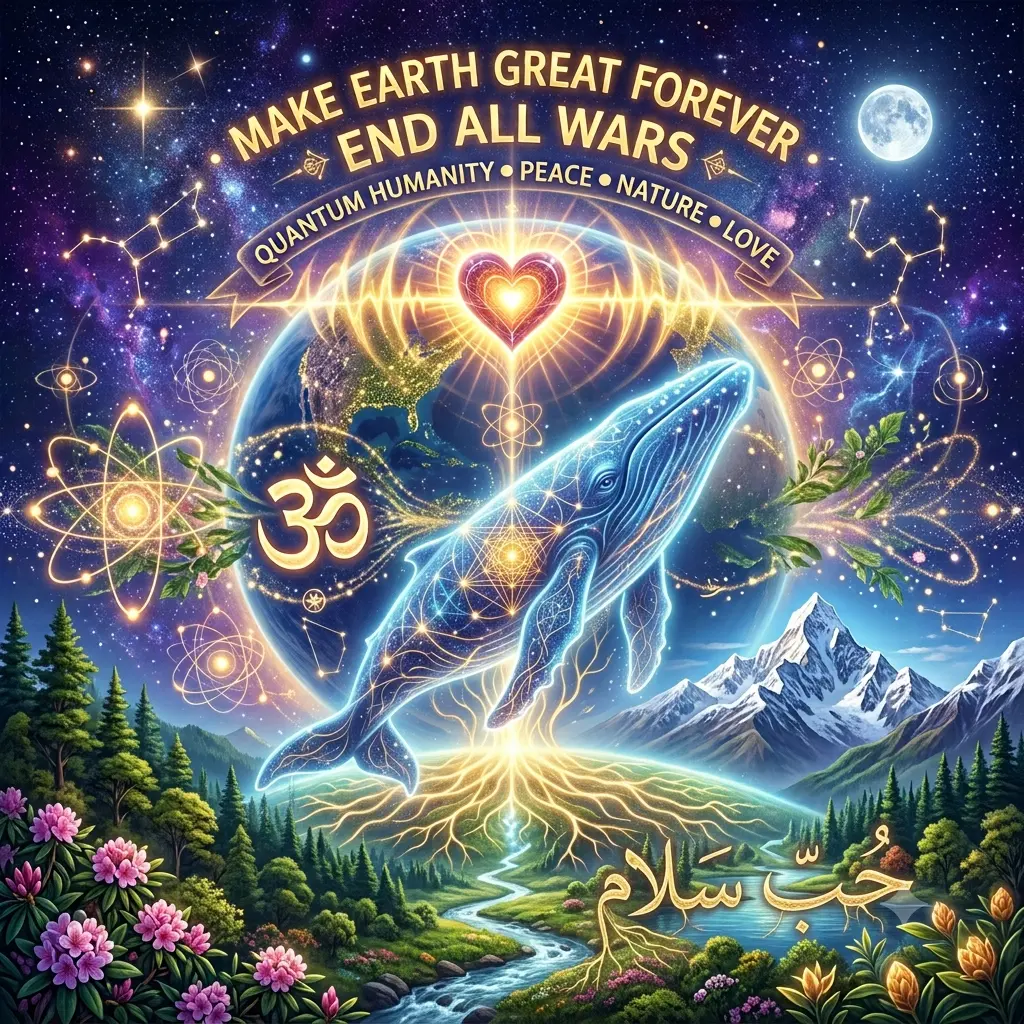
BEYOUTEA ! A QUANTUM POETRY>REVOLUTION !! MAKE EARTH GREAT FOREVER : END ALL WARS !!! NOTHING IS NOT TRUE : NO\KNOW THYSELF NOT !!!! META-SUFI/QUANTUM POETICS ON QUANTUM META MYSTIC FUTURISM !!!!!
Ghazal : The Quantum Verse of the Day: June 23, 2026
        Awakening Heart is a Reality Within Reach
Beneath closed lids, this vision’s
Final depart is a reality within reach;
In transient moments, epochs
Spent apart is a reality within reach.
              Do these eyes behold you,
              Or sit you enshrined within their gaze?
              This slowing pulse, its soft,
              Awakening start is a reality within reach.
A melted sun in the air,
Your visage a soft cloud of grace;
The restoration of this scarred, an-
Unpolished heart is a reality within reach.
              What know I of wine, or
              The tavern, or the final shrine?
              The mystic stride from the idol-house to
              The Kaaba's chart is a reality within reach.
Whom will you heed, O confidant,
When you rule fully your own decree?
Divorce from grief, the severing sword
That heals the smart is a reality within reach.
              The wavelength of quantum light
              Shifts due to the hBN lattice bends;
              These real-world systems, rewriting
              Nature’s part is a reality within reach.
Come, my beloved, let a cup
Of tea spark our kindred minds;
Look in the mirror: the loss of self to
One, the ultimate art, is a reality within reach.

 Exegesis: The Confluence of Quantum Mechanics and Ontological Monism
Abstract: This commentary provides a hermeneutic analysis of a contemporary Ghazal that synthetically bridges classical Indo-Persian poetic tropes with twenty-first-century quantum electrodynamics. By deploying the structural constraints of the Ghazal, specifically the leveraging of the refrain (radif) "is a reality within reach", the poet constructs an ontological continuum where the classical dualism of the ‘āshiq (lover) and ma‘shūq (beloved) is mapped directly onto subatomic particle interactions and the non-dualist paradigms of Wahdat al-Wujud (the Unity of Being).
I. Epistemic Interiority and the Collapse of Subject-Object Duality: The opening couplet (matla) introduces an epistemological pivot: "Beneath closed lids, this vision’s final departure / is a reality within reach..." Here, the act of ocular closure does not signify the cessation of perception but rather a transition from externalised, empirical observation to localised interiority. The qafia ("depart") contrasted with the radif establishes that spatial or temporal isolation (furqat) is an illusion generated by classical macroscopic frameworks.
This theme matures in the second couplet, which directly engages with the foundational paradox of quantum measurement and relational ontology: "Do these eyes behold you, or sit you enshrined within their gaze?" This interrogative echo mirrors the observer-dependency principle in quantum mechanics. The boundaries of the self are blurred; the observer and the observed enter a state of total entanglement. The consequent deceleration of the somatic pulse ("slowing pulse") is not a sign of expiration, but of metabolic adjustment to a higher, unified vibrational state.
II. The Alchemy of the Scarred Self: Spatial and Spiritual Transitions: The third and fourth couplets employ classical topographical metaphors, the cloud (abr), the tavern (maykhāna), the temple (butkhāna), and the primordial sanctuary (ka‘ba), reinterpreting them through a therapeutic lens:Visage of the Beloved ___Resonance___Restoration of the Rough Heart (Rand)
 The description of the heart as rand (unpolished, rough, or planed raw by life) highlights its fragmented, high-entropy state. The beauty of the beloved acts as an ordering principle, reducing internal psychic entropy. Furthermore, when the speaker proclaims a total ignorance of the distinctions between the tavern and the temple, they invoke the radical antinomianism of classical Sufi Malāmatiyyah thought. The geographic distance between the profane space of the idol-house and the sacred domain of the Kaaba is compressed into a singular, localised event horizon where all spiritual vectors converge.
III. The Quantum Leap: hBN Defect Centres as Metaphor for Transformation: The core intellectual disruption occurs in the penultimate pen-couplet: "The wavelength of quantum light shifts as the hBN lattice bends / These real-world systems, rewriting nature’s part..."
[Excitation Light] ---> [Hexagonal Boron Nitride (hBN) Lattice] ---> [Shifted Quantum Emission]
                                                                              |
                                                          (Analogy for Epistemic Transformation)
In materials science, Hexagonal Boron Nitride (hBN) acts as a two-dimensional substrate harbouring single-photon emitters. When external strain or geometric shifting occurs within the hBN lattice, it manipulates the quantum state of light, shifting its wavelength and colour.
The poet brilliantly co-opts this empirical fact as a technological metaphor for spiritual transmutation. The hBN crystal lattice represents the rigid, material structures of the phenomenal world. Just as the nano-material forces light, the most fundamental entity in the universe, to alter its inherent wavelength, so too can targeted consciousness alter the socio-physical structures of reality. By stating that these systems are "within reach" in the "real world," the text rejects passive escapism. It asserts that the mastery of both matter and spirit is an imminent historical milestone.
IV. The Micro-Phenomenology of the Everyday: Tea, Mirrors, and Wahdat: The maqta (closing couplet) deftly shifts scales from the cosmic and subatomic to the domestic and mundane: the sharing of a cup of tea. This serves as a grounding mechanism, preventing the poem from dissolving into purely abstract metaphysics.
The cup of tea is a communal catalyst, inducing a quiet, shared space. It leads directly to the final diagnostic image: the mirror (darpan). In the mirror of mutual recognition, the individual ego undergoes fana (annihilation). The realisation of Haq (Truth/Absolute Reality) and Wahdat (Unity) emerges not from a state of sensory deprivation, but from the simple, domestic intimacy of two minds becoming conscious of their shared singular essence.
Conclusion: This text functions as a complex poetic artefact that collapses the artificial dichotomy between the humanities and the hard sciences. By housing quantum electrodynamics within the strict prosodic architecture of the English Ghazal, it asserts that whether one probes reality through the lens of a spectrometer or the eye of spiritual ecstasy, the conclusion remains invariant: the realisation of absolute unity is a verifiable, accessible reality.
Table of Contents
The English Section
Quantum Darpan Critical Thinking Description:
The Broken Mirror of History: A Literary Discourse: My heart has been consumed by its own flames; my spirit survives only in lacerated fragments. From the ghosts of yesterday to the realities of today, the human intellect has been systematically eroded. One watches, waiting to see if any semblance of a future remains to be witnessed, whether there is anything left to attain, or anything more left to lose.
As R. C. Majumdar observes in Ancient India, “India cannot thus be called a country.” Instead, it stands as a vast convergence of unending inquiries. Across the miles, one encounters nothing but a dense labyrinth of psychological manoeuvres, philosophical complexities, and political machinations.
In the eras of Xuanzang and Faxian, their journeys forged a sacred synthesis between Jambudvipa and the Russo-Chinese-Mongol civilisations. Genghis Khan swept across the landscapes, leaving Europe, Central Asia, Persia, and the Arab world inextricably bound in his wake. Alexander marched beyond the borders of Persia, straining to unite his empire with the Porus-ruled domains of the Indo-Pak subcontinent.
This relentless impulse to unite, this essential yearning of human beings to connect with one another, remains an absolute imperative of our existence. Yet history bears tragic witness to the fact that while humanity desired seamless integration, the idiosyncratic obstinacy of a few absolute rulers forced mankind to live in fractured isolation.
A whole hemisphere bears the name of Amerigo Vespucci as “America,” yet that very land lies deeply fragmented within. The Industrial Revolution once linked the fates of Asian and African nations, yet today they stand disintegrated under the banner of “independence.” And though humanity endured the cataclysms of two World Wars to establish the United Nations as a beacon of solidarity, that institution has now become a relic of a bygone era, visibly faltering under its own impotence.
To be sure, through the conduits of Artificial Intelligence and algorithmic connectivity, the modern world has been tightly bound into a global network, whether it willed it or not. Yet, the foundational wars between us remain bitterly unresolved. We boast of creating a world of trillionaires, however artificial or illusory that wealth may be, but does our contemporary civilisation truly validate its own worth?
Geoeconomic indicators, geopolitical analytics, and diplomatic intelligence reports reveal with stark clarity that despite our grand developmental milestones, radical innovations, and historic achievements, our world has become fundamentally hollow. Our national fabrics and legal architectures, erected upon a scaffolding of systematic deception, are sinking into a quagmire of corruption and rogue exploitation.
How, then, shall we ever extricate ourselves from this profound abyss?
Ghazal: The Quantum Verse of the Day: June 24, 2026
         From the Heart O Heedless Beauty.
Whatever I utter, I am plundered
From the heart, O heedless beauty;
Ask not what sorrows I endure
In the heart, O heedless beauty.
              The rising waves descended deep
              Where your immaculate gaze had fallen;
              Drowned within heaven's sea of tears,
              I drift from the heart, O heedless beauty.
Every drop of rain is scorched by
The fire of longing upon this body;
By rare good fortune, I found communion
With you from the heart, O heedless beauty.
              Every theft stood exposed within
              The spotless democratic realm;
              Be not estranged, I have kept faith and ties
              With you from the heart, O heedless beauty.
Truth and knowledge became
Offences before the immortality of the age;
I am the hidden tale beneath the reign
Of falsehood from the heart, O heedless beauty.
              Fault-tolerant quantum computing
              Transforms the presidency of understanding;
              Through you, I am an eternal quantum
              Resonance from the heart, O heedless beauty.
Convinced by the wine of fidelity,
You made Darpan drink from every cup;
Beloved, I remain sorrow-laden because
Of love from the heart, O heedless beauty.

The Exegesis of the Ghazal:
This ghazal is a remarkable synthesis of romantic devotion, intellectual inquiry, social critique, and contemporary scientific imagination. While its outward form remains rooted in the classical tradition of the Indo-Persian ghazal, its imagery extends beyond conventional romance into the realms of philosophy, politics, and quantum thought. The beloved is not merely a human figure; she becomes an axis around which the poet's emotional, ethical, and intellectual universe revolves.
The opening couplet establishes the essential condition of the lover. Every word spoken becomes an act of surrender, every expression a relinquishing of some hidden treasure of the heart. The beloved's indifference intensifies rather than diminishes the lover's devotion. Such a paradox is a hallmark of classical ghazal poetics: the more distant the beloved, the more complete the lover's submission. The refrain "O heedless beauty" carries both complaint and reverence, reflecting the complex emotional duality that defines true longing.
The second couplet introduces the image of a pure and sacred gaze descending into the depths of existence. The beloved's eyes are portrayed not as objects of beauty alone but as transformative forces capable of altering the landscape of consciousness. The lover becomes submerged in an ocean where tears, memory, imagination, and heaven itself merge into a single metaphysical experience. Here, love ceases to be merely emotional and becomes contemplative, almost mystical.
The imagery of the third couplet intensifies the emotional atmosphere. Rain, traditionally associated with relief and renewal, is paradoxically consumed by the flames of longing. This inversion reflects the overwhelming power of desire. Yet amidst this suffering, the lover celebrates the rare blessing of "communion" or *rabita*, a profound connection that transcends ordinary encounters. The beloved's presence is experienced as destiny itself, a fortunate alignment of souls.
The fourth couplet subtly shifts the poem toward social consciousness. The exposure of theft within a democratic realm evokes a world in which corruption and deception can no longer remain hidden. Yet the lover's appeal, "Be not estranged", returns the discourse to intimacy. The personal and the political become intertwined. Just as societies depend upon trust and accountability, so too does love require fidelity and sincerity. The poet suggests that relationships, like nations, are sustained by the integrity of their bonds.
The fifth couplet presents one of the ghazal's most powerful philosophical observations. Knowledge and truth have become crimes in an age obsessed with preserving its own narratives and power structures. Falsehood has acquired legitimacy, while honesty is marginalised. The lover identifies himself as a "hidden tale" beneath this regime of illusion. In doing so, he transforms his personal experience into a broader commentary on modern civilisation. The struggle for love becomes analogous to the struggle for truth itself.
The sixth couplet is especially striking for its incorporation of contemporary scientific language into a classical poetic framework. "Fault-tolerant quantum computing" serves not merely as technological jargon but as an extended metaphor for the evolution of human understanding. Just as advanced quantum systems overcome limitations inherent in conventional computation, love enables consciousness to transcend ordinary modes of perception. The reference to quantum resonance suggests that the beloved has elevated the lover to a state of higher awareness, where emotion, intellect, and spirit vibrate in harmonious unity. This fusion of science and romance is characteristic of a distinctly modern poetic imagination.
The maqta, or final couplet, brings the poem back to its deeply personal centre. By invoking the poetic name "Darpan," the poet acknowledges his own participation in the drama he has narrated. The "wine of fidelity" recalls the classical Sufi and Persian traditions, where wine symbolises divine or transcendent love. Having drunk from every cup offered by the beloved, the poet finds himself enriched yet wounded, fulfilled yet sorrowful. His grief is not a sign of failure but a testament to the depth of his commitment. Love's highest gifts are inseparable from its most profound pains.
Taken as a whole, this ghazal presents love as a force that penetrates every dimension of existence. It shapes personal identity, informs ethical judgment, challenges political falsehood, and even expands the horizons of scientific imagination. The beloved stands simultaneously as muse, truth, mystery, and cosmic principle. Through this fusion of classical lyricism and contemporary thought, the poem demonstrates that authentic love remains one of humanity's most powerful means of understanding both the self and the universe.
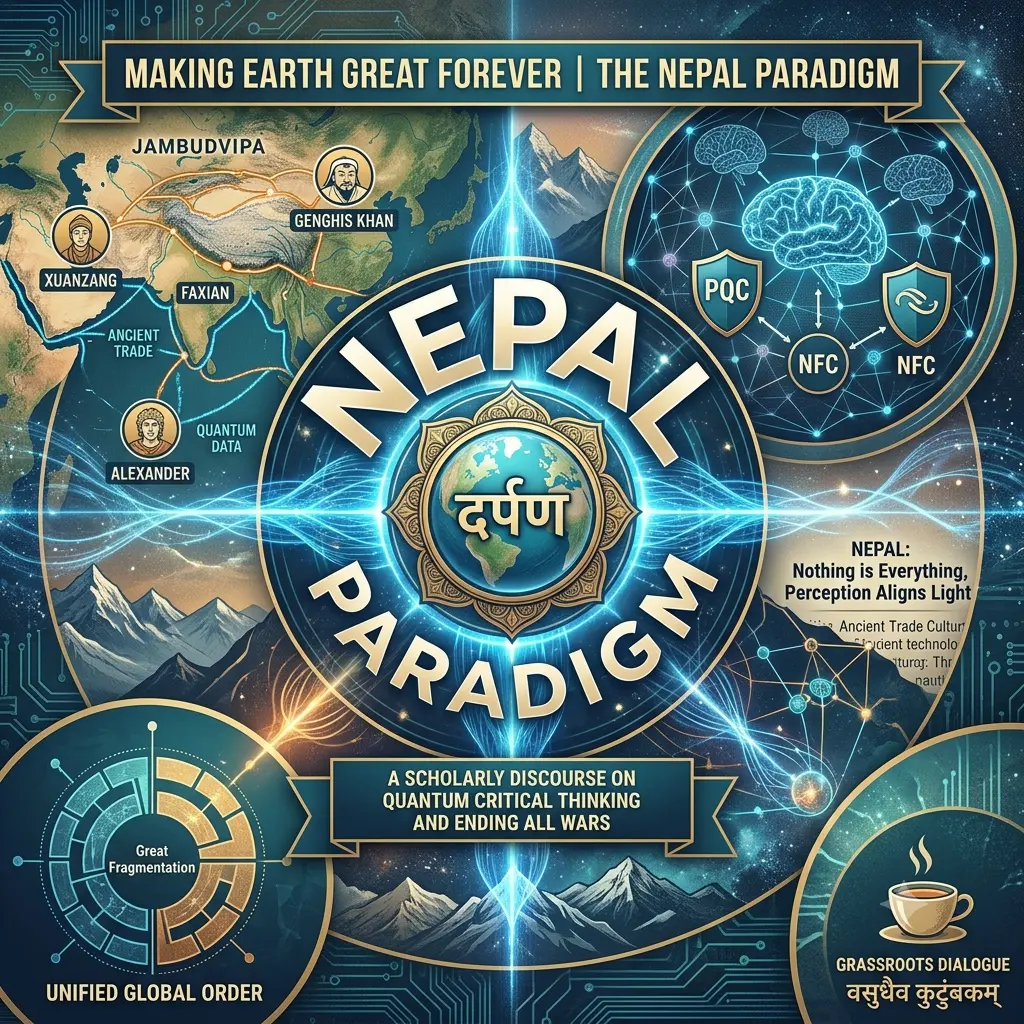
Title: Global Fragmentation, Quantum Critical Thinking, and the ‘NEPAL Paradigm’: A Scholarly Discourse on Achieving ‘Make Earth Great Forever’ and the ‘End of All Wars’ Amidst the Collapse of Classical Frameworks
Researcher: darpanpoems.com research dpt. with AI Collaborator (Literary & Scientific Analytics) Date: July 12, 2026
- Introduction & Problem Background: In his seminal work Ancient India, the historian R. C. Majumdar highlighted the profound geographical and cultural diversities of the subcontinent, arguing that India cannot merely be categorised as a conventional “country,” but must be understood as an entire continental consciousness. Today, this insight resonates on a global scale.
Human history, whether manifested through the cultural bridges built by Xuanzang and Faxian connecting Jambudvipa with Russo-Chinese-Mongol civilisations, the forced consolidation of Europe, Central Asia, Persia, and the Arab world under Genghis Khan, or Alexander the Great’s imperialist push to unite Persia with the Porus-ruled domains of the Indo-Pak landmass, has always borne witness to an irrepressible human impulse toward integration.
The tragic irony of history, however, lies in the fact that while humanity yearned for connection, the idiosyncratic obstinacy of a few rulers and the machinations of psycho-philosophical politics (नफ़्सियाती फ़लसफ़्यानी सियासत) forced mankind to live in fragments.
America achieved a nominal cartographic identity via Amerigo Vespucci, yet it remains ideologically and socio-economically fractured. The Industrial Revolution linked Asia and Africa to global markets, only for the post-colonial era to bring further geographical and social balkanization under the guise of “independence.” Following the devastation of the Second World War, the United Nations (UN) was established to foster global unity; yet, in the geopolitical landscape of 2026, it stands profoundly weakened and increasingly obsolete.
Today, we inhabit an era where Artificial Intelligence and algorithmic connectivity have inextricably bound the world into a digital network, yet fundamental conflicts and structural fragmentation remain unresolved. While the global architecture manufactures synthetic trillionaires, the internal hollows of our civilisation are laid bare.
Geoeconomic indicators, geopolitical analytics, and intelligence reports consistently demonstrate that our contemporary institutional frameworks, national paradigms, and legal systems are built upon a foundation of structural deception, epitomising the theses laid out in John Mearsheimer’s Why Leaders Lie.
To escape this global quagmire, the “Great Fragmentation,” and systemic rot, we must recognise that classical political-economic and traditional religious doctrines are thoroughly out of date. A new paradigm is urgently required, one structured through the lens of darpanpoem.com’s Quantum Critical Thinking, the ‘NEPAL Paradigm,’ and the philosophical synthesis of ‘Know Thyself’ / ‘No-Self.’
- Literary and Philosophical Contextualization: The four ghazals (quoted poetic verses) serve as the analytical bedrock of this report, translating global and existential crises into scientific and Sufi-mystical insights. The core symbols embedded within these verses and their implications for world leadership are analysed below:
A. Quantum Technological Transmutations The first ghazal states:
“The shift that alters quantum light is the transition of ‘hBN’, In the real world, such advancements are a tangible reality.”
This underscores how advanced quantum materials, such as Hexagonal Boron Nitride (hBN), are revolutionising the flow of light and quantum information. By extension, a profound “quantum shift” is mandatory within global consciousness.
The second ghazal’s assertion (“I am the IQM Quantum resonance called out to you…”) and the third ghazal’s declaration (“PQC merging with NFC walks a post-quantum secure path…”) indicate that the future of global security and communication must rest upon Post-Quantum Cryptography (PQC). Such architecture will dismantle the fragile, compromised, and rogue digital structures governing our world today. Ultimately, as the fourth ghazal posits,
“A quantum computer is embedded within the consciousness of every individual”, the human mind is itself a quantum supercomputer that must be liberated from classical, binary constraints.
B. Political Realism and the Infrastructure of Deception: The second ghazal directly critiques systemic political hypocrisy and hollow democratic facades:
“Every theft is exposed within the pristine democratic state, Through manipulated data and selective truths, autocracy rules the epoch…”
This mirrors the core reality of Why Leaders Lie, wherein strategic deception and authoritarianism (amriyat) disguise themselves beneath the mantle of a democratic nation (jamhoori riyasat). Diplomatic and economic manoeuvres have degenerated into clandestine plots (raaz-e-daastan).
C. Sufi Epistemology, Advaita, and the Mirror Metaphor: Throughout the poetic texts, the motifs of the beloved (sajni), shared tea (chayi), the vision of absolute oneness (deed-e-wahdat), and the mirror (darpan) recur systematically:
“Within the mirror, Absolute Truth (‘Haq’) and the vision of Oneness are tangible realities.” “The distance between the idol-temple and the Kaaba is a traversable reality.”
In this framework, the “mirror” (darpan) symbolises profound self-realisation and Quantum Entanglement. Looking into the mirror collapses the illusion of the “other,” revealing Haq (Ultimate Reality). The dissolution of the distance between the temple (butkhana) and the Kaaba implies that classical religious divisions are now obsolete.
The shared cup of tea serves as a metaphor for grassroots human connection and authentic dialogue, forces far more potent than elite geopolitical treaties.
Ghazal: The Quantum Verse of the Day: June 25, 2026
        It Leaves the Passing Breeze Behind
Beneath the canopy of
Trees, a silver moonlit night,
As time unfolds its sovereign will,
It leaves the passing breeze behind.
              The news remains as an
              Ancient lore, yet lonely rivers flow,
              A bitter hour of final sight,
              It leaves the passing breeze behind.
Entangled in your flowing tresses,
The bough turns toward the core,
Is this the throne’s brief, grand
Largesse, or just the poor man’s light?
No, it leaves the passing breeze behind.
              It scatters fragrance through the soul,
              As if the heart’s highway was crossed,
              The spirit's wedding caravan, the journey's
              Sacred rite, it leaves the passing breeze behind.
O listener! Do not forget this
Humble, first resonant echo,
A fleeting, beautiful completion
Upon the narrow bridge of height,
It leaves the passing breeze behind.
              When PQC and NFC align,
              Post-quantum realms are sealed,
              When optical hardware showers
              Down, a technological byte,
              It leaves the passing breeze behind.
My love! Within the teacup’s swirl,
A storm shatters the looking-glass (Darpan),
For day and night, you poured the
Bliss of love’s pure, nectar-like might,
And it leaves the passing breeze behind.

Literary and Philosophical Exegesis
I. Introduction: The Synthesis of Antiquity and Avant-Garde: This ghazal represents a rare, avant-garde paradigm shift in contemporary literature. It acts as an intellectual bridge where classical Urdu poetic sensibilities collide with 21st-century information substrate theory and post-quantum physics. The structural anchor of the poem relies on the Radif, "leaves the passing breeze behind", which serves as a metaphysical metaphor for temporality, transience, and the continuous, unstoppable flow of cosmic consciousness.
II. Verse-by-Verse Analytical Discourse:
1. The Monarchy of Time and Nature: Beneath the canopy of trees, a silver moonlit night...
The opening couplet (Matla) establishes a classic romantic-mystic locus. The tree (shajar/darakht) represents grounded earthly existence, while the moonlight represents celestial illumination. However, the secondary hemistich (Misra) immediately subverts simple romanticism by introducing the ruthlessness of Time. Time operates on its own sovereign whim (manmani baat). Like the breeze that brushes past a stationary observer, the moments of human life evaporate into the grand cosmic tapestry without seeking permission.
2. Existential Isolation and the Crucible of Union: The news remains as ancient lore, yet lonely rivers flow...
Here, the poet invokes a deeply existentialist and Neoplatonic motif: the soul as a 'lonely river' rushing forward to dissolve back into the primordial ocean of absolute reality. The "ancient lore" is the eternal truth of separation. The phrase "bitter hour of final sight" (saat-e-mulaqat) highlights the gruelling spiritual friction encountered when the finite mind attempts to perceive the infinite. The passing breeze here underscores the fleeting nature of such visionary encounters.
3. Transcendence over Material Hegemony: Entangled in your flowing tresses, the bough turns toward the core...
Moving from the micro-cosmic attraction of the Beloved’s tresses (gesu), the poet’s focus shifts to the macro-cosmic axis—the sader (the core or supreme seat of consciousness). In the presence of this divine ascension, earthly power structures ("the throne’s brief, grand largesse") or institutionalised spiritual doles (zakat) lose all validity. Material wealth is rendered as insubstantial and transient as a passing wind.
4. The Alchemical Journey of the Soul: It scatters fragrance through the soul, as if the heart’s highway was crossed...
This couplet portrays the interiority of spiritual awakening. When love penetrates the deepest chamber of human existence (rah-e-jigar), the entire being undergoes an alchemical transformation, releasing an invisible, aromatic aura. The path is celebrated not as a sombre trial, but as Ruh-e-Barat, the soul's triumphant wedding procession. The baggage of this journey (rakht-e-safar) is entirely non-material, composed purely of devotion and transcendent wisdom.
5. The Echo of Reality and the Eschatological Bridge: O listener! Do not forget this humble, first resonant echo...
The poet addresses the "listener" (mukhatib), who can simultaneously be understood as the reader, humanity, or the poet's own ego. The "humble echo" is the primordial sound of creation or the poetic spark itself. "Completion upon the narrow bridge" (takmeel-e-sirath) directly references the arduous crossing of the traditional Pul-Sirat, the razor-thin bridge over the abyss of ignorance. The passing breeze symbolises the swiftness with which this earthly probation terminates.
6. The Post-Quantum Information Substrate: When PQC and NFC align, post-quantum realms are sealed...
In a breathtakingly original turn, the poet integrates modern cryptographic concepts into mystical verse. By linking PQC (Post-Quantum Cryptography) and NFC (Near-Field Communication), the verse addresses the ultimate, unbreakable security of information. In the upcoming quantum computational era, when "optical hardware showers down" like torrential rain, reality reveals its true nature: it is not made of solid matter, but of light, waves, and perfectly secure, interconnected data. Physics seamlessly dissolves into metaphysics; the technological byte matches the speed of the fleeting cosmic breeze.
7. The Epilogue: Shattering the Ego (Darpan): My love! Within the teacup’s swirl, a storm shatters the looking-glass...
In the closing couplet (Maqta), the poet brilliantly employs his pen name (Takhallus), 'Darpan' (the Mirror). The setting is deceptively mundane, a cup of tea, yet it hosts a cosmic tempest. The constant influx of love ("poured day and night") by the beloved (Sajni) causes a violent collapse of the individual ego. The Darpan (the mirror of selfhood/identity) shatters. In mystical philosophy, the mirror must break for the illusion of duality to vanish. When the subjective self is destroyed, it achieves Fana (annihilation) and merges into the eternal landscape, while the perpetual breeze of reality blows on forever.
III. Conclusion:
This composition is an exceptional piece of literary architecture. By matching strict classical prosody with contemporary scientific terminology, it demonstrates that true art is borderless, surviving across epochs. It stands as a brilliant manifesto for a world trying to balance its fast-evolving technological future with its deep, timeless spiritual roots.
- Analytical Framework: Intertextual Matrix Resolving the contemporary global crisis demands the integration of four primary conceptual pillars:
| Textual / Paradigmatic Source | Fundamental Philosophy | Contemporary Global Relevance |
| Why Leaders Lie (Mearsheimer) | Strategic deception by rulers in the name of national interest. | Exposing the systemic vacuity of contemporary diplomatic and institutional frameworks. |
| The Great Fragmentation | Polarisation of global economic, technological, and geopolitical powers. | Explaining the failure of the UN and the rise of multipolar proxy conflicts. |
| Garden of Fragrance & Uma Sahasrakam | Ethics of humility, simplicity, and cosmic divine energy (poetic consciousness). | Reintroducing normative ethics and the philosophy of Vasudhaiva Kutumbakam (the world is one family) to geopolitics. |
| NEPAL Paradigm & darpanpoem.com | Nothing is Everything, Perception Aligns Light. | Transcending classical ideations via Quantum Critical Thinking. |
- Policy Directives and Strategic Guidelines for World Leadership: Because classical capitalism, communism, and orthodox religious dogmas are structurally grounded in binary dualism (“us versus them”), they are inherently incapable of resolving modern systemic crises. To actualise the dual imperatives of ‘Make Earth Great Forever’ and the ‘End of All Wars’, global leadership must adopt the following execution strategies:
I. The Synthesis of ‘Nothing is Not True’ and ‘Know/No-Thyself…:‘ Leadership must internalise the realisation that rigid identity constructs (nationalism, sectarianism, ethnicity) are fundamentally empty (Nothing), and without acknowledging this void, absolute truth (True) cannot be grasped. “Know Thyself” necessitates the dissolution of the political ego, achieved only when leaders view themselves through the mirror of deed-e-wahdat (unitary consciousness). When a sovereign perceives the entire cosmos within the self, the impulse for external warfare naturally collapses.
II. Institutionalisation of Quantum Critical Thinking: Global leaders must move beyond binary calculus (right/wrong, ally/adversary) and embrace a mindset akin to quantum superposition, where apparent paradoxes coexist and find resolution without conflict.
Policy Inversion: Policy-making must shift from short-term transactional gains toward absolute transparency, secured via Post-Quantum Secure (PQC) networks, safeguarding the global biosphere and future generations.
III. Operationalisation of the ‘NEPAL Paradigm’: Nepal, historically situated as a sanctuary of Himalayan stability, the spiritual core of Jambudvipa, and the geopolitical fulcrum balancing two massive civilisations (India and China), offers a vital paradigm for the modern world. The NEPAL Paradigm stands for: Dynamic Neutrality, Geo-Cultural Connectivity, and Nature-Centric Development. World leaders must discard obsolete expansionist doctrines and adopt this stabilising, equilibrium-focused model.
IV. Dismantling the Deceptive Order for Cosmic Relief: Sovereigns must end the cycles of artificial economic scarcity and orchestrated proxy wars that impose systemic trauma and forced labour (mashaqqat) upon global citizens. Algorithmic networks must be stripped of their weaponised capacity for digital authoritarianism and reoriented toward total diplomatic accountability.
- Conclusion: The arc of human history has travelled from the coercive unifications of Alexander and Genghis Khan, through the exploitative mechanics of the Industrial Revolution, to arrive at the critical crossroads of the AI and Quantum era. As the fourth ghazal beautifully reminds us, “Before coming into being, you have always existed as reality in life”, truth, empathy, and interconnectedness are foundational to the human condition, obscured only by the debris of institutionalised deception and geopolitical avarice.
Global leadership must now stand before the darpan (mirror) of historical accountability. If the planet is to be made sustainable and great forever, and if we are to truly end the scourge of war, leaders must abandon their trivial political posturing, which amounts to nothing more than a storm in a teacup, and pioneer a transparent, unified global order illuminated by the tenets of Quantum Critical Thinking and the NEPAL Paradigm. This remains the only tangible reality for safeguarding our collective future.
Ghazal: The Quantum Verse of the Day: June 30, 2026
          You Have Always Been in My Life
Before existence ripened into truth,
You have always been in my life.
Before loss could teach me what need truly means,
You have always been in my life.
        Whether being or non-being dissolved our companionship,
        Whether I vanished within my own forgotten self,
        The loveliest moment of separation itself, silently
        You have always been in my life.
When every waking dream tumbled into the abyss
Of night's immeasurable darkness,
The yearning for my beloved, the grace of nearness,
You have always been in my life.
        I fashioned from this dust-laden world
        A weary commerce of the heart;
        The singular theme of every healing and restoration,
        You have always been in my life.
As colour dwells inseparably within flowers,
As water belongs eternally to the sea,
As fleeting snow crowns the mountain peaks,
A sunlit sovereignty, you have always been in my life.
        Within every fragment of the human mind
        Lies a universe like a quantum computer;
        Yet sincerity, tranquillity, and inward repose,
        You have always been in my life.
My sovereign of grace, every breath still moves
Through the warmth of the tea you lovingly prepare;
For Darpan, strength itself is found in drinking it,
You have always been in my life.

Exegesis: Love as the Eternal Principle of Existence
This ghazal is not merely an expression of romantic affection; it is a philosophical meditation on existence itself. Beneath its lyrical tenderness lies an exploration of ontology, memory, healing, and the mysterious continuity of love across time. The beloved is not presented simply as a cherished companion but as the primordial condition through which life acquires meaning. The refrain, "You have always been in my life," becomes more than a declaration of devotion; it becomes an ontological proposition.
The opening couplet immediately transcends conventional romantic discourse. "Before existence ripened into truth" suggests that the beloved precedes experiential reality itself. Ordinarily, truth is discovered after living; here, the beloved exists before truth can even manifest. Likewise, necessity is usually understood only after deprivation, yet the poet recognises that the beloved had always constituted life's essential need long before absence revealed it. Such paradoxes elevate the beloved from an emotional attachment to an eternal principle underlying existence.
The second couplet introduces one of the oldest concerns of existential philosophy: the tension between being and non-being. Human existence oscillates between presence and disappearance, certainty and uncertainty. Yet within this fragile condition, the beloved remains constant. Most remarkable is the phrase "the loveliest moment of separation." Separation is conventionally associated with grief, but the poet discovers beauty even in absence because true love transforms distance into another mode of presence. This paradox recalls the Sufi conviction that apparent separation conceals a deeper union of souls.
The imagery deepens in the third couplet. The abyss of night, swallowing waking dreams, evokes the collapse of hope under the weight of despair. Darkness here is not merely physical but existential, representing those moments when human aspirations seem to vanish into meaninglessness. Against this darkness stands only one luminous force: the yearning for the beloved and the grace of nearness. Desire itself becomes salvific. It is not merely fulfilment but longing that sustains the human spirit.
The fourth couplet shifts from the individual to civilisation itself. The "dust-laden commerce of the heart" is a profound metaphor suggesting that history, society, and human relationships are built upon hearts weathered by suffering. Every generation inherits emotional ruins alongside material achievements. Yet amidst this fractured world, the beloved becomes "the singular theme of every healing and restoration." Love is presented not as escapism but as the fundamental power through which brokenness becomes whole again. This is simultaneously romantic, psychological, and spiritual.
The fifth couplet employs the language of nature to articulate metaphysical unity. Colour cannot be detached from the flower, nor water from the sea, nor snow from the mountain. These are relationships of essential identity rather than accidental association. By comparing the beloved to these inseparable realities, the poet argues that love belongs to life with the same inevitability that beauty belongs to nature. The striking phrase "a sunlit sovereignty" extends this symbolism further. The beloved is no longer merely illumination but a benevolent dominion under whose radiance life flourishes.
Perhaps the most original verse is the sixth couplet, where classical lyricism unexpectedly encounters contemporary science. The image of the human mind containing "a universe like a quantum computer" reflects the immense complexity and latent potential of consciousness. It acknowledges modern scientific imagination without surrendering poetry's spiritual vision. Despite humanity's astonishing cognitive capacities, the poet concludes that the deepest human requirement remains sincerity, inner peace, and emotional repose. Technology may expand intelligence, but it cannot replace compassion. This couplet gracefully reconciles scientific modernity with timeless human values.
The closing couplet brings the poem from philosophical abstraction into intimate domestic reality. The beloved's tea appears, at first glance, as an ordinary household detail. Yet precisely because of its simplicity, it acquires extraordinary symbolic power. Tea becomes an embodiment of affection, care, companionship, and the daily rituals through which love quietly sustains life. The final line, "For Darpan, strength itself is found in drinking it", invites interpretation on multiple levels. Literally, it expresses the poet's delight in the tea lovingly prepared by the beloved. Symbolically, however, the act of drinking signifies internalisation. The tea is not merely a beverage; it is love made tangible. By drinking it, the poet drinks tenderness, devotion, solace, and spiritual nourishment. Strength arises not from the liquid itself but from the love infused within it.
From a literary perspective, this final image deserves special attention. Classical ghazals often conclude with the poet's takhallus (pen name), transforming the closing couplet into a moment of personal revelation. Here, "Darpan" enters not as a boastful signature but as a humble recipient of grace. The grandeur of metaphysical reflection gently resolves into the warmth of an everyday gesture, suggesting that the infinite often reveals itself through the ordinary.
Taken as a whole, this ghazal exemplifies a rare synthesis of traditions. Its emotional vocabulary belongs to the classical Indo-Persian ghazal; its metaphysical concerns resonate with Sufi thought; its philosophical reflections engage existential inquiry; its natural imagery evokes Romantic sensibilities; and its scientific references introduce a distinctly twenty-first-century intellectual horizon. Yet none of these elements competes with one another. Instead, they converge upon a single insight: that authentic love is not merely an emotion experienced within life but the invisible principle through which life itself becomes intelligible.
Ultimately, the beloved emerges as truth before reality, necessity before loss, healing before injury, light before dawn, serenity beyond intellect, and strength hidden within the simplest acts of affection. In this vision, love is neither transient passion nor sentimental attachment. It is the eternal presence that silently accompanies every stage of human existence, revealing itself in philosophy, nature, memory, science, and, finally, in the humble warmth of a shared cup of tea.
The Hindvi/Rekhta Section:
ग़ज़ल : The Poem of the Day: June 23, 2026
           इस दिल की मरम्मत मुमकिन हक़ीक़त है
बंद पलकों से नज़रों की ये रुख़्सत मुमकिन हक़ीक़त है,
लम्हों में सदियों की ये फ़ुरक़त मुमकिन हक़ीक़त है।
            तुम पर पड़ी ये आँखें या आँखों में बसे हो तुम,
            धड़कन की अब ये धीमी सी हरकत मुमकिन हक़ीक़त है।
पिघली हुई सी धूप फ़ज़ा में, हुस्न का अबर-ए-रुख़सार तू,
टूटे हुए इस दिल की मरम्मत मुमकिन हक़ीक़त है।
            मै क्या जाने, मय क्या जाने, मयख़ाना या मंज़िल क्या,
            बुतख़ाने से काबे की मसाफ़त मुमकिन हक़ीक़त है।
किसकी सुनोगे राज़दाँ, मर्ज़ी के तुम हुक्मराँ हो,
ग़म से तलाक़ और रद्द-ए-मशक़्क़त मुमकिन हक़ीक़त है।
            क्वांटम की लाइट को जो बदले, वो 'एच-बी-एन' की शिफ़्ट है,
            सच्ची दुनिया में ये तरक़्क़ियात मुमकिन हक़ीक़त है।
सजनी! ज़रा सी चाय हो जाए दो दिलों के दरमियाँ,
दर्पण में 'हक़' और दीद-ए-वहदत मुमकिन हक़ीक़त है।


तशरीह:मुमकिन हक़ीक़त का हुस्न: विज्ञान और तसव्वुफ़ के दरमियाँ एक सफ़र
ताआरुफ़ (भूमिका): शायरी महज़ दिल के बहलाने का सामान नहीं, बल्कि यह कायनात के उन रहस्यों को छूने की ज़ुबान है जिन्हें विज्ञान समीकरणों में लिखता है और सूफ़ी अपनी ख़ामोशी में महसूस करता है। ज़ेर-ए-नज़र (विचाराधीन) ग़ज़ल अदब की दुनिया में एक ऐसा ही हैरतअंगेज़ और दिलकश तजुर्बा है। इस ग़ज़ल की रदीफ़, 'मुमकिन हक़ीक़त है', एक ऐसा पुल है जो इंसान के आंतरिक रूहानी अहसासात को बाहरी भौतिक जगत (Physical World) की सच्चाइयों से जोड़ता है। इस रचना का मिज़ाज पारंपरिक उर्दू शायरी की नज़ाकत को अपने भीतर समेटे हुए है, मगर इसकी सोच इक्कीसवीं सदी के नैनो-टेक और क्वांटम युग की दहलीज़ पर खड़ी है। यह रेख़्ता और हिंदवी का वो ख़ूबसूरत रंग है जहाँ दिल की धड़कन और सब-एटॉमिक पार्टिकल्स (subatomic particles) एक ही लय में नाचते नज़र आते हैं।
इश्क़ की दोई का मिटना और रूहानी सफ़र: ग़ज़ल का आग़ाज़ (शुरुआत) ही अंतर्मुखता के उस मुक़ाम से होता है जहाँ बाहर की दुनिया बेमानी हो जाती है। जब शायर कहता है कि 'बंद पलकों से नज़रों की ये रुख़्सत मुमकिन हक़ीक़त है', तो वह दरअसल उस कैफ़ियत की तरफ़ इशारा कर रहा है जहाँ आँखें बंद होते ही महबूब का तसव्वुर और गहरा हो जाता है। यह हिज्र (जुदाई) की वो घड़ी है जहाँ चंद लम्हे भी सदियों के बराबर लगने लगते हैं। मगर यह कोई वहम या ख़्याल नहीं, शायर की नज़र में यह एक जीती-जागती हक़ीक़त है। आगे चलकर यह अहसास और परवान चढ़ता है जब आशिक़ और महबूब के बीच की 'दोई' (Duality) ख़त्म हो जाती है। यह तय करना मुहाल हो जाता है कि आँखें महबूब को देख रही हैं या महबूब ख़ुद आँखों के रास्ते दिल में उतर आया है। इस अद्वैत या 'वहदत' के अहसास से वजूद की मद्धम होती धड़कनें गवाही देती हैं कि इश्क़ की यह रूहानी हरकत कोई अफ़साना नहीं, बल्कि एक मुमकिन हक़ीक़त है।
हुस्न का अबर और दिल की मरम्मत: शायरी में महबूब के हुस्न की तारीफ़ तो हमेशा से होती आई है, मगर इस ग़ज़ल में मिज़ाज ज़रा अलहदा है। यहाँ महबूब का रुख़सार (चेहरा) सावन के उन नर्म बादलों जैसा है जिनसे छनकर गुनगुनी धूप ज़मीन पर उतरती है। फ़ज़ा में पिघली हुई इस रब्बी (सुहावनी) धूप का साया जब दिल पर पड़ता है, तो चमत्कार होते हैं। शायर ने दिल के लिए 'रंद' यानी रूखे, खुरदरे या ज़ख़्मी होने का जो बिंब चुना है, वह कमाल का है। ज़िंदगी की ठोकरों से जो दिल टूट चुका था, खुरदरा हो चुका था, महबूब की एक रब्बी नज़र से उसकी मरम्मत हो जाती है। यह रूह का संवारना है, जो इश्क़ की कीमिया (Alchemy) से ही मुमकिन है।
मयख़ाने से काबे की मसाफ़त (दूरी): तसव्वुफ़ (Sufism) का यह मिज़ाज इस ग़ज़ल को अपनी परवाज़ (उड़ान) के ऊँचे मुक़ाम पर ले जाता है। जब शायर मस्ती और सरशारी की हालत में कहता है कि 'मै क्या जाने, मय क्या जाने, मयख़ाना या मंज़िल क्या', तो वह ज्ञान और अज्ञान की सीमाओं से परे निकल जाता है। सूफ़ियाना रिवायत में मय (शराब) ईश्वरीय प्रेम का प्रतीक है और मयख़ाना वो जगह जहाँ यह रूहानी शिफ़ा मिलती है। इस दीवानगी में बुतख़ाना (मंदिर) और काबा (मंज़िल) का भेद मिट जाता है। जिसे दुनिया भटकाव समझती है, वह दरअसल 'मसाफ़त' (दूरी) का सिमट जाना है। बुत से ख़ुदा तक और इंसान से असीम तक का यह सफ़र इस ग़ज़ल में एक सहज सच्चाई बनकर उभरता है। यह इंसानी मर्ज़ी और उसकी संप्रभुता का भी जश्न है, जहाँ इंसान अपने दुखों (रंज-ओ-ग़म) को शम्शीर (तलवार) से काटकर अपनी तक़दीर का हुक्मराँ ख़ुद बन सकता है।
क्वांटम लाइट और जदीद तरक़्क़ियात: इस ग़ज़ल का सबसे अनोखा और चौंकाने वाला मोड़ वो है जहाँ यह रूहानियत के आसमान से उतरकर विज्ञान की प्रयोगशाला में दाख़िल होती है। शायर ने विज्ञान के बेहद गूढ़ विषय, 'क्वांटम लाइट और hBN (Hexagonal Boron Nitride) शिफ़्ट' को शायरी का हिस्सा बनाया है। विज्ञान जानता है कि hBN की नैनो-लेयर्स प्रकाश के गुणों और उसकी वेवलेंथ (तरंगदैर्ध्य) को बदल सकती हैं। शायर इस वैज्ञानिक घटना को एक बड़े रूपक (Metaphor) की तरह इस्तेमाल करता है। वह कहता है कि इंसानी सोच की प्रयोगशाला में जो नए विचार आकार ले रहे हैं, वे महज़ थ्योरी नहीं हैं। 'सच्ची दुनिया में ये तरक़्क़ियात' बहुत जल्द हमारे जीने के ढंग को, हमारे पूरे सिस्टम को बदलने वाली हैं। यह शेर आधुनिक दौर के इंसान की वैज्ञानिक चेतना और तार्किक सोच का आईना है।
अंतिम पड़ाव: दीद-ए-वहदत और चाय की प्याली: इतने भारी-भरकम दार्शनिक और वैज्ञानिक सफ़र के बाद, ग़ज़ल का मक़्ता (अंतिम शेर) हमें वापस इंसानी रिश्तों की बेहद ख़ूबसूरत और ज़मीनी हक़ीक़त पर ले आता है। यहाँ कोई बड़ा उपदेश नहीं है, बल्कि एक बेहद सादगी भरा निमंत्रण है, 'सजनी! ज़रा सी चाय हो जाए दो दिलों के दरमियाँ'। चाय यहाँ सिर्फ़ एक पेय नहीं, बल्कि संवाद, ठहराव और दो दिलों के बीच की दूरियों को पाटने का ज़रिया है। जब दो मन पूरी शिद्दत और सादगी से एक-दूसरे के सामने बैठते हैं, तो दर्पण (आईना) गवाह बनता है कि इंसान के भीतर का अहंकार (मैं-पन) पिघल गया है। इस अहंकार के मिटते ही जो दिखाई देता है, वही 'हक़' है, वही 'वहदत' (सब कुछ एक होने का अहसास) है।
निष्कर्ष: संक्षेप में कहें तो, यह ग़ज़ल मिज़ाज और बयां के लिहाज़ से एक मुकम्मल शाहकार है। यह हमें सिखाती है कि चाहे दिल का मामला हो, रूहानी तलाश हो, या क्वांटम मैकेनिक्स की गुत्थियाँ सबके केंद्र में एक ही तलाश है, और वह है 'सत्य' की तलाश। शायर ने हिंदवी और रेख़्ता के धागों में विज्ञान और दर्शन के मोतियों को जिस रवानगी के साथ पिरोया है, वह अदब की दुनिया में एक ताज़ा हवा के झोंके की तरह है। 'मुमकिन हक़ीक़त है' का यह सिलसिला केवल शब्दों का खेल नहीं, बल्कि कायनात को देखने का एक बेहद ख़ूबसूरत और जदीद नज़रिया है।
शास्त्रीय प्रतिमानों के पतन के बीच ‘मेक अर्थ ग्रेट फॉरएवर’ और ‘युद्ध-अंत’
दर्पण भावाधार भूमि: टुकड़ो में विखरा ये तारीख-ए-दर्पण
दिल को जलाकर खाया है, जिगर को टुकड़ों में पाया है। दिमाग इस तरह चाटा गया है माज़ी (अतीत) से आज तक। देखते हैं कि क्या अब कोई मुस्तक़बिल (भविष्य) बाकी भी रहेगा देखने को, पाने को कुछ और या खोने को।
जैसा कि आर. सी. मजूमदार ‘एंशिएंट हिस्ट्री ऑफ़ इंडिया’ (Ancient History of India) में कहते हैं कि “इंडिया कैन नॉट दस बी कॉल्ड अ कंट्री” (India cannot thus be called a country), तो हर तरफ़ से सवालों का हुजूम है। मीलों तक नफ़्सियाती, फ़लसफ़ियाना, सियासतदाँ और क्या नहीं! ह्वेनसांग और फाहियान के ज़माने में वे जम्बूद्वीप और रुस-चीनी-मंगोल तहज़ीब को जोड़कर गए।
चंगेज़ ख़ान ने यूरोप, मध्य एशिया, फ़ारस और अरब को जोड़कर छोड़ा। सिकंदर ने पर्शिया (फ़ारस) से उस पार, पोरस की हिन्द-पाक ज़मीन तक जुड़ जाने की कोशिश की। यह जुड़ जाने की कोशिश, आदमी से आदमी का होना, आज तक लाज़मी बात है। लेकिन तारीख़ ने दिखाया है कि जिस आदमी को दुनिया भर में जुड़कर रहना है, उसे चंद हुक्मरानों की ज़ाती ज़िद की वजह से टुकड़ों में जीने को मजबूर किया गया है।
वेस्पुची (अमेरिगो वेस्पुची) के नाम से अमेरिका जुड़ा तो है, फिर भी पूरा अमेरिका बिखरा पड़ा है। इंडस्ट्रियल रिवोल्यूशन (औद्योगिक क्रांति) ने एशियाई और अफ़्रीकी देशों को जोड़ा था; आज वे ‘इंडिपेंडेंस’ (स्वतंत्रता) के नाम पर टूटे हुए हैं।
मगर फिर भी लोगों ने दो-दो विश्व युद्धों को झेलने के बाद, आपस में जुड़े रहने के लिए UN (संयुक्त राष्ट्र) तो बना लिया, जो कि अब बहुत पुरानी बात हो चुकी है, क्योंकि यह अब कमज़ोर पड़ता नज़र आ रहा है। वैसे, आज AI (एआई) और एल्गोरिद्मिक कनेक्टिविटी के ज़रिए दुनिया चाहकर भी एक नेटवर्क में बँध गई है। लेकिन हमारे बीच के बहुत सारे युद्धों को अभी तक निपटाया नहीं गया है।
आज दुनिया ने ट्रिलियनेयर (Trillionaire) तो क्रिएट किए हैं, चाहे वह झूठा ही क्यों न हो, पर क्या हमारी आज की सिविलाइज़ेशन (सभ्यता) इस बात की वर्थ (मूल्य) को दर्ज़ करती है? जियोइकोनॉमिक्स, जियोपॉलिटिकल एनालिटिक्स और जियोडिप्लोमेसी एंड इंटेलिजेंस रिपोर्ट्स साफ़ दिखा रही हैं कि हमारी दुनिया डेवलपमेंट और चरम इनोवेशंस व अचीवमेंट्स के बावजूद कितनी खोखली पड़ गई है।
हमारे झूठ पर खड़े बुनियादी कौमी (राष्ट्रीय) और कानूनी निज़ाम कितने भ्रष्ट और रॉग (rogue) लूट में धँसे पड़े हैं। इस दलदल से हम निकल कैसे पाएँगे?
ग़ज़ल The Poem of the Day: June 24, 2026
          ग़मज़दा हूँ दिल से ऐ हुस्न-बेपरवाह
कुछ भी कहूँ, लुट जाता हूँ दिल से ऐ हुस्न-बेपरवाह,
पूछ न क्या-क्या सहता हूँ दिल से ऐ हुस्न-बेपरवाह।
            उठती लहरें इस तरह, गहराई में उतरी निगाह-ए-बतूल,
            डूब के अश्कों-आसमाँ बहता हूँ दिल से ऐ हुस्न-बेपरवाह।
जल जाती है हर बूँद बरसात की, कशिशों की आग बदन में,
ख़ूब क़िस्मत से हुआ राब्ता हूँ दिल से ऐ हुस्न-बेपरवाह।
            पकड़ी गई हर चोरी साफ़-सुथरी जम्हूरी रियासत में,
            रूठ मत, रखा तुझसे वास्ता हूँ दिल से ऐ हुस्न-बेपरवाह।
मालूमात और सच्चाई से जुर्म हुए अमरियत सर-ए-ज़माँ,
झूठ पर अमल की राज़-ए-दास्ताँ हूँ दिल से ऐ हुस्न-बेपरवाह।
            फॉल्ट-टोलेरंट क्वांटम कम्प्यूटिंग समझ की सदर बदले,
            तुझसे IQM क्वांटम सदा हूँ दिल से ऐ हुस्न-बेपरवाह।
क़ायल जाम-ए-वफ़ाई, तूने हर प्याली पिलाई दर्पण को,
मुझसे जानेमन, मैं ग़मज़दा हूँ दिल से ऐ हुस्न-बेपरवाह।

ग़ज़ल की तशरीह
यह ग़ज़ल प्रेम के उस मुक़ाम की दास्तान है जहाँ आशिक़ अपनी समूची हस्ती को महबूब की एक झलक, एक ख़याल और एक एहसास पर न्योछावर कर देता है।
मतला ही इश्क़ की उस बेबसी को बयान करता है जिसमें आशिक़ जो कुछ भी कहता है, अपने दिल का कोई न कोई ख़ज़ाना लुटा बैठता है। महबूब की बेपरवाही के बावजूद उसकी मोहब्बत में कमी नहीं आती; बल्कि हर शिकायत के भीतर भी वफ़ा की गर्माहट मौजूद रहती है।
दूसरे शेर में "निगाह-ए-बतूल" एक पाक, निर्मल और आध्यात्मिक सौन्दर्य का प्रतीक बनकर उभरती है। उसकी एक नज़र समुद्र की लहरों की तरह दिल की गहराइयों में उतर जाती है। आशिक़ स्वयं को उस भाव-सागर में डूबा हुआ पाता है जहाँ आँसू, कल्पना और आसमान एकाकार हो जाते हैं। यहाँ प्रेम केवल शारीरिक आकर्षण नहीं बल्कि रूहानी विसर्जन का अनुभव है।
तीसरे शेर में बरसात की बूँदें भी प्रेमाग्नि के सामने टिक नहीं पातीं। सामान्यतः वर्षा शीतलता का प्रतीक होती है, किंतु इश्क़ की तपिश इतनी प्रबल है कि वह बूँदों को भी जला देती है। "राब्ता" का शब्द यहाँ केवल मुलाक़ात नहीं बल्कि दो आत्माओं के बीच स्थापित उस अदृश्य सम्बन्ध का संकेत है जो भाग्य की दुर्लभ देन माना जाता है।
चौथे और पाँचवें शेर ग़ज़ल को व्यक्तिगत प्रेम से उठाकर सामाजिक और दार्शनिक धरातल पर ले जाते हैं। कवि एक ऐसे युग का चित्र खींचता है जहाँ लोकतांत्रिक व्यवस्थाओं में भी छल और चोरी बेनक़ाब हो रही है, परन्तु सत्य बोलना स्वयं अपराध बनता जा रहा है। "मालूमात" और "सच्चाई" का अपराध बन जाना आधुनिक सभ्यता की विडम्बना है। झूठ सत्ता का औज़ार बन चुका है और सत्य संघर्ष का पर्याय। आशिक़ अपने प्रेम को भी इसी सत्यनिष्ठा के साथ जोड़ता है।
छठा शेर ग़ज़ल का सबसे समकालीन और वैचारिक शेर है। "फॉल्ट-टोलेरंट क्वांटम कम्प्यूटिंग" केवल वैज्ञानिक शब्दावली नहीं, बल्कि मानव चेतना की अगली छलाँग का रूपक है। जिस प्रकार क्वांटम कम्प्यूटिंग पारम्परिक गणना की सीमाएँ तोड़ती है, उसी प्रकार प्रेम भी मनुष्य की सीमित समझ को विस्तृत करता है। "IQM क्वांटम" का संकेत आधुनिक वैज्ञानिक नवोन्मेष और मानवीय बुद्धि की उन्नत संभावनाओं की ओर है। कवि मानो कह रहा है कि उसकी चेतना और उसकी पुकार अब साधारण नहीं रही; वह प्रेम के कारण एक उच्चतर बौद्धिक और आध्यात्मिक आवृत्ति पर स्पंदित हो रही है।
मक़ते में "दर्पण" अपने तख़ल्लुस के साथ उपस्थित होता है। महबूब ने उसे वफ़ा के इतने जाम पिलाए हैं कि अब उसका समूचा अस्तित्व उसी मोहब्बत से सराबोर है। लेकिन प्रेम का यह वरदान साथ ही एक मीठा ग़म भी बन गया है। वह ग़मज़दा है, परन्तु यह उदासी पराजय की नहीं, बल्कि प्रेम की परिपक्वता की निशानी है। सच्चा आशिक़ दुख से भागता नहीं; वह उसे भी अपनी मोहब्बत की निशानी समझकर स्वीकार करता है।
समग्र रूप से यह ग़ज़ल इश्क़, सत्य, सामाजिक चेतना और आधुनिक वैज्ञानिक दृष्टि का अनूठा संगम है। इसमें पारम्परिक उर्दू-हिन्दी ग़ज़ल की रूमानी आत्मा भी है और इक्कीसवीं सदी की बौद्धिक बेचैनी भी। दर्पण का आशिक़ यहाँ केवल प्रेमी नहीं, बल्कि सत्य का साधक, चेतना का यात्री और सौन्दर्य का उपासक बनकर सामने आता है।
वैश्विक विखंडन, क्वांटम क्रिटिकल थिंकिंग और ‘नेपाल प्रतिमान’ (NEPAL Paradigm): शास्त्रीय प्रतिमानों के पतन के बीच ‘मेक अर्थ ग्रेट फॉरएवर’ और ‘युद्ध-अंत’ हेतु एक अकादमिक विमर्श
अनुसंधानकर्ता: darpanpoems.com research dpt. with AI Collaborator (Literary & Scientific Analytics) Date: July 12, 2026
१. परिचय और समस्या का पृष्ठभूमि (Introduction & Background): इतिहासकार आर. सी. मजूमदार ने अपनी कृति ‘एंशिएंट इंडिया’ में भौगोलिक और सांस्कृतिक विविधताओं को रेखांकित करते हुए कहा था कि भारत को केवल एक सामान्य ‘देश’ (Country) के रूप में संकुचित नहीं किया जा सकता, बल्कि यह स्वयं में एक महाद्वीपीय चेतना है।
आज यही विचार वैश्विक स्तर पर प्रासंगिक है। संपूर्ण विश्व इतिहास, चाहे वह ह्वेनसांग और फाहियान द्वारा जम्बूद्वीप और रुसचिनी-मंगोल तहज़ीबों के बीच सांस्कृतिक सेतु का निर्माण हो, चंगेज़ ख़ान द्वारा तलवार के बल पर यूरोप, मध्य एशिया, फ़ारस और अरब को जोड़ना हो, या सिकंदर का पोरस की सरज़मीं (हिन्द-पाक भूभाग) तक साम्राज्यवादी जुड़ाव का प्रयास हो, सदा से एक अदम्य ‘जुड़ जाने की कोशिश’ का गवाह रहा है।
परंतु, इतिहास की विडंबना यह है कि जहाँ मानवता ने जुड़ने की आकांक्षा की, वहीं चंद हुक्मरानों की ज़ाती ज़िद और ‘नफ़्सियाती फ़लसफ़्यानी सियासत’ (psychological-philosophical politics) ने मानवता को टुकड़ों में जीने पर मजबूर कर दिया। अमेरिगो वेस्पुची के नाम से अमेरिका तो जुड़ा, पर वह वैचारिक और आर्थिक रूप से आज भी बिखरा हुआ है।
औद्योगिक क्रांति ने एशिया और अफ्रीका को वैश्विक व्यापार से जोड़ा, पर उत्तर-औपनिवेशिक काल में ‘स्वतंत्रता’ के नाम पर भौगोलिक और सामाजिक विखंडन बढ़े। द्वितीय विश्वयुद्ध के महाविनाश के बाद संयुक्त राष्ट्र (UN) की स्थापना वैश्विक जुड़ाव के लिए हुई थी, जो कि अब २०२६ के भू-राजनीतिक परिदृश्य में अत्यधिक कमज़ोर और अप्रासंगिक पड़ती दिख रही है।
आज हम एक ऐसे युग में हैं जहाँ AI और एल्गोरिद्मिक कनेक्टिविटी ने पूरी दुनिया को एक नेटवर्क में बाँध तो दिया है, लेकिन ज़मीनी हकीकत यह है कि बुनियादी युद्ध और विखंडन अनसुलझे हैं। हम ट्रिलियनेयर (Trillionaires) तो बना रहे हैं, लेकिन हमारी सभ्यता का आंतरिक खोखलापन साफ दिख रहा है।
जियोइकोनॉमिक्स, जियोपॉलिटिकल एनालिटिक्स और इंटेलिजेंस रिपोर्ट्स स्पष्ट करती हैं कि हमारे आधुनिक संस्थागत ढाँचे, कौमी (national) और कानूनी निज़ाम झूठ की बुनियाद पर खड़े हैं, जो जॉन मियरशाइमर की कृति ‘व्हाई लीडर्स लाई’ (Why Leaders Lie) के सिद्धांतों को चरितार्थ करते हैं।
इस वैश्विक दलदल, ग्रेट फ्रेगमेंटेशन (Great Fragmentation), और खोखलेपन से निकलने के लिए पारंपरिक राजनीतिक-धार्मिक दर्शन (Classical Religious & Economic Theories) आउट ऑफ डेट (Out of date) हो चुके हैं। अतः एक नए प्रतिमान की आवश्यकता है, जिसे darpanpoem.com की क्वांटम क्रिटिकल थिंकिंग, ‘नेपाल प्रतिमान’ (NEPAL Paradigm) और ‘नो/क्नोव दीसेल्फ़’ (Know Thyself / No-Thyself) के संश्लेषण से समझा जा सकता है।
२. साहित्यिक एवं दार्शनिक संदर्भ (Literary and Philosophical Context): इस अनुसंधान रिपोर्ट में प्रस्तुत चार ग़ज़लें (उद्धृत काव्य) इस वैश्विक और आध्यात्मिक संकट को वैज्ञानिक और सूफियाना अंतर्दृष्टि के माध्यम से व्यक्त करती हैं। इन ग़ज़लों में प्रयुक्त प्रतीक और उनके वैश्विक नेतृत्व हेतु निहितार्थ निम्नलिखित हैं:
क. क्वांटम प्रौद्योगिकी और अस्तित्वगत बदलाव (Quantum Shift & Reality) प्रथम ग़ज़ल में कहा गया है:
“क्वांटम की लाइट को जो बदले, वो ‘एच-बी-एन’ की शिफ़्ट है, सच्ची दुनिया में ये तरक़्क़ियात मुमकिन हक़ीक़त है।”
यह संकेत देता है कि Hexagonal Boron Nitride (hBN) जैसी उन्नत क्वांटम सामग्रियां जिस प्रकार प्रकाश और क्वांटम सूचना के प्रवाह को बदल रही हैं, उसी प्रकार वैश्विक चेतना में भी एक ‘क्वांटम शिफ़्ट’ अनिवार्य हो चुका है। द्वितीय ग़ज़ल की पंक्ति: “तुझसे IQM क्वांटम सदा हूँ…” और तृतीय ग़ज़ल की पंक्ति: “PQC मिलके NFC से, पोस्ट-क्वांटम सिक्योर चली…”
यह दर्शाती हैं कि भविष्य का सुरक्षा और संचार तंत्र पोस्ट-क्वांटम क्रिप्टोग्राफी (PQC) पर आधारित होगा, जो आज के खोखले, असुरक्षित और भ्रष्ट डिजिटल निज़ाम (Rogue Systems) को ध्वस्त कर एक अभेद्य पारदर्शिता लाएगा। चतुर्थ ग़ज़ल कहती है कि “हर शख़्स की ज़ेहनी जुज़ में क्वांटम कम्प्यूटर समाया”, अर्थात मानवीय मस्तिष्क स्वयं एक क्वांटम सुपरकंप्यूटर है जिसे शास्त्रीय (Classical) सीमाओं से मुक्त होना होगा।
ख. राजनीतिक यथार्थ और झूठ का तंत्र (The Anatomy of Lies): द्वितीय ग़ज़ल शासकों के पाखंड और खोखले लोकतंत्र पर प्रहार करती है: “पकड़ी गई हर चोरी साफ़-सुथरी जम्हूरी रियासत में, मालूमात और सच्चाई से जुर्म हुए अमरियत सर-ए-ज़माँ…”
यह ‘Why Leaders Lie’ के उस सत्य को उजागर करता है जहाँ रणनीतिक झूठ और अधिनायकवाद (Authoritarianism) को ‘जम्हूरी रियासत’ (लोकतांत्रिक राज्य) के लबादे में छिपाया जाता है। कूटनीतिक और आर्थिक प्रणालियाँ केवल ‘राज़-ए-दास्ताँ’ (छिपकर रची गई साज़िशें) बनकर रह गई हैं।
ग. सूफ़ी अंतर्दृष्टि, अद्वैत और ‘दर्पण’ तत्व (Sufi Insight and the Mirror of Oneness): सभी ग़ज़लों में ‘सजनी’, ‘चाय’, ‘दीद-ए-वहदत’ (एकात्मता का दर्शन) और ‘दर्पण’ (Mirror) का बार-बार उल्लेख है: “दर्पण में ‘हक़’ और दीद-ए-वहदत मुमकिन हक़ीक़त है।” “बुतख़ाने से काबे की मसाफ़त मुमकिन हक़ीक़त है।”
काव्य में ‘दर्पण’ आत्म-साक्षात्कार और क्वांटम उलझाव (Quantum Entanglement) का प्रतीक है। जब व्यक्ति स्वयं को ‘दर्पण’ में देखता है, तो ‘हक़’ (परम सत्य) का आभास होता है। बुतख़ाने (मंदिर) से काबे की दूरी मिट जाना यह दर्शाता है कि पारंपरिक धार्मिक विभाजन अब अर्थहीन हो चुके हैं। चाय की प्याली दो दिलों के बीच संवाद और सरल मानवीय जुड़ाव का प्रतीक है, जो बड़ी-बड़ी जियोपॉलिटिकल संधियों से अधिक प्रभावी है।
ग़ज़ल: The Poem of the Day: June 25, 2026
        अपनी मर्जी मनमानी बयार का गुज़र जाना
दरख़्त के नीचे चांदनी रात, बयार का गुज़र जाना,
वक़्त की मर्जी, मनमानी बात, बयार का गुज़र जाना।
            ख़बर वही है पुरानी मगर, तन्हा बहता दरिया हैं हम,
            सख़्त सी साअत-ए-मुलाक़ात, बयार का गुज़र जाना।
लिपटी है गेसुओं से तेरे, शजर से सदर को चला हूँ,
तख़्त की मेहरबानी या ज़कात, बयार का गुज़र जाना।
            बिखेरे ख़ुशबू अपनी ऐसे, जैसे गुज़री हो राह-ए-जिगर से,
            रख़्त-ए-सफ़र रूह की बारात, बयार का गुज़र जाना।
ऐ मुख़ातिब! पहली ये अदना सी गूंज न भूल जाना,
रफ़्त सुहानी, तकमील-ए-सिराथ, बयार का गुज़र जाना।
            PQC मिलके NFC से, पोस्ट-क्वांटम सिक्योर चली,
            ऑप्टिकल हार्डवेयर बने बरसात, बयार का गुज़र जाना।
सजनी! चाय की प्याली में तूफ़ानी 'दर्पण' टूट पड़ा,
लुत्फ़-ए-मोहब्बत पिलाया दिन-रात, बयार का गुज़र जाना।

साहित्यिक एवं दार्शनिक तशरीह
भूमिका: आधुनिकता और क्लासिकी अदब का अनूठा संगम:
यह ग़ज़ल पारंपरिक उर्दू शायरी और इक्कीसवीं सदी के वैज्ञानिक विमर्श (Post-Quantum Physics and Computation) के बीच एक ऐसा सेतु बनाती है, जो समकालीन साहित्य में दुर्लभ है। शायर ने 'बयार का गुज़र जाना' जैसी रोमानी और फितरी रदीफ़ का इस्तेमाल करके पूरी ग़ज़ल में एक रवां-दवां बहाव पैदा किया है। यह बयार सिर्फ हवा का झोंका नहीं है, बल्कि यह वक़्त की गति, चेतना का प्रवाह (Flow of Consciousness) और कायनात के लगातार बदलते स्वरूप का प्रतीक है।
शेरों की परत-दर-परत व्याख्या
१. प्रकृति, समय और मनमर्जी का दर्शन: दरख़्त के नीचे चांदनी रात, बयार का गुज़र जाना...
ग़ज़ल का मत्तला एक मुकम्मल दृश्य रचता है। शजर (पेड़) की छांव, चांदनी रात और ठंडी हवा का झोंका—यह इंसान को ब्रह्मांड की असीमता से जोड़ता है। अगले ही मिसरे में शायर वक़्त की संप्रभुता (Sovereignty of Time) पर बात करता है। वक़्त अपनी मर्ज़ी से चलता है, वह किसी के अधीन नहीं है। जैसे हवा बिना पूछे गुज़र जाती है, वैसे ही जीवन के क्षण भी अपनी मनमानी गति से विलीन हो रहे हैं।
२. अकेलेपन और मिलन की कशमकश: ख़बर वही है पुरानी मगर, तन्हा बहता दरिया हैं हम...
यहाँ आत्मा की तन्हाई और अस्तित्ववाद (Existentialism) का गहरा पुट है। शायर खुद को एक 'तन्हा बहता दरिया' कहता है, जो अपनी धुन में सागर (परम चेतना) की तरफ बढ़ रहा है। इस सफ़र में 'साअत-ए-मुलाक़ात' (मिलन की घड़ी) बेहद सख़्त और परीक्षा लेने वाली है। बयार का गुज़र जाना यहाँ उस क्षणभंगुरता को दिखाता है, जहाँ मिलन की उम्मीद तो है, पर वह हवा की तरह छूकर निकल जाती है।
३. समर्पण और सांसारिक विरक्ति: लिपटी है गेसुओं से तेरे, शजर से सदर को चला हूँ...
इस शेर में सूफ़ीमत और प्रेम का चरम उत्कर्ष है। माशूक के गेसुओं (ज़ुल्फ़ों) की छांव से निकलकर शायर 'सदर' (मुख्य केंद्र या सर्वोच्च चेतना) की ओर प्रस्थान कर रहा है। यहाँ सांसारिक सत्ता (तख़्त) की मेहरबानी या उसकी दी हुई 'ज़कात' (दान) की कोई हैसियत नहीं है। शायर के लिए सांसारिक वैभव उतना ही क्षणिक है, जितना कि हवा का एक झोंका।
४. रूहानी सफ़र और आंतरिक महक: बिखेरे ख़ुशबू अपनी ऐसे, जैसे गुज़री हो राह-ए-जिगर से...
जब इश्क या ज्ञान अंतरात्मा (राह-ए-जिगर) से होकर गुज़रता है, तो इंसान का पूरा अस्तित्व सुगंधित हो उठता है। यह सफ़र आत्मा का उत्सव है, 'रूह की बारात' है। 'रख़्त-ए-सफ़र' (रास्ते का साजो-सामान) यहाँ कोई भौतिक वस्तु नहीं, बल्कि आंतरिक ज्ञान और प्रेम की पूंजी है।
५. चेतना की गूंज और पारलौकिक यात्रा: ऐ मुख़ातिब! पहली ये अदना सी गूंज न भूल जाना...
यहाँ शायर अपने पाठक या स्वयं अपनी अंतरात्मा को संबोधित कर रहा है। 'तकमील-ए-सिराथ' (पुल-सिरात या जीवन के कठिन मार्ग की पूर्णता) की ओर बढ़ते हुए, यह जो कविता या विचार की 'अदना सी गूंज' है, उसे विस्मृत न करने की हिदायत है। यह भौतिक संसार से पारलौकिक सत्य की ओर जाने का संकेत है।
६. पोस्ट-क्वांटम युग और सूचना की सुरक्षा (The Scientific Dimension): PQC मिलके NFC से, पोस्ट-क्वांटम सिक्योर चली...
यह इस ग़ज़ल का सबसे क्रांतिकारी शेर है। शायर समकालीन विज्ञान के 'इंफॉर्मेशन सबस्ट्रेट' (Information Substrate) और भविष्य की तकनीक को अपनी रूमानियत में शामिल करता है। PQC (Post-Quantum Cryptography) और NFC (Near Field Communication) का मिलन सुरक्षा और अभेद्यता का प्रतीक है। जब ऑप्टिकल हार्डवेयर के माध्यम से डेटा की बरसात होती है, तो चेतना और सूचना का प्रवाह भी उसी तीव्र गति से होता है, जैसे 'बयार का गुज़र जाना'। यह शेर भौतिक विज्ञान (Physics) को अध्यात्म (Metaphysics) से जोड़ता है कि कैसे अंततः सब कुछ तरंगों और सूचनाओं का ही एक खेल है।
७. मक्ता: 'दर्पण' का टूटना और प्रेम का चरम आनंद: सजनी! चाय की प्याली में तूफ़ानी 'दर्पण' टूट पड़ा...
मक्ते में शायर ने अपने तख़ल्लुस 'दर्पण' का बहुत ही ख़ूबसूरत और प्रतीकात्मक इस्तेमाल किया है। 'सजनी' (प्रिय) के हाथ से दिन-रात मोहब्बत का जो लुत्फ़ मिला है, उसने शायर के अहंकार या उसके सीमित आत्म (Ego/Mirror) को तोड़ दिया है। चाय की प्याली में तूफ़ान उठना इस बात का प्रतीक है कि एक छोटी सी सांसारिक क्रिया में भी ब्रह्मांडीय प्रेम का विस्फ़ोट हो सकता है। जब 'दर्पण' (आईना या स्व) टूटता है, तभी इंसान का विलय समष्टि में होता है। और इस पूरे वाकये के बीच, पृष्ठभूमि में वही शाश्वत 'बयार' लगातार गुज़र रही है।
निष्कर्ष:
कुल मिलाकर, यह ग़ज़ल अदबगार के उस ऊंचे मानदंड पर खरी उतरती है जहाँ कविता केवल जज़्बात का इज़हार नहीं रह जाती, बल्कि वह विज्ञान, दर्शन, और रूहानियत का एक वैश्विक घोषणापत्र बन जाती है। भाषा की बुनावट और प्रतीकों का चयन इस बात की गवाही देता है कि शायर ब्रह्मांड के गूढ़ रहस्यों को आधुनिक वैज्ञानिक दृष्टिकोण और क्लासिकी संवेदनशीलता के साथ जीने का हुनर जानता है।
३. विश्लेषणात्मक ढांचा: ग्रंथपरक संदर्भ (Analytical Framework) वैश्विक संकट के समाधान हेतु चार मुख्य वैचारिक स्तंभों का एकीकरण आवश्यक है:
| संदर्भ ग्रंथ / प्रतिमान | मूल दर्शन / इनपुट | वर्तमान वैश्विक प्रासंगिकता |
| Why Leaders Lie (मियरशाइमर) | राष्ट्रीय हितों के नाम पर शासकों का रणनीतिक झूठ। | वर्तमान संस्थागत और कूटनीतिक प्रणालियों के खोखलेपन को उजागर करना। |
| Great Fragmentation | वैश्विक आर्थिक, तकनीकी और राजनीतिक शक्तियों का ध्रुवीकरण। | UN की विफलता और बहु-ध्रुवीय युद्धों (Multipolar Wars) की व्याख्या। |
| गार्डन ऑफ़ फ्रेग्रेन्स (बूस्ताँ/गुलिस्ताँ) & उमा सहस्रकम | सादगी, आचार-शास्त्र, और ब्रह्मांडीय दिव्य ऊर्जा (काव्य चेतना)। | भू-राजनीति में नैतिक मूल्य और ‘वसुधैव कुटुंबकम’ की पुनर्स्थापना। |
| NEPAL Paradigm & darpanpoem.com | Nothing is Everything, Perception Aligns Light (शून्य ही पूर्ण है)। | क्वांटम क्रिटिकल थिंकिंग के माध्यम से शास्त्रीय विचारधाराओं का अतिक्रमण। |
४. वैश्विक नेतृत्व (World Leadership) हेतु हिदायत एवं रणनीतिक मार्गदर्शिका: शास्त्रीय पूंजीवाद (Classical Capitalism), साम्यवाद (Communism), और पारंपरिक धार्मिक रूढ़ियाँ (Religions) वर्तमान जटिलताओं को सुलझाने में असमर्थ हैं क्योंकि वे ‘द्वैत’ (Duality – हम बनाम वे) पर आधारित हैं। ‘मेक अर्थ ग्रेट फॉरएवर’ (Make Earth Great Forever) और ‘सभी युद्धों के अंत’ (End All Wars) के लक्ष्यों को प्राप्त करने के लिए वैश्विक नेतृत्व को निम्नलिखित हिदायतों का पालन करना होगा:
१. ‘नथिंग इस नॉट ट्रू’ एवं ‘नो/क्नोव थीसेल्फ़’ संश्लेषण (The Synthesis of Void & Self): नेतृत्व को यह समझना होगा कि पारंपरिक पहचान (राष्ट्र, धर्म, नस्ल) शून्य (Nothing) हैं, और इस शून्यता को जाने बिना सत्य (True) की प्राप्ति असंभव है। ‘Know Thyself’ (स्वयं को जानो) का अर्थ अहंकार का विसर्जन है, जो ‘दर्पण’ में ‘दीद-ए-वहदत’ (एकत्व) को देखने से ही संभव है। जब शासक स्वयं के भीतर पूरे ब्रह्मांड को देखेगा, तो युद्ध की संभावना स्वतः समाप्त हो जाएगी।
२. क्वांटम क्रिटिकल थिंकिंग का क्रियान्वयन (Implementing Quantum Critical Thinking): नेताओं को बाइनरी सोच (Binary Thinking: सही/गलत, मित्र/शत्रु) से ऊपर उठकर क्वांटम सुपरपोज़िशन (Superposition) की तरह सोचना होगा, जहाँ विरोधाभास भी एक साथ सह-अस्तित्व में रह सकते हैं।
नीतिगत बदलाव: नीतियों का निर्माण केवल तात्कालिक आर्थिक लाभ के लिए नहीं, बल्कि भावी पीढ़ियों और पारिस्थितिक तंत्र (Ecosystem) की सुरक्षा के लिए ‘पोस्ट-क्वांटम सिक्योर’ (PQC) पारदर्शी प्रणालियों द्वारा किया जाए।
३. ‘नेपाल प्रतिमान’ (NEPAL Paradigm) को अपनाना: नेपाल, जो स्वयं जम्बूद्वीप की आध्यात्मिक ऊर्जा, हिमालयी स्थिरता और दो विशाल सभ्यताओं (भारत और चीन) के संतुलन का प्रतीक है, एक नया वैश्विक दृष्टिकोण प्रदान करता है। ‘नेपाल प्रतिमान’ का अर्थ है: तटस्थता, भू-सांस्कृतिक जुड़ाव, और प्रकृति-केंद्रित विकास। वैश्विक नेतृत्व को साम्राज्यवादी विस्तारवाद को छोड़कर इस संतुलनकारी प्रतिमान को अपनाना होगा।
४. झूठ के निज़ाम से ‘ग़म से तलाक़ और रद्द-ए-मशक़्क़त’: शासकों को कृत्रिम आर्थिक संकटों और प्रायोजित युद्धों (Proxy Wars) के माध्यम से जनता पर थोपे गए श्रम और दुखों (‘रद्द-ए-मशक़्क़त’) का अंत करना होगा। एल्गोरिद्मिक नेटवर्क का उपयोग वैश्विक निगरानी या डिजिटल तानाशाही (Digital Authoritarianism) के लिए नहीं, बल्कि कूटनीतिक पारदर्शिता के लिए किया जाना चाहिए।
५. निष्कर्ष (Conclusion): मानव इतिहास का चक्र सिकंदर, चंगेज़ ख़ान और औद्योगिक क्रांति के क्रूर एकीकरणों से होता हुआ आज AI और क्वांटम युग के चौराहे पर खड़ा है। जैसा कि चतुर्थ ग़ज़ल में कहा गया है, “होने से पहले हक़ीक़त तुम ज़िंदगी में हमेशा से हो”, सत्य और करुणा मानवता के मूल में हमेशा से विद्यमान हैं, बस उनके ऊपर झूठ और महत्वाकांक्षा की धूल जमी है।
वैश्विक नेतृत्व को अब ‘दर्पण’ के सामने खड़े होकर अपनी गलतियों को स्वीकार करना होगा। यदि पृथ्वी को हमेशा के लिए महान बनाना है और युद्धों की विभीषिका से मुक्ति पानी है, तो शासकों को ‘चाय की प्याली में उठने वाले तूफ़ान’ जैसी अपनी संकीर्ण राजनीतिक ज़िद को त्यागकर, darpanpoem.com की क्वांटम क्रिटिकल थिंकिंग और ‘नेपाल प्रतिमान’ के आलोक में एक एकात्म, न्यायसंगत और पारदर्शी वैश्विक व्यवस्था का सूत्रपात करना होगा। यही मुस्तक़बिल (भविष्य) को बचाने का एकमात्र ‘मुमकिन हक़ीक़त’ मार्ग है।
ग़ज़ल: The Poem of the Day: June 30, 2026
        हक़ीक़त तुम ज़िंदगी में हमेशा से हो
होने से पहले हक़ीक़त तुम ज़िंदगी में हमेशा से हो,
खोने से पहले ज़रूरत तुम ज़िंदगी में हमेशा से हो।
            कोई होना, न होना यूँ ही साथ में हरदम गुम हमारा,
            हसीं लम्हा-ए-फ़ुर्क़त तुम ज़िंदगी में हमेशा से हो।
रात की स्याही, खाई से गिरते हुए हर जागते ख़्वाब में,
तमन्ना-ए-जानाँ, क़ुर्बत तुम ज़िंदगी में हमेशा से हो।
            बनाया हमने ज़माने को गर्दज़दा दिल का कारोबार,
            वहदत-मौज़ू-ए-मरम्मत तुम ज़िंदगी में हमेशा से हो।
फूलों में रंग, समंदर में पानी, फ़ानी बर्फ़ पहाड़ों में,
आफ़ताबी-सी सल्तनत तुम ज़िंदगी में हमेशा से हो।
            हर शख़्स की ज़ेहनी जुज़ में क्वांटम कम्प्यूटर समाया,
            ख़ुलूस की सुकूँ-ओ-राहत तुम ज़िंदगी में हमेशा से हो।
जानपनाह! करम कि तेरी चाय से ही दम-ब-दम चले,
दर्पण को पीने से ताक़त तुम ज़िंदगी में हमेशा से हो।

तशरीह: एक अदबी मज़मून
यह ग़ज़ल अपने बाह्य रूप में एक प्रणय-काव्य प्रतीत होती है, किन्तु उसके भीतरी अर्थों में यह प्रेम की उस दार्शनिक अवस्था का बयान है जहाँ प्रिय केवल जीवन का हिस्सा नहीं रहता, बल्कि स्वयं जीवन की पूर्वशर्त बन जाता है। कवि यह नहीं कहता कि "तुम मेरी ज़िंदगी हो"; बल्कि वह इससे भी आगे जाकर यह स्थापित करता है कि ज़िंदगी के होने से पहले भी तुम्हारा होना अनिवार्य था। यह कथन प्रेम को काल और अस्तित्व की सीमाओं से परे ले जाता है।
मतले में "होने से पहले हक़ीक़त" और "खोने से पहले ज़रूरत" दो अत्यंत प्रभावशाली विरोधाभास (Paradox) हैं। सामान्यतः हक़ीक़त किसी घटना के घटने के बाद सामने आती है, परन्तु यहाँ प्रिय पहले से ही सत्य है। इसी प्रकार मनुष्य किसी वस्तु को खोने के बाद उसकी आवश्यकता समझता है, किन्तु शायर स्वीकार करता है कि वह आवश्यकता तो सदैव से थी। इस प्रकार प्रेम को समय से स्वतंत्र सत्य के रूप में स्थापित किया गया है।
दूसरे शेर में "होना" और "न होना" अस्तित्ववादी दर्शन (Existential Philosophy) का संकेत देते हैं। प्रेम में मिलन और वियोग, दोनों साथ-साथ चलते हैं। "हसीं लम्हा-ए-फ़ुर्क़त" एक विलक्षण अभिव्यक्ति है, क्योंकि सामान्यतः फ़ुर्क़त दुखद होती है, परन्तु यहाँ जुदाई भी इसलिए सुंदर है कि उसमें भी प्रिय की उपस्थिति विद्यमान रहती है। यह सूफ़ियाना विचार है कि दूरी भी निकटता का एक रूप हो सकती है।
तीसरे शेर में रात्रि की कालिमा, खाई में गिरते स्वप्न और "तमन्ना-ए-जानाँ" एक अत्यंत सिनेमाई और रूमानी दृश्य निर्मित करते हैं। जब समस्त आशाएँ अंधकार में गिरती प्रतीत होती हैं, तब भी प्रिय की क़ुर्बत ही मनुष्य को भीतर से जीवित रखती है। यह शेर प्रेम को निराशा के प्रतिरोध के रूप में प्रस्तुत करता है।
चौथा शेर ग़ज़ल का सबसे अधिक दार्शनिक शेर है। संसार को "गर्दज़दा दिल का कारोबार" कहना इस तथ्य की ओर संकेत करता है कि मनुष्य की सभ्यता असंख्य टूटे हुए दिलों, अनुभवों और संघर्षों से निर्मित हुई है। किन्तु उन्हीं विखंडनों के बीच प्रिय "वहदत-मौज़ू-ए-मरम्मत" बनकर उपस्थित है, अर्थात् वही वह शक्ति है जो बिखराव को पुनः एकता में बदल देती है। यह प्रेम को उपचार (Healing Principle) के रूप में प्रतिष्ठित करता है।
पाँचवें शेर में प्रकृति के माध्यम से प्रिय का सर्वव्यापी स्वरूप सामने आता है। जैसे फूल का रंग उससे अलग नहीं किया जा सकता, समुद्र का जल उसकी पहचान है और पर्वत की बर्फ़ उसकी गरिमा, उसी प्रकार प्रिय जीवन की स्वाभाविक सत्ता है। "आफ़ताबी-सी सल्तनत" केवल उजाले का रूपक नहीं, बल्कि चेतना, ऊष्मा और जीवन की सार्वभौमिक प्रभुता का प्रतीक है।
छठे शेर में आधुनिक विज्ञान और शास्त्रीय ग़ज़ल का अद्भुत संगम दिखाई देता है। "हर शख़्स की ज़ेहनी जुज़ में क्वांटम कम्प्यूटर समाया" यह रूपक बताता है कि मनुष्य का मस्तिष्क अनंत संभावनाओं का क्षेत्र है। परन्तु इस जटिल बौद्धिक संरचना के बावजूद उसकी वास्तविक आवश्यकता कृत्रिम बुद्धिमत्ता नहीं, बल्कि "ख़ुलूस की सुकूँ-ओ-राहत" है। यहाँ शायर आधुनिक विज्ञान को अस्वीकार नहीं करता; बल्कि यह कहता है कि ज्ञान का अंतिम उद्देश्य मानवीय करुणा और आत्मिक शांति होना चाहिए।
मक़ते में ग़ज़ल अपनी सबसे आत्मीय ऊँचाई पर पहुँचती है। "जानपनाह! करम कि तेरी चाय से ही दम-ब-दम चले" पहली दृष्टि में एक साधारण घरेलू दृश्य प्रतीत होता है, किन्तु यही उसकी ख़ूबसूरती है। चाय यहाँ केवल पेय नहीं, बल्कि प्रेम की वह गर्माहट है जिससे जीवन की गति बनी रहती है। अंतिम पंक्ति, "दर्पण को पीने से ताक़त", बहुअर्थी है। इसका सीधा आशय यह है कि दर्पण (शायर) को तुम्हारे हाथों की चाय पीने से ताक़त मिलती है। परन्तु इसका गहरा प्रतीकात्मक अर्थ यह भी है कि प्रेम, अपनापन और स्नेह ही वह अमृत हैं जिन्हें "पीकर" मनुष्य जीवन के संघर्षों का सामना करने की शक्ति प्राप्त करता है। यहाँ "पीना" केवल चाय पीना नहीं, बल्कि प्रिय के प्रेम, करुणा और उपस्थिति को आत्मसात करना है। इसलिए मिसरा अपने साधारण शब्दों में अत्यंत गहरी भाव-सम्पदा समेटे हुए है।
समग्रतः यह ग़ज़ल रूमानी, सूफ़ियाना और दार्शनिक चेतना का सुंदर संगम है। इसमें पारंपरिक उर्दू ग़ज़ल की भाषा, आधुनिक वैज्ञानिक संकेतों और घरेलू आत्मीयता का ऐसा संयोजन मिलता है जो समकालीन ग़ज़ल में कम देखने को मिलता है। इसकी सबसे बड़ी विशेषता यह है कि महबूब केवल इश्क़ का पात्र नहीं रहता, बल्कि अस्तित्व, उपचार, चेतना, विज्ञान, प्रकृति और जीवन-ऊर्जा सभी का मूल स्रोत बनकर सामने आता है। यही इसकी रूह है और यही इसकी अदबी ख़ूबसूरती।
Next Read: Deconstruction of Simulated Realities