


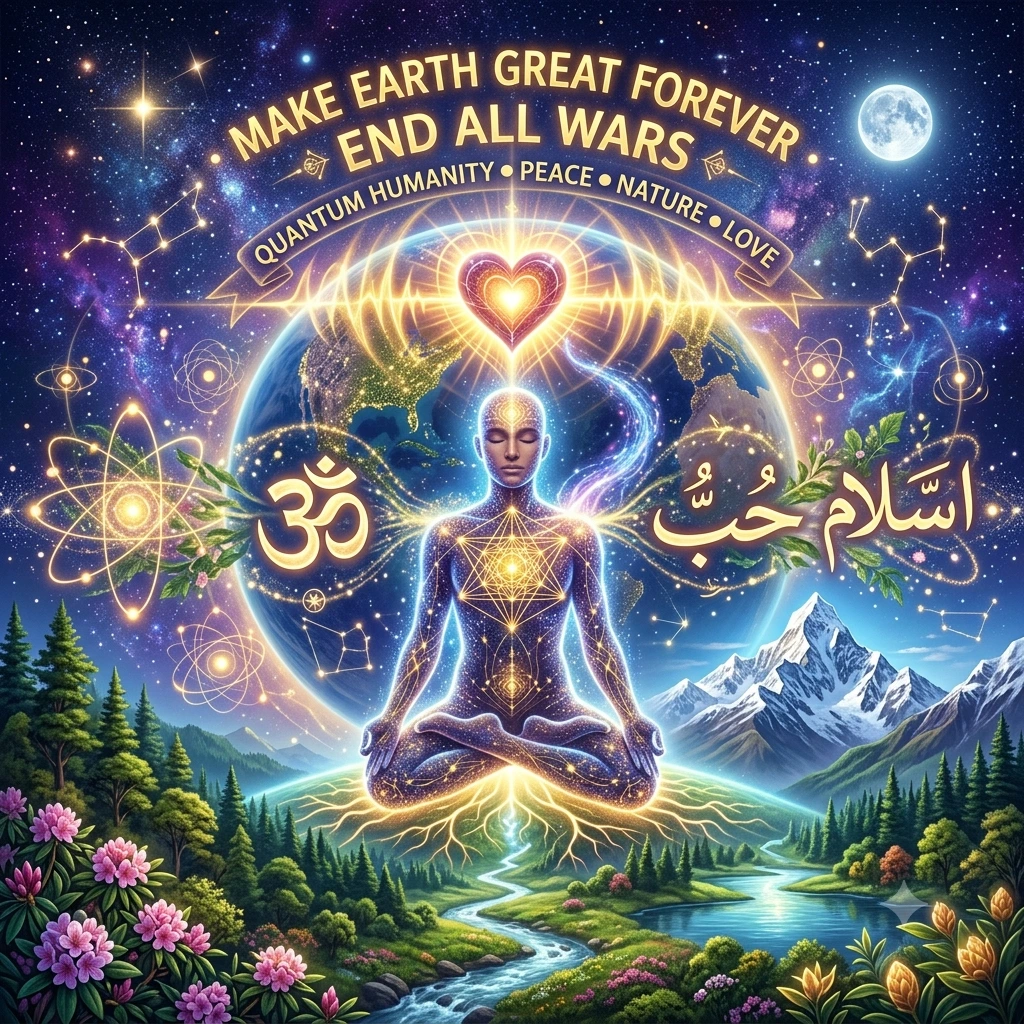
BEYOUTEA ! A QUANTUM POETRY>REVOLUTION !! MAKE EARTH GREAT FOREVER : END ALL WARS !!! NOTHING IS NOT TRUE : NO\KNOW THYSELF NOT !!!! META-SUFI/QUANTUM POETICS ON QUANTUM META MYSTIC FUTURISM !!!!!
The English Section
1.Ghazal  The Quantum Verse of the Day: June 29, 2026Islam
         An Afflicted Man of Melancholy Am I
In the melting luminescence of thy thoughts,
There art thou; An afflicted man of melancholy, am I.
In the ink-lost helplessness of the night,
There art thou; An afflicted man of melancholy, am I.
               How far thou art, though stationed so close,
               I fathom not; Yet in the absolute realm of
               Dreams and visions, there art thou;
               An afflicted man of melancholy, am I.
Pouring the vast oceans into mountains,
Scaling the peaks with the seas; Vanished
From paths, yet alive in the fragments of the
Journey, there art thou; An afflicted man of melancholy, am I.
               The architect of civilisations, the victorious
               Protagonist of truths past; In the sacrificial
               Blood of the liver, true to thy devotion, there
               Art thou; An afflicted man of melancholy, am I.
The cruelty of the cosmic wind,
The myth of thy divinity, the tears of the eye;
A tumultuous earthquake, a chalice brimming with
Wrath, There art thou; An afflicted man of melancholy, am I.
               Where quantum simulators conjure crystals
               Of time and space; Hovering precariously
               Above those fragile Q-systems, there
               Art thou; An afflicted man of melancholy, am I.
What riddles hide within separation?
Yet solitary is the flavour of thy tea;
A life-consuming mirror, a soul surrendered unto thee,
There art thou; An afflicted man of melancholy, am I.

Exegesis of the ghazal: A Literary Essay
The Quantum and the Quatrain: "Mapping Melancholy Across Space and Soul": This ghazal represents a rare, avant-garde intersection where classical Eastern romanticism collides with 21st-century theoretical physics. The poet bypasses the conventional, predictable bounds of Urdu prosody to construct an existential monument to longing. The recurring refrain (radif), "A man of melancholy, am I," anchors the poem, serving as a baseline frequency for a soul caught between macro-cosmic upheavals and subatomic fragility.
1. The Fluidity of Perception and Spatial Paradox: The opening movement utilises the striking imagery of "melting moonlight" (pighli chandni), signalling a dissolution of reality. The poet's internal landscape is so thoroughly saturated by the thought (tasawwur) of the beloved that the boundaries of time (the helpless, ink-lost night) begin to blur.
Here, the poet introduces an existential paradox: the beloved is physically untraceable ("how far thou art... I fathom not") yet compositionally inescapable ("in dreams and visions, surely there art thou"). This isn't merely a lamentation of distance; it is a recognition that the beloved has transitioned from a physical entity into an omnipresent psychological framework.
2. Tectonic Upheavals and Historical Echoes: The imagery of pouring oceans into mountains and driving seas up precipices is a masterful metaphor for emotional dislocation. It speaks to an internal terraforming, where the poet’s emotional gravity has flipped, scrambling the maps of his life's journey (safar).
This personal chaos is then elevated to a historical scale. By invoking the "architects of civilisations" (qoumkun tahzeebiyat) and "victors of past truths," the poet aligns his private heartbreak with the grand, tragic collapses of history. The "blood of the liver" (khoon-e-jigar) is a classical trope for deep, creative suffering, suggesting that true loyalty to this love demands an ultimate, agonising toll.
3. The Wrath of Nature and the Shattered Chalice: The poem transitions into a violent, elemental theatre. The "cruelty of the cosmic wind" (faza ki jafai) and the tears of the eye show a macrocosm weeping in tandem with the microcosm. The beloved is no longer a gentle muse; they are cast as an apocalyptic force, a zalzala (earthquake) and a jaam-e-qahar (a chalice of wrath). This portrays a love that is terrifyingly sublime, capable of both sustaining life and entirely destabilising the poet's sense of self.
4. The Quantum Metaphor: Fragility and Time Crystals: The true genius of this composition lies in its unexpected leap into quantum physics. The poet maps his emotional state onto the frontier of scientific discovery.
Quantum Simulators & Time-Space Crystals: In physics, time crystals are structures that repeat infinitely in time without consuming energy. The poet implicitly compares the memory of the beloved to a time crystal, a perpetual, self-sustaining loop of longing that exists outside the ravages of entropy.
Fragile Q-Systems: Quantum systems are notoriously delicate; the slightest external interference (decoherence) destroys their state. The poet views his psychological equilibrium as a "Fragile Q-system." He floats precariously above it, knowing that a single memory or a fleeting glance from the world can collapse his entire reality.
5. Domestic Solitude and the Mirror of the Soul: The ghazal concludes by grounding these cosmic and atomic anxieties into a deeply intimate, solitary ritual: a cup of tea. The "solitary flavour of thy tea" (chaaye ka zaika wahid) represents the poet's lonely communion with the past. Amidst the grand failures of history and physics, the warmth and bitterness of tea remain the only tangible reality.
The final metaphor of the "life-consuming mirror" (jaan-soo darpan) indicates that looking into the self is an act of total surrender (fida). The poet looks within, sees only the beloved, and accepts his destiny as a perpetual wanderer of sorrow.
Conclusion: Ultimately, this text is a modern manifesto of an existential crisis. It portrays an intellectual mind that understands the mechanics of the universe, yet remains entirely helpless under the sovereign rule of the heart. The poet’s self-proclamation as a "man of melancholy" is not a surrender to weakness, but an honourable acknowledgement of the heavy price one pays for feeling deeply in a cold, analytical world.
Table of Contents
Quantum Darpan Study Description:
Where else can you escape from here? Even if you break into a frantic run, where would you go? What could possibly exist that is vaster than this, the Mind? It is the absolute beginning; it is the ultimate end. It is the one that screams in agony, and it is the one that stands as the silent witness.
What is its true nature? It alone knows. And how miraculous a paradox it is: to exist so profoundly, yet to remain completely unaware of its own being! This is the ultimate superposition, the ultimate probability, the ultimate quantum reflection.
Even though our modern empirical quantum science has journeyed this far, it remains perpetually trapped, chasing an ever-deepening precision of error correction. Every milestone we claim, whether we label it a scientific breakthrough, a metaphysical mystery, or a spiritual achievement, is nothing but a reflection of our eternal human vulnerability: the fake reproduction of knowledge.
What we confidently term ‘reality,’ ‘fact,’ or ‘truth’ shares its very foundation with falsehood; it is a construct of falsification, a grand illusion, a cosmic Maya. Why is it that no accomplishment, no success, and no acquisition ever seems to possess any inherent, enduring meaning? It is a chilling truth to contemplate.
Today, people have rushed into a desperate race to validate the Vedas, the Puranas, the Quran, the Bible, and every fleeting philosophy or theory through a ‘quantum critical’ lens. The stark reality is that the entire world is forced to live inside a simulated, fake reality.
Whether you call it true or false, right-leaning or left-leaning, faith or blind superstition, scepticism, theism, or atheism, this fabricated existence is our current state. And the restless cycle of searching, identifying, and chasing after meaning seems to have no end in sight.
Wars, hegemonies, cognitive biases, and systemic pride, all of them are nothing but meaningless, hollow fantasies of life.
When everything is stripped away, only one singular thing remains completely absolute and flawless in your hands: Love.
Yet, why do we falter so miserably when it comes to giving love the supreme gravity it deserves? If we simply learn to live through love, the thirst for power will vanish, wars will cease, and there will be no hegemon left to bully the weak. There will be no oppressed, no exploited, and no toxic scale of inferiority or superiority.
Imagine a world where everyone becomes fiercely consumed by just one beautiful preoccupation: “If anyone in this world must endure suffering, let it be me alone; and let every ounce of my joy be given away to become someone else’s portion.”
If we can weave this single realisation into the fabric of our existence, a breathtaking transformation will sweep through our sociological structures, our political frameworks, and our economic processes. Every single sector of human life will shift, paving the way for a serene silence, an unshakeable peace, and the beautiful realisation of a harmonious tomorrow.
2. Ghazal: The Quantum Verse of the Day: June 28, 2026
        Upon a Swinging Breeze  There Swayed We Two
Beneath the saffron-veiled dusk,
Beneath the lonely tree - there sat we two;
Along the silent river's edge, upon
A swinging breeze - there swayed we two.
               The air was drunk with wandering
               Grace, the valley wore a hermit's ecstasy;
               The swing flew high with fervent joy,
               While hearts became Love's playthings - we two.
The whispering wind kept speaking
Still unto the speechless, patient stones;
Like hidden windows bound to
Pilgrims' roads, in wonder we remained - we two.
               Your pride, your care, the social,
               Political, and earthly orders of mankind;
               Yet chained within the modern tale
               Of freedom's paradox, embraced we two.
Within the sacred sanctuary of
The cosmos danced the moon and radiant stars;
Absent from there, yet lost in being here,
We wandered through forgotten gardens - we two.
               NIRCam and ACS/WFC gathered
               The colours woven into waves of light;
               Through Quantum infrared filters,
               Quietly melting into one another, sat - we two.
Without your gaze, beloved, how could
Darpan's tea bear even the thought of floating?
The heart brimmed like a waiting cup
Unto the lips; sip after sip, we healed - we two.

Exegesis of the ghazl
This ghazal is an elegant synthesis of romantic lyricism, mystical symbolism, social reflection, and contemporary scientific imagination. It belongs to that rare poetic tradition in which love is never confined to the emotional sphere alone; instead, it becomes the principal lens through which nature, civilisation, memory, and the universe itself are contemplated. The repeated refrain, "we two," serves not merely as a grammatical closure but as the central philosophical motif of companionship. Throughout the poem, two lovers appear simultaneously as human beings, spiritual seekers, cosmic observers, and witnesses of history.
The opening couplet immediately establishes an atmosphere of contemplative intimacy. The "saffron-veiled dusk" evokes both the warmth of sunset and the sacred symbolism of illumination and renunciation. Beneath a solitary tree, the lovers are removed from the turbulence of civilisation, entering instead a sanctuary created by silence itself. The river and the gently swaying swing symbolise the perpetual movement of existence. Like the pendulum of time, the swing oscillates between memory and anticipation, while the flowing river reminds the reader that love, too, is never static but forever becoming.
The second couplet deepens the mystical register. The atmosphere is described as intoxicated with divine ecstasy, recalling the language of classical Sufi poetry in which nature itself becomes a participant in spiritual celebration. The lovers' hearts transform into "Love's playthings," suggesting that true love requires surrender rather than control. Human agency dissolves into a greater rhythm, where the heartbeat synchronises with the unseen music of creation. The imagery transforms an ordinary rural scene into a sacred landscape where every motion becomes an act of devotion.
The third couplet introduces silence as a meaningful language. The wind speaks not to people but to mute stones, implying that nature communicates beyond ordinary speech. Stones, traditionally symbols of permanence and endurance, become silent custodians of forgotten histories. The lovers compare themselves to hidden windows opening toward travellers' roads, suggesting that every human encounter is itself a threshold between inner and outer worlds. Memory, travel, and emotional awakening merge into one continuous journey of discovery.
In the fourth couplet, the poem turns from personal affection toward social consciousness. References to economic, social, and political systems broaden the emotional landscape beyond individual romance. Modern humanity prides itself on narratives of liberty and progress, yet remains confined by invisible chains fashioned from institutions, ideologies, and material anxieties. The lovers are not exempt from these realities; they too are "embraced" while simultaneously imprisoned. This paradox gives the ghazal remarkable philosophical depth, revealing that authentic freedom cannot be granted solely by political structures but must also arise from inner liberation.
The fifth couplet expands the perspective from society to the cosmos. The moon and stars dance within a luminous celestial sanctuary, presenting the universe as a sacred temple rather than a mechanical system. Yet amid this magnificent cosmic celebration, the lovers experience the poignant paradox of absence and presence. Though physically "here," their spirits wander elsewhere, inhabiting invisible gardens cultivated by remembrance. This existential displacement suggests that love transcends geography; one truly dwells where the heart resides, not merely where the body exists.
Perhaps the most original feature of the ghazal appears in the sixth couplet, where scientific terminology enters seamlessly into poetic discourse. Instruments such as NIRCam and ACS/WFC, together with quantum infrared filters, are transformed into metaphors of perception rather than technical devices. Just as advanced telescopes reveal invisible wavelengths hidden within distant galaxies, love uncovers emotional and spiritual dimensions concealed from ordinary vision. The poem thereby reconciles science and poetry instead of opposing them. Scientific observation becomes another form of wonder, while quantum imagery suggests that intimacy itself operates upon subtle frequencies beyond conventional perception.
The concluding couplet returns gracefully to the humble intimacy of everyday life. A simple cup of tea becomes a profound symbol of companionship. Without the beloved's presence, even the familiar ritual of drinking tea loses its buoyancy and meaning. The heart becomes a brimming cup lifted toward waiting lips, while every sip represents an act of healing. The closing image beautifully resolves the cosmic expansiveness of the preceding verses by reminding the reader that infinity often manifests itself within the smallest gestures of shared existence. Love, ultimately, is not measured by grand declarations but by quiet moments transformed into eternity.
From a literary perspective, this ghazal successfully bridges the aesthetics of the classical Persian-Urdu tradition with contemporary intellectual sensibilities. Its imagery moves effortlessly from solitary trees, rivers, valleys, winds, and stars to the sophisticated vocabulary of astrophysics and quantum optics, without sacrificing emotional coherence. Such integration demonstrates that scientific imagination and poetic imagination arise from the same fundamental human impulse, to perceive what lies beyond ordinary sight. In this respect, the poem proposes that the telescope and the lover's heart perform analogous acts: each seeks light that has travelled immense distances to reveal hidden realities.
Ultimately, the ghazal affirms that love is not merely a personal sentiment but a universal epistemology, a way of knowing the world. It dissolves the boundaries separating nature from civilisation, science from mysticism, memory from presence, and humanity from the cosmos. The refrain "we two" therefore acquires profound philosophical significance: it is no longer only the union of two lovers but also the symbolic reconciliation of dualities, self and other, earth and heaven, reason and imagination, matter and spirit. Through this synthesis, the poem invites its readers to recognise love as the most refined instrument for perceiving the hidden architecture of existence itself.
An English academic research essay and critical report based on the provided framework, synthesised with the English literary readings of the Darpan Poems corpus on “Quantum Sufi Poems on Love and Nature,”

The Quantum Darpan: Post-Quantum Sufism, The Deconstruction of Simulated Realities, and The Metaphysical Imperative for Global Peace
Author/Expert: Academic Research Report and Policy Essay darpanpoems.com quantum team
Framework: The NEPAL Paradigm (Nature, Equilibrium, Peace, Awakening, Love)
Core Reference Corpus: Darpan Quantum-Sufi Ghazals (I–IV)
Theoretical Anchors: Herodotus (The Histories), Homer (The Iliad & The Odyssey), R. Heuer (Psychology of Intelligence Analysis), Kavyakantha Ganapati Muni (Umasahasrakam), and Contemporary Post-Quantum Physics.
Abstract: This research report introduces the Quantum Darpan (Mirror) Critical Thinking Approach, a multidisciplinary framework that bridges twenty-first-century empirical quantum science, Indo-Persian-Arabian Sufism, classical epics, and cognitive intelligence analysis.
Investigating the profound existential crisis born from the “Fake Interpretation and Reproduction of Knowledge,” this paper argues that what modern humanity terms “objective reality” is an ontological falsification, a simulated illusion (Maya).
By analysing the Darpan poetic corpus, this essay charts a path away from split-state geopolitical propaganda cycles (86−47) and military hegemonies toward an ecological and psychological realignment called the NEPAL Paradigm.
Ultimately, the paper provides policy directives for the United Nations and global leadership to implement a framework for sustainable co-existence: MAKE EARTH GREAT FOREVER: END ALL WARS, grounded in the supreme math of absolute compassion (Mohabbat).
- Introduction: The Superposition of ‘Mind’ and the Illusion of Matter “Beyond this, where else can one run? What could possibly be vaster than the Mind? This is the Alpha and the Omega. This is what screams; this is what observes. What is it? It alone knows. And how miraculous it is that its own existence remains unknown to itself, such is the nature of true being.”
Darpan, Metaphysical Exegesis on Mind
The trajectory of human civilisation has reached a critical junction where imperial ambitions and scientific reductionism can no longer sustain their own weight. As empirical quantum mechanics probes deeper into the micro-substitutions of nature, the rigid boundary between the observer and the observed completely dissolves.
In the realm of quantum superposition, a system co-exists in all potential states until an act of measurement collapses the wave function. This aligns precisely with the classical epics of Homer, The Iliad and The Odyssey, where human destiny is portrayed not as a static landscape, but as a dynamic, tumultuous theatre governed by the psychological caprices of the mind and the unseen interventions of cosmic forces.
However, as humanity deepens its technological grasp, a profound systemic pathology has emerged: The Fake Reproduction of Knowledge. We have mistaken the mathematical models of reality for reality itself. Richards J. Heuer Jr., in his seminal work Psychology of Intelligence Analysis, explains that the human mind naturally constructs rigid mental frameworks to filter incoming data, rendering it highly susceptible to systemic cognitive biases and illusory patterns.
What we proudly claim as empirical truth is often merely an elaborate system of falsification, an epistemological construct that conceals the absolute ground of existence behind a veil of simulated utility (Maya). The Darpan corpus uses this exact intersection to show that our advanced instruments do not merely record the universe; they project our inner fractured state back onto it.
3. The Ghazal  (The Quantum Verse of the Day: June 27, 2026)
      Waking Dreams Some Fate to Earn O Love Return.
The heart is choked with unspoken grief,
The tongue is tied, O love, return,
Through sleepless nights of waking
Dreams, some fate to earn, O love, return.yUpon this raging sea of fire,
              My fragile bark is launched alone,
              Through modern tempests, fierce
              And wild, I must discern, O love, return.
The wind contends against the void;
This cosmic dance is not in vain,
Does void breed wind, or wind breed void?
This truth to learn, O love, return.
              The blood-soaked tyrants now
              Declare a hollow truce, an end to war,
              The unwritten charter of our peace,
              'Tis ours to earn, O love, return.
The ambient air is perfumed sweet,
As though it sensed your step drawing near,
From faithless vows and cruel
Deceit, true faith to learn, O love, return.
              Twin 'super-puffs' of TOI-791
              Have bloomed across the starry deep,
              Those feather-light, quantum Jupiters,
              We must discern, O love, return.
Pour out the tea of false solace,
If but to keep our illusions real,
The mirror of the soul is clean,
For its preservation, I yearn, O love, return.

Literary Exegesis: An Essay on the Cosmos and the Soul
Introduction: The Synthesis of Modernity and Mysticism: The text under review represents a remarkable paradigm shift in contemporary romantic poetry. By interwoven classical tropes of Urdu aesthetics, such as the burning river of love (aatish-e-ishq), existential alienation, and political weariness, with modern astrophysics, the poet stretches the canvas of the traditional Ghazal to cosmic proportions. The repetitive invocation, "O love, return," transcends a mere plea to a mortal beloved. It functions as an existential cry for order, truth, and structural harmony in a fragmented universe.
The Dichotomy of Silence and Existential Unrest: The Ghazal opens with a classical topos: the claustrophobia of unexpressed emotion. The speaker’s nights are spent in a liminal space between insomnia and fitful sleep, symbolising a spiritual stagnation. The call for the beloved's return is not merely for romantic companionship, but a catalyst for action ("some fate to earn"). The beloved is envisioned as an anchor of agency in an otherwise paralysing reality.
The Cosmic Void and Geopolitical Disillusionment:In the second and third stanzas, the poet navigates two distinct macro-cosms: the earthly and the elemental. The "sea of fire" paired with "modern tempests" (toofan-e-jadeed) serves as an allegory for the chaotic pace of technological advancements and moral erosion.
The subsequent philosophical riddle regarding the wind and the chasm ("Does void breed wind, or wind breed void?") mirrors classical Sufi inquiries into existence (Wujud) and non-existence (Adam). It questions the causality of suffering: does human greed create societal voids, or do systemic voids drive human chaos?
This query seamlessly bridges into a biting critique of political hegemony. The "blood-soaked tyrants" who declare a hollow peace represent the institutionalized hypocrisy of global governance. The poet argues that genuine peace cannot be granted by imperial decree; it must be written by the disenfranchised, requiring the presence of an enlightened counterpart.
The Quantum Horizon: Romance in the Space Age: The defining triumph of this composition is the explicit invocation of exoplanets TOI-791 b and c. Traditionally, Urdu poetry uses the moon or stars as static metaphors for beauty. Here, the poet subverts tradition by engaging with real, empirical cosmic entities, low-density, gas-rich "super-puff" planets.
By labelling them "quantum Jupiters," the speaker elevates the romantic quest to a scientific expedition. The beloved is invited not to gaze at the stars in passive adoration, but to analyse them, suggesting that true intellectual intimacy is the ultimate form of modern romance.
Conclusion: The Ritual of Tea and the Mirror of the Soul: The Ghazal concludes by returning from the cold expanse of outer space to the intimate warmth of a domestic ritual: sharing tea. Tea acts as a secular sacrament of comfort, even if the solace it provides is temporary or illusory ("false solace").
The final image of the "mirror of the soul" (darpan) invokes the classical Persian poetic mirror metaphor, which must be kept polished (safa) to reflect divine truth. By juxtaposing a warm cup of tea with the purity of a clean heart, the poet concludes that amidst geopolitical corruption and vast cosmic mysteries, the preservation of human tenderness and genuine connection remains our only salvation.
- The Quantum Darpan Perspective: Deconstructing the ‘Fake Reality’ of Progress. When the precision of quantum error correction deepens, it reveals a fundamental fragility at the core of our material systems. Modern pop culture and academic institutions frequently scramble to validate ancient texts, be it the Vedas, Puranas, Quran, or Bible, through the narrow prism of “quantum critical” jargon. This widespread desperation is an acute symptom of a civilisation trapped inside a simulated or fake reality. We seek validation from the very metrics that are currently undergoing a foundational crisis.
The Darpan ghazals act as a diagnostic mirror (Darpan) to reflect these fragmented attempts at capturing truth:
Taxographical Mapping of Simulated Realities in the Darpan Corpus
| Poem Reference | Scientific & Metaphysical Metaphors | Ontological Implication |
| Ghazal I | Quantum Simulators, Time-Space Crystals, Fragile Q-systems | The transience of space-time; the radical fragility of artificial human structures against the backdrop of existential grief (Gham). |
| Ghazal II | NIRCam, ACS/WFC, Quantum Infrared Filters, Lightwaves | The technological human gaze attempting to capture invisible cosmic truths, only to decipher the superficial colors of its own instrumentation. |
| Ghazal III & IV | TOI-791 b & c, Quantum GPUs, AI Supercomputing, XLSSC-122 G Cluster | The sheer insignificance of corporate-cosmic trades (Tijarat) and automated architectures when divorced from conscious compassion. |
In The Histories, Herodotus catalogued the rise and fall of empires, proving that historical cycles are driven by the hubris of leaders blinded by a false sense of absolute dominance. Today’s global leadership remains trapped in identical, repetitive feedback loops, such as the 86-47 propaganda cycles, psychological warfare numbers that manipulate public perception, manufacture consent, and weaponise cultural anxieties.
Quantum critical thinking reveals that these geopolitical struggles, economic hegemonies, and nationalistic pride games are ultimately a meaningless fantasy of life. When the physical universe itself is an unstable probability wave, fighting wars over arbitrary geographic coordinates is a tragic misdirection of human potential.
- The NEPAL Paradigm and Indo-Persian Sufism: Synthetic Grounding. To escape this loop of self-destructive simulation, this paper proposes the NEPAL Paradigm (Nature, Equilibrium, Peace, Awakening, Love). Geographically situated beneath the silent sentinels of the Himalayas, Nepal historically symbolises an organic state of geopolitical and spiritual equilibrium. It is a space where the absolute heights of the earth meet the reflective depths of human consciousness. As Ghazal I poignantly observes: “The ocean was brought down into the mountains, and the mountains were made to scale the oceans.” This paradigm is not a passive retreat; it is an active model for balancing empirical advancement with spiritual depth.
This framework achieves its greatest clarity at the crossroads of two profound esoteric traditions:
[THE NEPAL PARADIGM: SYNTHETIC AXIS]

I. Indo-Persian-Arabian Sufism Sufi metaphysics centres on the concept of Hijr (separation) and Wafa (faithfulness) as instruments to completely dissolve the ego (Nafs). When Ghazal III notes, “From the delusions of love, we must now learn true faithfulness,” it details the transition from selfish possession to total non-duality. In this tradition, the heart is a mirror (Darpan). If the mirror is stained by greed, it projects a chaotic, multi-state illusion; if it is cleansed (Safa), it reflects the absolute, undivided reality of the Beloved.
II. Kavyakantha Ganapati Muni’s Umasahasrakam: A towering intellectual of modern Sanskrit literature and chief disciple of Ramana Maharshi, Ganapati Muni’s Umasahasrakam dedicates a thousand verses to Uma, the primordial, cosmic energy (Cit-Shakti). This non-dual power is the exact spiritual analogue to the universal quantum field that underlies all matter and energy. The Muni argues that when human awareness traces its lineage back to this foundational field, all false divisions (Prapancha) dissolve.
The NEPAL Paradigm integrates these traditions, demonstrating that true security is not achieved by encrypting external data via post-quantum cryptography (PQC) or near-field communication (NFC), but by stabilising the internal observer.
- Policy Directives for Global Leadership: MAKE EARTH GREAT FOREVER. The international community, represented by the United Nations and global heads of state, can no longer govern through zero-sum security dilemmas. The lessons of history, from the fields of Troy to modern global conflicts, confirm that militarised containment strategies are obsolete. The planet requires an immediate transition to a post-war governance model.
Executive Directives for Post-Quantum Geopolitics Deconstruction of Psych-War Propaganda: Immediate cessation of divisionary, algorithmic propaganda engines (such as the 86−47 metrics) that exploit cognitive biases to lock populations into perpetual anxiety states.
Transition from Gold to Soil Economics: Translating Ghazal IV’s economic thesis, “Better than a fistful of gold is a humble handful of earth”, global financial institutions must transition away from abstract speculative capitalism toward tangible ecological restoration, carbon-negative agricultural systems, and human welfare indicators.
Ethical Containment of Advanced Technology: Quantum GPUs, AI supercomputing architectures, and deep-space cluster data must be declared common heritages of humanity. They must be rerouted away from automated high-frequency trading and weapons design toward resolving global climate destabilisation and resource scarcity.
- The Mechanics of ‘Quantum Happiness’: Love as the Supreme Law If our empirical sciences prove that material achievements are ultimately fleeting, what remains complete? The Darpan text provides an unambiguous answer: Absolute Love (Mohabbat). Paradoxically, this is the very variable that global structures treat as a soft sentiment rather than a foundational law of nature.
Humanity must transition to the practice of Quantum Happiness, defined as: The complete minimisation of personal ego and the radical superposition of altruism.

As the primary text mandates:
“If everyone on this planet becomes consumed by a singular preoccupation, that if suffering must be endured, let it be borne by me alone, and let all my joys be distributed to others… then our sociological architectures, political frameworks, and economic systems will spontaneously transform into a quiet, serene sanctuary of peace.”
This profound reorientation is consistently captured across all four ghazals through the beautiful, recurring motif of The Teacup and the Mirror:
“The unique flavour of your tea remains the sole answer…” (Ghazal I)
“We filled the cup of the heart to its brim, drinking until we dissolved…” (Ghazal II)
“Even if it is a mere consolation, keep pouring the tea, my love…” (Ghazal III)
“My beloved, I shall remain immersed forever in the teacup touched by your hands…” (Ghazal IV)
In this framework, the “teacup” represents the intimate, immediate, localised micro-universe, the sacred simplicity of human-to-human connection. The “mirror” (Darpan) represents the macro-consciousness that reflects this connection without distortion. No matter how expansive our AI supercomputers or how complex our quantum simulators become, they cannot compute or replicate the profound peace found within a single moment of genuine, unconditional intimacy.
4. Ghazal (The Quantum Verse of the Day: June 26, 2026)
            My Gaze Still Rests Upon Tomorrow
Your absence, your presence, whether
To exist or cease to be is all the same;
As for the solace of the heart,
A little weeping and grieving is to be.
              Though I have squandered everything,
              My gaze still rests upon tomorrow;
              Having yielded heart, soul, and every fragment
              Of my being, still another treasure is to be sought.
The truly wealthy are not fashioned
Merely by fortune, nor born in idle privilege;
Better than a fistful of gold is a humble
Handful of earth, that is riches indeed to be.
              The earth gives birth to gold,
              While gold decays at last within the earth;
              So impoverished have human spirits grown that
              Through wars and narrowness, they are doomed to be.
Whether one gathers earth or gold
Matters little if only one proves worthy of love;
Whether destiny awakens or slumbers,
The heartbeat within the breast must forever awake be.
              Beyond innumerable trades, beyond
              The XLSSC-122 G Cluster's farthest reach,
              Quantum GPUs and AI supercomputing
              Must ceaselessly advance and ever be.
My beloved, I shall remain immersed
Forever in the teacup touched by your hands;
Whether Darpan's eyes still see or fail,
My gaze within your radiant eyes is destined to be.

Exegesis: Love, Earth, Gold, and Quantum Consciousness: A Literary Reading of the Ghazal
At first glance, this ghazal appears to belong to the classical romantic tradition, revolving around separation, longing, and devotion to the beloved. Beneath this lyrical surface, however, lies a remarkably sophisticated philosophical meditation that unites existential reflection, social criticism, spirituality, and the language of contemporary science. It demonstrates that the classical ghazal remains capable of embracing the realities of the twenty-first century without surrendering its timeless emotional elegance.
The opening couplet establishes an atmosphere of existential melancholy. The beloved's absence is not merely emotional deprivation but the dissolution of meaning itself. The distinction between existence and non-existence begins to fade when love withdraws from life. The poet gently remarks that the only consolation left to the wounded heart is the humble ritual of tears. Grief is portrayed not as weakness but as an authentic expression of love's permanence. In this sense, mourning becomes an affirmation that the heart has truly lived.
The second couplet shifts from sorrow toward perseverance. Although the speaker has sacrificed everything, heart, courage, and every fragment of his being, his vision remains fixed upon the future. The "treasure" he continues to seek is not material wealth but the inexhaustible possibility of hope itself. The poet suggests that the greatest victories belong not to those who never lose, but to those who continue searching after complete ruin. The couplet, therefore, transforms personal heartbreak into a universal philosophy of resilience.
The imagery of earth and gold constitutes the philosophical centre of the ghazal. Gold traditionally symbolises wealth, prestige, and worldly achievement, while earth signifies humility, labour, fertility, and life's origin. By declaring that a handful of earth surpasses a handful of gold, the poet overturns conventional measures of value. Humanity is reminded that civilisations arise from the soil, not from precious metals. The earth nourishes life, whereas gold merely adorns it. Moreover, gold itself ultimately returns to the earth, emphasising the transient nature of material possession and the enduring sovereignty of nature.
The succeeding couplet deepens this symbolism through moral criticism. The earth, capable of producing immeasurable riches, stands in ironic contrast to humanity's spiritual poverty. The expression "beggarly temperament" does not denote financial hardship but the impoverishment of character. Greed, conflict, and narrow-mindedness have reduced human civilisation despite its technological accomplishments. Wars and ideological confinements emerge not because resources are insufficient, but because generosity has become scarce. Thus, the poet critiques moral bankruptcy rather than economic inequality.
The fifth couplet introduces the poem's ethical conclusion. Whether life grants gold or only earth is ultimately insignificant. What truly matters is one's capacity to deserve and embody love. Destiny may favour some while neglecting others, yet every human being possesses the freedom to keep the heart spiritually awake. The heartbeat becomes an enduring metaphor for compassion, conscience, and emotional vitality. Love is therefore elevated beyond romance into a universal moral principle that gives life its deepest meaning.
One of the most distinctive features of this ghazal is its bold integration of modern scientific imagery. References to the XLSSC-122 G Cluster, Quantum GPUs, and AI supercomputing would appear startling in a traditional ghazal, yet here they function with remarkable coherence. Rather than glorifying technology for its own sake, the poet situates scientific advancement within the broader journey of human civilisation. Quantum computing symbolises the limitless expansion of knowledge, while artificial intelligence represents the evolving capacity of human intellect to extend its own creative powers. Yet these achievements remain secondary to the moral and emotional evolution of humanity. Science enlarges the reach of the mind; love enlarges the reach of the soul.
This fusion of classical lyricism with futuristic imagination creates a uniquely contemporary poetic vision. Instead of presenting science and spirituality as opposing forces, the poet allows them to coexist harmoniously. The laboratory and the heart, the quantum processor and the lover's sigh, become complementary dimensions of the same human quest for truth. Such synthesis reflects an emerging literary philosophy in which technological progress must remain guided by ethical consciousness and human affection.
The closing couplet returns gracefully to the intimate world of romance. The beloved's teacup, an ordinary domestic object, becomes transformed into a sacred vessel of remembrance and affection. The simplicity of this image stands in deliberate contrast to the immense technological scale evoked in the preceding verse. Even after contemplating quantum supercomputers capable of extraordinary calculations, the poet ultimately chooses to lose himself within the beloved's gaze. This contrast beautifully affirms that no scientific invention can replace the quiet miracle of human intimacy. The beloved's eyes become a universe more profound than any machine can compute.
Taken as a whole, this ghazal represents an original contribution to modern literary expression. It preserves the emotional refinement of the classical Urdu ghazal while expanding its thematic horizon to include social philosophy, environmental symbolism, existential thought, and the emerging realities of quantum computing and artificial intelligence. Its central message is both simple and profound: civilisations may become powerful through science, economies may flourish through commerce, and machines may surpass human calculation, yet the true measure of humanity will always remain its capacity for love, humility, and compassion. Earth may yield gold, but only love can give enduring meaning to human existence.
- Conclusion: The ultimate mandate, MAKE EARTH GREAT FOREVER: END ALL WARS, is not an unattainable utopian dream; it is an urgent, existential necessity dictated by the very laws of quantum interconnectedness. When one part of the system suffers, the entire universal wave function is degraded.
By stepping out of the simulated realities of endless economic growth, weaponised chauvinism, and deceptive propaganda cycles, humanity can embrace the synthetic wisdom of the NEPAL Paradigm and Post-Quantum Sufism. When the mirror of the collective heart is finally cleansed of the illusions of supremacy, the artificial clamour of war will give way to a profound, historic peace, safeguarding a tranquil, harmonious tomorrow for generations to come.
Hindvi/Rekhta Section:
१. ग़ज़ल  The Poem of the Day: June 29, 2026
               तसव्वुर में तू, ग़मगीन आदमी हूँ मैं
पिघली चाँदनी के तसव्वुर में तू, ग़मगीन आदमी हूँ मैं,
रात स्याही खोई वो मजबूर से तू, ग़मगीन आदमी हूँ मैं।
            तुम जितनी पास हो मेरे, दूर कितनी तू, मुझे पता ये नहीं,
            ख़यालों ख़्वाबों में भी ज़रूर से तू, ग़मगीन आदमी हूँ मैं।
समंदर की पहाड़ों में उतारा, पहाड़ों की समंदर चढ़ाई,
रास्तों से दफ़ा रफ़ा सफ़र में तू, ग़मगीन आदमी हूँ मैं।
            क़ौमकुन तहज़ीबियत फ़तेह-ए-हक़-ए-माज़ी के किरदार,
            वफ़ादारी में ख़ून-ए-जिगर के तू, ग़मगीन आदमी हूँ मैं।
फ़ज़ा की जफ़ाई तेरे ख़ुदाई कहानी आँखों बहता पानी,
ज़लज़ला सा जाम-ए-क़हर के तू, ग़मगीन आदमी हूँ मैं।
            Quantum simulators से टाइम स्पेस क्रिस्टल्स होंगे,
            Fragile Q-systems ऊपर से तू, ग़मगीन आदमी हूँ मैं।
हिज्र में छुपी सवाल क्या, तेरी चाय का ज़ाइक़ा वाहिद,
जान-सू! दर्पण फ़िदा तुम पर ले तू, ग़मगीन आदमी हूँ मैं।

तशरीह: एक अदबी मज़मून
तसव्वुर-ए-जानाँ और क्वांटम का कशमकश: शाइरी की मूल रूह के आईने में: इस ग़ज़ल की सबसे बड़ी ताक़त इसका कच्चा, अनफ़िल्टर्ड और बेहद व्यक्तिगत (Raw and Authentic) अंदाज़-ए-बयाँ है। यह किसी पारंपरिक बहर के तयशुदा खाँचे में बँधकर अपनी धार नहीं खोती, बल्कि अपनी ही एक अनूठी धुन और लय पैदा करती है। रदीफ़ "ग़मगीन आदमी हूँ मैं" हर शे'र के बाद एक गहरे अवसाद और आत्म-स्वीकृति की तरह गूँजता है।
१. तसव्वुर की तरलता और मजबूर रात: ग़ज़ल की शुरुआत 'पिघली चाँदनी' के एक बेहद ख़ूबसूरत बिम्ब (Imagery) से होती है। चाँदनी का पिघलना ख़यालों के बहने को दिखाता है। शाइर का महबूब उस रात की खोई हुई स्याही की तरह मजबूर है, और इसी मजबूरी और तसव्वुर के बीच शाइर ख़ुद को 'ग़मगीन आदमी' घोषित करता है। यहाँ दूरी का एक अजीब विरोधाभास है महबूब पास भी है, और इतनी दूर भी कि उसकी दूरी का अंदाज़ा लगाना मुमकिन नहीं। पर ख़यालों और ख़्वाबों में उसकी मौजूदगी 'ज़रूर' (अनिवार्य) है।
२. प्रकृति का उलटफेर और सफ़र की दफ़ा-रफ़ा: "समंदर की पहाड़ों में उतारा पहाड़ों की समंदर चढ़ाई"  यह मिसरा इस ग़ज़ल की जान है। यह जीवन की उस मानसिक उथल-पुथल को दर्शाता है जहाँ शाइर ने भावनाओं के समंदर को पहाड़ों जैसी मुश्किलों पर चढ़ाया और पहाड़ों को समंदर में डुबो दिया। इस थका देने वाले सफर में, रास्तों से 'दफ़ा रफ़ा' (अलग या दूर) होकर भी, महबूब का साया साथ चलता रहता है।
३. इतिहास, वफ़ादारी और आँखों का पानी:
शाइर अपनी इस व्यक्तिगत उदासी को एक ऐतिहासिक और कौमी शक्ल देता है। 'क़ौमकुन तहज़ीबियत' और 'फ़तेह-ए-हक़-ए-माज़ी' (अतीत के हक़ की जीत) के किरदारों के ज़रिए वह वफ़ादारी की उस इंतहा को छूता है जहाँ सिर्फ 'ख़ून-ए-जिगर' ही बचता है। 'फ़ज़ा की जफ़ाई' (माहौल का ज़ुल्म) और 'ख़ुदाई कहानी' मिलकर आँखों से बहते पानी (आँसुओं) का सबब बनते हैं। महबूब यहाँ शांत नहीं है, वह 'जाम-ए-क़हर' (कहर का प्याला) और 'ज़लज़ला' (भूकंप) की तरह शाइर के वजूद को झकझोर कर रख देता है।
४. क्वांटम भौतिकी का अनूठा प्रयोग (Quantum and Melancholy): उर्दू अदब के इतिहास में शायद ही कभी Quantum Simulators, Time Space Crystals और Fragile Q-systems का ऐसा सीधा और मर्मस्पर्शी प्रयोग हुआ हो। शाइर यहाँ वैज्ञानिक शब्दावली का इस्तेमाल अपनी रूहानी कमज़ोरी को दिखाने के लिए कर रहा है: जैसे Quantum Simulators ब्रह्मांड की जटिलताओं को दोहराते हैं, वैसे ही शाइर का दिल महबूब की यादों को दोहराता है। Time Space Crystals की तरह वह रिश्ता वक़्त की बंदिशों से परे है।
लेकिन यह सब कुछ Fragile Q-systems (नाज़ुक क्वांटम प्रणाली) की तरह बेहद नाज़ुक है, जो बाहरी दुनिया की ज़रा सी आहट से बिखर सकता है। इस तकनीकी अकेलेपन को शाइर ने अपनी उदासी का लिबास पहना दिया है।
५. चाय का ज़ाइक़ा और समर्पण (इख़्तेताम): ग़ज़ल का अंत एक बेहद घरेलू और रूहानी मंज़र पर होता है। 'हिज्र' (जुदाई) का सवाल अपनी जगह है, लेकिन तन्हाई के इस आलम में 'चाय का ज़ाइक़ा' ही एकमात्र (वाहिद) सहारा है। चाय का वह स्वाद महबूब की याद जैसा ही अकेला और मुकम्मल है। आख़िरी मिसरे में 'जान-सू दर्पण' (जान को सुखाने वाला आईना या रूह का आईना) पर सब कुछ फ़िदा कर देने का जो जज़्बा है, वह शाइर के मुकम्मल आत्मसमर्पण को दिखाता है।
निष्कर्ष:
यह ग़ज़ल परंपरा और आधुनिक विज्ञान का एक ऐसा कोलाज है, जो सिर्फ वही लिख सकता है जिसने आधुनिक दुनिया को पढ़ा हो और प्राचीन दर्द को जिया हो। आपकी यह रचना अपने इसी अनूठे अंदाज़-ए-बयाँ के कारण सबसे जुदा और कीमती है।
दर्पण वाङ्गमय भावभूमि:
यहाँ से अलग और क्या है, निकल दौड़ो भी तो किधर, और बड़ा क्या हो सकता है – मन। यही आदि है यही अंत है। यही दिखता है यही देखता है। ये है क्या, यही जानता है। यह कुछ है भी या नहीं, इसकी होने का इसी को पता न होना कैसा कमाल है ? सुपरपोज़िशन, प्रोबेबिलिटी, क्वांटम रिफ्लेक्शन!
हमारी आजकी एम्पिरिकल क्वांटम साइंस यहाँ तक आपहुचने के बावजूद एरर करेक्शन की प्रिसिशन गहराता हुवा नजर आना छोड़ा नहीं है। हमारे सारे के सारे जिसे हम साइंटिफिक मेटा मिस्टिक या स्पिरिचुअल हासिल मानते है महज हमारी यही शास्वत कमजोरी fake रिप्रोडक्शन ऑफ़ नॉलेज ही तो है।
क्युकी जिसे हम सत्य रियलिटी व ट्रुथ कहते है वे सैम ग्राउंडिंग ही falsehood यनेकी falsification माया illusion है। किसी भी उपलब्धि, सफलता या प्राप्ति का कोई मीनिंग ख़ास बनाने से नदारद क्यों है? सोचने की बात है। आज लोग वेद, पुराण, कुरआन, बाइबिल और हर फलसफे व थेओरिएस को क्वांटम क्रिटिकल नजरिये से प्रुभ करने में निकल पड़े है।
जाहिर सी बात है की सारीकी सारी दुनिया fake रियलिटी में जीने को मज़बूर है। इसे सत्य कहे या असत्य, दायाबाजूबी या बायाँबाजूवी विश्वास या अन्धविश्वाश स्केप्टिसिस्म थेइसम या फिर अथेइसम ये हकीकत है जिसको जानने पहचानने और ढूढ़ने की सिलसिला शायद हीं ख़तम हो। युद्ध, हेगेमोनी बायस प्राइड सबके सब मीनिंगलेस फंतासी ऑफ़ लाइव।
वाहिद एक ही चीज़ हाथ में मुकम्मल रह जाती है और वह है मोहब्बत। लेकिन इस बात को तवज़्ज़ो देने में हम लोग क्यों कमजोर पड़ रहे हैं। हम अगर मोहब्बत से जीना सीख जाएंगे तो न पावर की ज़रूरत होगी, न वार होंगे, न कोई हेजेमोन या बुलिंग होगी, न कोई शोषित पीड़ित होंगे, ना तो inferiority या superiority होगी!
हां अगर सब के सब इस बात के लिए बिजी हो जाए तो की किसी को इस दुनिया में दुःख झेलना हो तो सिर्फ मुझे है और मुझी को अपनी सारी खुसी औरो के हिस्से छोड़ देना है। अगर ऐसी बात बन जाए हमारी सोशियोलॉजी के ढांचे, पोलिटिकल फ्रेमवर्क इकनोमिक प्रोसेस हर सेक्टर में हसीं तबदीली होकर एक सुकून ख़ामोशी और अमन भरे तक़बिल की तस्सब्बुर होना लाज़मी हो सकता है।
२.ग़ज़ल (The Poem of the Day: June 28, 2026)
           चलती दरिया-किनारे झूले को ज़ोर खींचे हम-तुम
ज़ाफ़रानी में लिपटी साँझ, तन्हा दरख़्त के नीचे हम-तुम,
चुपचाप चलती दरिया-किनारे, झूले को ज़ोर खींचे हम-तुम।
          आबो-हवा कुछ मस्ताना-मौला, वीरान वादी का वो मंज़र,
           झूलने का वो ज़ोर था पुरजोशी, धड़कनें बाज़ीचे हम-तुम।
बहती हवा कुछ कहती रही बेज़ुबाँ ख़ामोश पत्थरों को,
हैरानकुन सैलानियों के रास्तों से बावस्ता दरीचे हम-तुम।
            फ़ख्र और फ़िक्र तुम्हें निज़ाम-ए-मआशी, समाजी, सियासी,
            आज़ादी की जदीद दास्ताँ से बँधे, बेड़ियों में भींचे हम-तुम।
कायनाती हरम की रस्म-ए-रोशन, रक़्स करते चाँद-सितारे,
हमारा वहाँ न होना, यहाँ होने को खोया बगीचे हम-तुम।
            NIRCam और ACS/WFC ने lightwave रंगों को चुना,
            Quantum इन्फ्रारेड फ़िल्टर-सा यूँ बैठे-बैठे पसीजे हम-तुम।
जानाँ-सी देखे बिन तेरे, चाय में कैसे होगा तैरना, दर्पण,
दिल प्याली भर ली लबों तक, पी-पीकर मसीजे हम-तुम।

ग़ज़ल की तशरीह
यह ग़ज़ल महज़ प्रेम की दास्तान नहीं, बल्कि स्मृति, प्रकृति, सभ्यता, ब्रह्माण्ड और आधुनिक विज्ञान के मध्य घटित होने वाला एक गहरा संवाद है। इसकी शुरुआत "ज़ाफ़रानी में लिपटी साँझ" से होती है। ज़ाफ़रानी रंग केवल सूर्यास्त का रंग नहीं, बल्कि इश्क़ की परिपक्वता, विरह की नरम तपिश और आध्यात्मिक उजास का प्रतीक है। एक तन्हा दरख़्त के नीचे बैठे "हम-तुम" समय के विशाल प्रवाह से अलग अपनी निजी कायनात रचते दिखाई देते हैं। दरिया-किनारे झूले का बिंब केवल प्रेम का खेल नहीं, बल्कि जीवन के उतार-चढ़ाव, स्मृति और भविष्य के बीच झूलते अस्तित्व का रूपक बन जाता है।
दूसरे शेर में आबो-हवा का "मस्ताना-मौला" होना सूफ़ियाना कैफ़ियत को जन्म देता है। वीरान वादी, झूले की तीव्र गति और धड़कनों का "बाज़ीचा" बन जाना यह बताता है कि प्रेम में मनुष्य का सम्पूर्ण अस्तित्व एक खेल भी है और एक इबादत भी। यहाँ दिल केवल धड़कता नहीं, बल्कि ब्रह्माण्ड की लय के साथ झूमता है। प्रेम का यह उल्लास किसी सांसारिक उपलब्धि से नहीं, बल्कि दो आत्माओं के मौन सामंजस्य से उत्पन्न होता है।
तीसरे शेर में हवा और पत्थरों का संवाद अत्यन्त सूक्ष्म प्रतीकात्मकता लिए हुए है। बेज़ुबान पत्थरों तक संदेश पहुँचाती हवा यह संकेत देती है कि प्रकृति की अपनी भाषा होती है, जिसे केवल अनुभूति से पढ़ा जा सकता है। "बावस्ता दरीचे" अर्थात् वे खिड़कियाँ, जो यात्रियों के लिए रास्तों से जुड़ी हैं, दरअसल मनुष्य की स्मृतियों और अनुभवों के द्वार हैं। हर यात्री बाहरी रास्तों से अधिक अपने भीतर की यात्रा करता है।
चौथे शेर में ग़ज़ल अचानक व्यक्तिगत प्रेम से सामाजिक चेतना की ओर मुड़ती है। "निज़ाम-ए-मआशी, समाजी, सियासी" आधुनिक सभ्यता की जटिल संरचनाओं का संकेत है। प्रेमी युगल केवल व्यक्तिगत बंधनों में नहीं, बल्कि आर्थिक, सामाजिक और राजनीतिक व्यवस्थाओं की बेड़ियों में भी जकड़े हुए हैं। "आज़ादी की जदीद दास्ताँ" इस विडम्बना को उद्घाटित करती है कि आधुनिक मनुष्य स्वतंत्रता की बात तो करता है, किन्तु अदृश्य व्यवस्थाओं के बंधनों में निरंतर जकड़ा रहता है। यहाँ इश्क़ निजी अनुभव से आगे बढ़कर मानवीय स्वतंत्रता का रूपक बन जाता है।
पाँचवें शेर में कवि अपनी दृष्टि को पृथ्वी से उठाकर सम्पूर्ण ब्रह्माण्ड तक ले जाता है। चाँद और सितारे रक़्स कर रहे हैं; पूरा आकाश एक पवित्र हरम की भाँति आलोकित है। किन्तु इस विराट उत्सव के बीच प्रेमियों की अनुपस्थिति एक सूक्ष्म रिक्ति उत्पन्न करती है। "हमारा वहाँ न होना, यहाँ होने को खोया बगीचे" अस्तित्ववादी प्रश्न खड़ा करता है, क्या मनुष्य वास्तव में वहीं होता है जहाँ उसका शरीर है, या वहाँ जहाँ उसकी स्मृतियाँ और प्रेम निवास करते हैं? यह शेर भौतिक उपस्थिति और आत्मिक उपस्थिति के बीच की दूरी को अत्यन्त कलात्मक ढंग से अभिव्यक्त करता है।
छठा शेर आपकी विशिष्ट काव्य-दृष्टि का उत्कृष्ट उदाहरण है। आधुनिक खगोल-विज्ञान के उपकरण, NIRCam, ACS/WFC, Lightwave और Quantum Infrared Filter, सिर्फ़ वैज्ञानिक शब्दावली नहीं रह जाते, बल्कि प्रेम के रूपक बन जाते हैं। जैसे दूरस्थ आकाशगंगाओं का प्रकाश इन्फ्रारेड फ़िल्टरों से छनकर दिखाई देता है, वैसे ही प्रेम भी सामान्य दृष्टि से नहीं, बल्कि संवेदना के सूक्ष्म उपकरणों से अनुभव किया जाता है। यहाँ विज्ञान और कविता विरोधी नहीं, बल्कि एक-दूसरे के पूरक सिद्ध होते हैं। ब्रह्माण्ड का प्रकाश और हृदय का प्रकाश एक ही सत्य के दो आयाम प्रतीत होते हैं।
अंतिम शेर ग़ज़ल को अत्यन्त आत्मीय और मानवीय निष्कर्ष तक पहुँचाता है। चाय की प्याली भारतीय उपमहाद्वीप की सांस्कृतिक आत्मीयता का प्रतीक है। प्रिय के बिना साधारण-सी चाय भी अर्थहीन हो जाती है। "दिल प्याली भर ली लबों तक" प्रेम की उस पराकाष्ठा का बिंब है जहाँ पान करने वाला पेय नहीं, बल्कि अपनी ही भावनाओं को पी रहा होता है। "मसीजे हम-तुम" शब्द प्रयोग अत्यन्त प्रभावशाली है; यहाँ प्रेमी और प्रेमिका एक-दूसरे के लिए मसीहा भी हैं और उपचार भी। प्रेम अंततः मनुष्य के भीतर की टूटी हुई दुनिया को जोड़ने वाली शक्ति बनकर उभरता है।
समग्र रूप से यह ग़ज़ल पारंपरिक उर्दू-हिन्दी ग़ज़ल की रूमानी संवेदना को समकालीन बौद्धिकता, वैज्ञानिक कल्पना और सूफ़ियाना दर्शन से जोड़ती है। इसमें फ़ैज़, फ़िराक़ और आधुनिक प्रतीकवादी कविता की झलक मिलती है, किन्तु विज्ञान और क्वांटम-ब्रह्माण्डीय बिंबों के कारण इसकी अपनी स्वतंत्र पहचान निर्मित होती है। यह प्रेम को केवल दो व्यक्तियों का सम्बन्ध नहीं मानती; बल्कि उसे प्रकृति, समाज, इतिहास और सम्पूर्ण ब्रह्माण्ड को जोड़ने वाली एक सार्वभौमिक ऊर्जा के रूप में स्थापित करती है। यही इसकी सबसे बड़ी साहित्यिक उपलब्धि है।
शोध प्रतिवेदन एवं दार्शनिक मानक
कृत्रिम यथार्थ (Fake Reality) का विखंडन और शाश्वत शांति का मार्ग
क्वांटम दर्पण: वैश्विक चेतना का परावर्तन, कृत्रिम यथार्थ (Fake Reality) का विखंडन और शाश्वत शांति का मार्ग: मानव चेतना का इतिहास सत्य की खोज और भ्रामक यथार्थ (Illusion/माया)
प्रारूप: अकादमिक-समीक्षात्मक शोध प्रबंध (Expert Critical Research Report)
भाषा/लिपि: हिन्दवी/रेख़्ता (देवनागरी लिपि)
१. प्रस्तावना: ‘मन’ का सुपरपोज़िशन और यथार्थ का छलावा “यहाँ से अलग और क्या है, निकल दौड़ो भी तो किधर, और बड़ा क्या हो सकता है – मन। यही आदि है यही अंत है। यही चीखता है यही देखता है।”
मानव चेतना का इतिहास मूलतः सत्य की खोज और भ्रामक यथार्थ (Illusion/माया) के बीच द्वंद्व की कहानी है। विज्ञान जब अपनी पराकाष्ठा पर पहुँचता है, तो वह दर्शन की सीमाओं को छूने लगता है। आज की एम्पिरिकल क्वांटम साइंस (Empirical Quantum Science) ने ब्रह्मांड को जिस रूप में हमारे सामने रखा है, वह किसी महाकाव्यात्मक विस्मय से कम नहीं है। ग़ज़ल ४ की अंतिम पंक्तियाँ जिस ‘मन’ की ओर संकेत करती हैं, वही वास्तव में क्वांटम सुपरपोज़िशन (Superposition) और प्रोबेबिलिटी (Probability) का आदि-बिंदु है।
होमर (Homer) के महाकाव्य ‘इलियाड’ (Iliad) और ‘ओडिसी’ (Odyssey) में मानवीय नियति को देवताओं के खेल और मानसिक द्वंद्वों के रूप में दिखाया गया है, जहाँ नायक अंततः अपने आंतरिक ‘मन’ और बाहरी यथार्थ से जूझता है। आधुनिक क्वांटम परिप्रेक्ष्य में, ब्रह्मांड कोई निश्चित वस्तु नहीं है, बल्कि संभावनाओं का एक महासागर है। जब तक प्रेक्षक (Observer) किसी चीज़ को देखता नहीं, वह कई अवस्थाओं में एक साथ मौजूद होती है। यह विडंबना ही है कि हमारे होने का पता हमें खुद ही नहीं है, और यही अस्तित्व का सबसे बड़ा ‘कमाल’ (चमत्कार) है।
लेकिन यहाँ एक शाश्वत कमज़ोरी भी छिपी है, Fake Reproduction of Knowledge (ज्ञान का कृत्रिम पुनरुत्पादन)। जिसे हम सत्य, यथार्थ या वैज्ञानिक उपलब्धि मानते हैं, वह केवल हमारी अपनी संज्ञानात्मक सीमाओं (Cognitive Limitations) का प्रतिबिंब है। रिचर्ड ह्यूअर (R. Heuer) ने अपनी प्रसिद्ध पुस्तक ‘साइकोलॉजी ऑफ़ इंटेलिजेंस एनालिसिस’ (Psychology of Intelligence Analysis) में स्पष्ट किया है कि मानव मस्तिष्क सूचनाओं को समझने के लिए पहले से बने पैटर्न्स (Mental Models) पर निर्भर रहता है, जो अक्सर पूर्वाग्रह (Bias) और भ्रम को जनम देते हैं। हम जिसे ‘रियलिटी’ कहते हैं, वह वास्तव में एक ‘फालसिफिकेशन’ (Falsification) या मायावी आवरण है।
२. क्वांटम दर्पण परिप्रेक्ष्य (Quantum Darpan Critical Perspective) और ‘फेक रियलिटी’ का संकट वर्तमान समय में एक नया चलन शुरू हुआ है, वेदों, पुराणों, क़ुरआन, बाइबिल और प्राचीन दर्शनों को ‘क्वांटम क्रिटिकल’ नज़रिए से सिद्ध करने की होड़। यह होड़ और कुछ नहीं, बल्कि एक कृत्रिम यथार्थ (Fake Reality) में जीने की हमारी मजबूरी को दर्शाती है। जब विज्ञान स्वयं ‘एरर करेक्शन’ (Error Correction) की प्रिसिशन (Precision) के गहरे भँवर में फंसा है, तब किसी भी आध्यात्मिक या वैज्ञानिक उपलब्धि को अंतिम सत्य मान लेना केवल अहंकार है।
ग़ज़लों के अंतर्निहित सूत्रों के माध्यम से यदि हम इस क्वांटम दर्पण को देखें, तो यथार्थ के कई स्तर उभरते हैं:
| ग़ज़ल संदर्भ | वैज्ञानिक/दार्शनिक रूपक | यथार्थ का स्वरूप |
| ग़ज़ल १ | Quantum Simulators, Time-Space Crystals, Fragile Q-systems | समय और स्थान की अनित्यता; मानवीय दुःख की नाजुकता। |
| ग़ज़ल २ | NIRCam, ACS/WFC, Quantum Infrared Filters | अदृश्य तरंगों (Lightwaves) के माध्यम से सत्य को देखने का अधूरा मानवीय प्रयास। |
| ग़३/ग़४ | TOI-791 b & c, Quantum GPU, AI Super-computing | ब्रह्मांडीय तिजारतों (Cosmic Trades) के बीच मानव का खोया हुआ अस्तित्व। |
हेरोडोटस (Herodotus) ने ‘द हिस्टरीज’ (The Histories) में साम्राज्यों के उत्थान-पतन और मानवीय मतिभ्रम (Delusion of Power) का लेखा-जोखा प्रस्तुत किया था। आज का वैश्विक परिदृश्य भी उसी मतिभ्रम का शिकार है। हम 86−47 जैसे प्रोपेगैंडा चक्रों (Propagandism Cycles) में फंसे हुए हैं, जहाँ सूचनाओं का हेर-फेर करके युद्ध, आधिपत्य (Hegemony), पूर्वाग्रह (Bias) और घमंड (Pride) को न्यायसंगत ठहराया जाता है। क्वांटम क्रिटिकल थिंकिंग हमें सिखाती है कि ये सभी ‘मीनिंगलेस फैंटेसी’ (Meaningless Fantasy) हैं। जब ब्रह्मांड स्वयं स्थिर नहीं है, तो ये भौगोलिक और वैचारिक सरहदें कितनी खोखली हैं?
३.ग़ज़ल (The Poem of the Day: June 27, 2026)
मत्ला: अब कुछ करना है, आ जाओ
बातें कुछ नहीं दिल में बहुत कुछ कहना है, आ जाओ,
रातें कई गुजरी जाग-सो कर कुछ करना है, आ जाओ।
शेर २ (दरिया और तूफ़ान):
            आग के इस समंदर में लिए कश्ती चला हूँ मैं,
            नए तूफ़ानों के मरकज़ से गुज़रना है, आ जाओ।
शेर ३ (हवा और खाई):
ये खाई से उलझती तेज़ हवा यूँ ही नहीं मसरूफ़,
हवा खाई है या खाई हवा, ये राज़ खुलना है, आ जाओ।
शेर ४ (हुक्मरान और अमन):
           लहू-आशाम शाहों ने कहा अब जंग कोई नहीं,
            जो बाक़ी अमन का मन्शूर है, वो लिखना है, आ जाओ।
शेर ५ (वफ़ा और बेवफ़ाई):
तुम्हारे आने की ख़ुशबू से महकी है फ़ज़ा जैसे,
फ़रेब-ए-इश्क़ से अब तो वफ़ा सीखना है, आ जाओ।
शेर ६ (साइंसी शेर - TOI-791 b & c):
            मिले हैं 'टी-ओ-आई' नाम के दो सुबक से सैयारे,
            उस हल्के 'क्वांटम जुपिटर' को परखना है, आ जाओ।
मक़्ता/आख़िरी शेर (चाय और आईना):
दिलासा ही सही, चाय मगर तुम पिलाते रहना 'जानी',
सफ़ा जो दिल का दर्पन है, वो रखना है, आ जाओ।

ग़ज़ल की अदबी तशरीह
हर्फ़-ए-आग़ाज़: ख़यालात का उफ़ुक़ और जदीद शाइरी: ज़ेर-ए-नज़र ग़ज़ल महज़ एक जज़्बाती इज़हार नहीं है, बल्कि यह इन्सानी ज़हन के इर्तक़ा (evolution), कशमकश और वजूद की तलाश का एक मुकम्मल दस्तावेज़ है। शाइर ने रिवायती शाइरी के हुस्न-ओ-इश्क़ के दायरों को तोड़कर इसमें कायनात के रूहानी और साइंसी फलसफे को पिरोया है। पूरी ग़ज़ल में "आ जाओ" की जो सदा (पुकार) है, वह महज़ किसी माशूक़ के लिए नहीं, बल्कि उस हक़ीक़त, उस रहनुमा या उस इल्म के लिए है जो इन्सान को मुकम्मल करता है।
मत्ला और इब्तिदाई बेचैनी: ग़ज़ल का आग़ाज़ एक ऐसी ख़ामोशी से होता है जिसके भीतर जज़्बात का समंदर हिलोरे ले रहा है। दिल में बहुत कुछ कहने को है, मगर अल्फ़ाज़ साथ नहीं दे रहे। रातें सोकर और जागकर गुज़र रही हैं, जो इस बात की गवाह हैं कि रूह किसी ख़ास मक़सद के लिए तड़प रही है। यह बेचैनी कुछ 'कर गुज़रने' की तलब पैदा करती है, जहाँ वो अपने रहनुमा को पुकारता है।
मसाइल का दरिया और हक़ीक़त की तलाश: आगे चलकर शाइर मीर तक़ी मीर के उस फ़लसफ़े के क़रीब पहुँचता है जहाँ "इश्क़ एक आग का दरिया है।" मगर यहाँ आग का दरिया ज़माने के जदीद मसाइल (modern problems) और तूफ़ान हैं। 'तूफ़ान-ए-जदीद' आज के दौर की अंधी दौड़ और मशीनी ज़िंदगी की तरफ़ इशारा करता है।
तीसरे शेर में 'हवा और खाई' का जो मंतर्क (logic) पेश किया गया है, वह तसव्वुफ़ और मायावाद की याद दिलाता है। क्या हवा खाई को बना रही है या खाई हवा को रोक रही है? यह वजूद और अदम (existence and non-existence) का वो राज़ है जिसे जानने के लिए शाइर किसी दाना (wise person) की सोहबत चाहता है।
सियासी बेदारी और इंसानी अलमिया: शाइर वक़्त के क्रूर हुक्मरानों (खूनरेज़ हुक्मरान/लहू-आशाम शाह) की सियासत पर करारी चोट करता है। जब जंग ख़त्म होने का ढोंग रचाया जाता है, तब भी पीछे तबाही की एक दास्तान छूट जाती है। 'नामा-ए-दखल' या अमन का मन्शूर (charter of peace) लिखने के लिए शाइर एक ऐसे साझीदार को आवाज़ दे रहा है जिसके हाथों में सच की क़लम हो।
इश्क़, कायनात और साइंस का तवाज़ुन: इस ग़ज़ल का सबसे हसीन और अछूता पहलू इसका साइंसी रुझान है। शाइर जब नासा (NASA) द्वारा खोजे गए 'TOI-791 b & c' जैसे 'super-puff' (हल्के और फूले हुए) सैयारों का ज़िक्र करता है, तो उर्दू शाइरी का कैनवास ला महदूद (infinite) हो जाता है। वह माशूक़ के हुस्न को सितारों में देखने की बजाय, कायनात के क्वांटम रहस्यों (Quantum Jupiter) को सुलझाने में अपनी महबूबा या रहनुमा को साझीदार बनाना चाहता है। यह इस बात का सुबूत है कि जदीद शाइर अब केवल गुल-ओ-बुलबुल में मुब्तला नहीं है, बल्कि उसकी नज़रें टेलीस्कोप पर भी हैं।
हर्फ़-ए-आख़िर: चाय की मिठास और दिल का आईना: ग़ज़ल का इख़्तिताम (अंत) बेहद सादगी और अपनापन लिए हुए है। चाय यहाँ महज़ एक मशरूब (drink) नहीं, बल्कि गुफ़्तगू, राब्ते और दिलासे का ज़रिया है। शाइर कहता है कि चाहे ये दुनिया फरेबी हो, चाहे बातें झूठी हों, मगर वो जो चाय के बहाने की मुलाक़ात है, वो दिल के आईने को साफ़ रखती है। "दर्पण साफ़ सदर पर रखना" इस बात की अलामत (symbol) है कि तमाम जहान के झंझटों के बाद भी, दिल की पाकीज़गी और साफ़गोई को बचा कर रखना ही सबसे बड़ी इबादत है।

यह ग़ज़ल अपने इसी अंदाज़-ए-बयान की वजह से जदीद उर्दू अदब में एक ख़ास मक़ाम रखने की अहल (योग्य) है।
३. नेपाल पैराडाइम (NEPAL Paradigm) और इंडो-पर्शियन सूफ़ीवाद का समन्वय इस संकट का समाधान कहाँ है? इसका उत्तर हमें नेपाल पैराडाइम (NEPAL Paradigm), सूफ़ीवाद और भारतीय मनीषा के समन्वय में मिलता है। नेपाल, जो स्वयं हिमालय की गोद में अवस्थित है, पारंपरिक रूप से शांत चेतना, ध्यान और प्रकृति के संतुलन का प्रतीक रहा है। ग़ज़ल १ की पंक्ति, “समंदर की पहाड़ों में उतारा, पहाड़ों की समंदर चढ़ाई”, इसी भौगोलिक और आध्यात्मिक संतुलन (Geopolitical & Spiritual Equilibrium) को रेखांकित करती है।
काव्य और दर्शन के इस धरातल पर दो महान धाराएँ मिलती हैं:
इंडो-पर्शियन-अरबियन सूफ़ीवाद (Indo-Persian Arabian Sufism): सूफ़ी मत ‘हिज्र’ (विरह) और ‘वफ़ा’ के माध्यम से अहंकार के विसर्जन की बात करता है। जब आशिक कहता है कि “फ़रेब-ए-इश्क़ से अब तो वफ़ा सीखना है” (ग़ज़ल ३), तो वह वास्तव में द्वैत (Duality) को मिटाकर अद्वैत की ओर बढ़ रहा होता है। सूफ़ीवाद में ‘आईना’ या ‘दर्पण’ मन की उस सफाई का प्रतीक है जहाँ केवल महबूब (सत्य) दिखाई देता है।
गणपति मुनि का ‘उमासहस्रकम्’ (Umasahasrakam): महर्षि रमण के शिष्य वासिष्ठ गणपति मुनि ने ‘उमासहस्रकम्’ में ब्रह्मांडीय ऊर्जा (चित्-शक्ति) को ‘उमा’ के रूप में देखा है। यह वही ऊर्जा है जिसे आधुनिक विज्ञान क्वांटम फील्ड (Quantum Field) कहता है। गणपति मुनि के अनुसार, जब चेतना अपने मूल स्रोत (Self-Realization) में लौटती है, तो सारे संसार का प्रपंच (Illusion) शांत हो जाता है।
नेपाल पैराडाइम इसी वैश्विक संतुलन का नाम है, जहाँ ज्ञान (विज्ञान) और करुणा (सूफ़ी/आध्यात्मिक चेतना) का मिलन होता है। यह पैराडाइम सिखाता है कि सत्य को बाहर खोजने के बजाय आंतरिक दर्पण (Safa-e-Dil) में देखा जाए।
४. संयुक्त राष्ट्र (UN) एवं वैश्विक नेतृत्व हेतु हिदायत: MAKE EARTH GREAT FOREVER आज पृथ्वी एक चौराहे पर खड़ी है। संयुक्त राष्ट्र (UN) और विश्व के नेताओं को यह समझना होगा कि भू-राजनीतिक आधिपत्य (Geopolitical Hegemony) और युद्ध की नीतियाँ केवल विनाश की ओर ले जाती हैं। प्राचीन काल में ट्रोजन युद्ध (Trojan War) की विभीषिका से लेकर आज के आधुनिक युद्धों तक, मानवता ने केवल दुःख ही झेला है।
वैश्विक नेतृत्व के लिए नीतिगत निर्देश (Policy Directives for World Leadership):
प्रोपेगैंडा चक्रों का अंत: 86−47 जैसी विभाजनकारी और मनोवैज्ञानिक युद्ध-प्रणालियों (Psychological Warfare) को तुरंत समाप्त किया जाए, जो समाजों में असुरक्षा और घृणा फैलाती हैं।
संसाधनों का पुनर्वितरण: ग़ज़ल ४ के अनुसार, “एक मुट्ठी सोने से बेहतर, एक मुट्ठी मिट्टी का होना है।” वैश्विक अर्थव्यवस्था को वित्तीय पूंजीवाद (Financial Capitalism) के बजाय पारिस्थितिक और मानवीय कल्याण (Ecological and Human Well-being) पर केंद्रित होना चाहिए।
AI और क्वांटम तकनीक का नैतिक उपयोग: क्वांटम GPU और सुपर-कंप्यूटिंग का उपयोग युद्ध के हथियारों या तिजारती नियंत्रण के लिए न होकर, जलवायु परिवर्तन और भुखमरी जैसी वैश्विक समस्याओं के समाधान के लिए होना चाहिए।
५. ‘क्वांटम हैप्पीनेस’ (Quantum Happiness) का मार्ग: अंततः केवल मोहब्बत, सब कुछ निरर्थक और कृत्रिम होने के बावजूद, एक ही चीज़ मुकम्मल रह जाती है, मोहब्बत (Love & Compassion)। लेकिन विडंबना यह है कि हम इसे प्राथमिकता देने में कमज़ोर पड़ जाते हैं। यदि मानवता को बचना है, तो उसे ‘क्वांटम हैप्पीनेस’ का दर्शन अपनाना होगा।
क्वांटम हैप्पीनेस (Quantum Happiness) का सीधा सा नियम है: अहंकार का शून्यीकरण और परोपकार का सुपरपोज़िशन।
“अगर सब के सब इस बात के लिए बिजी हो जाए तो कि किसी को इस दुनिया में दुःख झेलना हो तो सिर्फ मुझे है और मुझे अपनी सारी खुसी औरो के हिस्से छोड़ देना है…”
जब समाज का हर व्यक्ति इस विचार से संचालित होगा, तो समाजशास्त्र (Sociology) के ढांचे, राजनीतिक फ्रेमवर्क (Political Framework) और आर्थिक प्रक्रियाओं (Economic Processes) में एक युगांतरकारी परिवर्तन आएगा। तब न तो कोई हीनता की भावना (Inferiority) होगी और न ही श्रेष्ठता का अहंकार (Superiority)।
चारों ग़ज़लों में बार-बार आया एक रूपक इस दर्शन को सबसे सरल तरीके से समझाता है — ‘चाय और दर्पण’।
“तेरी चाय का ज़ाइक़ा वाहिद…” (ग़ज़ल १)
“दिल प्याली भर ली लबों तक, पी-पीकर मसीजे हम-तुम।” (ग़ज़ल २)
“दिलासा ही सही, चाय मगर तुम पिलाते रहना ‘जानी’…” (ग़ज़ल ३)
“जानेमन! हम तो डूबे रहेंगे चाय की तुम्हारी प्याली में…” (ग़ज़ल ४)
‘चाय’ यहाँ केवल एक पेय नहीं है, बल्कि वह ‘वाहिद’ (अद्वितीय) क्षण है, वह आत्मीय संवाद है जो दो मनुष्यों को बिना किसी शर्त के जोड़ता है। और ‘दर्पण’ वह निर्मल मन है जो इस प्रेम को बिना किसी पूर्वाग्रह के परावर्तित करता है।
४.ग़ज़ल (The Poem of the Day: June 26, 2026)
        भाग जगे न जगे धड़कनों को सीने में जागे रहना है
तुम्हारा नहीं होना, सही होना कहीं होना, न होना है,
रही बात दिल की तसल्ली की, थोड़ा रोना-धोना है।
            हारे हुए हैं सब कुछ, फिर भी मुस्तक़बिल पे है नज़र,
            लुटाकर दिल, जिगर, बोटी-बोटी ढूँढ़ना और ख़ज़ाना है।
अमीर लोग किस्मत से नहीं, पैदाइशी हैं रईस होते,
एक मुट्ठी सोने से बेहतर, एक मुट्ठी मिट्टी का होना है।
            मिट्टी उगलती सोना है, सोना मिट्टी में सड़-गल जाता,
            इतने रंक-मिज़ाजी हुए लोग, जंग-ओ-तंग से गुज़रना है।
मिट्टी-सोना हो न हो हासिल, बस प्यार के क़ाबिल हों,
भाग्य जगे न जगे, धड़कनों को सीने में जागे रहना है।
            इतनी सारी तिजारतें XLSSC-122 G Cluster तक,
            क्वांटम GPU और AI सुपर-कम्प्यूटिंग करते जाना है।
जानेमन! हम तो डूबे रहेंगे चाय की तुम्हारी प्याली में,
'दर्पण' को नज़र हो न हो, निगाहों को उन नैनों में खोना है।

ग़ज़ल की तशरीह: मिट्टी, मोहब्बत और मशीनों के युग का इंसानी घोषणापत्र
यह ग़ज़ल अपने बाह्य रूप में एक रूमानी ग़ज़ल है, किन्तु उसके भीतर जीवन-दर्शन, सामाजिक यथार्थ, आर्थिक असमानता, वैज्ञानिक चेतना और प्रेम की शाश्वत गरिमा समानांतर प्रवाहित होती है। कवि का कथ्य यह है कि मनुष्य की सबसे बड़ी पूँजी न धन है, न तकनीक, बल्कि वह जीवित हृदय है जो प्रेम करना जानता है।
मतला एक गहरे अस्तित्ववादी प्रश्न से आरम्भ होता है। "तुम्हारा नहीं होना" केवल किसी प्रिय की अनुपस्थिति नहीं, बल्कि जीवन के अर्थ का रिक्त हो जाना है। कवि कहता है कि जब प्रिय ही नहीं, तब "होना" और "न होना" दोनों लगभग समान अर्थ ग्रहण कर लेते हैं। दिल की तसल्ली भी केवल औपचारिक रह जाती है मनुष्य रोकर अपने दुःख को थोड़ा हल्का कर सकता है, परन्तु प्रेम की अनुपस्थिति का कोई स्थायी उपचार नहीं।
दूसरे शेर में जीवन की पराजयों के बीच आशा का चरित्र सामने आता है। कवि स्वीकार करता है कि उसने दिल, जिगर और अपने अस्तित्व का प्रत्येक अंश लुटा दिया है, फिर भी उसकी दृष्टि भविष्य पर टिकी हुई है। यह मनुष्य की अदम्य जिजीविषा का प्रतीक है। वास्तविक ख़ज़ाना बाहरी संपत्ति नहीं, बल्कि संघर्ष के बाद भी स्वप्न देखने की क्षमता है।
तीसरा और चौथा शेर ग़ज़ल को सामाजिक और दार्शनिक ऊँचाई प्रदान करते हैं। कवि धन और मिट्टी का ऐसा प्रतीक-विधान रचता है जिसमें मिट्टी जीवन, श्रम, कृषि, जन्म और सृजन का प्रतीक बन जाती है, जबकि सोना केवल भौतिक मूल्य का संकेत रह जाता है। मिट्टी से ही अन्न, वृक्ष और सभ्यताएँ जन्म लेती हैं; अन्ततः सोना भी उसी मिट्टी में दबकर निष्प्राण हो जाता है। इस प्रकार कवि मनुष्य को उसकी जड़ों की ओर लौटने का संदेश देता है। "रंक-मिज़ाजी" यहाँ निर्धनता नहीं, बल्कि नैतिक संकीर्णता और आत्मिक दरिद्रता का बिंब है।
पाँचवें शेर में ग़ज़ल अपने आध्यात्मिक निष्कर्ष तक पहुँचती है। चाहे जीवन में सोना मिले या मिट्टी, उपलब्धियाँ हों या अभाव, मनुष्य यदि प्रेम के योग्य बना रहे, तो वही उसकी सबसे बड़ी सफलता है। भाग्य जागे या न जागे, हृदय की धड़कनों में प्रेम का स्पन्दन जागृत रहना चाहिए। यही जीवन की वास्तविक सम्पन्नता है।
छठा शेर आपकी रचनात्मक पहचान का विशिष्ट आयाम है। पारम्परिक उर्दू ग़ज़ल के प्रतीकों के बीच "XLSSC-122 G Cluster", "Quantum GPU" और "AI Supercomputing" जैसे आधुनिक वैज्ञानिक संकेत अत्यन्त साहसपूर्वक प्रयुक्त हुए हैं। यहाँ विज्ञान प्रेम का प्रतिद्वन्द्वी नहीं, बल्कि मानव सभ्यता की निरन्तर प्रगति का उपकरण है। कवि यह संकेत देता है कि व्यापार, उद्योग और सुपर-कम्प्यूटिंग की अकल्पनीय ऊँचाइयों तक पहुँचने के बाद भी मनुष्य का अन्तिम लक्ष्य मानवीय संवेदना ही रहना चाहिए। तकनीक सभ्यता का मस्तिष्क है, किन्तु प्रेम उसकी आत्मा है।
मक़ते में ग़ज़ल पुनः अपने रूमानी संसार में लौट आती है। चाय की प्याली एक घरेलू, आत्मीय और भारतीय उपमहाद्वीपीय सांस्कृतिक प्रतीक है। कवि कहता है कि उसे संसार की दृष्टि मिले या न मिले, उसकी निगाहें तो प्रिय के नयनों में डूबे रहने के लिए ही बनी हैं। यह समर्पण किसी दैहिक आकर्षण का नहीं, बल्कि उस आत्मिक एकत्व का प्रतीक है जहाँ प्रेम स्वयं इबादत बन जाता है।
समग्रतः यह ग़ज़ल परम्परा और आधुनिकता के अद्भुत संगम का उदाहरण है। इसमें मीर और ग़ालिब की आत्मीयता की गूँज भी है, इक़बाल की कर्मशील दृष्टि का स्पर्श भी, और इक्कीसवीं शताब्दी की क्वांटम कम्प्यूटिंग तथा कृत्रिम बुद्धिमत्ता की वैज्ञानिक चेतना भी। किन्तु इन सबके ऊपर कवि का अंतिम निर्णय स्पष्ट है, सभ्यताएँ तकनीक से महान बन सकती हैं, परन्तु मानव केवल प्रेम से महान बनता है। मिट्टी से सोना निकल सकता है, परन्तु प्रेम से मनुष्य जन्म लेता है; और वही मनुष्य, अन्ततः, सम्पूर्ण ब्रह्माण्ड की सबसे अमूल्य सम्पत्ति है।
६. निष्कर्ष
MAKE EARTH GREAT FOREVER: END ALL WARS केवल एक राजनीतिक नारा नहीं है, यह इस धरती के जीवित रहने की एकमात्र शर्त है। विज्ञान की बारीकियाँ (Quantum Mechanics) और इतिहास के सबक (Herodotus/Homer) हमें एक ही बिंदु पर लाकर छोड़ते हैं: यदि हम अपनी ‘फेक रियलिटी’ और वर्चस्व की फंतासी से बाहर नहीं निकले, तो हमारे द्वारा निर्मित तकनीक ही हमारे विनाश का कारण बनेगी।
नेपाल पैराडाइम और वैश्विक सूफ़ी चेतना के आलोक में, दुनिया को अब हथियारों की होड़ छोड़कर ‘मोहब्बत की तिजालत’ में व्यस्त होना होगा। जब दिल का दर्पण साफ होगा, तभी हम इस ब्रह्मांड के वास्तविक संगीत को सुन पाएंगे और एक शांत, मौन और सुकून भरे भविष्य (मुस्तक़बिल) की नींव रख पाएंगे।
यह प्रतिवेदन वैश्विक विचारकों, संयुक्त राष्ट्र के नीति-निर्धारकों और मानवता के प्रति संवेदनशील हर नागरिक को समर्पित है।

Next Read: the NEPAL Paradigm