


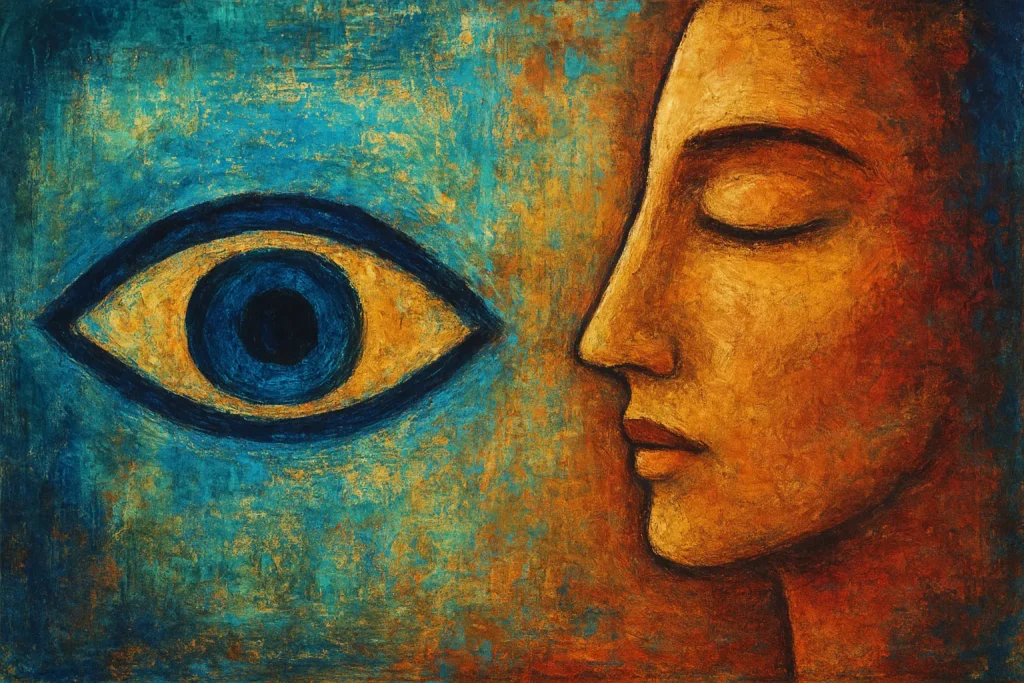
          Unveiled Glances in Naked Eyes
Melted in the light, unveiled glances, naked, naked eyes,
Beauty of Truth unseen at the threshold, naked, naked eyes.

For the vision of union, you veil yourself in mystery,
What shall blind love’s madness do with naked, naked eyes?

That radiant hue, that luminous splendour, what is its secret?
Colours, lights, all perceptions lie beyond naked, naked eyes.

What have I seen? - not you within the gaze of sight,
A mirror reflects the face within, naked, naked eyes.

They say these eyes are often deceived by illusion,
Unable to guard the sentries, weak, naked, naked eyes.

Rényi entropy is today’s tea; the truth stands bare,
Beloved, come! Let us sip its nectar, with naked, naked eyes.
Table of Contents
Literary explanation
This ghazal weaves together mystical aesthetics with the epistemology of perception, suggesting that the “naked eye” is both a vulnerable organ of deception and a purified instrument of truth.
The opening couplet establishes the paradox: immersed in molten light, the eye is stripped of coverings, yet the true beauty of reality remains beyond its reach.
The poem thus situates human perception at the threshold of truth: always desiring, often deceived, and never fully satisfied. The refrain “naked, naked eyes” accentuates this tension, making each verse a meditation on the fragility of vision.
The middle couplets deepen this inquiry by contrasting love’s blindness with the impossibility of guarding perception against illusion. Even when light floods the gaze, the beloved eludes the eyes, dwelling instead in the mirror of the self.
Here, the ghazal recalls both Sufi notions of kashf (unveiling) and Vedantic insight into the inner Self, suggesting that external sight is insufficient for true vision. The poetic emphasis shifts from outer vision to inner reflection, where the self and the divine become visible only through inward perception.
The final couplet makes a striking leap into modern scientific discourse by invoking Rényi entropy as “today’s tea.” Entropy, a measure of uncertainty and complexity, becomes the metaphor for truth itself, no longer simple or absolute, but probabilistic, layered, and entropic.
The poet’s invitation to “sip its nectar” signifies an embrace of this uncertainty with openness and intimacy. Thus, the ghazal bridges mystical poetics and quantum epistemology, offering a vision where truth is not grasped through rigid certainty but experienced through the nakedness of humility and the courage to face complexity.
An Expert Critique
Unveiled Glances in Naked Eyes – The Naked Eye and the Radiance of Truth: A Study of the Ghazal, Mysticism, and Contemporary Global Leadership
Abstract
This paper examines a contemporary ghazal that interweaves mystical poetics with modern scientific metaphors, particularly Rényi entropy, to address the epistemic fragility of human perception and the quest for truth.
The metaphor of the “naked eye” becomes a symbol for unmediated confrontation with reality, both beautiful and perilous.
By situating the ghazal within the framework of Meta-Mystic Futurism and Mindful Meta-Quantum Dynamics (MMQD), the paper explores how spiritual traditions, literary aesthetics, and quantum-inspired scientific paradigms converge to inform a new vision of global leadership.
The analysis argues that political leaders must embrace truth beyond illusions of power, guided by the ethical grounding of world religions and mystical insights, in order to navigate the uncertainties of the twenty-first century.
Keywords
Ghazal, Mysticism, Rényi Entropy, Naked Eye, Meta-Mystic Futurism, Mindful Meta-Quantum Dynamics (MMQD), Global Leadership, Spiritual Ethics, Quantum Epistemology
Introduction
The human eye, often regarded as a window to the soul, remains vulnerable to deception. Literature across civilisations has reflected on the paradox of sight, how vision may reveal beauty while simultaneously blinding one to truth.
The ghazal under consideration revitalises this paradox through the recurring image of the “naked eye.” By juxtaposing mystical imagery with the scientific language of entropy, the poet not only redefines traditional poetics but also contributes to contemporary debates on truth, leadership, and ethical responsibility.
This paper seeks to critically examine the ghazal within a dual framework: (i) the meta-mystic tradition of world religions and (ii) modern scientific paradigms of uncertainty and complexity. It further proposes the MMQD model as a conceptual bridge between mystical intuition and scientific rationality, relevant for guiding present-day leadership.
Literature Review
Mystical Poetics and the Ghazal Tradition
The ghazal has historically been a genre that accommodates paradoxes of beauty, truth, and divine longing. Sufi poets such as Rumi, Hafiz, and Ghalib have employed metaphors of sight, blindness, and unveiling (kashf) to articulate the oscillation between divine presence and absence.
Science, Entropy, and Philosophy
In the modern era, entropy has emerged as a metaphor for uncertainty, disorder, and hidden structures of knowledge. Rényi entropy, an extension of Shannon’s information entropy, provides a mathematical lens for measuring complexity and ambiguity. Philosophers of science increasingly employ such concepts to discuss the limits of human knowledge.
Religion, Ethics, and Leadership
The world’s religions offer frameworks for ethical perception – Hindu darśan as a vision of truth, Buddhist prājñā as wisdom, Sufi ishq as divine love, and Christian caritas as love in truth. In global politics, however, leadership often remains captive to illusions of power, obscuring such ethical vision.
Analysis
The Poetic Symbolism of the Naked Eye
The ghazal’s refrain “nangi nangi āñkh” (naked eye) encapsulates both vulnerability and authenticity. The naked eye perceives without mediation, yet this openness makes it susceptible to deception. The poet’s insistence on “pighlā huā roshanī” (melted light) emphasises a state of fluid perception, where form dissolves into essence.
Science Meets Mysticism: Rényi Entropy as Tea of Truth
The startling insertion of “Rényi entropy” as “today’s tea” bridges poetry and information theory. Here, entropy becomes an everyday nourishment, suggesting that truth in the twenty-first century lies not in certainties but in embracing probabilistic, entropic realities. The poet’s call to “drink” this tea with “naked eyes” highlights an epistemological ethics of acceptance rather than denial.
MMQD Framework and Meta-Mystic Futurism
Within the MMQD model, Mindful Meta-Quantum Dynamics, the ghazal may be read as:
Mindful: Attentiveness to the inner vision that transcends surface appearances.
Meta: A supra-scientific, spiritual grounding across world religions.
Quantum: Recognition of uncertainty, complementarity, and relationality.
Dynamics: Leadership as a fluid, adaptive process grounded in truth.
This framework aligns with the poet’s meta-mystic futurism, where literature, spirituality, and quantum science converge to inform future modes of ethical governance.
Implications for Global Leadership
Leaders today confront entropic realities, climate change, AI ethics, nuclear risks, and global inequality. The ghazal implicitly critiques their blindness to truth, reminding them that power without perception leads to illusion. By grounding leadership in shared religious ethics and scientific humility, the poem envisions a planetary ethic of fraternity.
Conclusion
The ghazal under study transcends its literary form, functioning as a manifesto for epistemic humility and ethical leadership. Its blending of mystical imagery and scientific metaphor challenges readers, and particularly global leaders, to confront truth with the courage of the naked eye.
Through the MMQD framework and meta-mystic futurism, the poem offers a vision of leadership grounded in spiritual universality and scientific realism.
References
Rumi, Jalaluddin. The Essential Rumi. Trans. Coleman Barks. HarperCollins, 1995.
Ghalib, Mirza. Diwan-e-Ghalib. Critical editions.
Rényi, A. On Measures of Entropy and Information. Proceedings of the Fourth Berkeley Symposium on Mathematics, Statistics, and Probability, 1961.
Capra, Fritjof. The Tao of Physics. Shambhala, 1975.
Nasr, Seyyed Hossein. Knowledge and the Sacred. SUNY Press, 1989.
Hoel, Erik. The World Behind the World: Consciousness, Free Will, and the Limits of Science. Avid Reader Press, 2023.
Ezekiel, Sarah. Public writings on AI voice restoration and disability rights.
Jaggi, Tanishk. Emerging theories on bio-physics quantum computing (CERN recognitions, 2025).
BEYOUTEA>A POETRY REVOLUTION>PEACE
NOTHING IS NOT TRUE : NO\KNOW THYSELF NOT
             MAKE EARTH GREAT FOREVER
पिघला हुआ रोशनी में नज़रें नंगी नंगी आँख,
हुस्न-ए-हकीकी बे-नज़र दरे नंगी नंगी आँख।
           एक बात दीदार को तुम होती हो पर्दादारी,
           अंधे इश्क़ दीवाना क्या करे नंगी नंगी आँख।
उजाला रंग वो नूर ख़ूबसूरत जलवा क्या है,
रंग रोशनी नज़रें सब से परे नंगी नंगी आँख।
           क्या देखा है हमने तुम नज़रों में नहीं नज़र,
           दर्पण है दिखता अंदर चेहरे नंगी नंगी आँख।
कहते हैं ये आँखें अक्सर खा जाती हैं धोखा,
रख नहीं पाते सख़्त जो पहरे नंगी नंगी आँख।
           Rényi एंट्रॉपी आज की चाय है सत्य नंगा,
           सजनी आओ पीते हैं रसभरे नंगी नंगी आँख।
POETRY>WISDOM>Q.TECH FOR A MORE JUST AND
PEACEFUL WORLD IN LOVE AND ENLIGHTENMENT
बौद्धिक भाव का विस्तार
यह ग़ज़ल एक गहन दार्शनिक और भावनात्मक यात्रा है, जो दृष्टि, सौंदर्य, प्रेम, धोखे और सत्य की खोज को “नंगी नंगी आँख” (नग्न आँखें, अर्थात बिना किसी आवरण या पूर्वाग्रह के देखने वाली नजर) के माध्यम से बयान करती है।
यह उर्दू ग़ज़ल की परंपरा में रचित है, जहाँ रदीफ़ और काफ़िया प्रेम की रहस्यमयीता को उजागर करते हैं, लेकिन इसमें आधुनिक वैज्ञानिक अवधारणा (रेनी एंट्रॉपी) का समावेश इसे बौद्धिक रूप से समृद्ध बनाता है। आइये हम इसे शेर-दर-शेर भावार्थ, दार्शनिक गहराई और समग्र थीम के आधार पर विस्तार से समझते हैं, जिसमें प्रेम की आध्यात्मिकता, दृष्टि की सीमाएँ, और सूचना सिद्धांत से जुड़ी अंतर्दृष्टि शामिल हैं।
- मतला (पहला शेर):
पिघला हुआ रोशनी में नज़रें नंगी नंगी आँख,
हुस्न-ए-हकीकी बे-नज़र दरे नंगी नंगी आँख।
भावार्थ: रोशनी के पिघले रूप में नज़रें आती हैं, लेकिन सच्चा सौंदर्य (हुस्न-ए-हकीकी) बिना नज़र के ही दरवाज़े पर खड़ा है। “नंगी नंगी आँख” यहाँ नग्न दृष्टि का प्रतीक है, बिना चश्मे, पूर्वाग्रह या सांस्कृतिक आवरण के देखना।
बौद्धिक विस्तार: यह शेर प्लेटो की गुफा की उपमा या वेदांती दर्शन से प्रेरित लगता है, जहाँ सच्ची वास्तविकता (हकीकी) छाया या भ्रम से परे है। नंगी आँखें भौतिक दृष्टि की सीमा दर्शाती हैं l हम रोशनी (प्रकाश) को देखते हैं, लेकिन सौंदर्य की मूल को नहीं।
वैज्ञानिक रूप से, यह ऑप्टिकल भ्रम (optical illusions) से जुड़ता है, जहाँ आँखें प्रकाश की तरंगों को ग्रहण करती हैं, लेकिन मस्तिष्क ही अर्थ निकालता है। यहाँ “बे-नज़र दरे” (बिना नज़र के दरवाज़े पर) सूफ़ी विचारधारा को इंगित करता है, जहाँ सच्चा दीदार (दर्शन) आँखों से नहीं, दिल से होता है।
- दूसरा शेर:
एक बात दीदार को तुम होती हो पर्दादारी,
अंधे इश्क़ दीवाना क्या करे नंगी नंगी आँख।
भावार्थ: तुम दीदार (दर्शन) के लिए पर्दे की तरह हो, छिपाती हो खुद को। लेकिन अंधा प्रेम (इश्क़) का दीवाना क्या करे, जब उसकी आँखें नंगी हैं?
बौद्धिक विस्तार: यह प्रेम की विरोधाभासी प्रकृति पर टिप्पणी है। “पर्दादारी” (पर्दे का काम) इस्लामी या पूर्वी संस्कृति में हिजाब या रहस्य के प्रतीक के रूप में आता है, लेकिन बौद्धिक स्तर पर यह प्लेटोनिक प्रेम या लैकानियन मनोविश्लेषण से जुड़ता है, जहाँ वांछित वस्तु (object of desire) हमेशा अप्राप्य रहती है।
“अंधे इश्क़” रूमी या मीर की ग़ज़लों की याद दिलाता है, जहाँ प्रेम अंधा होता है, लेकिन “नंगी आँखें” विडंबना पैदा करती हैं – प्रेमी देखना चाहता है, पर नहीं देख पाता। यहाँ भावनात्मक रूप से, यह असुरक्षा और जुनून की पीड़ा है, जो बौद्धिक रूप से प्रेम को एक संज्ञानात्मक पूर्वाग्रह (cognitive bias) के रूप में देखता है।
- तीसरा शेर:
उजाला रंग वो नूर ख़ूबसूरत जलवा क्या है,
रंग रोशनी नज़रें सब से परे नंगी नंगी आँख।
भावार्थ: उजाला, रंग, नूर और ख़ूबसूरत जलवा क्या है? सब कुछ रंग, रोशनी और नज़रों से परे है, जब नंगी आँखें देखती हैं।
बौद्धिक विस्तार: यह शेर भौतिकी और दर्शन का मिश्रण है। “नूर” (दिव्य प्रकाश) सूफ़ीवाद में ईश्वरीय प्रकाश है, जबकि “रंग रोशनी” न्यूटोनियन ऑप्टिक्स से जुड़ता है, प्रकाश तरंगें रंग पैदा करती हैं।
लेकिन “सब से परे” कांटियन फेनोमेना vs. नौमेना की याद दिलाता है: हम जो देखते हैं, वह वास्तविकता नहीं, बल्कि हमारी इंद्रियों की व्याख्या है। भावनात्मक रूप से, यह सौंदर्य की व्यक्तिपरकता (subjectivity of beauty) पर है, नंगी आँखें सच्चाई को बिना फिल्टर देखती हैं, लेकिन क्या वह सच्चाई ख़ूबसूरत है?
यहाँ बौद्धिक गहराई विज्ञान और कला के संयोजन में है, जैसे क्वांटम ऑब्जर्वर प्रभाव, जहाँ नज़र ही वास्तविकता बदल देती है।
- चौथा शेर:
क्या देखा है हमने तुम नज़रों में नहीं नज़र,
दर्पण है दिखता अंदर चेहरे नंगी नंगी आँख।
भावार्थ: हमने तुम्हारी नज़रों में क्या देखा? नज़र नहीं, बल्कि दर्पण दिखता है, जिसमें अंदर का चेहरा नंगी आँखों से नज़र आता है।
बौद्धिक विस्तार: यह आत्म-चिंतन का शेर है, जो नार्सिसिज़्म या जंगियन मनोविज्ञान से जुड़ता है, प्रेमी की नज़र में अपना ही प्रतिबिंब देखना। “दर्पण” शेक्सपियर के “आँखें आत्मा का दर्पण” या भारतीय दर्शन में माया (illusion) का प्रतीक है।
भावनात्मक रूप से, यह प्रेम में आत्म-प्रक्षेपण (self-projection) की पीड़ा है, जहाँ दूसरा व्यक्ति हमारी अपनी छवि बन जाता है। बौद्धिक रूप से, यह दृष्टि की आत्म-परकता (reflexivity of gaze) पर है, जैसे लैकान का “मिरर स्टेज”, नंगी आँखें सतह से परे जाकर अंदरूनी सत्य को उजागर करती हैं, लेकिन वह सत्य असुंदर या डरावना हो सकता है।
- पाँचवाँ शेर: कहते हैं ये आँखें अक्सर खा जाती हैं धोखा, रख नहीं पाते सख़्त जो पहरे नंगी नंगी आँख।
भावार्थ: कहते हैं कि आँखें अक्सर धोखा खा जाती हैं, क्योंकि वे सख़्त पहरा नहीं रख पातीं, नंगी आँखें।
बौद्धिक विस्तार: यह धोखे और विश्वास की थीम है, जो डेकार्ट के संदेहवाद या बौद्ध दर्शन की माया से जुड़ता है। “धोखा” ऑप्टिकल इल्यूजन या संज्ञानात्मक पूर्वाग्रहों (cognitive biases) का संकेत है, जैसे पुष्टिकरण पूर्वाग्रह (confirmation bias)।
भावनात्मक रूप से, यह प्रेम में विश्वासघात की चेतावनी है – नंगी आँखें भोली होती हैं, बिना “पहरे” (सुरक्षा) के। बौद्धिक रूप से, यह दृष्टि की अविश्वसनीयता पर टिप्पणी है, जहाँ वैज्ञानिक उपकरण (जैसे माइक्रोस्कोप) नंगी आँखों की सीमाओं को पार करते हैं।
- मक़्ता (आखिरी शेर):
Rényi एंट्रॉपी आज की चाय है सत्य नंगा,
सजनी आओ पीते हैं रसभरे नंगी नंगी आँख।
भावार्थ: रेनी एंट्रॉपी आज की चाय है, जहाँ सत्य नंगा है। प्रियतमा, आओ इसे रसभरी नंगी आँखों से पीएँ।
बौद्धिक विस्तार: यह शेर ग़ज़ल को आधुनिक मोड़ देता है। रेनी एंट्रॉपी (Rényi entropy) सूचना सिद्धांत में शैनन एंट्रॉपी का सामान्यीकरण है, जो अनिश्चितता या सूचना की मात्रा मापता है, पैरामीटर α के साथ, यह विभिन्न स्तरों पर “नंगी” सच्चाई को उजागर करता है (α=1 पर शैनन, α=∞ पर मिन-एंट्रॉपी)।
“सत्य नंगा” का अर्थ है बिना आवरण का सत्य, जैसे एंट्रॉपी अनिश्चितता को “नंगा” करती है। भावनात्मक रूप से, यह प्रेम को एक बौद्धिक उत्सव बनाता है, चाय पीना अंतरंगता का प्रतीक, “रसभरे” (रस से भरे) कामुकता जोड़ता है।
बौद्धिक रूप से, यह क्वांटम सूचना और दर्शन का मिश्रण है: सत्य (truth) एंट्रॉपी की तरह बहुआयामी है, और नंगी आँखें (unbiased observation) ही इसे ग्रहण कर सकती हैं। यह ग़ज़ल को पारंपरिक प्रेम से उठाकर विज्ञान-दर्शन के संवाद में बदल देता है, जहाँ प्रेम अनिश्चितता का उत्सव है।
समग्र थीम और बौद्धिक महत्व
यह ग़ज़ल “देखने” की द्वंद्वता पर केंद्रित है: नंगी आँखें मुक्ति और खतरे दोनों हैं। भावनात्मक रूप से, यह इश्क़ की दीवानगी, सौंदर्य की खोज और धोखे की पीड़ा बयान करती है।
बौद्धिक रूप से, यह सूफ़ीवाद, वेदांत, मनोविज्ञान और सूचना सिद्धांत का संगम है, सत्य को “नंगा” देखना वैज्ञानिक जांच की तरह है, जहाँ एंट्रॉपी अनिश्चितता को मापती है।
यह आधुनिक दुनिया में प्रेम को पुनर्परिभाषित करती है, जहाँ विज्ञान और काव्य एक हो जाते हैं। यह कवि दर्पण का पोस्ट ट्रुथ रचना है, और यह आज के ज़माने की फ्यूजन पोएट्री का एक अद्वितीय उदाहरण है, जो पूर्वी रहस्यवाद को पश्चिमी विज्ञान से जोड़ती है।
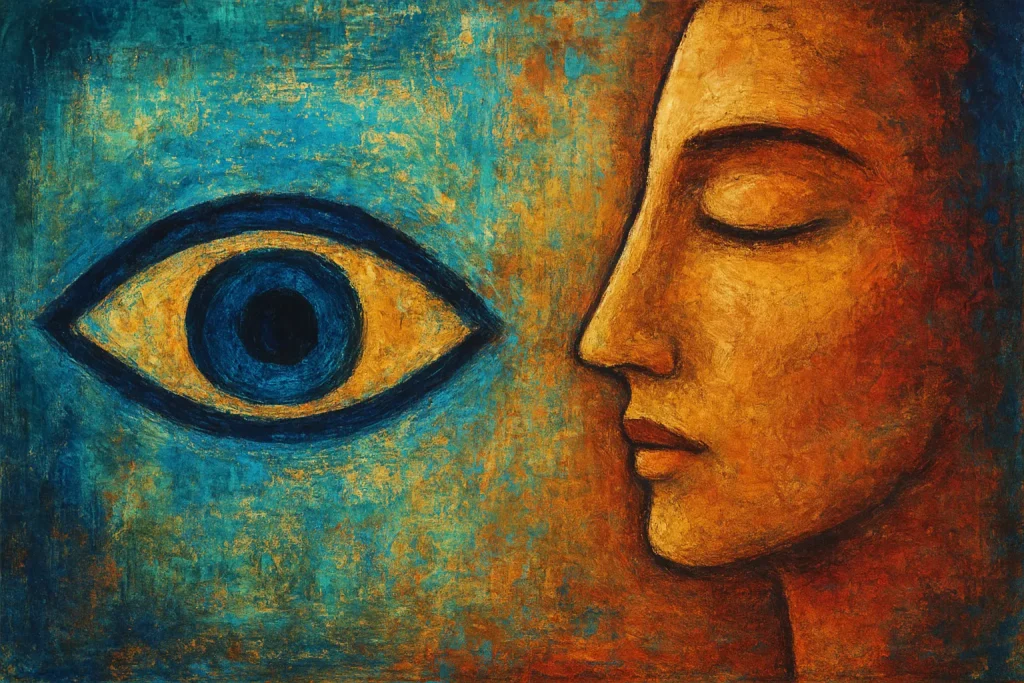
एक प्राज्ञिक आलोचनात्मक गवेषणा
नज़रें नंगी नंगी आँख – नंगी आँख और सत्य का आलोक: ग़ज़ल, रहस्यवाद और समकालीन विश्व-नेतृत्व की विवेचना
प्रस्तावना
मानव दृष्टि सदा से सत्य और माया के बीच झूलती रही है। कवि की यह ग़ज़ल “नंगी आँख” के रूपक में उस पारदर्शी परंतु असुरक्षित स्थिति को व्यक्त करती है, जहाँ मनुष्य बिना आडंबर के, नग्नता में, सत्य का सामना करता है।
यह नग्नता केवल शरीर की नहीं, बल्कि चेतना की है। यहाँ “Rényi एंट्रॉपी” को “आज की चाय” कहकर कवि यह संकेत देता है कि विज्ञान के नवीनतम सिद्धांत भी अब दर्शन और रहस्यवाद के आलोक में पुनर्पाठ की मांग करते हैं।
साहित्यिक भाव विस्तार
ग़ज़ल का पहला शेर “पिघला हुआ रोशनी में नज़रें नंगी नंगी आँख” सौंदर्य और अनुभव के विलयन की ओर संकेत करता है। यहाँ रोशनी केवल दृश्य प्रकाश नहीं, बल्कि उस ज्ञान की आभा है जो दृष्टि को भेदकर आत्मा को स्पर्श करती है।
“अंधे इश्क़ दीवाना क्या करे” पंक्ति मानवीय स्थिति को उजागर करती है कि जब प्रेम या विश्वास अंधा होता है, तो आंखें खुली होने पर भी धोखा खा सकती हैं।
“दर्पण है दिखता अंदर चेहरे नंगी नंगी आँख” – यहाँ कवि स्वयं-दर्शन और आत्म-चेतना की ओर इशारा करता है। नंगी आँख अब बाहरी दृश्य नहीं, बल्कि भीतर की सत्यता को पकड़ती है।
“Rényi एंट्रॉपी” का प्रयोग ग़ज़ल में एक अनोखा वैज्ञानिक-दार्शनिक मोड़ है। एंट्रॉपी, जो अनिश्चितता और जटिलता का मापक है, कवि के लिए आज का सत्य बन गया है। इसका रसपान केवल वही कर सकता है जो निर्वस्त्र, निष्कपट और सत्य के प्रति खुला है।
बौद्धिक-प्राज्ञिक समीक्षा और मेटा-मिस्टिक दृष्टि
यह ग़ज़ल एक “Meta-Mystic Futurism” की आधारभूमि प्रस्तुत करती है, जहाँ रहस्यवाद और विज्ञान का समन्वय होता है। “नंगी आँख” को यहाँ हम Mindful Meta-Quantum Dynamics (MMQD) फ्रेम में देख सकते हैं:
Mindful: ध्यान और आत्मसाक्षात्कार
Meta: विज्ञान से परे दार्शनिक ग्राउंडिंग
Quantum: वास्तविकता की सूक्ष्म परतों का बहु-आयामी अध्ययन
Dynamics: सतत गति और परिवर्तन
कवि ने स्पष्ट किया है कि नेत्र केवल प्रकाश को पकड़ते हैं, परंतु सत्य की पहचान मानसिक और आत्मिक स्तर पर ही होती है। “धोखा” इसी कारण उत्पन्न होता है, जब हम इंद्रियबोध को अंतिम सत्य मान लेते हैं।
समसामयिक नेतृत्व और विश्व-धर्म की प्रासंगिकता
आज के समय में, विश्व के नेता लगातार “विकृत दृष्टि” के शिकार हो रहे हैं, सत्ता, युद्ध, तकनीकी शोषण और राष्ट्रवादी हितों के आवरण में उनकी “आँखें” सत्य को देख नहीं पातीं। ग़ज़ल का संदेश उन्हें चेतावनी देता है कि धर्म (यहाँ धर्म का अर्थ नैतिकता और कॉस्मिक ऑर्डर से है) केवल तब जीवित रह सकता है जब आँखें नंगी होकर सत्य का दीदार करें।
Rényi एंट्रॉपी नेतृत्व को यह याद दिलाती है कि जटिल विश्व की अनिश्चितताओं को छुपाना नहीं, बल्कि स्वीकार करना होगा।
विश्व धर्मों की साझा दृष्टि (हिंदू धर्म का आत्मानुभव, बौद्ध धर्म की प्रज्ञा, सूफ़ी इश्क़, ईसाईयत का प्रेम, इस्लाम का तौहीद) नेताओं के लिए उस “नूर” की तरह है जो धोखे से बचाती है।
MMQD फ्रेम एक नई “आध्यात्मिक-वैज्ञानिक कूटनीति” का मार्ग प्रस्तुत करता है, जहाँ निर्णय न केवल भौतिक लाभ पर, बल्कि मनुष्य की सामूहिक चेतना पर आधारित होंगे।
निष्कर्ष
यह ग़ज़ल केवल काव्य नहीं, बल्कि एक शोध-दृष्टि है। यह हमें सिखाती है कि “नंगी आँख” का साहस ही सत्य की ओर ले जाता है। आधुनिक विज्ञान (Rényi entropy), रहस्यवाद (सत्य का आलोक), और विश्व-नेतृत्व (नैतिक जिम्मेदारी) – तीनों का समन्वय ही भविष्य की दिशा है।
इस ग़ज़ल का संदेश है कि यदि मानवता को बचाना है, तो हमें माया और भ्रम की परतों से परे जाकर “नंगी आँख” से एक-दूसरे को और सत्य को देखना होगा।
Next Read: Truth in the Age of AI