


This Heritage of Ours and Thine थोडी सि तो मीट्टीहै
The Poem of the Day: November 3, 2026
ग़ज़ल
        अब पुर्सां-ए-हाल न पूछो
गहरी ज़ख़्म-ए-जिगर दे दी, अब पुर्सां-ए-हाल न पूछो,
हरीभरी दर्द-ए-सिहर दे दी, अब पुर्सां-ए-हाल न पूछो।
           वो हम पर नज़र-ए-सानी, ख़ुदा करम-फ़रमान बड़ा,
           फ़ानी दुनिया-ए-फ़ित्तर दे दी, अब पुर्सां-ए-हाल न पूछो।
स्याह चूक से नहाई रात में सूरज का ख़ंजर चमका,
टुकड़े चाँद तीतर-वीतर दे दी, अब पुर्सां-ए-हाल न पूछो।
           तारीफ़ तनक़ीद क्या करें हम, रहनुमा ख़ुद से निकले,
           हुकूमत बेरहमानी भीतर दे दी, अब पुर्सां-ए-हाल न पूछो।
तहरीर गुल-ए-दरा में ज़ाहिर है हर तारीख़-ए-लहूलाल,
हलालीयाली किधरकीधर दे दी, अब पुर्सां-ए-हाल न पूछो।
           वेक्षण के बाद तहक़ीक़ात, हिसाब से फ़िज़िक्स होता है,
           रिवर्स फ़िज़िक्स कर इधर दे दी, अब पुर्सां-ए-हाल न पूछो।
इन आँखों से देखना क्या है, सजनी, ख़याल मुख़्तलिफ़ है,
दर्पण को नशे चाय दिदार दे दी, अब पुर्सां-ए-हाल न पूछो।

क्वांटम-सूफ़ी पोएटिक्स के विधान में शेर-दर-शेर तशरीह
ज़ख़्म, सिहर और मौन की मनोवैज्ञानिक सत्ता पहले शेर में ज़ख़्म-ए-जिगर और दर्द-ए-सिहर की छवियाँ एक ऐसी आन्तरिक स्थिति निर्मित करती हैं, जहाँ पीड़ा केवल शरीर या हृदय का अनुभव नहीं रह जाती, बल्कि चेतना की स्थायी संवेदनात्मक स्मृति बन जाती है। हरी-भरी का प्रयोग सामान्यतः जीवन, वसन्त और उर्वरता का बोध कराता है; इसके साथ दर्द का संयोजन एक विरोधाभासी सौन्दर्य पैदा करता है। यहाँ पीड़ा भी जीवित है, विकसित हो रही है और अपनी अलग दुनिया रच रही है। सूफ़ियाना अर्थ में यह वह मुक़ाम है जहाँ ज़ख़्म स्वयं पहचान का हिस्सा बन जाता है। मनोवैज्ञानिक दृष्टि से बार-बार हाल पूछे जाने से उत्पन्न थकान, भावनात्मक अवरोध और मौन की इच्छा रदीफ़ में अभिव्यक्त होती है।
नज़र-ए-सानी, ख़ुदाई करम और फ़ानी दुनिया दूसरे शेर में नज़र-ए-सानी का अर्थ पुनः दृष्टिपात अथवा दूसरी बार देखने की संभावना है। ख़ुदा के करम और फ़रमान का उल्लेख इस दृष्टि को केवल व्यक्तिगत अनुग्रह नहीं, बल्कि अस्तित्वगत पुनर्विचार का संकेत देता है। फ़ानी दुनिया-ए-फ़ित्तर का प्रयोग नश्वर संसार और उसकी परिवर्तनशील प्रकृति की ओर ध्यान खींचता है। क्वांटम-सूफ़ी पठन में पर्यवेक्षण और दृष्टिकोण का महत्त्व यहाँ रूपकात्मक रूप से सामने आता है: एक ही वास्तविकता अलग दृष्टि से अलग अर्थ ग्रहण करती है। यह क्वांटम भौतिकी के पर्यवेक्षक-प्रश्न का काव्यात्मक संवाद है, न कि किसी भौतिक सिद्धान्त का प्रत्यक्ष प्रमाण। सूफ़ी दर्शन में फ़ना और बक़ा के बीच की यात्रा भी इस शेर की अन्तर्धारा में पढ़ी जा सकती है।
स्याह रात, सूरज का ख़ंजर और चाँद का विखण्डन तीसरा शेर ग़ज़ल के दृश्यात्मक और अस्तित्ववादी पक्ष को तीव्र करता है। स्याह रात के भीतर सूरज का ख़ंजर चमकना प्रकाश को केवल आशा का प्रतीक नहीं रहने देता; वह अन्धकार को चीरने वाली कठोर शक्ति भी बन जाता है। चाँद के तीतर-वीतर टुकड़े विखण्डित अनुभूति, टूटे हुए आत्मबोध और बिखरे हुए सामूहिक स्वप्न का बिम्ब निर्मित करते हैं। क्वांटम-सूफ़ी पोएटिक्स में इसे एक अखण्ड प्रतीत होने वाली वास्तविकता के अनेक संभावित रूपों में बिखरने के रूपक की तरह पढ़ा जा सकता है। चाँद यहाँ प्रेम, सौन्दर्य और मन की शीतलता का प्रतिनिधि है, जबकि सूरज का ख़ंजर सत्य की कठोरता और परिवर्तन की अनिवार्यता का।
रहनुमा, सत्ता और भीतर का बेरहमपन चौथे शेर में ग़ज़ल निजी अनुभूति से सामाजिक और राजनीतिक आलोचना की ओर मुड़ती है। रहनुमा का स्वयं अपने भीतर से निकलना आत्मनिर्भर नेतृत्व का संकेत भी हो सकता है, लेकिन इसके तुरन्त बाद हुकूमत की बेरहमानी सामने आती है। यही विरोधाभास शेर का वास्तविक व्यंग्य है। नेतृत्व का उद्भव यदि आत्मचेतना और नैतिक विवेक से न हो, तो सत्ता अपने ही भीतर निर्ममता को जन्म देती है। तारीफ़ और तनक़ीद दोनों से आगे जाकर कवि सत्ता की नैतिक परिणति पर प्रश्न उठाता है। नफ़्सियाती दृष्टि से यह सामूहिक सत्ता-मनोविज्ञान, आत्ममुग्धता और नैतिक विस्थापन की आलोचना है। सूफ़ियाना परिप्रेक्ष्य में बाहरी सल्तनत से अधिक महत्त्वपूर्ण अपने नफ़्स पर शासन है।
तारीख़-ए-लहूलाल और इतिहास की सामूहिक स्मृति पाँचवाँ शेर इतिहास को केवल तारीख़ों और घटनाओं का अभिलेख नहीं मानता। तहरीर और गुल-ए-दरा की छवि के भीतर लहूलुहान इतिहास की उपस्थिति यह बताती है कि सभ्यता का सौन्दर्य अनेक बार हिंसा और विस्थापन की कीमत पर निर्मित हुआ है। हलालीयाली और किधर-की-किधर का प्रयोग, अपने मूल आशय की पुष्टि के अधीन, सांस्कृतिक दिशा के उलट जाने अथवा मूल नैतिक धरातल के बिखरने का संकेत दे सकता है। यहाँ इतिहास एक जीवित सामूहिक स्मृति है, जिसमें विजेताओं के आख्यानों से अधिक महत्त्व पीड़ितों के अनुभवों का है। DarpanPoems की सार्वभौमिक मानवीय एकता, धार्मिक सहअस्तित्व और युद्ध-विरोधी दृष्टि इसी संवेदनात्मक धरातल पर अपना अर्थ ग्रहण करती है।
वेक्षण, तहक़ीक़ात और रिवर्स फ़िज़िक्स छठा शेर इस ग़ज़ल का विशिष्ट वैज्ञानिक-दार्शनिक मोड़ है। वेक्षण, तहक़ीक़ात और फ़िज़िक्स के शब्द कविता को आधुनिक ज्ञानमीमांसा के क्षेत्र में ले जाते हैं। सामान्य वैज्ञानिक प्रक्रिया में अवलोकन से प्रश्न, प्रश्न से परीक्षण और परीक्षण से निष्कर्ष की यात्रा होती है। कवि इसके विपरीत रिवर्स फ़िज़िक्स का संकेत देकर ज्ञान की स्थापित दिशा को उलटने की चुनौती देता है। इसका आशय केवल वैज्ञानिक निष्कर्षों को उलटना नहीं, बल्कि उन आधारभूत मान्यताओं की पुनः जाँच करना है जिनके सहारे वास्तविकता को समझा जाता है। क्वांटम सिद्धान्त में मापन, प्रायिकता और पर्यवेक्षक की भूमिका इस शेर के लिए वैचारिक संवाद खोलती है। सूफ़ी अर्थ में भी बाहरी जगत को जानने से पहले जानने वाले की चेतना की पड़ताल आवश्यक है। इस प्रकार शेर विज्ञान और आत्मान्वेषण के बीच एक सेतु निर्मित करता है।
सजनी, चाय, दीदार और दर्पण की आत्मचेतना मक़ते में सजनी का ख़याल पारम्परिक प्रेमिका की छवि से आगे बढ़कर चेतना, प्रियतम और अस्तित्वगत एकत्व का प्रतीक बनता है। आँखों से देखने और वास्तव में देखने के बीच का अन्तर यहाँ महत्त्वपूर्ण है। दृश्य का अनुभव केवल नेत्रों से नहीं, बल्कि मन की स्थिति, स्मृति और भावात्मक ग्रहणशीलता से भी निर्मित होता है। चाय इस काव्य-जगत में साधारण पेय नहीं, बल्कि आत्मीय संवाद, दैनिक जीवन की आध्यात्मिक रसायनिकी और दो चेतनाओं के बीच निकटता का प्रतीक है। दीदार प्रेम की परिपूर्णता है, जबकि दर्पण आत्मावलोकन और स्वयं के भीतर प्रियतम की उपस्थिति का संकेत देता है। इस प्रकार सजनी, चाय और दर्पण तीनों एक ही चेतनात्मक सम्बन्ध के अलग-अलग आयाम बन जाते हैं। मक़ते में कवि का तख़ल्लुस इस आत्मसंवाद को पूर्णता प्रदान करता है।
DarpanPoems की ख़ुसूसियत : क्वांटम-सूफ़ी काव्य-दृष्टि इस ग़ज़ल की विशिष्टता इसकी विधागत बहुलता में निहित है। पारम्परिक रेख़्ता की इश्क़िया शब्दावली, सूफ़ियाना तजुर्बे, आधुनिक मनोविज्ञान, राजनीतिक नैतिकता और क्वांटम भौतिकी के संकेत एक ही काव्यात्मक संरचना में परस्पर संवाद करते हैं। यह सम्मिश्रण केवल वैज्ञानिक शब्दों को शायरी में शामिल करने तक सीमित नहीं है; इसका उद्देश्य उन अनुभवों के बीच वैचारिक सम्बन्ध तलाशना है जिन्हें सामान्यतः अलग-अलग अनुशासनों में समझा जाता है।
DarpanPoems की Meta-Mystic Futurism की अवधारणा में मनुष्य केवल बाहरी वास्तविकता का पर्यवेक्षक नहीं, बल्कि अपने अनुभव, स्मृति, संवेदना और विवेक के माध्यम से अर्थ का सक्रिय अन्वेषक है। इस दृष्टि से ग़ज़ल का प्रत्येक शेर एक स्वतंत्र चेतनात्मक घटना है, लेकिन सभी शेर मिलकर एक व्यापक अस्तित्ववादी आख्यान रचते हैं। व्यक्तिगत ज़ख़्म से आरम्भ हुई यात्रा सामाजिक अन्याय, ऐतिहासिक हिंसा और वैज्ञानिक ज्ञान की सीमाओं से गुजरते हुए प्रेम तथा आत्मचेतना तक पहुँचती है।
इस काव्य-दृष्टि में विज्ञान और अध्यात्म एक-दूसरे के प्रतिस्पर्धी नहीं हैं। विज्ञान वास्तविकता के परीक्षण और उसके नियमों की खोज करता है, जबकि अध्यात्म अनुभव करने वाले अस्तित्व, उसके अहंकार, संवेदना और आत्मबोध की पड़ताल करता है। दोनों के बीच संवाद स्थापित करना ही क्वांटम-सूफ़ी पोएटिक्स का रचनात्मक प्रयोजन है। यहाँ क्वांटम शब्दावली को वैज्ञानिक प्रमाणों के विकल्प के रूप में नहीं, बल्कि अनिश्चितता, बहुसंभावना, सम्बन्धपरकता और दृष्टिकोण के काव्यात्मक रूपकों के रूप में ग्रहण करना आवश्यक है।
नफ़्सियाती स्तर पर इस ग़ज़ल की रदीफ़ एक विशेष महत्त्व रखती है। अब पुर्सां-ए-हाल न पूछो प्रत्येक शेर के बाद लौटकर आती है, लेकिन हर बार उसका भाव बदल जाता है। कहीं यह भावनात्मक थकान है, कहीं अस्तित्वगत असहमति, कहीं राजनीतिक प्रतिरोध, कहीं इतिहास से उपजी वितृष्णा और कहीं आत्मीय प्रेम का संकोच। इस प्रकार रदीफ़ एक मनोवैज्ञानिक refrain बन जाती है, जो अलग-अलग अनुभवों को एक साझा चेतना में बाँधती है।
निष्कर्ष: यह ग़ज़ल व्यक्तिगत दर्द से सार्वभौमिक विवेक तक की यात्रा है। इसका कथ्य बताता है कि मनुष्य का सबसे गहरा ज़ख़्म केवल प्रेम में नहीं, बल्कि अन्याय, हिंसा, ऐतिहासिक विस्मृति और अपनी ही चेतना से दूर हो जाने में भी छिपा है। इसका प्रतिरोध युद्ध और सत्ता की बेरहमी के विरुद्ध है; इसका वैज्ञानिक पक्ष स्थापित ज्ञान की पुनर्परीक्षा का आह्वान करता है; और इसका सूफ़ियाना पक्ष प्रेम तथा आत्मबोध में एकत्व की तलाश करता है।
DarpanPoems की ख़ासियत इसी त्रिवेणी में है, इश्क़ की संवेदना, विज्ञान की जिज्ञासा और अध्यात्म की आत्मदृष्टि। इसका लक्ष्य केवल सौन्दर्य का सृजन नहीं, बल्कि ऐसी मानवीय चेतना का विकास है जिसमें ज्ञान के साथ करुणा, शक्ति के साथ उत्तरदायित्व और विविधता के साथ सार्वभौमिक बन्धुत्व भी उपस्थित हो।
अन्ततः अब पुर्सां-ए-हाल न पूछो का मौन निराशा का अन्तिम पड़ाव नहीं है। यह उस चेतना की आवाज़ है जो अपने ज़ख़्मों को पहचान चुकी है, इतिहास से प्रश्न कर चुकी है और अब मनुष्य तथा संसार के लिए एक अधिक न्यायपूर्ण, शांतिपूर्ण और सह-अस्तित्वपूर्ण भविष्य की तलाश में है।
The Poem of the Day: November 3, 2026
Ghazal
        The Wounded Mirror
A deeper wound within my heart was
Was dealt; ask not how fares my soul,
A verdant ache, a trembling spell,
Was dealt; ask not how fares my soul.
            May Heaven grant that second glance,
            That grace which turns its gaze anew;
            A fleeting world of strange design
            Was dealt; ask not how fares my soul.
Through night, washed black by some
Celestial error, the Sun unsheathed its blade;
The Moon lay scattered, shard
By shard; ask not how fares my soul.
            What praise or censure shall I offer?
            Our own guides rose from within;
            A merciless dominion dwells
            Within; ask not how fares my soul.
Upon the rose-leaf of the vale,
Each crimson chronicle is writ;
The sacred verdure strayed
Afar; ask not how fares my soul.
            Observation first, then inquiry;
            Thus Physics reckons what is real;
            Reverse the laws, and turn them
            Back; ask not how fares my soul.
What is there merely to behold, beloved,
When thoughts assume another hue?
Darpan, steeped in tea's sweet trance, was granted
The Beloved's view; ask not how fares my soul.

Scholarly Exegesis Quantum-Sufi Poetics, Literary Philosophy and Psychological Interpretation

The Wound as a Living Consciousness: The opening couplet transforms the wound of the heart into a living condition of consciousness. Its paradoxical image of a verdant ache suggests that suffering, rather than remaining an inert injury, becomes fertile with memory and emotional awareness. The refrain, “ask not how fares my soul,” conveys psychological exhaustion, wounded dignity and the desire to preserve an interior world beyond intrusive questioning. In Sufi interpretation, the wound may also signify the heart's awakening through longing.
Divine Grace and the Ephemerality of Existence: The second couplet invokes the possibility of a renewed divine gaze. The expression of a second look suggests grace, reconsideration and spiritual renewal. Yet the fleeting world remains strange and unstable. Its philosophical tension lies between divine permanence and worldly transience. Through a quantum-Sufi reading, the changing perspective of the observer becomes a metaphor for the plurality of experienced realities, without confusing poetic analogy with physical theory.
The Solar Dagger and the Fragmented Moon: The third couplet presents a striking cosmic paradox: the Sun appears as a dagger piercing a night darkened by celestial error, while the Moon is fragmented into scattered shards. Light is no longer merely comforting; it becomes an instrument of revelation and disruption. The shattered Moon represents wounded beauty, fractured identity and the disintegration of familiar certainties. The imagery evokes a universe in which apparent wholeness may conceal profound instability.
Leadership and the Tyranny Within: The fourth couplet moves from personal suffering towards political and ethical criticism. Its question of praise and censure challenges the legitimacy of leadership when authority emerges without moral self-examination. The merciless dominion dwelling within suggests that oppression is not merely an external political structure but may originate in the psychology of power itself. Its Sufi implication is unmistakable: mastery over others is inferior to mastery over the ego.
History, Blood and the Displacement of Moral Direction: The fifth couplet treats history as a chronicle written in blood upon the delicate surface of existence. The rose-leaf imagery contrasts beauty with historical violence. The displacement of sacred verdure suggests the loss of moral direction, cultural harmony and humanity's natural affinity with life. Its ethical resonance is universal: civilisations cannot claim spiritual advancement while their histories remain stained by persecution, conquest and war.
Reverse Physics and the Epistemology of Observation: The sixth couplet introduces the scientific dimension of the ghazal. Observation, investigation and Physics represent the disciplined pursuit of knowledge. The provocative expression Reverse Physics invites a reconsideration of established assumptions and the relationship between observation and reality. Its deeper philosophical significance lies in questioning not merely what is observed, but also the intellectual frameworks through which observation becomes knowledge.
Within quantum-Sufi poetics, this becomes an encounter between scientific inquiry and contemplative self-investigation. Quantum mechanics raises profound questions concerning measurement, probability and physical description; Sufi introspection asks who observes and how consciousness interprets experience. Their dialogue is philosophical and poetic rather than a claim that quantum physics scientifically establishes mystical doctrine.
The Beloved, Tea and the Luminous Mirror: The concluding couplet brings the cosmic and philosophical journey back to intimacy. The sajni, or beloved, transcends the conventional figure of romantic affection and becomes an emblem of relational consciousness and spiritual unity. Tea represents the everyday alchemy of companionship: a humble ritual transformed into an intimate contemplative experience.
Darpan, the mirror, signifies self-reflection and the recognition of the Beloved within the self. The act of seeing is therefore distinguished from the deeper experience of beholding. The final vision unites romantic longing, inward illumination and the Sufi aspiration towards unity.
Concluding Interpretation: The DarpanPoems Perspective: The ghazal unfolds through seven interconnected dimensions: emotional injury, divine reconsideration, cosmic fragmentation, political responsibility, historical memory, scientific inquiry and spiritual intimacy.
Its distinctive literary achievement lies in bringing classical Persianate romantic imagery into conversation with contemporary scientific and philosophical vocabulary. The wound becomes consciousness; the Sun becomes revelation; the shattered Moon becomes fractured identity; political authority becomes a question of inner ethics; and Physics becomes an invitation to reconsider the foundations of knowledge.
This synthesis reflects the intellectual aspiration of Meta-Mystic Futurism (MMF) and Quantum-Sufi Poetics: to explore the relationship between consciousness, reality, scientific knowledge, spiritual experience and human responsibility.
The refrain, “ask not how fares my soul,” gradually acquires a meaning beyond personal sorrow. It becomes the silence of a consciousness that has witnessed suffering, questioned authority, confronted history and continued to seek love.
Ultimately, the ghazal's philosophical destination is not despair but awakening. Its wounded mirror reflects a world in need of compassion, intellectual humility, spiritual fraternity and peace. Its deepest message is that humanity must learn to govern the self before attempting to govern the world.
In the universal humanist spirit of DarpanPoems: Let knowledge advance without arrogance, let faith unite without domination, let love transcend every frontier, and let Earth become a home beyond war.
The Poem of the Day: November 2, 2026
ग़ज़ल
        शब-बख़ैर! शाम-बख़ैर!
तारिक़-ए-मग़रिबी टिमटिम, शब-बख़ैर! शाम-बख़ैर!
बारीक़-ए-मशरिक़ी रिंदी, शब-बख़ैर! शाम-बख़ैर!
            सुराही-ए-बदन रक़्स-ए-क़मर, हलक से उतरे जाम,
            फ़ार तर-ए-मय-कशी रिमझिम, शब-बख़ैर! शाम-बख़ैर!
साक़ी! ये कैसी तिशनगी? तलब डूब कर पीने की है,
तैराकी-ए-आतिशीं डिमडिम, शब-बख़ैर! शाम-बख़ैर!
            लाजवाब कबाब, शुमाली ज़ायके, रंग लाल गुलाबी,
            जुबां भी है महकी सिमसिम, शब-बख़ैर! शाम-बख़ैर!
नशेमन, निज़ामी, दरिंदगी, रहनुमाई, नज़राना-पोशी,
बे-ईमान ईमान, जमज़मे, हालिम! शब-बख़ैर! शाम-बख़ैर!
            अल्ट्राथिन कागोमे मटेरियल्स ने रास्ता निकाला,
            अनोखे क्वांटम स्टेट्स तरतीम, शब-बख़ैर! शाम-बख़ैर!
शाम है सजनी चाय के नाम, सुबह सूरज दुलारा होगा,
दर्पण! पीने में बदनाम सलिम! शब-बख़ैर! शाम-बख़ैर!

अदबी, फलसफ़ियाना और नफ़्सियाती तशरीह (Quantum Sufi Poetics के तहत)

मर्कज़ी ज़मीन और वजूदियाती तसव्वुर (Quantum-Sufi Ontology): यह ग़ज़ल क्लासिक सूफी मय-कशी (रहस्यवादी प्रेम) और आधुनिक क्वांटम भौतिकी (Quantum Physics) का एक अनोखा संगम है, जिसे 'DarpanPoems' की विशिष्ट शैली यानी यथार्थ के बहुआयामी पन्नों (Multiverse of Consciousness) के रूप में देखा जा सकता है। यहाँ "तारिक़-ए-मग़रिबी" (पश्चिमी अंधकार) और "बारीक़-ए-मशरिक़ी रिंदी" (पूर्वी रहस्यवाद) का द्वंद्व महज़ भौगोलिक नहीं, बल्कि वेव-पार्टिकल ड्यूअलिटी (Wave-Particle Duality) की मानिंद वजूद की दो अलग-अलग अवस्थाओं को दर्शाता है। शायर ने "अल्ट्राथिन कागोमे मटेरियल्स" और "क्वांटम स्टेट्स" के इस्तआरे से यह साबित किया है कि रूहानी हक़ीक़त और वैज्ञानिक सबैटिकल (Scientific Subatomic reality) मूलतः एक ही चेतना के दो पहलू हैं।

मय-कशी, तिशनगी और नफ़्सियाती कसक (Psychological Dynamics of Desire): शेर दर शेर बढ़ती हुई यह प्यास "तिशनगी" और "तैराकी-ए-आतिशीं" (अग्नि में तैरना) इंसानी नफ़्स की उस बेचैनी को उजागर करती है जहाँ चाहत और विरह एक साथ सांस लेते हैं। "सुराही-ए-बदन" और "रक़्स-ए-क़मर" जिस्मानी खूबसूरती के पार जाकर ब्रह्मांडीय स्पंदनों (Cosmic Vibrations) से जुड़ने का रूपक बन जाते हैं। यहाँ मय-कश का डूबकर पीना असल में इगो (Ego / Ananiyat) के विसर्जन (Annihilation/Fana) की मनोवैज्ञानिक प्रक्रिया है, जहाँ चेतना अपने सीमित दायरे को तोड़कर अनंत (Infinite Superposition) में विलीन हो जाती है।

मारूफ़ियत, विरोधाभास और 'दर्पण' की तंजिया व रूहानी खुसूसियत: शेरों में "बे-ईमान ईमान", "दरिंदगी और रहनुमाई" तथा "जमज़मे और हालिम" जैसे متضاد (Paradoxical) अल्फाज़ मानवीय चरित्र की दोहरी परतों (Dualities of Human Psyche) को बेनकाब करते हैं। भौतिक और आध्यात्मिक दुनिया के बीच झूलता हुआ इंसान जब चाय के प्याले की सादगी से लेकर क्वांटम उलझाव (Quantum Entanglement) तक सफ़र करता है, तो वह खुद अपने वजूद का आईना बन जाता है। तख़ल्लुस 'दर्पण' और "सलिम" का ज़िक्र इसी बात की ताकीद करता है कि शब और शाम का यह फेर बाहरी दुनिया का नहीं, बल्कि खुद के भीतर झाँकने (Self-Introspection) का एक मुसलसल सिलसिला है, जहाँ हर अँधेरा एक नई सुबह के सूरज का इंतज़ार कर रहा होता है।

निष्कर्ष (Concluding Paragraph): आख़िरकार, यह रचना महज़ शब्दों का मेल या विज्ञान और अध्यात्म का सतही प्रयोग नहीं है, बल्कि यह इंसानी तजुर्बे की उस अल्टीमेट सीमा का दस्तावेज़ है जहाँ भौतिकता और रूहानियत एक दूसरे में घुल-मिल जाते हैं। 'DarpanPoems' के इस अनूठे विधान में 'शब-बख़ैर' और 'शाम-बख़ैर' महज़ अलविदा कहने के कलमे नहीं, बल्कि चेतना के एक आयाम से निकलकर दूसरे आयाम में प्रवेश करने के द्वार हैं। क्वांटम अनिश्चितता से लेकर सूफी बका (स्थायित्व) तक का यह पूरा ताना-बाना पाठक को इस गहरी सच्चाई से रूबरू कराता है कि हमारा वजूद विज्ञान और रहस्य के जिस नाज़ुक मोड़ पर खड़ा है, वहाँ हर प्याला, हर कबाब और हर कतरा-ए-मय असल में उस विराट कायनात की ही बाज़गश्त है, जिसे हम अपनी सीमित आँखों से महज़ 'शाम और सुबह' समझ बैठते हैं।
The Poem of the Day: November 2, 2026
Ghaza
        Adieu, Good Eve, Good Night
The occidental gloaming’s flickering
Light, adieu, good eve, good night!
The oriental ruby’s subtle grace,
Adieu, good eve, good night!
            An amphora of graceful form,
            The moon’s own dance upon the sea,
            As cups o’erflow this yearning throat’s
            Embrace, adieu, good eve, good night!
Say, Saki, what consuming thirst
Compels this soul to plunge and drown?
A fiery swimming through the mystic
Space, adieu, good eve, good night!
            Exquisite kebabs, northern spice,
            In crimson blushes softly drest,
            A whispered ‘Sesame’ fills the tongue’s
            Embrace, adieu, good eve, good night!
A bower’s rule, a savage code,
Patronage woven in disguise,
Faithless fidelity, sacred streams, and
Holy trace, adieu, good eve, good night!
            Behold how ultra-thin Kagome sheets
            Have carved a pathway through,
            In strange quantum arrangements we
            Find place, adieu, good eve, good night!
The evening wears my lady’s tea;
The morrow brings a golden dawn,
While Darpan drinks, renowned in love’s
Disgrace, adieu, good eve, good night!

Exegesis and Philosophical Interpretation

Ontological Dualism and the Quantum-Sufi Synthesis: This ghazal bridges the chasm between classical Sufi mysticism and modern quantum mechanics, presented through the evocative lens of DarpanPoems. The tension between the "occidental gloaming" (representing materialist or empirical darkness) and the "oriental ruby" (symbolising ancient, intuitive wisdom) mirrors the wave-particle duality of subatomic reality. By juxtaposing advanced concepts like "ultra-thin Kagome materials" and "quantum states" with traditional mystical longing, the verse proposes that the fundamental architecture of the cosmos and the inner landscapes of the human soul are governed by the same entangled laws of perception.

The Poetics of Desire, Surrender, and Annihilation: The imagery of the cup, the glowing thirst, and "fiery swimming" encapsulates the classic Sufi motif of Fana, the annihilation of the ego. The physical forms, the "amphora of graceful form" and the "moon's own dance"- transcend mere sensory allure to become cosmic vibrations. To drink deeply in this poetic universe is to surrender individual identity, letting consciousness collapse from a multitude of uncertain possibilities into a singular, infinite state of unmediated union with the Beloved.

Paradox, Mirroring, and the Concluding Vision: In weaving together paradoxes such as "faithless fidelity," savage codes, and sacred springs, the poem lays bare the profound contradictions of the human psyche. Straddling science and soul, the persona of Darpan functions as a living mirror where external phenomena fold back into internal reflection.

Concluding Synthesis: Ultimately, this creation transcends being a mere stylistic exercise; it is an exploration of the ultimate frontier where empirical science and transcendent mysticism dissolve into one another. In this unique DarpanPoems framework, "good eve, good night" ceases to be a simple farewell. Instead, it serves as a threshold ritual, a conscious transition across the multi-dimensional multiverse of consciousness. From the subatomic precision of quantum lattices to the timeless sorrow of the wine-cup, the poem reminds us that our fragile existence stands at a sacred crossroads where every evening's twilight and every morning's dawn are continuous echoes of the infinite Divine.
The Poem of the Day: November 1, 2026
ग़ज़ल
        ख़ूब से तुम पर जो पड़े
यूँ जलता हूँ धूप से, ख़ूब से तुम पर जो पड़े,
यूँ गलता हूँ रूप से, ख़ूब से तुम पर जो पड़े।
            गेसुओं से बहकी हवाएँ, झूले छुएँ वदन को,
            हिलें-चलें अनुरूप से, ख़ूब से तुम पर जो पड़े।
वाक़िफ़ नहीं कोई कातिब, क्या तहरीर बोलती है,
दिल-ए-रोशनी है चुप से, ख़ूब से तुम पर जो पड़े।
            ये जड़ी-बूटी, तिब्बी आलात, अदबियात-ए-तबीबी,
            सलामती रहे मशरूफ़ से, ख़ूब से तुम पर जो पड़े।
हिकमत, इफ़्फ़त, अदालत, वज़ारत, ये शराइअतें,
निज़ामत हो तआरुफ़ से, ख़ूब से तुम पर जो पड़े।
            क्वांटम सिस्टम, मिनी-यूनिवर्स लैब में बनाया,
            वक़्त निकले छुप से, ख़ूब से तुम पर जो पड़े।
प्याली रसीली चाय से, सजनी, दिल बहल जाए,
दर्पण तब हो धुरुप से, ख़ूब से तुम पर जो पड़े।

तशरीह: क्वांटम-सूफ़ी पठन DarpanPoems की खुसूसियत के अनुरूप

यह ग़ज़ल अपनी संरचना में प्रेम-काव्य है, किन्तु उसके भीतर प्रेम केवल आशिक़ और माशूक़ के बीच का सांसारिक आकर्षण नहीं रहता। DarpanPoems की खुसूसियत के अनुरूप यह रचना रूप, रूह, प्रकृति, चिकित्सा, सामाजिक नैतिकता और क्वांटम-विज्ञान को एक साझा चेतना-भूमि पर रखती है। इसकी क्वांटम-सूफ़ी पोएटिक्स का मूल विधान यह है कि दृश्य और अदृश्य, पदार्थ और अनुभूति, प्रेम और ज्ञान, एक-दूसरे से अलग-अलग अस्तित्व नहीं, बल्कि परस्पर असरअंदाज़ होने वाले अनुभव हैं।

मतले में धूप और रूप दो अलग भौतिक और सौन्दर्यात्मक शक्तियों की तरह उपस्थित हैं। आशिक़ का जलना और गलना केवल अतिशयोक्ति नहीं; यह उस नफ़्सियाती अवस्था का बयान है जिसमें प्रिय के अनुभव से आत्म की आन्तरिक दशा बदल जाती है। “तुम पर जो पड़े” में एक सूक्ष्म स्थानान्तरण है, धूप प्रिय पर पड़ती है, किन्तु उसकी तपिश आशिक़ में अनुभव होती है। क्वांटम-सूफ़ी अर्थ में यह परस्पर सम्बद्ध चेतना का काव्यात्मक रूपक है: दूसरे पर घटित घटना स्वयं के भीतर भी तरंग उत्पन्न करती है।

दूसरे शेर में गेसू, हवा और वदन एक गतिशील दृश्य बनाते हैं। हवा बहकती है, झूलती है और स्पर्श करती है; प्रेमिका की उपस्थिति प्रकृति की गति को भी अनुरूप बना देती है। सूफ़ियाना दृष्टि से यह रक़्स-ए-कायनात है, जहाँ बाहरी संसार भीतर की कैफ़ियत का प्रतिबिम्ब हो जाता है। नफ़्सियाती तौर पर प्रेमी का मन अपने परिवेश को निष्पक्ष रूप में नहीं देखता; उसकी भावात्मक चेतना हर दृश्य को प्रिय के अर्थ से भर देती है।

तीसरे शेर में कातिब और तहरीर के माध्यम से भाषा की सीमा सामने आती है। दिल-ए-रोशनी की चुप्पी उस ज्ञान की ओर संकेत करती है जो कहा कम और जिया अधिक जाता है। सूफ़ी परम्परा में सुकूत कभी-कभी बयान से अधिक अर्थवान होता है; इसी तरह क्वांटम-सूफ़ी काव्य में चेतना का सबसे सूक्ष्म अनुभव हमेशा प्रत्यक्ष शब्दों में अनुवादित नहीं हो सकता। यहाँ मौन कोई रिक्तता नहीं, बल्कि नूर से भरा हुआ आन्तरिक इल्म है।

जड़ी-बूटी, तिब्बी आलात और अदबियात-ए-तबीबी वाला शेर ग़ज़ल के रोमानी संसार को शिफ़ा और मानवीय सलामती से जोड़ता है। DarpanPoems की काव्य-दृष्टि में ज्ञान का विभाजन कठोर नहीं है: प्रेम, विज्ञान और चिकित्सा जीवन के अलग-अलग महकमे नहीं, बल्कि मनुष्य की हिफ़ाज़त और बेहतरी की साझा तलाश हैं। यहाँ नफ़्सियाती दानाई यह समझाती है कि प्रेम की परिपक्व अवस्था केवल पाने की इच्छा नहीं, बल्कि दूसरे के सलामत रहने की दुआ भी है।

अगले शेर में हिकमत, इफ़्फ़त, अदालत, वज़ारत और शराइअतें नैतिक और सामाजिक चेतना के विभिन्न आयाम बनकर आती हैं। यह शेर निजी प्रेम को सार्वजनिक जिम्मेदारी से जोड़ता है। यदि प्रेम केवल भावुकता में सीमित रहे तो वह अधूरा है; उसकी व्यापकता न्याय, परिचय, व्यवस्था और मानवीय गरिमा में प्रकट होती है। इस प्रकार सूफ़ी इश्क़ यहाँ अदब-ए-इंसानियत का रूप ग्रहण करता है।

क्वांटम सिस्टम और मिनी-यूनिवर्स का शेर इस ग़ज़ल की विशिष्ट आधुनिक छलाँग है। प्रयोगशाला में निर्मित सूक्ष्म जगत और “छुप से निकलता वक़्त” वैज्ञानिक शब्दावली को शाब्दिक विज्ञान-व्याख्या नहीं, बल्कि काव्यात्मक तजुर्बे में बदलते हैं। सूफ़ी के लिए कायनात रहस्य है; आधुनिक विज्ञान के लिए भी सूक्ष्म जगत सहज प्रत्यक्ष अनुभव से परे जटिलता रखता है। DarpanPoems की क्वांटम सूफ़ी पोएटिक्स इन दोनों को मिलाकर कहती है कि रहस्य अज्ञान का नाम मात्र नहीं, ज्ञान की बढ़ती हुई सीमा भी है।

मक़ते में रसीली चाय, सजनी और दिल का बहलना इस पूरी दार्शनिक यात्रा को रोज़मर्रा की आत्मीयता में वापस ले आता है। यही इस काव्य-दृष्टि की नफ़्सियाती खूबसूरती है: ब्रह्माण्डीय चेतना को पाने के लिए मनुष्य को ब्रह्माण्ड से बाहर जाने की आवश्यकता नहीं। एक प्याली चाय, प्रिय की निकटता और साझा क्षण भी अस्तित्व के गहरे अर्थ का द्वार बन सकते हैं। “दर्पण” यहाँ केवल तख़ल्लुस नहीं, बल्कि आत्म-दर्शन का प्रतीक है, प्रेम में स्वयं को देखना और स्वयं में सम्पूर्ण जगत की झलक पाना।

निष्कर्ष: यह ग़ज़ल DarpanPoems की उस खास रचनात्मक पहचान को पुष्ट करती है जिसमें इश्क़ और इल्म, सूफ़ियाना रूहानियत और क्वांटम कल्पना, निजी अनुभूति और सामूहिक मानवीय दानाई एक ही काव्य-क्षितिज पर मिलते हैं। इसकी क्वांटम-सूफ़ी पोएटिक्स किसी वैज्ञानिक सिद्धान्त को धार्मिक प्रमाण में बदलने का प्रयास नहीं करती; बल्कि विज्ञान और तसव्वुफ़, दोनों की भाषा में उपस्थित रहस्य, सम्बन्ध और चेतना को काव्यात्मक संवाद में रखती है।

अन्ततः यह ग़ज़ल कहती हुई प्रतीत होती है कि जो धूप प्रिय पर पड़ती है, उसकी तपिश दूसरे हृदय में भी महसूस हो सकती है; जो नूर दिल में मौन है, वह शब्दों से अधिक बोल सकता है; और जो मिनी-यूनिवर्स प्रयोगशाला में खोजा जाता है, उसकी मानवीय प्रतिध्वनि कभी-कभी सजनी के साथ साझा की गई एक प्याली चाय में भी सुनाई दे सकती है। यही दर्पण की काव्य-दृष्टि है, बाहरी ब्रह्माण्ड और भीतरी रूह को एक-दूसरे का प्रतिबिम्ब मानकर, प्रेम को ज्ञान और ज्ञान को करुणा की ओर ले जाना।
The Poem of the Day: November 1, 2026
Ghazal
     Thus Melteth I Before Beauty
Thus am I burned by the sun,
When its splendour upon thee is shed;
Thus melt I away before beauty,
When its splendour upon thee is shed.
            From thy tresses the wandering breezes
            Grow drunken and kiss thy fair form;
            They tremble and move in accordance,
            When its splendour upon thee is shed.
No knowing scribe can discover
What scripture the silent heart writes;
The heart of radiance speaks in hush,
When its splendour upon thee is shed.
            Herbs of healing, instruments of
            Physic, and lore of the healer attend;
            May safety remain ever busy,
            When its splendour upon thee is shed.
Wisdom and chastity, judgement and
Statecraft, the ordinances of the realm,
Let governance rise into knowing,
When its splendour upon thee is shed.
            A quantum system, a miniature universe,
            Was fashioned within the laboratory;
            And Time steals forth from its hiding,
            When its splendour upon thee is shed.
With a fragrant cup of sweet tea,
O Sweetheart, the heart is beguiled;
Then Darpan becomes a bright mirror,
When its splendour upon thee is shed.

Exegesis: A Quantum-Sufi Poetics of Love, Consciousness, and Reflection

This ghazal belongs to a poetic terrain in which romantic experience is never merely private. In keeping with the distinctive imaginative character of DarpanPoems, love becomes a meeting ground for sensual beauty, Sufi inwardness, ethical wisdom, healing, and the metaphoric possibilities of quantum science. Its central poetic movement is one of relation: what touches the beloved also transforms the lover. The beloved is therefore at once a human presence, an aesthetic ideal, and a possible figure of consciousness itself.

The opening couplet establishes this principle through sunlight and beauty. The sun falls upon the beloved, yet the lover feels the burning; beauty appears before the beloved, yet the lover melts. The displacement is psychologically significant. Love abolishes the rigid boundary between observer and observed: another's experience enters the emotional universe of the self. In Quantum-Sufi poetics, this should be understood as a poetic analogy of interconnectedness rather than as a scientific claim. The couplet imagines affection as a field of reciprocal influence in which distance remains physically present but inward separation begins to dissolve.

The second couplet extends this union into nature. The beloved's tresses intoxicate the wandering breeze, while movement, touch, and bodily grace merge into a small cosmic dance. The outer world is no longer emotionally neutral; the lover's consciousness has charged it with the presence of the beloved. This is also a subtle psychology of love: desire does not merely perceive the world—it reorganises perception, making wind, movement, and touch participants in an interior drama. The Persian-Sufi inheritance of the poem allows this dance to suggest a raks of existence, where motion itself becomes meaningful.

The third couplet turns from sensuality to silence. No scribe can fully decipher the writing of the luminous heart, for some experiences exceed the authority of language. The silent heart is not empty; its silence is filled with radiance. Here the poem enters a classical Sufi understanding of inward knowledge: certain truths are lived before they can be spoken. The psychological insight is equally important. Human consciousness contains emotional and intuitive dimensions that resist complete verbalisation. Silence thus becomes not the absence of meaning but a higher density of meaning.

The imagery of herbs, medical instruments, and healing literature brings an unusual modern dimension into the ghazal. Love expands beyond longing into care for life itself. Healing is treated as an extension of compassion, suggesting that knowledge becomes morally complete when it serves human well-being. This movement is characteristic of the broader poetic world of DarpanPoems, where scientific and technical vocabularies are not excluded from lyric poetry but are invited into a humanistic and spiritual conversation.

The following couplet broadens the poem from the individual to society. Wisdom, chastity, justice, statecraft, and law form a constellation of ethical and civic values. Love, therefore, is not allowed to remain a purely private intoxication. Its mature form must also ask how human beings organise their common world. The Sufi implication is that inward refinement ought eventually to find an outward ethical expression. A luminous heart without justice, or wisdom without humane governance, would remain incomplete.

The quantum couplet marks the poem's most distinctive imaginative transition. A quantum system and a miniature universe appear within the laboratory, while Time emerges mysteriously from concealment. The scientific vocabulary here functions primarily as poetic metaphor. Modern physics opens the imagination toward scales of reality that challenge ordinary intuition; Sufi poetry, through another historical language, has long contemplated the hidden dimensions of existence. The poem places these two vocabularies beside one another without forcing either to become the proof of the other. Its essential intuition is that mystery is not merely ignorance: it may also be the horizon of expanding knowledge.

The final couplet returns the cosmic journey to the intimacy of a cup of tea shared with Sajni. This return is central to the poem's emotional wisdom. The infinite does not have to be sought only in distant heavens or abstract laboratories; it may become perceptible in affection, companionship, and an ordinary moment of shared warmth. The name Darpan, meaning a mirror, transforms the maqta into an act of self-reflection. The poet becomes a mirror precisely when love enables the self to see beyond its own enclosure.

Conclusion: The ghazal's special achievement lies in its refusal to divide the worlds of love, knowledge, spirituality, and modern imagination. Its Quantum-Sufi poetics does not confuse scientific theory with mystical doctrine. Rather, it discovers a poetic kinship among questions of relationship, mystery, consciousness, and the limits of human expression.

From the sunlight falling upon the beloved to the hidden emergence of Time from a miniature universe, the poem follows one continuous movement: the outer world becomes inwardly meaningful, while the inner world discovers itself reflected in the universe. Finally, the vastness of this philosophical journey is gathered into a simple cup of tea with the beloved. In that intimate moment, the cosmic and the domestic, the scientific and the spiritual, meet in Darpan, the mirror of a consciousness that finds love not as an escape from reality, but as one of its deepest ways of knowing.
The Poem of the Day: October 31, 2026
ग़ज़ल
        सुकून जला उम्र भर हमीं
आँखों के रास्ते से चला उम्र भर हमीं,
जीना तपीश, सुकून जला उम्र भर हमीं।
            दीवानगी, फकीरी, इनायत, नबी का इश्क,
            दिल की धड़कनों से चला कलम उम्र भर हमीं।
मरा रूह की हुकूमत, निजाम-ए-जिंदाँ,
ज़िंदा लाशें, इंकलाब, उतरा उम्र भर हमीं।
            किसे खौफ खुदा का, नापाक पाकीज़गी,
            गद्दारी की तारीख पढ़ा उम्र भर हमीं।
मज़हब, इस्लाम, ईसाई, कुफ्र, इबरत,
काफिरों में काफिर न मिला, रहा उम्र भर हमीं।
            क्वांटम सिक्योर संचार जैसे ख्वाब में फंसे,
            Fragile क्वांटम इंफोर्मेशन बना उम्र भर हमीं।
अदब से पिया चाय में सजनी! दिल डुबोकर,
दर्पण से चुराकर नज़र, रहा उम्र भर हमीं।

अदबी, फलसफियाना और नफ़्सियाती तशरीह (क्वांटम सूफी पोएटिक्स के तहत)

प्रस्तुत ग़ज़ल DarpanPoems की अनूठी और विशिष्ट धारा का एक जीवंत दस्तावेज है, जहाँ रूहानी तसव्वुफ और आधुनिक क्वांटम भौतिकी (Quantum Physics) का एक अद्भुत और दार्शनिक संगम देखने को मिलता है। इस कला को हम "क्वांटम सूफी पोएटिक्स" के विधान के रूप में समझ सकते हैं, जहाँ चेतना (Consciousness) और ब्रह्मांडीय ऊर्जा के सूत्र शायरी के पायदान पर उतरते हैं।
इस रचना का केंद्रीय फलसफा आंतरिक यात्रा और बाहरी विरोधाभासों के इर्द-गिर्द घूमता है। पहले और दूसरे शेरों में शायर ने आँखों के रास्ते वजूद की तपिश और सुकून को तलाशने की बात कही है, जहाँ दिल की धड़कनों से कलम का चलना यह दर्शाता है कि रूहानी तड़प ही सृजन की बुनियादी प्रेरणा है। तीसरे और चौथे शेर में दुनियादारी के निजाम, खोखली पाकीज़गी और गद्दारी से भरी तारीख पर करारा तंज कसते हुए इंसानी नफ़्सियात (Psychology) की परतें खोली गई हैं, जहाँ इंसान ज़िंदा लाश बनकर इंकलाब की तलाश में भटक रहा है।
एक तरफ़ रूहानी, फ़लसफ़ी और सामाजिक टिप्पणी, दूसरी तरफ़ विज्ञान और रोज़मर्रा की सरल मोहब्बत। बुनियादी रदीफ़ "उम्र भर हमीं" (सारी ज़िंदगी बस हम ही) बार-बार दोहराकर शायर एक व्यंग्य-भरा, आत्म-केंद्रित लेकिन अकेला स्वर गढ़ता है। हर शेर का पहला मिसरा एक दावा/तस्वीर खड़ी करता है, दूसरा उसे "हम ही करते रहे" पर पूरा कर देता है।
मतला (पहला शेर): "आँखों के रास्ते से चला उम्र भर हमीं", शायर खुद को आँखों के ज़रिए दिल तक जाने वाले रास्ते का मुसाफ़िर बताता है, यानी दीदार और नज़र का सफ़र ज़िंदगी भर चलता रहा। "जीना तपीश, सुकून जला उम्र भर हमीं", ज़िंदगी भर हमने ही जीने की तपिश (कड़ी धूप/तकलीफ़) झेली और अपने सुकून को जला दिया। यहाँ जीना और सुकून दो विरोधी ताकतों की तरह सामने आते हैं, जीने की आग में सुकून जलता रहा।
दूसरा शेर: "दीवानगी, फकीरी, इनायत, नबी का इश्क", दीवानगी (जुनून), फकीरी (दरवेशी), दैवी कृपा, और पैगंबर का इश्क, यानी इश्क़ के सारे मंज़िलें और रंग। "दिल की धड़कनों से चला कलम उम्र भर हमीं", यह क़लम हमने दिल की धड़कनों से चलाई, यानी शायरी और इबादत दोनों दिल से निकलीं, ज़िंदगी भर।
तीसरा शेर: सामाजिक-राजनीतिक तंज़: "मरा रूह की हुकूमत, निजाम-ए-जिंदाँ", रूह की हुकूमत मर गई, ज़िंदगी का निज़ाम (व्यवस्था) भी। "ज़िंदा लाशें, इंकलाब, उतरा उम्र भर हमीं", समाज में ज़िंदा लाशें (भीतर से मुर्दा लोग) घूम रही हैं, और इंकलाब का बोझ भी हम ही उतारते रहे। यानी बदलाव की कोशिश अकेले हमने की।
चौथा शेर: खुदा के खौफ़ और पाखंड पर: "किसे खौफ खुदा का, नापाक पाकीज़गी", किसे खुदा का डर है, जब पाकीज़गी (पवित्रता) खुद नापाक हो चुकी है। "गद्दारी की तारीख पढ़ा उम्र भर हमीं", हमने ज़िंदगी भर गद्दारी की तारीख़ (इतिहास) पढ़ा, यानी विश्वासघात का दस्तावेज़ हम ही देखते रहे। धर्म के ऊपर नैतिक पतन का तीखा प्रहार।
पाँचवाँ शेर: मज़हब और कुफ्र की सीमाएँ: "मज़हब, इस्लाम, ईसाई, कुफ्र, इबरत", धर्मों, ईसाईयत, कुफ्र (अविश्वास) और इबरत (सबक़) की दुनिया। "काफिरों में काफिर न मिला, रहा उम्र भर हमीं", सबसे बड़ा व्यंग्य: काफ़िरों के बीच भी खरा काफ़िर न मिला, यही जगह ज़िंदगी भर के लिए बची हमारे पास। यानी न धर्म में सच मिला, न उसके खिलाफ़ लड़ने में, बस सवाल हम ही बने रहे। मजहबी कट्टरता और इंसानी फितरत के उस गहरे विरोधाभास को छुआ गया है, जहाँ तमाम लबोहलैब और तफ़रीक़ के बावजूद इंसानियत और बेगुनाही की असली तलाश कभी पूरी नहीं होती।
छठा शेर: विज्ञान में छलाँग: "क्वांटम सिक्योर संचार जैसे ख्वाब में फंसे", यह शेर अचानक आधुनिक विज्ञान की ओर मुड़ता है; क्वांटम सुरक्षित संचार जैसे सपनों में फँसे रहे। "fragile क्वांटम इंफोर्मेशन बना उम्र भर हमीं", नाज़ुक (fragile) क्वांटम सूचना को ज़िंदगी भर हम ही संजोते रहे। यहाँ "फ्रेजाइल क्वांटम इन्फॉर्मेशन" एक रूपक बन जाता है, जैसे क्वांटम जानकारी और भीतर की नाज़ुक हक़ीक़त नष्ट होने से बचानी पड़ती है, वैसे ही हमने ज़िंदगी भर नाज़ुक सच को थामे रखा। यह मिसरा ग़ज़ल को पुराने और नए के बीच पुल बनाता है।
यह रचना पूरी तरह से DarpanPoems की मुख्य विशेषता यानी क्वांटम सूफी पोएटिक्स को साधती है, जहाँ Quantum Secure Communication जैसी अमूर्त और तकनीकी हकीकत को Fragile Quantum Information के नाज़ुक एहसास के साथ जोड़कर प्रेम और चेतना के मुकम्मल संवाद को गढ़ा गया है।
मक़ता (आख़िरी शेर): "अदब से पिया चाय में सजनी! दिल डुबोकर", तमाम भारी फ़लसफ़े के बाद अचानक नज़्म घर की चाय की ओर लौटती है; सजनी (महबूबा) ने अदब और नाज़ुकी से चाय पेश की, जिसमें हमने दिल डुबो दिया। "दर्पण से चुराकर नज़र, रहा उम्र भर हमीं", आईने से नज़र चुराकर (यानी चुपके से दीदार करके) ज़िंदगी भर यही सिलसिला रहा। यह शेर सारी दार्शनिक थकान को रोज़मर्रा की साधारण मोहब्बत में उतार देता है, एक मीठी, मासूम नोक-झोंक।  चाय की प्याली में दिल डुबोने के ज़मीनी अदब और 'दर्पण' के जरिए खुद को छुपाने या चुराने का प्रतीकात्मक अंदाज इस बात की तस्दीक करता है कि हकीकत और माया का यह खेल अनंत काल तक जारी रहने वाला है।
कुल मिलाकर: इस ग़ज़ल की ख़ूबसूरती उसकी हरफ़-ब-हरफ़ बढ़ती हुई मंज़िलों में है, आँखों से दिल तक, इश्क़ से सियासत तक, पाखंड से विज्ञान तक, और आख़िर में एक कप चाय तक। रदीफ़ "उम्र भर हमीं" हर शेर में एक ही बात दोहराती है, सब कुछ हमने ही किया, हमने ही भुगता, हमने ही बुना, और यही पुनरावृत्ति उसे एक उदास, व्यंग्यात्मक लेकिन साथ ही अपने-आप पर महसूस होने वाली शायरी बनाती है।
निष्कर्षतः, यह ग़ज़ल सिर्फ शब्दों का काफिला नहीं, बल्कि आधुनिक विज्ञान की नाज़ुक सच्चाइयों और कदीम सूफी तालीम की रूहानी गहराइयों का एक बेजोड़ फलसफियाना आईना है, जो पाठक को भौतिकता से परे एक उच्चतर ब्रह्मांडीय चेतना की सैर कराता है।
The Poem of the Day: October 31, 2026
Ghazal
        The Crown of Sighs
Through darkened eyes we wandered all our days,
To burn in peace, yet live through fevered blaze.
           A kingly madness, sacred grace, and throne,
           With beating heart we carved our verse alone.
The realm of spirit perished in the night,
As walking tombs embraced a sudden light.
           What dread of Heaven stirs the pure in name,
           When history pages drip with treason's shame?
Through creed and cross, through infidel and grace,
No truer soul appeared in all the race.
           As quantum secrets bind our fragile breath,
           We weave immortal messages in death.
With courtly grace, I drank your cup of tea,
While mirrored eyes stole all the world from me.

Exegesis: The Poetic Philosophy and Psyche

This rendering frames the original verse within the rich, ornate idiom of the Victorian-Persian synthesis, often associated with the grand traditions of The Rubáiyát and refined courtly romanticism. Written in a stately "King's English," the ghazal bridges neoclassical precision with intense, melancholic longing, marrying metaphysical depth with elevated courtly aesthetics.

Stanzaic and Thematic Breakdown: The Pilgrim's Progress and Fire: The opening couplets establish the foundational paradox of the lover's journey, navigating through the sensory realm ("darkened eyes") to achieve a state of luminous torment, where passion and inner peace are forged in the same crucible.

The Sovereign Psyche: Moving into the realms of madness, kingship, and poetic creation ("With beating heart we carved our verse alone"), the text elevates human artifice to a divine ordinance. The collapse of worldly institutions ("walking tombs") highlights a profound psychological disillusionment with institutional hypocrisy and historical betrayal.

The Quantum-Sufi Metaphor: In a manner characteristic of DarpanPoems, the integration of modern physics ("quantum secrets", "fragile breath") into classical romantic structures serves as an allegory for the delicate, non-local entanglement of two souls. Just as fragile quantum states collapse upon observation, the lover's vulnerability mirrors the supreme uncertainty of human attachment.

The Mirror and the Cup: The concluding couplets ground the cosmic abstraction in intimate, tangible domesticity, sharing tea with courtly grace, while the "mirror" acts as the ultimate ontological threshold where identity is both reflected and stolen by the beloved.

Conclusion:
Ultimately, this Victorian-Persian adaptation transforms the original Hindi-Urdu expression into a timeless tapestry of romantic fatalism and metaphysical grace. It marries the solemnity of 19th-century English verse with the ecstatic yearning of Sufi mysticism, creating a poignant meditation on love, loss, and the fragile architecture of the human soul.
The Poem of the Day: October 30, 2026
ग़ज़ल
        गहराई में कितनी मेरे ज़ेहन-नशीन
रूहानी गहराई में कितनी रहती हो मेरे ज़ेहन-नशीन,
अर्श-ओ-फ़र्श पर ज़र जितनी रहती हो मेरे ज़ेहन-नशीन।
            ठहरे पल-छिन, गुज़रे वक़्त को हमने ठहरा-सा कर दिया,
            सारे रस्ते-ए-हक़ पर मितनी रहती हो मेरे ज़ेहन-नशीन।
सिरातल-मुस्तक़ीम की हिदायत तेरे नाम का दर खुला,
ग़ैब तक राब्ता, बजूँ सिंतनी रहती हो मेरे ज़ेहन-नशीन।
            हया-सोफ़िया की इमामत से अवाम हुए नाख़ुश मगर,
            बे-क़द्र रहनुमा को मिटनी रहती हो मेरे ज़ेहन-नशीन।
आतिश-फ़िज़ा-मिज़ाजी लोग, बारिश-ए-तपिश जुनूब चले,
बुझती आग-ए-नफ़्स की चिमनी रहती हो मेरे ज़ेहन-नशीन।
            फ़ोटॉनों की उत्पाद अब क्वांटम डॉट-बेस्ड किरणों से,
            UbiQD की नब्ज़-ओ-धमनी रहती हो मेरे ज़ेहन-नशीन।
मसालों के रस घोले सजनी, चाय इज़ाफ़ी सेहतियात,
पीकर दर्पण-संग हर रमनी रहती हो मेरे ज़ेहन-नशीन।

DarpanPoems की क्वांटम सूफ़ी पोएटिक्स के विधान में अदबी, फ़लसफ़ियाना और नफ़्सियाती तशरीह

पहला पैराग्राफ़: रूहानी इश्क़ और कायनाती तसव्वुर: मतले में 'रूहानी गहराई' और 'ज़ेहन-नशीन' का तअल्लुक़ महबूबा को महज़ एक हसीन तसव्वुर नहीं रहने देता, बल्कि उसे चेतना की आंतरिक गहराइयों में क़ायम एक स्थायी उपस्थिति बना देता है। अर्श-ओ-फ़र्श का इस्तिआरा बुलंदी और पस्ती, आसमान और ज़मीन, ज़ाहिर और बातिन के बीच एक वसीअ कायनाती रिश्ता स्थापित करता है। 'ज़र जितनी' का बिंब इसी असीम विस्तार में सूक्ष्म अस्तित्व की क़ीमत का एहसास कराता है।
दूसरे शेर में ठहरे हुए पल और गुज़रे हुए वक़्त को खड़ा करने का तख़य्युल समय की मनोवैज्ञानिक अनुभूति से जुड़ता है। यहाँ समय केवल घड़ी की गति नहीं, बल्कि स्मृति, तवज्जोह और इश्क़ से निर्मित आंतरिक अनुभव है। क्वांटम सूफ़ी पोएटिक्स के संदर्भ में यह अतीत, वर्तमान और भविष्य की पारंपरिक अनुभूति को चेतना के एक साझा अनुभव-क्षेत्र में देखने का काव्यात्मक प्रयास है।

दूसरा पैराग्राफ़: हिदायत, ग़ैब और नैतिक नेतृत्व: सिरातल-मुस्तक़ीम का हवाला इश्क़ को रूहानी अनुशासन और नैतिक दिशा प्रदान करता है। महबूबा के नाम हिदायत का तसव्वुर यहाँ व्यक्तिगत प्रेम को व्यापक इंसानी रहनुमाई से जोड़ता है। ग़ैब तक राब्ते की कल्पना दृश्य और अदृश्य के बीच संवाद का प्रतीक है। हया-सोफ़िया की इमामत और उससे अवाम की नाख़ुशी का उल्लेख नेतृत्व, नैतिकता और सामाजिक स्वीकार्यता के बीच मौजूद तनाव को सामने लाता है। इसका फ़लसफ़ियाना आशय यह है कि सच्ची रहनुमाई केवल सत्ता या लोकप्रियता से प्रमाणित नहीं होती; उसकी असल बुनियाद हया, हिकमत, इंसाफ़ और इंसानी गरिमा है। बेक़द्र रहनुमा का बिंब इसी नैतिक अवमूल्यन की आलोचना करता है।

तीसरा पैराग्राफ़: नफ़्स की आतिश और क्वांटम तख़्लीक़: आतिश, तपिश, बारिश और चिमनी के बिंब मनुष्य के भीतर सक्रिय नफ़्सानी उथल-पुथल को अभिव्यक्त करते हैं। यहाँ आग केवल तबाही का प्रतीक नहीं, बल्कि अनियंत्रित इच्छाओं, क्रोध और अहंकार की मनोवैज्ञानिक ऊर्जा भी है। उसे बुझाने का तसव्वुर आत्मानुशासन और तज़किया-ए-नफ़्स की ओर संकेत करता है। इसके बाद फ़ोटॉन्स, क्वांटम डॉट-बेस्ड किरणों और UbiQD का वैज्ञानिक संदर्भ ग़ज़ल को समकालीन टेक्नो-साइंटिफ़िक तख़य्युल से जोड़ता है।
UbiQD का उल्लेख प्रकाश, पदार्थ और आधुनिक क्वांटम डॉट तकनीक के बीच संबंध का काव्यात्मक संकेत है। फ़ोटॉन प्रकाश का क्वांटम है और क्वांटम डॉट्स प्रकाश के अवशोषण तथा उत्सर्जन के गुणों को नियंत्रित करने वाली नैनोस्तरीय संरचनाएँ हैं। इस वैज्ञानिक बिंब को महबूबा की नब्ज़ और धमनी से जोड़ना एक दिलचस्प काव्यात्मक रूपक है: मानो कायनात की प्रकाशमान ऊर्जा और इंसानी जीवन की जैविक धड़कन एक ही तख़य्युल में संवाद कर रही हों।

चौथा पैराग्राफ़: सजनी, चाय और निष्कर्ष: मक़ते में मसालों के रस से महकती चाय, सजनी और दर्पण का साथ ग़ज़ल को पुनः रोज़मर्रा की आत्मीय दुनिया में लौटा लाता है। यह वापसी महज़ रोमानी नहीं, बल्कि नफ़्सियाती और रूहानी भी है। चाय यहाँ एक छोटी-सी घरेलू रस्म से आगे बढ़कर रिश्तों की गर्माहट, साझा तजुर्बे और पारस्परिक सुकून का प्रतीक बन जाती है। 'दर्पण' का आगमन आत्मपरकता, आत्मनिरीक्षण और महबूब के साथ अपने अस्तित्व को पहचानने की प्रक्रिया को मुकम्मल करता है। यही DarpanPoems की ख़ुसूसियत है, जहाँ सूफ़ियाना इश्क़, इंसानी मनोविज्ञान, नैतिक फ़लसफ़ा, वैज्ञानिक जिज्ञासा और रोज़मर्रा की ज़िंदगी एक-दूसरे से अलग नहीं, बल्कि एक ही रूहानी ताने-बाने के हिस्से हैं।

निष्कर्ष: यह ग़ज़ल रूहानी इश्क़ को केवल दो व्यक्तियों के बीच का जज़्बाती रिश्ता नहीं मानती, बल्कि उसे चेतना, समय, नैतिकता, विज्ञान और सामाजिक जीवन के बीच एक व्यापक संवाद का माध्यम बनाती है। इसकी केंद्रीय उपलब्धि यह है कि ग़ैब और ज़ाहिर, नफ़्स और नूर, फ़ोटॉन और धड़कन तथा सजनी और दर्पण एक ही काव्यात्मक कायनात में सह-अस्तित्व पाते हैं। यही क्वांटम सूफ़ी पोएटिक्स का मूल सौंदर्य है, इश्क़ को अनुभव, अनुभव को चेतना और चेतना को कायनात से जोड़ना।
The Poem of the Day: October 30, 2026
Ghazal
    The Beloved, Enshrined Within the Mind
How deep within the soul dost thou
Abide, my heart's enshrined delight?
As dust between the Earth and Heaven,
Thou dwell'st within my mind's own light.
            The moments stood; the passing
            Hours we bade awhile to cease,
            Upon the pathways of the Truth, thou
            Walk'st with me through every night.
Of Sirāt al-Mustaqīm, one sacred
Guiding grace bears thy name,
Beyond the veil of the Unseen,
Entwined with my very being, bright.
            Though multitudes disdain the
            Grace of Haya's Sufi Imāmat,
            Thou dost expose the worthlessness
            Of guides bereft of insight.
Amidst the fiery airs of men whose
Tempers rain down burning heat,
Thou art the chimney of the soul,
Where vanishes the flame of spite.
            From quantum dots the photons
            Rise, in rays of newly fashioned light;
            UbiQD's pulse and arteries beat in
            Thee, my consciousness alight.
With fragrant spices, dearest Sajni,
Let our evening tea be blessed;
And whilst we drink, each woman's
Grace blooms in Darpan's heart tonight.

Exegesis: A Quantum-Sufi Poetic Reading: An Aesthetic, Philosophical and Psychological Interpretation

1. Mystical Love, Cosmic Consciousness and the Experience of Time: The opening couplet establishes the beloved not merely as an object of romantic affection but as an intimate presence inhabiting the deepest recesses of consciousness. The expression enshrined within the mind transforms remembrance into a spiritual dwelling, while the Persianate image of Earth and Heaven (arz-o-arsh) evokes the metaphysical correspondence between the terrestrial and celestial dimensions of existence. The image of dust introduces a paradox of scale: the apparently infinitesimal becomes meaningful within the immeasurable universe of love.
The second couplet develops this inward cosmology through the suspension of passing moments. Time is no longer experienced exclusively as chronological succession; it becomes an intimate psychological phenomenon shaped by memory, attention and emotional intensity. In this respect, the poem's treatment of time resonates philosophically with Henri Bergson's concept of durée, or lived duration. Within Quantum-Sufi Poetics, this is a poetic exploration of consciousness as the meeting ground of subjective temporality and cosmic experience, rather than a literal proposition about quantum physics.

2. Spiritual Guidance, the Unseen and the Ethics of Leadership: The invocation of Sirāt al-Mustaqīm, the Straight Path, introduces a dimension of spiritual discipline and moral orientation. The beloved becomes associated with divine guidance, suggesting that genuine love is inseparable from ethical responsibility. The phrase beyond the veil of the Unseen extends this relationship into the metaphysical realm, whilst the original expression bajūñ sintanī, a companion entwined with one's very existence, introduces an original lexical image of inseparable spiritual companionship.
The reference to Haya's Sufi Imāmat brings the poem into the domain of social ethics and public leadership. The dissatisfaction of the populace with spiritual or moral leadership raises questions concerning the distance between authority and genuine wisdom. The unworthy guide becomes a symbol of leadership deprived of humility, integrity and compassion. Philosophically, the couplet suggests that leadership cannot be validated merely through institutional authority or popular recognition; its legitimacy rests upon ethical conduct, human dignity and moral discernment.

3. The Psychology of the Nafs and the Quantum Illumination of Matter: The fifth couplet introduces the imagery of fire, heat, atmospheric turbulence and the chimney as an allegorical representation of the human nafs. The fire signifies uncontrolled desire, anger, vanity and the psychological turbulence generated by an undisciplined ego. The chimney, conversely, suggests a transformative passage through which destructive heat may be released and the inner atmosphere purified. This is closely associated with the Sufi discipline of tazkiyat al-nafs, the refinement of the self.
The subsequent reference to photons, quantum dots and UbiQD brings contemporary scientific vocabulary into this mystical landscape. Quantum dots are nanoscale semiconductor structures whose optical properties allow the manipulation of light absorption and emission; photons are the quantum particles associated with electromagnetic radiation. The poetic association of these phenomena with UbiQD's pulse and arteries creates an imaginative correspondence between the luminous behaviour of matter and the vital rhythms of biological existence.
This is not a scientific equivalence between quantum dots and human consciousness, but a metaphorical convergence of illumination, vitality and interconnectedness. Such an intersection exemplifies the distinctive ambition of DarpanPoems: to make contemporary scientific imagination participate in an ancient conversation about the nature of existence.

4. Sajni, the Ritual of Tea and the Completion of Self-Recognition: The concluding couplet returns the reader from the vastness of celestial imagery to the intimacy of everyday human companionship. The beloved Sajni, the fragrant spices and the shared cup of tea restore the poem to the sensory world of affection, nourishment and domestic tenderness. Tea becomes more than a beverage: it is an emblem of relational alchemy, through which ordinary moments acquire emotional and spiritual significance. The presence of Darpan in the concluding verse completes the movement towards self-recognition. The poet's takhallus functions as a mirror of consciousness, suggesting that the beloved is encountered not only through the external world but also through the reflective depths of the self. The feminine image of Ramani further evokes beauty, companionship and the celebratory vitality of human relationships. Thus, the final couplet reconciles the metaphysical with the everyday, demonstrating that spiritual illumination need not remain remote from ordinary human pleasures.

Conclusion: The Distinctive Aesthetic of DarpanPoems: This ghazal constructs a continuous poetic journey from celestial infinity to intimate companionship, from the metaphysics of the Unseen to the psychology of the nafs, and from the luminosity of photons to the warmth of a shared cup of tea. Its distinctive achievement lies in bringing Sufi metaphysics, Persianate romantic expression, ethical philosophy, psychological introspection and contemporary quantum-scientific imagery into a common imaginative framework.

Within the intellectual and literary vision of Quantum-Sufi Poetics, love becomes a mode of knowing, consciousness becomes a site of self-discovery, and scientific inquiry becomes an additional language through which the mystery of existence may be contemplated. The poem does not claim that spirituality and quantum mechanics are identical; rather, it explores their imaginative and philosophical resonances without erasing their distinct intellectual foundations.

Ultimately, DarpanPoems advances a human-centred literary philosophy in which the beloved is simultaneously companion, conscience, reflection and illumination. The journey from Arsh to Farsh, from the Unseen to the photon, and from cosmic contemplation to Sajni's tea culminates in a single poetic proposition:

Love is the mirror in which consciousness recognises its place within the immeasurable universe.
The Poem of the Day: October 29, 2026
ग़ज़ल
        वो ख़्वाब था मुसल्लत मुझ पर
वो इक ख़्वाब था हसीं, था मुसल्लत मुझ पर,
अजब बेबसी का निशाँ था मुसल्लत मुझ पर।

            लटकता सा इक चाँद चोटी पे था,
            वो तन्हाई का राज़दाँ था मुसल्लत मुझ पर।

अजीब सरशारी-ए-कैफ़-ए-तनहाई,
वो झरनों की जादू-बयाँ था मुसल्लत मुझ पर।

            हँसी रात की; मुस्कुराता रहा मैं,
            वो बुलबुल का ज़ेहनी गुमाँ था मुसल्लत मुझ पर।

जो नींदों में देखा, वो जागते पाया,
जिहाद-ए-मुहब्बत का जहाँ था मुसल्लत मुझ पर।

            वो एंड्रू-क्विबिट्स का सुपरकरेंट,
            वो तर्मीम का इम्तिहाँ था मुसल्लत मुझ पर।

उठो जानेमन चाय का वक़्त आया,
वो दर्पण का अक्स-ए-रवाँ था मुसल्लत मुझ पर।

अदबी, फ़लसफ़ियाना और नफ़्सियाती तशरीह (क्वांटम सूफ़ीयत के आईने में)

प्रस्तुत ग़ज़ल मात्र पारंपरिक प्रेम-अभिव्यक्ति नहीं है, बल्कि यह क्वांटम सूफी पोएटिक्स के अनूठे विधान पर आधारित एक ऐसा रूपक है जहाँ रहस्यवाद (Mysticism), भौतिकी (Quantum Physics) और अंतर्मन का मनोविज्ञान (Psychoanalysis) एक बिंदु पर आकर विलीन हो जाते हैं। ग़ज़ल का हर एक शेर 'मुसल्लत' (अधिभावी या ज़बरदस्ती छा जाने वाले प्रभाव) की केंद्रीय धुरी पर घूमता है, जो चेतना के बहुआयामी स्तरों को उजागर करता है।

शेर-दर-शेर पठन में, शुरुआती अशआर आंतरिक तन्हाई, चाँद की गहराई और झरनों की झंकार के ज़रिए उस अतीन्द्रिय अवस्था (Trance State) को दर्शाते हैं जहाँ आशिक़ अपनी इन्द्रियों से परे किसी अज्ञात ब्रह्मांडीय शक्ति से जुड़ जाता है। मध्यवर्ती शेरों में जब शायर 'एंड्रू-क्विबिट्स (Andreev Qubits)' और 'सुपरकरेंट (Supercurrent)' जैसे वैज्ञानिक और क्वांटम यांत्रिकी के प्रतीकों का प्रयोग करता है, तो यह इल्म-ए-लदन्नी (आध्यात्मिक ज्ञान) और आधुनिक क्वांटम सुपरपोज़िशन का अद्भुत संगम बन जाता है। जिस प्रकार एंड्रू क्विबिट्स बिना बाहरी ऊर्जा के अपने भीतर सुपरकरेंट पैदा करते हैं, ठीक उसी तरह सूफी का रूहानी इश्क किसी बाहरी सहारे के बिना आंतरिक ऊर्जा से प्रस्फुटित होता है।

'DarpanPoems' की ख़ासियत के अनुरूप, यह रचना भौतिक यथार्थ और क्वांटम संभावनाओं के बीच एक जीवित आईना (दर्पण) पेश करती है। अंततः, नींद के सपनों से जागने की जद्दोजहद और चाय की चुस्की के साथ सुबह के धरातल पर लौटना यह सिद्ध करता है कि परम सत्य और आध्यात्मिक चेतना का अनुभव प्रयोगशाला की वैज्ञानिक शुद्धता (Reconstruction Accuracy) और जीवन के सादातरीन पलों की सहजता में एकसाथ निहित है।

क्वांटम सूफी पोएटिक्स और 'DarpanPoems' के फलसफे में "Nothing is not true: no/know thyself not" का सिद्धांत इस ग़ज़ल की रूहानी और वैज्ञानिक गहराई को एक नया आयाम देता है। क्वांटम यांत्रिकी के शून्य-बिन्दु ऊर्जा (Zero-Point Energy) और शून्यता (Void) के सिद्धांत की तरह, यह सूफी विचार इस बात पर बल देता है कि परम सत्य को पाने के लिए अहम् और सीमित ज्ञान का विसर्जन अनिवार्य है। जब तक दृष्टा अपने आप को (Self) 'नहीं जानता' (Not know thyself), तब तक वह असीम ब्रह्मांडीय चेतना से एकरूप नहीं हो सकता। ग़ज़ल में वर्णित 'मुसल्लत' का भाव इसी शून्यता और अज्ञान की स्थिति से जन्म लेता है, जहाँ अहंकार मिट जाता है और केवल अस्तित्व शेष रहता है।

इसी प्रकार, एंड्रू क्विबिट्स (Andreev Qubits) का स्वतःस्फूर्त सुपरकरेंट इस बात का भौतिक प्रमाण है कि शून्यता से ही अनंत ऊर्जा प्रकट होती है। 'DarpanPoems' की विशिष्ट शैली के अनुसार, यह दर्पण रूपी अंतर्मन जब स्वयं को शून्य मानकर देखता है, तो भ्रम और यथार्थ का भेद मिट जाता है। नींद, सपने, चाय की चुस्की और क्वांटम सुपरपोज़िशन, ये सब उसी एक ही परम सत्य के विभिन्न प्रतिबिंब हैं, जो यह सिखाते हैं कि जो कुछ भी अनुभव किया जा रहा है, वह उस शून्यता का ही विस्तार है जहाँ सब कुछ सच है क्योंकि कुछ भी अनर्गल नहीं है।
The Poem of the Day: October 29, 2026
Ghaza
    So Sweet Was the Dream Supreme O'er Me
That dream was so sweet
And reigned supreme o'er me,
A haunting phantom steeped in majesty.

A lonely moon suspended on the steep,
The chamber’s lattice watched my quiet plea.

            Strange tides of ecstasy and sovereign trance,
            The silver rills sang tender melody.

The midnight laughed, and I perforce must smile,
The nightingale breathed sweet captivity.

            What waking found in dreams was certified,
            The holy war of love sat crown'd o'er me.

Those Andreev qubits forged their current pure,
The strict precision of fidelity.

            Awake, beloved, let the tea be poured,
            The mirror showed thy travelling soul in me.

The Exegesis: Quantum Sufi Poetics & The Philosophy of the Void

The English rendition of the ghazal transcends conventional romantic verse, manifesting as an intricate synthesis of Quantum Sufi Poetics, mystical annihilation (Fana), and the paradoxical tenets of "Nothing is not true: no/know thyself not." Within this Victorian-Persian framework, the poem explores how the absolute void of the ego serves as the birthplace of supreme reality, mirroring both the quantum vacuum and the mystic’s surrender.

In the philosophy of Quantum Sufi Poetics and the ethos of DarpanPoems, the maxim "Nothing is not true: no/know thyself not" imparts a profound metaphysical and scientific depth to the ghazal. Much like the Zero-Point Energy and the Void in quantum mechanics, this Sufi concept emphasises that attaining absolute truth necessitates the total dissolution of the ego and limited empirical knowledge.

Until the observer chooses not to know themselves in a worldly sense, they cannot merge with the infinite cosmic consciousness. The pervasive motif of the ghazal, muसल्लत (reigning supreme) originates directly from this state of ego-death and divine unknowing, where the ego vanishes, and pure existence alone remains.

Similarly, the spontaneous supercurrent of Andreev Qubits serves as physical proof that infinite energy manifests directly out of the quantum vacuum. According to the distinctive style of DarpanPoems, when this mirror-like inner self perceives itself as a zero-point, the boundaries between illusion and reality dissolve entirely.

Sleep, dreams, a quiet cup of tea, and quantum superposition all emerge as varying reflections of a single ultimate truth, teaching that everything experienced is an extension of that primordial void, where nothing is not true because nothing exists outside of absolute reality.

In a stanza-by-stanza progression, the verses move from solitary, moonlit trances to the subatomic elegance of Andreev qubits, where supercurrents emerge spontaneously without external dissipation.

This physical phenomenon mirrors the Sufi state of Baqaa (subsistence in the divine), where spiritual energy flows uninhibited once the self is eclipsed. Grounded in the signature ethos of DarpanPoems, the mirror acts as a threshold between empirical observation and metaphysical truth, asserting that when the observer ceases to "know" themselves in worldly terms, the entire universe reflects a singular, unalloyed reality.
The Poem of the Day: October 28, 2026
ग़ज़ल
       जाने-जाँ, क़ुर्बान हम चाय की प्याली में
आँखें ज़ाफ़रीना, शाम-ए-साहिल, चला राह-ए-हक़,
पाँखें, धड़कन, दिल के ये जाहिल, चला राह-ए-हक़।
           इश्क़, मोहब्बत, चाहत, हवस किस-किस का बक़ा,
           तुझमें नूर-ए-नज़र, हमसे ताहिल, चला राह-ए-हक़।
ख़मज़दा ख़ुदपरस्ती, फ़ितूर से जुड़ा हश्र-ए-ख़ुदाई,
अम्न-ए-ख़ुदा, मंसूब इल्मी ताबिल, चला राह-ए-हक़।
           चारसू आग ही आग, शहरों में हुक्म-ए-ख़ाक उड़ा,
           बेनिशाँ, बेज़ुबाँ, जाँ-ख़ामोश बातिल, चला राह-ए-हक़।
भटके राहगीर हैं सब या राह ही ख़ुद भटका हुआ,
भटकने में हम-तुम तमाम शामिल, चला राह-ए-हक़।
           DIII-D टोकामक, डोनट-शेप्ड रिएक्टर, ईंधन जला,
           क्वांटम लिमिटलेस फ़्यूज़न कामिल, चला राह-ए-हक़।
यही हक़ीक़त, जाने-जाँ, क़ुर्बान हम चाय की प्याली में,
दीवान-ए-दर्पण रहे चमकते, तामिल चला राह-ए-हक़।

        क्वांटम सूफ़ी पोएटिक्स के विधान में तशरीह
नूर, शाम-ए-साहिल और राह-ए-हक़: ग़ज़ल का आरंभ आँखों की ज़ाफ़रीना रंगत, साहिल की शाम और सत्य की राह को एक ही तख़य्युली मंज़र में समेटता है। आँखें यहाँ केवल देखने का माध्यम नहीं, बल्कि चेतना की वह खिड़की हैं जहाँ बाहरी दृश्य आंतरिक अनुभव में बदलता है। पाँखें, धड़कन और दिल जीवन की गति, उड़ान तथा भावनात्मक अस्तित्व के प्रतीक हैं। जाहिल का प्रयोग इस संदर्भ में एक अर्थगत तनाव उत्पन्न करता है: क्या सत्य की राह पर चलने वाला मनुष्य ज्ञान के अभाव से ग्रस्त है, या वह उस अज्ञान को पहचानने की दहलीज़ पर खड़ा है जो आत्मबोध की शुरुआत बन सकता है? क्वांटम सूफ़ी पोएटिक्स इस विरोधाभास को संभावनाओं और चेतना के काव्यात्मक रूपक की तरह पढ़ती है, न कि क्वांटम भौतिकी के किसी प्रत्यक्ष निष्कर्ष की तरह।
इश्क़, हवस और नफ़्स की तहें: इश्क़, मोहब्बत, चाहत और हवस का एक साथ आना प्रेम के विभिन्न मनोवैज्ञानिक रूपों के बीच अंतर करने का अवसर देता है। बक़ा का प्रश्न पूछता है कि कौन-सा भाव टिकाऊ है और कौन-सा क्षणिक आकर्षण में समाप्त हो जाता है। नूर-ए-नज़र महबूब की चमक के साथ आत्मा की अंतर्दृष्टि का भी रूपक है; ताहिल का मूल प्रयोग इस शेर में एक विशिष्ट अर्थगत गाँठ बनाता है, जिसकी सही व्याख्या के लिए कवि का अभिप्राय जानना ज़रूरी है। अगले शेर में ख़मज़दा ख़ुदपरस्ती और फ़ितूर का मेल अहंकार की उस मानसिक अवस्था को उजागर करता है जिसमें मनुष्य अपनी इच्छा को ही अंतिम सत्य समझने लगता है। इसके बरअक्स अम्न-ए-ख़ुदा और इल्मी ताबिल का संबंध आध्यात्मिक शांति, ज्ञान और विवेक की तलाश को सामने लाता है।
आग, बातिल और सामूहिक भटकाव: चारसू फैली आग, शहरों से उड़ती ख़ाक और बेनिशाँ-बेज़ुबाँ ज़िंदगियाँ युद्ध, हिंसा तथा सामाजिक विनाश का सघन दृश्य रचती हैं। बातिल यहाँ असत्य और विनाशकारी मानसिकता का प्रतीक बन सकता है, जबकि जाँ-ख़ामोश उन जीवनों की ओर संकेत करता है जिनकी आवाज़ संघर्ष के शोर में दब जाती है। भटके राहगीरों और स्वयं भटकी हुई राह का प्रश्न नफ़्सियाती आत्मालोचन को सामूहिक ज़िम्मेदारी में बदल देता है। हम-तुम तमाम शामिल का भाव बताता है कि संकट का समाधान केवल दूसरों को दोष देने में नहीं, बल्कि अपनी भूमिका और अपनी सामाजिक व्यवस्थाओं की जाँच में भी है। इसीलिए राह-ए-हक़ यहाँ धार्मिक पहचान से आगे बढ़कर इंसानी गरिमा, विश्वबंधुत्व और युद्ध-विरोध की नैतिक खोज बन जाती है।
DIII-D टोकामक और क्वांटम फ़्यूज़न: वैज्ञानिक शब्दावली का प्रवेश इस ग़ज़ल को समकालीन टेक्नो-सूफ़ियाना आयाम प्रदान करता है। DIII-D एक टोकामक अनुसंधान सुविधा है, जिसमें डोनट-जैसी संरचना के भीतर चुंबकीय क्षेत्रों की मदद से अत्यधिक गर्म प्लाज़्मा को सीमित रखा जाता है। परमाणु संलयन हल्के परमाणु नाभिकों के मिलने से ऊर्जा मुक्त करने की प्रक्रिया है; प्रयोगात्मक संलयन और व्यावहारिक, निरंतर ऊर्जा उत्पादन के बीच अभी महत्त्वपूर्ण वैज्ञानिक चुनौतियाँ हैं। क्वांटम लिमिटलेस फ़्यूज़न कामिल का काव्यात्मक आशय असीम संभावनाओं, ऊर्जा और पूर्णता की आकांक्षा के रूप में पढ़ा जा सकता है। यहाँ कामिल वैज्ञानिक उपलब्धि और सूफ़ियाना पूर्णता के बीच रूपकात्मक सेतु बनता है; यह दावा नहीं कि क्वांटम सिद्धांत स्वयं आध्यात्मिक सत्य प्रमाणित करता है।
चाय की प्याली, दीवान-ए-दर्पण: अंतिम शेर में चाय की प्याली ब्रह्मांडीय कल्पना को रोज़मर्रा की आत्मीयता से जोड़ती है। एक साधारण साझा क्षण में प्रेम, संवाद और पारस्परिक उपस्थिति की वह संभावना निहित है जो बड़े दार्शनिक दावों को मानवीय अर्थ प्रदान करती है। दीवान-ए-दर्पण में दर्पण कवि के तख़ल्लुस के साथ आत्मनिरीक्षण का प्रतीक भी है, एक ऐसा प्रतिबिंब जो व्यक्ति को अपनी रोशनी और अपनी सीमाएँ दोनों दिखाता है। तामिल का प्रयोग यदि अनुपालन, अमल या किसी विशिष्ट सूफ़ियाना अर्थ की ओर संकेत करता है, तो वह राह-ए-हक़ को केवल विचार नहीं, बल्कि जीवन में उतारे जाने वाले आचरण से जोड़ सकता है।
निष्कर्षतः, DarpanPoems की ख़ुसूसियत इश्क़, आध्यात्मिक चेतना, मनोविज्ञान, आधुनिक विज्ञान और विश्वशांति को एक साझा काव्यात्मक धरातल पर लाने में है। ग़ज़ल का व्यापक संदेश यह है कि सत्य की राह तभी सार्थक होती है जब उसका नूर मनुष्य के भीतर भी चमके और दुनिया में अम्न, करुणा तथा युद्धमुक्त भविष्य की राह भी रोशन करे।
The Poem of the Day: October 28, 2026
Ghazal
        The Path of Truth
The saffron eyes of eve behold the
Shore; toward Truth they wend their way,
The wings, the pulse, the heart, though
Unwise, toward Truth pursue their way.
           Love, passion, yearning, lust whose
           Breath shall through eternity survive?
           Thou art the light my longing eyes
           Adore; through thee, toward Truth I stray.
Self-worship, bent and broken, breeds
A strange and fateful reckoning divine;
The peace of God, the wisdom of the
Learned toward Truth their hopes they lay.
           On every side, but fire! The cities
           Choke beneath the dust of ruin;
           The falsehood, voiceless, nameless, with
           Its death-stilled souls, toward Truth they pray.
Are all the pilgrims lost, or hath the
Very road forgotten whither it leads?
In wandering, thou and I and all are
Bound; toward Truth we lose our way.
           Within DIII-D’s tokamak, the
           Doughnut-shaped reactor burns its fuel;
           O limitless quantum fusion, may
           Thy consummation light the way!
This, dearest soul, is truth itself, for
Which I’d sacrifice all within a cup of tea;
May Darpan’s Dīvān shine ever bright,
And Truth be wrought in deeds each day.

The Exegesis: Quantum-Sufi Poetics, Consciousness, and the Human Search for Truth

Saffron Vision, the Liminal Shore, and the Metaphysics of Truth: The opening couplet establishes a liminal landscape in which the saffron eyes, the evening shore, the wings, the pulse, and the heart converge upon the Path of Truth. The saffron hue evokes sacred luminosity, dawn-like promise, and the aesthetic richness of Persianate romantic imagery, while the shore functions as a threshold between distinct yet contiguous realms: land and sea, appearance and mystery, the finite self and the unbounded horizon of consciousness.
The wings and pulse embody the dynamism of existence, transforming the journey towards truth into an embodied rather than merely intellectual undertaking. The paradox of the unwise heart proceeding towards truth suggests that spiritual insight may begin with the recognition of ignorance. Within Quantum-Sufi Poetics, this may be interpreted metaphorically through the language of possibility and emergence: consciousness encounters a world whose significance cannot be exhausted by habitual perception. This is a philosophical analogy, not a claim that quantum mechanics scientifically establishes mystical experience.
Love, Desire, and the Psychology of the Self: The second couplet distinguishes love, passion, yearning, and lust through the question of endurance: whose essence shall survive the passage of time? The interrogative structure invites a psychological differentiation between love as reciprocal recognition and lust as potentially possessive appetite. The beloved’s light becomes both an object of romantic devotion and a symbol of inward illumination. The lover’s movement towards truth through the beloved suggests that intimate attachment may become a pathway to self-knowledge when it transcends appropriation and egoistic desire. The subsequent imagery of distorted self-worship and divine reckoning deepens this inquiry. Self-centredness is presented as a source of moral and existential disorientation, whereas divine peace and learned wisdom represent complementary aspirations towards reconciliation and understanding. The phrase the wisdom of the learned also introduces an important epistemological dimension: spiritual conviction is most fruitful when accompanied by reflection, humility, and intellectual discernment. The poem thus refuses to reduce mystical love to sentiment alone; it treats love as a possible discipline of consciousness and ethical transformation.
Fire, Falsehood, and the Collective Psychology of Conflict: The imagery of burning cities, suffocating dust, nameless suffering, and death-stilled souls establishes the ghazal’s political and humanitarian dimension. Fire signifies not only physical destruction but also the contagious passions of hatred, domination, and ideological absolutism. The personification of falsehood as voiceless and nameless suggests a world in which violence silences individual identities and erodes the moral language through which suffering might be acknowledged. The ensuing question whether the pilgrims have lost their way or the road itself has forgotten its destination constitutes the poem’s most significant political and psychological paradox.
It shifts attention from individual error to the possibility that institutions, ideologies, and systems of authority may themselves become disoriented. The inclusion of thou and I and all establishes shared responsibility without implying that every participant bears equal power or culpability. In this respect, the ghazal’s universalist vision accords with DarpanPoems’ commitment to human fraternity and the imperative to end war. The Path of Truth becomes a moral horizon against which the legitimacy of political power must be measured by peace, dignity, and the protection of human life.
DIII-D, Tokamak Science, and the Poetics of Quantum Fusion: The scientific couplet introduces a striking conjunction of contemporary plasma research and mystical aspiration. DIII-D is an experimental tokamak facility in which magnetic fields are used to confine extremely hot plasma within a toroidal configuration, commonly described as doughnut-shaped. Nuclear fusion involves the combining of light atomic nuclei, releasing energy under appropriate physical conditions. Achieving fusion reactions experimentally, however, is distinct from establishing commercially practical, sustained energy production. The phrase limitless quantum fusion therefore operates most persuasively as poetic speculation: it imagines scientific ingenuity as a source of transformative potential for humanity.
The word consummation carries a double resonance, suggesting both the fulfilment of a scientific endeavour and the mystical aspiration towards completeness. Within Quantum-Sufi Poetics, fusion may symbolise the reconciliation of apparently disparate domains matter and meaning, technological power and ethical responsibility, analytical knowledge and contemplative insight. Nevertheless, this correspondence remains literary and philosophical rather than an assertion that quantum physics validates Sufism. The couplet’s deeper challenge is ethical: scientific achievement becomes genuinely illuminating when its benefits contribute to collective flourishing rather than intensifying competition, inequality, or destructive power.
The Cup of Tea, Darpan’s Dīvān, and the Synthesis of the Ghazal: The closing couplet returns from cosmic speculation to the intimate world of the shared cup of tea. This descent from the grand scale of fusion research to an ordinary human ritual is central to the poem’s aesthetic and philosophical unity. The cup becomes a microcosm of relational existence: a place where conversation, affection, reflection, and companionship may transform abstract ideals into lived experience. The beloved, addressed as dearest soul, embodies romantic intimacy while also suggesting the inward presence through which the world acquires meaning. Darpan’s Dīvān functions simultaneously as the poet’s literary testament and as a metaphorical mirror of consciousness. Its radiance depends not merely upon the beauty of its language but upon the possibility that its vision may be enacted in life.
The final emphasis on truth being wrought in deeds is therefore crucial: spiritual insight must become ethical conduct if it is to possess enduring significance. Taken as a whole, the ghazal moves from perception to desire, from personal psychology to collective suffering, from scientific possibility to intimate human communion. Its distinctive contribution to DarpanPoems lies in bringing Persianate romanticism, Sufi introspection, scientific imagination, and a universalist ethic into a single poetic conversation. Its concluding proposition is that the Path of Truth cannot be fulfilled by illumination alone: it must manifest as peace, compassion, intellectual humility, and a shared commitment to a world beyond war.
The Poem of the Day: October 27, 2026
ग़ज़ल:
         दवा तुम, तर्बियत-ए-तबीबा
शिफ़ा तुम दवा तुम, हबीबा! तर्बियत-ए-तबीबा,
मरुब्बा तुम, मरहबा तुम! तर्बियत-ए-तबीबा।
            खिले सीने में दर्द के गुल, महकती साँस-साँस,
            दिलरुबा तुम, मंसूबा तुम! तर्बियत-ए-तबीबा।
मरज़-ए-नफ़्स दुनिया की माहिर तू मतबगार,
रूह-ओ-जिगर की दुवा तुम! तर्बियत-ए-तबीबा।
            इंसानियत की तिजारत है फ़ितरत जहाँ की,
            जर्द आसरे की हवा तुम! तर्बियत-ए-तबीबा।
बगलगीर आवाम को कर दिया हक से दूर,
खयानत-रवा-ए-इतात तुम! तर्बियत-ए-तबीबा।
            'क्वांटम आर्ट' आया तो वेव-प्रोपगेशन सुलझा,
             एक खोज-ए-जव-जवा तुम! तर्बियत-ए-तबीबा।
नई कहवा की ख़ुशबू से सजनी चाय मनमोहे,
दर्पण उड़ा धुआँ-धुआँ तुम! तर्बियत-ए-तबीबा।

तशरीह, अदबी, फ़लसफ़ियाना और नफ़्सियाती मुझाया (DarpanPoems की खुसूसियत के तहत)

प्रस्तुत ग़ज़ल मात्र पारंपरिक इश्क़िया या तिब्बी शेरो-शायरी का मजमुआ नहीं है, बल्कि यह क्वांटम सूफी पोएटिक्स (Quantum Sufi Poetics) के उस आधुनिक आध्यात्मिक और वैज्ञानिक फलसफे पर आधारित है जहाँ रूहानी तसव्वुर, नफ़्सियाती तार्किकता और आधुनिक क्वांटम भौतिकी (जैसे वेव-प्रोपगेशन और क्वांटम आर्ट) एक दूसरे में पैवस्त हो जाते हैं। 'दर्पण' (DarpanPoems) की विशिष्ट काव्य-शैली का यह मिज़ाज है कि वह बाहरी मुशाहिदे को अंदरूनी चेतना के आईने में इस तरह उतारती है कि हर लफ्ज़ एक तजुर्बा बन जाता है।

1. मर्कज़ी खयाल और रूहानी शिफ़ा (शेत 1 व 2): शिफ़ा तुम दवा तुम, तर्बियत-ए-तबीबा... शायर अपने आंतरिक ज़ख्मों और रूहानी बेचैनी के इलाज के लिए 'तर्बियत-ए-तबीबा' (चिकित्सिका/मरहम रखने वाली की परवरिश) को पुकारता है। यहाँ तबीबा केवल कोई हकीम या डॉक्टर नहीं, बल्कि कायनात की वह अलौकिक शिफ़ा है जो इंसान के सीने में सुलगते दर्द के गुलों (फूलों) को महका देती है। क्वांटम सूफी दृष्टिकोण से, यह वेव-फंक्शन (Wave Function) का वह कोलैप्स है जहाँ बिखरे हुए दर्द और अंतःचेतना के तरंग-पुंज एक शांत ऊर्जा में तब्दील हो जाते हैं।

2. नफ़्सियाती तहकीकात और दुनियावी तकाज़े (शेर 3 व 4): मरज़-ए-नफ़्स की तू है माहिर तबीबा... इंसानी नफ़्स (Ego/Psyche) के उलझावों और दुनिया की तिजारत-परस्त फितरत (कहाँ इंसानी रिश्तों की खरीद-ओ-फरोख्त होती है) के बीच, तर्बियत-ए-तबीबा एक मुकम्मल राहत बनकर आती है। नफ़्सियाती सतह पर यह इस बात का इज़हार है कि भौतिकतावादी युग में इंसान भीतर से टूट चुका है और उसे किसी सतही नुस्खे की नहीं, बल्कि रूहानी तरबियत (आत्मिक परिष्कार) की सख्त जरूरत है।

3. सियासी खयानत और क्वांटम वेव-प्रोपगेशन का फलसफा (शेर 5 व 6): जो 'क्वांटम आर्ट' आया वेव-प्रोपगेशन... इस ग़ज़ल का सबसे अनूठा और वैज्ञानिक-दार्शनिक पड़ाव यहीं आता है। जहाँ एक तरफ दुनिया के हुक्मरान और सियासतदाँ आवाम को उनके हक से महरूम करते हैं (खयानत), वहीं दूसरी तरफ चेतना के ब्रह्मांडीय विस्तार को समझाने के लिए 'क्वांटम आर्ट' और 'वेव-प्रोपगेशन' (Wave Propagation) का सहारा लिया जाता है। तरंगों का संचरण (Wave Propagation) यह साबित करता है कि कायनात का हर ज़र्रा एक-दूसरे से जुड़ा है। तबीबा की तरबियत भी उसी क्वांटम वेब की तरह है जो दूर बैठे दिल तक अपनी मौजें (Waves) पहुँचाती है।

4. कहवा, चाय और 'दर्पण' की अक्स-साज़ी (शेर 7): उड़ा आई दर्पण धुआँ-धुआँ! तर्बियत-ए-तबीबा। अंतिम शेर में कहवा और चाय की सौंधी खुशबू के बीच तन्हाई का जो मंजर है, वह 'दर्पण' की खास पोएटिक इमेजरी (Poetic Imagery) को उजागर करता है। धुएँ की मानिंद उड़ते हुए ख्यालात और आईने में तैरता हुआ अक्स यह बताता है कि हकीकत और तसव्वुर की सरहदें किस तरह धुंधली हो जाती हैं। यही वह मकाम है जहाँ दर्द, दवा, विज्ञान और रूहानियत एक नुक्ते पर आकर मिल जाते हैं।

निष्कर्ष और फ़लसफ़ियाना पठन: यह ग़ज़ल मात्र पारंपरिक इश्क़िया या तिब्बी शेरो-शायरी का मजमुआ नहीं है, बल्कि यह क्वांटम सूफी पोएटिक्स (Quantum Sufi Poetics) के उस आधुनिक आध्यात्मिक और वैज्ञानिक फलसफे पर आधारित है जहाँ रूहानी तसव्वुर, नफ़्सियाती तार्किकता और आधुनिक क्वांटम भौतिकी एक दूसरे में पैवस्त हो जाते हैं।

'दर्पण' (DarpanPoems) की विशिष्ट काव्य-शैली का यह मिज़ाज है कि वह बाहरी मुशाहिदे को अंदरूनी चेतना के आईने में इस तरह उतारती है कि हर लफ़्ज़ एक जीवंत तजुर्बा बन जाता है। इस ग़ज़ल में 'शिफ़ा', 'दवा' और 'तर्बियत-ए-तबीबा' जैसे मौलिक और खास अल्फ़ाज़ को उनकी असल रूह और वज़न के साथ बरकरार रखते हुए, नफ़्सियाती उलझनों, दुनिया की तिजारत-परस्त फितरत और सियासी खयानत को क्वांटम वेव-प्रोपगेशन की तर्ज़ पर खूबसूरती से ढाला गया है।

अंततः, कहवा की सौंधी खुशबू और 'सजनी' के तसव्वुर के साथ धुएँ की मानिंद उड़ते ख्यालात इस बात की गवाही देते हैं कि हकीकत, इश्क और ब्रह्मांडीय विज्ञान किस तरह एक ही कायनात के दो पहलू हैं।
The Poem of the Day: October 27, 2026
Ghazal
        The Healer of Souls: A Regal Ghazal
Thou art my healing, thou my medicine,
O sovereign balm of the healer's art,
Thou my beloved, thou my welcome
Grace, O sovereign balm of the healer's art.
           Within the breast the blossoms of sorrow
           Bloom, each breath exhaling sweet perfume,
           Thou my heart's solace, thou my destined
           Aim, O sovereign balm of the healer's art.
A master thou o'er the maladies of the
Self, skilled in the sanctum's noble lore,
Thou prayer of my spirit, breath of my
Soul, O sovereign balm of the healer's art.
           The commerce of mankind traffics
           In the barter of all human souls,
           Yet thou art the breeze to the fading
           Hope, O sovereign balm of the healer's art.
The mighty rulers estrange the folding
Populace from their rightful dues,
Thou the sole grace amidst tyranny's
Sway, O sovereign balm of the healer's art.
           When Quantum Art arose to unfold the
           Mystery of wave propagation's thread,
           Thou art the wondrous discovery's
           Dawn, O sovereign balm of the healer's art.
With the fresh scent of kahwa doth
My beloved sweeten the twilight tea,
Darpan exhales in smoke as thou drawest
Nigh, O sovereign balm of the healer's art!

The Exegesis: A Synthesis of Quantum Poetics and Sufi Metaphysics
This ghazal bridges classical Sufi mysticism and contemporary quantum philosophy, establishing a sophisticated dialogue between the eternal seeker and the divine feminine principle of inner healing (tarbiyat-e-tabiba). Written within the traditional metric framework of the Mutaqarib meter, the composition elevates the poetics of yearning into a metaphysical exploration of consciousness, sociopolitical critique, and subatomic interconnectedness.

1. The Metaphysical Healer and the Collapse of the Wave Function: The opening couplets establish the Beloved not merely as a romantic entity, but as the supreme ontological physician (tabiba) capable of curing the profound alienation of the modern soul. In the context of quantum-sufi hermeneutics, the "blooming of sorrow" within the chest mirrors the excitation of quantum states. The arrival of the Healer acts as the definitive collapse of the chaotic wave function into a coherent state of spiritual equilibrium.

2. Critique of Materialism and Political Alienation: Moving from the internal landscape to the socioeconomic macrocosm, the verses address the transactional nature of humanity, where existence is reduced to the "commerce of souls." The indictment of political rulers who estrange the populace (awam) from justice reflects a deep-rooted classical Persian tradition of ethical governance, reframed here through the lens of modern disillusionment. Against this institutional entropy, the Beloved stands as the singular restoration of moral and spiritual breath.

3. The Intersection of Quantum Art and Esoteric Devotion: A striking innovation of this work is its seamless integration of advanced scientific terminology into classical prosody. The invocation of "Quantum Art" and "wave propagation" serves as a profound epistemological metaphor. Just as waves propagate across space-time fields in invisible yet mathematically rigorous harmony, spiritual grace and divine affection traverse the invisible fabric of the cosmos, connecting observer and observed across distances.

4. The Ritual of Tea and the Transcendence of Darpan: The concluding verse anchors the ethereal flights of quantum metaphysics into the intimate, tactile ritual of pouring kahwa (traditional tea) with the beloved figure (sajni). Here, the pen name Darpan (the mirror) dissolving into "smoke" (dhuwa-dhuwa) encapsulates the ultimate mystical annihilation (fana). The material world evaporates into an exquisite vapour of consciousness, leaving only the pure essence of the healing presence.
Table of Contents
ग़ज़ल
         जो है हमारी-तुम्हारी
थोड़ी-सी तो मिट्टी है, जो है हमारी-तुम्हारी,
कुछ कूड़े-कंकर, गिट्टी है, जो है हमारी-तुम्हारी।
            दरिया, सागर, नदी, झरने गिरते हैं ऊँचाई से,
            कैसी सरहदों-पट्टी है, जो है हमारी-तुम्हारी।
हवा बनकर उड़ आऊँ, कैसे कोई रोके,
हाथ पकड़ समाँ की लट्ठी है, जो है हमारी-तुम्हारी।
            गले से मिलकर यूँ रोया, न रोता तो कैसे,
            गिले-शिकवे की गठरी है, जो है हमारी-तुम्हारी।
एक असल इंसाँ होने में सदियाँ बीत चलीं,
शख़्सियत बड़ी ज़िद्दी है, जो है हमारी-तुम्हारी।
            क्वांटम फ़िज़िक्स ही धर्म-धम्म, मेटा-AI समझ है,
            माइंड-टेस्ट एक सिद्धि है, नो/नौ-है हमारी-तुम्हारी।
ज़िंदगी एक पहेली, दर्पण, आज सुबह की चाय,
सजनी संग तू मीठी-खट्टी है, जो है हमारी-तुम्हारी।

क्वांटम सूफ़ी पोएटिक्स : फ़लसफ़ियाती और नफ़्सियाती तशरीह
केंद्रीय स्थापना : मिट्टी से माइंड तक, और माइंड से मोहब्बत तक: इस कविता की फ़लसफ़ियाती ज़मीन एक बुनियादी सवाल पर खड़ी है: जब इंसानी वजूद की भौतिक बुनियाद, भावनात्मक ज़रूरतें और अस्तित्वगत आशाएँ साझी हैं, तो हमारी-तुम्हारी के बीच इतनी दीवारें क्यों हैं?
कविता मिट्टी से शुरू होकर सरहद, हवा, आलिंगन, शख़्सियत, क्वांटम फ़िज़िक्स, मेटा-AI और आख़िर में सुबह की चाय तथा सजनी तक पहुँचती है। यह यात्रा केवल बाहरी दुनिया से भीतरी दुनिया की यात्रा नहीं, बल्कि विभाजन की चेतना से पारस्परिक संबद्धता की चेतना तक पहुँचने का काव्यात्मक प्रयास है।
यहाँ क्वांटम सूफ़ी पोएटिक्स को क्वांटम सिद्धांतों और सूफ़ी तसव्वुफ़ के बीच एक रचनात्मक संवाद के रूप में पढ़ना उचित है, न कि इस दावे के रूप में कि आधुनिक भौतिकी ने किसी आध्यात्मिक मत को वैज्ञानिक रूप से प्रमाणित कर दिया है।
१. मिट्टी, कूड़े-कंकर और साझे वजूद का फ़लसफ़ा: थोड़ी-सी तो मिट्टी.....जो है हमारी-तुम्हारी। मिट्टी यहाँ केवल ज़मीन नहीं, बल्कि इंसानी अस्तित्व की साझी भौतिक बुनियाद का प्रतीक है। मनुष्य का शरीर प्राकृतिक पदार्थों से निर्मित है; उसकी नश्वरता, उसकी ज़रूरतें और उसकी पृथ्वी पर निर्भरता किसी राष्ट्रीय, धार्मिक या सामाजिक पहचान से समाप्त नहीं होतीं।
कूड़े-कंकर और गिट्टी का उल्लेख इस साझे संसार की अपूर्णता को सामने लाता है। हमारी साझा दुनिया केवल फूलों, ख़ुशबुओं और आदर्शों से नहीं बनी; इसमें कचरा, अव्यवस्था, संघर्ष और ऐतिहासिक विरासतों का बोझ भी है।
नफ़्सियाती स्तर पर यह शेर एक अहम बदलाव सुझाता है। सामूहिक अहंकार मनुष्य को अपनी पहचान दूसरों से श्रेष्ठ सिद्ध करने में उलझाता है। मिट्टी की साझेदारी उस अहंकार को उसकी वास्तविक सीमा दिखाती है।
सूफ़ियाना अर्थ में यह ख़ाकसारी है: अपने वजूद को पहचानना, मगर उसे दूसरों के वजूद से काटकर न देखना। क्वांटम रूपक के स्तर पर मिट्टी विभिन्न संरचनाओं और संबंधों के लिए साझा भौतिक आधार का संकेत देती है। यहाँ कविता का दावा सामाजिक और दार्शनिक है; मिट्टी की साझेदारी अपने आप में क्वांटम उलझाव (quantum entanglement) का प्रमाण जैसा ही है।
२. दरिया, सागर और सरहदों की बनावटी हदबंदी: दरिया, सागर, नदी, झरने---जो है हमारी-तुम्हारी। पानी की गति प्राकृतिक ढलान, गुरुत्वाकर्षण और भूगोल के नियमों से संचालित होती है। नदी राजनीतिक नक़्शे को नहीं पढ़ती; बादल किसी राष्ट्र की नागरिकता लेकर नहीं बरसते। कविता इसी प्राकृतिक स्वतंत्रता को इंसानी सरहदों के सामने रखती है।
इस तुलना का अर्थ यह नहीं है कि सभी सीमाएँ निरर्थक हैं। राजनीतिक सीमाएँ प्रशासन, क़ानून और नागरिक अधिकारों की व्यवस्था में भूमिका निभा सकती हैं। कविता का प्रश्न उस समय अधिक तीखा होता है, जब सीमा मनुष्य की गरिमा, करुणा और शांतिपूर्ण सह-अस्तित्व से बड़ी बना दी जाती है।
नफ़्सियाती दृष्टि से सरहदें केवल भूगोल में नहीं होतीं। वे सामूहिक स्मृति, भय, पूर्वाग्रह और अपने समूह के प्रति अंधी निष्ठा में भी बनती हैं। मनुष्य अपने समूह की सुरक्षा चाह सकता है, मगर वही सुरक्षा-बोध दूसरे समूह के प्रति अविश्वास में बदल जाए, तो साझी मानवता संकुचित होने लगती है।
क्वांटम सूफ़ी दृष्टि में नदी एक ऐसा रूपक बनती है जो अपने अस्तित्व को संबंधों के माध्यम से प्रकट करती है। उसकी धारा स्रोत, धरती, वर्षा, सहायक नदियों और समुद्र से जुड़ी है। यह पारिस्थितिक अंतर्संबद्धता का वास्तविक उदाहरण है, जबकि क्वांटम संबंध इसका एक वैचारिक समानांतर है।
३. हवा, उड़ान और आज़ादी की नफ़्सियात: हवा बनकर उड़---जो है हमारी-तुम्हारी। हवा बनकर उड़ने की कल्पना देह, दूरी और प्रतिबंधों से परे पहुँचने की आरज़ू है। यहाँ आशिक़ की उड़ान केवल महबूब तक पहुँचने का रोमानी ख़याल नहीं; यह उस मनुष्य की भी आकांक्षा है जो पहचान और अधिकार के कठोर ढाँचों से आगे निकलना चाहता है।
नफ़्सियाती रूप से यह स्वायत्तता (autonomy) और लगाव (attachment) के बीच का दिलचस्प तनाव है। मनुष्य स्वतंत्र होना चाहता है, मगर संबंधों से पूरी तरह मुक्त होकर नहीं। वह उड़ना चाहता है और किसी का हाथ भी थामना चाहता है। स्वस्थ संबंध में ये दोनों इच्छाएँ एक-दूसरे की विरोधी नहीं होतीं।
“समाँ की लट्ठी” मूल कविता का एक अनोखा, खुला प्रयोग है। यदि “समाँ” से आशय माहौल, फ़िज़ा या समय के परिवेश से है, तो लट्ठी को सहारे, नियंत्रण अथवा सामाजिक बंधन की छवि की तरह पढ़ा जा सकता है। इस बिंब की अस्पष्टता कविता को निजी अर्थ देने की गुंजाइश भी प्रदान करती है।
क्वांटम रूपक में उड़ान संभावनाओं के खुले क्षितिज का संकेत है। लेकिन किसी व्यक्ति का विचारों में स्वतंत्र होना और किसी क्वांटम कण का भौतिक व्यवहार दो अलग स्तरों की घटनाएँ हैं। कविता उनकी तुलना कर सकती है; उन्हें एक ही प्रक्रिया घोषित करना वैज्ञानिक सावधानी होगा।
४. गले लगना, रोना और भावनात्मक मुक्ति: गले से मिलकर...जो है हमारी-तुम्हारी। इस शेर में कविता का भावनात्मक केंद्र खुलकर सामने आता है। गले मिलना केवल दो शरीरों का निकट आना नहीं, बल्कि उन अनुभवों का सामना करना भी है जिन्हें लंबे समय तक शब्द नहीं मिले।
आँसू कभी दुःख के, कभी राहत के, कभी अपराधबोध के और कभी पुनर्मिलन के होते हैं। किसी भरोसेमंद व्यक्ति के सामने रो पाना भावनात्मक सुरक्षा का अनुभव हो सकता है। हालाँकि हर व्यक्ति अपने दुख को एक ही तरह व्यक्त नहीं करता, और रोना अपने आप में उपचार की गारंटी भी नहीं है।
गिले-शिकवों की गठरी संबंधों की संचित स्मृतियों का रूपक है। इसमें शिकायतें, अधूरी अपेक्षाएँ, पुराने घाव और अनकहे प्रेम एक साथ बँधे रहते हैं। आलिंगन इस गठरी को तुरंत मिटा नहीं देता; वह उसे खोलने और उसके भीतर मौजूद भावनाओं को स्वीकार करने का अवसर दे सकता है।
सूफ़ी तर्ज़ पर यह क्षण आत्म-समर्पण और नर्मी का है। यहाँ अहंकार की कठोरता कुछ देर के लिए पिघलती है और दूसरा व्यक्ति विरोधी नहीं, एक भावनात्मक संसार वाला इंसान दिखाई देता है।
क्वांटम सूफ़ी पोएटिक्स में इसे संबंधपरक चेतना की छवि कहा जा सकता है: हमारी भावनाएँ अक्सर दूसरों के साथ संवाद में आकार लेती हैं। इसका अर्थ यह नहीं कि आलिंगन से क्वांटम उलझाव उत्पन्न होता है; इसका अर्थ है कि मनुष्य का अनुभव अलग-थलग नहीं, बल्कि संबंधों में गुँथा हुआ है।
५. असल इंसान, सदियाँ और ज़िद्दी शख़्सियत: एक असल इंसाँ होने...है हमारी-तुम्हारी। यहाँ कविता व्यक्तिगत प्रेम से आगे बढ़कर सभ्यता की नैतिक समस्या उठाती है। तकनीकी विकास, ज्ञान और संस्थागत प्रगति अपने आप में मनुष्य को न्यायप्रिय, करुणामय या विवेकशील नहीं बना देते। मनुष्य अत्यंत उन्नत उपकरण बना सकता है और फिर भी पुराने पूर्वाग्रहों में फँसा रह सकता है।
“असल इंसाँ” का अर्थ यहाँ किसी जैविक प्रजाति का सदस्य भर होना नहीं, बल्कि नैतिक अर्थ में इंसान होना है, दूसरे की गरिमा पहचानना, अपने अधिकारों के साथ दूसरे के अधिकारों को स्वीकार करना और शक्ति को जवाबदेही से बाँधना।
नफ़्सियाती धरातल पर “ज़िद्दी शख़्सियत” आत्म-छवि, आदतों, रक्षा-तंत्रों और समूहगत पहचान की कठोरता का प्रतीक है। मनुष्य अपनी भूल स्वीकार करने से इसलिए भी बच सकता है कि उसे लगता है इससे उसकी पूरी पहचान कमज़ोर पड़ जाएगी।
सूफ़ियाना तसव्वुर में यह नफ़्स की इस्लाह का प्रश्न है। अपने भीतर के अहंकार को पहचानना आत्म-घृणा नहीं, बल्कि आत्म-ज्ञान का आरंभ है। असल इंसान बनने की प्रक्रिया एक बार की उपलब्धि नहीं, बल्कि निरंतर अभ्यास है।
“सदियाँ” इस नैतिक विकास की ऐतिहासिक लंबाई को दर्शाती हैं। कविता का व्यंग्य यह है कि मनुष्य ने बाहरी संसार को बदलने में जितनी शक्ति लगाई, उतनी ही गंभीरता से अपने भीतर के पूर्वाग्रहों को बदलना अभी भी बाक़ी है।
६. क्वांटम फ़िज़िक्स, धर्म-धम्म और मेटा-AI: क्वांटम फ़िज़िक्स ही धर्म-धम्म, मेटा-AI समझ है, माइंड-टेस्ट एक सिद्धि है, नो-है हमारी-तुम्हारी।
यह कविता का सबसे प्रयोगधर्मी शेर है। यहाँ वैज्ञानिक ज्ञान, धार्मिक परंपराओं, कृत्रिम बुद्धिमत्ता और मन की परीक्षा को एक साझा विचार-क्षेत्र में रखा गया है।
क्वांटम फ़िज़िक्स पदार्थ और ऊर्जा के सूक्ष्म स्तर पर प्रकृति के व्यवहार का अध्ययन करती है। धर्म-धम्म नैतिकता, आचरण, आत्मानुशासन और जीवन के अर्थ से जुड़े प्रश्न उठा सकते हैं। मेटा-AI का प्रयोग यहाँ ऐसी कृत्रिम बुद्धिमत्ता की कल्पना के रूप में पढ़ा जा सकता है जो ज्ञान, निर्णय, आत्म-मूल्यांकन और मानवीय उद्देश्यों के संबंध पर विचार करने को प्रेरित करे।
लेकिन इन तीनों को एक ही ज्ञान-पद्धति मान लेना उचित नहीं होगा। क्वांटम फ़िज़िक्स गणितीय मॉडल और प्रयोगों से अपने दावों की जाँच करती है; धार्मिक-दार्शनिक परंपराएँ अलग-अलग तर्कों, अनुभवों और मान्यताओं पर आधारित होती हैं; AI प्रणालियों का मूल्यांकन उनके डिज़ाइन, प्रशिक्षण, व्यवहार और परिणामों से किया जाता है।
कविता की मौलिकता इन भिन्नताओं को मिटाने में नहीं, बल्कि इनके बीच संवाद की संभावना तलाशने में है।
“माइंड-टेस्ट” को आत्म-परीक्षण के रूप में पढ़ा जा सकता है। क्या मन अपने पूर्वाग्रहों की पहचान कर सकता है? क्या वह अपने विश्वासों और प्रमाणों में अंतर कर सकता है? क्या वह वैज्ञानिक अनिश्चितता को अज्ञान समझने के बजाय ज्ञान की प्रक्रिया का हिस्सा मान सकता है? क्या वह धार्मिक आस्था को दूसरों के विरुद्ध इस्तेमाल किए बिना नैतिक जीवन का आधार बना सकता है?
“नो-है” का प्रयोग विशेष रूप से खुला है। यदि इसमें अंग्रेज़ी के know और no की ध्वनि-संभावना निहित है, तो यह जानने और निषेध करने, ज्ञान और अज्ञान, या आत्म-पहचान और आत्म-अस्वीकृति के बीच भाषाई खेल बन सकता है। मगर यह आशय निश्चित करने के लिए मूल अभिप्राय की पुष्टि उपयोगी होगी।
क्वांटम सूफ़ी पोएटिक्स का केंद्रीय बौद्धिक अनुशासन यहाँ यह है: रहस्य के लिए जगह रहे, मगर रहस्य के नाम पर प्रमाण का स्थानापन्न न बनाया जाए। इसी संतुलन में विज्ञान के प्रति सम्मान, आध्यात्मिकता की गरिमा और मनुष्य की आलोचनात्मक स्वतंत्रता एक साथ रह सकते हैं।
७. सुबह की चाय, सजनी और मीठे-खट्टे वजूद की हिकमत: ज़िंदगी एक पहेलीजो... है हमारी-तुम्हारी। आख़िरी शेर कविता को किसी अमूर्त सिद्धांत पर समाप्त नहीं करता। वह उसे सुबह की चाय, सजनी की संगत और रोज़मर्रा के अनुभवों में वापस ले आता है। यही उसकी काव्यात्मक सफलता है।
ज़िंदगी एक पहेली है क्योंकि उसका अर्थ हमेशा पूरी तरह खुला नहीं रहता। सुबह की चाय उस पहेली के बीच एक छोटा, ठोस और साझा क्षण है। उसकी गर्माहट, स्वाद और साथ बैठने का अनुभव बड़े दार्शनिक प्रश्नों को जीवन की साधारण लय से जोड़ता है।
सजनी यहाँ प्रियतम, प्रिय चेतना और आत्मीय संबंध, तीनों की प्रतीकात्मक संभावना रखती है। यह प्रेम किसी निष्कलंक, हमेशा सुखद अवस्था का नाम नहीं। मीठे-खट्टे अनुभवों में आकर्षण के साथ मतभेद, निकटता के साथ दूरी और सुख के साथ बेचैनी भी शामिल हैं।
नफ़्सियाती स्तर पर यह भावनात्मक परिपक्वता की छवि है। परिपक्व प्रेम दूसरे को अपनी इच्छाओं का प्रतिबिंब भर नहीं बनाता; वह उसकी स्वतंत्रता, अपूर्णता और अलग दृष्टिकोण के लिए भी जगह रखता है।
“दर्पण” तख़ल्लुस के रूप में आत्म-निरीक्षण की भूमिका निभाता है। दर्पण दुनिया को दिखाने के साथ देखने वाले को भी उसकी ओर लौटाता है। इस अर्थ में प्रेमी और प्रिय, देखने वाला और देखा जाने वाला, आत्म और संसार, एक-दूसरे को समझने की प्रक्रिया में शामिल होते हैं।
यहाँ क्वांटम रूपक की सबसे सुंदर वापसी है: ब्रह्मांड के बारे में बड़े सवाल अंततः इस प्रश्न तक पहुँचते हैं कि हम अपने निकटतम संबंधों में कैसे जीते हैं। लेकिन जीवन की गर्माहट को किसी वैज्ञानिक सिद्धांत में पूरी तरह समेटना भी संभव नहीं। चाय की महक, सजनी की उपस्थिति और साझा स्मृतियों का अर्थ अपने मानवीय अनुभव में ही पूर्ण होता है।

निष्कर्ष:
१. साझा पदार्थ:मिट्टी मनुष्य की भौतिक समानता और साझा धरती का प्रतीक है।
२. प्राकृतिक प्रवाह: दरिया और सागर राजनीतिक विभाजन के पार पारिस्थितिक अंतर्संबंध दिखाते हैं।
३. स्वतंत्रता और संबंध: हवा की उड़ान आत्मनिर्णय की चाह और हाथ का स्पर्श आत्मीयता की ज़रूरत व्यक्त करता है।
४. भावनात्मक मेल-मिलाप: आलिंगन और आँसू शिकायतों को स्वीकारने तथा संबंधों की मरम्मत की संभावना बनाते हैं।
५. आत्म-सुधार: ज़िद्दी शख़्सियत से नैतिक इंसान बनने तक की यात्रा आत्म-परीक्षण की माँग करती है।
६. ज्ञान का संवाद: क्वांटम फ़िज़िक्स, धर्म-धम्म और AI को आलोचनात्मक, रचनात्मक संवाद में रखा गया है।
७. रोज़मर्रा की एकता: सुबह की चाय और सजनी के साथ मीठे-खट्टे जीवन में दर्शन अनुभव बन जाता है।

इन सात पड़ावों को जोड़ने वाला सूत्र है संबंधपरक अस्तित्व, यह विचार कि मनुष्य को उसके पदार्थ, परिवेश, स्मृतियों, संबंधों और नैतिक विकल्पों से अलग करके पूरी तरह नहीं समझा जा सकता।
क्वांटम फ़िज़िक्स में कुछ प्रणालियों के गुण और सहसंबंध शास्त्रीय सहज-बोध से भिन्न होते हैं। सूफ़ी चिंतन में आत्म और परम के संबंध, अहंकार के अतिक्रमण तथा प्रेम की भूमिका पर विचार किया जाता है। नफ़्सियात यह समझने में मदद करती है कि भय, लगाव, पहचान और स्मृति हमारे व्यवहार को कैसे आकार देते हैं। इन तीनों के बीच संवाद कविता को समृद्ध कर सकता है, बशर्ते उनके अलग-अलग प्रमाण-मानदंडों और अर्थ-क्षेत्रों का सम्मान बना रहे।
अंततः, “हमारी-तुम्हारी” इस कविता में अधिकार जताने की भाषा से आगे बढ़कर साझे वजूद की भाषा है। मिट्टी साझा है, पानी परस्पर निर्भर है, मनुष्य भावनात्मक संबंधों में विकसित होता है और ज्ञान को आत्म-परीक्षण की आवश्यकता है। इसीलिए कविता का सबसे बड़ा क्वांटम-सूफ़ियाना संकेत किसी चमत्कारी भौतिक दावे में नहीं, बल्कि इस नैतिक संभावना में है कि अलग-अलग अस्तित्व अपनी विशिष्टता बनाए रखते हुए भी एक-दूसरे से जुड़े रह सकते हैं।
और यही इसकी अंतिम हिकमत है: धरती को बाँटने से पहले उसकी साझेदारी को पहचानना, इंसान को परखने से पहले अपने नफ़्स को जाँचना, और ब्रह्मांड को समझने की कोशिश में प्रेम को जीवन से अलग न करना।
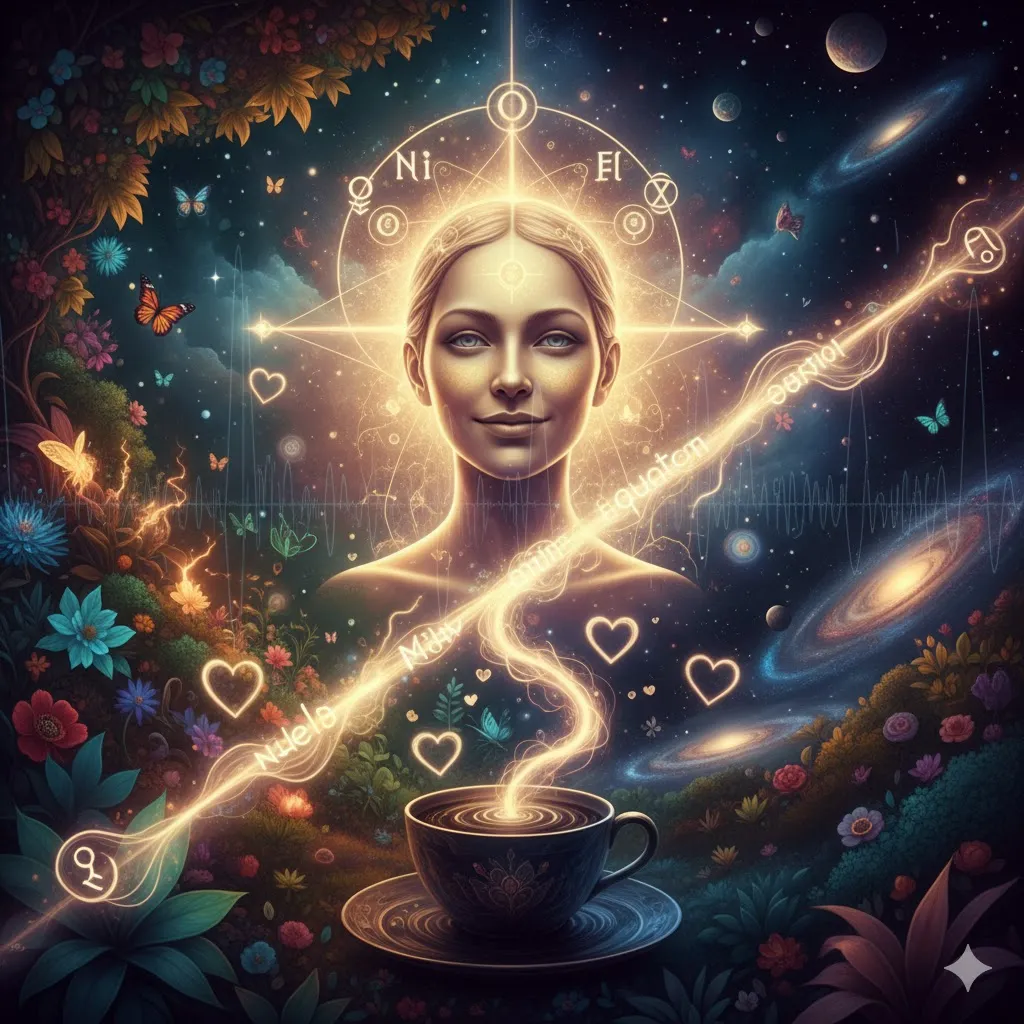
Ghazal
        This Heritage of Ours and Thine
A little dust is all this earth,
This heritage of thine and mine;
Some rubble, pebbles, shards of stone,
This common world of thine and mine.
            From heights descend the streams and
            Rivers, the oceans receive their flowing tide;
            What strange partitions mark the earth,
            And claim these bounds as thine and mine?
As wind, I would come flying unto thee,
What hand could stay my flight?
Yet hands entwined, we grasp the staff of fate,
This shared domain of thine and mine.
            How could I clasp thee to my
            Breast and not dissolve in tears?
            Our ancient grievances, our wounded pride,
            The burden borne by thine and mine.
Through centuries we have striven
Still to be true human souls;
How stubbornly the self persists,
In this proud heart of thine and mine.
            Let Quantum Physics, Dharma,
            Dhamma, and Meta-AI be pondered well;
            The mind’s own trial, a sacred art of
            Knowing, this quest of thine and mine.
Life is a riddle, Darpan; behold
The morning’s fragrant tea;
With my beloved, sweet and tart,
Unfolds the life of thine and mine.
Exegesis: Quantum Sufi Poetics, Relational Consciousness, and the Shared Human Condition
Abstract: “Ours and Thine” is a philosophical-romantic ghazal that brings together the material commonality of human existence, the political arbitrariness of exclusionary boundaries, the emotional vulnerability of intimate relationships, the persistence of ego, and the contemporary dialogue between quantum physics, spiritual traditions, and artificial intelligence.
Its recurring phrase, “thine and mine,” functions as a refrain of relational identity: a linguistic negotiation between possession and participation, separation and belonging. Read through the interpretative framework of Quantum Sufi Poetics, the poem presents unity not as the erasure of difference but as the ethical recognition of interdependence.
Its scientific and spiritual references are best understood as dialogical and metaphorical rather than as claims that quantum mechanics experimentally establishes mystical doctrines.
Keywords: Quantum Sufi Poetics; relational consciousness; mystical humanism; quantum physics; Meta-AI; ego and identity; interdependence; romantic ghazal; spiritual ecology; human fraternity.
- Introduction: The Poetics of Shared Existence The ghazal begins with an apparently modest proposition: the earth consists of a little dust, rubble, pebbles, and stone, and this material world belongs, in a fundamental sense, to everyone who inhabits it. Beneath this unadorned imagery lies a challenge to the psychological and political assumptions through which human beings divide the world into possessions, territories, identities, and competing allegiances.
The poem’s governing refrain, “thine and mine,” evokes the ceremonious intimacy of Victorian romantic diction while retaining the philosophical tension characteristic of Persianate mystical poetry. The possessive pronouns initially appear to establish a distinction between two selves. Yet their repeated conjunction gradually destabilises that distinction. What is called mine is also implicated in thine; what appears to separate us may simultaneously disclose the conditions of our mutual dependence.
The ghazal consequently moves through several interconnected registers: material existence, natural processes, freedom, emotional reconciliation, moral development, scientific and spiritual inquiry, and intimate companionship. Its movement is neither a rejection of individuality nor a demand for uniformity. Rather, it suggests that individual identity acquires depth through its relations with other beings and with the world.
Quantum Sufi Poetics offers a productive interpretative framework for this movement. Here, quantum signifies both a reference to modern physical inquiry and a disciplined metaphor for questioning simplistic assumptions about separateness; Sufi signifies the ethical and contemplative pursuit of self-knowledge, humility, and love. The conjunction is literary and philosophical, not an assertion that quantum theory proves Sufism or that consciousness has been demonstrated to control physical reality through mystical intention.
- Earth, Matter, and the Ontology of Common Ground: The opening couplet reduces the grandeur of territorial possession to the elementary materials of the earth: A little dust is all this earth, this heritage of thine and mine; Some rubble, pebbles, shards of stone, this common world of thine and mine.
The contrast between the apparent insignificance of dust and the magnitude of human claims is central to the couplet’s irony. Nations, institutions, communities, and individuals may attach profound symbolic value to land; nevertheless, their claims remain situated within a material world that precedes and exceeds their particular identities.
Dust is particularly significant in mystical literature. It may signify mortality, humility, the transience of worldly power, or the return of embodied existence to the earth. In this ghazal, it also becomes an image of common material belonging. Human differences remain real, but they do not abolish the material conditions that unite human life.
The inclusion of rubble and broken stone prevents the poem from idealising the world as an immaculate spiritual landscape. Shared existence includes damage, disorder, historical conflict, and the remnants of failed ambitions. The earth is common not because it is perfect, but because its imperfections are shared.
From a psychological perspective, this imagery challenges the inflation of collective identity. Individuals often derive security and self-worth from belonging to a particular group, yet such belonging can become exclusionary when difference is interpreted as a threat. The dust motif invites a more modest understanding of identity: belonging need not depend upon superiority.
A scientific qualification is essential. The shared material composition of earthly life does not, by itself, establish quantum entanglement or a universal consciousness. The poem’s achievement lies instead in transforming material commonality into an ethical proposition: the recognition of shared conditions should encourage responsibility towards others.
- Rivers, Oceans, and the Political Imagination of Borders The second couplet contrasts the fluidity of natural processes with the rigidity of human demarcations: From heights descend the streams and rivers, the oceans receive their flowing tide; What strange partitions mark the earth, and claim these bounds as thine and mine?
The river becomes an emblem of movement across imposed divisions. Water follows physical gradients and participates in interconnected hydrological systems; it does not recognise political allegiance as a natural property. Rivers, watersheds, rainfall, and oceans form relationships that frequently exceed national jurisdictions.
The political implication is not that every boundary is illegitimate. Borders may serve administrative, legal, and civic purposes. The poem questions the transformation of boundaries into absolute moral distinctions, especially when territorial claims are used to justify hostility, exclusion, or the denial of human dignity.
Its environmental dimension is equally important. Rivers and oceans reveal that ecological systems depend upon cooperation, whether or not human institutions acknowledge that dependence. Pollution, resource scarcity, and climatic disruption cannot be adequately addressed through isolated national perspectives alone.
The psychological counterpart is the tendency to construct an absolute opposition between the familiar and the foreign. Social identity can provide solidarity, but it can also encourage suspicion when belonging is defined through hostility towards outsiders. The river offers an alternative image: continuity without uniformity.
Within a Quantum Sufi interpretation, the river signifies relational existence. Its identity depends upon its source, tributaries, surrounding terrain, and eventual destination. This is a useful philosophical analogy for interdependence, although ecological connectivity and quantum entanglement remain distinct phenomena.
The couplet therefore advances an ethic of planetary responsibility. The earth may be politically organised into jurisdictions, but its ecological and human consequences cannot be confined to the psychological boundaries of possession.
- Wind, Freedom, and the Paradox of Intimacy: The third couplet shifts from geography to the intimate imagination: As wind, I would come flying unto thee; what hand could stay my flight? Yet hands entwined, we grasp the staff of fate, this shared domain of thine and mine.
The speaker imagines becoming wind to reach the beloved. The transformation is romantic, but it also expresses a desire to transcend distance, restriction, and the limitations of embodied separation.
Wind possesses a long-standing symbolic association with breath, spirit, freedom, and invisible movement. In a mystical reading, it becomes an image of the self’s yearning to move beyond rigid boundaries. The beloved is no longer merely an object of desire; the beloved represents a point of encounter through which the self discovers possibilities beyond its accustomed limits.
Yet the second line introduces an important tension. The speaker wishes to fly freely but also seeks the beloved’s hand. Freedom and attachment are not presented as mutually exclusive. The desired relationship offers companionship without necessarily extinguishing individuality.
Contemporary relational psychology provides a useful interpretative distinction here. Secure intimacy generally permits both connection and autonomy: individuals can remain emotionally close without surrendering their independent agency. By contrast, possessive attachment may convert affection into surveillance, control, or fear of separation.
The image of the entwined hands thus modifies the conventional romantic fantasy of unrestricted pursuit. The question is not merely whether one can reach the beloved, but whether the encounter allows both persons to remain free.
The “staff of fate” in the English rendering is an interpretative poetic image rather than a literal equivalence of the ambiguous expression in the original. It evokes the possibility that love offers both support and an awareness of shared vulnerability. The precise meaning of the original image remains open.
Quantum language can illuminate this tension metaphorically: a relationship may transform how individuals understand themselves without making them identical. The analogy should not be mistaken for a physical account of love. Its value is conceptual: the recognition that individuality and relationship can coexist.
- Embrace, Tears, and the Psychology of Reconciliation: The fourth couplet presents the emotional heart of the ghazal:
How could I clasp thee to my breast and not dissolve in tears? Our ancient grievances, our wounded pride, the burden borne by thine and mine.
The embrace becomes the moment in which accumulated emotional experience finds expression. Tears suggest not merely sorrow but the possible release of grief, relief, remorse, longing, and the recognition of renewed closeness.
The expression “ancient grievances” places the intimate relationship within the temporal dimension of memory. Relationships accumulate unspoken expectations, disappointments, injuries, and misunderstandings. Such experiences may become part of the emotional structure through which each person interprets the other.
The “burden” of grievances is therefore both interpersonal and psychological. It belongs neither exclusively to one party nor necessarily in equal measure to both. The refrain acknowledges a shared relational history without requiring the false conclusion that responsibility for every injury is symmetrical.
From a psychological standpoint, reconciliation requires more than emotional intensity. An embrace may create a sense of safety, but durable repair ordinarily depends upon recognition of harm, communication, accountability, and changed behaviour. Crying may accompany this process, yet it does not guarantee resolution.
The Sufi resonance lies in the softening of pride. The self that had defended its position becomes capable, at least momentarily, of acknowledging vulnerability. Such humility need not entail self-abasement; it may instead allow the individual to perceive the beloved as a person whose inner life cannot be reduced to the self’s grievances.
The couplet also complicates the distinction between self and other. The shared burden is not evidence that the two persons have become metaphysically identical. It signifies that their experiences have become intertwined through memory, affection, and conflict.
The ghazal’s reconciliation is therefore an ethical possibility rather than a sentimental guarantee: intimacy becomes transformative when vulnerability leads towards understanding rather than renewed domination.
- The Stubborn Self and the Long Education of Humanity: The fifth couplet widens the poem’s horizon from private relationships to civilisation:
Through centuries we have striven still to be true human souls; How stubbornly the self persists, in this proud heart of thine and mine.
The distinction between biological humanity and ethical humanity is fundamental. Human beings may achieve extraordinary intellectual, technological, and institutional advances while retaining destructive habits of prejudice, domination, and collective antagonism.
The phrase “true human souls” expresses a moral ideal rather than a biological category. To become fully human, in the poem’s ethical vocabulary, is to recognise the dignity of others, acknowledge the limits of one’s own perspective, and exercise power with restraint and accountability.
The stubborn self may be understood through several psychological mechanisms. People often defend their existing beliefs because those beliefs are intertwined with identity, social belonging, and a desire for consistency. Acknowledging error can feel like a threat to the whole self rather than a correction of a particular judgement.
Collective identity can intensify this resistance. When political, religious, or national commitments become inseparable from personal worth, criticism of a belief may be experienced as an attack upon the person. This can obstruct dialogue even when evidence or ethical considerations call for reconsideration.
The Sufi concept of nafs provides a complementary interpretative vocabulary. In many Sufi traditions, the refinement of the self involves confronting arrogance, possessiveness, and the desire for superiority. Such refinement is not the annihilation of moral agency; it is an effort to free agency from the compulsions of ego.
The reference to centuries introduces a historical irony. Humanity has accumulated knowledge across generations, yet moral transformation remains unfinished. Technological progress does not automatically produce compassion, just as scientific literacy does not necessarily dissolve prejudice.
The couplet consequently asks for an ongoing education of the self. The challenge is not simply to become more knowledgeable, but to become more capable of living responsibly with others.
- Quantum Physics, Dharma, Dhamma, and Meta-AI: Towards an Interdisciplinary Consciousness: The sixth couplet introduces the poem’s most explicit intellectual synthesis: Let Quantum Physics, Dharma, Dhamma, and Meta-AI be pondered well; The mind’s own trial, a sacred art of knowing, this quest of thine and mine.
The juxtaposition of quantum physics, Dharma, Dhamma, and Meta-AI places scientific inquiry, ethical-spiritual traditions, and artificial intelligence within a shared field of reflection. The poem does not need to make them interchangeable in order to bring them into dialogue.
Quantum physics investigates the behaviour of physical systems at microscopic scales and, more broadly, the mathematical structures through which quantum phenomena are modelled and experimentally tested. Concepts such as superposition, measurement, and entanglement challenge certain classical intuitions about physical reality. Their precise implications depend upon the physical theory and experimental context.
Dharma and Dhamma carry diverse meanings across Indian religious and philosophical traditions. Depending upon the tradition, they may refer to ethical conduct, duty, teaching, truth, the order of existence, or the path of liberation. Their meanings should not be collapsed into a single universal doctrine.
Meta-AI, as employed in this poetic context, can be interpreted as a conceptual horizon beyond ordinary task execution: a reflection upon how artificial intelligence might evaluate its own outputs, reason about its limitations, and remain accountable to human purposes. This is an interpretative use of the term, not a claim that a particular AI system possesses consciousness or genuine self-knowledge.
The convergence occurs at the level of inquiry. What can be known? What counts as evidence? How should uncertainty be handled? What responsibilities accompany knowledge? Can intelligence be separated from ethical judgement without consequences?
The phrase “the mind’s own trial” makes these questions reflexive. The mind is not merely the instrument through which the world is investigated; it is also the object of examination. Its assumptions, biases, interpretative habits, and claims to certainty require scrutiny.
This reflexive turn is compatible with scientific critical thinking and with contemplative traditions that encourage examination of the self. Nevertheless, the methods remain distinct. Physical theories require mathematical coherence and empirical testing; ethical and spiritual claims involve additional forms of philosophical argument, interpretation, and experiential evaluation; AI systems must be assessed through their actual capabilities, limitations, and behaviour.
A rigorous Quantum Sufi Poetics therefore rejects two opposite reductions. It does not dismiss spiritual traditions merely because they do not operate as laboratory sciences, nor does it use the prestige of quantum terminology to certify spiritual assertions that have not been experimentally established.
The poem’s intellectual promise lies in sustaining a disciplined conversation among different forms of inquiry while asking each to confront its own limits.
7.1. The Ambiguity of “Know” and “No” The original’s expression “नो है” may carry a phonetic or conceptual play between know and no, although its intended meaning cannot be established with certainty from the wording alone.
If the ambiguity is deliberate, it can be interpreted as a miniature philosophical paradox. Knowing involves making distinctions and forming judgements; saying “no” can involve rejecting an assumption, resisting an imposed identity, or acknowledging that a particular claim exceeds available evidence.
In this reading, intellectual maturity requires both the courage to know and the discipline to refuse unwarranted certainty. The mind’s trial is not completed by accumulating answers; it also involves recognising when a question remains unresolved.
This interpretation suits the ghazal’s larger argument: a mind capable of self-examination may be better equipped to resist dogmatism, whether that dogmatism appears in political ideology, religious exclusivism, technological enthusiasm, or scientific overconfidence.
- The Morning Cup: Love as Everyday Metaphysics: The final couplet returns the reader from abstract inquiry to the ordinary intimacy of morning: Life is a riddle, Darpan; behold the morning’s fragrant tea; With my beloved, sweet and tart, unfolds the life of thine and mine.
The movement is significant. After considering matter, borders, freedom, reconciliation, ego, and knowledge, the ghazal does not conclude with a grand metaphysical declaration. It concludes with tea and the beloved.
The morning cup functions as an emblem of embodied experience. Its warmth, fragrance, taste, and shared presence locate philosophical reflection within the rhythms of ordinary life. Meaning is not confined to abstract propositions; it also emerges through the practices by which people care for one another and inhabit time together.
The image of sweet-and-tart companionship resists idealisation. Love does not eliminate frustration, difference, uncertainty, or the possibility of disappointment. Rather, a mature relationship learns to accommodate mixed experience without reducing the beloved to an instrument of personal satisfaction.
The word beloved retains several possible dimensions. It can refer to a romantic partner, the object of spiritual longing, or a figure through whom the self encounters a deeper sense of unity. These meanings can coexist poetically without being treated as identical in every theological or philosophical context.
The signature Darpan, meaning “mirror,” adds a reflexive dimension. The mirror reveals an image while inviting the viewer to recognise the act of seeing. It therefore becomes an emblem of self-knowledge: the observer must also examine the assumptions through which the observed world is interpreted.
The cup of tea offers an especially effective counterpoint to the poem’s cosmic vocabulary. It suggests that the search for unity need not require escape from material life. Shared presence, ordinary tenderness, and the willingness to remain with another person through life’s mixed flavours may themselves constitute meaningful forms of spiritual practice.
The poem thus returns metaphysics to lived experience. The question of how existence is interconnected becomes inseparable from the question of how one treats the person seated across the table.
- Conclusion: From Possession to Participation “Ours and Thine” develops a coherent ethical trajectory through its recurring refrain. The language of possession gradually becomes a language of participation. The earth is shared; natural systems exceed political divisions; intimacy requires both freedom and connection; reconciliation confronts accumulated memory; ethical humanity demands the examination of ego; and interdisciplinary knowledge requires intellectual humility.
The ghazal’s Quantum Sufi orientation is most persuasive when understood as a philosophical dialogue rather than a scientific equivalence. Quantum physics supplies concepts that challenge certain inherited intuitions about physical systems, while Sufi traditions offer contemplative resources for examining selfhood, humility, and love. Psychology contributes accounts of attachment, identity, and emotional regulation. Together, these perspectives can illuminate different dimensions of relational existence without being reduced to a single explanatory system.
The poem also establishes an important distinction between unity and uniformity. A shared world does not require the disappearance of cultural, religious, political, or personal differences. Ethical fraternity instead requires that such differences cease to function as automatic justifications for humiliation, exclusion, or violence.
The final image of the beloved and the morning cup gathers these arguments into a simple human scene. The cosmic and the intimate are not identical, yet each can change how the other is understood. A philosophy of interdependence becomes credible when it informs ordinary conduct: how grievances are addressed, how power is restrained, how difference is encountered, and how affection survives imperfection.
The deepest proposition of the ghazal is therefore neither that science has abolished mystery nor that mystical experience has superseded evidence. It is that knowledge, however sophisticated, remains ethically incomplete when separated from self-examination and care.
To recognise the earth as shared, the other as fully human, and the beloved as free is to move from the possessive logic of “mine” towards the relational wisdom of “ours.” In this movement, the poem’s refrain becomes more than a romantic device. It becomes an invitation to imagine a world in which human dignity is not bounded by the divisions that human beings have constructed.
Selected Scholarly References The following works provide a foundation for the scientific, philosophical, psychological, and mystical conversations developed in this exegesis. They support the interpretative framework; they do not establish that quantum physics proves mystical unity.
- Bell, J. S. (1964). On the Einstein Podolsky Rosen paradox. Physics Physique Fizika, 1(3), 195–200.
- Bohm, D. (1980). Wholeness and the implicate order. Routledge.
- Bowlby, J. (1988). A secure base: Parent-child attachment and healthy human development. Basic Books.
- Friston, K. (2010). The free-energy principle: A unified brain theory? Nature Reviews Neuroscience, 11, 127–138.
- James, W. (1902). The varieties of religious experience: A study in human nature. Longmans, Green, and Co.
- Keshavan, M. S., Nasrallah, H. A., & Tandon, R. (2011). Schizophrenia, “Just the Facts”: Moving ahead with the schizophrenia concept. Schizophrenia Research, 127(1–3), 3–13.
- Stapp, H. P. (2007). Mindful universe: Quantum mechanics and the participating observer. Springer.
- Zohar, D. (1990). The quantum self: Human nature and consciousness defined by the new physics. William Morrow.
Editorial note: The references are interdisciplinary points of departure, not a claim that all cited authors endorse the same interpretation of consciousness, quantum theory, or mysticism. The ghazal’s most defensible contribution is literary and ethical: it uses scientific and spiritual vocabularies to reconsider the relationship between individuality, shared existence, and love.