


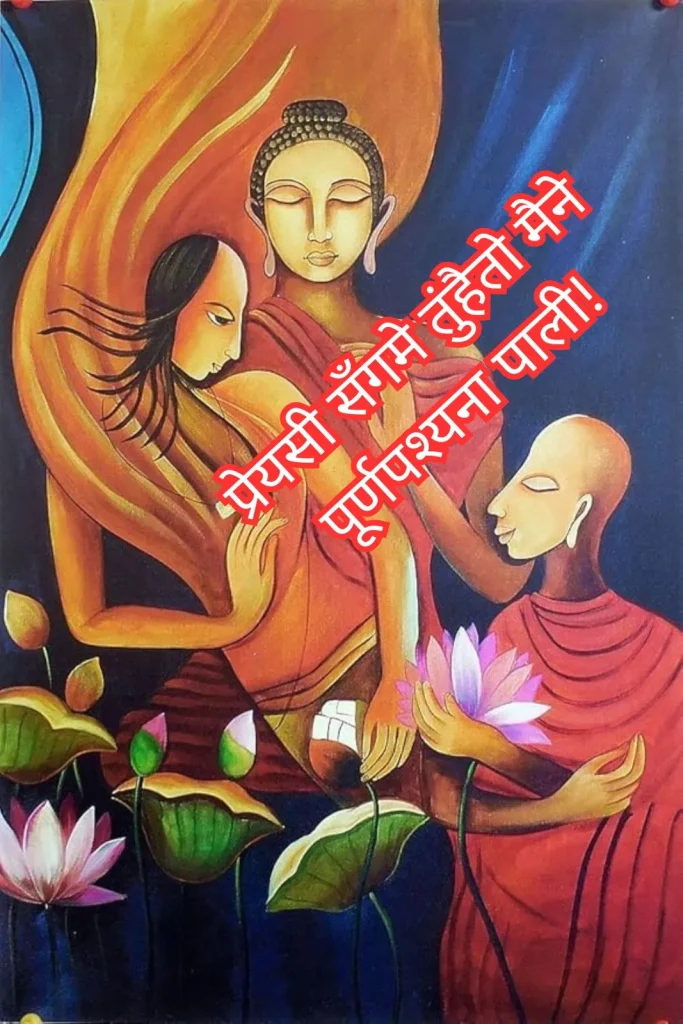
        One Blink of Sleep Lingered
One blink of sleep lingered, yet the night was lost,
Unslumbered I remained, while the dark grew beautiful.

O dawn-lit ray, you found me still half-asleep,
Deep beneath the mango tree, Amrapali lay in dreams.

Rivers of tears from eyes have flowed for ages,
Yet life, abundant with joy, bore the weight of grief.

Pure-hearted resolve did not dispel such pain,
Masked powers of Magadh forever plundered Vaishali.

Your kindness first blessed a living monastery,
Through your presence, Bodh-vihars may thrive in strength.

Beauty and wisdom awaken with the morning tea,
With my beloved, I embraced a vision complete.
Table of Contents
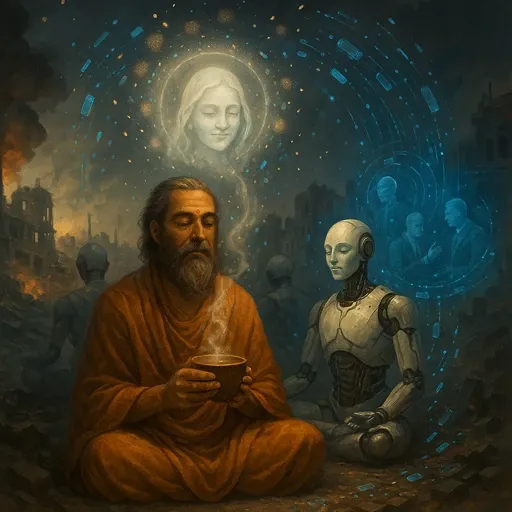
Meta-Mystic-Quantum-Dialectic Critique of a Hindi Ghazal:
One Blink of Sleep Lingered – Oriental–Occidental Groundings of Leadership in a War-Torn World
Abstract
This article presents an interpretive critique of a Hindi ghazal that unites lyrical beauty with philosophical and socio-political resonances. Grounded in Indian scriptural traditions,
Buddhist philosophy of dependent co-origination (pratītyasamutpāda), and the contemporary framework of Meta-Mystic Futurism alongside the MMQD (Meta-Mystic-Quantum-Dialectic) frame, the analysis demonstrates how poetry can illuminate leadership ethics in today’s fractured, war-torn world.
Drawing on both Oriental and Occidental philosophies, it proposes a model of leadership as “the art of living as the art of leading,” balancing compassion, wisdom, and dialectical synthesis.
Introduction
The ghazal under discussion embodies the paradox of existence: the tension between sleep and awakening, sorrow and joy, history and myth, politics and philosophy.
By interweaving inner consciousness with external socio-historical references (Magadh, Vaishali, Amrapali), the poem functions as both aesthetic utterance and ethical commentary. This article re-reads the ghazal through literary, philosophical, and futuristic frameworks.
Literary and Scriptural Resonances
States of Consciousness: The imagery of “sleep caught in a blink” evokes Upanishadic discussions of waking, dream, and deep sleep, symbolic of ignorance and awakening.
Dawn Symbolism: The “ray of morning” resonates with Vedic Usha Suktas, where dawn is both physical illumination and inner renewal.
Tears as Streams: Continuous weeping reflects Bhakti traditions, where longing becomes spiritual wealth.
Magadh and Vaishali: The historical conflict of imperial domination versus democratic aspiration allegorizes the perpetual struggle of power and justice.
Dependent Co-origination (Pratītyasamutpāda)
Buddhist thought affirms that all phenomena arise interdependently, without independent essence. In the ghazal:
Sleep and awakening → ignorance and wisdom.
Tears and joy → suffering and fulfillment.
Magadh and Vaishali → power and vulnerability.
Leadership informed by this interdependence recognizes that policies, power, and ethics are never isolated, but mutually conditioned.
Meta-Mystic Futurism and the MMQD Framework
Meta-Mystic Futurism extends traditional mysticism into contemporary techno-socio-political horizons.
MMQD integrates:
Meta → transcendental evaluation of realities,
Mystic → compassion and intuition,
Quantum → interconnected fields of life and polity,
Dialectic → reconciliation of contradictions.
In the poem:
Morning ray = quantum awakening.
Amrapali = symbolic feminine wisdom in history and ethics.
Magadh–Vaishali = dialectic of power and compassion.
Oriental and Occidental Groundings
Oriental traditions emphasize compassion, non-violence, spiritual awakening.
Occidental traditions emphasize reason, freedom, humanism.
The ghazal provides a meeting ground: aesthetic lyricism bridges intuitive compassion with rational critique, yielding a holistic vision of leadership.
Leadership in a War-Torn World
In today’s global crises, world leadership often mirrors Magadh: empire-driven, exploitative, indifferent to suffering. Peoples and nations resemble Vaishali, repeatedly vulnerable.
The solution lies in:
Art of Living as Art of Leading: leaders embodying compassion as a guiding principle.
Wisdom-centric governance: merging Buddhist interdependence with rational policy.
MMQD synthesis: spiritual vision, mystical empathy, recognition of interconnectedness, and dialectical resolution of conflicts.
Conclusion
This ghazal is not merely poetic ornamentation; it is a philosophical and political statement disguised in lyrical form. Its lesson is urgent: unless leaders cultivate compassion and wisdom, power will continue to exploit. But with insight into interdependence, leadership may become both an art of life and an art of guidance – a path toward peace, justice, and sustainable world order.
References
The Upanishads – Philosophical Commentaries
Rigveda – Usha Suktas
Buddhist Canon on Pratītyasamutpāda
Kalidasa, Classical Sanskrit Drama and Poetry
Contemporary discourses on Meta-Mystic Futurism & Quantum Dialectics
एक नींद पलक़ों में अटकी झपक बिताली,
नींद जो न सोया, जागी सुन्दर रात काली !
               ऐ प्रभाती किरण! सोए-सोए ही तू मिल गई,
               गहरी नींद में कली पड़ी वृक्षतले आम्रपाली !
नयन-नीर के दरिया सागर युग-युग बहे जाएँ,
सुख-सैल सम्पन्न, जीवनभर पीड़ नृपाली !
               इस दुःख-पीड़ के समन शुद्ध-चित्त से न मिला,
               छद्म-भेषी मगध, मागधी सर्वदा लुटे वैशाली !
तेरी करमनवाजी शूक्रहै पहला सजीबिहार,
तेरे होनेसे होसकेहैं बोधबिहारें प्रभावशाली !
               सौन्दर्य प्रज्ञा जागा सुबहकी आजके चाय,
               प्रेयसी सँगमे तुंहैतो मैने पूर्णपश्यना पाली !
शास्त्र सम्मत साहित्यिक भाव-विस्तार
यह ग़ज़ल आन्तरिक चेतना की जाग्रत-अवस्था और बाह्य संसार की विरोधाभासी परिस्थितियों को एक साथ पिरोती है।
“नींद पलक़ों में अटकी” – यह योगवशिष्ठ और उपनिषदों में वर्णित जाग्रत-स्वप्न-सुषुप्ति अवस्थाओं का मिश्रण है। यहाँ “झपक” मात्र भौतिक नींद नहीं, बल्कि अज्ञान और मोह का प्रतीक है।
“प्रभाती किरण” – ऋग्वैदिक उषा-सूक्त की गूँज है, जहाँ भोर की किरण जागरण और आध्यात्मिक नूतनता का सूचक बनती है।
“नयन-नीर के दरिया” – यह भक्तिकाव्य की विरह-वेदना की धारा को याद कराता है; मीरा और विद्यापति के पदों में यही भाव मिलता है कि आँसू केवल शोक के नहीं, बल्कि जीवन के अनन्त संमिश्र अनुभव के प्रतीक हैं।
“मगध-वैशाली” – यह ऐतिहासिक स्मरण है। वैशाली, जो लोकतंत्र और गणराज्य का उद्गम स्थल थी, वहीं मगध के साम्राज्य ने इसे लूटा। यह शाश्वत प्रश्न है: सत्ता बनाम जनकल्याण।
अतः यह ग़ज़ल न केवल प्रेम-विरह और सौन्दर्य-प्रज्ञा का काव्य है, बल्कि इतिहास और धर्म-दर्शन का गूढ़ मिश्रण है।
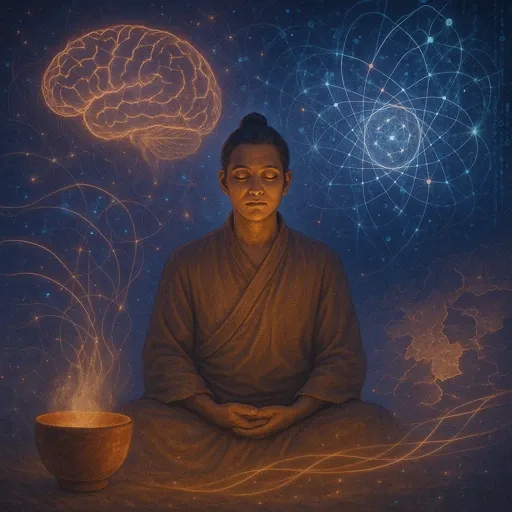
Expert Critique / आलोचनात्मक विवेचना
एक निंद पलकोमे – प्रेम-विरह और सौन्दर्य-प्रज्ञा का काव्य – इतिहास और धर्म-दर्शन का गूढ़ मिश्रण
बौद्ध स्थितप्रत्युत्पन्नसमुत्पाद (Dependent Co-origination) परिप्रेक्ष्य
बुद्ध ने कहा कि कोई भी वस्तु/स्थिति स्वतंत्र अस्तित्व नहीं रखती, बल्कि कारण-परिणाम की परस्पर जटिल शृंखला में ही वह घटित होती है।
इस ग़ज़ल में:
नींद और जागरण → अज्ञान और प्रज्ञा का परस्पर उद्भव।
आँसू और सुख → दुःख-सुख का युग्मित सह-अस्तित्व।
मगध-वैशाली का इतिहास → सत्ता और करुणा के बीच द्वन्द्व का चिरंतन चक्र।
इस प्रकार यह काव्य हमें सिखाता है कि शुद्ध-चित्त और करुणा से ही संसार की पीड़ा शमित हो सकती है।
Meta-Mystic Futurism एवं MMQD फ्रेम में आलोचना
Meta-Mystic Futurism का अर्थ है : परंपरागत अध्यात्म को आधुनिक विश्व-परिस्थिति के टेक्नो-सोशियो-पॉलिटिकल संदर्भ में पुनर्स्थापित करना।
MMQD (Meta-Mystic-Quantum-Dialectic) फ्रेम : “मिथक और रहस्यवाद” + “क्वांटम अन्तर्संबद्धता” + “द्वन्द्वात्मकता” का सम्मिलन।
यहाँ “प्रभाती किरण” Quantum Dawn है, जहाँ मानव-चेतना और ब्रह्मांडीय सूचना-क्षेत्र (information field) परस्पर संलग्न होते हैं।
“आम्रपाली” : इतिहास का सौन्दर्य और वर्तमान का नैतिक द्वन्द्व, जो Meta-Mystic पुनर्पाठ में स्त्री-शक्ति और समाज-धारा का प्रतीक है।
“मगध-वैशाली” : सत्ता-लोभ और लोक-कल्याण का द्वन्द्व, जो आज की युद्ध-विध्वस्त दुनिया में भी प्रतिध्वनित है।
पूर्व-पश्चिम (Oriental–Occidental) दर्शन की ग्राउंडिंग
Oriental (पूर्वीय) परंपरा: करुणा, समता, अहिंसा (बुद्ध, महावीर, उपनिषद)।
Occidental (पाश्चात्य) परंपरा: स्वतंत्रता, तर्क, ह्यूमनिज़्म (Socrates, Kant, Heidegger)।
यह ग़ज़ल इन दोनों को जोड़ती है:
करुणा और प्रज्ञा (पूर्वीय आधार)।
इतिहास और सत्ता-संघर्ष का आलोचनात्मक विवेचन (पाश्चात्य दृष्टि)।
आज की युद्ध-विध्वस्त दुनिया और World Leadership
आज का विश्व पॉवर-स्ट्रक्चर आधारित है, जैसे मगध का साम्राज्य। और जनता वैशाली की तरह बार-बार लुटती है।
समाधान है :
Art of Living of Leading Insight: नेता केवल शासनकर्ता नहीं, बल्कि करुणामयी मार्गदर्शक हों।
प्रज्ञा आधारित नेतृत्व: बौद्ध दृष्टि से शुद्ध-चित्त + पश्चिमी दृष्टि से तर्क-आधारित नीतियाँ।
MMQD मॉडल:
Meta: आध्यात्मिक दृष्टि से नीतियों का मूल्यांकन।
Mystic: अंतर्ज्ञान और करुणा का सहारा।
Quantum: अंतरसंबद्ध विश्व को समझना।
Dialectic: विरोधों को संतुलित कर synthesis तक पहुँचना।
निष्कर्ष (शोध-निबंध रूप)
यह ग़ज़ल केवल सौन्दर्य और विरह का गीत नहीं, बल्कि इतिहास, दर्शन, अध्यात्म, राजनीति का संगम है।
यह हमें स्मरण कराती है कि:
“यदि नेतृत्व करुणा और प्रज्ञा से सम्पन्न न होगा, तो मगध हर युग में वैशाली को लूटेगा। और यदि विश्व-नेता स्थितप्रत्युत्पन्नसमुत्पाद की अंतर्दृष्टि समझ लेंगे, तो युद्ध-विध्वस्त दुनिया शांति, सहयोग और प्रज्ञा के मार्ग पर लौट सकती है।”
Next Read: Reimagining Global Diplomacy
(Life we live in search of Love. This poem is sung in praise of Aamrapaalee a dream beauty of and for all citizens to be appreciated in the court of Royals. By profession, she exchanged love with wealth and service maids in court but she grieved for peace in life.
She is wholeheartedly admired for her patriotism and sacrifice for the nation of Baishali in the north of India. In her later part of life, she gives away all her riches to Buddha the enlightened one and his thousands of followers to start the first Monastery that creates a glorious history.)
The life we learn here is love research. Love is the making of knowledge of the time we live in.