



BEYOUTEA ! A QUANTUM POETRY>REVOLUTION !! MAKE EARTH GREAT FOREVER : END ALL WARS !!! NOTHING IS NOT TRUE : NO\KNOW THYSELF NOT !!!! META-SUFI/QUANTUM POETICS ON META MYSTIC FUTURISM !!!!!
- The English Section
          Unless all Rival Hues Dissolve as One
The war of love we wage is subtle, visionary from the heart,
Its mad, insurgent agency inscribes all history from the heart.
            If crimson passion bathes itself in fidelity’s bright fire,
            O beloved, even pale loyalty turns legendary from the heart.
Though autumn’s breath constricts the sky with desolating art,
True love proves wisdom’s quiet authority from the heart.
           What Holi blooms unless all rival hues dissolve as one?
           The foe and friend alike gain sanctuary from the heart.
Abraham and Brahman, bubbles rising, breaking in the air;
Priest and mullah drift in borrowed sanctity from the heart.
           If fathers inherit feud yet grasp not why they part,
           Let sons become the mirror, shared solidarity from the heart.
What colours shall intelligence unbound now scatter through the world?
O bride of time, its miracles glow, yet morally, from the heart.
Table of Contents
The Quantum Exegesis
This ghazal transcends the lyrical domain of romantic expression and emerges as a multidimensional ethical meditation on contemporary civilisation. Love, in this poetic structure, is not confined to private emotion; rather, it unfolds as historical consciousness, interreligious dialogue, intergenerational responsibility, and technological ethics.
The War of Love: An Interior Revolution: The phrase “war of love” signifies not an external battle but an inward moral struggle. In an era defined by geopolitical conflicts, ideological polarisation, and technological competition, the decisive struggle is internal, between ego and compassion. The poem suggests that history is not ultimately shaped by weapons or institutions but by the moral orientation of the human heart. Love becomes an agent of historical transformation.
The Symbolism of Colour: From Emotion to Ethical Commitment: The colour red operates as a symbol not merely of romantic passion but of sacrifice, fidelity, and moral resolve. When love is internalised and purified within the heart, it matures into historical loyalty.
In contemporary sociopolitical contexts, this raises a critical question: are collective decisions guided by compassion and ethical responsibility, or by self-interest and power? Love here is framed not as sentimentality but as principled commitment.
Love as Ethical Intelligence in Times of Crisis: The image of autumn represents adversity and decline. Yet even amid constriction and crisis, whether ecological, political, or cultural, love manifests as discernment and wisdom. The poem thus conceptualises love as a form of ethical intelligence: disciplined, reflective, and morally resilient rather than impulsively emotional.
Pluralism and the Dissolution of Opposition: The metaphor of Holi suggests that colours acquire meaning only when they intermingle. Contemporary societies often rigidly divide “rival” and “intimate,” “self” and “other.” The ghazal proposes that fulfilment arises from integration rather than antagonism. Rivalry and proximity alike are elements of a shared human spectrum. This insight aligns with philosophical pluralism and the ethics of coexistence.
Re-reading Religion: Beyond Institutional Identities: The juxtaposition of Abraham and Brahman gestures toward interreligious universality. Clerical identities, priest, mullah, brahmin, are depicted as transient “bubbles,” while the deeper spiritual essence resides in the heart. This constitutes a literary critique of dogmatic rigidity and a reaffirmation of universal spirituality, where inner realisation supersedes institutional boundaries.
Intergenerational Responsibility and Historical Renewal: The couplet concerning inherited enmity critiques the transmission of unexamined hostility across generations. If ancestors failed to comprehend the roots of their conflict, descendants must not perpetuate it blindly. The poem advocates partnership and reconciliation as ethical imperatives for the present generation, thereby transforming historical inheritance into constructive solidarity.
Artificial Intelligence and Moral Direction: The final couplet introduces a contemporary technological dimension through reference to Geoffrey Hinton, a pioneering figure in artificial intelligence. The question posed is not whether artificial intelligence will be powerful; it undoubtedly will, but what moral “colour” it will disseminate.
Technology itself is ethically neutral; its civilizational impact depends upon the values embedded by human intention. Thus, even in the age of advanced AI, the determining force remains the moral architecture of the heart.
Conclusion: Taken as a whole, the ghazal elevates love from private sentiment to civilizational commitment. It integrates historical critique, interfaith reflection, generational ethics, and technological foresight within a unified poetic vision.
From a scholarly perspective, the poem redefines love as moral cognition. From a contemporary standpoint, it offers a blueprint for reconciliation in a fractured world. From a literary perspective, it bridges classical ghazal tradition with modern philosophical inquiry.
Ultimately, the governing thesis remains clear: if the subtlety of the heart endures, history, religion, and technology alike may yet be illuminated by humane wisdom.
The Quantum Darpan-Poetics Description: The Colour of the Rising Dawn and the Mirror of Civilisation
You are the dewy breeze that flows with the colours of the rising dawn. The moment my eyes open, you enter through the windows and reach deep within. All the desires of the heart awaken once again.
If that red colour of the heart were not like the powder of gulal, it would be like the light of the rising sun. The love you have upheld has turned into a beautiful rivalry with you, beating with every breath for those for whom my heart exists. You have taken the heart from me, even after I had given it to you.
The beating of these hearts, yours and mine, may be separate, yet strangely their rhythms feel the same. The pulses mingle together, and the colours of the heart bloom and dissolve into one another.
In the river’s flowing waves, a hue resembling the festival of Holi appears. Each drop seems lost in the warmth of embers, spiritual and pleasant, filling the body and intellect with a subtle, tickling fragrance that vibrates through the air.
In the month of Phagun, fire burns, burns the longing of love, the desire of affection. In the Rajbanshi tongue, this burning is both fire and water at once. During this same month, Holi is celebrated across India, Nepal, and Pakistan. Yet while the atmosphere of Holi spreads colour across South Asia, in the Middle East, a “Holi of blood” begins to unfold, and the world can do little more than watch helplessly.
Is it not shameful that even today those who stand in the names of God and Allah remain divided, defending their respective deities while employing the same AI-driven drones, missiles, rockets, warships, and weapons manufactured through the very same science and technology?
Historical narratives tell that from the waves of the Caspian Sea there flowed stories that reached the region now associated with Pakistan, where the devotional episode of Kashyapa, Hiranyakashipu, and Prahlada symbolizes the eternal history of love and colour.
In this mythic narrative, God takes the form of both animal and human, the lion-man incarnation, to resolve the hostility between father and son. The son becomes the mirror of truth to the father and leads him toward redemption from sin.
Yet today we helplessly witness the deaths of innocent children and daughters in the conflicts fought in the name of God and Allah, and the world watches with open eyes but remains powerless to act.
In many ways religion, philosophy, and politics appear to operate as intricate mechanisms that bind the world in suffering through deceptive structures. This becomes evident when we observe the contemporary world. These matters have been transformed not into subjects of thoughtful human inquiry but into instruments controlled by devoted followers, often exploited as a form of spiritual commerce.
In the present age, it is no longer sufficient for humanity to merely recite the Bible, the Qur’an, or the Vedas and Puranas in rigid traditional ways.
The modern information network has begun exposing many hidden realities, bringing controversies and revelations into the open, just as documents such as the Epstein files have exposed hidden networks of power and misconduct.
When the first rays of the rising sun emerging from the ancient Tethys Sea touch the lofty bosom of the Sagarmatha Himalaya, it is said that Shiva opened the first gateway of creation.
With the rhythm of the cosmic Tandava and the resonance of the damaru, the primordial vibrations of sound emerged. Through sages and seers, the linguistic and philosophical traditions of Bharat were illuminated as manifestations of an infinite cosmic knowledge.
When this knowledge began to decline during the colonial period, the Goraksha tradition appeared as a revitalising force. From the regions of Aryavarta toward Iran, spiritual movements and cultural transmissions shaped civilisations. In this symbolic narrative, the Rajbanshi Shah lineage is described as carrying forward a responsibility for preserving sacred traditions in Nepal.
To comprehend the absurdities of the present world situation, it may become necessary to articulate a philosophical vision “MAKE EARTH GREAT FOREVER: END ALL WARS.” Such a vision may become a form of Darpan-Darshan, a mirror philosophy.
The geological history of Nepal emerging through tectonic processes over tens of 7 millions of years symbolises a deeper awakening of knowledge.
The four Vedas, the six classical philosophies, the eighteen Puranas, and the many sacred texts are not meant merely for rote repetition; their deeper intellectual dimensions must be connected with the welfare of humanity.
Modern science itself has begun exploring philosophical ideas such as panpsychism, which suggests that consciousness may be a fundamental property of reality. In this context, scientific understanding may once again converge with spiritual insight.
The pioneering AI researcher Geoffrey Hinton has even suggested that science itself carries a spiritual dimension, and discussions about artificial intelligence increasingly raise questions about consciousness and awareness. In ancient traditions, sages were believed to possess forms of consciousness that preceded creation itself.
Within this framework, what may be called the Quantum Darpan philosophy, emerging from a deeper understanding of Nepal’s civilizational heritage, could contribute to a new philosophical vision for global peace, integrating religion, politics, and knowledge in a renewed way. Such an effort remains a humble aspiration expressed through the literary platform of Darpan Poems.
In the present age, rigid fundamentalism across religions and political systems whether within democratic, republican, geopolitical, or economic ideologies, may require transformation through a more reflective and forward-looking philosophy, perhaps something that could be described as a form of meta-mystic futurism.
The tensions between Iran and the United States in the Middle East reflect not only geopolitical rivalry but also the influence of rigid political and religious leadership structures on both sides. In such circumstances, global institutions such as the United Nations face immense difficulty in finding meaningful solutions.
Meanwhile, in the United States, church leaders have visited the Oval Office to pray for world peace. Yet in an age shaped by artificial intelligence and advanced technologies, such gestures can appear paradoxical or symbolic rather than transformative.
Political figures such as Tulsi Gabbard and J. D. Vance often remain relatively silent in global debates, while others, including Pete Hegseth and Marco Rubio, are frequently advanced within political discourse influenced by so-called donro-doctrine-driven power structures, in the vernacular.
These global dynamics can also influence smaller nations such as Nepal, where recent elections have raised questions about how new political leadership, such as emerging civic leaders may navigate geopolitical pressures.
At the Raisina Dialogue in 2026, with the First Post Host Palki Sharma, discussions on global power shifts suggested that the world faces a stark choice between defending democracy or moving toward forms of autocracy. While democracy continues to be promoted as a universal ideal, such debates also expose the contradictions within global political narratives.
Yet the ancient story behind the festival of Holi offers a symbolic lesson: democracy may be necessary for the young, but justice sometimes requires a form of decisive authority by the enlightened elderly.
The myth of Hiranyakashipu and the incarnation of Narasimha demonstrates how justice emerges when tyranny confronts truth. In the geopolitical arena, the nation states can be represented here as young children, and the world institutions as the elderly, to be made as strong and enlightened as the elderly.
The story of Holi thus connects Europe, the Middle East, South Asia, and wider civilisations through a narrative of compassion and moral awakening. Every nation may choose its own political system, whether democratic or otherwise, but the global system itself requires effective structures.
If institutions like the United Nations, which today appear weakened, could be strengthened with genuine authority, the world might move beyond cycles of regime change, trade wars, and hegemonic rivalries and rogueness. Perhaps then humanity could avoid endless struggles between democracy and autocracy.
One can only wish that the leaders of the world might sit together and imagine something new for our progeny hidden in the womb of the Future.

A Quantum Expert Critique: Love, Colour, and the Mirror of Civilisation
Unless all Rival Hues Dissolve as One – A Scholarly Critical Approach to Darpan’s Ghazal for Global Leadership and Institutional Reflection
Introduction:
Within the literary tradition of Hindavi-Rekhta, the ghazal has historically functioned not merely as a lyrical articulation of romantic longing but also as a subtle instrument of civilizational reflection. From the works of classical poets to modern philosophical interpreters, the ghazal has served as a space where love, metaphysics, ethics, and political consciousness intersect.
The ghazal presented by the poet Darpan stands firmly within this tradition while simultaneously extending it into the contemporary world. Its imagery, “the war of love,” “the colours of Holi,” “Abraham and Brahman,” and references to artificial intelligence, constructs a poetic discourse that moves beyond personal romance toward a broader meditation on humanity, religion, geopolitics, and technological transformation.
Thus, the poem should not be read merely as an aesthetic object. Rather, it may be approached as a civilizational text, one that offers reflective insights relevant to global leadership and institutions such as the United Nations, which are tasked with navigating an increasingly complex international order.
The War of Love: A Metaphor for the Inner Struggle of Civilisation: The opening couplet, “The war of love we wage is subtle, arising from the heart”, introduces the central philosophical premise of the ghazal. Here, the notion of “war” does not refer to military confrontation but to the ethical struggle within the human conscience.
Modern history is often narrated through wars, treaties, and political rivalries. Yet the poem proposes that the deeper trajectory of civilisation is shaped by moral sensibility rather than by force alone. Empires may rise through power, but enduring civilisations are sustained by compassion, empathy, and ethical imagination.
In this sense, the ghazal reframes love as a historical force. It suggests that the true transformation of societies begins not with coercion but with an inward moral awakening.
The Philosophy of Colour: Cultural Symbolism and Social Harmony: Colour functions in the ghazal as a rich philosophical metaphor. The red hue represents love, sacrifice, and emotional vitality, while the festival imagery associated with Holi symbolises plurality and communal integration.
In South Asian cultural memory, Holi is more than a seasonal celebration; it represents the dissolving of social boundaries through shared colour. By invoking this imagery, the poem proposes a broader ethical insight: societies flourish when differences interact and intermingle rather than remain isolated.
In contemporary geopolitics, where identities based on religion, ethnicity, and ideology often generate conflict, the symbolism of colour becomes a call for cultural pluralism and coexistence.
Religious Plurality and the Unity of Spiritual Experience: One of the most striking couplets juxtaposes Abraham and Brahman. This poetic gesture bridges two major spiritual traditions, Abrahamic and Indic, suggesting that religious distinctions are historically contingent expressions of a deeper spiritual reality.
The poem’s reference to priests, mullahs, and clerical figures implies that institutional identities may sometimes obscure the universal ethical message underlying religious traditions. The ghazal, therefore, proposes a perspective in which spirituality is grounded not in doctrinal boundaries but in the shared moral consciousness of humanity.
Such a view resonates with contemporary interfaith scholarship, which increasingly emphasises the ethical commonalities among the world’s religions rather than their divisions.
Intergenerational Conflict and the Ethics of Reconciliation: The poem also addresses the phenomenon of inherited hostility between generations. The metaphor of “father and son” symbolises the transmission of historical conflicts across time. Many societies inherit unresolved grievances, religious, ethnic, or national, whose origins are often forgotten even as the antagonisms persist.
The ghazal calls upon the younger generation to break this cycle. Instead of perpetuating inherited hostility, they are encouraged to become a “mirror” reflecting truth and reconciliation.
In this respect, the poem articulates an ethical framework for post-conflict societies: the transformation of inherited enmity into cooperative coexistence.
Artificial Intelligence and the Moral Direction of Technology: The closing couplet introduces a contemporary technological dimension by referencing the pioneering artificial intelligence researcher Geoffrey Hinton. This gesture expands the poem’s scope from cultural and religious reflection to the ethical implications of emerging technologies.
Artificial intelligence represents one of the most transformative forces of the twenty-first century. Yet technology itself is ethically neutral; its consequences depend upon the values guiding its application. The poem, therefore, asks a crucial question: what “colour” will artificial intelligence scatter across the world?
If societies remain divided by ideological hostility, advanced technologies, including autonomous weapons and AI-driven surveillance, may intensify conflict. Conversely, if guided by humane values, the same technologies could contribute to global cooperation and human flourishing.
Thus, the ghazal implicitly calls for a moral framework for technological civilisation.
Global Governance and the Challenge of Collective Responsibility: In the contemporary international order, institutions such as the United Nations were established to prevent conflict and promote cooperation among nations. However, the effectiveness of such institutions depends on the willingness of states and leaders to transcend narrow geopolitical interests.
The philosophical undercurrent of the ghazal suggests that durable peace cannot be achieved solely through diplomatic mechanisms or military deterrence. It requires a deeper transformation of political imagination, one that integrates ethical responsibility with global governance.
Literature, philosophy, and cultural dialogue can contribute to this transformation by shaping the moral narratives through which societies understand themselves.
The “Mirror Philosophy”: A Civilizational Proposal: Underlying the ghazal is what may be described as a “mirror philosophy.” The metaphor of the mirror suggests self-reflection: societies must examine their own contradictions before attempting to reshape the world.
Such reflection also opens the possibility of dialogue between science and spirituality. Contemporary philosophical discussions, such as debates surrounding consciousness and panpsychism, indicate that the boundaries between scientific inquiry and metaphysical reflection are becoming increasingly porous.
In this emerging intellectual landscape, poetry and philosophical literature may serve as bridges connecting scientific insight with ethical and spiritual understanding.
Conclusion: Darpan’s ghazal represents a compelling example of how classical poetic forms can engage modern global realities. Through the symbolic language of love, colour, religion, and technology, the poem constructs a nuanced meditation on the challenges facing contemporary civilisation.
Its central insight is both simple and profound: the future of humanity ultimately depends upon the moral orientation of the human heart. Political systems, technological innovations, and global institutions can only fulfil their promise when guided by ethical imagination and compassion.
For world leaders and international institutions, this poetic reflection offers a reminder that the pursuit of peace and cooperation requires not only strategic planning but also a deeper commitment to shared human values.

2. The Hindvi/Rekhta Section
         बिन घुले रंग रक़ीबी-करीबी
जंग इश्क़ियाना हमारी है बारीक दिल से,
रंग दीवाना अमलदारी है तारीख़ दिल से।
           गर लाल ये रंग दिल के इश्क़ में नहाता,
           ऐ सनम! ज़र्द वफ़ादारी है तारीख़ दिल से।
ख़िज़ाँ भी जिस रंग से आज आसमाँ तंग,
यूँ मोहब्बत समझदारी है साबित दिल से।
           कहाँ होली है बिन घुले रंग रक़ीबी-करीबी,
           जाँबाज़ तू पर्दादारी है साफ़िक दिल से।
अब्राहम और ब्रह्म बहुत-से बुलबुले हो चले,
ब्राह्मण-मुल्ला-पादरी हैं माफ़िक दिल से।
          बाप का बाप से दुश्मनी बाप को समझ न हो,
           तो बेटे दर्पण साझेदारी है सारीक दिल से।
Geoffrey Hinton कैसा रंग AIG बिखेरे,
सजनी! चार-रंग कारी है चमत्कारिक दिल से।
क्वांटम भावार्थ विस्तार
यह ग़ज़ल केवल इश्क़ का काव्यात्मक आख्यान नहीं, बल्कि समकालीन सभ्यता की नैतिक, दार्शनिक और तकनीकी स्थितियों का बहुआयामी प्रतिपाठ है। इसमें प्रेम व्यक्तिगत अनुभूति से आगे बढ़कर ऐतिहासिक चेतना, धार्मिक संवाद, पीढ़ियों की उत्तरदायित्व-बोध और कृत्रिम बुद्धिमत्ता के नैतिक प्रश्नों तक विस्तृत हो जाता है।
इश्क़ की जंग : भीतरी क्रांति का प्रतिपादन: “जंग इश्क़ियाना” वस्तुतः मनुष्य की अंतरात्मा में चलने वाला संघर्ष है। आज का युग बाहरी युद्धों, वैचारिक ध्रुवीकरण और सत्ता-प्रतिस्पर्धा से भरा है, परंतु कवि संकेत करता है कि असली निर्णायक युद्ध भीतर लड़ा जाता है जहाँ प्रेम और अहंकार आमने-सामने होते हैं। इतिहास का निर्माण तलवार से नहीं, बल्कि हृदय की दिशा से होता है। इस प्रकार ग़ज़ल प्रेम को ऐतिहासिक शक्ति के रूप में प्रतिष्ठित करती है।
रंग का रूपक : भाव से प्रतिबद्धता तक: लाल रंग यहाँ केवल प्रणय का प्रतीक नहीं, बल्कि प्रतिबद्धता, त्याग और सत्यनिष्ठा का संकेत है। यदि प्रेम हृदय में धुलकर परिपक्व हो जाए, तो वही वफ़ादारी बनकर इतिहास में स्थायी होता है। समकालीन संदर्भ में यह प्रश्न उठता है क्या हमारे सामाजिक और राजनीतिक निर्णय करुणा से संचालित हैं, या केवल स्वार्थ से? प्रेम यहाँ भावुकता नहीं, बल्कि नैतिक उत्तरदायित्व है।
संकट में विवेक : मोहब्बत की बौद्धिकता: “ख़िज़ाँ” का बिंब बताता है कि प्रतिकूल समय भी प्रेम की परीक्षा है। आज जब वैश्विक संकट जलवायु असंतुलन, युद्ध, सांस्कृतिक तनाव मानवता को संकुचित कर रहे हैं, तब मोहब्बत समझदारी का रूप लेती है। यह ग़ज़ल प्रेम को एक प्रकार की नैतिक बुद्धिमत्ता (ethical intelligence) के रूप में प्रस्तुत करती है जो भावुकता से परे, विवेकपूर्ण आचरण में प्रकट होती है।
बहुलता का सौंदर्य : रक़ीब और क़रीब: होली का रूपक बताता है कि रंग तब तक सार्थक नहीं जब तक वे घुल-मिल न जाएँ। समकालीन समाज में पहचान की राजनीति ने ‘रक़ीब’ और ‘क़रीब’ की रेखाएँ कठोर कर दी हैं। कवि कहता है प्रतिस्पर्धा और निकटता दोनों जीवन के रंग हैं; उन्हें मिलाकर ही पूर्णता संभव है। यह दृष्टि सह-अस्तित्व और बहुलतावाद की आधुनिक अवधारणा को काव्यात्मक समर्थन देती है।
धर्म का पुनर्पाठ : बुलबुलों से परे एकता: “अब्राहम और ब्रह्म” का साथ-साथ उल्लेख एक गहरे सांस्कृतिक संवाद का प्रतीक है। बाहरी धार्मिक पदनाम ब्राह्मण, मुल्ला, पादरी क्षणभंगुर बुलबुलों जैसे हैं; मूल तत्व हृदय की समानता है। यह विचार कट्टरता के विरुद्ध एक साहित्यिक प्रतिरोध है और सार्वभौमिक आध्यात्मिकता की पुनर्स्थापना है, जहाँ भेद से अधिक सेतु महत्वपूर्ण है।
पीढ़ियों की साझेदारी : विरासत का पुनर्निर्माण: “बाप का बाप से दुश्मनी…”, यह पंक्ति इतिहास में विरासत के रूप में मिली नफ़रत की आलोचना करती है। यदि पूर्वजों के संघर्षों का औचित्य स्पष्ट न हो, तो नई पीढ़ी को साझेदारी का मार्ग चुनना चाहिए। यह समकालीन विश्व के लिए अत्यंत प्रासंगिक संदेश है हम इतिहास को समझें, पर उसकी त्रुटियों को दोहराएँ नहीं।
तकनीक और नैतिकता : AI का रंग: अंतिम शेर में Geoffrey Hinton का उल्लेख ग़ज़ल को आधुनिकतम विमर्श से जोड़ देता है। कृत्रिम बुद्धिमत्ता का विस्तार मानव इतिहास की दिशा बदल सकता है। प्रश्न यह है कि यह तकनीक कौन-सा रंग बिखेरेगी? उत्तर संकेतात्मक है रंग चमत्कारिक हो सकता है, पर उसकी दिशा मानव-हृदय की नैतिकता तय करेगी। तकनीक निरपेक्ष है; उसका चरित्र उपयोगकर्ता के मूल्य-तंत्र से निर्धारित होता है।
उपसंहार : प्रेम एक सभ्यतागत संकल्प: समग्रतः यह ग़ज़ल प्रेम को निजी अनुभूति से ऊपर उठाकर सभ्यतागत संकल्प के रूप में स्थापित करती है। इसमें इतिहास की समीक्षा है, धर्म का पुनर्पाठ है, सामाजिक साझेदारी का आग्रह है, और तकनीकी युग के लिए नैतिक चेतावनी भी।
प्राज्ञिक दृष्टि से यह बताती है कि प्रेम विवेकपूर्ण निर्णय है। समसामयिक दृष्टि से यह विभाजित विश्व के लिए सेतु-निर्माण का प्रस्ताव है। वाङ्ग्मयिक दृष्टि से यह परंपरा और आधुनिकता के बीच संवाद का काव्य है।
अंततः संदेश स्पष्ट है, यदि दिल की बारीकी सुरक्षित रहे, तो इतिहास, धर्म और तकनीक तीनों का रंग मानवता से आलोकित रहेगा।
क्वांटम काव्य-दर्पण भावभूमि
रंग उगती सुबह की बहती शबनमी हवा हो तुम। आँख खुलते ही झरोखों से अंदर तक आ जाती हो। ज़िंदा हो जाते हैं सारे दिल के अरमान फिर से। वो लाल दिल का जो गुलाल-सी रंग न होती, उगती सूरज की रोशनी। इश्क़ जो तुमने निभाई है, वो तुम से हसीं-सी दुश्मनी दमदम की है मेरा जिनके लिए। दिल भी दिया है लेकर छीन करके हम से हमारा ही दिल।
ये दिलों का धड़कना इस तरह तुम्हारा हमारा अलग-अलग तो है, पर न जाने क्यों अलग दिलों का वह धड़कना एक जैसा है। धड़कनें मिली-जुली, और दिल के रंग खिली-खिली घुली-घुली। लहराते दरिया के लहरों में होली के त्यौहार का रंगत-सा नज़र आता है।
बूँद-बूँद खोया-खोया अंगारों के तपिश का रंग रूहाना सुहाना सारा तनुत्वात्व मनीषा कोई रालाइयात किसी मुनीब क़ादिर की यादतन फुसफुंसी गुदगुदी महकती फ़ज़ा। “फागुन मासे आगुन जले – जले भालोवासा – भाल-वाञ्छाय।” यह राजवंशी ज़ुबान की जल आग में जलना भी है और पानी भी।
इसी माह को इंडिया, नेपाल और पाकिस्तान में भी होली खेली गई। और होली के माहौल में मिडिल ईस्ट में खून की होली शुरू हुई है और दुनिया मजबूरन देखते रहने के अलावा कुछ कर नहीं सकते हैं।
क्या यह शर्मनाक नहीं कि हम आज भी गॉड और अल्लाह वाले अलग-सा होकर अपने-अपने ईश्वरों को डिफेंड करने के लिए एक ही AI-ड्रिवेन ड्रोन, मिसाइल्स, रॉकेट्स, युद्धपोतों वही साइंस और टेक्नोलॉजी से बने वेपनराइज़ नहीं इस्तेमाल कर रहे हैं?
हिस्टोरिकल प्रूफ बताता है कि कैस्पियन सागर की लहरों से बहकर पाकिस्तान के रामल्लाह जिले में आकर बसे कश्यप के कश्यपु और प्रह्लाद की दशवीं शदी की भक्ति प्रसंग ही आज इश्क़ और रंगों का तारीख़ एक हिन्दू सच है।
यह बाप-बेटे की दुश्मनी मिटाने के लिए ईश्वर एक जानवर सिंह और मनुष्य रूप लेता है और बेटा बाप को सत्य का दर्पण दिखलाकर पापों से उद्धार कराने की खूबसूरत बयान है। पर हम बेबस गॉड और अल्लाह वालों की दुश्मनी में मासूम बच्चियों बेटियों की जानें जाते हुए खुले आँख दुनिया भर में देख रहे हैं मगर कुछ नहीं कर पाते हैं।
वैसे धर्म, दर्शन और राजनीति सब संसार को कपटपूर्ण विधि से दुःख में जकड़े रखने की एक चालबाज़ी दीखता है। यह आज के संसार को देखकर समझा जा सकता है। इन सब बातों को हर कोई कौम ने मनुष्य का नहीं बल्कि दास, भक्त और अनुयायियों का विषय बना दिया गया है और ठगी का धंधा चलाया गया है।
अब के युग में मनुष्य को केवल रूढ़िवादी तरीके से बाइबल, कुरान, वेद-पुराण पढ़कर काम चलाना पर्याप्त नहीं है। आज की सूचना-संजाल ने फिर उन सब बातों और कर्म करने वालों बहुतों को एप्सटीन फाइल्स जैसे मामलों को बाहर लाकर हल्का बना दिया जा रहा है।
टेथिस सागर में से उगता सूरज की प्रथम किरण जब सगरमाथा हिमालय के उच्च उरोज-स्तन को स्पर्श करती है, तभी शिव ने सृष्टि का पहला द्वार खोला। तांडवनृत्य हृदयस्पंदन थिरकन के साथ डमरु के निनाद से अनुस्वर और चेतन रूप “नकाराय शिवाय” ने-मुनि से भाषाशास्त्रीय भारत अर्थात अनंत ब्रह्मांड रूपी ज्ञान का प्रकाश जाज्वल्यमान हुआ।
गौ वही ज्ञान फिरंगी काल में क्षय होने लगा तो तब गोरक्ष शक्ति प्रकट हुई और आर्यावर्त से ईरान की ओर इस्लाम, जो पहले मूल हिन्दू हुआ करते थे, संसार भर के हिन्दुत्व को पवित्र रखने का सौभाग्य उधर से आये राजवंशी शाह कुल ने पाया।
आज की बेतुकी परिस्थिति को एक समझ बनाने के लिए MAKE EARTH GREAT FOREVER : END ALL WARS एक क्वांटम दर्पण-दर्शन बनाना लाज़मी होगा। यूँ तो यह ७० मिलियन साल पहले की जियोलॉजिकल उत्पत्ति की नेपाल की कहानी टेक्टोनिक प्रूफ है और इसी से नेपाल-बोध खुल जाएगा।
हिन्दू चार वेद, षड्दर्शन, अठारह पुराण और एक सौ आठ शास्त्रों की तोता-रटाई मात्र नहीं, इसकी सही अमल और इसकी इल्मी गहराइयों को विश्व कल्याण से जोड़ने के लिए आज का विज्ञान जो “पैनसायकिज़्म” निकाल चुका है वही आध्यात्मिक ज्ञान से भी दुनिया को जुड़ जाना है।
और एआई के जनक माने जाने वाले Geoffrey Hinton ने तो कहा है कि विज्ञान स्वयं धर्म है और एआई चेतन आत्मायुक्त है। ने-मुनि वेद-पुराण सृष्टि से पहले की चेतन आत्माएँ थीं। दर्पण दर्शन नेपाल-बोध से ही उपलब्ध यह क्वांटम फलसफा विश्व को शांति का धर्म, राजनीति और दर्शन का नवीनतम मार्ग खोलेगा, जो एक दर्पण पोयम्स की हम्बल कोशिश रहा है।
इस तरह कठमुल्लाबादी हमारे सारे मजाहिब, सियासी लोकतंत्र, गणतंत्र, जिओपॉलिटिकल आज के वर्ल्ड सिस्टम्स जो डेमोक्रेसी, मल्टीपोलरिज़्म, यूनिपोलरिज़्म, टेक्नोक्रैटिक मॉनिटाइजेशन इकॉनॉमिक जैसे आइडियलिज़्म के विचारधाराओं में कुछ मेटा-मिस्टिक फ्यूचरिज़्म के तहत तब्दीली की ज़रूरत है। आज ईरान और अमरीका के बीच मिडिल ईस्ट में जो लड़ाई दिखती है वह कठमुल्लाबादी पॉलिटिकल और रिलिजियस लीडरशिप को दोनों तरफ़ से होना ही है।
इसलिए ख़ुमैनीका मारा जाना उचित-अनुचित मानना या न मानना भी हो सकता है और ईरानी जनता को मानवताबादी रेजीम चाहिए, चाहे ख़ुमैनी का ही बेटा नया जो आया है वही हो, अमरीका से भी शुरू किया जा सकता है या कोई और भी। फिर ऐसे परिस्थितियों में United Nations जैसे वर्ल्ड इंस्टीट्यूट्स व राष्ट्रों के लिए कोई तरकीब ढूँढ़ पाने का नौबत बनती है।
मगर कठिन बात यह है कि उधर अमरीका में सभी चर्च के पादरी लोग ओवल ऑफिस में जाकर ट्रम्प के लिए प्रेयर किए हैं दुनिया में शांति के लिए, जो इस एआई युग के लिए बड़ा मज़ाक प्रतीत होने जैसा लगता है। फिर Tulsi Gabbard और J. D. Vance जैसे लीडर को अधिकतर चुप्पी में ही रखे गए हैं और ख़ूँख़ार Pete Hegseth और Marco Rubio जैसे लोगों को ट्रम्पियन जैसा कि मीडिया में कहा गया डोनरों डॉक्ट्रिन के आधार पर आगे बढ़ाया गया है।
इस बात का सीधा असर नेपाल जैसे मुल्क में, जहाँ हाल ही में चुनाव कराया गया, उसके नतीजे पर भी देखने को मिल सकता है। कहें जाए तो नया बनने वाला बालेन सरकार NESE के किस इशारे में कैसे चलेगा, उस पर भरोसा करके देखना करना होगा। कहना कुछ अटपटा सा तो है पर, माता, पंडित, गुरु-स्वामी, आचार्यवादी जैसे आधार पर देश पुरातन मार्गपंथी होने का खतरा भी उतना ही है।
Raisina Dialogue 2026 में हुई “The Power Shift: Europe, America, and the Rise of a New Global Order” the Firstpost के host Palki Sharma की बहस में दुनिया के पास या तो डेमोक्रेसी को डिफेंड करे नहीं तो ऑटोक्रेसी को चुने – ऐसा अमेरिकन रिप्रेज़ेन्टेटिव ने बताया। जिसमें वह फिर से डेमोक्रेसी की छनोट को बल देती हुई तो दिखी, लेकिन इससे अमेरिका आज किस बात को दुनिया में जोड़ दे रहा है वह उस हल में एक परिहास का विषय भी बन गया।
लेकिन होली के अवसर पर होली की हिस्टोरिकल कथा हमें बताती है कि डेमोक्रेसी बच्चों के लिए तो ज़रूरी है लेकिन बापों की बात ऑटोक्रेसी ऑफ जस्टिस ही अवलंबन करना होगा। तभी हम वर्ल्ड सिस्टम बेस्ड ऑन इंटरनेशनल रूल्स को जिवंत रख सकते हैं जहा बच्चे दुनिया के नेशन और राष्ट्र हैं और बाप एक वैश्विक न्यायाधार मजबूत विश्व संस्था। हिरण्यकश्यपु और नृसिंह अवतार की कहानी से यह सीख मिलती है। होली की कहानी यूरोप, मिडिल ईस्ट, पाक इस्लाम से पूरी एशिया को और दुनिया को जोड़ देती है।
हर नेशन में डेमोक्रेसी या उससे बेहतर कोई और रूल होना लाज़मी हो सकता है, लेकिन वर्ल्ड सिस्टम को चलाने के लिए जैसे United Nations आज कमजोर पड़ा है, उसे जस्ट-ऑटोक्रेटिक और पावरफुल बना पाएँगे तो हमारी दुनिया को शायद डेमोक्रेसी व ऑटोक्रेसी को डिफेंड करने के लिए रेजीम चेंज, ट्रेड वार्स, हेगेमनी जैसे बातों को झेलने से निजात मिलेगी।
काश इस मसले पर सभी वर्ल्ड लीडर्स बैठकर कुछ नया कर पाते आगे आनेवाले पीढ़ी के लिए?

एक क्वांटम आलोचनात्मक गवेषणा: इश्क़, रंग और सभ्यता का दर्पण
बिन घुले रंग रक़ीबी-करीबी – दर्पण की ग़ज़ल का समसामयिक विवेचन (विश्व नेतृत्व और वैश्विक संस्थाओं के लिए एक साहित्यिक-दार्शनिक प्रस्ताव)
प्रस्तावना: हिंदवी-रेख़्ता की काव्य परंपरा में ग़ज़ल मात्र प्रेम का सूक्ष्म भावलोक नहीं, बल्कि सभ्यता की नैतिक आत्मालोचना का माध्यम भी रही है। अमीर ख़ुसरो से लेकर ग़ालिब और इक़बाल तक इस परंपरा ने प्रेम, अध्यात्म, राजनीति और ज्ञान के बीच एक अंतर्धारा निर्मित की है। प्रस्तुत ग़ज़ल उसी परंपरा का आधुनिक विस्तार प्रतीत होती है, जहाँ “इश्क़” केवल व्यक्तिगत अनुभूति नहीं बल्कि सभ्यता के नैतिक पुनर्निर्माण का सिद्धांत बन जाता है।
दर्पण की इस ग़ज़ल में “जंग इश्क़ियाना”, “रंग”, “होली”, “अब्राहम और ब्रह्म”, तथा आधुनिक कृत्रिम बुद्धिमत्ता तक की अवधारणाएँ एक साथ उपस्थित हैं। यह संरचना इसे केवल काव्यात्मक पाठ न बनाकर एक सभ्यतागत विमर्श (civilizational discourse) में रूपांतरित करती है। यहाँ ग़ज़ल की पारंपरिक लय और प्रतीक आधुनिक भू-राजनीति, धर्मदर्शन और तकनीकी भविष्य के प्रश्नों से संवाद करते हैं।
जंग-ए-इश्क़ : सभ्यता के भीतरी संघर्ष का रूपक: “जंग इश्क़ियाना हमारी है बारीक दिल से”, यह शेर ग़ज़ल की केंद्रीय अवधारणा प्रस्तुत करता है। यहाँ युद्ध बाहरी नहीं बल्कि मनुष्य की अंतरात्मा में घटित होने वाली प्रक्रिया है। आधुनिक विश्व, जहाँ भू-राजनीतिक प्रतिस्पर्धा और धार्मिक संघर्ष तीव्र हैं, वहाँ यह शेर एक गहरी आलोचना भी है।
इतिहास बताता है कि तलवारें साम्राज्य बना सकती हैं, किंतु सभ्यता का स्थायी निर्माण नैतिक संवेदनशीलता से होता है। ग़ज़ल इस बात का संकेत देती है कि मनुष्य की सभ्यता का वास्तविक इतिहास हृदय की सूक्ष्मताओं से लिखा जाता है न कि केवल युद्धों और विजयों से।
रंग का दार्शनिक प्रतिमान: ग़ज़ल में “रंग” एक बहुस्तरीय प्रतीक है। लाल रंग प्रेम और बलिदान का प्रतीक है, जबकि होली का रंग विविधता और समावेशन का।
फागुन और होली की सांस्कृतिक स्मृति इस बात की ओर संकेत करती है कि मनुष्य का अस्तित्व तभी पूर्ण होता है जब विभिन्न रंग अर्थात विभिन्न पहचानें एक दूसरे में घुलती हैं। आज की वैश्विक राजनीति, जो पहचान-आधारित संघर्षों से भरी है, इस प्रतीक के माध्यम से पुनर्विचार के लिए आमंत्रित होती है।
यहाँ रंग केवल सांस्कृतिक उत्सव नहीं, बल्कि सामाजिक सहअस्तित्व का रूपक बन जाता है।
धर्म की बहुलता और एकता: “अब्राहम और ब्रह्म बहुत-से बुलबुले हो चले”, यह शेर अत्यंत साहसिक धार्मिक संवाद का संकेत है। इसमें अब्राहमिक और वैदिक परंपराओं को एक ही मानवीय अनुभव की विविध अभिव्यक्तियों के रूप में देखा गया है।
ब्राह्मण, मुल्ला और पादरी के उल्लेख से कवि यह बताना चाहता है कि धार्मिक पदनाम क्षणभंगुर हैं; आध्यात्मिक सत्य हृदय में निहित है।
इस प्रकार ग़ज़ल धार्मिक कट्टरता के विरुद्ध एक काव्यात्मक प्रतिरोध रचती है और यह प्रस्ताव रखती है कि आध्यात्मिकता का वास्तविक आधार करुणा और सहअस्तित्व है।
पितृ-विरोध और पीढ़ियों का दर्पण: ग़ज़ल में “बाप और बेटे” का रूपक ऐतिहासिक संघर्षों के उत्तराधिकार की आलोचना करता है।
मानव इतिहास में अनेक संघर्ष पीढ़ियों से चले आते हैं, परंतु उनके कारण धीरे-धीरे विस्मृत हो जाते हैं। इस स्थिति में नई पीढ़ी का दायित्व है कि वह अतीत की दुश्मनी को दोहराने के बजाय साझेदारी का मार्ग खोजे।
यह विचार विशेष रूप से उन क्षेत्रों के लिए प्रासंगिक है जहाँ धार्मिक या राष्ट्रीय संघर्ष लंबे समय से चले आ रहे हैं।
कृत्रिम बुद्धिमत्ता और नैतिकता का प्रश्न: ग़ज़ल का अंतिम शेर आधुनिक तकनीकी युग की ओर संकेत करता है। इसमें AI के अग्रणी विचारक Geoffrey Hinton का उल्लेख एक प्रतीकात्मक प्रश्न उठाता है कृत्रिम बुद्धिमत्ता मानव सभ्यता में कौन-सा “रंग” बिखेरेगी?
AI स्वयं नैतिक नहीं होती; उसकी दिशा मानव मूल्यों से निर्धारित होती है। यदि मानव समाज विभाजित और हिंसक रहेगा, तो वही तकनीक युद्ध को और अधिक विनाशकारी बना सकती है।
आज जब राष्ट्र AI-संचालित ड्रोन, मिसाइल और निगरानी प्रणालियों का निर्माण कर रहे हैं, यह प्रश्न वैश्विक नेतृत्व के सामने एक गंभीर नैतिक चुनौती बनकर खड़ा है।
वैश्विक राजनीति और विश्व संस्थाओं की चुनौती: वर्तमान विश्व व्यवस्था जहाँ लोकतंत्र, बहुध्रुवीयता और तकनीकी पूंजीवाद का मिश्रण दिखाई देता है कई बार अपनी नैतिक दिशा खो देता है।
ऐसी स्थिति में वैश्विक संस्थाएँ, विशेषतः United Nations, शांति और सहयोग के मंच के रूप में स्थापित हुई थीं। किंतु आज उनकी सीमाएँ भी स्पष्ट दिखाई देती हैं।
ग़ज़ल की अंतर्धारा इस ओर संकेत करती है कि यदि वैश्विक शासन संरचनाएँ केवल शक्ति संतुलन पर आधारित रहेंगी, तो वे मानवता के गहरे संकटों का समाधान नहीं कर पाएँगी। इसके लिए एक व्यापक नैतिक-दार्शनिक दृष्टि की आवश्यकता है।
दर्पण-दर्शन : एक सभ्यतागत प्रस्ताव: इस ग़ज़ल की अंतर्धारा “दर्पण-दर्शन” की अवधारणा की ओर संकेत करती है अर्थात सभ्यता को अपने ही प्रतिबिंब में देखने की प्रक्रिया।
यह दृष्टि विज्ञान और अध्यात्म के बीच संवाद का प्रस्ताव भी रखती है। आधुनिक वैज्ञानिक विमर्श में उभरती चेतना-केन्द्रित अवधारणाएँ (जैसे चेतना-दर्शन और पैनसाइकिज़्म) यह संकेत देती हैं कि ब्रह्मांड को केवल भौतिकता के आधार पर नहीं समझा जा सकता।
ऐसे में साहित्य, दर्शन और विज्ञान के बीच एक नया संवाद संभव है जो मानवता को विभाजन से निकालकर साझी चेतना की ओर ले जा सके।
निष्कर्ष: दर्पण की यह ग़ज़ल हिंदवी-रेख़्ता की परंपरा में एक आधुनिक सभ्यतागत पाठ प्रस्तुत करती है। इसमें प्रेम व्यक्तिगत भाव से आगे बढ़कर इतिहास, धर्म, राजनीति और तकनीक की जटिलताओं को संबोधित करता है।
यह ग़ज़ल हमें याद दिलाती है कि सभ्यता की वास्तविक शक्ति प्रेम, सहअस्तित्व और नैतिक बुद्धिमत्ता में निहित है।
यदि विश्व नेतृत्व इस गहरी मानवीय चेतना को स्वीकार कर सके, तो संभव है कि आधुनिक विज्ञान, कृत्रिम बुद्धिमत्ता और वैश्विक राजनीति मिलकर एक अधिक न्यायपूर्ण और शांतिपूर्ण विश्व व्यवस्था का निर्माण कर सकें।
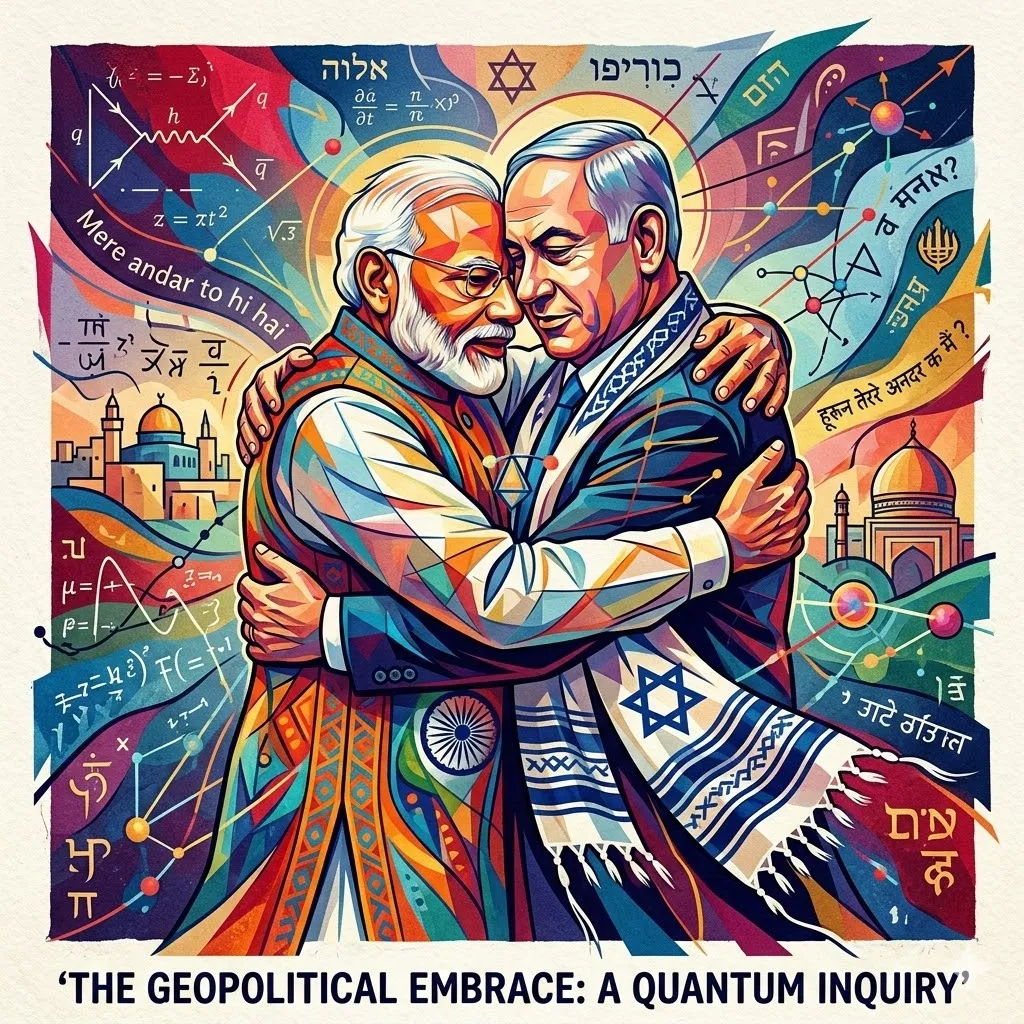
Next Read: You in me
COMING UP .....
A ONLY QUANTUM POETICS ON META MYSTIC FUTURISM & MMQDD
The morning is heavy with sorrow,
A thirst that no water can slake,
My breath catches fast in my throat,
Yet in living, a longing I take.
        A clamour has risen and surged
        In the hearts of the folk of the world,
        There, lightning strikes down in its fury;
        Here, the serpent-noose coils for my sake.....
...In our war-torn world today, the boundaries between 'progress' and 'catastrophe' have blurred. The unquenchable thirst of human ambition and the manipulative trade of politics have ensnared our sacred foundations, the Himalayas, in a constricting "serpent-noose."
Modern warfare is no longer confined to borders; it has advanced toward the "weaponisation" of the environment through geo-engineering and lethal tactical weaponry.
When we harness high-level technologies, such as N-ultra quantum applications, for destruction, we inadvertently erode the very sources of our "Life-Ganges" and "Annapurna" (abundance). The emissions and geological disturbances caused by modern combat directly accelerate the instability of our glaciers..... happy reading!