


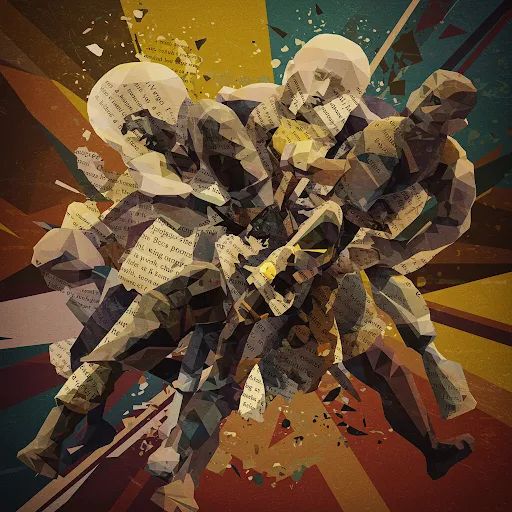
How Intelligence Agencies and Security Forces Can Transform Borders and Disparities into Connection-Building Buffers Through the Poetry of Love and Nature Poems for Intelligence and Security in Action
In the complex and tumultuous landscape of modern geopolitics, intelligence agencies and security forces have long been tasked with defining and defending national borders, ensuring safety, and maintaining security.
These institutions are essential in mitigating conflict, yet they often contribute to divisions—be they political, ideological, or cultural. However, a radical shift is possible, one that integrates the power of poetry to transform these boundaries into spaces for cooperation, coexistence, and creative progression.
By utilising love and nature poems for intelligence and security in action, the intelligence agencies and security forces all over the nations could act as catalysts for bridging divisions, building lasting peace, and promoting a more harmonious world.
Table of Contents
The Role of Borders, Differences, and Disparities
Borders, both physical and ideological, are often regarded as inevitable and inescapable. Intelligence agencies and security forces uphold these borders, working tirelessly to safeguard the integrity of nations, ideologies, and even identities.
Yet, these borders between countries or different peoples also often become the root of conflict. Political differences, historical grievances, and economic disparities fuel tensions and violence across the globe, resulting in a world rife with divisions and distrust.
The work of intelligence agencies, although crucial, often serves to further entrench these separations, leaving little room for empathy or cooperation. In this environment, the idea of overcoming these divides through the use of art, specifically poetry, might seem foreign or impractical.
However, understanding the broader potential of poetry reveals a profound opportunity: it offers a universal language that transcends borders, unites disparate communities, and promotes understanding on an emotional and intellectual level.
Poetry as a Bridge Between Divides
At its core, poetry is an art form that transcends the practicalities of language, ideology, and culture. Its beauty lies in its ability to express shared human experiences—love, grief, hope, nature—through evocative language.
This universality has allowed poetry to play a critical role in history, offering solace, reflection, and, at times, resistance. All these are the ways and only hopes for life on earth.
Poetry as a Universal Language
Consider the work of Rumi, a 13th-century Persian poet whose words continue to resonate with people across cultures and religions. His poetry, steeped in mysticism and spirituality, speaks to the commonality of human existence, our shared longing for love, connection, and understanding.
Similarly, the poems of Pablo Neruda, a Chilean poet known for his passionate explorations of love and nature, have bridged gaps between countries and political ideologies. Poetry can stir a sense of shared humanity that is often lost in the rhetoric of politics and war.
The Power of Love and Nature in Poetry
Themes of love and nature, in particular, can connect individuals across the most divisive of barriers. Love, in its many forms, is a universal force that unites individuals in their common humanity.
Similarly, nature, whether it is the beauty of the ocean, the mountains, or the forests, reminds us of our shared existence within the natural world. In times of conflict, poetry that centers on these themes can serve as a reminder of the intrinsic bonds that connect us all.
In a world increasingly defined by borders, ideologies, and political divisions, the soft, universal language of love and nature provides an essential counterpoint. Poetry that explores these themes invites individuals to see beyond their differences and recognize the shared human experiences that transcend national or ideological lines.
Shifting the Paradigm: Intelligence Agencies and Poetry
While intelligence agencies and security forces are traditionally seen as the keepers of borders, there is a growing recognition of the need for these institutions to evolve beyond their traditional roles. The key lies in understanding how these agencies, which often perpetuate divisions, can instead embrace artistic expression as a tool for connection-building. Poetry, with its power to heal and unite, offers a compelling pathway.
A New Paradigm for Intelligence Work
The notion of intelligence agencies adopting poetry as a diplomatic tool may seem radical, but it is precisely this radical thinking that is necessary in today’s world. Intelligence agencies often work behind the scenes, dealing with national security,
surveillance, and counterintelligence. However, integrating creative forms of expression such as poetry into their efforts could promote emotional intelligence, empathy, and shared understanding—qualities that are sometimes lost in the cold calculus of national security.
Incorporating poetry into intelligence work does not mean abandoning the essential functions of these agencies; rather, it suggests expanding their toolkit to include art as a way of fostering communication and empathy.
Poetry could be used to facilitate dialogue between conflicting parties, help negotiators and diplomats better understand each other’s emotional landscapes, and create spaces for reflective thinking that might encourage cooperation rather than confrontation.
Buffer Glue Alchemy: Poetry as a Transformative Force
The metaphor of “buffer glue alchemy” captures the transformative potential of poetry in bridging divides. Like alchemists who sought to turn base metals into gold, poetry can transform negative energy, fear, hatred, suspicion into positive connection.
By centering on shared human experiences like love and nature, poetry can bind opposing sides together, creating a space for collaboration rather than conflict. This “buffer glue” effect has the potential to dissolve the hard edges of geopolitical and ideological divides, fostering cooperation and coexistence.
Imagine a scenario where intelligence agencies, instead of focusing solely on intelligence gathering or surveillance, also work to create poetry-driven dialogue programs. Through such programs, individuals from different backgrounds, whether diplomats, military personnel, or citizens, could come together to create, share, and reflect upon poems about love, nature, and the human condition.
The result would not only be a reduction in tensions but also an active promotion of collaboration and mutual understanding peace, and cooperation.
Promoting Cooperation and Coexistence Through Poetry
Poetry, when used as a tool for communication and cooperation, can help establish a dialogue between seemingly incompatible ideologies.
Through organized poetry readings, workshops, or even collaborative poetry creation, people from opposing cultures or political camps can begin to see each other as human beings with shared desires for peace, safety, and happiness. Poetry can create a space where conflict is softened and where ideas of coexistence and commonality take root.
Creating Safe Spaces for Dialogue
One way to promote cooperation through poetry is by creating safe spaces for dialogue, such as poetry workshops or events that bring together people from different backgrounds. These spaces allow individuals to express themselves creatively and reflect on the experiences of others in a non-confrontational environment.
Such initiatives could be particularly beneficial in post-conflict zones or areas affected by political and social strife, offering opportunities for healing and reconciliation.
Art and Peacebuilding
Throughout history, art, especially poetry, has played a critical role in peacebuilding. From the work of African poets during apartheid to the writings of writers and activists in the wake of war, art has consistently served as a vehicle for social change.
In the realm of diplomacy, the inclusion of poetry as a tool for fostering cooperation would not diminish the importance of formal negotiations; rather, it would complement these efforts by creating a more profound emotional connection between parties, facilitating a more holistic approach to peace.
Creative Progression in a World Torn by Conflict
As we look to the future, it becomes evident that creativity—especially the creative arts—will play a central role in shaping global progress.
Poetry, with its ability to spark emotional connections, can inspire innovative solutions to some of the world’s most pressing issues, including climate change, inequality, and conflict.
By reimagining borders not as barriers but as points of connection, we open up possibilities for cooperation that extend beyond traditional political or economic boundaries.
Conclusion
In a world fractured by borders, differences, and disparities, it is time to reconsider the tools we use to bridge these divides. Intelligence agencies and security forces, while essential for maintaining order and security, can play a transformative role in fostering peace and cooperation.
By embracing the power of poetry, especially poems about love and nature, these institutions can move beyond their traditional roles and become champions of connection-building and creative progress.
In doing so, they would not only help heal old wounds but also pave the way for a more harmonious and interconnected world. Through the alchemy of poetry, love, and nature, humanity can transcend its divisions and work toward a collective future of coexistence and creative evolution.
This article explores how poetry can serve as a powerful tool for breaking down barriers in a world torn by conflict, offering new insight into the potential roles that intelligence agencies and security forces can play in building a more connected and cooperative world today.