


            More Low than Emptiness Refrain
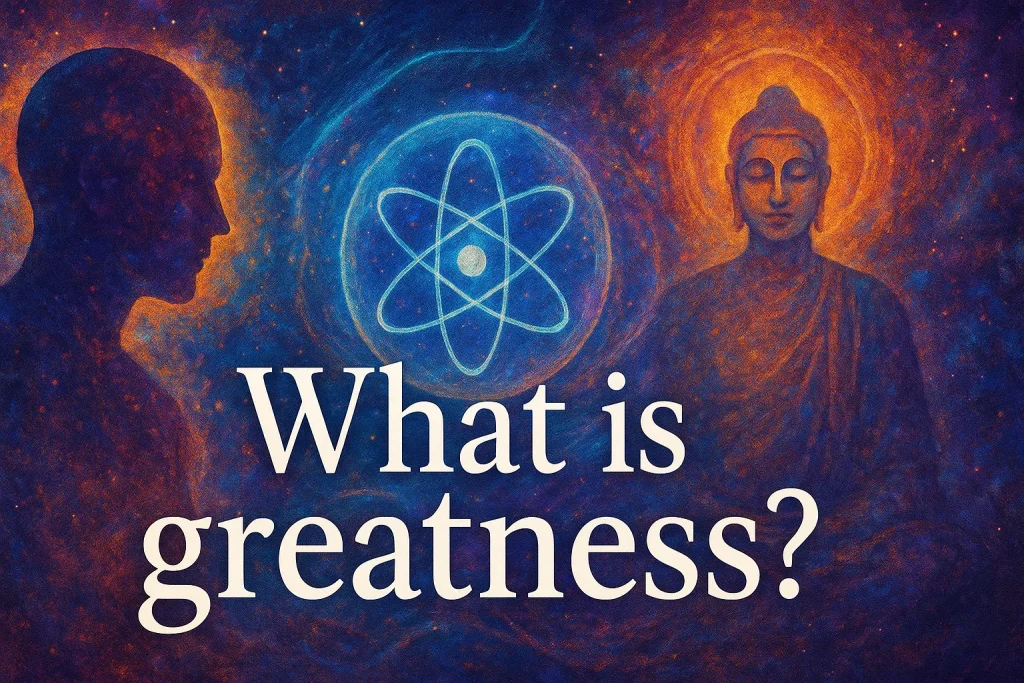
What is greatness? Can it be higher than the void’s serene domain?
The hardest height is yet more low than emptiness’ refrain.

Though we have met, the soul’s embrace eludes our mortal hands,
What meeting now remains, but less than absence’s gain?

Since you departed, clothed in veils of the unknown shore,
I’ve searched the ages, ask not how absence is more than presence’s chain.

Shall we speak of childish wars the elders wage with pride?
When beards and crowns hide tempers small, is that not lower than the void’s plain?

The “quantum world” itself, said Zeilinger, is no solid creed,
Yet Alain too would quarrel, what insight springs from disputes so vain?

O Lord, if You were nought, perhaps You’d be beyond the highest height,
Is all this “everything” but truly less than absence’ reign?

Today, the great discourse of the mighty has become mere tea-house talk,
Beloved, to sip and lie in jest, is that not less than the nothing’s domain?
An engaging explanation of the ghazal’s literal meaning
This ghazal begins with a bold question: What does it truly mean to be great?
The poet suggests that often, what we call “greatness” is nothing more than ego, noise, and display, and in such cases, even “nothingness” is better. Sometimes, being empty of pride and ambition is richer than the false fullness of status and power.
The poet uses the idea of meeting a beloved as an example: yes, two people can meet in body, but if their hearts and minds are distant, that meeting is hollow, less meaningful than never meeting at all.
In the same way, when someone we value leaves us, the search for them and the pain of their absence can be deeper and more real than the shallow presence of someone who does not truly connect.
The verses grow sharper as the poet compares the quarrels of world leaders and “great” elders to the petty fights of children. Even celebrated minds, like Nobel-winning scientists Anton Zeilinger and Alain Aspect, can fall into small disputes that add nothing to the pursuit of truth.
The poem then turns to God, asking: if You were nothing, without form, without the labels humans give, might You be greater than any human idea of greatness?
The ghazal ends with a wry image: the lofty talk of the mighty has been reduced to light chatter over tea, mixed with small lies and polite pretences.
Through these simple yet piercing images, the poet says: greatness without sincerity, truth, and humility is just a shadow, and sometimes, having nothing at all is far greater.
Table of Contents
An Expert Academic Critique
More Low than Emptiness Refrain – A bold question: What does it truly mean to be great?
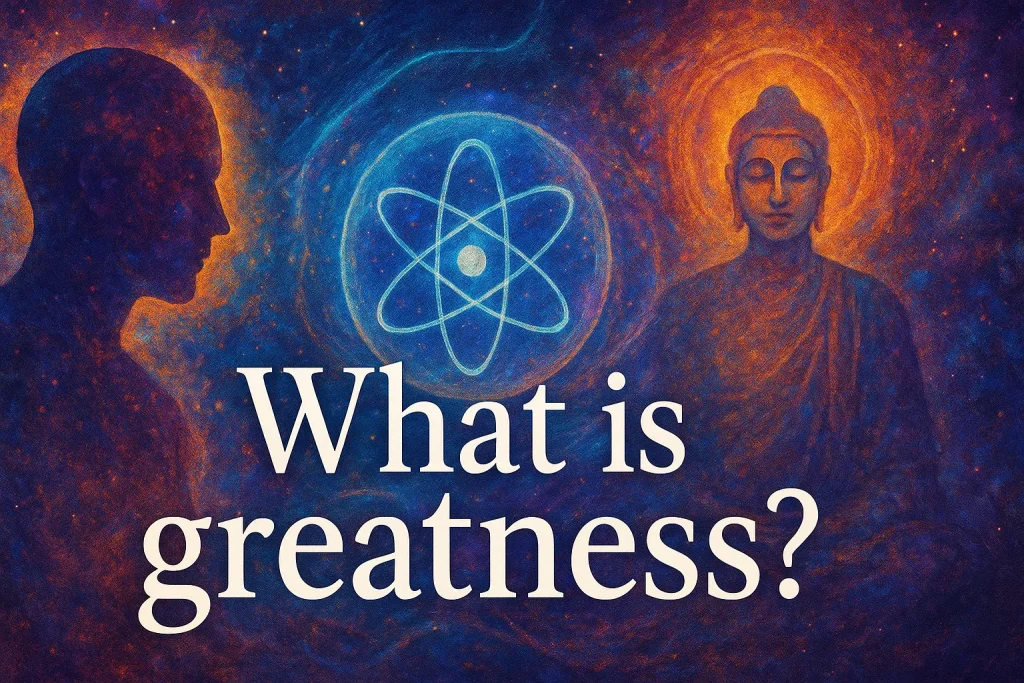
This ghazal presents a multi-layered philosophical satire on the human conception of greatness. It challenges the deeply ingrained assumption that “being great” is inherently superior to “being nothing.”
The poet constructs a deliberate paradox: the absence of ego, conflict, and ostentation can in fact be a higher state than the presence of hollow grandeur.
The poem’s opening couplet sets the ontological premise; greatness is interrogated not as a measurable hierarchy of achievement, but as a moral and existential quality.
Here, “nothingness” is not a void of meaning, but a reservoir of peace, humility, and freedom from pretension. In the following verses, “meeting” is redefined: physical proximity without spiritual communion is no more meaningful than absence itself.
The longing for the departed, in turn, reveals that sometimes the pain of separation deepens one’s awareness more than the shallow comfort of forced presence.
The satirical blade
The satirical blade sharpens when the poet equates “elders’ wars” with the petty quarrels of children, suggesting that maturity, in the political and intellectual realms, is often only a facade.
This motif extends to the realm of science, where the disputes between Nobel laureates Anton Zeilinger and Alain Aspect are invoked not to belittle their contributions, but to question the purpose of quarrels when the ultimate aim is collective truth-seeking.
The poet hints at the “Observer Effect” of the ego: even in high science, perception can be clouded by status, recognition, and personal stake, thereby distorting the purity of inquiry.
The invocation of God in the penultimate verse introduces a theological dimension: if divinity were free from human-imposed definitions and projections, it might exist beyond even the concept of “greatness.”
This aligns with the Neti-Neti doctrine of the Upanishads, the stripping away of all descriptors to approach ultimate reality. Here, nothingness parallels the mystical state of detachment, where being is unbound by labels.
The ghazal’s closing couplet brings the critique to contemporary social and political culture; the “great” debates of our age are often reduced to casual, performative exchanges over tea, laced with polite falsehoods and strategic narratives.
In this, the poet critiques not only world leaders and public intellectuals, but society at large for allowing discourse to devolve into spectacle.
From the perspective of Meta Mystic Quantum Dialectics (MMQD), the ghazal can be read as a reflection on the superposition between “being” and “non-being.”
Just as quantum states collapse into definite reality only upon observation, so too can “greatness” collapse into pettiness when observed through the lens of ego. The poem’s argument subtly mirrors the Bhagavad Gita’s principle of samattvam yoga uchyate, equanimity as the highest discipline.
From a Stoic Greco-Philosophy standpoint, the ghazal resonates with the notion that control lies only in our reasoned will, not in external recognition or conflict. Ataraxia, the tranquil state of an undisturbed mind, is the “nothingness” the poet values above the noisy theatre of worldly prestige.
Applied to world leadership, the poem offers a humble directive to figures such as Donald Trump, Benjamin Netanyahu, Volodymyr Zelensky, Vladimir Putin, and all other decision-makers: relinquish the illusion that might, rhetoric, and political theatre constitute true greatness.
In the long arc of history, the absence of war, the silencing of ego-driven disputes, and the quiet cultivation of cooperative truth will stand as far greater achievements than any temporary show of dominance.
The poet’s challenge is timeless: to rise above the childishness of conflict and embrace the creative humility of “being nothing” so that humanity may truly be great.
In essence, this ghazal is not merely a work of poetic satire; it is a transdisciplinary moral philosophy. It bridges literature, quantum theory, Vedantic non-dualism, and Stoic ethics to deliver a singular message: the worth of existence lies not in the inflation of self, but in the dissolution of self into a cooperative, peaceful, and truthful whole.
BEYOUTEA>A POETRY REVOLUTION>PEACE
NOTHING IS NOT TRUE : NO\KNOW THYSELF NOT
             MAKE EARTH GREAT FOREVER
क्या होना है बड़ा होना कुछ नहोने से बड़ा,
सब से बड़ा कठीन वो तुच्छ नहोने से बड़ा।
           मिलने से तो रहें हम फिर भी हो मिले तुम,
           अब मिलने को क्या है कूच नहोने से बड़ा।
कूच किये जब से तुम ने पैराहन अनजाना,
ढूंढ़ते रहें है कब से मत पूछ नहोने से बड़ा।
           क्या कहें बच्चोंका जंग लड़ाई बड़े से बड़ा,
           बड़े लोग ना होवे दाढ़ी मुछ नाहोने से बड़ा।
क्वांटमवर्ल्ड है ही नहीं ज़ीलिंगर बड़ा बात,
अलैन झगड़ पड़े काहे सूझ नहोने से बड़ा।
           खुदा तूं कुछ ना होता होता ना बड़ा सबसे,
           सबकुछ यहहै क्या सचमुच नहोने से बड़ा।
बड़े बडों का बड़ा बात बनगया आज चाय,
सजनी पीना कहना झूठमूठ नहोने से बड़ा।
LET'S GOODNESS A CHANCE : END ALL WARS
Meta-Sufi/Cyber Poetics on MetaMystic Futurism in
MMQD>META MIND QUANTUM DHARMA GROUND
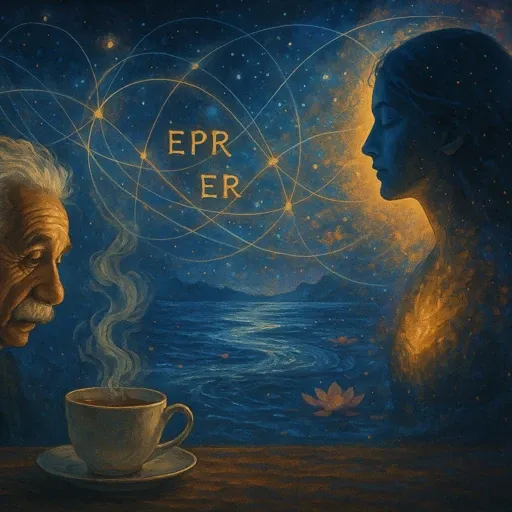
सरल भावार्थ: इस ग़ज़ल में कवि “बड़ा होना” की अवधारणा पर प्रश्न उठाते हैं।
वे कहते हैं, कई बार हम जिस चीज़ को “बड़ा” समझते हैं, वह वस्तुतः कुछ न होने से भी कमतर हो जाती है। जैसे, अगर “बड़ा” होना सिर्फ़ अहंकार, विवाद और दिखावे से है, तो वह “कुछ न होने” की शांति और विनम्रता से भी बुरा है। मिलने की स्थिति में भी, यदि आत्मा या मन का वास्तविक मिलन न हो, तो वह “मिलना” भी एक खोखली औपचारिकता बन जाता है।
प्रिय या मूल्यवान व्यक्ति के जाने के बाद, उसकी तलाश और उसकी कमी का अनुभव इतना गहरा होता है कि “न होने” की पीड़ा किसी भी “हाज़िरी” से बड़ी बन जाती है।
कवि आगे व्यंग्य करते हैं,
बड़े-बड़े लोग बच्चों जैसी लड़ाई-झगड़ों में लगे रहते हैं।
विश्वस्तरीय वैज्ञानिक भी, जैसे एंटन ज़ीलिंगर और अलेन अस्पेक्ट (दोनों नोबेल पुरस्कार विजेता), क्वांटम वर्ल्ड के विषय में तुच्छ विवादों में उलझ सकते हैं, जबकि ज्ञान का असली उद्देश्य विवाद नहीं, सत्य की खोज है।
अंततः, ईश्वर का होना और न होना भी, यदि हमारी समझ में केवल अहंकार और दिखावा है, तो “ना होना” ही शायद श्रेष्ठ हो।
अंतिम शेर में, “बड़े-बड़ों” की बातें आजकल चाय पर बैठकर हल्की-फुल्की गपशप और दिखावे में बदल गई हैं, जहाँ सच्चाई की बजाय झूठ-मूठ की बातें ही परोसी जाती हैं।
प्राज्ञिक आलोचनात्मक विवेचना, मेटा मिस्टिक फ़्यूचरिज़्म फ़्रेमवर्क में
होना कुछ नहोने से बड़ा – “बड़े-बड़ों” की बातें आजकल चाय पर बैठकर हल्की-फुल्की गपशप और दिखावे
- मेटा मिस्टिक फ़्यूचरिज़्म (MMF) का दृष्टिकोण
मेटा मिस्टिक फ़्यूचरिज़्म का मूल तर्क यह है कि भविष्य की सभ्यता का मार्गदर्शन केवल तकनीकी उन्नति से नहीं, बल्कि आध्यात्मिक गहराई और अस्तित्वगत विनम्रता से होना चाहिए।
यह ग़ज़ल “बड़ा” होने के ढोंग को तोड़कर “कुछ न होने” की शक्ति को दर्शाती है, जो MMF में “अस्तित्व की अनुलग्नता-मुक्त अवस्था” (Non-Attachment State) के बराबर है।
- MMQD (Meta Mystic Quantum Dialectics)
MMQD में यह विचार है कि क्वांटम की तरह, जीवन में भी सत्य स्थिर नहीं है, वह संदर्भ, निरीक्षक, और आंतरिक चेतना के स्तर से बदलता है।
ज़ीलिंगर और अस्पेक्ट के विवाद का उदाहरण MMQD में Observer Effect और Ego Effect का मिश्रण है, जहाँ “सत्य” की माप अहंकार से विकृत हो जाती है।
“कुछ न होने” से बड़ा” का संकेत क्वांटम सुपरपोज़िशन की तरह है, जहाँ शून्यता भी संभावना की एक उच्चतम स्थिति है।
- नेति-नेति (न यह, न वह)
उपनिषदों का “नेति-नेति” सिद्धांत कहता है कि सत्य की पहचान सीमित शब्दों, अहंकार, और बौद्धिक वाद-विवाद से नहीं हो सकती। कवि का संदेश
“बड़ा होना” यदि स्वार्थ और प्रदर्शन से जुड़ा है, तो वह वास्तविक “बड़ा” नहीं है।
हमें न “बड़ा” होने का मोह रखना चाहिए, न “छोटा” होने का भय, बल्कि सत्य को दोनों से परे देखना चाहिए।
- गीता का परिप्रेक्ष्य
भगवद्गीता में कृष्ण कहते हैं, “समत्वं योग उच्यते” (अध्याय 2) समान भाव ही योग है।
बड़े और छोटे का द्वैत मिटाकर, कार्य को कर्तव्यभाव से करना ही श्रेष्ठ है।
वैज्ञानिकों का विवाद भी, यदि परिणाम के आसक्ति-मुक्त होकर सत्य-प्राप्ति के लिए हो, तो वह गीता-सम्मत है; लेकिन यदि अहंकार से प्रेरित है, तो वह गीता के मार्ग से भटकाव है।
- Stoic Greco-Philosophy का दृष्टिकोण
स्टॉइक विचारधारा कहती है,
केवल वे ही चीज़ें हमारे नियंत्रण में हैं जो हमारे विचार और कर्म हैं; बाकी सभी बाहरी स्थितियाँ (जैसे प्रतिष्ठा, विवाद, उपाधि) हमारे नियंत्रण से बाहर हैं।
इस ग़ज़ल में “कुछ न होने” का महत्व स्टॉइक Ataraxia (मानसिक शांति) के निकट है।
- आलोचनात्मक निष्कर्ष
यह ग़ज़ल केवल साहित्यिक व्यंग्य नहीं, बल्कि आधुनिक मानव सभ्यता के नेतृत्व के लिए चेतावनी है, यदि “बड़ा होना” केवल तकनीकी शक्ति, पद, या नाम तक सीमित है, तो वह मानवता के लिए हानिकारक है।
विज्ञान, दर्शन, और अध्यात्म, तीनों को अहंकार-रहित सहयोग में लाना होगा। भविष्य का सच्चा नेतृत्व वही है जो कुछ न होने की विनम्रता से “सब कुछ” को देखने में सक्षम हो।
विश्व नेतृत्व के लिए विनम्र अपील
इस ग़ज़ल का भाव आप सभी विश्व नेताओं, डोनाल्ड ट्रम्प, बेंजामिन नेतन्याहू, व्लोदिमिर ज़ेलेंस्की, व्लादिमीर पुतिन और अन्य, के लिए एक दर्पण है, जो दिखाता है कि “बड़ा होना” केवल शक्ति, पद, या हथियारों से नहीं, बल्कि आत्मसंयम, करुणा, और सत्य के प्रति विनम्र निष्ठा से आता है।
युद्ध, प्रतिशोध और राजनीतिक प्रदर्शन भले अल्पकालिक “बड़प्पन” का आभास दें, परंतु वे अंततः “कुछ न होने” से भी कमतर साबित होते हैं, क्योंकि वे मानवीय मूल्यों, शांति, और सहयोग को नष्ट कर देते हैं।
जैसे विज्ञान में सत्य की खोज अहंकार के शोर से नहीं, बल्कि मौन और सहयोग से फलती है, वैसे ही नेतृत्व की गरिमा भी तब प्रकट होती है जब आप अपने विरोधियों को शत्रु नहीं, सह-यात्री मानकर संवाद और समझौते का मार्ग चुनते हैं।
यदि आप इस दृष्टि से कदम बढ़ाएँ, तो न केवल अपने राष्ट्रों, बल्कि समस्त मानवता के लिए “बड़ा” होना सचमुच कुछ न होने से बड़ा बन सकेगा।
Next Read: Lord in Your Sheer Non-Being