


              He is Disgraced in Every Strand
Why would God Himself defame, in every place and land,
Yet faith and creed are made to dance, and he’s disgraced in every strand.

For your sacred name we shall perish with truth’s embrace,
Yet the humblest verse he speaks is mocked and shamed in every place.

It was he who made the valley bloom, as Nazir Akbarabadi’s muse,
He waged with “Ram’s Name” the storm away, still branded in public abuse.

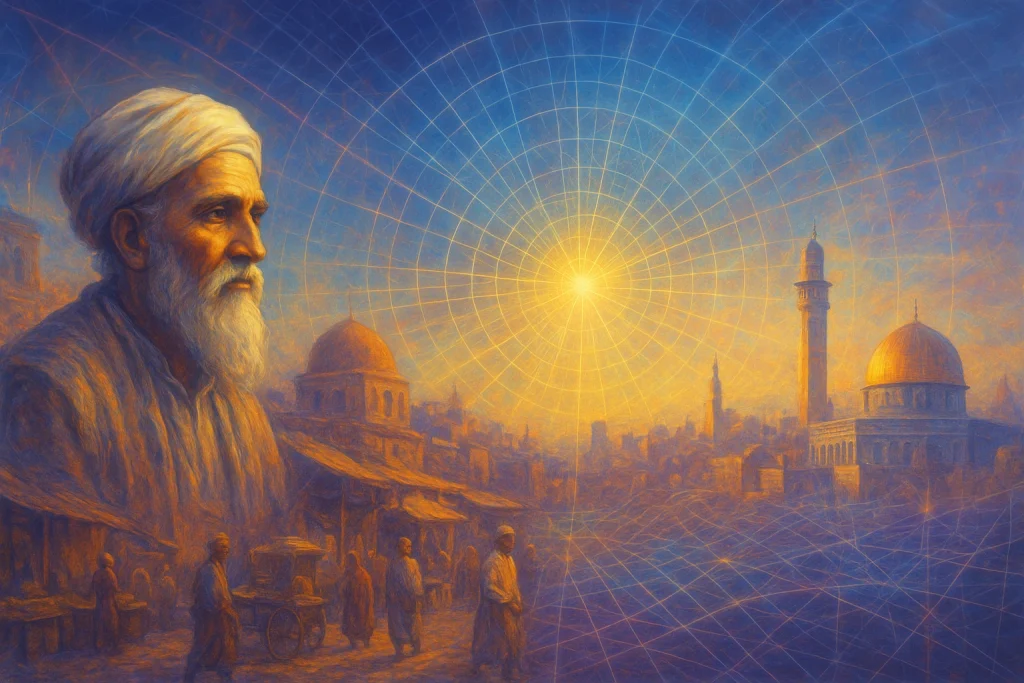
I saw Hari’s Name and Shankara’s guard marching in Jerusalem’s dome,
The man of liberty has never changed, yet defamed wherever he roams.

By God, had there been no helmsman, we’d be adrift from the divine shore,
Beloved is faith, yet lost he stands, dishonoured for evermore.

No, it is you who dwell within, whose name resounds in my heartbeat’s call,
Beloved idol, today the tea-seller too is slandered before all.
Table of Contents

Expert Scholarly Critique
He is Disgraced in Every Strand – A Paradoxical Mirror: Reflecting the Nobility of Truth and Faith while Revealing the World’s Tendency to Vilify Who Uphold
1. The Ghazal’s Layered Fabric of Meaning
This ghazal, He is Disgraced in Every Strand stands as a paradoxical mirror: it reflects the nobility of truth and faith while revealing the world’s tendency to vilify those who uphold them. The refrain “he’s disgraced in every place” is not simply a lament, it is a sociological indictment of how societies punish moral steadfastness.
Here, the poet’s voice intertwines personal devotion (“for your sacred name we shall perish”) with public defiance. The protagonist becomes a universal archetype, akin to a Sufi saint, a bhakti poet, or a stoic philosopher, whose virtue is misconstrued as rebellion.
The intertextual invocation of Nazir Akbarabadi is no casual ornament; Nazir’s poetry blended devotional symbolism with the vernacular pulse of the people. By placing “Ram’s Name” alongside a storm-dispelling act, the poet universalises divine invocation as an instrument of human solidarity, not sectarian division.
Jerusalem’s mention lifts the poem from South Asian religio-poetic tradition into a truly global sacred geography, uniting Hari, Shankara, and the struggle for liberty under one canopy. This syncretic vision is not utopian escapism; it’s a historically resonant reality that civilizations have known and forgotten repeatedly.
2. Comparative Philosophy: Eastern and Western Axes
From an Eastern perspective, the ghazal’s hero is the Dharma-kshetra warrior, defending truth without yielding to expediency. The emphasis on “Name” recalls the Hindu nama-smarana, Buddhist chanting, Sufi zikr, and Sikh naam simran, all practices where sound is both spiritual invocation and social glue. In this frame, the “badnaam” (disgrace) is the inevitable trial of walking the path of satya (truth).
From a Western philosophical lens, this figure echoes the Socratic gadfly, unwelcome in power circles yet indispensable for moral health. In modern political philosophy, he aligns with the “righteous dissenter” who refuses to trade conscience for comfort. Even secular humanist traditions would recognise in him the embodiment of moral courage, irrespective of theism.
Thus, whether one stands as an āstika (believer) or nāstika (non-theist), the ghazal’s moral geometry holds: steadfastness in truth unites across metaphysical divides.
3. Meta Mystic & MMQD Grounding
In Meta Mystic Quantum Diplomacy (MMQD) terms, “Name” functions as a resonant frequency, a quantum coherence pattern capable of synchronising human intention across borders. The invocation of “Ram,” “Hari,” “Shankara,” “Allah,” or “Yahweh” is not to be read merely as religious loyalty; rather, each is a frequency-point in a shared human wavefield.
By bridging South Asian devotionalism with the contested sacred topography of Jerusalem, the ghazal points toward a universal resonance field, a form of spiritual quantum entanglement among humanity. Here, truth and faith become not fixed dogmas but harmonics in a planetary chorus.
In a world where quantum computing promises instantaneous global connection, the poet’s lament turns prophetic: If such networks can link our minds, why do our hearts remain divided? The ghazal thus becomes a manifesto against the entropy of war, warning that conflict in the Quantum Age is not only barbaric but also a betrayal of the technology-enabled unity now within our grasp.
4. Contemporary Relevance & Ethical Imperative
The repeated image of being “disgraced everywhere” resonates with today’s whistleblowers, peace activists, and social reformers, those vilified not for deceit but for inconvenient truths. In political rhetoric, such figures are often dismissed as naïve, dangerous, or subversive. Yet, history’s arc, whether in the liberation struggles of India, the civil rights movements in America, or the truth commissions of post-conflict societies, vindicates them.
In the Quantum Era, when information spreads at light speed and AI systems like HRM neuro-memory chips begin to mimic human recall, the poet’s call is unmistakable:
- Reject war as a relic unworthy of the technological and moral maturity we now claim.
- Recognise shared values as the unbreakable constants across belief systems.
- Anchor diplomacy in resonance, not coercion, aligning political negotiations with the same coherence principles that sustain quantum systems.
Conclusion:
This ghazal, in its deceptively traditional form, is a meta-mystic charter for the 21st century. It tells us that the real disgrace is not in being maligned for truth, but in humanity’s persistent failure to recognise itself as one. And in that recognition—through Name, through faith, through resonance,lies the only sustainable path forward.
BEYOUTEA>A POETRY REVOLUTION>PEACE
NOTHING IS NOT TRUE : NO\KNOW THYSELF NOT
            MAKE EARTH GREAT FOREVER
खुदासे क्याकाम भला वो बदनाम हर जगह,
ईमान धरमभी नाचला वो बदनाम हर जगह।
           हम तेरे नाम पर मगर मरमिट जाएंगे ईमांसे,
           मामूली सुख़नवरी खला वो बदनाम हर जगह।
उसे ही वादी किया बाद अक़बराबादी नज़ीर,
चलाये रामनामके बला वो बदनाम हर जगह।
           देखा हरिनाम शंकरा रक्श जमाता यरूस्लम,
           शख्शेहूर्रियत ना बदला वो बदनाम हर जगह।
वाखुदा नाख़ुदा होता क्या ख़ुदायी झगड़ते हम,
हबीबा है इमां खो चला वो बदनाम हर जगह।
           नहीं तुम हो धड़कनो में तुम्हारा नाम का गूँज,
           सनम आज चाय वाला वो बदनाम हर जगह।
LET'S GOODNESS A CHANCE : END ALL WARS
Meta-Sufi/CyberPoetics on Meta Mystic Futurism in
MMQD>META MIND QUANTUM DHARMA GROUND
सरल भावार्थ: He is Disgraced in Every Strand
आइये पहले इस ग़ज़ल का भावार्थ (2–3 अनुच्छेदों में), फिर पूर्वीय-पाश्चात्य आस्तिक-नास्तिक दर्शन की तुलनात्मक दृष्टि में, और अंत में Meta Mystic – MMQD grounding के साथ नज़ीर अकबराबादी, यरुशलम और नाम-संकीर्तन प्रसंगों को जोड़ते हुए एक शोधपरक, पर सरल-बोधगम्य विवेचना गवेषण शुरू करते हैं।
१. ग़ज़ल का भावार्थ (सरल शैली में)
कवि यहाँ उस व्यक्ति का चित्र खींचते हैं जो सच्चे ईमान, धर्म और मानवता के लिए हर जगह बदनाम है, क्योंकि उसने अपने विवेक और सत्य से समझौता नहीं किया।
पहले शेर में यह दिखाया गया है कि वह इंसान अपने धर्म, ईमान और विश्वास की रक्षा के लिए खड़ा रहा, लेकिन भीड़ और सत्ता ने उसे कलंकित कर दिया। दूसरे शेर में प्रेम और निष्ठा की चरम अभिव्यक्ति है, “हम तेरे नाम पर मर मिटेंगे”, परंतु दुनिया उसकी साधारण-सी बात को भी हल्के में लेकर बदनाम करती है।
आगे, कवि नज़ीर अकबराबादी के संदर्भ से बताते हैं कि कैसे एक व्यक्ति ने रामनाम जैसी सार्वभौमिक पुकार को अपने जीवन का हथियार बनाया, और यह सबके लिए भलाई का कारण बना, लेकिन उसे भी आलोचना मिली।
यरुशलम के संदर्भ में, जहाँ हरिनाम और शंकर के नाम के साथ स्वतंत्रता के सपने जुड़ते हैं,यह व्यक्त किया गया है कि सच्चे स्वतंत्रता-सेनानी का मूल चरित्र नहीं बदलता, चाहे परिस्थितियाँ कैसी भी हों।
अंत में, कवि कहते हैं कि सच्ची मोहब्बत और याद दिल की धड़कनों में गूँजती है, और आज “चाय वाला” जैसे साधारण व्यक्ति भी दुनिया में बदनाम हो सकते हैं, अगर वे सत्य बोलें और जनहित में खड़े हों।
२. तुलनात्मक दृष्टि: पूर्वीय-पाश्चात्य आस्तिक-नास्तिक दर्शन
पूर्वीय दर्शन (जैसे हिंदू वेदांत, बौद्ध, जैन, सूफ़ी और भक्ति परंपरा) में नाम-स्मरण, सत्य के लिए संघर्ष और अहिंसा प्रमुख मूल्य हैं। यहाँ आस्तिकता का अर्थ केवल ईश्वर-विश्वास नहीं, बल्कि धर्म (रighteousness) और ऋत (cosmic order) के प्रति आस्था है।
पाश्चात्य दर्शन (जैसे यहूदी, ईसाई, इस्लामी धर्मग्रंथों का नैतिक भाग; साथ ही ग्रीक स्टोइकवाद, कांटियन नैतिकता) में भी सत्य, न्याय और करुणा को सर्वोच्च माना गया है, भले ही कोई नास्तिक हो और ईश्वर को न माने, वह मानवता और नैतिकता के प्रति निष्ठावान रह सकता है।
इस ग़ज़ल में जो “हर जगह बदनाम” व्यक्ति है, वह दोनों दृष्टियों में नैतिक नायक है,
पूर्वीय परंपरा में वह “धर्म-योद्धा” और “सत्याग्रही” है।
पाश्चात्य परंपरा में वह “moral rebel” या “righteous dissenter” है।
३. Meta Mystic – MMQD grounding और समकालीन प्रासंगिकता
Meta Mystic में, यह ग़ज़ल हमें यह सिखाती है कि ईश्वर या सत्य की खोज अब केवल धार्मिक या दार्शनिक आयाम में नहीं, बल्कि क्वांटम युग में एक सार्वभौमिक नेटवर्किंग के रूप में भी देखी जा सकती है। MMQD (Meta-Mystic Quantum Diplomacy) की दृष्टि से, नाम-संकीर्तन, चाहे वह “राम”, “हरि”, “अल्लाह”, “याहवे” या “शंकर”, सिर्फ धार्मिक आह्वान नहीं, बल्कि एक कंपन-आधारित क्वांटम-रैज़ोनेंस है, जो मानव समुदायों को भावनात्मक और सांस्कृतिक रूप से जोड़ सकता है।
नज़ीर अकबराबादी की कविताएँ लोकधर्मी एकता की मिसाल हैं, वे बाज़ार, रोज़मर्रा के जीवन और धार्मिक प्रतीकों को जोड़ते हैं। इस लेख में उनका संदर्भ यह बताता है कि नाम का उच्चारण (जैसे रामनाम) सिर्फ एक संकीर्ण धार्मिक परंपरा का हिस्सा नहीं, बल्कि सामाजिक एकता का सूत्र हो सकता है।
यरुशलम, जो यहूदियों, ईसाइयों और मुसलमानों के लिए पवित्र है, आज भी यह दर्शाता है कि नाम-संकीर्तन और पवित्र स्थलों की रक्षा केवल धार्मिक गौरव का विषय नहीं, बल्कि मानव सभ्यता की साझा धरोहर का हिस्सा है।
शोधपरक निष्कर्ष:
क्वांटम युग में, जब सूचना, कंपन और ऊर्जा का आदान-प्रदान किसी भी सीमाओं से परे हो सकता है, हमें यह स्वीकार करना होगा कि,
युद्ध अब केवल संसाधनों का नहीं, बल्कि नैतिकता का विनाश करते हैं।
धर्म और दर्शन के साझा मूल्य-सत्य, करुणा, न्याय-मानवता के क्वांटम-नेटवर्क के स्थायी प्रोटोकॉल हैं।
नाम-संकीर्तन या सत्य-स्मरण का अभ्यास क्वांटम कोहेरेन्स की तरह है, जो विभाजन को घटाकर समन्वय को बढ़ाता है।
इस दृष्टि से, इस ग़ज़ल का केंद्रीय संदेश है: अब भी अगर हम युद्ध करते हैं, तो वह मानवता के माथे पर कलंक है; जबकि क्वांटम युग हमें मजबूती से जोड़ने का अवसर दे रहा है।
Next Read: one round piece of cake