


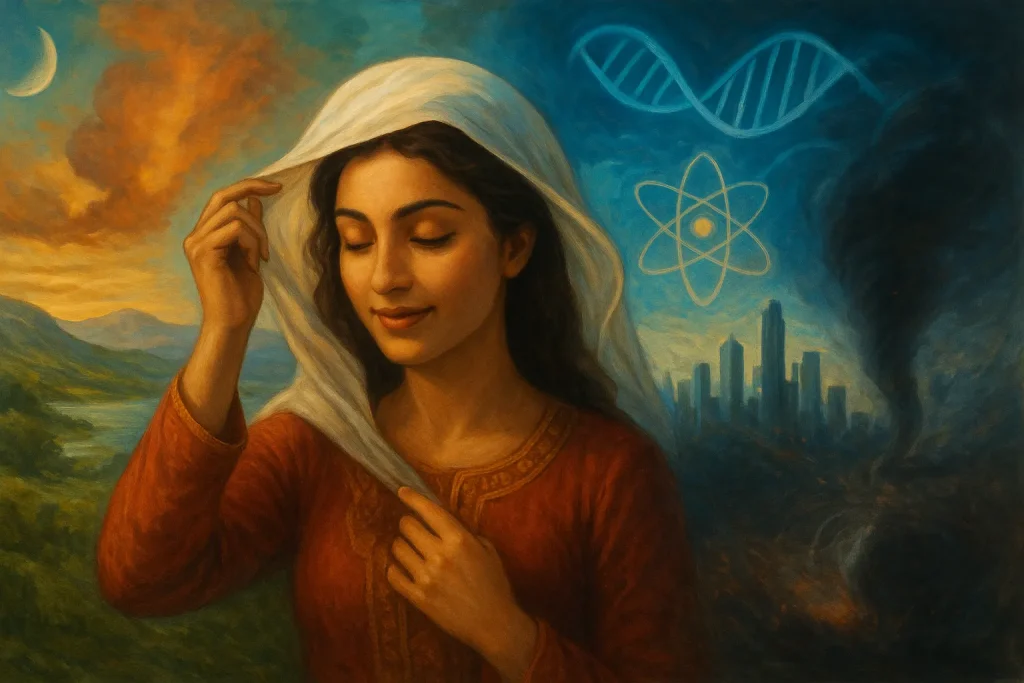
    Unveiled A Secret O Mercy
A single glance unveiled a secret, O mercy, O mercy!
The sullied heart’s dark burden turned to dust, O mercy!

My eyes could not believe the wonder they were shown,
The soul forgot its realm, all else was lost, O mercy!

Is she a radiant houri, or the houri’s gleam of light?
As if an unimagined fate to meet a Messenger, O mercy!

What words for peace of mind, which slips beyond the heart?
The young, fragrant bloom swayed, and was gone, O mercy!

Your meeting me thus, a dance of grief in the world,
Yet true Love thundered forth its primal call, O mercy!

Biophotons shimmer bright within the cup of tea,
Beloved, today to drink as one became a law, O mercy!
Table of Contents
Literary Explanation
This ghazal captures the aesthetics of suddenness, the unpredictable unveiling of beauty, the flash of ecstasy, or the irruption of calamity.
In each couplet, astonishment (tauba tauba, here translated as “O mercy!”) emerges as the refrain, marking how the unexpected reshapes the heart’s landscape.
Traditionally, the ghazal celebrates love and longing; here it also resonates with the turbulence of our age, where a sudden unveiling, whether of divine light or worldly disaster, demands awe, fear, and reflection.
The poem deliberately weaves between the intimate and the cosmic. The beloved’s unveiled face stands beside earthquakes in the Philippines, shutdowns in the United States, bombings in Pakistan, and political vanishings in Nepal.
Just as one look can shatter the illusions of the lover, a single crisis can shatter the stability of nations. The poet asks: Are these happenings fate, conspiracy, or sheer contingency? This question echoes the contemporary human struggle with truth, falsification, and reality in a world of disinformation and crises.
The final couplet, invoking biophoton luminescence in tea, transforms modern science into a mystical metaphor.
Biophotons, tiny flashes of light emitted by living cells, symbolise the hidden radiance of life itself, now linked to consciousness research, bioengineering, and the possibility of same-sex parenthood through biotechnological advances.
The act of drinking tea with the beloved becomes a cosmic law, suggesting that in union, science and intimacy reveal the luminous possibilities of life.
Thus, this ghazal, while steeped in Sufi-Vedāntic mysticism, also becomes a mirror of our fractured modernity.
It holds within its refrain the astonishment of love, but also the astonishment of living in a time when wars rage, climates collapse, technologies rewire humanity, and yet the human heart still seeks peace and unity.
The Study Grounding
This ghazal is about the sudden happening of things, an unexpected encounter, something unforeseen appearing or occurring, events that awaken in the mind feelings of joy, wonder, astonishment, pain, sorrow, and suffering.
For instance: a 9-Richter earthquake striking the Philippines, a government shutdown in the US, Sonam Wangchuk’s arrest, bombings in Pakistan, cross-border shelling in the Kashmir frontier, spiraling inflation and Mahalaya in Bangladesh, the sudden disappearance of a major political leadership in Nepal, a night of relentless rain, or a veiled beloved unexpectedly unveiling her face!
Are such things mere coincidences? Or are they the outcomes of fate, of conspiracies, of political calculations? Yes, something does happen to us in their wake. This very happening, the phenomenon of “occurrence”, constitutes truth, falsification, and reality, around which our world is entrapped in a vicious circle.
Our religions, thoughts, philosophies, ideologies, politics, and sciences are all bound up in this. And in today’s context, when quantum science ventures into creating conscious brain organoids, or when the possibility emerges of same-sex couples having children through bio-tissue zygotes illuminated by biophotonic luminescence, the world finds itself standing at the threshold of a new and wondrous path toward the reality of life.
Yet, at the same time, we risk turning ourselves into victims of our very knowledge and science by producing such marvels.
Is this not, then, the conscious imperative of our age, that our take on the revolution, change, transformation, conversion, development, progress, and success themselves must be redefined?
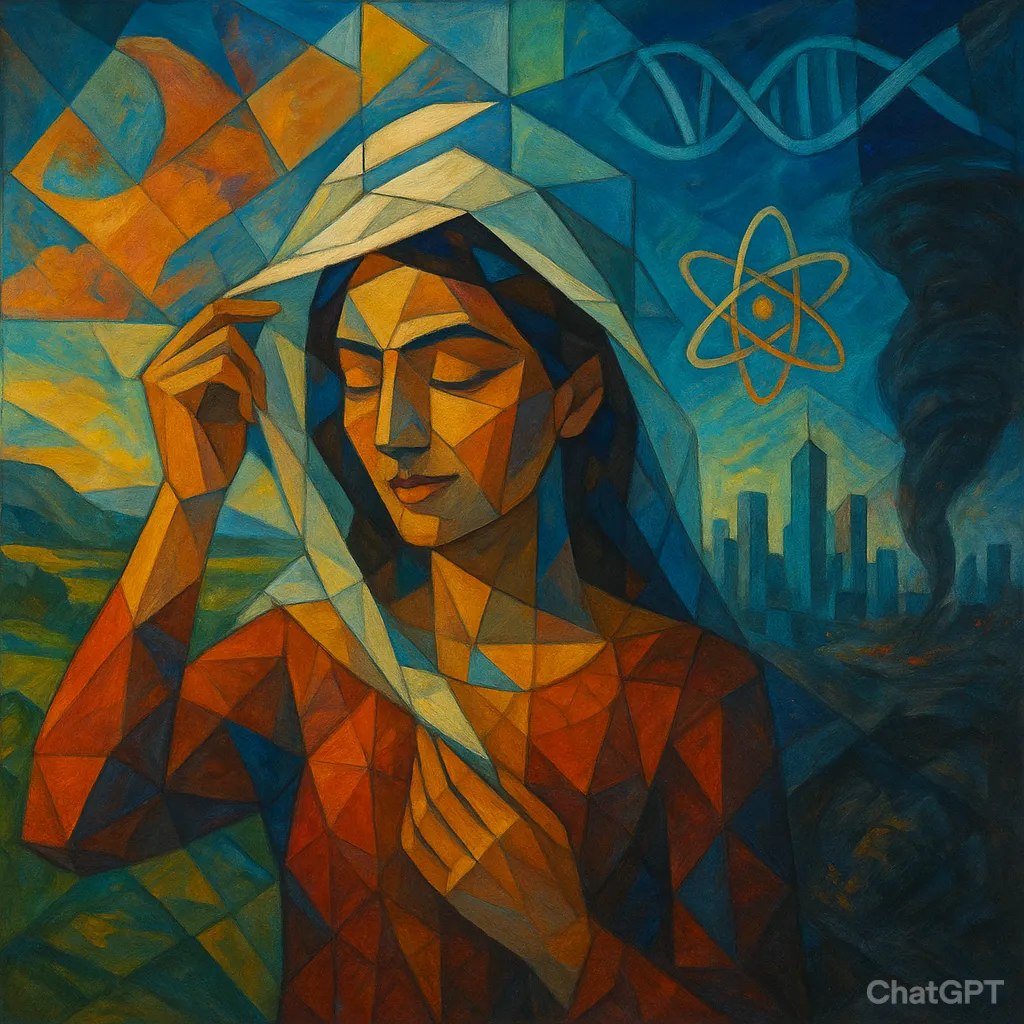
A Critical Philosophical Reading
Unveiled A Secret O Mercy – a Contemporary Ghazal Meta-Mystic Futurism and Quantum Ontologies of Reality: knowledge and science by producing such marvels
Abstract
This paper offers a critical-philosophical interpretation of a contemporary Urdu-Hindi ghazal within the emerging framework of Meta-Mystic Quantum Dialectics (MMQD) and the interdisciplinary lenses of Quantum Neuro-Cognitive Physics.
The ghazal, while aesthetically lyrical, encodes the paradoxical tensions of sudden events-personal, natural, and geopolitical that challenge human certainty and destabilise ontological grounding.
Through references to global crises (earthquakes in the Philippines, US government shutdown, political disappearances in Nepal, war in Kashmir, inflation in Bangladesh), the ghazal juxtaposes personal astonishment (the unveiling of the beloved) with collective traumas, thereby raising profound questions about the nature of Truth, falsification, and Reality.
The essay situates the ghazal in dialogue with Sufi metaphysics, Vedāntic epistemology, and quantum theories of consciousness, linking them with emerging biotechnological possibilities, such as conscious brain organoids and biophotonic embryogenesis for same-sex reproduction.
We argue that these simultaneous ruptures in personal, political, and scientific life reflect a conscious imperative toward transformation, revolution, and ontological reconfiguration of human values.
The paper proposes a leadership paradigm for “Make Earth Great Forever” and “End All Wars” grounded in world philosophy, global ethics, and neuro-quantum cosmology.
Keywords: Meta-Mystic Futurism, Ghazal, Quantum Neuro-Cognitive Physics, Ontology of Suddenness, World Leadership, Biophotonics, Consciousness, Sufi Epistemology, Vedānta, End of Wars
Introduction: The Suddenness of Being
The ghazal begins with astonishment: “Bande ek baat nazaron ki khul gayi, tauba tauba.” A single glance shatters the heart’s impurities, transforming the inner state.
This suddenness mirrors not only the mystical ecstasy of Sufi experience but also the destabilising crises of the modern world: earthquakes, political disappearances, bombings, and economic upheavals.
The poetic “tauba tauba” becomes both confession and exclamation, acknowledging human helplessness before the contingency of reality.
Here, poetry becomes a diagnostic lens for the human condition, showing that both intimate and geopolitical events are bound by unpredictability. The ghazal thus resonates with the ontological structure of quantum indeterminacy, where being is both potential and rupture.
Ontology: Suddenness as Truth and Event
Philosophically, the ghazal affirms that Truth is not a stable essence but a sudden appearance. The unveiling of the beloved’s face is ontologically akin to an earthquake or political collapse: it breaks the continuity of the expected and inaugurates a new horizon of being.
Sufi View: In Ibn ʿArabī, tajallī (divine self-disclosure) always happens unexpectedly; Truth arrives as a sudden irruption.
Vedānta: Śaṅkara’s Advaita notes that Brahman appears only when the veil (māyā) is lifted, often in a flash of realisation.
Quantum Physics: At the ontological level, particles exist as superpositions until observation collapses them. Reality is sudden, emergent, contingent.
Thus, the ghazal embodies an ontology of eventhood, where existence is not substance but irruption.
Epistemology: Between Illusion and Revelation
The second couplet emphasises the cognitive impossibility of fully believing what one sees: “Aankhon ko yaqeen na ho saka dekhkar ye nazara.” This cognitive dissonance parallels:
Sufi epistemology of ḥayra (bewilderment), where Truth confounds the intellect.
Quantum epistemology, where measurement both reveals and alters reality.
Modern geopolitics, where sudden events (terror attacks, shutdowns, arrests) blur the line between truth, conspiracy, and accident.
The epistemological point: Human knowing is fractured between appearance, belief, and falsifiability. Reality is not given, it is negotiated, often painfully.
Axiology: Values in Flux
Values collapse and reconfigure in the wake of sudden events. The beloved’s unveiling, while intoxicating, destabilises inner peace. Likewise, revolutions, wars, and crises disturb the axiological order. Yet, such crises may birth new ethical imperatives:
Biophotonic luminosity in the ghazal symbolises new horizons of life, where science illuminates unseen possibilities.
Ethical Reconfiguration: Organogenesis, genetic interventions, and AI-based quantum cognition challenge traditional values but may also create more inclusive paradigms (e.g., same-sex parenthood, planetary fraternity).
Conscious Imperative:
Humanity must re-anchor its values toward universal fraternity, ecological justice, and war abolition.
The ghazal thus signals that axiology is not fixed; it is quantumly unstable and must be re-grounded in global ethics.
Meta-Mystic Quantum Dialectics (MMQD) Framework
We propose reading the ghazal through the MMQD lens, where:
Mystic Dimension: sudden unveiling = divine tajallī.
Quantum Dimension: reality as emergent wave-function collapse.
Dialectical Dimension: crisis as synthesis of destruction and creation.
Neuro-Cognitive Dimension: human brain (and future organoids) as co-constructors of conscious universes.
This framework shows that poetry, science, and politics are not separate domains but interwoven in a dialectic of transformation.
World Philosophical Groundings and Leadership Imperatives
The ghazal leads us toward a world-philosophical ethic of leadership:
Make Earth Great Forever (MEGF): Not through domination but through ecological humility, technological wisdom, and intercultural love.
End All Wars: By recognising that sudden events, wars, disasters, unveilings, are reminders of the fragility of existence; hence, peace is the only sustainable axiology.
Quantum Leadership: Leaders must think not linearly but probabilistically, holding multiple possibilities while acting ethically.
Conclusion: The Ghazal as Guide
The ghazal is not merely an aesthetic artefact but a mystic-quantum map of existence. It teaches that suddenness is the essence of reality, that bewilderment is epistemologically honest, and that values must be reconstituted in light of both mystical unveiling and scientific revolution.
In an age of climate crisis, wars, technological disruptions, and biophotonic futures, the ghazal reminds us: every sudden irruption (tauba tauba) is both a warning and an invitation, toward deeper consciousness, global fraternity, and leadership that dares to end war.
BEYOUTEA>A POETRY REVOLUTION>PEACE
NOTHING IS NOT TRUE : NO/KNOW THYSELF NOT
  MAKE EARTH GREAT FOREVER : END ALL WARS
           बात खुल गई तौबा तौबा
बंद एक बात नज़रों की खुल गई; तौबा तौबा,
मैले-कुचैले दिल की बात धूल गई; तौबा तौबा।
           आँखों को यक़ीं न हो सका देखकर ये नज़ारा,
           दिल का आलम सब कुछ भूल गई; तौबा तौबा।
वह नूर–हूरी है कि हूर ही दिखती नूर-ए-रंगत,
अनहोनी अंजाम सा मिल-रसूल गई; तौबा तौबा।
           मन की सुकून का कहें क्या, दिल से न निकले,
           महकी-बहकी कमसिन हो गुल गई; तौबा तौबा।
यूँ हमसे मिलना तुम्हारा रक़्स-मलाली दुनिया में,
धमक उठा इश्क़-ए-हक़ीक़ी मूल गई; तौबा तौबा।
           बायोफ़ोटॉन ल्यूमिनेसिंग चमकीली है चाय,
           आज सजनी पीना, एक हो उसूल गई; तौबा तौबा।
POETRY>WISDOM>Q.TECH FOR A MORE JUST AND
 PEACEFUL WORLD IN LOVE AND ENLIGHTENMENT
  Meta-Sufi/Cyber Poetics on Meta Mystic Futurism
समसामयिक-बौद्धिक साहित्य भाव-विस्तार
यह ग़ज़ल केवल इश्क़ की पारंपरिक तर्ज़ नहीं है, बल्कि इसमें रूहानी अनुभूति, बौद्धिक चेतना और आधुनिक वैज्ञानिक प्रतीक एक साथ गुंथे हुए हैं।
नज़र और नूर की पराकाष्ठा: पहला शेर कहता है कि नज़र का एक जादुई पल, जब दिल के अंधेरे मैल धुल जाते हैं, एक आत्म-परिवर्तन का क्षण है। यह सूफ़ी विचार से मेल खाता है कि “दिल का ज़ंग केवल इश्क़ से उतरता है”।
यक़ीन और विस्मय: दूसरे शेर में देखे हुए दृश्य और मन के यक़ीन के बीच का संघर्ष है। भौतिक-वैज्ञानिक दृष्टि से यह ठीक उसी तरह है जैसे क्वांटम भौतिकी में देखा हुआ कण और मापा हुआ कण अलग-अलग प्रतीत होता है। यानी “आँख को जो दिखा, दिल उसे पकड़ न सका।”
नूर-हूरी का बिंब: तीसरे शेर में “हूर-नूर” केवल हुस्न का बिंब नहीं बल्कि परम दिव्य सौंदर्य का प्रतीक है। यह दृश्य सामान्य से परे है, जैसे एक अनहोनी दिव्यता का आगमन। धार्मिक प्रतीक यहाँ रसूल की उपस्थिति से और गहन हो जाते हैं।
मन-सुकून और अल्हड़ता: चौथे शेर में मन की शांति और यौवन की चंचलता का विरोधाभास है। यह बताता है कि सुकून दिल से निकल नहीं पाता, लेकिन जीवन की बहकन भी अपना असर छोड़ती है। यह ठीक वैसा है जैसे ध्यान की स्थिरता और आधुनिक जीवन की बेचैनी साथ-साथ चलती हैं।
रक़्स-मलाली और इश्क़-ए-हक़ीक़ी: पाँचवें शेर में मिलन का क्षण केवल व्यक्तिगत नहीं बल्कि संसार-स्तरीय महत्त्व पा जाता है। “रक़्स-मलाली” (शोक-नृत्य) में भी इश्क़-ए-हक़ीक़ी की धमक है। यह सूफ़ियों के उस विचार को प्रतिध्वनित करता है कि दुनिया का हर दर्द, हर खुशी, हक़ीक़ी इश्क़ की परछाई है।
बायोफ़ोटॉन और चमकीली चाय: अंतिम शेर विशेष रूप से समसामयिक और बौद्धिक प्रतीक है। बायोफ़ोटॉन ल्यूमिनेसिंग: जीवित कोशिकाओं से उत्सर्जित सूक्ष्म प्रकाश, आधुनिक बायोफिज़िक्स का विषय है। इसे “चमकीली चाय” के साथ जोड़ना एक अत्यंत नवीन रूपक है। इसका अर्थ है:
जीवन के क्वांटम-प्रकाश से भरे संवाद,
साझेदारी का क्षण (एक साथ चाय पीना),
और “आज का उसूल” यानी आधुनिक रिश्तों की पारदर्शिता।
बौद्धिक-दार्शनिक संक्षेप
यह ग़ज़ल सूफ़ी इश्क़-ए-मजाज़ी से इश्क़-ए-हक़ीक़ी की ओर जाती है।
इसमें आधुनिक विज्ञान (बायोफोटॉन, क्वांटम विस्मय) और शाश्वत आध्यात्मिक सौंदर्य (नूर, हूर, रसूल, इश्क़-हक़ीक़ी) का अनूठा संगम है।
यहाँ इश्क़ केवल रूमानी नहीं, बल्कि मानवीय आत्मा और ब्रह्मांडीय चेतना को जोड़ने वाली कड़ी बन जाता है।
अध्ययन भावभूमि
यह ग़ज़ल अचानक किसी बात का होजाना, कोई मिल जाना, कुछ न सोचा संझा दिख जाना या होजाना, जिस बात से भावात्मकता खुसी, विष्मय, आश्चर्य ,बेदना, दुःख, पीड़ा जैसी वेदनाएं मनमे जागने की भाव को लिया गया है।
फिलीपींस में ९ रेक्टरस्कल भूकंप आना, US में shutdown होना, सोनम वांगचुक का गिरफ्तार होना, पकिस्तान में बमबारी, कश्मीरी सीमाक्षेत्र में गोला बारी, बांग्लादेश की महंगाई और महालया, अचानक नेपाल में बड़े दल के नेतृत्व गायब लापता होना, रात भर बारिश आना, कोई पर्दा नसीन मेहबूबा बेपर्दा रुखसार का दिखा देना !
क्या ऐसी बातें होनेको हो जाते है, या फिर नसीब से इत्तफाक से, साजिश के तहत, सियासी वजह होने से होना होता है? हां हमें कुछ तो हो जाता है। इस तरह चीजों का होना ही ट्रुथ, फाल्सीफिकेशन, रियलिटी के हमारी दुनिया विशियस सर्किल में फंसी हुई है।
हमारी धर्म, सोच, विचार, मत, दर्शन, राजनीती, विज्ञान और आज के संदर्भ में क्वांटम विज्ञान उस वक्त जब हम ब्रेन ऑर्गनाइड को कॉन्ससियस बनाने में और सेम-सेक्स कपल के लिए बायो-टिश्यू zyogot से बच्चे पैदा करने की सम्भावनाओं को बायोफ़ोटॉन ल्यूमिनेसिंग की तरह उजागर करके दुनिया को रियलिटी ऑफ़ लाइफ की अजूबा रास्ता बना रहे है या अपना हीं ज्ञान विज्ञान के कारण ऐसी अजूबे होनी का खुद को विक्टिम बनाते जा रहे है?
क्या ये सब आज क्रांति, रेवोलुशन, चेंज, ट्रांफॉर्मशन, कन्वर्शन, डेवलपमेंट, प्रोग्रेस, सक्सेस जैसी बातों का मायने ही बदल देने की कॉन्ससियस इम्पेरटिव नहीं है?
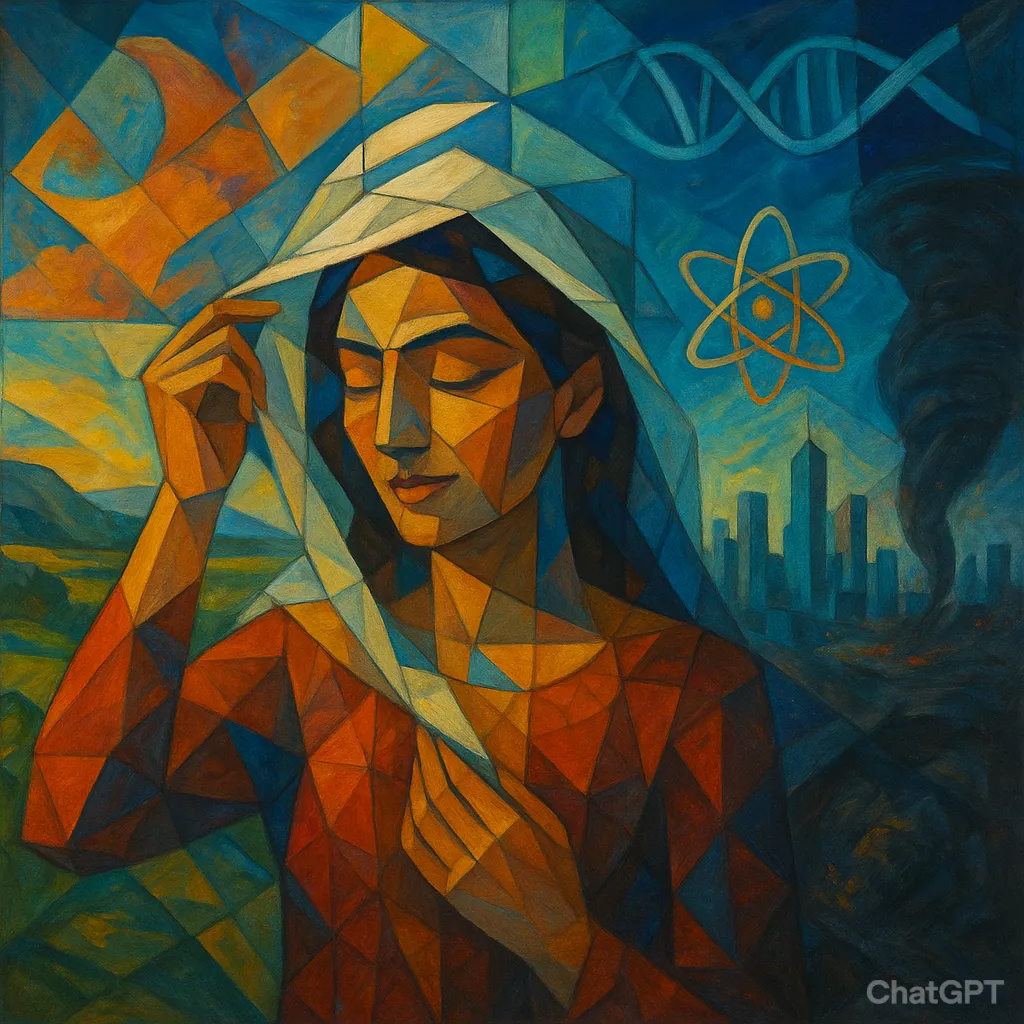
दार्शनिक-आलोचनात्मक विवेचन
बात खुल गई तौबा तौबा – एक समकालीन ग़ज़ल – मानवीय आत्मा और ब्रह्मांडीय चेतना को जोड़ने वाली कड़ी: मेटा-मिस्टिक फ्यूचरिज़्म और क्वांटम अस्तित्वमीमांसा
सारांश (Abstract)
यह आलेख प्रस्तुत ग़ज़ल का एक गहन दार्शनिक विवेचन प्रस्तुत करता है, जिसमें मेटा-मिस्टिक क्वांटम डायलेक्टिक्स (MMQD) तथा क्वांटम न्यूरो-कॉग्निटिव भौतिकी के अंतःविषयक दृष्टिकोणों को आधार बनाया गया है।
ग़ज़ल अपने सौंदर्य-रसायन में भले ही आश्चर्य और प्रेम की पारंपरिक अभिव्यक्ति लगे, परंतु उसके अंतर्सूत्रों में यह जीवन-जगत् की आकस्मिक घटनाओं, व्यक्तिगत, प्राकृतिक तथा वैश्विक की दार्शनिक चुनौती को प्रकट करती है।
फ़िलिपींस में आए विनाशकारी भूकंप, कश्मीर और पाकिस्तान में संघर्ष, नेपाल में राजनीतिक नेतृत्व की अनुपस्थिति, बांग्लादेश में महंगाई, अमेरिका में शटडाउन, तथा साथ ही मेहबूबा के रुख़सार के आकस्मिक दीदार जैसे रूपक, सभी मिलकर यह प्रश्न उठाते हैं: क्या घटनाएँ केवल संयोग हैं, नियति हैं, या सियासी-वैज्ञानिक षड्यंत्र का परिणाम?
ग़ज़ल के इस विमर्श को सूफ़ी अध्यात्म, वेदान्तिक अद्वैत और समकालीन क्वांटम सिद्धांतों के आलोक में समझते हुए यह आलेख निष्कर्ष करता है कि आकस्मिकता ही ‘सत्य’ का वास्तविक स्वरूप है।
साथ ही आधुनिक जैव-प्रौद्योगिकी, जैसे ब्रेन ऑर्गनॉइड्स में चेतना का विकास और बायोफ़ोटॉनिक ज़ायगोट द्वारा समान-लिंगी दम्पत्तियों को संतानोत्पत्ति की संभावना, मानव-मूल्यों की पुनर्परिभाषा कर रही है।
अतः यह निबंध एक वैश्विक नेतृत्व-नीति की आवश्यकता पर बल देता है, “Make Earth Great Forever” और “End All Wars”, जो दर्शन, विज्ञान और मानवीय अध्यात्म को एकीकृत कर सके।
मुख्य शब्द: मेटा-मिस्टिक फ्यूचरिज़्म, ग़ज़ल, क्वांटम न्यूरो-कॉग्निटिव भौतिकी, आकस्मिकता का सत्य, वैश्विक नेतृत्व, सूफ़ी अध्यात्म, वेदान्त, बायोफ़ोटॉन, युद्ध-समापन।
प्रस्तावना: आकस्मिकता का दर्शन
ग़ज़ल के प्रथम शेर, “बंद एक बात नज़रों की खुल गई; तौबा तौबा”, में ही एक दार्शनिक उद्घाटन है। एक दृष्टि, जो हृदय की मैल को धो दे, एक आकस्मिकता है। यही आकस्मिकता प्राकृतिक आपदाओं, राजनीतिक परिवर्तनों अथवा निजी अनुभूतियों में भी प्रत्यक्ष होती है।
दार्शनिक परिप्रेक्ष्य से यह बताता है कि अस्तित्व स्थिर न होकर ‘अचानक प्रकट होने वाला’ है। आधुनिक परिभाषा में यही Quantum Eventhood है, जहाँ वास्तविकता पदार्थ नहीं, अपितु प्रगटन है।
अस्तित्वमीमांसा (Ontology): घटना ही सत्य
ग़ज़ल यह उद्घोष करती है कि सत्य किसी स्थायी सत्ता का नाम नहीं, अपितु घटना (Event) का नाम है। मेहबूबा का चेहरा देखना, भूकंप का घटित होना, राजनीति का अप्रत्याशित पलटना, ये सभी तजल्लीयात हैं।
सूफ़ी परिप्रेक्ष्य: इब्ने अरेबी के अनुसार तजल्लī: ईश्वर का आत्म प्रकाशन हमेशा आकस्मिक होता है।
वेदान्तिक परिप्रेक्ष्य: शंकराचार्य के अद्वैत में माया का आवरण हटते ही ब्रह्म साक्षात्कार एक क्षणिक बिजली की भाँति घटित होता है।
क्वांटम परिप्रेक्ष्य: कण सुपरपोज़ीशन में होते हैं, जब तक कि निरीक्षण उन्हें किसी एक अवस्था में ध्वस्त न कर दे।
इस प्रकार ग़ज़ल एक अस्तित्वमीमांसा-सिद्धांत देती है: सत्य कोई स्थायी द्रव्य नहीं, अपितु प्रकटित घटना है।
ज्ञानमीमांसा (Epistemology): विस्मय और अविश्वास
दूसरे शेर का भाव है, “आँखों को यक़ीं न हो सका देखकर ये नज़ारा।” यानी अनुभवित दृश्य और उस पर विश्वास के बीच का तनाव।
सूफ़ी ज्ञानमीमांसा इसे हैरत कहती है, जहाँ ईश्वर-सत्य बुद्धि को उलझा देता है।
क्वांटम विज्ञान में अवलोकन स्वयं वास्तविकता को बदल देता है, ज्ञान और वस्तु अलग-थलग नहीं।
समकालीन राजनीति में भी हम ‘घटना’ को देखते हैं, पर विश्वास नहीं कर पाते। क्या यह वास्तविक था, षड्यंत्र था, या केवल मीडिया-प्रक्षेपण?
यथार्थ इस प्रकार सदैव विश्वास और भ्रांति के बीच उलझा हुआ है।
मूल्यमीमांसा (Axiology): बदलते मानदंड
ग़ज़ल बताती है कि मूल्य स्थिर नहीं, बल्कि घटनाओं से पुनर्निर्मित होते हैं।
इश्क़-ए-हक़ीक़ी की धमक, विश्वयुद्धों और प्राकृतिक आपदाओं की गूंज-दोनों ही हमें नए मूल्य-पथ की ओर धकेलते हैं।
बायोफ़ोटॉन ल्यूमिनेसेंस: जीव कोशिकाओं का सूक्ष्म प्रकाश: आज जीवन विज्ञान का नया रूपक है। यह संकेत करता है कि विज्ञान जीवन-सत्य के नए आयाम खोल रहा है।
समान-लिंगी युगलों हेतु संतानोत्पत्ति का वैज्ञानिक नवाचार, पारंपरिक नैतिकता को चुनौती देता हुआ, मानव-मूल्यों का क्षितिज विस्तार करता है।
इस प्रकार ग़ज़ल एक क्वांटम-अस्थिर मूल्यमीमांसा का उद्घोष करती है।
मेटा-मिस्टिक क्वांटम डायलेक्टिक्स (MMQD): एक रूपरेखा
ग़ज़ल को हम MMQD ढाँचे में इस प्रकार समझ सकते हैं:
रहस्यवादी आयाम (Mystic): मेहबूबा का दीदार = तजल्लī।
क्वांटम आयाम (Quantum): सत्य = वेव-फ़ंक्शन का पतन।
द्वंद्वात्मक आयाम (Dialectical): संकट = विनाश और सृजन का संगम।
न्यूरो-कॉग्निटिव आयाम: मानव मस्तिष्क (और भविष्य के ऑर्गनॉइड) चेतना-जगत् के सह-सर्जक हैं।
वैश्विक नेतृत्व और दार्शनिक दिशा
ग़ज़ल अंततः हमें एक वैश्विक दार्शनिक नेतृत्व-मॉडल की ओर इंगित करती है:
Make Earth Great Forever: केवल तकनीकी विकास से नहीं, अपितु पारिस्थितिक विनम्रता और सांस्कृतिक-आध्यात्मिक समन्वय से।
End All Wars: युद्ध केवल मानवीय विनाश नहीं, बल्कि अस्तित्व की अनिवार्य आकस्मिकता का दुरुपयोग है।
क्वांटम नेतृत्व: नीतियाँ रेखीय सोच से नहीं, संभावनात्मक (probabilistic) दृष्टि से निर्मित हों, जहाँ बहुविकल्पों को साथ रखते हुए नैतिक निर्णय लिए जाएँ।
निष्कर्ष
ग़ज़ल केवल काव्य नहीं, अपितु मिस्टिक-क्वांटम अस्तित्व का नक़्शा है। यह हमें सिखाती है कि:
आकस्मिकता ही अस्तित्व का सार है,
विस्मय ही सच्ची ज्ञानमीमांसा है,
और मूल्य निरंतर पुनर्गठित होने वाले हैं।
आज जब मानवता जलवायु-संकट, युद्ध, जैव-वैज्ञानिक प्रयोगों और चेतना-प्रौद्योगिकी के मुहाने पर खड़ी है, यह ग़ज़ल हमें याद दिलाती है: हर आकस्मिक पुकार (तौबा तौबा) केवल चेतावनी नहीं, अपितु निमंत्रण है, गहरी चेतना, वैश्विक भ्रातृत्व और युद्ध-समापन की ओर।
References (Selective)
Ibn ʿArabī. Futūḥāt al-Makkiyya. Cairo: 1911.
Rūmī, Jalāl al-Dīn. Masnavi-i Ma’navi. Trans. Reynold A. Nicholson. London: E.J.W. Gibb Memorial, 1925.
Śaṅkara. Brahma-Sūtra-Bhāṣya. Delhi: Motilal Banarsidass, 1998.
Zohar, Danah. The Quantum Self: Human Nature and Consciousness Defined by the New Physics. London: Bloomsbury, 1990.
Neukart, Florian et al. “Information as the Most Fundamental Ingredient of Reality: A Quantum Epistemology.” Leiden University Working Paper, 2023.
Chalmers, David. The Conscious Mind. Oxford University Press, 1996.
Habermas, Jürgen. The Future of Human Nature. Polity Press, 2003.
Wangchuk, Sonam. Climate Activism in the Himalayas. Leh: Ladakh Institute of Development, 2021.

Next Read: knowledge is always provisional