


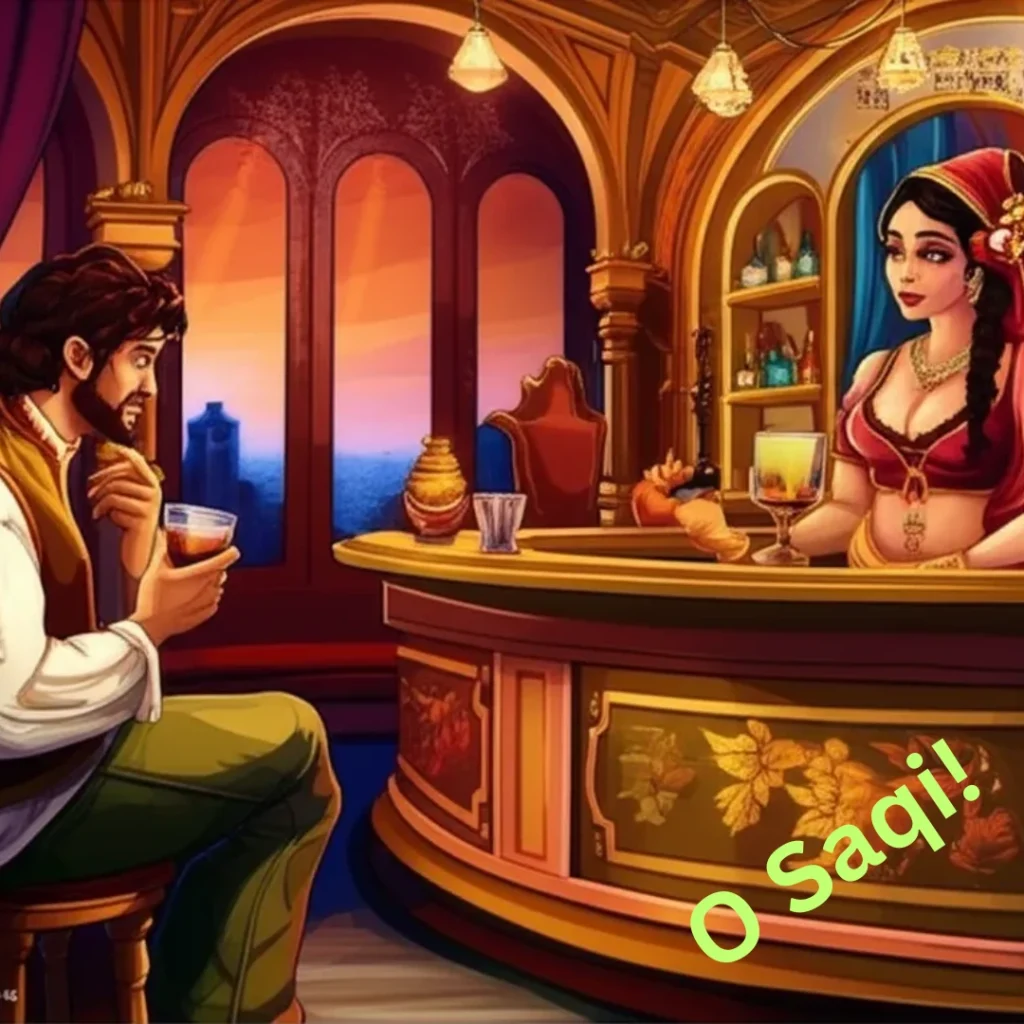
       The Tavern You Have Adorned
How wondrous, O Saqii, the tavern you have adorned,
My wakeful yet intoxicated heart is drawn by its charm unadorned.

The dawn unveils itself with an innocent, sunlit face,
While the pious preacher falters, and the libertine finds grace.

I have wandered through temples, mosques, churches, and shrines,
Yet everywhere the revellers sing, drink, and dance in lines.

At your threshold, they gather, clashing, quarrelling in vain,
But I, beholding your miracle of love, lift the goblet again.

I wish to drink only from your hand, life and death mean nought,
To gaze into your eyes alone is the victory I have sought.

This love is our tea, a festival renewed each day,
Beloved, the thirst you awakened, how could I ever turn away?
Table of Contents
Meaning and Poetic Essence
The Tavern You Have Adorned – Life not as grand a doctrine but as an intimate ritual, renewing every moment of existence.
This ghazal paints love as a divine tavern where intoxication is not of wine but of the spirit. The heart is awake yet drunk, suggesting a state where reason and ecstasy merge. The dawn shines with innocence, while religious austerity collapses before the radiant simplicity of love’s joy.
The poet’s wandering through temples, mosques, churches, and shrines represents humanity’s endless search for truth in institutions. Yet, wherever he turns, he finds celebration only in love’s company.
Even as quarrels erupt at the beloved’s threshold, the poet chooses not to dispute but to surrender, raising the goblet as a sign of reverence to love’s miracle.
In the end, love is likened to a daily tea, sustaining life not as grand a doctrine but as an intimate ritual, renewing every moment of existence.
A Mirror for Our Times
In today’s world, the ghazal resonates as a mirror to global geopolitics. Leaders and nations, much like drunken revellers, are intoxicated, yet not by love but by power, domination, and control.
This intoxication leads not to unity but to conflict, much like the quarrels at the beloved’s gate. Humanity, caught in this spiral, risks losing the very essence of its being.
The poet’s call for love as the true elixir is thus a critique of our age. Just as classical philosophy, from Plato’s symposium to Rumi’s tavern, taught that true intoxication dissolves the ego into divine unity, so too must our modern world recognise that authentic vitality lies not in military or economic might but in shared humanity.
Quantum Entanglements of Love
If classical philosophy reminds us of divine intoxication, quantum information science offers a modern parallel. At the quantum level, nothing exists in isolation: particles are entangled, realities superposed, and outcomes relational.
The ghazal’s vision of love as a shared festival echoes this quantum truth: humanity itself is an entangled web, and no individual or nation can truly flourish apart from the whole.
This convergence of mysticism and quantum science inspires what may be called meta-mystic futurism: a vision where the poetic, the philosophical, and the scientific weave together to guide humanity forward.
The beloved’s goblet is thus not just a metaphor of private desire, but a symbol of a collective ethic; only in compassion and shared experience does life gain meaning.
The MMQD Perspective (Meta-Mystic Quantum Dialectics)
From the lens of MMQD, this ghazal is both lyrical testimony and intellectual prophecy. Its metaphors dismantle institutional rigidity, temple, mosque, church, shrine, revealing that authentic truth flows from direct entanglement with love, not external authority.
The quarrels at the beloved’s gate mirror today’s geopolitical rivalries: nations fighting over influence, identity, and supremacy. Yet the poet’s choice to lift the goblet in silence is a radical act; it declares that only love, not conflict, offers real victory.
Thus, the ghazal is not merely a song of intimacy but a call toward a quantum society, a civilisation that understands reality as interwoven, dynamic, and relational, where knowledge, love, and existence co-create the future of humanity.
In this way, a timeless ghazal of love becomes a philosophical map: one that warns us of humanity’s dangerous intoxications, yet offers us a quantum path forward, where every goblet raised is not for power, but for shared compassion.
BEYOUTEA>A POETRY REVOLUTION>PEACE
    MAKE EARTH GREAT FOREVER
      NO THING IS NOT TRUE
कैसीऐसी तुंनेसजाई साकी तेरा गजबका मैख़ाना,
मेरा जागता हुवा मदहोश मनको अजबसे है टाना।
           सहरमे धुप खिलनेकोहै मासूमचेहरा आफ़ताबिया,
           शेख वाइज़ परहेज़ी नावरत सके रबरबाई रिंदाना।
मंदिर मस्जिद गिर्जाघरोंसे हो आया हुँ देख मज़ार,
मस्त लोग हरजगह मोज़ मनाये चले गानाबजाना।
           तेरे दरको सब आये देखने तुझे लड़े भिड़े झगड़ेहै,
           देखकर तेरी प्यारकी करामत हाथ उठाऊं पैमाना।
मुझेहै पीना बस तेरी हाथोसे जीना-मरना क्याबात,
तुं देखनदेख तेरे नैननिहारूं मुझे नाहार जितजाना।
           यह इश्क़ तेरी-मेरी चाय है हर दिनके तीज-त्यौहार,
           जानेमन तुंने जगायी प्यास कैसे होसकेगा जीपाना।
      LET'S GOODNESS A CHANCE : END ALL WARS
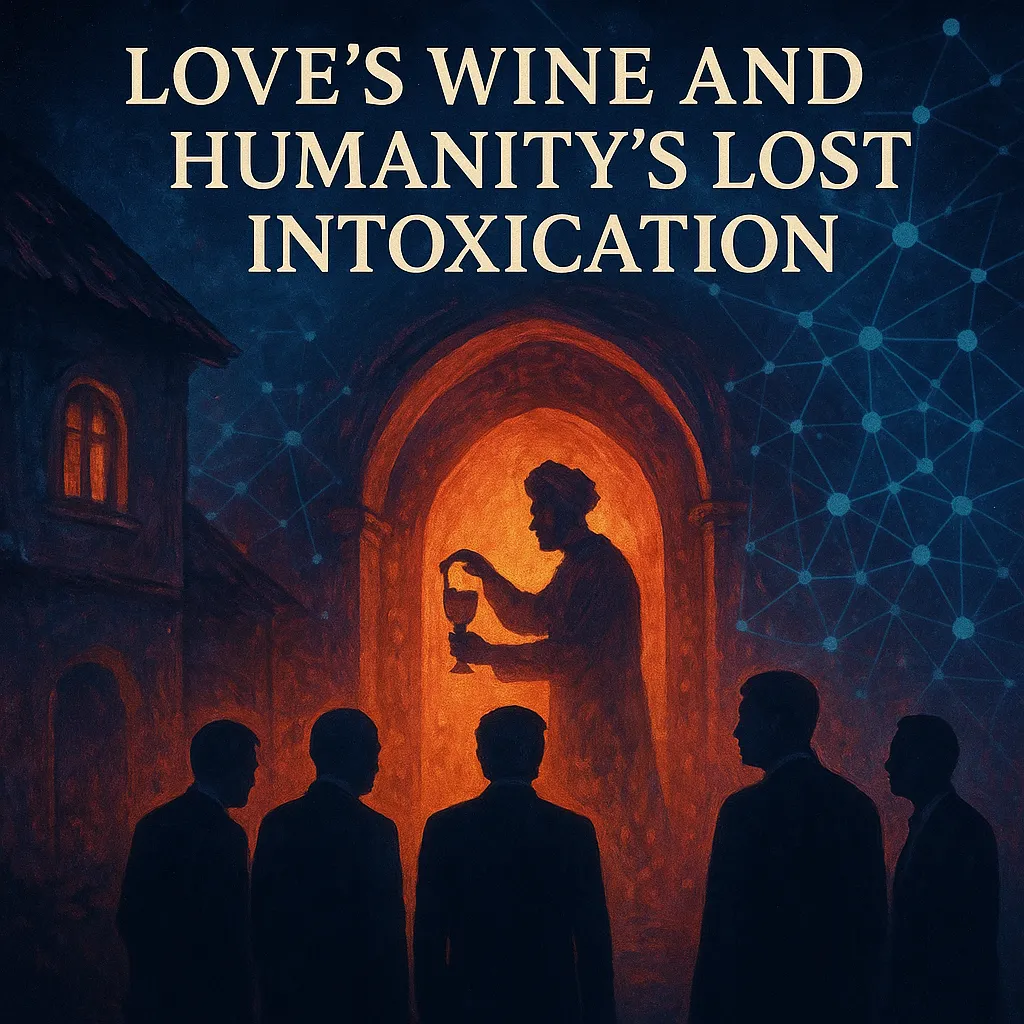
ग़ज़ल का भावार्थ
तेरा गजबका मैख़ाना – यह इश्क़ साधारण नहीं, बल्कि हर दिन के उत्सव और त्यौहार जैसी चाय है, जीवन का परम रस
यह ग़ज़ल प्रेम और रूहानियत की मस्ती से भरे हुए एक ऐसे मैख़ाने का चित्र खींचती है, जो सांसारिक सराय नहीं बल्कि आत्मा का दिव्य अनुभव है। शायर का मन एक अदृश्य आकर्षण में जागते हुए भी मदहोश है, यह इशारा है उस प्रेम की ओर जो न केवल भौतिक, बल्कि आध्यात्मिक और अनंत है।
सहर की धूप मासूम चेहरे जैसी प्रतीत होती है और धार्मिक संस्थाओं, मंदिर, मस्जिद, गिरजाघर, मज़ार, सभी जगह घूम आने पर भी कवि को असली जीवनरस उसी प्रेम के प्याले में मिलता है। शायर देखता है कि लोग इसी दर पर आकर झगड़ते हैं, पर वह स्वयं प्रेम की करामत देखकर केवल पैमाना उठाना चाहता है।
ग़ज़ल अंततः कहती है कि यह इश्क़ साधारण नहीं, बल्कि हर दिन के उत्सव और त्यौहार जैसी चाय है, जीवन का परम रस।
समसामयिक बौद्धिक विवेचना
आज की विश्व-राजनीति (geopolitics) भी किसी मायने में इस ग़ज़ल के मैख़ाने जैसी प्रतीत होती है। राष्ट्र और नेता नशे में हैं, पर यह नशा प्रेम का नहीं बल्कि सत्ता, पूंजी, तकनीकी नियंत्रण और प्रभुत्व का है।
महाशक्तियाँ अपने-अपने प्यालों में विष घोलकर पी रही हैं; कोई आस्था के नाम पर, कोई प्रगति के नाम पर, तो कोई रक्षा के नाम पर। परिणाम यह है कि मानवता का होश खोता जा रहा है।
जिस प्रकार ग़ज़ल में शायर कहता है कि मंदिर-मस्जिद से लेकर मज़ार तक घूमकर भी असली आनंद प्रेम में है, वैसे ही आज की मानव सभ्यता वैज्ञानिक, धार्मिक और राजनीतिक संस्थानों के बीच भटक रही है, लेकिन उसे अपनी आत्मा का सच्चा रस नहीं मिल रहा।
क्लासिकल फ़लसफ़ा, यूनानी, इस्लामी, भारतीय, हमें याद दिलाता है कि मस्ती का असली अर्थ है दिव्य साक्षात्कार, न कि भौतिक मदहोशी।
इसी धरोहर को यदि हम क्वांटम इनफ़ॉर्मेशन साइंस के नए क्षितिजों से जोड़ें, तो सामने आता है एक मेटा-मिस्टिक फ़्यूचरिज़्म (meta-mystic futurism)। क्वांटम फ्रेम में हर कण का सम्बन्ध हर दूसरे कण से है, यानी संपूर्णता, परस्पर निर्भरता, और रहस्यमयी जुड़ाव। ठीक यही दृष्टि ग़ज़ल का प्रेम भी प्रदान करता है: विभाजनों से परे जाकर एकता का रस।
आलोचनात्मक विवेचना (Meta-Mystic Quantum Dialectics – MMQD)
MMQD फ्रेम से देखें तो यह ग़ज़ल सिर्फ़ प्रेम की नहीं, बल्कि एपिस्टेमिक चेतावनी है। यह बताती है कि जब मानव सभ्यता बाहरी संरचनाओं धर्म, राजनीति, संस्थान, में खो जाती है, तब असली “मैख़ाना” यानी आत्मा की प्रेमपूर्ण चेतना भूली जाती है।
क्वांटम चेतना सिद्धांत हमें यह आधार देता है कि अनुभव और यथार्थ किसी एकरेखीय सत्ता से नहीं, बल्कि superposition और entanglement से निर्मित हैं। यदि नेता और राष्ट्र इस दृष्टि से सोचें, तो शक्ति-संघर्ष का नशा त्यागकर मानवता की साझी बेहतरी की ओर कदम बढ़ाया जा सकता है।
ग़ज़ल का पैमाना, जो केवल प्रिय के हाथ से उठता है, इस ओर संकेत करता है कि असली जीवनरस केवल साझा प्रेम और मानवीयता से संभव है, ना कि युद्ध, झगड़े या सत्ता के दावों से।
इस मेटा-मिस्टिक दृष्टिकोण में भविष्य का रास्ता एक क्वांटम-समाज है, जहाँ ज्ञान, प्रेम और अस्तित्व सभी आपस में उलझे हुए हैं, और जहाँ हर इंसान दूसरे की भलाई से ही अपने को संपूर्ण अनुभव करता है।
इस प्रकार, ग़ज़ल का रस केवल शायराना इश्क़ तक सीमित नहीं रहता; यह हमें विश्व राजनीति की मदहोशी पर आईना दिखाता है और क्वांटम चेतना व क्लासिकल फलसफ़े के आधार पर एक गहरे मानवीय भविष्य का प्रस्ताव भी करता है।
Next Read: in EndleSS SearcH