


Sans Wars, A 01 World Society with Buffer Borders: The Role of Politicians, Diplomats, Intellectuals, and Bureaucrats through Love and Nature Poetry
By DarpanPoems
In today’s internetted, wwwally https://..slashed connectivitised-globalised world, societies across borders face a constant array of disparities, injustices, and conflicts. Wars, poverty, political tensions, and environmental degradation threatening the essence of human well-being, fueling division and inequality.
While technological advancements have bound us together in a way previously unimaginable, these innovations have not yet led to a global society where unity, peace, and justice prevail. The dream of a borderless, conflict-free world society remains elusive.
However, this dream is not an impossibility. It is time high for initiating productive, concrete, and the concerted efforts of politicians, diplomats, intellectuals, and bureaucrats, empowered by the wisdom of love and the nurturing spirit of nature, can eliminate world disparities and unite humanity for a common good with fulfillment of an eternal cause.
Table of Contents
The Vision for Global Unity
To imagine a world without borders is to envision a society based on shared humanity, where national identities dissolve into collective responsibility. The idea of a conflict-free, harmonious global community hinges on one essential question:
Can we rise above the systems of division and inequality that have plagued us for centuries? For this to happen, political, diplomatic, intellectual, and bureaucratic frameworks must evolve into instruments that foster empathy, collaboration, and inclusivity.
Yet, even as we contemplate these institutional changes, we must also turn our attention to the transformative power of love and nature poetry as crucial elements in bridging the deep divides that separate us.
Love, in its purest form, transcends borders and biases. It creates connections between individuals and cultures that can unite in their shared vulnerability and desire for peace. Nature, with its boundless beauty and intrinsic interconnectedness, reminds us of our common origin, grounding our shared existence in the ecosystems that sustain life.
Poetry, especially love and nature poems, serves as the most powerful form of expression to capture these ideals, weaving a universal language that can inspire change. When harnessed by political, diplomatic, intellectual, and bureaucratic forces, love and nature have the potential to reshape the world order for the better tomorrow.
The Role of Politicians: Leadership Beyond Borders
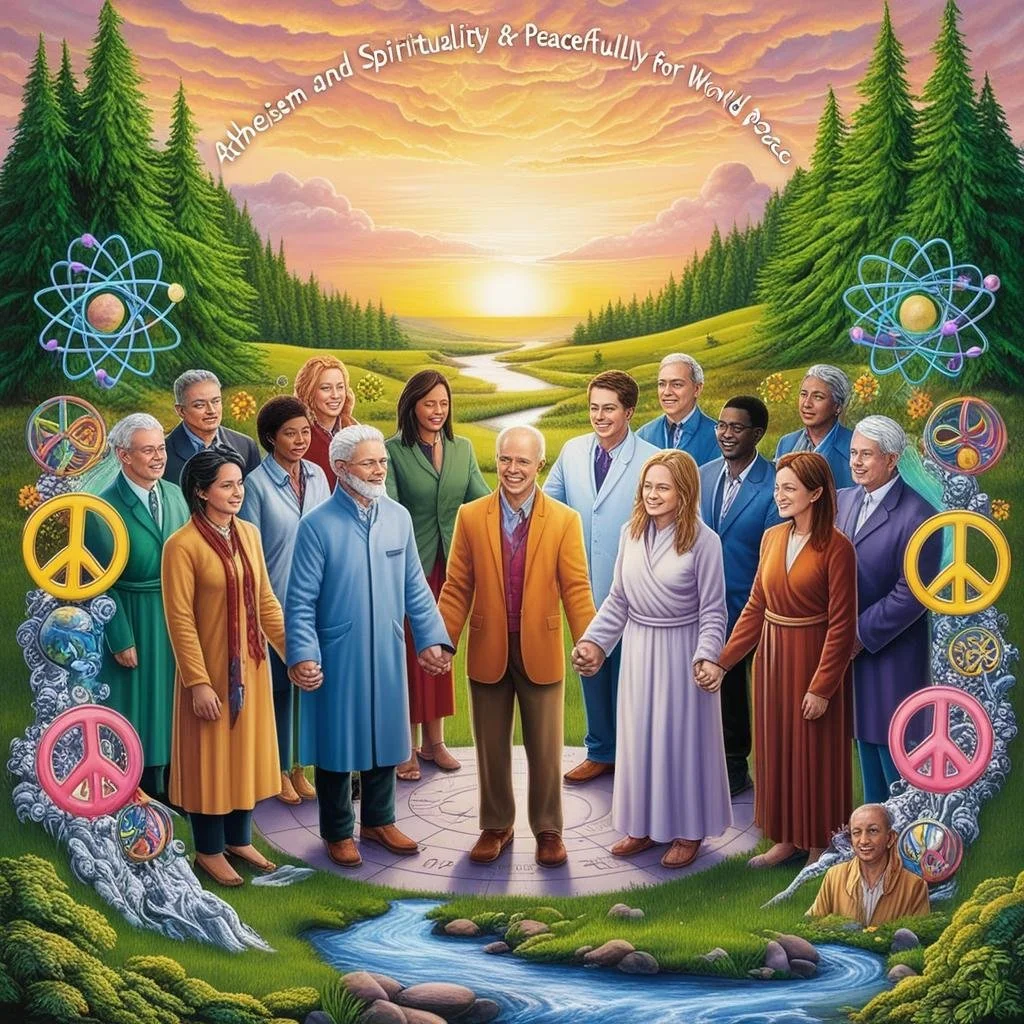
Politicians wield unparalleled influence over national and international policies. Their decisions dictate the course of economic, social, and environmental development. For global unity to be realized, political leadership must shift from a mindset rooted in nationalism and territorialism to one that emphasizes global cooperation and shared responsibility based on humanity.
Embracing Collective Global Responsibility
Politicians must work to foster a collective global responsibility that transcends national interests. This shift can begin by adopting policies that promote international collaboration on issues such as climate change, global health, and poverty eradication.
Nationalism, when taken to an extreme, can perpetuate divisions that hinder progress. For example, the Paris Agreement on climate change represents an attempt by world leaders to address environmental destruction in a unified manner.
However, much more needs to be done to ensure that such agreements are not only symbolic but also deeply integrated into policy frameworks across the globe.
Love as Political Doctrine
The transformative power of love can be reimagined as a political doctrine. Love in politics means placing human dignity, equality, and the well-being of all people at the forefront of policy decisions.
Politicians must embrace the idea of universal compassion, creating policies that aim to uplift the most vulnerable populations while ensuring fair and equitable access to resources for all.
Nelson Mandela’s unwavering commitment to forgiveness and unity after decades of apartheid in South Africa illustrates how love can be a cornerstone of political leadership, transcending division and building a foundational base of grounding for collective healing.
Diplomats: Bridging Gaps with Dialogue and Empathy
Diplomats are the architects of global peace and cooperation. Their role in navigating international relations cannot be overstated, as they facilitate dialogue, negotiate treaties, and mediate conflicts. Diplomacy, when driven by empathy and love, can serve as a bridge between nations that would otherwise remain in discord.
Diplomacy as a Bridge for Peace
Diplomacy must evolve from transactional relationships between nation-states to a more humane approach rooted in empathy and mutual respect. Peace talks, such as the Oslo Accords or the Iran Nuclear Deal (now at jeopardised conditions!), demonstrate how dialogue, when executed with genuine intent, can lead to constructive outcomes even in the most hostile environments at this moment felt as a must.
Diplomats must focus on understanding the perspectives of others and build frameworks that prioritize long-term peace over short-term gain. It looms so emergent now concerning the wars going on among Ukraine and Russia, Gaza and Israil, and in some countries in Africa, alarmingly broken out war between Iran and Israil recently.
Love and Nature in International Relations
The inclusion of love and nature in diplomatic dialogue could reshape how nations relate to one another. The language of nature, such as the idea of interconnected ecosystems, offers a powerful metaphor for global interdependence.
Diplomats could invoke the symbolism of nature to emphasize that, like the Earth’s ecosystems, global cooperation benefits all parties, ensuring mutual survival and prosperity. The idea of “global citizenship” can be framed within this understanding, encouraging international solidarity and the collective preservation of the planet.
The Intelligentsia: Reimagining the World Through Thought
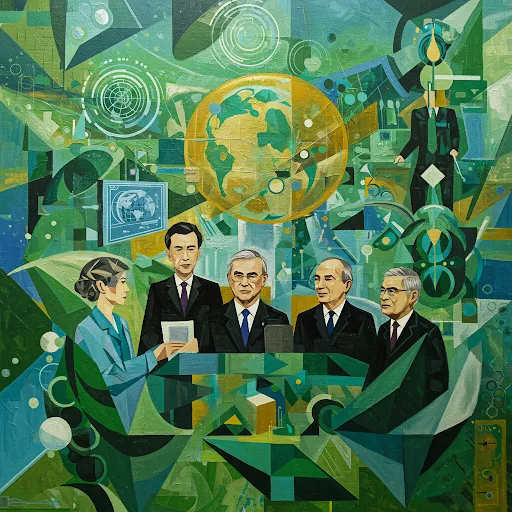
Intellectuals have always been at the forefront of shaping societies. Scholars, philosophers, and thought leaders have the unique ability to challenge prevailing ideologies and offer new ways of understanding the world.
The intelligentsia has an important role in eliminating global disparities by reframing the narratives around power, culture, and identity through unbiased quantum information panpsychism super numeric computational grounding of innovations today.
The Power of Thought in Changing the World
The transformation of societal structures begins with the transformation of thought. Intellectuals have the capacity to challenge outdated paradigms that reinforce inequality and conflict. The works of thinkers such as Amartya Sen, who advocates for capabilities and human development, or Arundhati Roy, whose critiques of global capitalism shed light on the intersections of politics and economic inequality.
These aforementioned instances are prime examples of how intellectual discourse can propel us toward a more equitable world. At the same time, our grounding of civilisations grounded on Vedic and Upanishadic ancient ideologies of ‘basudhaiva kutumbakam and sarve bhavantu sukhin…’ can be incorporated with Amigo dei and Al Jajira and the contemporary scientismic and panpsychismic thoughts that can be cultivated perpetually forever of human good to the entirety of eternal entity.
Integrating Love and Nature into Intellectual Discourse
Love and nature can serve as essential themes in the intellectual framework for global unity. These values can guide the exploration of new economic models, social structures, and educational systems that prioritize human well-being and environmental sustainability. Intellectuals can also reimagine education as a tool for cultivating empathy and compassion, allowing future generations to understand the interconnectedness of all people and ecosystems.
Bureaucrats: The Engine of Real-World Change
Bureaucrats are the individuals who translate political and diplomatic goals into tangible action. Their work in the implementation of policies is critical to the realization of a global society free from disparity and conflict.
Bureaucracy’s Role in Implementing Change
While bureaucratic systems are often criticized for their rigidity and inefficiency, they play a critical role in implementing policies that support global unity. Bureaucrats must be the ones to ensure that international agreements, such as the United Nations Sustainable Development Goals, are not only agreed upon but also actively pursued.
By streamlining international cooperation, bureaucrats can create an environment where disparities in wealth, education, and access to basic needs are diminished.
Sustainable Development Through Collective Action
Bureaucrats can also lead efforts to create sustainable, equitable global systems. Working within the framework of international institutions, they can promote policies that balance economic growth with environmental conservation, ensuring that the progress of today does not come at the expense of future generations. In this regard unwise green harvesting and deep sea mining must immediately be considered to an end.
The Healing Power of Love and Nature Poetry
In the pursuit of a conflict-free, borderless world, the importance of love and nature poetry cannot be overlooked. Poetry has long been a means of expressing the deepest emotions and the most profound truths about humanity and the world around us.
The beauty of love and nature poems lies in their ability to transcend language, culture, and time, offering a universal language of peace.
Poetry as a Global Connector
Love and nature poems evoke feelings of universal compassion, bringing people from different walks of life together in shared appreciation of beauty and human connection.
A poem about the wonders of nature, like John Keats’s “Ode to a Nightingale” or Maya Angelou’s “Still I Rise,” can inspire individuals to see themselves as part of a greater whole, united by common human experiences.
The Role of Poetry in Political and Diplomatic Discourse
Poetry can also be used as a tool of diplomacy. In tense negotiations or peace talks, a well-crafted poem can serve as a reminder of our shared humanity and the common dreams that bind us.
Imagine a poem being read at the table during international peace talks, its evocative imagery and gentle rhythms could serve as a moment of reflection, encouraging empathy and fostering an atmosphere of mutual understanding.
A Call to Action for Global Unity
In conclusion, the vision of a borderless, conflict-free world is not a utopian dream but a tangible reality that can be achieved through collective action. politicians, diplomats, intellectuals, and bureaucrats must align their efforts in creating policies, dialogues, and systems that emphasize global cooperation, empathy, and sustainability.
These efforts must be coupled with the power of love and nature poems, timeless expressions of our shared humanity that can inspire and unite people across the world. DarpanPoems has initiated an insignificant but genuine endeavour, a little step forward yet to accomplish such an unfathomable goal.
By reimagining our approach to politics, diplomacy, and bureaucracy through the lens of love and nature, we can build a world where disparity is eradicated and all people can live in peace, harmony, and unity sans wars sans conflicts in a natural world of love.
May the words of love and nature continue to inspire us all toward a better tomorrow!
BEYOUTEA>A POETRY REVOLUTION>PEACE MAKE EARTH GREAT FOREVER NOTHING IS NOT TRUE
‘Tis hard to touch what isn’t seen, What use is seeing that remains unseen? The eyes behold a world within the mind. How can one hold what sight can’t find?
A fleeting glimpse, lightning in the rain, How do I see what won’t remain? To see you is to see what seeing means, But knowing the unseen is beyond my dreams.
O Mirror, who do you show, you or me? How do I trust what I can’t see? Today, the tea has been brewed with my own heart’s flame, And, Sweetheart, I wonder, is our love just a dream without a name?
LET’S GOODNESS A CHANCE : END ALL WARS