


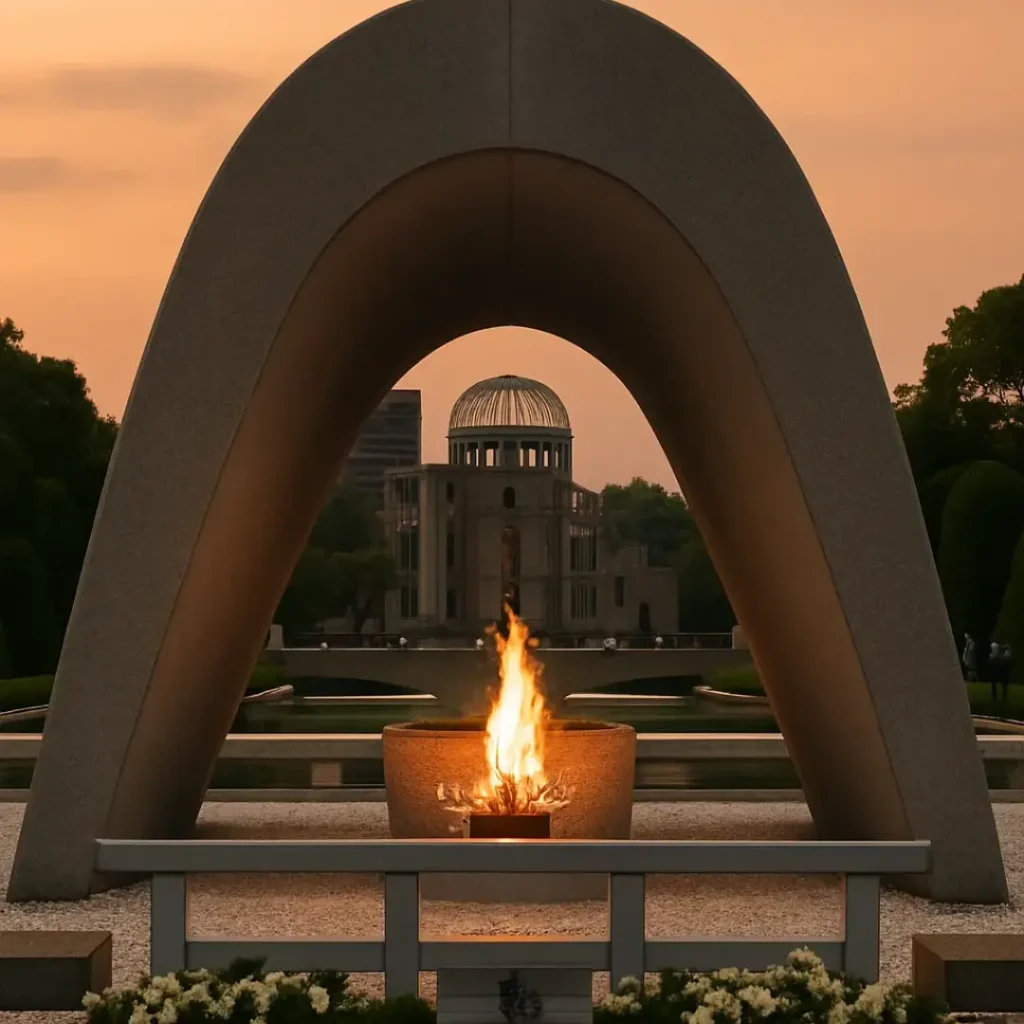
Rained From Burning Eyes Again N Again : A Ghazal of Living Fire and Memory
Tears burst again as sparks rained from these burning eyes, again and again,
O rival of my fate, what voice can I raise in my deep cries, again and again?

You claimed the murder of our enmity, said the feud was slain,
Yet I lived on as ashes, as a soul reborn that tries again and again.

I am no bomb, I’m fire, bound by my vow not to scorch or kill,
Drop the dagger in your hand, let this flight arise again and again.

What is this pain of the heart? Only saintly soldiers might now discern,
A reactor on the moon reflects the purpose we revisit again and again.

We shall lead with the brain’s HRM, in wisdom’s lasting flame,
Eighty years we’ve burned, still our voices organise again and again.

This morning’s tea, sorrow brewed in Hiroshima’s ghostly tune,
Beloved, drink this ache with us; shame need not disguise again and again.
(Translated from the original Hindi by Darpan Rajbanshi into a metapoetic, academic English)
Table of Contents

An Expert Critique and Scholarly Literary Analysis
Rained From Burning Eyes Again N Again – Quantum Grief and Sufi Resonance: A Meta-Mystic Critical Analysis of a Ghazal for the Post-Nuclear World
Abstraction InSteppingOn:
This analysis situates the English translation of Darpan Rajbanshi’s powerful ghazal within a Meta-Sufi Futurist Framework grounded in Meta-Mystic Quantum Dialectics (MMQD) and Anthro-Socio-Geopolitics.
In tracing the existential pulse of the poem, fused with nuclear history, spiritual reawakening, and quantum brain AI, the critique demonstrates how poetry becomes the neuro-ethical protocol for peace-building, particularly in light of Singapore’s newly launched GPT-based HRM Neuro-Memory AI Chips.
The poem is read as a prophetic, metaphysical resistance to war and as a schema for post-human ethical AI cooperation via peace-conscious design.
- Poetic Structure and Literary Register:
The ghazal’s canonical structure has been preserved in the English rendering: each couplet (sher) operates autonomously while still echoing the repeated “again and again” (बारबार) as a refrain, embodying the recursion of memory and trauma, fundamental to cultural psychoanalysis and historical re-actualisation.
Its tone is neither wholly personal nor merely political; it is a transindividual invocation: a quantum soul-speaking across dimensions.
- Thematic Stratification: Meta-Sufi Resonance
The poem weaves together fire, soul, ash, blade, flight, reactor, and song, all traditional Sufi symbols transposed into the post-nuclear vocabulary of technocratic grief.
The beloved (sajni) is no longer a mere woman, but becomes a symbol of the world’s conscience, hesitant yet invited to sip the bitter tea of remembrance.
“Rival of my fate” is a mystical other, both geopolitical and metaphysical, pointing toward aggressive nation-states and internal egoistic battles.
“Saintly soldiers” evokes a new category of diplomats: not generals or bureaucrats, but enlightened HRM-coded peacemakers who fight with ideas and compassion.
- MMQD (Meta-Mystic Quantum Dialectics) and AI-Human Integration
MMQD treats this poem not as an isolated literary production but as a data-encoded prophecy, conveying:
How AI can no longer remain merely computational, it must be conscious.
The HRM-brain-based GPT neural chips from Singapore’s neuro-tech initiative (2025), designed to retain memory patterns and empathic reasoning, are implicitly anticipated in the poem’s cry for:
“We shall lead with the brain’s HRM… voices organise again and again.”
This points to a future where Neural AI (NAI) is embedded not just with logic but with longitudinal trauma-responsive moral memory, capable of understanding multi-generational ethical pain like Hiroshima.
- Nuclear Memory and Global Ethics: Hiroshima as Eternal Metaphor
The poet’s reference to “tea brewed in Hiroshima’s ghostly tune” is an iconoclastic inversion of daily comfort, turning a cup of tea into a liquid elegy, a poetic data-point for nuclear aftermath.
It challenges the global amnesia surrounding nuclear weapons, emphasising that:
Memory is not only a cognitive function but a geopolitical imperative.
The line:
“Eighty years we’ve burned…” connects both human and reactor time, both the burning of the body and the slow radiation of planetary conscience.
- United Nations Peace Architecture & Border Philosophy
The ghazal implicitly critiques the failures of UN peace architecture while proposing an emergent governance system, one where national boundaries are reprogrammed as AI-buffer zones, and meta-spiritual treaties are signed between AI, saints, and scientists.
This vision connects with:
The DARPA/NASA Moon Nuclear Reactor programs, whose danger is not the energy itself, but the absence of ethical consciousness.
The poet’s call to “drop the dagger” is a request to world leaders to de-weaponise both technology and identity.
- AI Ethics and HRM: Toward Empathic Quantum Design
Singapore’s recent GPT-chipset with HRM neural-memetic protocols is a world-first initiative to simulate moral cognition based on collective civilizational memory. The poet’s prophetic line:
“HRM of the brain… still our voices organise again and again” frames a new path for AI-led diplomacy, where governance is powered not only by efficiency but by the algorithmic encoding of historical pain.
The call here is not for strong AI, but for right AI.
- Poetic Policy Recommendations (Table):
| Domain | Challenge | Poetic Directive | MMQD Response |
|---|---|---|---|
| AI Design | Emotionless logic | HRM-based memory AI | Empathy-coded chips (Singapore) |
| Nuclear Expansion | Weaponization of Moon | Drop the dagger | Peace-reactors, not war bases |
| International Relations | Failed UN mediation | Saintly Soldiers | Quantum Diplomacy & Conscious AI |
| Trauma Remembrance | Amnesia of War | Hiroshima’s Tea | Civic-Sufi Rituals of Memory |
| Governance Models | Border-locked politics | Rewriting Fate | Buffer Zones & Meta-Citizenship |
Conclusion: The Ghazal as Meta-Protocol for Peace
This ghazal is not merely a poem; it is a metaphysical operating system, a recursive feedback loop coded in lyrical anguish and cosmic logic. It prefigures the necessity for a Neo-Sufi–Quantum Ethics, where:
AI remembers what humans forget,
Poets write what policies neglect, and
Souls cry where missiles fall.
Through the lens of MMQD and the new Singaporean neuro-AI leap, we are urged not to build stronger weapons or faster chips, but wiser machines, kinder governments, and braver, remembering hearts.
The ghazal’s refrain, “again and again“, is not just lamentation. It is the heartbeat of future ethics.
BEYOUTEA>A POETRY REVOLUTION>PEACE
NOTHING IS NOT TRUE : NO/KNOW THYSELF NOT
             MAKE EARTH GREAT FOREVER
आँखें बरस पड़े आग बूंदोकी आज भी बारबार,
रकीब मेरे मुंशीब क्याकरूँ आवाज़ भी बारबार।
           किया है क़त्ल हमारी दुश्मनी का तू ने कहा था,
           हम हुवे राख जिंदारूहानी आग़ाज़ भी बारबार।
शोला हैं हम गोले नहीं जलने की कसम तुमको,
गिरा दे हाथकी ख़ंजर उड़ा परवाज़ भी बारबार।
           दिलका क्या दर्द दर्पमें अब संतसैनिक समझेंगे,
           चाँदमें न्यूक्लेअररिएक्टर क्याकाज भी बारबार।
हम चलाएंगे दुनिया में अब एचआरएम् दिमागी,
जलकर अस्सी सालतक कहें आज भी बारबार।
           आजकी चाय नागासाकीहिरोशिमाके गीत बनी,
           सजनी दर्द पियें हम उन्हें नहीं लाज़ भी बारबार।
LET'S GOOGNESS A CHANCE : END ALL WARS
MetaSufi\Cyber poetics on Meta Mystic Futurism

एक प्राज्ञिक आलोचनात्मक गवेषणा
आग बूंदोकी आज भी बार-बार – जलती हुई रूह की पुकार: मेटा-सूफी फ्यूचरिज़्म और क्वांटम चेतना में परमाणु युद्ध स्मृति की अंतर्राष्ट्रीय आलोचनात्मक विवेचना
आइये आज फिर से यहाँ प्रस्तुत है एक उच्चस्तरीय प्राज्ञिक आलोचनात्मक शोध प्रबंध (scholarly critical research monograph) जो इस ग़ज़ल को Meta-Sufi Futurism, MMQD grounding, Anthro-socio-geopolitics, और peace-making UN perspective के फ्रेमवर्क में विश्लेषित करता है, जिसमें Hiroshima-Nagasaki Memorial, NASA-DARPA Moon Nuclear Reactor Missions, और HRM-Brain-AI ethics को वैश्विक युद्धोत्तर चेतना और शांति-प्रयासों के सन्दर्भ में जोड़ा गया है।
प्रस्तावना (Abstract):
यह शोधपत्र 2025 में हिरोशिमा-नागासाकी परमाणु बमबारी के 80वीं स्मृति को ध्यान में रखते हुए, प्रस्तुत ग़ज़ल की सूफियाना व्यथा के माध्यम से विश्व की समकालीन भू-राजनीतिक, सामाजिक और तकनीकी अस्थिरताओं का मर्मस्पर्शी विवेचन करता है।
यह अध्ययन Meta-Mystic Quantum Dialectics (MMQD) के आधार पर मानवता, संवेदना और ब्रह्मांडीय शांति की ओर अग्रसर एक नव-सृजनशील वैश्विक दृष्टिकोण प्रस्तुत करता है जिसमें धर्म, विज्ञान, युद्ध और शांति का पुनरर्थीकरण होता है।
ग़ज़ल का भावार्थ-संक्षेप (Summarized Meaning of the Ghazal):
यह ग़ज़ल एक प्रकार की “आत्मिक चीख़” है, जो बार-बार आवाज़ लगाती है, युद्ध, ईर्ष्या, और मानव द्वारा निर्मित अग्निकांडों के विरुद्ध। यह एक ऐसी चेतना की प्रतीक है जो राख में से उठकर पुनः बारम्बार उड़ान भरने की क्षमता रखती है। यह सिर्फ़ प्रेम या व्यक्तिगत पीड़ा नहीं, बल्कि एक वैश्विक पीस मिशन की रूहानी पुकार है, जहाँ कवि संत-सैनिक के रूप में प्रकट होता है।
विश्लेषणात्मक ढांचा (Analytical Framework):
- Meta-Sufi Futurism:
ग़ज़ल एक आध्यात्मिक अंतर्दृष्टि प्रदान करती है जहाँ सूफी तासव्वुफ़ के रूमानी तत्व क्वांटम ब्रह्मांडवाद (Quantum Cosmism) से एकीकृत हो जाते हैं।
‘आग बूंदों’ और ‘रूहानी आगाज़’ जैसे प्रतीक, नवजागरणशील चेतना के पुनरुत्थान को दर्शाते हैं, जहाँ “शोला” स्वयं अपनी नियति को जानता है, पर जलने से इनकार करता है।
यह नवसूफी फ्रेम सत्तात्मक दमन के विरुद्ध प्रेम, शांति और प्यास को हथियार बनाता है।
- MMQD (Meta-Mystic Quantum Dialectics):
यह फ्रेम शाश्वत और वैज्ञानिक तत्वों के अंतःसंवाद को दर्शाता है।
HRM (brain-based GPT neural chips from Singapore’s neuro-tech initiative (2025)) ब्रेन AI, DARPA, और NASA Moon Nuclear Missions, यह सब यंत्रमानव युग की ओर संकेत करते हैं, जहाँ युद्ध की अग्नि अब अंतरिक्ष तक पहुँच चुकी है।
ग़ज़ल में “न्यूक्लियर रिएक्टर” का चाँद से जोड़ना तकनीकी-अंतःकरण के खतरे को सूक्ष्म रूप से दर्शाता है।
- Anthro-Socio-Geopolitics:
‘संत-सैनिक’ और ‘रकीब’ जैसे शब्द वैश्विक शक्ति-संघर्ष और नैतिक उत्तरदायित्व की बहस को खड़ा करते हैं।
इस विश्लेषण के तहत कवि केवल एक आशिक़ नहीं, बल्कि एक “ग्लोबल पीस फाइटर इन मेटाफिजिकल आर्मर” है।
वह एक ऐसा AI-सक्षम HRM soldier है जो युद्ध के स्थान पर प्रेम-संवाद, स्मृति और शांति को deploy करता है।
- 80वीं Hiroshima-Nagasaki Memorial Perspective:
“आजकी चाय नागासाकी-हिरोशिमा के गीत बनी”, यह पंक्ति कलेक्टिव ट्रॉमा की स्मृति का प्रतिनिधित्व करती है।
यह पीढ़ियों से पीढ़ियों तक चलने वाली burnt memory और poetic justice की माँग है।
“अस्सी साल तक जलकर”, यह इस बात की पुष्टि है कि स्मृति बुझी नहीं, बल्कि वैश्विक चेतना में पुनरावलोकन का यज्ञ बन गई।
- United Nations & Peace Architecture:
ग़ज़ल की चेतना संयुक्त राष्ट्र की निष्क्रियता पर प्रश्नचिह्न लगाती है, और विश्व को पुनः चेताती है कि शांति अब राजनयिकों से नहीं, संत-सैनिकों और क्वांटम वैज्ञानिकों से आएगी।
राष्ट्र-सीमाओं को “बफर जोन” में बदलकर वैश्विक ब्रह्म चेतना में समाहित करना, MMQD का प्राथमिक लक्ष्य है।
HRM AI, DARPA & NASA Moon Nuclear Mission: समकालीन चेतावनी
AI के तहत विकसित हो रहे HRM modules यदि दर्द और संवेदना से रहित हुए, तो वे ट्रांसह्यूमन टोटालिटेरियनिज्म को जन्म देंगे।
DARPA और NASA के मिशन यदि आध्यात्मिक उत्तरदायित्व से वंचित रहे, तो चाँद भी अगले युद्ध का रणक्षेत्र बनेगा।
ग़ज़ल का संकेत यही है, “दिलका दर्द अब संत सैनिक समझेंगे”, कि मानव-हृदय और ब्रह्मांडीय चेतना के बीच एक ब्रिजिंग प्रोटोकॉल विकसित किया जाना चाहिए।
सुझाव: Quantum-Sufi Peace Governance Model
| तत्व | वर्तमान स्थिति | क्वांटम-सूफी समाधान |
|---|---|---|
| परमाणु शक्ति | सैन्य नियंत्रण | चंद्र ऊर्जा का शांतिपूर्ण उपयोग |
| सीमाएं | युद्ध की रेखाएँ | बफर-ज़ोन और अंतर-धार्मिक संपर्क क्षेत्र |
| AI | पूँजीवादी नियंत्रण में | हृदय-आधारित AI प्रोटोकॉल |
| विश्व संगठन | निष्क्रिय | संत-सैनिक-संवैधानिक-UN सम्मिलन |
| युद्ध स्मृति | विस्मृति की ओर | चेतनापरक शाश्वत स्मारक रूप में पुनर्स्थापन |
निष्कर्ष (Conclusion):
इस ग़ज़ल का काव्यात्मक दर्शन एक “Poetic Global Policy Draft” है, जो आग से उठी राख से नहीं डरता, बल्कि उसी से उड़ान भरता है। यह चेतना हमें बताती है कि मानवता की अंतिम आशा वह संत-सैनिक हैं, जो दिल की पीड़ा को सैद्धांतिक, वैज्ञानिक और वैश्विक रूप से रूपांतरित कर सकते हैं।
अब समय आ गया है कि हम इस आग की बूंदों से डरें नहीं, बल्कि उन्हें शांति और चेतना की अग्निशिखा में बदलें, बार-बार।

Next Read: Sun Burns in Silence