


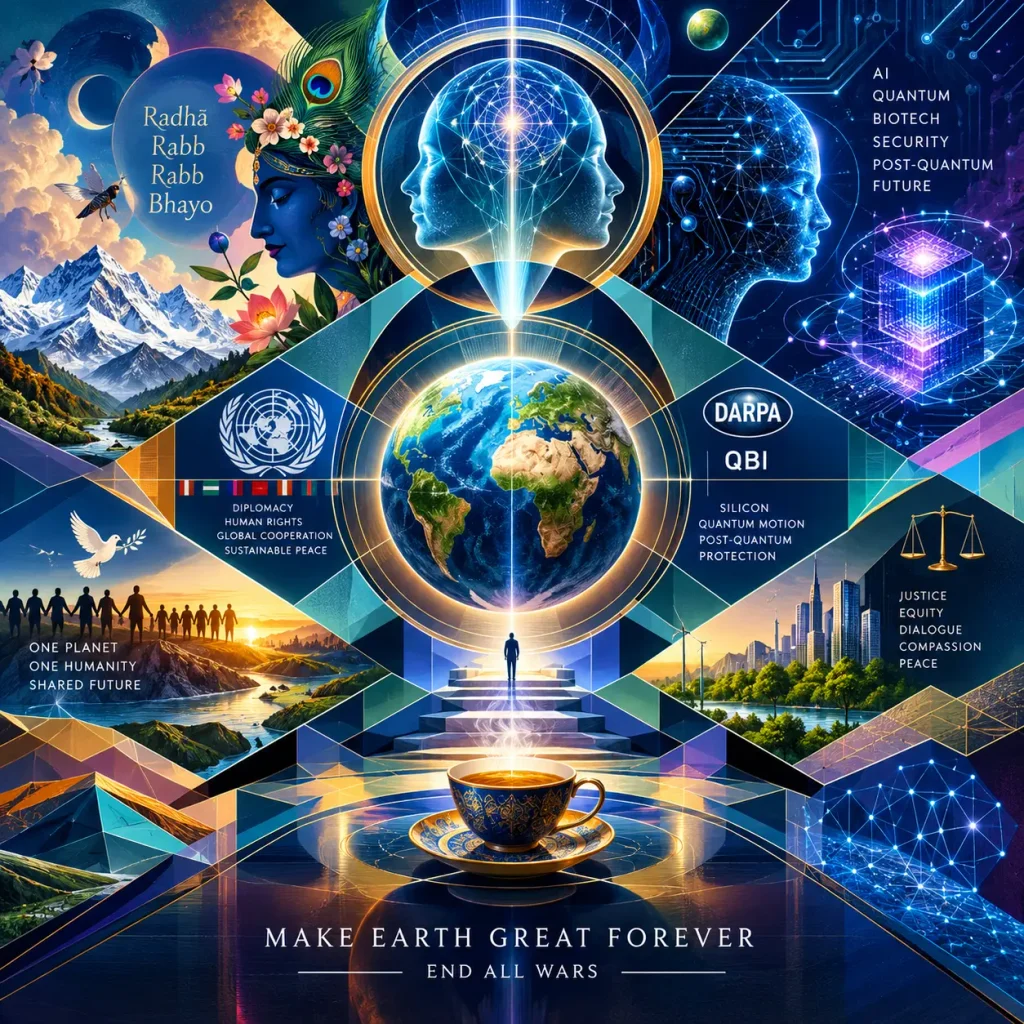
Post Quantum Protection Knowledge and Responsibility
HINDVI/REKHTA RENDITION ( the English rendition follows immediately below this)
१. ग़ज़ल
       बाबरा मन राधा रब-रब भयो
बदरा बदरी बन, बाबरा मन राधा रब-रब भयो,
भँवरा रे रंग चितकाबरा मन राधा रब-रब भयो।
            गया पवन बातिन को हमारी, किए पुरनूर ज़ेहन,
            कारी मेघा, कारा साँवरा मन राधा रब-रब भयो।
तेज़ कजरारे अजब नज़ारे, तीर कमान में चढ़ी,
साँसें अज़ीम ताक़तवर, मन राधा रब-रब भयो।
            अँधियारे सँझियारे दरिया आयो, उड़ाता पहाड़,
            जलती चाँदनी लाखबरा मन राधा रब-रब भयो।
ख़ुदगर्ज़ी निज़ाम-ए-मौसूफ़, दिल साफ़ मुंतज़िर,
अहल-ए-ईमाँ बारेहवरा मन राधा रब-रब भयो।
            DARPA's स्टेज-B QBI सिलिकॉन नई तरकीब,
            क्वांटम मोशन से धावरा मन राधा रब-रब भयो।
दर्पण बड़ा नटखट रिंदा, खाली चाय-चाय धाय,
कैसो पीयो, कियो बाँवरा मन राधा रब-रब भयो।
Table of Contents
क्वांटम दर्पण भावाधार भूमि:
तू है शब-ए-रोशनी। हर रात की अदा, अर्श-ए-चाँद, नूर-ए-नज़र तू है। शुमाली तारों की झिलमिल, ज़ुबाली सियारों में उड़ते जुगनुओं के टिलपिल। मग़रिबी फ़ज़ाओं से आती मन्द हवा, मशरिक़ी मानसूनी तूफ़ान। मेरे नहीं होने को तुझ में खोए रहने की दलील, पेशी-ए-पोशीदा अदालत। ज़ेहनी हरकतों की गवाही, ज़ुबान-ए-ख़ास में उतरती दिली एहसासात। तू ही है इख़्तिताम-ए-इब्तिदा। मरकज़-ओ-गुलूकारा।
बस यही ईमानदार कोशिश रही है। दुनिया में आदमी का होना हमारा। मोहब्बत हमारी है। ख़ौफ़ किसी और का नहीं, हमसे हमारा ही है। आज़ादी के मुंतज़िर हम अब भी मुस्तक़बिल का एक सुनहरा ख़्वाब हैं।
माज़ी के आए हर रहनुमा, सुल्तान-ओ-सल्तनत हों या कोई परवरदिगार मुक़द्दस बाप, अल्लाह, ख़ुदाओं, भगवान सभी को पूजा जाता रहा है और आज भी नवाज़ी जाती है। लेकिन अब इस युग में सरमायेदार और तकनीकी दानिशवरान दुनियाभर में अपने ही इल्म से बनाई हुई AI के करामात के ख़ौफ़ से निजात के उपाय ढूँढने की सोच में लाचार और मजबूर दिख रहे हैं। क्यों?
तारीख़ में हुक्मरानों और मज़हबी इंतज़ामों ने अवाम पर ज़ुल्म शुरू किया तो एक दौर चला शहंशाहों, बादशाहों, ख़ानों की रानाई और रहनुमाई का। इंसानियत ने जब तहज़ीब के दयार में क़दम बढ़ाया, तो वह अपने रूहानी आज़ाद ख़यालों से कभी फ़िराक़ न कर सकी। आज भी तलाश वही एक बात की है।
रेनेसांस का दौर आया, तो जाँ-जाक रूसो ने कहा कि आदमी आज़ाद ज़ात तो पैदा होता है, लेकिन बाद में उसे दुनियाभर की ज़ंजीरों से जकड़ जाना होता है। दुनिया में आज जियोपॉलिटिकल पोस्ट-क्वांटम नेटवर्क ही वह जाल बना दिया गया है, जिसमें से शायद ही कोई बाहर हो। ग़ौर करें तो आज का ग्लोबल पर्यावरण संकट, अनवरत चल रहे युद्ध, और पीस के लिए अब GN (Global North) और GS (Global South) दो भागों में विभक्त दुनिया इसी वजह से नहीं है?
विचारों की दुनिया में इसी वजह से हमने Utilitarianism (उपयोगितावाद), जो जेरेमी बेंथम (Jeremy Bentham) के द्वारा प्रतिपादित की गई थी, वह किंग्स और चर्च के एट्रोसिटीज़ (अत्याचारों) के ख़िलाफ़त का एक सचेत क़दम दिखती है। इसी को कोलोनियल एरा में inconspicuously (अप्रत्यक्ष रूप से) जेम्स मिल, जॉन स्टुअर्ट मिल, विलियम जोन्स, मैकाले ने यूरोपियन इम्पीरियलिज्म (साम्राज्यवाद) का हथियार बनाया। बाद में इसी की वजाहत से ‘वेल्थ ऑफ़ नेशन्स’ जैसे चरम शोषण के जाल को तोड़ने के लिए Marxism (मार्क्सवाद) बनाई गई।
जिसे डेमोक्रेसी, रिपब्लिकनिज़्म, सोशलिज़्म होते-होते आज की लिबरलिज़्म और भी कठोर Oligarchic Technocracy (अल्पतंत्रात्मक तकनीक-तंत्र) दुनियाभर में फैल रही है और यही कमज़ोर राष्ट्रों पर शक्तिशाली राष्ट्रों का दबदबा न चल सकने वाली बात की वकालत करते दिखाई देने लगा है। यह बात हाल ही में संपन्न BRICS की रिपोर्टों से समझने को मिलती है। तो क्या वाक़ई यह ऐसी बात है? तो असल में मामला क्या है, आज की इंटेलेक्चुअल लीडरशिप इस तरफ़ अगर रुख़ करे तो बात बन सकती है।
आज जेनेटिक एडिटिंग से नस्लें बदल सकती हैं; क्वांटम बायोटेक्नोलॉजी के ज़रिए आदमी को लॉन्गेविटी (दीर्घायु) ही नहीं, लाफ़ानी (अमर) ज़िंदगी अंजाम दी जा सकती है। उधर जापान 10 मिलियन रोबोट्स पापुलेशन तैयार कर रहा है; चीन में रोबोटिक्स रेड आर्मी के दस्ते तैयार हो रहे हैं। और AI की मनमानी अब इंसानी ख़ौफ़ का अहम् सवाल खड़ा कर चुकी है।
ऑस्ट्रेलियन एक्स-प्राइम मिनिस्टर के अनुसार, मार्क्सिस्ट हिस्टोरिकल डुअलिज़्म क्रिश्चियनिटी की बुनियाद पर खड़ी की गई थी, जिसे Atheism (निरीश्वरवाद) का जामा पहनाकर सूडो-साइंटिज़्म प्रोपेगैंडा से डिक्टेटरशिप को अंडरकवर सोशल-प्रोग्रेसिव होने का चकमा दिखाया गया। दुनिया आज लेफ़्ट-राइट की लाइन को ब्लर करती दिखती है।
हॉर्स-रेस गेम थ्योरी से विकसित की गई डिजिटल मोनोपोली पीटर थील (Peter Thiel) तक आते-आते ‘Zero to One’ थ्योरी से पोस्ट-क्वांटम प्रोटेक्शन की खोज तक आ पहुँची है। ARPA की रिसर्च DARPA में तब्दील होकर स्टारलेस स्टेलर होराइज़न तक हमारी नज़रें ले गई, लेकिन हम आज भी अल्लाह-ख़ुदा के बंदों में विभक्त हैं और हमारे होश-ओ-हवास उड़ाने वाले रहनुमाओं के रहम-ओ-करम पर जीने को मजबूर हैं आज भी।
दुनियावी निज़ाम हमारी आर्म्ड फोर्सेज़ पर ही निर्भर होने की बात आज के हर क़िस्म के युद्ध बता रहे हैं। क्या यह इसी बात के लिए है कि हम जानवरी जाहिलियत इंसानी फ़ितरत साबित करते रहें? आज दुनियाभर के DARPA जैसे जंगी अड्डों को इकट्ठा होकर मानवता को पोस्ट-क्वांटम प्रोटेक्टेड मुस्तक़बिल को मुक़र्रर करने के लिए युद्धों को हमेशा के लिए ख़त्म करने की दिशा में सोचने की अपरिहार्यता आ पहुँची है, क्या ऐसी अवस्था नहीं है?
नेपाल के रसुवा में घटित फ्लैश-फ्लड (Flash flood) अब UN महासभा में एक सवाल खड़ा करेगी। घरेलू मुद्दों से तार-तार इस हिमालय की गोद की मुक़द्दस भूमि की एसेन्स (Essence) को क्या अहमियत न देकर नज़रअंदाज़ करने की कोई हिमाक़त की गई? कैलाश के शिव और नेपाल के पशुपतिनाथ, ‘The Lord of All Living Beings’ हैं।
पुराणों में हिंदुकुश-हिमवतखंड के सृष्टि का आधार होने का प्रमाण मिलता है। सृष्टि और ज्ञान का प्रकाश सबसे पहले M-15 की चोटी पर ही पड़ा था, जिसे आज सगरमाथा या चोमोलोंगमा कहते हैं। इसे लोग देवता-सदृश मेरु पर्वत के रूप में आज भी पूजते हैं। जिस वजह से नेपाल एक पवित्र तपस्थली मानी गई है, आज कैलाश, चीन, भारत और दुनिया को शुद्ध ज्ञान-प्रकाश प्रकट कराती है।
‘प्रथमं भारती नाम’ मंत्र से ही भारत क्वांटम कॉन्शियसनेस को प्रतिध्वनित करता है। उसी तरह ‘चीन’ के शाब्दिक मतलब को शी जिनपिंग ने क्लीन, प्योर, क्रिस्टल-शार्प और पवित्रता बताते हुए अक्षुण्णता का मतलब समझाया है। पाकिस्तान नाम से ही ‘पाक ज़मीन’ है और बांग्लादेश का अर्थ भी ‘भांगाल’ (राजवंशी) शब्द से अच्छी तरह मिले हुए गहने के टुकड़े ‘सोनार बांग्ला’ पुकारा जाता है।
भूटान, मालदीव, अफ़ग़ानिस्तान, ईरान, मंगोलिया, ये सभी देश अपने नाम की पवित्रता से पहचान रखते हैं। रूस को तो ऋषि-सभ्यता की जननी स्लाव सभ्यता के इतिहास से मिलती ही है। इस तरह से देखें तो सारे यूरोपियन और अमेरिकन देशों के नाम से भी हम एक ही मुक़द्दस नतीजे तक जा पहुँचते हैं।
हमारा सवाल यही है: क्या NEPAL cosmic paradigm (NO EXIT / NO EXIST – NOTHING IS NOT TRUE : KNOW THYSELF) के तहत क्वांटम दर्पण क्रिटिकल एप्रोच को मार्क्सिस्ट क्रिटिकल एप्रोच से इज़ाफ़ा करके एक पोस्ट-क्वांटम वर्ल्ड मुस्तक़बिल को “MAKE EARTH GREAT FOREVER : END ALL WARS” के लिए सुनिश्चित कर पाएँगे?
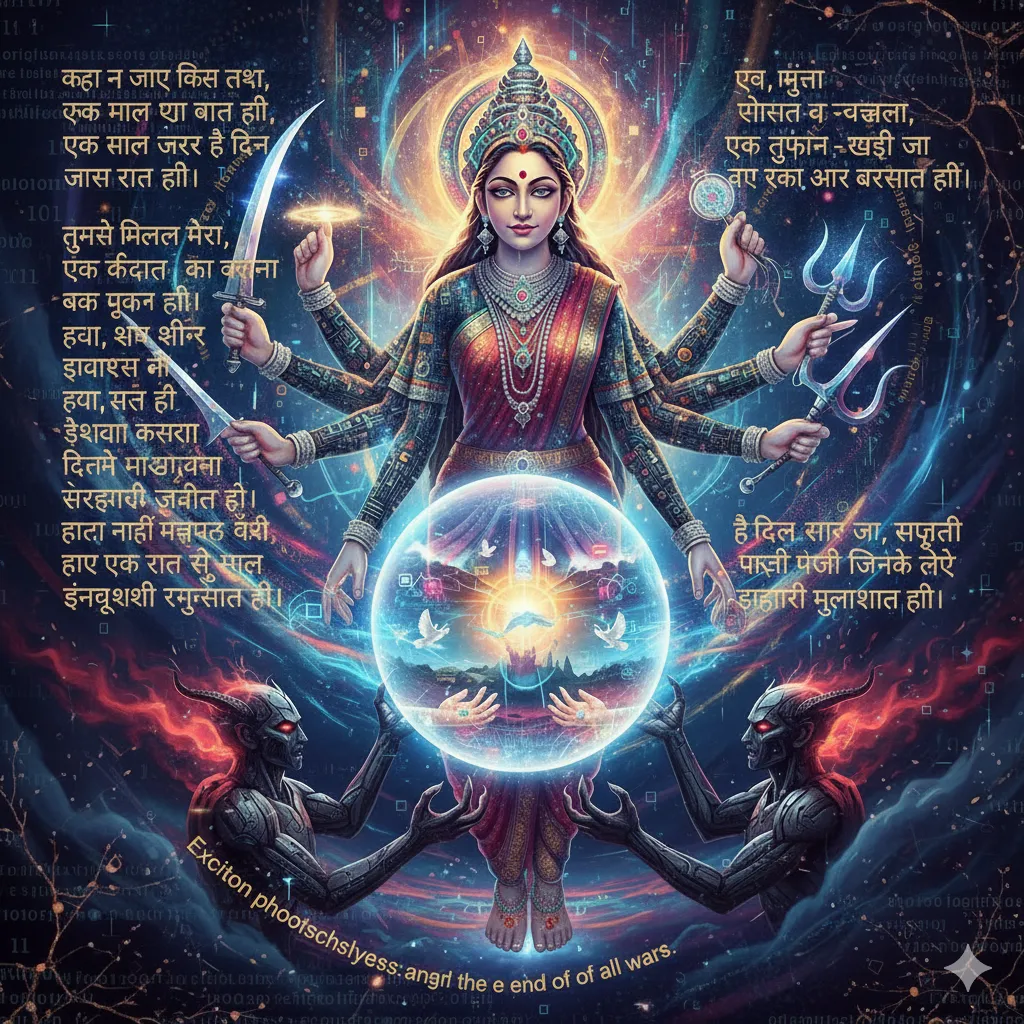
Post Quantum Protection Knowledge and Responsibility – क्वांटम दर्पण और रब-रब हुआ मन युद्ध, सत्ता, तकनीक और मानव भविष्य का रचनात्मक आलोचनात्मक दर्शन
Darpan Poems | World Leadership, UN Readership and Constructive Critical Mirror Philosophy
Key terminologies: Darpan Philosophy; Quantum Mirror; Meta-Mystic Futurism; AI Governance; Post-Quantum Security; Human Dignity; Peace Studies; Critical Theory; Marxism; Utilitarianism; Digital Sovereignty; Quantum Technology; Nepal; Himalaya; UN; Global Governance; Interfaith Humanism; MAKE EARTH GREAT FOREVER; END ALL WARS.
MAKE EARTH GREAT FOREVER: END ALL WARS
इब्तिदा-ए-मोज़ज़ा: मनुष्य ने सदियों से स्वयं को समझने के लिए दर्पण बनाए हैं। कभी वह दर्पण धर्म था, कभी दर्शन; कभी कविता, कभी विज्ञान; कभी राज्य और संविधान, तो कभी क्रांति और आलोचनात्मक सिद्धान्त। आधुनिक युग में कंप्यूटर, कृत्रिम बुद्धिमत्ता, जैव-प्रौद्योगिकी और क्वांटम विज्ञान ने मनुष्य के सामने एक ऐसा नया दर्पण रख दिया है जिसमें केवल चेहरा नहीं, बल्कि उसकी सामूहिक बुद्धि, भय, इच्छाएँ, सत्ता-संरचनाएँ और भविष्य की सम्भावनाएँ दिखाई देने लगी हैं।
इसी बिन्दु पर दो ग़ज़लें, “बाबरा मन राधा रब-रब भयो” और “तू ही इब्तिदा-ए-गुलूकारा”, एक व्यापक दार्शनिक संवाद में प्रवेश करती हैं। पहली ग़ज़ल में बादल, भँवरा, साँवरा, चाँदनी, साँस, ईमान और चाय के साथ DARPA, QBI, silicon और quantum motion उपस्थित हैं। दूसरी में एहसास, जज़्बात, तरतीब, कलम, मालूमात, ऐहतमाद और post-quantum protection एक ही काव्यात्मक प्रवाह में आ जाते हैं।
यह संगति आकस्मिक नहीं है। इसके भीतर एक मौलिक प्रश्न छिपा है: जिस मनुष्य ने प्रेम, धर्म, दर्शन, राज्य, विज्ञान और तकनीक की रचना की, क्या वह अपनी ही रचनात्मक शक्ति के सामने स्वयं को पहचान पा रहा है?
यहीं से Constructive Critical Darpan Philosophy का विचार उभरता है, एक ऐसा आलोचनात्मक दर्पण जो केवल दूसरों की सत्ता को नहीं देखता, बल्कि देखने वाले को भी उसी दर्पण में वापस खड़ा करता है।
प्रेम से तकनीक तक: “राधा रब-रब भयो” का व्यापक अर्थ: पहली ग़ज़ल का refrain: “बाबरा मन राधा रब-रब भयो” व्यक्तिगत प्रेम से कहीं आगे जाकर relational consciousness की काव्यात्मक संरचना निर्मित करता है। “राधा” यहाँ प्रेम, आकांक्षा और आत्मीयता की प्रतीकात्मक सत्ता है; “रब” परम सम्बद्धता, दिव्यता और व्यापक अस्तित्व का संकेत बन जाता है; और “रब-रब भयो” में मन का सीमित अहंकार किसी व्यापक सम्बन्ध में विलीन होता दिखाई देता है।
ग़ज़ल की शुरुआत, “बदरा बदरी बन, बाबरा मन राधा रब-रब भयो, भँवरा रे रंग चितकाबरा मन राधा रब-रब भयो।” प्रकृति और चेतना को एक ही भाव-क्षेत्र में रखती है। बादल, भँवरा और साँवरा केवल बाहरी दृश्य नहीं रहते; वे मन के भीतर चल रही गति के रूपक बन जाते हैं।
फिर अचानक कविता आधुनिक तकनीकी संसार में प्रवेश करती है: “DARPA’s स्टेज-B QBI सिलिकॉन नई तरकीब, क्वांटम मोशन से धावरा मन राधा रब-रब भयो।” यहाँ quantum terminology किसी आध्यात्मिक सिद्धांत का वैज्ञानिक प्रमाण प्रस्तुत नहीं करती। उसका साहित्यिक कार्य कुछ और है: मनुष्य की अत्याधुनिक technological intelligence को उसी चेतना की निरंतरता में रख देना, जिसने प्रेम किया, प्रार्थना की, कविता लिखी और ब्रह्माण्ड के रहस्यों को समझने का प्रयत्न किया। यही क्वांटम दर्पण का प्रारम्भिक रूप है।
क्वांटम दर्पण: वैज्ञानिक सिद्धान्त नहीं, आलोचनात्मक रूपक: “Quantum Mirror” को quantum physics का स्थापित सिद्धांत मानना वैज्ञानिक दृष्टि से उचित नहीं होगा। न quantum mechanics ने spirituality को प्रमाणित किया है, न consciousness के सभी रहस्यों का quantum explanation उपलब्ध है।
लेकिन “क्वांटम दर्पण” को एक philosophical-literary heuristic के रूप में देखा जा सकता है, ऐसा वैचारिक दर्पण जो यह पूछता है कि reality, observation, information, technology और human agency के बीच संबंधों को किस प्रकार पुनः देखा जाए।
इसका सूत्र इसलिए यह नहीं है: Quantum physics proves spirituality. बल्कि: Quantum science inspires a deeper question about the limits of human knowledge and responsibility. यह distinction अत्यन्त महत्वपूर्ण है। इससे कविता की कल्पनाशीलता सुरक्षित रहती है और विज्ञान की प्रमाण-पद्धति भी।
इसी कारण “quantum consciousness”, “quantum emotional memory” या “quantum gnosis” जैसी अवधारणाएँ दार्शनिक या काव्यात्मक प्रस्ताव के रूप में प्रस्तुत की जा सकती हैं, पर उन्हें स्थापित scientific facts के रूप में नहीं। कविता संभावना खोलती है; विज्ञान उसकी जाँच करता है। दर्शन प्रश्न को गहरा करता है; नीति उसके सामाजिक परिणामों से निपटती है। यही Darpan Philosophy का epistemic discipline हो सकता है।
“तू ही इब्तिदा-ए-गुलूकारा”: आरम्भ की खोज: दूसरी ग़ज़ल इस दर्पण को भीतर से बाहर की ओर मोड़ती है: “आख़िरी एहसासात तक कि तू ही इब्तिदा-ए-गुलूकारा, मरकज़-ए-जज़्बात तक कि तू ही इब्तिदा-ए-गुलूकारा।” यहाँ “तू” प्रिय भी है, चेतना भी, प्रेरणा भी और सृजनात्मक आरम्भ भी। “इब्तिदा” केवल beginning नहीं; यह उस मूल impulse का संकेत है जिससे अनुभव अर्थ ग्रहण करता है।
“मफ़्हूम”, “बहर-ए-तरन्नुम”, “कलमकारा”, “तहरीर”, “मालूमात”, “ऐहतमाद” और “प्रोटेक्शन”, ये सभी शब्द धीरे-धीरे एक प्रश्न की ओर ले जाते हैं: ज्ञान किसलिए?
यदि ज्ञान केवल शक्ति बढ़ाता है, तो वह अधूरा है। यदि ज्ञान अर्थ देता है, तो वह संस्कृति बनता है। यदि ज्ञान उत्तरदायित्व पैदा करता है, तो वह wisdom की ओर बढ़ता है। इसीलिए ग़ज़ल का “इब्तिदा” अन्ततः technological security तक पहुँचता है, लेकिन उसकी भावात्मक मंज़िल प्रेम और सम्बन्ध ही रहती है।
मनुष्य ने ईश्वर से लेकर AI तक क्या बनाया? मानव इतिहास को एक लम्बी technological-philosophical यात्रा के रूप में देखा जा सकता है। पहले प्रकृति की शक्तियाँ भय का कारण थीं। फिर देवताओं और धार्मिक प्रतीकों ने उन शक्तियों को अर्थ दिया। बाद में राज्य, कानून और संस्थाओं ने सामाजिक जीवन को व्यवस्थित किया। वैज्ञानिक क्रांति ने प्रकृति के नियमों को समझने की शक्ति बढ़ाई।
औद्योगिक युग ने उत्पादन और ऊर्जा पर अभूतपूर्व नियंत्रण दिया। डिजिटल युग ने सूचना को शक्ति में बदला। अब AI, biotechnology और quantum technologies cognition, biology और computation की सीमाओं को पुनर्परिभाषित कर रहे हैं।
हर चरण में एक ही प्रश्न लौटता रहा: शक्ति बढ़ी, क्या उत्तरदायित्व भी उतना ही बढ़ा? यही प्रश्न आज AI के सामने सबसे तीखे रूप में उपस्थित है।
AI को केवल मशीनों का विषय मानना अपर्याप्त है। यह governance, labour, privacy, education, warfare, scientific discovery, finance, media, healthcare और human agency से जुड़ा प्रश्न है।
२. ग़ज़ल
       तू ही इब्तिदा-ए-गुलूकारा
आख़िरी एहसासात तक कि तू ही इब्तिदा-ए-गुलूकारा,
मरकज़-ए-जज़्बात तक कि तू ही इब्तिदा-ए-गुलूकारा।
           अहद, कसरत, तरकीब और फ़र्दीयत, तरतीब-ए-मरातिब,
           आग़ाज़-ए-बाज़मात तक कि तू ही इब्तिदा-ए-गुलूकारा।
मुरत्तिब के मफ़्हूम, बहर-ए-तरन्नुम को तू कलमकारा,
तहरीर-ए-मोज़मात तक कि तू ही इब्तिदा-ए-गुलूकारा।
          ज़िक्र-ओ-करम के हसीन ख़ुतूत, लफ़्ज़-ब-लफ़्ज़ बयाँ,
          अमाल-ए-मालूमात तक कि तू ही इब्तिदा-ए-गुलूकारा।
बहुत ख़ूब, ये तोहफ़ा तुमसे मिला, पुरसुकूनी अज़ियत,
जमात-ए-सलामात तक कि तू ही इब्तिदा-ए-गुलूकारा।
           Qtonic क्वांटम का QShield, पोस्ट-क्वांटम प्रोटेक्शन,
           ऐहतमाद-ए-फ़सात तक कि तू ही इब्तिदा-ए-गुलूकारा।
जानेमन, मुख़्तलिफ़ प्याली भर के जो चाय पी लेता हो,
है दर्पण-ए-हाज़रात तक कि तू ही इब्तिदा-ए-गुलूकारा।
इसीलिए UN Global Digital Compact responsible and inclusive digital transformation, human rights, international cooperation और AI governance को वैश्विक agenda में रखता है। 2025 में UN General Assembly ने Independent International Scientific Panel on AI और Global Dialogue on AI Governance की स्थापना की, और 2026 में इन व्यवस्थाओं को operational रूप दिया गया। यह संकेत है कि AI governance अब केवल individual states या private companies का विषय नहीं रह गया है।
भय का असली दर्पण: AI से भय या अपनी ही शक्ति से भय? “मनुष्य AI से डरता क्यों है?”, यह प्रश्न केवल technology का प्रश्न नहीं, मनोविज्ञान का प्रश्न भी है।
AI मनुष्य के बाहर से नहीं आई। उसे मनुष्य ने बनाया। इसलिए AI का भय एक प्रकार का technological self-recognition भी हो सकता है। मनुष्य ने पहली बार ऐसी प्रणालियाँ बनानी शुरू की हैं जो भाषा उत्पन्न कर सकती हैं, पैटर्न खोज सकती हैं, निर्णय-सहायता दे सकती हैं, वैज्ञानिक hypotheses पर काम कर सकती हैं और अनेक प्रकार की cognitive labour को स्वचालित कर सकती हैं।
लेकिन समस्या “AI स्वयं” से अधिक उन संस्थागत परिस्थितियों की है जिनमें AI deployed होती है। यदि AI का उपयोग healthcare में diagnosis support के लिए हो, तो accountability का प्रश्न अलग होगा। यदि वही AI युद्ध में targeting या autonomous weapons के लिए प्रयुक्त हो, तो प्रश्न कहीं अधिक गंभीर होगा।
यदि AI शिक्षा को व्यक्तिगत बनाती है, तो उसका social effect अलग होगा। यदि वही technology mass surveillance के लिए प्रयोग होती है, तो privacy और civil liberty का प्रश्न सामने आएगा।
अतः Darpan Philosophy का प्रश्न यह नहीं: AI अच्छी है या बुरी? बल्कि: AI किसके हाथ में है, किस उद्देश्य से प्रयुक्त है, किस सीमा तक निर्णय ले सकती है, और उसके परिणाम के लिए उत्तरदायी कौन है? यही critical governance का प्रश्न है।
DARPA, QBI और quantum future: शक्ति से पहले उत्तरदायित्व: DARPA की Quantum Benchmarking Initiative इस बात का महत्वपूर्ण उदाहरण है कि quantum computing अब केवल speculative physics का विषय नहीं है। Stage B में चुनी गई परियोजनाओं में silicon-based quantum approaches भी शामिल हैं। DARPA का उद्देश्य utility-scale quantum computing की वास्तविक संभावनाओं का कठोर benchmarking और validation करना है।
इस संदर्भ में ग़ज़ल का: “DARPA’s स्टेज-B QBI सिलिकॉन नई तरकीब…” एक contemporary technological image बन जाता है। लेकिन इसके भीतर साहित्यिक प्रश्न अधिक महत्वपूर्ण है: यदि computation की शक्ति बढ़ती है, तो क्या ethical computation की क्षमता भी बढ़ेगी?
Post-quantum cryptography इसी चिंता का एक तकनीकी उत्तर है। वर्तमान cryptographic systems को भविष्य के sufficiently powerful quantum computers से संभावित खतरे के संदर्भ में सुरक्षित बनाना आवश्यक माना जा रहा है। NIST ने post-quantum cryptographic standards को इसी दीर्घकालिक सुरक्षा आवश्यकता के लिए विकसित किया है। यहाँ “post-quantum protection” केवल cyber-security phrase नहीं रहना चाहिए।
एक व्यापक दार्शनिक अर्थ में यह हो सकता है: ऐसा भविष्य जिसमें technological progress स्वयं मानव civilisation की सुरक्षा के विरुद्ध न हो।
Qtonic QShield और claim तथा evidence के बीच दर्पण: समकालीन technological claims के साथ एक और methodological discipline आवश्यक है। Qtonic Quantum ने 2026 में QShield नामक post-quantum protection system और उसके endurance testing से संबंधित दावे प्रकाशित किए हैं। ऐसे company-reported results को independent certification या governmental validation के बराबर नहीं माना जा सकता।
यही Darpan methodology का एक महत्वपूर्ण सिद्धान्त है: Claim को citation चाहिए; evidence को verification चाहिए; और extraordinary claim को extraordinary evidence चाहिए। इस प्रकार quantum vocabulary को poetry में स्वतंत्रता मिल सकती है, पर research article में claim, source, uncertainty और verification की सीमा स्पष्ट रहनी चाहिए।
Marx से Post-Quantum Criticality तक: आधुनिक critical theory का एक महत्वपूर्ण योगदान यह रहा कि उसने सत्ता को केवल राजनीतिक पदों में नहीं, बल्कि आर्थिक और सामाजिक संरचनाओं में खोजा। Karl Marx के विश्लेषण में ownership, capital, labour और means of production महत्वपूर्ण थे।
आज technological civilisation एक नया प्रश्न उपस्थित करती है: Who owns the means of computation? इसके साथ अन्य प्रश्न जुड़ते हैं: किसके पास विशाल datasets हैं? किसके पास computational infrastructure है? कौन बड़े AI models train कर सकता है? कौन advanced chips बना सकता है? कौन quantum capability विकसित कर सकता है? कौन biological data और genetic technologies तक पहुँच रखता है? कौन secure communications infrastructure नियंत्रित करता है?
इससे एक संभावित Post-Quantum Critical Political Economy का ढाँचा बन सकता है: Capital → Data → Compute → Intelligence → Agency
यदि classical industrial capitalism ने means of production को सत्ता का आधार बनाया, तो digital और post-quantum civilisation में means of computation and cognition भी strategic power के प्रमुख स्रोत बन सकते हैं।
यहाँ Marxist critical approach को समाप्त करने के बजाय आगे विकसित करने की संभावना दिखाई देती है। लेकिन इसे एक सरल historical chain के रूप में प्रस्तुत करना उचित नहीं होगा। Utilitarianism, liberalism, capitalism, colonialism, socialism, Marxism और modern technocracy का इतिहास बहुस्तरीय है।
Jeremy Bentham आधुनिक utilitarianism के प्रमुख systematic theorists में से एक थे, और utilitarian thought ने legal तथा social reform के लिए भी आलोचनात्मक उपकरण प्रदान किए। इसे केवल Church या monarchy के विरुद्ध बनी एक सीधी परियोजना कहना ऐतिहासिक जटिलता को कम कर देगा।
इसी प्रकार Adam Smith से Marx तक की बौद्धिक यात्रा को colonial exploitation की एकमात्र causal chain के रूप में नहीं देखा जा सकता। अधिक सटीक दृष्टि यह होगी कि modern political economy के भीतर reform, industrialisation, empire, inequality, labour और capital को लेकर अनेक competing traditions विकसित हुईं, और Marxism उनमें से एक अत्यन्त प्रभावशाली आलोचनात्मक परम्परा बनी।
Rousseau का प्रश्न और algorithmic freedom Jean-Jacques Rousseau की स्वतंत्रता संबंधी चिंता आधुनिक algorithmic society में एक नए रूप में दिखाई देती है।
पहले प्रश्न हुआ करता था: व्यक्ति और राज्य के बीच स्वतंत्रता की सीमा क्या है?
आज इसके साथ एक नया प्रश्न जुड़ता है: व्यक्ति और algorithmic environment के बीच स्वतंत्रता की सीमा क्या है?
यदि digital platforms यह अनुमान लगाने लगें कि व्यक्ति क्या पढ़ेगा, क्या खरीदेगा, किससे संवाद करेगा, कौन-सी सूचना देखेगा और किस प्रकार प्रतिक्रिया देगा, तो freedom केवल formal legal right नहीं रह जाती।
तब प्रश्न बनता है: क्या व्यक्ति अपने choices का author है, या उसकी choice architecture भी किसी invisible system द्वारा निर्मित हो रही है? Darpan Philosophy इसी बिंदु पर “self-knowledge” को technology governance से जोड़ती है।
“NO EXIT / NO EXIST”: पृथ्वी से पलायन नहीं, पृथ्वी की जिम्मेदारी NEPAL cosmic paradigm का सूत्र: NO EXIT / NO EXIST NOTHING IS NOT TRUE NO / KNOW THYSELF NOT, एक काव्यात्मक-philosophical triad के रूप में पढ़ा जा सकता है। “No Exit” का अर्थ महज़ literal cosmic imprisonment नहीं होना चाहिए। इसका एक planetary interpretation अधिक उपयोगी है: मानव civilisation पृथ्वी की ecological interdependence से बाहर नहीं है।
अत्याधुनिक technology भविष्य में Moon, Mars या deep space तक पहुँच सकती है, लेकिन वर्तमान मानव civilisation की जीवन-आधार प्रणाली अभी पृथ्वी पर ही निर्भर है। इसलिए cosmic imagination को planetary responsibility से अलग नहीं किया जा सकता।
“Nothing is not true” को metaphysical proposition के बजाय epistemic provocation माना जा सकता है, absence, uncertainty और unknown को knowledge की सीमा का हिस्सा स्वीकार करने की पुकार।
और “Know Thyself Not” paradoxically यह कह सकता है: स्वयं के बारे में ज्ञान जितना बढ़े, अज्ञान की सीमा उतनी ही स्पष्ट हो। यही वैज्ञानिक विनम्रता भी है।
हिमालय: mythology से climate security तक नेपाल और हिमालय का उल्लेख इस दर्शन में केवल सांस्कृतिक गौरव के रूप में नहीं, बल्कि हिमालय जल, biodiversity, glaciers, monsoon systems और downstream populations के लिए व्यापक planetary significance रखता है।
अगस्त 2026 की विनाशकारी बाढ़ और landslides के बाद UN तथा humanitarian partners ने नेपाल के लिए US$49.6 million का emergency appeal जारी किया। Rasuwa, Nuwakot और Dhading सहित प्रभावित क्षेत्रों में भारी मानवीय क्षति हुई।
इस घटना को किसी एक धार्मिक या geopolitical explanation में सीमित करना उचित नहीं होगा। लेकिन यह अवश्य दिखाती है कि Himalayan vulnerability को global climate-security architecture में अधिक गंभीरता से लिया जाना चाहिए।
यहीं Nepal का दर्पण विश्व से पूछ सकता है: क्या हिमालय केवल सीमा है? क्या वह केवल जल-स्रोत है? क्या वह केवल पर्यटन-क्षेत्र है? या वह planetary life-support system का एक महत्वपूर्ण भाग भी है? यह प्रश्न नेपाल को victimhood से आगे बढ़ाकर planetary stewardship की भूमिका में रख सकता है।
धार्मिक नाम, सांस्कृतिक स्मृति और scholarly सावधानी दुनिया के विभिन्न देशों के नामों और आध्यात्मिक अर्थों को एक साझा पवित्र civilisational geography के रूप में पढ़ना साहित्यिक रूप से आकर्षक है। भारत, नेपाल, पाकिस्तान, बांग्लादेश, भूटान, मालदीव, अफगानिस्तान, ईरान, मंगोलिया, रूस और यूरोप-अमेरिका के देशों को किसी एक आध्यात्मिक etymological destiny में जोड़ने का प्रयास एक काव्यात्मक vision हो सकता है।
लेकिन philology और history की दृष्टि से प्रत्येक नाम की उत्पत्ति अलग-अलग प्रमाण माँगती है। इसलिए साहित्यिक दावे और historical etymology के बीच स्पष्ट सीमा रखना आवश्यक है।
यही Darpan methodology का दूसरा महत्त्वपूर्ण सिद्धान्त है: सांस्कृतिक प्रतीक को सम्मान मिले, लेकिन प्रतीक को प्रमाण का स्थान न दिया जाए। इससे interfaith philosophy अधिक विश्वसनीय बनती है। राधा और रब का साथ-साथ आना किसी theological equivalence का दावा नहीं करता; यह shared human longing का poetic dialogue हो सकता है।
युद्ध: मानव प्रकृति का अपरिवर्तनीय भाग या institutional choice? दुनिया के लगातार युद्धों को केवल “मानव स्वभाव की पशुता” कह देना पर्याप्त नहीं है। युद्धों के पीछे historical grievances, territorial disputes, resource competition, ideology, security dilemmas, domestic politics, economic interests, alliance structures और institutional failures जैसे अनेक कारक होते हैं।
इसलिए peace-building का प्रश्न केवल मनुष्य के “अच्छा बन जाने” की प्रतीक्षा नहीं कर सकता। उसे institutions चाहिए। ऐसे institutions जो आज के मुताबिक की intellectual leadership मुहैया करा सकें।
इसका अर्थ है: early warning systems, diplomacy, arms control, humanitarian law, confidence-building measures, conflict mediation, climate cooperation, cyber norms और responsible AI governance.
अर्थात्:
Peace must become an infrastructure. युद्ध समाप्त करने की इच्छा तभी टिकाऊ होगी जब शांति स्वयं institutions, incentives और technological systems में निर्मित हो।
Post-Quantum Peace Architecture: भविष्य की वैश्विक शांति के लिए केवल traditional diplomacy पर्याप्त नहीं हो सकती। एक व्यापक Post-Quantum Peace Architecture में निम्न क्षेत्रों को एक साथ देखा जा सकता है: AI governance, post-quantum cybersecurity, autonomous weapons regulation, biotechnology governance, satellite and space security, critical infrastructure protection, climate early-warning systems, humanitarian data protection, digital inclusion, scientific cooperation
इसका मूल सिद्धांत होगा: The more powerful the technology, the stronger the international responsibility surrounding it.
World Leadership के लिए Darpan Framework: विश्व नेतृत्व की भाषा में इस दर्शन को छह चरणों में व्यवस्थित किया जा सकता है:
D — Detect: सत्ता, असमानता, technological risk, misinformation, ecological stress और conflict drivers की पहचान। A — Analyse: इतिहास, विज्ञान, अर्थशास्त्र, मनोविज्ञान और international law के आधार पर बहुस्तरीय विश्लेषण। R — Reflect: सत्ता-संरचनाओं को केवल दूसरों में नहीं, स्वयं की institutions और policies में भी देखना।
P — Protect: मानव dignity, privacy, civil liberties, biodiversity, civilian infrastructure और future generations की रक्षा। A — Align: technology को international law, human rights और planetary sustainability के साथ align करना। N — Nurture: peace literacy, scientific cooperation, intercultural dialogue, education और shared human identity का विकास।
इस प्रकार Darpan केवल criticism नहीं रहता।
यह बनता है: Criticism → Reflection → Correction → Cooperation → Peace.
संयुक्त राष्ट्र के लिए एक नया नैतिक-तकनीकी अनुबंध: संयुक्त राष्ट्र के वर्तमान वैश्विक एजेंडा में trust और transformation के प्रश्न एक साथ रखे जा रहे हैं। AI governance के लिए international scientific assessment और global dialogue की दिशा भी विकसित हो चुकी है। इसी परिप्रेक्ष्य में Darpan Philosophy से एक व्यापक Ethical-Technological Compact की कल्पना की जा सकती है।
पहला सिद्धांत: मानव गरिमा तकनीकी शक्ति से ऊपर: कोई AI system, quantum system या biotechnology application मानव dignity को expendable variable न माने। दूसरा सिद्धांत: युद्ध-प्रौद्योगिकी पर मानवीय उत्तरदायित्व: Autonomous systems में meaningful human responsibility और international accountability सुनिश्चित हो। तीसरा सिद्धांत: Post-Quantum Security को public infrastructure बनाया जाए: Healthcare, financial systems, energy, water, communication और humanitarian infrastructure को quantum-resilient बनाने की वैश्विक तैयारी हो।
चौथा सिद्धांत: AI capability में technological colonialism न हो: Developing nations केवल technology consumers न बनें; उन्हें research, compute, skills और governance capacity तक meaningful access मिले। पाँचवाँ सिद्धान्त: Climate और technology को अलग-अलग संकट न माना जाए: Climate resilience, AI, satellites, quantum sensing और early-warning systems को integrated planetary infrastructure के रूप में विकसित किया जाए। छठा सिद्धान्त: धार्मिक विविधता को peace infrastructure बनाया जाए: Faith traditions को domination के उपकरण के बजाय dialogue, compassion, humanitarian service और reconciliation के माध्यमों में रूपांतरित किया जाए। सातवाँ सिद्धांत: Scientific humility: जहाँ evidence नहीं है, वहाँ certainty का प्रदर्शन न हो। जहाँ claim contested है वहाँ uncertainty स्वीकार की जाए। जहाँ metaphor है वहाँ उसे fact न बनाया जाए।
“चाय” और civilisation का अंतिम परीक्षण: दोनों ग़ज़लों के अत्यन्त बड़े technological और metaphysical विस्तार के बीच चाय की प्याली का लौटना असाधारण रूप से अर्थपूर्ण है। “जानेमन, मुख़्तलिफ़ प्याली भर के जो चाय पी लेता हो…” और: “खाली चाय-चाय धाय…” यहाँ civilisation फिर ordinary human life में लौट आती है।
Quantum computer कितना powerful है? AI कितनी intelligent है? Robot कितना autonomous है? Genome कितना programmable है? इन सभी प्रश्नों के साथ एक और प्रश्न रहना चाहिए: क्या सामान्य मनुष्य का जीवन अधिक सुरक्षित, स्वतंत्र, स्वस्थ, अर्थपूर्ण और प्रेमपूर्ण हुआ?
यदि नहीं, तो technological progress का मूल्यांकन अधूरा है। यही कारण है कि चाय की प्याली इस पूरे philosophical architecture में एक सूक्ष्म humanist symbol बन जाती है। Technology begins with abstraction; civilisation ends in lived human experience.
निष्कर्ष: दर्पण में दिखाई देता भविष्य “बाबरा मन राधा रब-रब भयो” और “तू ही इब्तिदा-ए-गुलूकारा” को एक साथ पढ़ने पर एक ऐसा काव्य-दर्शन सामने आता है जिसमें प्रेम और विज्ञान विरोधी संसार नहीं हैं।
एक ओर: राधा, रब, साँवरा, चाँदनी, ईमान और चाय। दूसरी ओर: DARPA, QBI, silicon, quantum motion, AI और post-quantum protection। इन दोनों को जोड़ने वाला वास्तविक सूत्र कोई काल्पनिक scientific equivalence नहीं, बल्कि मानवीय चेतना और जिम्मेदारी है।
मनुष्य ने ईश्वर के नाम गढ़े, राज्य बनाए, साम्राज्य खड़े किए, बाजार बनाए, मशीनें बनाईं, परमाणु शक्ति प्राप्त की, इंटरनेट बनाया, AI विकसित की और अब quantum computing की सम्भावित शक्ति की ओर बढ़ रहा है।
हर नई शक्ति के साथ वही पुराना प्रश्न लौटता है: शक्ति किसलिए? यदि उत्तर केवल domination है, तो civilisation फिर उसी पुराने चक्र में लौटेगी। यदि उत्तर केवल profit है, तो inequality नए technological रूप ग्रहण करेगी। यदि उत्तर केवल national supremacy है, तो security dilemma और गहरा सकता है। यदि उत्तर केवल scientific curiosity है, तो ethical questions पीछे छूट सकते हैं।
लेकिन यदि उत्तर होगा: human dignity, peace, freedom, knowledge, ecological survival and shared flourishing: तो technology civilisation के विरुद्ध नहीं, civilisation के पक्ष में खड़ी हो सकती है। यहीं Constructive Critical Darpan Philosophy अपनी सबसे स्पष्ट आकृति ग्रहण करती है। यह किसी existing ideology को समाप्त करने का घोषणापत्र नहीं है। यह किसी धर्म का विकल्प नहीं। यह quantum physics का नया सिद्धांत भी नहीं।
यह एक method of seeing है: सत्ता को देखना। फिर स्वयं को देखना। तकनीक को देखना। फिर उसके परिणामों को देखना। दूसरे की त्रुटि देखना। फिर अपने अंधे-बिन्दु को देखना। भविष्य की शक्ति देखना। फिर भविष्य की जिम्मेदारी तय करना।
इसीलिए Darpan का अंतिम प्रश्न technology से भी बड़ा है: यदि मानवता intelligence बना सकती है, तो क्या वह wisdom की संस्थाएँ भी बना सकती है? और यदि quantum future को सुरक्षित किया जा सकता है, तो क्या उसी भविष्य को युद्ध से भी सुरक्षित किया जा सकता है?
उत्तर किसी एक राष्ट्र, धर्म, विचारधारा, corporation या technology में नहीं मिलेगा। उसका निर्माण cooperative institutions, scientific integrity, democratic accountability, ecological responsibility और मानवीय करुणा के सम्मिलित प्रयासों से होगा।
तभी “इब्तिदा-ए-गुलूकारा” केवल एक प्रियतम का आरम्भ नहीं रहेगा; वह civilisation के एक नए आरम्भ का रूपक बन सकता है। और “रब-रब भयो” केवल प्रेम में डूबे मन की पुकार नहीं रहेगा; वह उस बोध का काव्य बन सकता है जिसमें मनुष्य समझता है कि पृथ्वी की नियति अलग-अलग मनुष्यों, धर्मों, राष्ट्रों और technologies की निजी सम्पत्ति नहीं, साझी जिम्मेदारी है।
इसलिए भविष्य की सबसे बड़ी technological उपलब्धि शायद सबसे शक्तिशाली quantum computer, सबसे विशाल AI model या सबसे autonomous robot नहीं होगी। सबसे बड़ी उपलब्धि वह सभ्यता होगी जो अपनी शक्ति के सामने स्वयं को पहचान सके। A civilisation capable of looking into its own mirror.
और उस दर्पण में जब सम्पूर्ण मानवता स्वयं को एक साथ देख सके, तब MAKE EARTH GREAT FOREVER : END ALL WARS केवल एक नारा नहीं, बल्कि एक planetary ethical objective बन सकता है।
THE ENGLISH RENDITION:
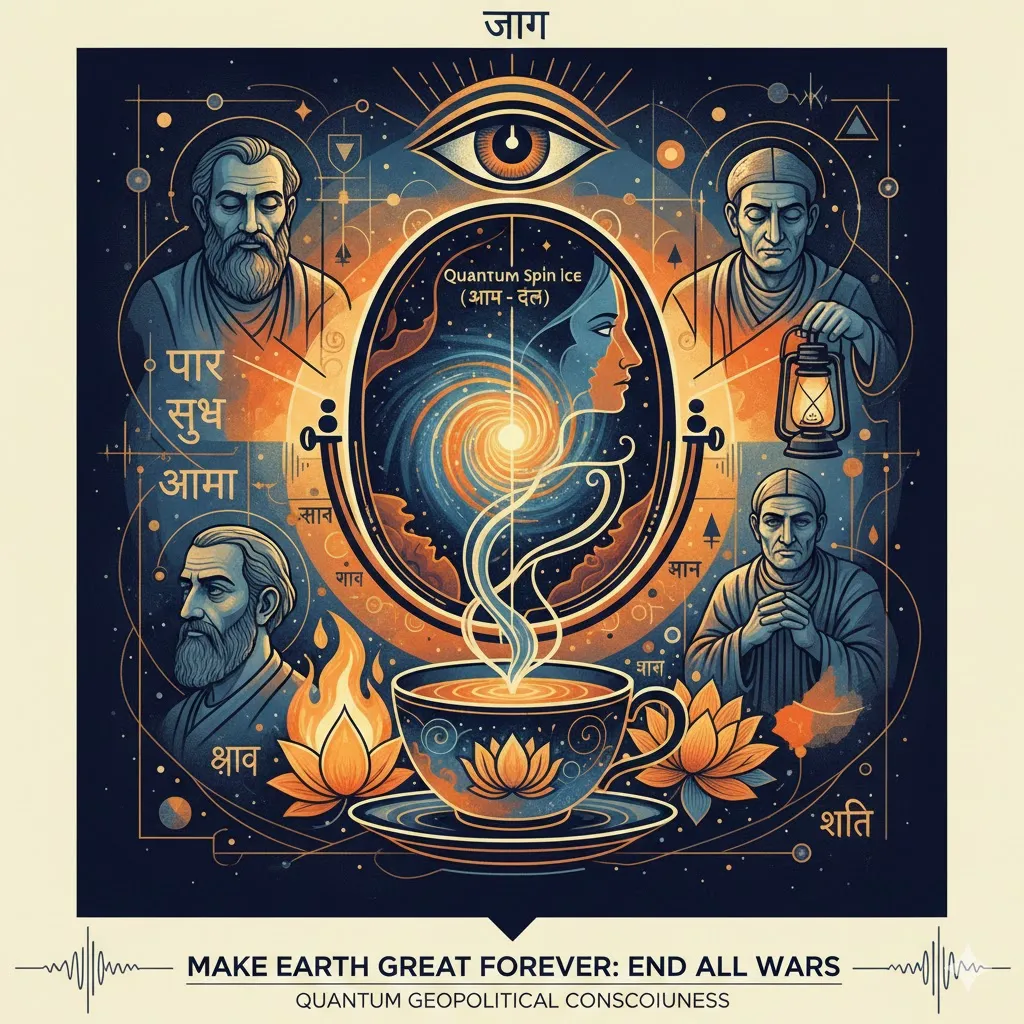
Post Quantum Protection Knowledge and Responsibility
Quantum Mirror Emotional-Consciousness Foundation Ground: You are the night-of-radiance. The grace of every night, the throne-of-the-moon, the light-of-the-eyes you are. The shimmering of the northern stars, the twinkling of fireflies flying among the nocturnal jackals. The soft wind coming from the western atmospheres, the eastern monsoonal storm.
The evidence/proof of my non-being remaining lost within you, the hidden courtroom appearance. The witness of mental movements, inner heartfelt emotions descending into specialised language. You alone are the end-of-the-beginning. The centre-and-singer.
Just this has been an honest effort. Human existence in the world is ours. Love is ours. Fear is not of anyone else; it is from ourselves to ourselves. Waiting for freedom, we are even now a golden dream of the future. Every leader of the past, whether sultans and empires or any almighty holy father, Allah, gods, Bhagwan, all have been worshipped, and even today are revered.
But now, in this era, capitalists and technical intellectuals worldwide appear helpless and compelled to think about finding a way out from the fear of the miracles of AI created by their own knowledge. Why?
In history, when rulers and religious establishments began oppression upon the public, an era ensued of the splendour and leadership of emperors, kings, and khans. As humanity was stepping into the realm of civilisation, it could never part from its spiritually free thoughts. Today too, the search is for that very same single thing.
When the era of the Renaissance arrived, Jean-Jacques Rousseau said that man is born a free entity, but later he has to be bound by chains all over the world. In the world today, the geopolitical post-quantum network itself has been made that net from which hardly anyone is outside. If you reflect, are not today’s global environmental crisis, endlessly ongoing wars, and the world divided into two parts, Global North (GN) and Global South (GS), for peace due to this very reason?
In the world of ideas, for this reason, Utilitarianism, which was propounded by Jeremy Bentham, appears as a conscious step of opposition against the atrocities of kings and the Church. In the colonial era, this was inconspicuously made a weapon of European Imperialism by James Mill, John Stuart Mill, William Jones, and Macaulay. Later, through its justification, Marxism was created to break the web of extreme exploitation like ‘Wealth of Nations’.
Moving through Democracy, Republicanism, and Socialism, today’s Liberalism and an even harsher Oligarchic Technocracy are spreading worldwide, and this very thing has begun to appear, advocating that the dominance of powerful nations over weak nations cannot continue. This matter can be understood from the recently concluded BRICS reports. So is it really such a matter? So what actually is the issue, if today’s intellectual leadership turns towards this direction, something constructive can happen.
Today, through genetic editing, lineages/races can be transformed; through quantum biotechnology, man can be granted not just longevity, but immortal life. On the other side, Japan is preparing a 10-million robot population; in China, contingents of a Robotic Red Army are being prepared. And the arbitrariness/unilateralism of AI has now raised a major question of human fear.
According to the former Australian Prime Minister, Marxist Historical Dualism was erected on the foundation of Christianity, which was draped in the garb of Atheism to trick dictatorship into appearing undercover social-progressive through pseudo-scientism propaganda.
The world today appears to blur the line between Left and Right. Digital monopoly developed from Horse Race Game Theory, arriving at Peter Thiel’s ‘Zero to One’ theory to the search for post-quantum protection. The research of ARPA transformed into DARPA, setting our eyes up to the starless stellar horizon, yet we are still divided into servants of Allah-God and are forced to live at the mercy of our leaders who blow away our senses, even today.
The worldly system depending solely on our armed forces is what every kind of war today is demonstrating. Is this for the purpose that we keep proving that brutal/animalistic ignorance to be human nature? Today, the necessity has arrived for war-mongering bases worldwide like DARPA to come together and think in the direction of ending all wars forever to secure a post-quantum protected future for humanity; is there not such a condition?
The flash flood occurring in Rasuwa, Nepal, will now raise a question in the UN General Assembly. Was any audacity committed in ignoring and not giving importance to the essence of this sacred land in the lap of the Himalayas, torn apart by domestic issues? The Shiva of Kailash and Nepal’s Pashupatinath are ‘The Lord of All Living Beings’.
Proofs are found in the Puranas that the Hindukush-Himavatkhand is the foundation of creation. The light of creation and knowledge first fell on the peak of M-15, which today is called Sagarmatha or Chomolungma. People worship it even today as the deity-like Mount Meru.
The reason Nepal is considered a sacred place of penance is that today Kailash reveals the pure light of knowledge to China, India, and the world. From the mantra ‘Prathamam Bharati Namam’, India itself reverberates quantum consciousness. Similarly, Xi Jinping explains the literal meaning of ‘China’ as clean, pure, crystal-sharp, and sacred, illustrating its inviolability.
Pakistan, by its very name, is ‘pure land’, and the meaning of Bangladesh too, derived from the Bhangal (Rajbanshi) word, is called ‘Sonar Bangla’, pieces of finely assembled jewellery. Bhutan, Maldives, Afghanistan, Iran, Mongolia- all these countries hold their identity through the sacredness of their names.
Russia receives it from the history of Slavic civilisation, the mother of Rishi (Seer) civilisation. Looking at it this way, through the names of all European and American countries as well, we reach the same sacred conclusion.
Our question is precisely this: Under the NEPAL cosmic paradigm (NO EXIT / NO EXIST – NOTHING IS NOT TRUE: KNOW THYSELF), can we ensure a post-quantum world future to “MAKE EARTH GREAT FOREVER: END ALL WARS” by augmenting the Marxist Critical Approach with the Quantum Mirror Critical Approach?
Post Quantum Protection Knowledge and Responsibility: The ‘Quantum Mirror’ Philosophy and the Global Order – A Roadmap for War-Elimination and Neo-Humanism
- Introduction and Philosophical Grounding: The third decade of the twenty-first century marks a severe existential transition for humanity. On one hand, emerging technologies such as genetic editing, advanced biotechnology, and DARPA’s Stage-B QBI (Quantum Biology & Information) are redefining the conventional parameters of life and consciousness. On the other hand, the global order faces geopolitical polarisation, post-quantum security vulnerabilities, and an expanding Oligarchic Technocracy.
The two Ghazals presented, “Babara Man Radha Rab-Rab Bhayo” and “Tu Hi Ibtida-e-Gulukara”, articulate the dialectical interplay across physical, quantum, and spiritual dimensions through the trope of the “Darpan” (the reflective Self/Observer).
This research paper formalises the ‘Quantum Mirror Critical Approach’. This paradigm synthesises traditional Marxist Historical Materialism with quantum consciousness and Eastern Vedic-Sufi philosophy. The objective is to provide the United Nations (UN) and global leadership with a conceptual roadmap toward the permanent cessation of warfare and the ecological preservation of Earth.
- Textual Critique and Synthesis of the Poems 2.1 First Ghazal: “Babara Man Radha Rab-Rab Bhayo” (Quantum Dynamics and Human Consciousness): This Ghazal establishes a convergence between devotion, mysticism, and principles of modern quantum mechanics:
Unification of Consciousness and Devotion: The convergence of ‘Radha’ and ‘Rab’ (the Divine) signifies a state wherein the boundary between individual subjective consciousness and the universal field dissolves.
Techno-Material Interconnection: In the verse “DARPA’s Stage-B QBI silicon new method / Quantum motion set the restless mind flowing…”, the poet juxtaposes silicon technology and quantum motion against the inherent dynamism and wonder of the human psyche.
The Metaphor of the Mirror: The ‘Darpan’ operates as an unbiased Observer (the quantum observer effect), remaining anchored in spiritual bliss amid the ephemerality of material pursuits (“empty, fast-paced chatter”).
2.2 Second Ghazal: “Tu Hi Ibtida-e-Gulukara” (The Primordial Sound and Post-Quantum Protection): This Ghazal invokes the primordial source of creation (the Primaeval Singer/Sound) to interrogate contemporary systemic threats:
Structural Order: Through concepts such as Ahad (unity), Kasrat (multiplicity), Tarqeeb (composition), and Fardiyat (individuality), the text maps the structural hierarchy of existence.
Technological Anxieties: The verse “Qtonic quantum’s QShield, post-quantum protection…” directly addresses global security apprehensions surrounding quantum computing and cryptographic vulnerabilities.
The Ultimate Reality: Amid complex technological safeguards, the ultimate refuge remains anchored in the foundational origin (Ibtida-e-Gulukara).
- Expanding the Marxist Framework: The Quantum Mirror Critical Approach. Historical analysis demonstrates that systemic oppression by ruling elites and dogmatic institutions repeatedly triggers paradigm shifts in human thought:
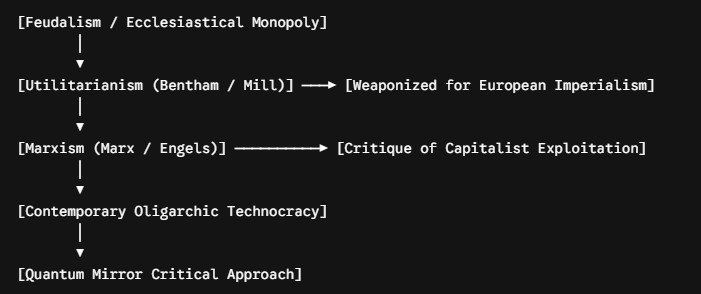
From Utilitarianism to Imperialism: Jeremy Bentham’s Utilitarianism initially offered a rational challenge to monarchical and ecclesiastical overreach. However, during the colonial era, thinkers such as James Mill, John Stuart Mill, and Thomas Babington Macaulay converted utilitarian frameworks into ideological instruments for European imperialism.
The Limits of Classical Marxism: Marxism emerged to dismantle the exploitative structures of industrial capitalism (“Wealth of Nations”). However, classical historical materialism remained predominantly restricted to physical resources and tangible means of production.
The Quantum Mirror Imperative: Modern technocratic capitalism exercises control not merely over physical assets, but over data architecture, algorithms, artificial intelligence, and post-quantum networks. The Quantum Mirror Critical Approach integrates Quantum Consciousness and Self-Reflective Ethics into materialist analysis. It posits that technology divorced from self-awareness inevitably yields coercive digital monopolies.
- Geopolitical Sovereignty and the Himalayan Paradigm: An examination of global cultural geography reveals that nation-states derive their core identity from foundational principles of sanctity, such as India (Quantum Consciousness), China (Unblemished Purity), Pakistan (Sacred Land), Russia (Rishi/Slavic Civilisation), and Western nations through their historical developments.
Nepal and the Ecological-Conscious Axis: Recent flash floods in Rasuwa, Nepal, represent more than a localised environmental hazard; they function as an indicator of global climate disruption and fragile Himalayan ecosystems.
Foundational Geographies: Classical texts identify the Himavatkhand (Nepal/Kailash) as a foundational locus of knowledge. The paradigm of Pashupatinath (“The Lord of All Living Beings”) advocates for the intrinsic value and coexistence of all sentient life.
M-15 (Sagarmatha / Chomolungma): This summit represents both a geographical elevation and an epistemological symbol—the initial point of illumination. Preservation of the Himalayan corridor is a prerequisite for planetary civilisation, not merely a regional concern.
- Policy Recommendations for the United Nations and International Leadership: To transition away from perpetual conflict and realise the imperative to “MAKE EARTH GREAT FOREVER,” international governance bodies must consider the following directives:
5.1 Redirection of Military Research toward Quantum Peace (Demilitarisation of DARPA): Global defence technology entities (such as DARPA) should pivot priorities from competitive weaponisation toward Post-Quantum Protected Infrastructure, Democratized Quantum Biotechnology, and Global Ecological Stabilisation.
5.2 Ethical Global Treaties on Autonomous Systems and AI: The UN General Assembly should establish binding multilateral frameworks to regulate autonomous military robotics and artificial intelligence, mitigating existential risks to human agency.
5.3 Adoption of the ‘No Exit / No Exist’ Imperative: Global leaders must recognise that in an era of climate feedback loops and post-quantum warfare, tactical exit strategies no longer exist for any single state (“Know Thyself”). The prevention of conflict is the sole viable strategy for existential continuity.
- Conclusion: The foundational themes of both Ghazals, devotional alignment, systemic reflection, and self-observation, demonstrate that technological advancement (including post-quantum cryptography such as QShield) remains incomplete without an underlying ethical framework.
The Quantum Mirror Critical Approach provides world leaders with an analytical framework: if state actors fail to transcend outdated ideological binaries and demilitarise high-technology sectors, the tools created for security will themselves precipitate systemic failure. The permanent elimination of war represents the necessary condition for humanity’s post-quantum future.