


Philosophy of Light and a New Foundation for Global Peace
Poem of the Day: November 22, 2026
ग़ज़ल
        वाहिद मुस्तफ़ा मरीज़ मैं तेरा
वाहिद है रूह राज़-ए-जिस्म, मुस्तफ़ा मरीज़ मैं तेरा,
हर क़िस्त जुदा हो गया, गुस्तफ़ा मरीज़ मैं तेरा।
            हर रंग घुली गुलबदन के परवाने मर गए हैं,
            साक्षी से ज़िंदा सवाल, जुस्तफ़ा मरीज़ मैं तेरा।
मिट्टी के तहख़ाने में क़ैद पानी हवा आग बाग़,
मज़ाज़ी इश्क़ हम-फ़ना, चुस्तफ़ा मरीज़ मैं तेरा।
            चिंगारी एक, आग-बबूला तड़प रहा, राख-राख,
            गुलामी सुल्ताना की, दुस्तफ़ा मरीज़ मैं तेरा।
मरीज़-ए-इश्क़िया हूँ, न कोई शिफ़ा, एहतियात,
बेदर्द ज़माने, ख़ुदा, नुस्तफ़ा मरीज़ मैं तेरा।
            क्वांटम ज़मीं, न्यूक्लियर फ़्यूज़न, प्लाज़्मा का मसला,
            हर एटमिक न्यूक्लिआई, ख़ुस्तफ़ा मरीज़ मैं तेरा।
ये चाय इश्क़-ए-हक़ीक़ी, महका बदन जानेमन,
देख भोला दर्पण को, दुरुस्तफ़ा मरीज़ मैं तेरा।

तशरीह: क्वांटम सूफ़ी पोएटिक्स की रोशनी में

इस ग़ज़ल की बुनियादी चाल "सुपरपोज़िशन" की है: एक ही वुजूद एक साथ कई हालतों में रहता है। मतले में "वाहिद रूह" और "राज़-ए-जिस्म" एक ही सिक्के के दो रुख़ हैं। हर "क़िस्त" का जुदा हो जाना उस वहदत का बिखरना है जो नापे जाते ही टुकड़ों में बँट जाती है। "मरीज़" वही है जिसे देखा, परखा और तशख़ीस किया जा रहा है। यानी आशिक़ यहाँ जाँचा जाने वाला सिस्टम है और महबूब मुशाहिदा करने वाला। दूसरे शेर में यह बात और खुलती है। परवाने गुलबदन के हर रंग में घुलकर मर जाते हैं, जैसे सफ़ेद रौशनी स्पेक्ट्रम में बिखरती है। पीछे बचता है "साक्षी से ज़िंदा सवाल": नापने के बाद भी जवाब का न मरना। यही नाज़ुक जगह है जहाँ फ़ना और इल्म आपस में टकराते हैं।

तीसरे और चौथे शेर में जिस्म "तहख़ाना" है। पानी, हवा, आग और मिट्टी जैसे अनासिर-ए-अरबआ इसमें क़ैद हैं। नफ़्स की यह क़ैद ही मज़ाज़ी इश्क़ का मैदान है, और यही मैदान आगे चलकर हम-फ़ना होने, यानी उलझाव (entanglement) की शक्ल लेता है, जहाँ दो वुजूद एक-दूसरे के बग़ैर मुकम्मल नहीं होते। चौथे शेर की चिंगारी आग-बबूला होकर राख-राख हो जाती है। नफ़्सियाती ज़बान में यह अहं का जलना है। यहाँ विरोधाभास यह है कि "सुल्ताना की गुलामी" में हुक्म और ताबेदारी एक ही चीज़ बन जाते हैं। जो बादशाहत नफ़्स चाहता था, वही इश्क़ में ग़ुलामी बनकर मिलती है।

पाँचवाँ शेर इस नफ़्सियाती पहलू का सबसे सीधा बयान है। आशिक़ को "शिफ़ा" चाहिए न "एहतियात"। वह अपना मर्ज़ बचाए रखना चाहता है, क्योंकि मर्ज़ ही उसकी पहचान है। फिर वह बेदर्द ज़माने और ख़ुदा, दोनों से एक ही सुर में मुख़ातिब होता है। इस शिकवे में अकेलापन भी है और उसी की क़ुबूलियत भी। छठे शेर में बात ज़मीन से सितारों तक जाती है। सितारों में फ़्यूज़न क्वांटम टनलिंग से होता है, जबकि ज़मीन पर प्लाज़्मा को बाँधे रखना मसला है। शायर इसी मसले को इश्क़ पर चढ़ा देता है: दिल वह प्लाज़्मा है जिसे क़ैद करना मुश्किल है, और नफ़्स की दीवार तभी पार होती है जब इश्क़ टनलिंग करता है।

आख़िरी शेर, यानी मक़्ता, सब कुछ अपनी जगह रख देता है। "चाय" रोज़मर्रा की चीज़ है और उसे "इश्क़-ए-हक़ीक़ी" कहना ख़ास लहजा है, जिसमें मुक़द्दस और मामूली एक ही प्याली में मिल जाते हैं। "भोला दर्पण" तख़ल्लुस भी है और वह आईना भी जो सब दिखाता है पर ख़ुद कुछ नहीं बनता। यह वही "ऑब्ज़र्वर" है जिसके देखने से सब तय होता है। निष्कर्ष: DarpanPoems की ख़ासियत तीन बातों में है। पहली, विज्ञान की शब्दावली (प्लाज़्मा, फ़्यूज़न, न्यूक्लिआई) को मज़ाज़ का पुल बनाकर हक़ीक़त तक ले जाना। दूसरी, आईने का साक्षी-भाव। तीसरी, क़ाफ़िये को खेल की तरह घुमाना: मुस्तफ़ा से गुस्तफ़ा, जुस्तफ़ा, दुस्तफ़ा तक, एक ही रदीफ़ पर अलग-अलग "मापे हुए मान", जैसे एक ही अवस्था के कई eigenvalue। कुल मिलाकर यह ग़ज़ल संजीदगी और शरारत के बीच उसी "अनिश्चितता" में टिकी है जिसे तसव्वुफ़ हैरत और विज्ञान अनसर्टेंटी कहता है।

The English Rendition

Ghazal:
      Of Thee, O Chosen One, Thy Patient
Single the spirit, secret of the
Clay; O Mustafa, thy patient am I.
Each portion parted, severed and
Astray; O Gustafa, thy patient am I.

All hues dissolved, the moths of rose-
Cheeked grace have perished in the flame,
A living question from the Witness’s
Day; O Justafa, thy patient am I.

In earthen vaults immured, the
Water, wind, the fire, and the bower,
Earthly desire co-mortal in decay;
O Chustafa, thy patient am I.

A single spark, envenomed,
Writhing, turned to ash on ash,
In thralldom to the Sultana’s
Sway; O Dustafa, thy patient am I.

A thrall of amorous malady,
No balm, no cautious ward,
O pitiless world, O God, no
Remedy; O Nustafa, thy patient am I.

Quantum terrain, nuclear fusion,
Plasma’s labyrinthine stress,
Each atomic nucleus in disarray;
O Khustafa, thy patient am I.

This tea, true love’s own essence;
Fragrant frame, O soul’s delight,
Behold the artless mirror, set aright;
O Durustafa, thy patient am I.

Exegesis: Formal and Prosodic Architecture
The source text is an experimental Urdu ghazal structured around an eccentric, neologistic radīf (refrain): मरीज़ मैं तेरा (marīz maiṅ terā, "thy patient am I"), preceded by a shifting qāfiya (rhyme) built on a playful morphological chain: मुस्तफ़ा (Muṣṭafā), गुस्तफ़ा, जुस्तफ़ा, चुस्तफ़ा, दुस्तफ़ा, नुस्तफ़ा, ख़ुस्तफ़ा, and दुरुस्तफ़ा. In classical Perso-Urdu poetics, Muṣṭafā ("the Chosen One") is an honorific epithet of the Prophet Muhammad, and qāfiya typically relies on authentic lexical or root resonance. By fabricating paronomastic variants (paronomasia / tajnīs) some echoing Persian/Urdu roots (gustākh/broken, justajū/quest, chust/agile or drawn taut, durust/rectified or true) the poem stages a deliberate tension between sacred veneration and linguistic delirium.
Stanza-by-Stanza Commentary:
Maṭla (Opening Couplet): The opening couplet establishes the ontological rift between spirit (rūḥ) and body (jism). Wāḥid ("single" or "unique") aligns the spirit with unity and inwardness, while the body appears as an enigmatic cipher (rāz). In the second line, har qist ("every installment" or "portion") introduces a commercial or sequential fragmentation: the self is meted out piece by piece and alienated. Muṣṭafā anchors the devotion in sacred election, whereas Gustafā, unmoored from canonical Arabic; signals a fractured, dislocated echo of the sacred name, mirroring the speaker’s splintered condition.
Second Couplet: Witness, Annihilation, and Inquiry: Here the poem draws upon classic ghazal iconography: gulbadan ("rose-bodied") and parwāne ("moths") immolating themselves in the radiance of the beloved. Yet the dissolution of har rang ("every hue" or mode of being) leaves behind not quietude, but a zindā sawāl ("living question") addressed to the sākṣī ("witness"). Justafā resonates with justajū ("seeking" or "inquiry"), turning devotion into an interrogative ordeal where the seeker persists as an unanswered question before a witnessing gaze.
Third Couplet: The Four Elements and Earthly Mortality The classical four elements (pānī, hawā, āg-water, wind, fire) along with bāgh ("garden") are entombed within a taḥkhānā ("subterranean vault" or cellar of miṭṭī, clay). In Sufi poetics, ‘ishq-e-majāzī ("metaphorical" or earthly love) is a bridge toward ‘ishq-e-ḥaqīqī ("real" or divine love), yet here it is declared ham-fanā ("co-extinct" or sharing in annihilation). Chustafā evokes a taut, compressed, or sharply drawn state-the constriction of cosmic elements inside mortal earth.
Fourth Couplet: Combustive Subjection: The image contracts to a single chingārī ("spark") that flares into āg-babūlā (furious, blazing, or whirling in rage) and crumbles into rākh-rākh ("ash upon ash"). Subjection (ghulāmī) to the Sulṭānā (a feminine sovereign figure, at once imperial, erotic, and tyrannical) reduces agency to combustion. Dustafā carries a darker, harsher assonance suggestive of dushwār (arduous) or dushman (adversary), capturing the punitive intensity of asymmetrical devotion.
Fifth Couplet: Incurability and Cosmological Abandonment: The speaker names the affliction marīz-e-‘ishqiyā ("patient of amorousness"), foreclosing both shifā ("healing" or cure) and eḥtiyāṭ ("precaution" or guard). Appealing to a bedard zamānā ("pitiless age/world") and Khudā ("God"), the stanza marks a point of utter exposure. Nustafā reads like a privative or negated inflection (na- / negation), underscoring the absence of cure or intercession within the speaker’s lament.
Sixth Couplet: Scientific Modernity as Symptom: In a striking modernist pivot, the poem imports physics terminology, kwānṭam zamīn ("quantum earth"), nyūkliyar fyūzan ("nuclear fusion"), plāzmā kā masla ("the problem/question of plasma"), and har eṭamik nyūkliāī ("every atomic nucleus"). Rather than offering detached scientific mastery, high-energy matter is assimilated into the speaker’s pathology: subatomic agitation becomes another register of fever, instability, and internal fissure. Khustafā introduces a guttural kh- friction that mirrors atomic collision and turbulence.
Seventh Couplet (Maqṭa): Consolation, Fragrance, and Rectification: The closing couplet shifts from metaphysical and atomic turbulence to intimate sensory grounding. Chāy ("tea") is elevated into ‘ishq-e-ḥaqīqī ("true/real love"), accompanied by the fragrant body (mahkā badan) of jāneman ("beloved" / "life of my soul") and the injunction to look upon the bholā darpaṇ ("artless" or guileless mirror). Durustafā plays directly on durust ("correct," "sound," or "set right"), resolving the sequence of distorted, fragmented, and turbulent coinages into a gesture of alignment and perceptual clarity, even as the speaker remains, to the very end, marīz ("thy patient").
Thematic Synthesis:
Read as a whole, the ghazal stages a deliberate collision of registers: classical Sufi-Urdu tropes, neologistic wordplay, existential and political/erotic subjugation, twentieth-first-century physics, and domestic intimacy. Its humour and pathos arise simultaneously, treating devotion as an incurable condition that traverses from sacred invocation through atomic flux to a warm cup of tea and a clear mirror.
Poem of the Day: November 21, 2026
ग़ज़ल
        है ये मर्ज़-ए-मोहब्बत
दिलो-जाँ भी हुए टुकड़े कि है ये मर्ज़-ए-मोहब्बत,
सुनाऊँ क्या हुक़ूक़ों का, अजब है तर्ज़-ए-मोहब्बत।
           कि क़ुर्बत है सुकूँ-आतिश, जलन सर्दी की जैसी है,
           अज़ीज़ों-सी तिरी यादें न होतीं ग़र्ज़-ए-मोहब्बत।
मज़ीद इन शोख़ियों से तुम न आओगी कभी भी बाज़,
सुलगती रौशनी ख़्वाब में, यही है हर्ज़-ए-मोहब्बत।
           कि हर ज़र्रा-ए-ईमाँ का नतीजा है ग़ुलामी ही,
           उसी के नाम क़ुर्बां थे वो नाज़ुक दर्ज़-ए-मोहब्बत।
लुटे हैं ख़ूब भरोसे पर मज़हबी रहनुमा से हम,
उतारो अब सुलूक का भी नक़ाब, ये क़र्ज़-ए-मोहब्बत।
           कि हॉर्स-हेड फ़्लेम सदीमें मिल सितारे जन्म देती हैं,
           कि क्वांटम में नए ढब से बँधी है लर्ज़-ए-मोहब्बत।
अरी सजनी, तिरी प्याली में है इक रंग मिज़ाजी सा,
ज़रा दर्पण को देखो तो, छलकता फ़र्ज़-ए-मोहब्बत।

तशरीह: क़ुर्ब, क़्वांटम और आईना

मतले में दिल और रूह के टुकड़े होना एक ऐसी अवस्था का बयान है जिसमें आशिक़ बँटकर भी बँधा रहता है। क्वांटम सूफ़ी नज़र से यह उलझाव (entanglement) है: टुकड़े अलग दिखते हैं, पर एक ही मर्ज़ की लहर से जुड़े रहते हैं। इसीलिए शायर "हुक़ूक़ की तफ़सील" सुनाने से इनकार करता है, क्योंकि इश्क़ का तर्ज़ दावों से बाहर है। दूसरे शेर में क़ुर्ब एक विरोधाभास है, एक ही वक़्त में सुकून की आग और सर्दी की जलन। सूफ़ी "बक़ा" और "फ़ना" की तरह यहाँ दो विरोधी अवस्थाएँ साथ रहती हैं। महबूब की यादें ग़र्ज़ नहीं, वजूद का हिस्सा हैं। तीसरे शेर में शोख़ियों से बाज़ न आना और ख़्वाब में सुलगती रौशनी इश्क़ की उस "हर्ज़" को दिखाते हैं जो नुक़सान भी है और नूर भी। यहाँ अदबी सलीक़ा यह है कि शिकायत ही तारीफ़ बन जाती है।

चौथे और पाँचवें शेर में ग़ज़ल का फ़लसफ़ियाना मोड़ है। "ज़र्रा-ए-ईमाँ" का अंजाम ग़ुलामी बताना उस आस्था पर तंज़ है जो तक़लीद में बदल जाए। मज़हबी रहनुमाओं से लुटना और सुलूक का नक़ाब उतारने की पुकार नफ़्सियाती तौर पर "सच्चे ख़ुद" की तलाश है। जब तक रिवायती किरदार का मुखौटा न उतरे, इश्क़ क़र्ज़ बनकर रहता है, हक़ीक़त नहीं बनता। यहाँ सूफ़ी रवायत का वही पुराना मिज़ाज दिखता है जो रस्मी दीनदारी से टकराकर बातिन की तरफ़ लौटता है। छठा शेर इसी आत्म-मुक्ति को ब्रह्मांडीय पैमाने पर ले जाता है। हॉर्सहेड और फ़्लेम नीहारिकाएँ मिलकर तारे जन्मती हैं, यानी टकराव और संगम से सृजन होता है। फिर क्वांटम की नई तरकीब में इश्क़ एक "लर्ज़" बन जाता है, ऐसा कंपन जो अनिश्चितता में भी रिश्ता निभाता है। यह तारों की कारीगरी और दिल की थरथराहट को एक ही विधान की दो शक्लें बनाता है।

आख़िरी शेर में सब कुछ घरेलू नज़दीकी पर उतर आता है। प्याली में मिज़ाजी रंग रोज़मर्रा का वह "मोजिज़ा" है जिसे आम आदमी भी देख सकता है। मक़ते में "दर्पण" का तख़ल्लुस आईने की तरह पूरी ग़ज़ल को ख़ुद पर लौटाता है: वह देखता है, छलकता है, फ़र्ज़ निभाता है। निष्कर्षतः DarpanPoems की ख़ासियत इसी तिहरे मेल में है। एक तरफ़ क्वांटम और खगोल की जदीद लफ़्ज़ियात, दूसरी तरफ़ सूफ़ी तजरबे की बातिनी गहराई, और बीच में चाय-प्याली जैसी घरेलू आत्मीयता। इस ग़ज़ल में इश्क़ बीमारी भी है, क़र्ज़ भी, फ़र्ज़ भी, और आईना भी। पढ़ने वाला उसमें दूसरे को कम और ख़ुद को ज़्यादा देखता है।

The English Rendition
Ghazal
     Strange is The Sound of Love
My heart and soul lie shattered:
This the malady, the wound of love;
What tale of rights shall I rehearse?
How strange the sound of love.

Thy nearness is a fire of peace,
A burning of the winter's frost;
Thy memories, dear as kindred, are no need,
Beloved: they are the ground of love.

From these thy wilful wiles,
O Fair, thou wilt not now refrain;
A light that smoulders in my dreams:
Such is the loss profound of love.

Each atom of the faith, at last,
Yields bondage as its end;
In His name were offered up the tender
Seams, thorn-crowned, of love.

Long plundered by the pious
Guides in whom I laid my trust,
Put off at last the mask of seemly
Ways: this debt is bound of love.

Horsehead and Flame, the nebulae,
Conjoin and give the stars their birth;
In quantum realms, by novel art,
The tremors resound of love.

O Sajni, in thy cup of tea there
Glows a hue of moody miracle;
Behold Darpan, the Mirror, brimming:
Duty spills all around of love.

Exegesis: The heart and soul are in pieces

The ghazal opens with a rupture. The heart and soul are in pieces, and love is named a malady rather than a consolation. The classical lover's wound is thus joined to a modern, almost physical image of entanglement: the fragments are scattered yet remain bound by one sickness. The speaker declines to catalogue love's "rights", because love's manner exceeds the vocabulary of claims. The second couplet turns on a Sufi paradox, a nearness that is both the fire of peace and the burn of winter's frost. Contraries coexist here as they do in the doctrine of fana and baqa, and the beloved's memories are no longer a need to be satisfied but the very ground of being. The third couplet gives the beloved's wilfulness and a smouldering dream-light, so that loss and illumination become one experience. This is the old Persian habit of making complaint a form of praise.

The fourth and fifth couplets are the philosophical centre. To say that every atom of belief ends in bondage is to indict faith when it hardens into obedience. What was offered "in His name" was the tender, vulnerable fabric of love itself, so the sacrifice is of the sensitive to the dogmatic. The fifth couplet continues in the satirical tradition of Hafiz and the Persian rebel-mystics, who attacked the outward pietist. The speaker was robbed by the "pious guides", and what he asks for is a stripping away of the mask of conduct. Psychologically, this is a demand for the authentic self beneath the performed role. Until the mask falls, love remains a debt that is inherited and discharged, never an experience that is lived.

The sixth couplet lifts that inner liberation to the cosmic scale. Two nebulae, the Horsehead and the Flame, collide and give birth to stars. Creation arises from encounter, not isolation, and the couplet's "quantum" turn proposes that love's tremor is of the same order as the vibrations that make matter. The unity of the astronomical and the affective is the poem's most original claim. The seventh couplet then brings that vastness down to a domestic scene: a lover's teacup, whose mood-coloured surface is a small miracle. The pen-name Darpan, the mirror, closes the poem as the classical takhallus should. It turns the vision back upon the poet, who is seen brimming with a duty that overflows.

In conclusion, what distinguishes DarpanPoems is this threefold fusion. Its vocabulary is drawn from astrophysics and quantum theory, its inner life from the Sufi critique of ritual, and its tenderness from the intimacy of tea and a beloved's moods. The speaker finds the sacred in the fragment and the cosmic in the cup. Love, across seven couplets, is wound, fire, ground, debt, tremor and duty, and the mirror at the end suggests that each reader will recognise it in a different form.
Poem of the Day: November 20, 2026
ग़ज़ल
        हम गिनते-गिनते भूल गए
तेरे बग़ैर दिन भी हम गिनते-गिनते भूल गए,
ख़ैर का पूछना भी मत, पिसते-घिसते धूल गए।
             इतनी ढेरों यादें लेकर फिर से आए संजीदा,
            दिल का परिंदा उड़ा तो अर्श-ए-फ़रिश्ते खुल गए।
फ़सल कब परवान चढ़ेगी खेतों में धूप पटाएं,
काश्तकारी की मिट्टी में ज़ोरों से पसीजते घुल गए।
             हर महफ़िल सियासत की प्यार से तूने सजाई है,
             दुश्मनी-दोस्ती के सौदे, खरीद-फ़रोख़्तें भूल गए।
अमन के ख़ंजर, बारूदी बीज सरज़मीं पर उगे,
जंग व तल्ख़ी की समाधि बसाते-बसते फूल गए।
             Aquila Experiments से न्यूट्रल एटम की क्रांति,
            क्वांटम डायनामिक्स के मान बढ़ते-चढ़ते खुल गए।
सजनी संजीदा महके आज चाय में मुख़्तलिफ़,
इख़्तेलाफ़ का दर्पण दिखा है, चमकते बिल्कुल गए।

क्वांटम सूफ़ी पोएटिक्स: शेर दर शेर पठन की समझ
क्वांटम सूफ़ी पोएटिक्स के विधान में कविता केवल रैखिक (linear) अर्थ या स्थूल घटनाओं का बयान नहीं है, बल्कि वह संभावनाओं (superposition), सह-संबंध (entanglement) और आंतरिक रूपांतरण (inner alchemy) का क्षेत्र है। पहले शेर में समय की गिनती भूल जाना और धूल हो जाना सूफ़ी 'फ़ना' (अहं के विलय) और क्वांटम स्तर पर कण के रूप-परिवर्तन जैसा है, जहाँ मापने या गिनने की पारंपरिक घड़ी टूट जाती है। दूसरे शेर में 'संजीदा' यादों का आगमन और दिल के परिंदे का उड़कर अर्श तक पहुँचना चेतना के उस विस्तार को दिखाता है जहाँ भीतर की उड़ान बाहर के आकाशीय द्वार खोल देती है।

तीसरे और चौथे शेर सामाजिक व भौतिक यथार्थ को आध्यात्मिक श्रम से जोड़ते हैं, जहाँ "खेतों में धूप पटाने" जैसा विरोधाभासी व प्रतीकात्मक बिंब सूफ़ी साधना की तपिश और मिट्टी में घुल जाने की विनम्रता को उभारता है, वहीं सियासत की महफ़िलों और रिश्तों के सौदों में छिपी क्षणभंगुरता को बेनक़ाब करता है। पाँचवें शेर में "अमन के ख़ंजर" और "बारूदी बीज" हिंसा के भीतर पनपती विरोधाभासी त्रासदी को दर्शाते हैं, जबकि छठा शेर आधुनिक विज्ञान (Aquila Experiments, न्यूट्रल एटम, क्वांटम डायनामिक्स) को सूफ़ी रहस्यवाद से जोड़ता है, जहाँ सूक्ष्म कणों की गति और अनिश्चितता उस 'वजूद' की तरह प्रतीत होती है जिसे किसी एक स्थिर समीकरण में बाँधा नहीं जा सकता। अंतिम शेर में चाय की सुगंध और "इख़्तेलाफ़ के दर्पण" के ज़रिए मतभेद को ही आत्म-बोध और चमकने का माध्यम बनाया गया है।

अदबी, फ़लसफ़ियाना और नफ़्सियाति तशरीह (DarpanPoems की ख़ुसूसियत के साथ)
अदबी और फ़लसफ़ियाना नज़रिए से यह ग़ज़ल आधुनिक मनुष्य की उस द्वंद्वात्मक स्थिति को पकड़ती है जहाँ वह एक ओर इतिहास, राजनीति और हिंसा के शोर में खड़ा है, और दूसरी ओर क्वांटम विज्ञान की सूक्ष्मता तथा सूफ़ी तसव्वुफ़ की गहराई में अर्थ तलाश रहा है। नफ़्सियाति (मनोवैज्ञानिक) स्तर पर, दिन गिनते-गिनते भूल जाना और पिसते-घिसते धूल हो जाना उस गहन थकान और स्मृति-भार को व्यक्त करता है जिसे मन लंबे इंतज़ार और संघर्ष के बाद महसूस करता है; पर उसी धूल और थकान के भीतर 'परिंदा दिल' की उड़ान मन की आत्म-उपचार (self-healing) और transcendence की क्षमता का प्रमाण है।

DarpanPoems की ख़ासियत इसी 'दर्पण' (प्रतिबिंब) की चेतना में निहित है, जहाँ बाहरी दुनिया, विज्ञान, रिश्तों और मतभेदों को दुश्मन या शोर मानने के बजाय एक ऐसे आईने के रूप में देखा जाता है जो इंसान को उसके भीतर के सत्य से रूबरू कराता है। 'इख़्तेलाफ़ का दर्पण' यह बताता है कि असहमति और भिन्नताएँ रिश्तों या चेतना को तोड़ती नहीं, बल्कि सही दृष्टि मिलने पर उन्हें अधिक उजला और स्पष्ट बना देती हैं।

निष्कर्षतः, यह ग़ज़ल इस बात की गवाह है कि जब आधुनिक विज्ञान की क्वांटम संवेदना, सूफ़ी फ़लसफ़े की विनम्रता और मानवीय मन की नफ़्सियाति सच्चाई एक साथ जुड़ते हैं, तब 'धूल' भी 'अर्श' का रास्ता बन जाती है और 'दर्पण' जीवन के हर विरोधाभास में चमकने का हुनर सिखा देता है।

The English Rendition

Ghazal
        Without Thee These days
Without thee, even the days
We have forgotten counting,
Ask not of well-being; ground and
Worn, we have crumbled to dust gone.

Bearing such abundant remembrances,
Dignified thou hath returned once more;
When the bird of the heart took wing,
The celestial Empyrean of angels gone open.

When shall the harvest ripen?
We water the fields with noonday sun;
In the soil of husbandry, melting
In fervour, we have dissolved gone.

Every assembly of statecraft thou
Hast adorned with tender grace;
The bargains of enmity and amity, and
Traffic of sale, we have forgotten gone.

Daggers of peace and seeds of powder
Have sprung upon the earthly realm;
Establishing sepulchres of strife and
Acrimony, we have blossomed gone.

From Aquila’s experiments,
A revolution of the neutral atom;
The measures of quantum dynamics,
Rising and swelling, have unfolded gone.

Glorious, beloved, breathes fragrant
Today in the tea, strangely wrought;
The mirror of discord hath appeared,
And in brilliance we have wholly gone.

Quantum Sufi Poetics: Exegesis on DarpanPoems Grounding
Set upon the DarpanPoems grounding, where the darpan (mirror) operates not as a passive glass of mere reflection but as an active threshold of self-recognition, this Victorian-Persian English rendition transforms the ghazal’s longing into an ornate architecture of romantic devotion and metaphysical inquiry. The elevated "King’s English" register, steeped in Victorian cadence and Persianate tasawwuf (mysticism) frames human weariness ("ground and worn, we have crumbled") alongside transcendent ascent ("the celestial Empyrean of angels"), suggesting that the soul’s dissolution is not annihilation (fana) alone, but a prelude to luminous re-ordering.

Across its couplets, the poem stages a deliberate tension between temporal fatigue, political artifice, and modern scientific wonder. Where statecraft trades in calculated bargains and earthly soil yields paradoxical "daggers of peace" and "sepulchres of strife," the intrusion of Aquila’s experiments, neutral atoms, and quantum dynamics destabilises rigid materialism. In a DarpanPoems reading, quantum indeterminacy and neutral-atom coherence mirror the Sufi paradox of unity within multiplicity: what appears fractured in the outward world becomes intelligible only when viewed through an inward lens capable of holding contradiction without collapsing into despair.

Ultimately, the final couplet brings this scholarly and romantic arc to a quiet, aromatic focus in the motif of tea and the "mirror of discord." By locating transcendence and brilliance within Sanjeeda’s presence and even within disagreement itself, the ghazal affirms that discord is not merely division, but a reflective surface through which consciousness catches its own radiance. On DarpanPoems, the poem stands as a meditation on how ancient mystical grace, Victorian elegiac beauty, and contemporary physics converge in the living mirror of human perception.
Poem of the Day: November 18, 2026
ग़ज़ल
        तो मेरी ख़ता क्या है
कोई रख ले हमें दिल में, तो मेरी ख़ता क्या है,
कोई गिनता नहीं तिल में, तो मेरी ख़ता क्या है।
            हमें हर शय रूह-ए-ज़ेहन से अज़ीज़, अज़मल,
           कोई मिलता नहीं महफ़िल में, तो मेरी ख़ता क्या है।
हैं हम ही सुल्तान-ए-उस्मानिया, सिकंदर-ए-यूनान,
सम्राट-ए-अशोक खड़े कील में, तो मेरी ख़ता क्या है।
            देख लिया ऐ मुर्शिद, तेरी इश्तिराकी जम्हूरियत,
            मैं ही नहीं, ज़माना ख़ुद से गया छिल, तो मेरी ख़ता क्या है।
मान भी ले, नंगे नज़र से निज़ाम ढका न रहे हुकूमत,
मेरी फूँक से ही कायनात जाए हिल, तो मेरी ख़ता क्या है।
            स्टार्स फ़ॉर्मेशन होता है मैसिव गैस के ग्रैविटी-पुल से,
            क्वांटम दुनिया बदले उसी से, जमील, तो मेरी ख़ता क्या है।
सजनी, न पूछो चाय का जायका, तेरी हर दिन नया-नया,
देख, दर्पण खिला-खिला, झिलमिल, तो मेरी ख़ता क्या है।

अदबी, फ़लसफ़ियाना और नफ़्सियाती तशरीह

इस ग़ज़ल का पहला शे'र प्रेम और सामाजिक स्वीकृति के बीच मनुष्य की आत्मप्रतिष्ठा का प्रश्न उठाता है। दिल में जगह मिलना प्रेम की स्वीकारोक्ति है, जबकि तिल में गिनना व्यक्ति को नगण्य समझने का प्रतीक बन जाता है। दूसरे शे'र में रूह-ए-ज़ेहन की अवधारणा प्रेम, ज्ञान और चेतना को एक ही आन्तरिक धरातल पर प्रतिष्ठित करती है। हर शय को अज़ीज़ समझने वाला मनुष्य महफ़िल में अकेला रह जाए, तो उसकी असफलता नहीं, बल्कि सामूहिक मनोविज्ञान की संकीर्णता उजागर होती है। नफ़्सियाती दृष्टि से यह आत्मसम्मान और बाहरी मान्यता के बीच का द्वन्द्व है। सूफ़ियाना अर्थ में प्रेम की वास्तविक महफ़िल बाहरी जमावड़े में नहीं, बल्कि चेतना के आन्तरिक विस्तार में बसती है।
तीसरे और चौथे शे'र में ऐतिहासिक स्मृति तथा राजनीतिक चेतना का व्यंग्यात्मक सम्मिश्रण दिखाई देता है। सुल्तान-ए-उस्मानिया, सिकंदर-ए-यूनान और सम्राट अशोक के उल्लेख सत्ता, विजय, साम्राज्य और इतिहास की स्मृतियों को एक ही काव्यात्मक धरातल पर लाते हैं। 'कील में खड़े' होने का बिम्ब महान ऐतिहासिक व्यक्तित्वों के स्थिर, जड़ अथवा किसी व्यवस्था में जकड़े हुए होने का संकेत दे सकता है। इसके बाद मुर्शिद की इश्तिराकी जम्हूरियत (लोकतंत्र और समाजवाद) का उल्लेख सामूहिकता के आदर्श और उसके वास्तविक आचरण के बीच की दूरी पर प्रश्नचिह्न लगाता है। 'ज़माना ख़ुद से गया छिल' में सामाजिक आत्मक्षरण का संकेत है। यहाँ सूफ़ी मुर्शिद केवल आध्यात्मिक मार्गदर्शक नहीं, बल्कि सामाजिक और वैचारिक सत्ता का प्रतीक भी बन जाते हैं।
पाँचवें और छठे शे'र में ग़ज़ल का स्वर मानवीय प्रतिरोध से ब्रह्माण्डीय विज्ञान की ओर बढ़ता है। नंगे नज़र से ढका हुआ निज़ाम सत्ता की उस प्रवृत्ति को उजागर करता है जिसमें वास्तविकता को आवरणों के पीछे छिपाया जाता है। शायर की फूँक से कायनात का हिलना सूफ़ियाना रूपक में आन्तरिक चेतना की परिवर्तनकारी शक्ति है, न कि कोई शाब्दिक भौतिक दावा। इसके तुरन्त बाद massive gas और gravitational pull के माध्यम से तारों के निर्माण का वैज्ञानिक बिम्ब आता है। गुरुत्वाकर्षण गैस और धूल के बादलों को संकुचित करके तारों के जन्म की परिस्थितियाँ निर्मित करता है। इसी वैज्ञानिक प्रक्रिया को क्वांटम दुनिया के परिवर्तन के साथ काव्यात्मक संवाद में रखना Meta-Mystic Quantum Poetics की विशेषता है। यहाँ विज्ञान और सूफ़ी तसव्वुर एक-दूसरे के पर्याय नहीं, बल्कि वास्तविकता को समझने के दो अलग-अलग, परस्पर संवादशील आयाम हैं।
अन्तिम शे'र पूरी ग़ज़ल के तनाव को प्रेम और सौन्दर्य की सहज अनुभूति में विसर्जित कर देता है। सजनी की चाय का हर दिन नया जायका होना दैनिक जीवन की उस सूक्ष्म रूहानी अल्केमी का प्रतीक है जिसमें प्रेम साधारण वस्तुओं को असाधारण अर्थ देता है। 'दर्पण' यहाँ केवल शायर का तख़ल्लुस नहीं, बल्कि आत्मदर्शन, प्रतिबिम्बित चेतना और अन्तःस्थित प्रकाश का प्रतीक बन जाता है। खिला-खिला झिलमिलाता दर्पण बाहरी प्रशंसा की प्रतीक्षा नहीं करता; उसका प्रकाश स्वयं उसके अस्तित्व से प्रस्फुटित होता है।
निष्कर्षतः, यह ग़ज़ल 'मेरी ख़ता क्या है?' के प्रश्न को व्यक्तिगत शिकायत से उठाकर सामाजिक न्याय, ऐतिहासिक चेतना, सत्ता-विमर्श, वैज्ञानिक जिज्ञासा और सूफ़ियाना आत्मबोध तक पहुँचाती है। इसका मूल दर्शन यह है कि अस्तित्व की सार्थकता बाहरी स्वीकृति से निर्धारित नहीं होती। प्रेम, ज्ञान, आत्मसम्मान और चेतना का अपना स्वतंत्र मूल्य है। यही DarpanPoems की विशेषता है जहाँ इश्क़ और इल्म, रूह और क्वांटम, इतिहास और भविष्य तथा चाय और कायनात एक ही काव्यात्मक संवाद में उपस्थित होते हैं।

The English Rendition:
Ghazal
        What Fault of Mine is There
If one should enshrine me in the heart, what fault of mine is there?
If none shall count me as a mote, what fault of mine is there?
All things are dear unto my soul, my mind, my inward sight;
If none shall meet me in the assembly, what fault of mine is there?
        We bear the Sultanate of Osman in our historical grace,
        The soul of Alexander, Ashoka's imperial face;
        If such great names stand nailed within the annals of time,
        What fault of mine is there, if history's chains confine?
Behold, O Murshid, now thy commonwealth of shared decree;
If neither I nor Time itself from selfhood can be free,
If the age, by its own contradictions, be flayed and still,
What fault of mine is there, against the world's own will?
        Grant, then, that sovereignty should veil the order from the eye,
        Yet let no veil conceal the truth beneath the open sky;
        If but one breath of mine should make the cosmos reel,
        What fault of mine is there, if worlds their tremors feel?
Lo, stars are born where massive clouds beneath gravitation bend,
Their cosmic dust in gathering embrace to stellar splendour tend;
If Quantum realms transform through Nature's hidden will,
What fault of mine is there, if change should reign there still?
        Ask not, beloved, of the tea, whose flavour blooms anew;
        Each dawn its subtle alchemy is born afresh with you.
        Behold the Mirror, radiant, in luminous delight;
        If Darpan glimmers, blossoming in love's eternal light,
        What fault of mine is there, if beauty shines so bright?

Exegesis: A Quantum-Sufi Reading: Literary, Philosophical and Psychological Perspectives

The ghazal begins with a meditation on recognition, belonging and the dignity of the individual. To be enshrined in the heart signifies an intimate form of acceptance, whereas being counted merely as a mote suggests social insignificance and emotional exclusion. The poet's lament is not simply a plea for attention; it is an assertion that human worth cannot be measured by the approval of an assembly. The second couplet deepens this position by identifying the beloved world with the soul's intellectual and spiritual consciousness. In Sufi terms, the heart becomes an inward gathering-place where the multiplicity of existence is received through love. Psychologically, the verses expose the tension between intrinsic self-worth and the desire for external validation.
The historical and political couplets expand this inward conflict into a critique of collective memory and institutional authority. The Sultanate of Osman, Alexander of Greece and Emperor Ashoka evoke contrasting legacies of empire, conquest, governance and moral transformation. Their juxtaposition raises questions about the permanence of historical greatness and the limitations imposed upon it by the narratives of power. The address to the Murshid introduces a further paradox: a professedly participatory and shared political order may still reproduce exclusion, ideological rigidity and collective self-alienation. The image of an age flayed by its own contradictions suggests a civilisation gradually losing its moral and psychological integrity. The poet thus interrogates the distance between the ideals of commonwealth and their historical enactment.
The subsequent couplet concerning the veiled political order develops the metaphor of concealment into a philosophy of resistance. The veil represents the mechanisms through which authority obscures its own structures and disguises uncomfortable truths. Against this concealment, the poet's breath becomes a metaphor for awakened consciousness: a seemingly small inward force capable of disturbing an established cosmic order. The following astronomical imagery connects this poetic intuition with the scientific account of stellar formation. Massive clouds of gas and dust contract under gravitational attraction, eventually creating the conditions for stars to emerge. The reference to quantum transformation extends the metaphor towards the changing foundations of physical reality. This is not a claim that human breath literally alters the cosmos, nor that gravity and quantum mechanics are interchangeable; rather, scientific processes become imaginative correspondences for transformation, emergence and interconnectedness. Such an interplay of scientific curiosity and mystical symbolism characterises DarpanPoems' Meta-Mystic Quantum Sufi Poetics.
The concluding couplet returns from cosmic immensities to the intimacy of the beloved and the everyday ritual of tea. Its changing flavour symbolises the inexhaustible renewal of love, wherein an ordinary experience acquires a fresh significance through companionship. The Mirror, or Darpan, becomes at once the poet's signature, an emblem of self-reflection and a metaphor for the luminous consciousness in which the beloved and the self encounter one another. The final question, what fault is mine if beauty shines?, transforms the opening complaint into an affirmation of existence. The ghazal's philosophical movement is therefore from exclusion to self-recognition, from political disillusionment to cosmic wonder, and ultimately from longing to contemplative fulfilment.
Conclusion: This ghazal brings together romantic devotion, historical consciousness, political criticism, astrophysical imagination and Sufi metaphysics. Its central proposition is that the worth of existence does not depend upon the recognition bestowed by social institutions or worldly assemblies. Love becomes a mode of knowing, consciousness a means of questioning established realities, and the universe an inexhaustible field of transformation. In the distinctive literary vision of DarpanPoems, the beloved's cup of tea and the birth of stars belong to one continuous imaginative universe: the intimate and the infinite illuminate one another through the mirror of consciousness.
ग़ज़ल
            जलना अंजाम मेरा
परवाना हूँ परें मन के धरे उड़ कर जलना अंजाम मेरा,
दीवाना हूँ तिरी धुन के बड़े जुड़ कर चलना अंजाम मेरा।
शम्अ-ए-रोशनी रात की अंधेरों की तलब-गार साक्षी,
बेगाना हूँ तिरे चुन के खड़े मुड़कर बदलना अंजाम मेरा।

रक़्स-ए-बदन लहराती आग की लपटें रूह-ए-रक्षा जहाँ,
अनजाना हूँ रस्ते-ख़म ख़ून-ए-डगर टहलना अंजाम मेरा।
कुछ भी नहीं मैं तिरे निज़ाम-ए-हरकत के हुकूमती हक़,
आसान हूँ समझ न-आने में मगर यूँ बहलना अंजाम मेरा।

महबूब मेरी शोहरत भरी नाम काम के मुक़ाम मुकम्मल,
अज़ान पढ़ूँ वेद मंतर इबादत ख़ुदारा छलकना अंजाम मेरा।
'hzero' है क्लासिकल को क्वांटम कंप्यूटिंग से मिलाने को,
ज़माना गढ़ूँ नए युग में सब कुछ अब ढलना अंजाम मेरा।

जानेमन आशिक़ हूँ तिरी चाय में डूबा-डूबा माशूक़ जाना,
कहना हूँ दर्पण दिखता झूठ-मूठ तो खलना अंजाम मेरा।

अदबी, फ़लसफ़ियाना और नफ़्सियाती तशरीह (क्वांटम सूफी पोएटिक्स के विधान बमोजिम)
यह ग़ज़ल क्लासिकीय सूफी तसव्वुफ, प्रेम की अनन्त तड़प और आधुनिक क्वांटम कंप्यूटिंग की बहुआयामी अवस्थाओं (Superposition) का एक अनूठा संगम है। 'DarpanPoems' की खुसूसी शैली के तहत, यहाँ हर शेर केवल एक बाह्य अभिव्यक्ति नहीं, बल्कि चेतना (Consciousness) के कणों और तरंगों के बीच का जीवंत संवाद है। पहले और दूसरे हिस्से में परवाने का जलना और क्वांटम 'hzero' का संदर्भ यह दर्शाता है कि भौतिकी के नियम और रूहानी इश्क़ दोनों ही एक ही परम सत्य के दो छोर हैं, जहाँ अनिश्चितता और निश्चितता एक साथ सह-अस्तित्व में रहती हैं।
दार्शनिक और मनोवैज्ञानिक (Psychological) धरातल पर, यह रचना अहम् (Ego) के विसर्जन और प्रेमिका/इलाही हस्ती में पूरी तरह डूब जाने (Fana) की अवस्था को उजागर करती है। चाय में डूबे हुए माशूक़ की रूपक अभिव्यक्ति और 'अज़ान, वेद, मंतर' का एक साथ उच्चारण इस बात की गवाही देता है कि सृष्टिकर्ता और सृजन के बीच कोई सांप्रदायिक या तात्विक दीवार नहीं है, चेतना का हर रूप उसी एक ही केंद्र से अनुप्राणित है। 'दर्पण' के माध्यम से सत्य का प्रकटीकरण और उसका मानसिक द्वंद्व पाठक को आत्म-अवलोकन के उस विंदु पर लाकर खड़ा कर देता है जहाँ भ्रम और यथार्थ की सीमाएँ मिट जाती हैं।
निष्कर्षतः, यह नज़्म केवल शब्दों का विन्यास नहीं, बल्कि भौतिक विज्ञान के वैज्ञानिक विमर्श को आध्यात्मिक चेतना से जोड़ने वाला एक क्वांटम-सूफ़ी दस्तावेज़ है। यह हमें सिखाती है कि आधुनिक युग की तकनीकी छलांग और प्राचीन आत्मीयता मिलकर एक नए युग के मानवीय सत्य का निर्माण करती हैं, जहाँ अंततः प्रेम और बोध ही संपूर्ण ब्रह्मांड का अंतिम और शाश्वत अंजाम है।
ग़ज़ल के प्रत्येक शेर की विस्तृत, तात्विक और दार्शनिक तशरीह शेर
1 परवाना हूँ परें मन के धरे उड़ कर जलना अंजाम मेरा, दीवाना हूँ तिरी धुन के बड़े जुड़ कर चलना अंजाम मेरा। व्याख्या: यह शेर अहम् (Ego) के समर्पण और चेतना की एकाग्रता का उद्घोष है। 'परवाना' (पतंगा) सूफी साहित्य में उस आशिक का प्रतीक है जो लौ पर मिट जाने के लिए बेताब रहता है। यहाँ 'परें मन के धरे' का अर्थ है मन की तमाम सीमाओं और बंधनों को लांघकर शम्अ-ए-हक़ीक़त की ओर अग्रसर होना। क्वांटम दृष्टिकोण से देखें तो यह तरंग फलन (Wave Function) के पतन (Collapse) जैसा है, जहाँ अनंत संभावनाओं में से एक ही अंतिम सत्य (जलना और मिट जाना) चुन लिया जाता है। 'तिरी धुन के बड़े जुड़ कर चलना' यह बताता है कि प्रेमी अपनी महबूबा या परम सत्ता के साथ क्वांटम एंटेंगलमेंट (Quantum Entanglement) की तरह गहराई से जुड़ चुका है, जहाँ दोनों की दूरियाँ मिट जाती हैं।
शेर 2 शम्अ-ए-रोशनी रात की अंधेरों की तलब-गार साक्षी, बेगाना हूँ तिरे चुन के खड़े मुड़कर बदलना अंजाम मेरा। व्याख्या: यहाँ विरोधाभास और द्वंद्व का सुंदर चित्रण है। रात का अंधेरा और शम्अ (दीपक) की रोशनी एक-दूसरे के विरोधी होकर भी एक-दूसरे की आवश्यकता (तलब-गार) हैं। 'साक्षी' होना उस द्रष्टा (Observer) की याद दिलाता है जो क्वांटम भौतिकी में कणों के व्यवहार को प्रभावित करता है। आशिक दुनिया की भीड़ से 'बेगाना' (अजनबी) है क्योंकि उसने उस परम सत्ता या प्रिय को 'चुन' लिया है। रास्ते पर मुड़कर अपने निर्णय से न पलटना और उसी निश्चित दिशा में आगे बढ़ना इस बात का प्रतीक है कि एक बार चेतना का मार्ग चुन लेने पर वापसी संभव नहीं है।
शेर 3 रक़्स-ए-बदन लहराती आग की लपटें रूह-ए-रक्षा जहाँ, अनजाना हूँ रस्ते-ख़म ख़ून-ए-डगर टहलना अंजाम मेरा। व्याख्या: इस शेर में जीवन के संघर्षात्मक और ऊर्जावान स्वरूप को दर्शाया गया है। 'रक़्स-ए-बदन' और आग की लहराती लपटें इस संसार की उथल-पुथल और ताप का प्रतीक हैं, जो खुद 'दुनिया जहाँ' की रक्षा में जुटी हैं। राह के خم (टेढ़े-मेढ़े मोड़ों) और 'खून-ए-डगर' (कंटकास्ट, लहूलुहान मार्ग) पर चलना इस बात का द्योतक है कि सत्य की राह आसान नहीं होती। क्वांटम ऊर्जा के प्रवाह (Energy Flux) की तरह, आशिक का इस दुर्गम रास्ते पर लगातार टहलना (चलते रहना) ही उसका शाश्वत कर्म और नियति है।
शेर 4 कुछ भी नहीं मैं तिरे निज़ाम-ए-हरकत के हुकूमती हक़, आसान हूँ समझ न-आने में मगर यूँ बहलना अंजाम मेरा। व्याख्या: यह शेर ब्रह्मांडीय नियमों और मानवीय लघुता के बीच के संबंध को स्पष्ट करता है। 'निज़ाम-ए-हरकत' (गति का पूरा तंत्र) उस विराट कॉस्मिक मशीनरी या ईश्वर के विधान की ओर इशारा करता है जिसके आगे मानव का अहम् 'कुछ भी नहीं' है। विरोधाभास यह है कि वह दिखने में बहुत सरल ('आसान हूँ') है, परंतु उसकी आंतरिक गहराई इतनी जटिल है कि वह किसी की समझ में नहीं आता। बहलना (प्रेम के तरंगों में झूमना या विचलित होना) इस बात का प्रमाण है कि परम चेतना के सम्मुख बुद्धि की सीमाएँ समाप्त हो जाती हैं।
शेर 5 महबूब मेरी शोहरत भरी नाम काम के मुक़ाम मुकम्मल, अज़ान पढ़ूँ वेद मंतर इबादत ख़ुदारा छलकना अंजाम मेरा। व्याख्या: यह शेर सार्वभौमिक प्रेम और सर्वधर्म समभाव का सर्वोच्च शिखर है। यहाँ प्रेमिका की शोहरत और मुक़ाम के साथ-साथ 'अज़ान', 'वेद मंत्र' और 'इबादत' को एक ही थाली में पिरो दिया गया है। क्वांटम सूफिज़्म का सार यही है कि ऊर्जा और चेतना का कोई मज़हब नहीं होता, चाहे वह मस्जिद की अज़ान हो या मंदिर के वेद मंत्र। सब कुछ उसी एक 'खुदा' या परम सत्य की आराधना है, और इस भक्ति में दिल का छलक जाना ही इस जीवन का सबसे बड़ा मुकम्मल अंजाम है।
शेर 6 'hzero' है क्लासिकल को क्वांटम कंप्यूटिंग से मिलाने को, ज़माना गढ़ूँ नए युग में सब कुछ अब ढलना अंजाम मेरा। व्याख्या: यह शेर 'DarpanPoems' की मौलिक और क्रांतिकारी दृष्टि, क्वांटम सूफी पोएटिक्स, का केंद्र बिंदु है। 'hzero' (Planck's constant और शून्य/Void का तात्विक संयोजन) वह वैज्ञानिक व दार्शनिक सूत्र है जो पारंपरिक (क्लासिकल) सोच को आधुनिक क्वांटम कंप्यूटिंग की बहुआयामी चेतना से जोड़ता है। कवि का उद्देश्य पुराने संसार को तोड़कर एक नए युग की रचना करना है, जहाँ विज्ञान और अध्यात्म मिलकर एक नई मानवता का निर्माण करें। सब कुछ इस नए सांचे में ढल जाना ही इस दौर का अनिवार्य भविष्य है।
शेर 7 जानेमन आशिक़ हूँ तिरी चाय में डूबा-डूबा माशूक़ जाना, कहना हूँ दर्पण दिखता झूठ-मूठ तो खलना अंजाम मेरा। व्याख्या: अंतिम शेर में निजी आत्मीयता और आत्म-समीक्षा का अनूठा रस है। चाय की प्याली में डूबने का रूपक जीवन की सुहानी सुस्ती, एकांत और प्रिय की यादों में खो जाने को दर्शाता है। pen name 'दर्पण' का प्रयोग करते हुए कवि कहता है कि उसका काम केवल सच दिखाना है, चाहे वह कितना भी कड़वा क्यों न हो। यदि दुनिया या खुद उसकी अपनी आँखें झूठ-मूठ का आवरण ओढ़ती हैं, तो उसका खलना (असुविधा पैदा करना या सच चुभना) ही उसका वास्तविक स्वभाव और अंजाम है।

Ghazal
        Thy Sacred Spell Enchains My Soul
The moth consumed within the flame is destiny’s decree,
Thy sacred spell enchains my soul through all eternity.
           The silent witness of the night, the taper burns in pain,
           An alien far from worldly shores, I weave my mournful strain.
The restless dance of beating heart, the blazing pyre of fire,
Doth shield the empire of the world with passion’s high desire.
           A stranger on the winding paths where crimson rivers flow,
           To wander through the dark abyss is all I dauntless know.
Before the sovereign majesty of thy supreme command,
My mortal worth is less than dust upon the shifting sand.
           Yet in the labyrinth of thought, my wandering steps incline,
           Where subtle mazes softly draw this pilgrim to thy shrine.
Thy peerless grace, thy radiant fame, thy works of high renown,
Are matched when Adhan calls to prayer and Vedic hymns come down.
           One single fount of grace divine imbues each sacred rite,
           And from o'erflowing cups of love my spirit takes its flight.
Behold 'hzero', the mystic key where ancient realms unite,
To wed the classical to code in quantum fields of light.
           A brand-new epoch wakes to birth, a universe anew,
           Where every atom melts and shifts to form the world in view.
O sovereign of my raptured soul, immersed in fragrant tea,
Thy tender lover drifts and drowns in sweet captivity.
Thus speaks the mirror of my heart, where truth will ever gleam,
Though bitter falsehoods startle souls who shatter in the dream.

Exegesis: The Quantum-Sufi Synthesis
This ghazal operates at the rare intersection of classical Sufi mysticism, Victorian-Persian poetic cadence, and contemporary quantum philosophy. The central poetic persona bridges the timeless vocabulary of metaphysical longing the moth and the flame, the wandering pilgrim, the cupbearer’s brew with the avant-garde framework of quantum consciousness.
At the heart of the text lies the conceptual bridging of deterministic classical frameworks with the probabilistic superposition of quantum mechanics, mediated through the symbolic operator 'hzero'. In this architecture, the Planck constant and the cosmic void unite to express the dissolution of the ego into a universal wave function. The verse dissolves sectarian boundaries by invoking both the Islamic Adhan and Vedic hymns, asserting that all spiritual tributaries empty into the same singular ocean of supreme awareness.
Ultimately, the composition functions as an epistemic mirror. The concluding verses use the metaphor of tea as a suspension of mundane reality, wherein the poetic self ('Darpan') acts as an uncompromising reflector of absolute truth. The poem thus posits that love, science, and mysticism are not disparate realms, but rather different dialects of a single, coherent cosmic equation.

The Entangled Mirror: Quantum Poetics, Sufi Metaphysics, and the Architecture of hzero
Contemporary avant-garde literature increasingly seeks to bridge the historical schism between empirical science and mystical interiority. Nowhere is this synthesis more ambitiously realised than in the emerging discipline of Quantum Poetics, a theoretical paradigm that treats poetic language not merely as a representational medium, but as a non-local field of consciousness. In the ghazal beginning "Parwana hoon paren man ke dhare..." (rendered in Victorian-Persian English as "The moth consumed within the flame is destiny’s decree..."), the classical architecture of the Perso-Indic ghazal is re-engineered into an epistemological laboratory. Through the integration of Sufi annihilative mysticism (fana), Advaitic non-duality, and quantum computational mechanics, the composition establishes a unified field theory of devotion, perception, and cosmic becoming.
I. The Ghazal as a Quantum Field: Superposition and the Radif. Historically, the ghazal operates through a paradox of structural autonomy and thematic unity. Each couplet (sher) functions as a self-contained semantic universe, yet all are tethered to a recurring gravitational centre through the qafiya (rhyme) and radif (refrain) here, "anjam mera" ("my ultimate destiny" or "destiny’s decree"). Within the framework of Quantum Poetics, this formal structure mirrors quantum superposition. Prior to the act of reading, the poem exists as a spectrum of indeterminate spiritual, erotic, and philosophical states. Each sher represents a distinct eigenstate of consciousness ranging from the self-immolating moth to the quantum architect that collapses into singular meaning only upon the intervention of the reader’s conscious observation.
Furthermore, the recurring radif ("anjam mera") acts as a non-local entanglement operator. Regardless of how radically the imagery shifts from medieval tavern mysticism to modern quantum computation, every couplet remains instantaneously correlated with the same teleological endpoint. In this paradigm, destiny is not a linear, Newtonian trajectory from cause to effect, but an inherent property of the system itself, already encoded within every localised vibration of the verse.
II. Fana as Wave-Function Collapse: The opening couplets draw upon the quintessential Sufi motif of the shama (flame) and the parwana (moth) to articulate the mechanics of ego-dissolution (fana). In classical Sufi metaphysics, the finite self must perish in the blaze of the Divine Beloved to realise its true, infinite nature (baqa). When viewed through a quantum-poetic lens, the moth’s flight across the boundaries of the mind ("paren man ke dhare") parallels the transition of a particle from a localised, classical state into an unbounded wave of probability.
In the second couplet, the introduction of the sakshi (the silent witness) directly invokes both Vedantic non-dualism and the observer effect in quantum mechanics. Just as a quantum system resists definitive measurement until observed, the nocturnal reality of the poem requires a witnessing consciousness to actualise its light. By declaring itself a stranger (begana) to conventional causality and refusing to turn back upon the crimson path (khoon-e-dagar), the poetic persona abandons classical determinism. Pain, longing, and existential disorientation are thus reframed not as tragic failures, but as the necessary thermodynamic friction required to shed the illusion of a separate, Cartesian self.
III. The Operator hzero: Bridging Classical Determinism and Quantum Consciousness: The philosophical fulcrum of the composition resides in its penultimate couplet, which introduces the symbolic operator hzero as the mediating principle uniting classical reality with quantum computation ("'hzero' hai classical ko quantum computing se milane ko"). In theoretical physics, Planck’s constant ( ℎ h) defines the fundamental grain of the universe the threshold below which classical mechanics breaks down and quantum indeterminacy reigns. By fusing ℎ h with zero (the metaphysical shunya or cosmic void), the poet formulates a conceptual bridge between two seemingly irreconcilable ontologies:
The Classical Domain: Governed by strict locality, binary logic, and rigid distinctions between subject (lover) and object (Beloved), temple and mosque, self and other.
The Quantum-Mystic Domain: Governed by entanglement, non-locality, and radical unity, where opposing states coexist without contradiction.
Through hzero, the poem argues that the classical world of human sorrow and historical division is merely a macroscopic approximation of a deeper, indivisible quantum reality. The poet’s task to "forge a new epoch" ("zamana gadhun naye yug mein") is therefore an act of ontological engineering: recalibrating human perception so that the binary conflicts of the old world dissolve into the coherent superposition of a unified planetary consciousness.
IV. Syncretic Non-Locality and the Epistemic Mirror (Darpan): This quantum non-locality finds its socio-spiritual expression in the poem’s effortless synthesis of sacred traditions. By placing the Islamic Adhan alongside Vedic mantras within a single breath of devotion, the verse demonstrates that religious forms are merely localized wave-patterns emerging from the same underlying field of grace. To argue over the superiority of one liturgical form over another is, in this framework, as absurd as arguing over whether light is fundamentally a particle or a wave; both are complementary manifestations of a single, transcendent reality.
Finally, the maqta (signature couplet) grounds this cosmic architecture in an intimate, domestic ritual: a lover immersed in the beloved’s cup of tea ("teri chai mein dooba-dooba"). Here, the mundane act of drinking tea becomes a suspension of linear time—a warm, liquid medium in which the boundaries between drinker and drink dissolve. Against this backdrop of tender intoxication stands the poet’s takhallus (pen name), Darpan (the Mirror). In classical Persian and Hindvi poetics, the mirror of the heart must be polished free of rust so it may reflect the Beloved without distortion. In its quantum-poetic culmination, Darpan serves as an uncompromising instrument of truth: if the observer approaches the mirror veiled in illusion or hypocrisy, the reflection will inevitably sting (khalna). Truth, like a quantum measurement, is absolute and unyielding; it reveals the exact state of the soul the moment one dares to look.
Table of Contents
Philosophy of Light and a New Foundation for Global Peace
Quantum Poetics Darpan Grounding:
This is the ultimate destiny if we understand with love. Let us grasp the understanding of love. Let us comprehend love. Let us understand the very understanding of love, in friendship, enmity, relationships, fidelity, rebellion, and romance. May the world across the cosmos be filled with love so that war and conflict vanish without a trace for all generations to come.
In a grand narrative describing the Mahatmya (glory) of Nepal to Sage Jaimini, Sage Markandeya says: “Nepal is the foremost among sacred seats (Peethas) and the supreme among pilgrimage sites (Tirthas).
The ancient name of this Nepal pilgrimage was the Shleshmantak Forest. It was filled with Sal, Tal, Tamal, and Hintala trees; adorned with date, orange, and lime trees; and resounded with numerous springs and the sweet chirping of diverse birds. Seeing the blossoming Shleshmantak Forest on the banks of the Bagmati River, O best of sages, Lord Shiva, along with Goddess Parvati, rejoiced and attained unsurpassed bliss.
Leaving Varanasi and serene Kailash, Maheshwar went with her to the Shleshmantak Forest. Unseen by His attendants, Shiva began to sport with Parvati there.”… Nepal delivers a primordial message of love to the world from right here.
“The fragrance of Nepal beats in my blood, Bangladesh lives in my consciousness,” shares Manoj Bahadur Gorkha openly from Chittagong, Bangladesh, in an interview with the BBC. Meanwhile, Ani Choying Drolma’s appointment in Lumbini remained a controversial subject regarding her Nepali citizenship.
Incidentally, figures ranging from Nobel literary laureate V.S. Naipaul to Udit Larayan Jha and Manisha Koirala are considered celebrated Indian artists of Nepali origin in India. Furthermore, Chief Minister Yogi Adityanath is inherently a Nepali-Indian by both his caste and monastic identity. Similarly, looking at surnames like Singh, Modi, and Sah, they appear in both Indian and Nepali cabinets, whether we view them as Nepali-Indians or Indian-Nepalis.
History from the colonial era shows that Nepali Gurkhas have continued their service from British India to the present day under the British Royals and the Indian Army. From Brunei, Singapore, and Hong Kong to fighting in the armed forces of both Russia and Ukraine today, they remain deeply engaged. Connecting this thread with foreign employment, Nepalis can be found in every corner of the globe pouring out their sweat, blood, and youth.
This reality has placed Nepal before a profound question: Nepal holds a distinct consciousness for the world today. If the fragrance of its sweat and blood emanates from every corner of its soil, can a wave of Nepali consciousness arise from every land on Earth? DarpanPoems’ ‘NEPAL Paradigm’ is the initiation of this very vision, where, if every human being develops an understanding of love, the vision of MAKE EARTH GREAT FOREVER: END ALL WARS is not far off.
Today, we are traversing through unprecedented crises such as WW3, climate catastrophe, AI crash, electromagnetic flip disasters, and trans-Himalayan ecological challenges. Concurrently, the NVIDIA honey-trap case has revived the shadow of the Epstein episode.
Considering all these issues together, how can we possibly regard today’s world as one of true success and development? Before our very eyes, even in socialist Scandinavian societies like Spain, citizens have erupted in fury over basic housing and shelter struggles. Why are sights like these becoming commonplace? Therefore, all scholars, intellectuals, and academicians must seriously contemplate prompt and meaningful reforms to programmatic governance structures dominated by oligarchic, hegemonic, and dominion-based systems worldwide.
Currently, Nepal is immersed in the sacred atmosphere of the Chhath festival. Here, the Sun is worshipped as a deity, and its morning rays of illumination are revered in the form of Chhathi Maiya. Solar light is invoked and worshipped in some form across every religion in the world, whether in ancient Egyptian, Greek, Roman, Ottoman, Mayan, Aztec, or Irish-Eurasian pagan traditions.
Photons of light also constitute the very core of modern quantum physics. Can this worship of the sun impart to the world the profound understanding of love and realisation, much like the message conveyed in our presented nazm?
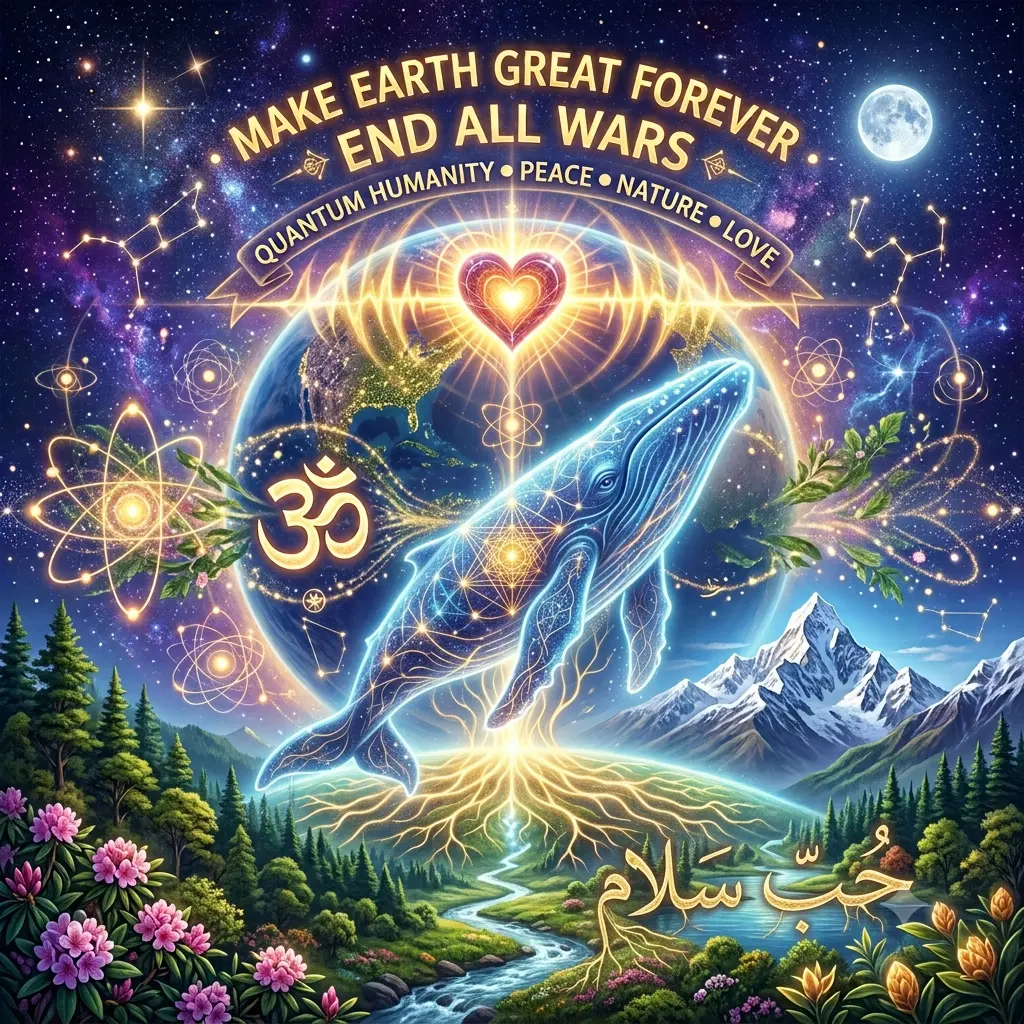
Philosophy of Light and a New Foundation for Global Peace – The Quantum Poetic Mirror: The ‘NEPAL Paradigm’
Abstract:
The contemporary global order stands at the precipice of a multidimensional existential polycrisis. On one hand, the looming spectre of World War III (WW3), climate catastrophe, the unchecked explosion and potential collapse of Artificial Intelligence (AI Crash), geomagnetic excursions (Electromagnetic Flip), and trans-Himalayan ecological destabilisation threaten the survival of humanity.
On the other hand, oligarchic hegemonic dominion, systemic institutional decay, evidenced by controversies such as the Epstein affair and technological espionage/honey-trap scandals, and rising civil unrest over basic housing and livelihoods even within developed social democracies expose the profound failure of prevailing governance models.
This research article examines the original philosophical foundation of DarpanPoems, specifically Quantum Sufi Poetics and the NEPAL Paradigm. It posits that the primordial message of love emerging from the Shleshmantak forest of the Himalayas, the global diffusion of diasporic Nepali consciousness, and the solar-photon worship embedded in the Chhath festival can collectively establish a non-local, love-centric governance framework for the United Nations (UN) and global leadership, translating the vision of “MAKE EARTH GREAT FOREVER: END ALL WARS” into historical reality.
Introduction:
A World Order in Crisis and the Philosophy of ‘Understanding Love’ Beneath the dazzling facade of modern developmentalism and technological advancement lies a profound spiritual void and moral disintegration. When citizens, even in established European social democracies such as Spain, erupt onto the streets over the fundamental right to shelter, and when global power centres resort to unethical covert tactics for technological supremacy, conventional definitions of “success” and “progress” prove bankrupt.
The poetic sensibility of the present quantum ghazal intervenes at this critical historical juncture: “This is the ultimate destiny if we understand with love; if we grasp the understanding of love; if we understand love itself; if we comprehend the very essence of understanding love.” Here, “love” is not narrow romantic sentimentality, but the highest state of Quantum Entanglement, wherein the binaries of friend and foe, fidelity and rebellion, dissolve. Once human consciousness internalises this non-dual awareness, war and conflict automatically become obsolete and vanish without a trace.
From Mythological Shleshmantak Forest to the Contemporary ‘NEPAL Paradigm’: A Geography of Consciousness Nepal is not merely a geopolitical entity; it is an eternal spiritual and poetic consciousness. In the Markandeya Purana, addressing Sage Jaimini, Sage Markandeya describes Nepal as “the foremost among sacred seats (Peethas) and the supreme among pilgrimage sites (Tirthas).” The ancient Shleshmantak Forest along the banks of the Bagmati River, where Lord Shiva left Mount Kailash to dwell in bliss with Goddess Parvati, transmitted the world’s primordial message of creation, beauty, and universal affection.
In the modern era, this ancient consciousness has manifested as an unprecedented demographic and cultural phenomenon. The declaration by Manoj Bahadur Gorkha from Chittagong, Bangladesh, “In my blood flows the fragrance of Nepal, in my consciousness lives Bangladesh” (Rakte amar Nepaler gandho, chetonay Bangladesh), underscores that Nepali identity has transcended geographic borders to become a universal sensibility.
From Nobel Laureate V.S. Naipaul to prominent figures in Indian arts, politics, and administration, such as Udit Narayan Jha, Manisha Koirala, Uttar Pradesh Chief Minister Yogi Adityanath, and the historical continuity of shared surnames across both Indian and Nepali cabinets, as well as cultural discourses surrounding figures like Ani Choying Drolma, it is evident that Himalayan consciousness is deeply woven into the civilizational fabric of South Asia and the wider world.
Concurrently, from the colonial era to the present day, spanning the British Royal Army, the Indian Army, Brunei, Singapore, Hong Kong, and now both sides of the ongoing Russia-Ukraine conflict, the global presence of Nepali blood, sweat, and labor raises a profound philosophical question: If the fragrance of Nepali toil and sacrifice permeates every corner of the globe, should not a transformative wave of ‘Nepali Consciousness’ rise from every land on Earth?
DarpanPoems’ ‘NEPAL Paradigm’ answers this question directly. Within this framework, NEPAL signifies No Exit / No Exist (there is no external escape from existence; the entire cosmos is a single indivisible field) and PAL (the Conscious Caretaker of the Moment). This principle teaches that as long as humanity perceives itself as fragmented from the “Other,” war and exploitation will persist.
The Chhath Festival, Solar Worship, and the Non-Duality of Quantum Photons: Rooted deeply in the folk consciousness of Nepal and the Mithila-Bhojpuri region, the Chhath Mahaparva stands as a living testament to this quantum-spiritual philosophy. Chhath requires no priestly mediation and no ritualistic idolatry; it is the direct veneration of the Sun and Chhathi Maiya, the presiding deity of dawn’s primal rays.
Across the canvas of world history, from Ancient Egypt (Ra), Greece (Helios), and Rome (Sol Invictus), to the Maya-Aztec civilisations, the Ottoman-Sufi tradition of Noor-e-Ilahi (Divine Light), and Eurasian paganism, humanity has universally worshipped this very light in myriad forms. Modern quantum physics identifies this fundamental essence as Photons. Possessing zero rest mass, a photon transcends the conventional boundaries of space and time, binding the entire universe through energy and information.
Offering Arghya (sacred libations) to both the setting and rising sun during Chhath symbolises the acceptance of quantum Wave-Particle Duality and the cyclical completeness of existence. Just as sunlight falls equally upon palace and hut, friend and adversary, without discrimination, the message of the Quantum Poetic Mirror elevates human awareness beyond sectarian identities toward the universal language of light and illumination.
Policy Implications for Global Leadership and the United Nations (UN): Currently, the United Nations (UN) and existing global governance architectures are experiencing acute institutional fatigue because they remain anchored in nineteenth- and twentieth-century classical, mechanistic, and hegemonic models, where balance of power is equated with military and economic dominance. The philosophical framework of DarpanPoems proposes transformative structural shifts for global policymakers, intellectuals, and academics:
| Current Global Governance Model (Classical-Hegemonic) | Proposed Quantum-NEPAL Paradigm | Implications for the UN & Global Leadership |
| Dualistic & Competitive (Zero-Sum Game): An “Us versus Them” mentality among nations, driving perpetual arms races. | Non-Dual & Coexistent (Quantum Entanglement): Viewing the entire Earth as a single, indivisible living organism. | Abolishing veto-based hegemony in the UN Security Council (UNSC) to establish a collaborative Planetary Council. |
| Extractive Economy: Destruction of trans-Himalayan and global ecosystems in the name of GDP growth. | Reverence for Nature (Surya-Chhath Ethos): Recognizing rivers, solar energy, and forests as conscious, sacred entities. | Designating the Himalayas as the “Third Pole and Sacred Ecological Peace Zone” of the world. |
| Oligarchic Tech-Control: Weaponizing AI and data for surveillance, warfare, and monopolistic profit. | Human Dignity & Transparency (‘Darpan’ Ethos): Aligning technology as a mirror of truth and human consciousness. | Enacting a binding global ethical charter for AI and quantum computing that unites science with compassion (hzero). |
| Exploitation of Migrants & Labor: Reducing transnational workers to disposable economic units. | Universal Citizenship (Global Nepali Consciousness): Honoring every drop of human labor and sacrifice as foundational to world-building. | Implementing universal human rights, dignity, and peace-rehabilitation frameworks for global migrant workers and conflict-affected personnel. |
Conclusion: As humanity navigates the converging tempests of climate collapse, the threat of a third world war, and unbridled technological disruption, durable solutions cannot emerge solely from diplomatic treaties or financial packages. What is required is a fundamental transformation in the underlying grammar of human consciousness.
From the primordial message of affection in the Shleshmantak Forest to the sacred solar offerings of Chhath, and from the theoretical bridge of ‘hzero’ in quantum computing to DarpanPoems’ NEPAL Paradigm, this intellectual trajectory converges on a single truth: the salvation of Earth will not come through displays of dominance, but through comprehending the understanding of love.
If global leadership and the United Nations place this Quantum-Sufi and Himalayan consciousness at the center of global policy, ending all wars and making Earth great forever (Make Earth Great Forever: End All Wars) will cease to be a poetic aspiration and become the next historic reality of human civilisation.
क्वांटम काव्य दर्पण भावभूमि:
यही अंजाम है अगर प्यार से समझ लें। प्यार की समझ लें। प्यार को समझ लें। प्यार की समझ को समझ लें हम – दोस्ती, दुश्मनी, रिश्ते, वफ़ा, बगावत और मोहब्बत में। कायनात में दुनिया प्यार ही प्यार भरी जहाँ हो जाए, फिर जंग-ओ-जदल बे-निशाँ रह जाए ज़माने भर के लिए।
ऋषि जैमिनी को मार्कण्डेय ऋषि नेपाल के महात्म्य का वर्णन करते हुए एक महाख्यान में कहते हैं – “नेपाल पीठों में प्रथम पीठ, तीर्थों में परम-तीर्थ है। इस नेपाल तीर्थ का प्राचीन नाम श्लेष्मांतक वन था। यह शाल, ताल, तमाल, हींतताल आदि वृक्षों से भरा था। खजूर, नारंगी, नींबू के वृक्षों से भूषित था। अनेक झरनों से तथा अनेक पक्षियों के कलरव से कुंजित था।
बागमती नदी के तट पर सर्वत्र पुष्पित श्लेष्मांतक वन को देखकर, हे मुनिश्रेष्ठ, पार्वती जी के साथ शंकर जी संतुष्ट हुए और अतुल सुख प्राप्त किया। वे काशी तथा सुरम्य कैलाश छोड़कर उनके साथ महेश्वर श्लेष्मांतक वन को गए। शंकर जी अपने सेवकों से अदृश्य होकर पार्वती जी के साथ रमण करने लगे।”… नेपाल यहीं से एक प्रीति संदेश दुनिया को देता है।
“रक्ते आमार नेपालेर गंध, चेतनाय बांग्ला देश”, मनोज बहादुर गोरखा बांग्लादेश चट्टगाँव से अपनी दिल की बात खोलते हुए बीबीसी को बताते हैं। इधर आनी छोइंग डोल्मा की लुम्बिनी नियुक्ति उनकी नेपाली नागरिकता पर एक विवादास्पद विषय बनी रही। वैसे, नोबेल साहित्यिक विद्याधर सूरजप्रसाद नैपाल से लेकर उदित नारायण झा और मनीषा कोइराला भारत में चर्चित नेपाल के भारतीय कलाकार माने जाते हैं। फिर, मुख्यमंत्री योगी तो अपनी जाति और संन्यास पहचान दोनों से नेपाली-भारतीय ही हैं।
ठीक उसी तरह, सिंह, मोदी और साह जैसी जाति से देखें तो भारत-नेपाल दोनों ही मंत्रिमंडलों में दिख जाते हैं, चाहे इन्हें हम नेपाली-भारतीय या भारतीय-नेपाली जिस नज़रिए से देख लें। औपनिवेशिक युग (Colonial Era) का इतिहास दिखाता है कि नेपाली गोरखाओं ने ब्रिटिश इंडिया से लेकर आज तक ब्रिटिश रॉयल्स और इंडियन आर्मी की खिदमत जारी रखी है।
और ब्रुनेई, सिंगापुर, हांगकांग से लेकर आज रूस-यूक्रेन दोनों सेनाओं से जुड़े हुए हैं। इसी सिलसिले को वैदेशिक रोज़गार से मिलाकर देखें तो दुनिया के हर किसी कोने में नेपाली आज अपना ख़ून-पसीना और जवानी पानी करते हुए मिल जाते हैं।
इस बात ने नेपाल को एक अहम सवाल के आगे खड़ा कर दिया है कि नेपाल आज विश्व के लिए मुख़्तलिफ़ चेतना रखता है। उसकी ख़ून-पसीना ज़मीन के हर कोने से महकती है, तो क्या दुनिया की हर सरज़मीन से नेपाली चेतना की लहर उठती है?
DarpanPoems की ‘NEPAL Paradigm’ इसी बात का आग़ाज़ है, जिससे यदि हर मनुष्य प्यार की समझ बना ले, तो MAKE EARTH GREAT FOREVER: END ALL WARS की परिकल्पना दूर नहीं। आज के दौर में हम WW3, जलवायु आपदा (Climate Catastrophe), AI क्रैश, भू-चुंबकीय विचलन (Electromagnetic Flip Disaster) और ट्रांस-हिमालयी पारिस्थितिकीय चुनौती जैसे संकटों से गुज़र रहे हैं। उसी वक़्त NVIDIA हनी ट्रैप केस ने एपस्टीन (Epstein) एपिसोड ताज़ा कर दिया है।
इन समूचे मसलों पर गौर करें तो क्या आज दुनिया को हम ‘सक्सेस’ और ‘डेवलपमेंट’ की दुनिया कैसे मानें? देखते-देखते स्पेन जैसी सोशलिस्ट स्कैंडिनेवियन सोसाइटी तक में लोग अपना घर बनाने-पाने के मुद्दे को लेकर देश में आग-बबूले हो उठे हैं। क्यों ये सब नज़ारे आम हैं? इसीलिए, दुनिया भर के कुलीनतावादी वर्चस्ववादी (Oligarchic Hegemonic Dominion Based) शासन-प्रणाली के गवर्नेंस में जल्दी से वाजिब तब्दीली के बारे में, प्रोग्राम के सही मंसूबे के लिए सभी दानिशवरों (बुद्धिजीवियों) और अकादमिकों को सोच लेना चाहिए।
अभी नेपाल में छठ पावनिका (पर्व का) माहौल है। यह सूर्य को भगवान के रूप में और उसकी प्रभातीय रश्मियों के प्रकाश उज्ज्वला देवी छठी माई के स्वरूप में पूजा-अर्चना की जाती है। सूर्य प्रकाश अल्लाह, गॉड और दुनिया के हर धर्म में किसी-न-किसी तरह इबादत की जाती है, वह चाहे मिश्र हो, यूनानी हो, रोमानी हो, उस्मानी हो, माया, एज़्टेक हो या आयरिश-यूरेशियन पगनिज़्म हो। प्रकाश के फोटॉन्स आज की क्वांटम फ़िज़िक्स का मरकज़ भी हैं। क्या यह सूर्य की आराधना दुनिया को प्रेम और बोध की समझ हमारी प्रस्तुत नज़्म के संदेश की भाँति समझा पाएगी?
Philosophy of Light and a New Foundation for Global Peace: प्रकाश-दर्शन और वैश्विक शांति का नया अधिष्ठान – क्वांटम काव्य दर्पण भावभूमि: ‘NEPAL Paradigm’,
शोध सारांश (Abstract):
समकालीन वैश्विक व्यवस्था एक बहु-आयामी अस्तित्वगत संकट (Existential Polycrisis) के मुहाने पर खड़ी है।
एक ओर तृतीय विश्व युद्ध (WW3) की आशंकाएँ, जलवायु आपदा (Climate Catastrophe), कृत्रिम बुद्धिमत्ता का विस्फोट एवं संभावित पतन (AI Crash), भू-चुंबकीय विचलन (Electromagnetic Flip) और ट्रांस-हिमालयी पारिस्थितिक असंतुलन मानवता के अस्तित्व को चुनौती दे रहे हैं; वहीं दूसरी ओर कुलीनतावादी वर्चस्व (Oligarchic Hegemonic Dominion), संस्थागत नैतिक पतन (जैसे एपस्टीन प्रकरण और तकनीकी जासूसी/हनी-ट्रैप विवाद) तथा विकसित समाजों में भी बुनियादी आवास और आजीविका को लेकर पनपता जनाक्रोश वर्तमान शासन-प्रणाली की विफलता को उजागर करता है।
यह शोध-निबंध DarpanPoems के मौलिक दार्शनिक अधिष्ठान, क्वांटम सूफी पोएटिक्स और NEPAL Paradigm का विश्लेषण करता है। यह लेख प्रतिपादित करता है कि हिमालय की श्लेष्मांतक वन-भूमि से उपजा प्रीति-संदेश, प्रवासी नेपाली चेतना का वैश्विक प्रसार, और छठ महापर्व में निहित सौर-ऊर्जा (फोटॉन) की उपासना मिलकर संयुक्त राष्ट्र (UN) तथा वैश्विक नेतृत्व के लिए एक ऐसे ‘अ-द्वैत और प्रेम-केंद्रित’ (Non-local, Love-centric) शासन मॉडल की आधारशिला रख सकते हैं, जो “MAKE EARTH GREAT FOREVER: END ALL WARS” के संकल्प को यथार्थ में बदल सके।
१. भूमिका: संकटग्रस्त विश्व-व्यवस्था और ‘प्यार की समझ’ का दर्शन: आधुनिक विकासवाद और प्रौद्योगिकी की चकाचौंध के भीतर एक गहरा शून्य और नैतिक विघटन छिपा हुआ है। जब यूरोप के सामाजिक-लोकतांत्रिक माने जाने वाले देशों (जैसे स्पेन) में भी नागरिक अपने सिर पर छत के बुनियादी अधिकार के लिए सड़कों पर उबल पड़ते हैं, और जब वैश्विक शक्ति-केंद्र तकनीकी वर्चस्व के लिए अनैतिक हथकंडों का सहारा लेते हैं, तब ‘सफलता’ और ‘विकास’ की प्रचलित परिभाषाएँ निरर्थक सिद्ध होती हैं।
प्रस्तुत क्वांटम ग़ज़ल की भावभूमि इसी ऐतिहासिक मोड़ पर एक दार्शनिक हस्तक्षेप करती है, “यही अंजाम है अगर प्यार से समझ ले। प्यार की समझ लें। प्यार को समझ ले। प्यार की समझ को समझ लें हम।” यहाँ ‘प्यार’ कोई संकीर्ण रूमानी भावुकता नहीं, बल्कि क्वांटम उलझाव (Quantum Entanglement) का वह उच्चतम स्तर है जहाँ मित्रता और शत्रुता, वफ़ा और बग़ावत के द्वैत समाप्त हो जाते हैं। जब मानव चेतना इस अ-द्वैत बोध को ग्रहण कर लेती है, तो युद्ध (जंग-ओ-जदल) स्वतः ही अप्रासंगिक और बे-निशाँ हो जाता है।
२. पौराणिक श्लेष्मांतक वन से समकालीन ‘NEPAL Paradigm’ तक: चेतना का भूगोल नेपाल केवल एक भू-राजनीतिक इकाई नहीं, बल्कि एक शाश्वत आध्यात्मिक और काव्यात्मक चेतना है। मार्कण्डेय पुराण में ऋषि जैमिनी को संबोधित करते हुए मार्कण्डेय ऋषि नेपाल को “पीठों में प्रथम पीठ और तीर्थों में परम-तीर्थ” बताते हैं। बागमती के तट पर स्थित प्राचीन श्लेष्मांतक वन, जहाँ भगवान शिव ने कैलाश छोड़कर माता पार्वती के साथ रमण किया, विश्व को सृजन, सौंदर्य और प्रीति का प्रथम संदेश देता है।
यही प्राचीन चेतना आधुनिक युग में एक अभूतपूर्व जनसांख्यिकीय और सांस्कृतिक परिघटना के रूप में प्रकट हुई है। चटगाँव (बांग्लादेश) में बैठे मनोज बहादुर गोरखा का यह कथन, “रक्ते आमार नेपालेर गंध, चेतनाय बांग्लादेश”, इस सत्य को रेखांकित करता है कि नेपाली अस्मिता भौगोलिक सीमाओं से परे एक सार्वभौमिक संवेदना बन चुकी है।
नोबेल पुरस्कार विजेता वी.एस. नायपॉल से लेकर भारतीय कला, राजनीति और प्रशासन (जैसे उदित नारायण झा, मनीषा कोइराला, या उत्तर प्रदेश के मुख्यमंत्री योगी आदित्यनाथ तथा भारत-नेपाल के मंत्रिमंडलों में साझा उपनामों की ऐतिहासिक निरंतरता) तक, और आनी छोइंग ड्रोल्मा जैसे सांस्कृतिक प्रतीकों पर होने वाले विमर्श तक, यह स्पष्ट है कि हिमालयी चेतना दक्षिण एशिया और विश्व के ताने-बाने में गहराई से गुँथी हुई है।
इसके समानांतर, औपनिवेशिक काल से लेकर आज तक ब्रिटिश रॉयल आर्मी, भारतीय सेना, ब्रुनेई, सिंगापुर, हांगकांग से होते हुए वर्तमान रूस-यूक्रेन युद्ध के दोनों मोर्चों तक नेपाली रक्त और पसीने की उपस्थिति एक गंभीर दार्शनिक प्रश्न खड़ा करती है: यदि विश्व की हर धरती पर नेपाली श्रम और बलिदान की सुगंध बिखरी है, तो क्या विश्व की हर सरज़मीं से एक नई ‘नेपाली चेतना’ (NEPAL Consciousness) की लहर नहीं उठनी चाहिए?
DarpanPoems का ‘NEPAL Paradigm’ इसी प्रश्न का उत्तर है, जहाँ NEPAL का तात्विक अर्थ है: No Exit / No Exist (अस्तित्व का कोई बाहरी पलायन नहीं, संपूर्ण ब्रह्मांड एक ही अविभाज्य क्षेत्र है) और PAL (वर्तमान क्षण का चैतन्य संरक्षक – Conscious Caretaker of the Moment)। यह सिद्धांत सिखाता है कि जब तक हम स्वयं को दूसरों से अलग मानते रहेंगे, तब तक युद्ध और शोषण जारी रहेंगे।
३. छठ महापर्व, सौर-उपासना और क्वांटम फोटॉन का अद्वैत: नेपाल और मिथिला-भोजपुरी क्षेत्र की लोक-चेतना में रचा-बसा छठ महापर्व इस क्वांटम-आध्यात्मिक दर्शन का जीवंत प्रमाण है। छठ में न किसी पुरोहित की मध्यस्थता है, न मूर्ति-पूजा का आडंबर; यहाँ प्रत्यक्ष सूर्य और उनकी प्रातःकालीन रश्मियों की अधिष्ठात्री छठी माई की उपासना की जाती है।
विश्व इतिहास के फलक पर देखें तो प्राचीन मिस्र (Ra), यूनान (Helios), रोम (Sol Invictus), माया-एज़्टेक सभ्यता, उस्मानी-सूफ़ी परंपरा के नूर-ए-इलाही (Divine Light) और यूरेशियन पगनिज़्म तक, संपूर्ण मानवता किसी न किसी रूप में इसी प्रकाश की इबादत करती रही है। आधुनिक क्वांटम भौतिकी इसी प्रकाश को फोटॉन (Photons) के रूप में देखती है। फोटॉन का कोई विराम द्रव्यमान (Rest Mass) नहीं होता; वह समय और स्थान की सीमाओं से मुक्त होकर समूचे ब्रह्मांड को सूचना और ऊर्जा से जोड़ता है।
छठ पर्व में डूबते और उगते दोनों सूर्यों को अर्घ्य देना क्वांटम भौतिकी के तरंग-कण द्वैत (Wave-Particle Duality) और जीवन-मृत्यु की चक्रीय पूर्णता का स्वीकरण है। जिस प्रकार सूर्य का प्रकाश बिना किसी भेदभाव के महल और झोपड़ी, दोस्त और दुश्मन पर समान रूप से बरसता है, उसी प्रकार क्वांटम काव्य दर्पण का संदेश भी मनुष्य को संकीर्ण पहचानों से ऊपर उठाकर ‘प्रकाश और बोध’ की सार्वभौमिक भाषा सिखाता है।
४. वैश्विक नेतृत्व और संयुक्त राष्ट्र (UN) के लिए नीतिगत निहितार्थ (Implications): वर्तमान में संयुक्त राष्ट्र (UN) और वैश्विक शासन-प्रणाली (Global Governance) अपने सबसे कमजोर दौर से गुजर रही है, क्योंकि वह उन्नीसवीं और बीसवीं सदी के क्लासिकल, यांत्रिक और वर्चस्ववादी (Hegemonic) मॉडल पर टिकी हुई है जहाँ शक्ति संतुलन का अर्थ सैन्य और आर्थिक दबदबा माना जाता है। DarpanPoems की यह दार्शनिक भावभूमि वैश्विक नीति-निर्माताओं और बुद्धिजीवियों (दानिशवरों व अकादमीशियनों) के समक्ष निम्नलिखित क्रांतिकारी सुधारों का प्रस्ताव रखती है:
| वर्तमान वैश्विक शासन मॉडल (Classical-Hegemonic) | प्रस्तावित क्वांटम-नेपाल प्रतिमान (Quantum-NEPAL Paradigm) | संयुक्त राष्ट्र (UN) एवं विश्व नेतृत्व के लिए निहितार्थ |
| द्वैतवादी और प्रतिस्पर्धी (Zero-Sum Game): राष्ट्रों के बीच ‘हम बनाम वे’ की मानसिकता और हथियारों की होड़। | अ-द्वैत और सह-अस्तित्व (Quantum Entanglement): संपूर्ण पृथ्वी को एक अविभाज्य जीवंत तंत्र मानने की दृष्टि। | सुरक्षा परिषद (UNSC) के वीटो-आधारित वर्चस्व को समाप्त कर एक सहयोगात्मक ‘प्लैनेटरी काउंसिल’ का गठन। |
| प्रकृति का दोहन (Extractive Economy): विकास के नाम पर ट्रांस-हिमालयी और वैश्विक पारिस्थितिकी का विनाश। | प्रकृति की उपासना (Surya-Chhath Ethos): नदी, सूर्य और वनस्पति को चैतन्य सत्ता मानकर संरक्षण। | हिमालय को ‘विश्व का तृतीय ध्रुव और पवित्र शांति क्षेत्र’ (Sacred Ecological Zone) घोषित करना। |
| तकनीकी कुलीनतंत्र (Oligarchic Tech-Control): AI और डेटा का उपयोग निगरानी, युद्ध और मुनाफाखोरी के लिए। | मानवीय गरिमा और पारदर्शिता (‘Darpan’ Ethos): प्रौद्योगिकी को मानव चेतना और सत्य के दर्पण के रूप में ढालना। | AI और क्वांटम कंप्यूटिंग के नियमन हेतु एक वैश्विक नैतिक संहिता, जो ‘hzero’ की भांति विज्ञान को करुणा से जोड़े। |
| शरणार्थी और प्रवासी शोषण: श्रमिकों को केवल सस्ते मानव संसाधन के रूप में देखना। | सार्वभौमिक नागरिकता (Global Nepali Consciousness): श्रम और पसीने की हर बूंद को विश्व-निर्माण का आधार मानना। | वैश्विक प्रवासी श्रमिकों और युद्ध-प्रभावित सैनिकों के लिए सार्वभौमिक मानवाधिकार एवं शांति-पुनर्वास नीति। |
५. निष्कर्ष (Conclusion): आज जब मानवता जलवायु परिवर्तन, संभावित तृतीय विश्व युद्ध और अनियंत्रित प्रौद्योगिकी के भँवर में फँसी हुई है, तब समाधान केवल नई संधियों या आर्थिक पैकेजों से नहीं निकल सकता। इसके लिए मानवीय चेतना के बुनियादी व्याकरण में परिवर्तन अनिवार्य है।
श्लेष्मांतक वन के आदिम प्रीति-संदेश से लेकर छठ के पावन अर्घ्य तक, और आधुनिक क्वांटम कंप्यूटिंग के ‘hzero‘ से लेकर DarpanPoems के NEPAL Paradigm तक यह संपूर्ण वैचारिक यात्रा हमें एक ही सत्य की ओर ले जाती है: पृथ्वी का उद्धार शक्ति के प्रदर्शन से नहीं, बल्कि ‘प्यार की समझ’ को समझ लेने से होगा। यदि विश्व नेतृत्व और संयुक्त राष्ट्र इस क्वांटम-सूफी और हिमालयी बोध को अपनी नीतियों का केंद्र बना लें, तो युद्धों का अंत और शाश्वत वैश्विक शांति (Make Earth Great Forever: End All Wars) केवल एक काव्यात्मक कल्पना न रहकर मानव सभ्यता का अगला ऐतिहासिक यथार्थ बन जाएगी।
Next Read: NEPAL Paradigm