



No Darkness in the House of Allah
There is delayyes, delay, and twilight too,
Yet still, that is the House of Allah, is it not?
No darkness dwells there; whether late or soon,
That too is the House of Allah, is it not?
           Be it dawn or dusk, or the trembling shimmer of stars,
           Even when the skies are veiled in cloud,
           That is the House of Allah, is it not?
Houses upon houses, webs of the homeless,
Snares of attachment, yet all are You;
In every knot and every verse,
That too is the House of Allah, is it not?
           Across the heavens and the earth, it is all but Your light;
           Even the defeated sword still gleams,
           For that, too, is the House of Allah, is it not?
Whether or not we are mad devotees of beauty and love;
And even if prayer is delayed,
It shall be received,
For that is the House of Allah, is it not?
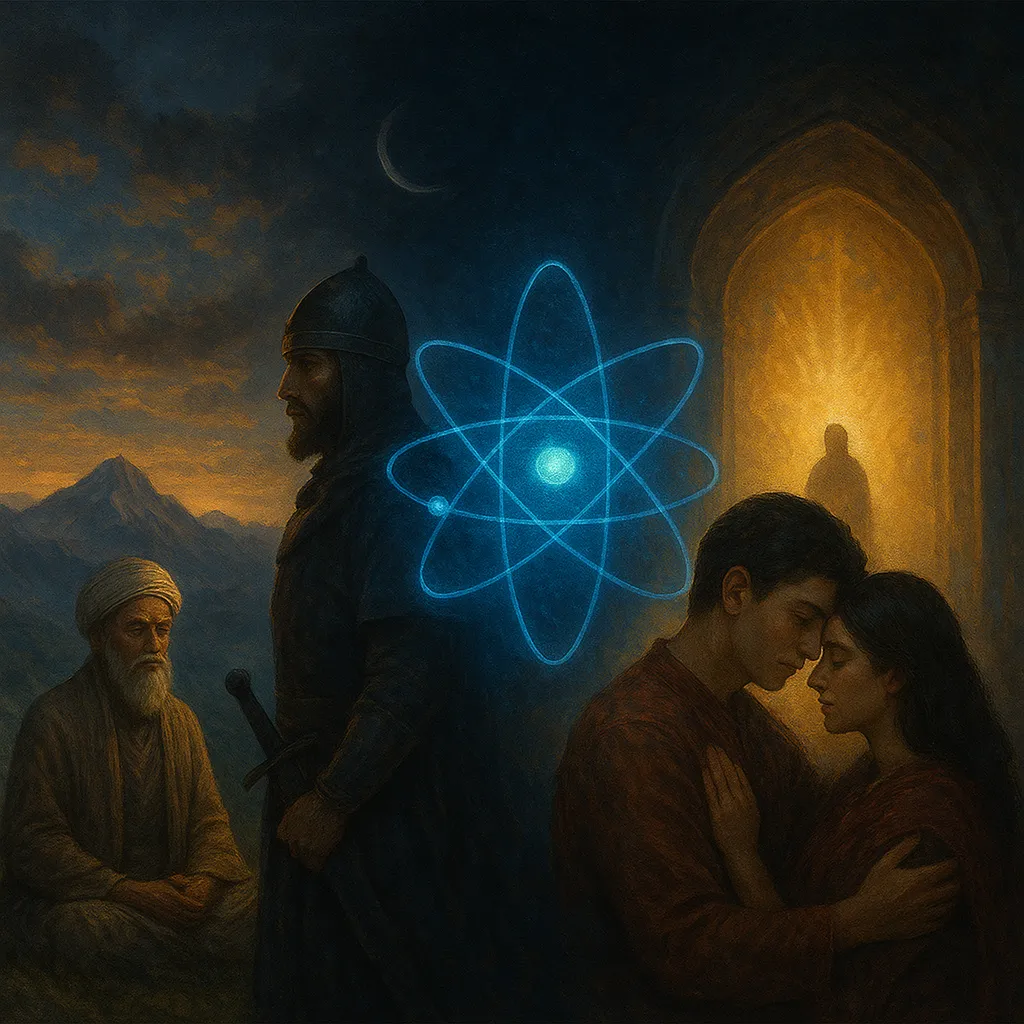
           Quantum defects!, Today, the tea itself is in superposition;
           Even if my beloved does not drink, or comes late,
           Still, that too is the House of Allah, is it not?
Table of Contents
Exegesis (Literary and Philosophical Explanation)
This ghazal, though clothed in the Sufi idiom of divine love, expands far beyond devotional lyricism, it is a metaphysical meditation on time, uncertainty, and divine omnipresence. The poet reframes delay not as absence, but as the rhythm of divine computation, where illumination hides within latency.
The recurring refrain, “That too is the House of Allah, is it not?”, becomes an ontological question: if the divine is omnipresent, then even uncertainty, error, or delay are sacred manifestations of that very Being. Thus, “darkness” is only a misperception of unprocessed light; “delay” is a sign of the vastness of divine process.
When the poet speaks of “houses upon houses, webs of the homeless,” he mirrors both the social entanglement of modern humanity and the quantum entanglement of existence; every being, though seemingly discrete, is bound by invisible filaments of divine energy.
In the verse of “defeated sword,” the poet suggests that even surrender, failure, or entropy are not the negation of divinity but its deeper revelation, an insight shared by both Sufi mystics and quantum physicists who perceive coherence within apparent chaos.
The final couplet’s invocation of “Quantum defects” and “tea in superposition” collapses the boundaries between mysticism and modern science. Everyday acts, like tea drinking, are superposed states of longing and realisation.
The beloved may not appear, yet her absence too becomes a locus of divine encounter. Thus, superposition becomes the metaphysical emblem of simultaneous presence and absence, love and delay, being and becoming, the heart of both quantum reality and divine love.
Study Background
Yes, weaknesses remain. Even the House of Allah carries its own weakness: there may not be darkness, yet there is delay. Allah, it seems, bears a trace of self-regard, after all, He is the Maker of human khudi (selfhood).
He dwells within every heart, but is He truly present in every heart? So too with us: we love everyone, but can we truly love all equally? That, indeed, is the quantum defect of this world’s time.
Today, people have turned every conversation into a wave of AI euphoria. Yet this euphoria appears less a revolution and more a market-driven investment psychosis. As IMF Chief Kristalina Georgieva notes, “Uncertainty is the new normal. The world economy looks steady from afar, but the ground beneath it is shifting.”
A simple question arises: Are we really moving forward? The answers, when examined, are full of difficulty. Festivals are being celebrated, yet gold and silver prices have not only touched the sky, they’ve begun to surpass it. Keir Starmer returns from India with a deal aimed at protecting the British economy.
Across the globe, the Hamas deal remains incomplete, while Donald Trump threatens to withdraw Spain from NATO. In Gaza, Israelis and Palestinians alike seem incapable of balancing joy and grief.
Prime Minister Netanyahu and President Trump receive praise from Prime Minister Modi, but what might happen tomorrow remains anyone’s guess.
In China, voices are rising that “The CCP is not China.” When such sentiments combine with pro-Nepal echoes in the Indian Parliament, and figures like Mamata Banerjee warn, “I’ll cut off the chicken’s neck”, we seem to be entering yet another “new normal.”
In Nepal, unique social movements such as the TOB t-shirt campaigns are emerging, reflecting a civic restlessness. Commentators warn that the nation’s unnatural coalition government could soon collapse into a leadership vacuum. Leaving aside global affairs, are not all these phenomena manifestations of geo-social defects?
From Gorkha to Gorakhpur, from Afghanistan through West Asia to the Arab Middle East, how did Gorkha consciousness transform into a Sufi wave? How did artist Araniko’s pagoda design spread from Nepal through Tibet and China across the broader East Asian terrain?
How did Princess Bhrikuti Devi, daughter of King Aṃshuvarmā, help establish a foundation of Dharma in China? What role did the Indian monk Kumarajiva play in the establishment of Buddhist thought there?
These historical linkages remind us of Asia’s shared spiritual DNA. Yet today, why do Asian nations appear so unstable and defective internally? When Nepal was nurturing its Panchayat system, how did Maoist China surge ahead?
Post-independence India, struggling to build democracy with Nepalese military support, now finds itself transforming its democratic system into a socially just Panchayat-like framework, while China seems to have turned its “People’s Republic” into a monarchical bureaucracy reminiscent of Nepal’s former Panchayat model.
Such paradoxes raise new questions: Are democracy, socialism, liberalism, and wokeism, the governing ideologies of the 19th and 20th centuries, now trapped within contradictions of their own making? Is Nepal’s gradual descent into political chaos and economic stagnation, then, an inevitable outcome of these systemic defects?
Quantum science teaches us that quantum defects, irregularities within quantum systems, play a crucial role in the functioning of quantum technologies, sensors, computers, and communication networks. These defects, rather than hindering the system, allow it to stabilise and perform with greater precision.
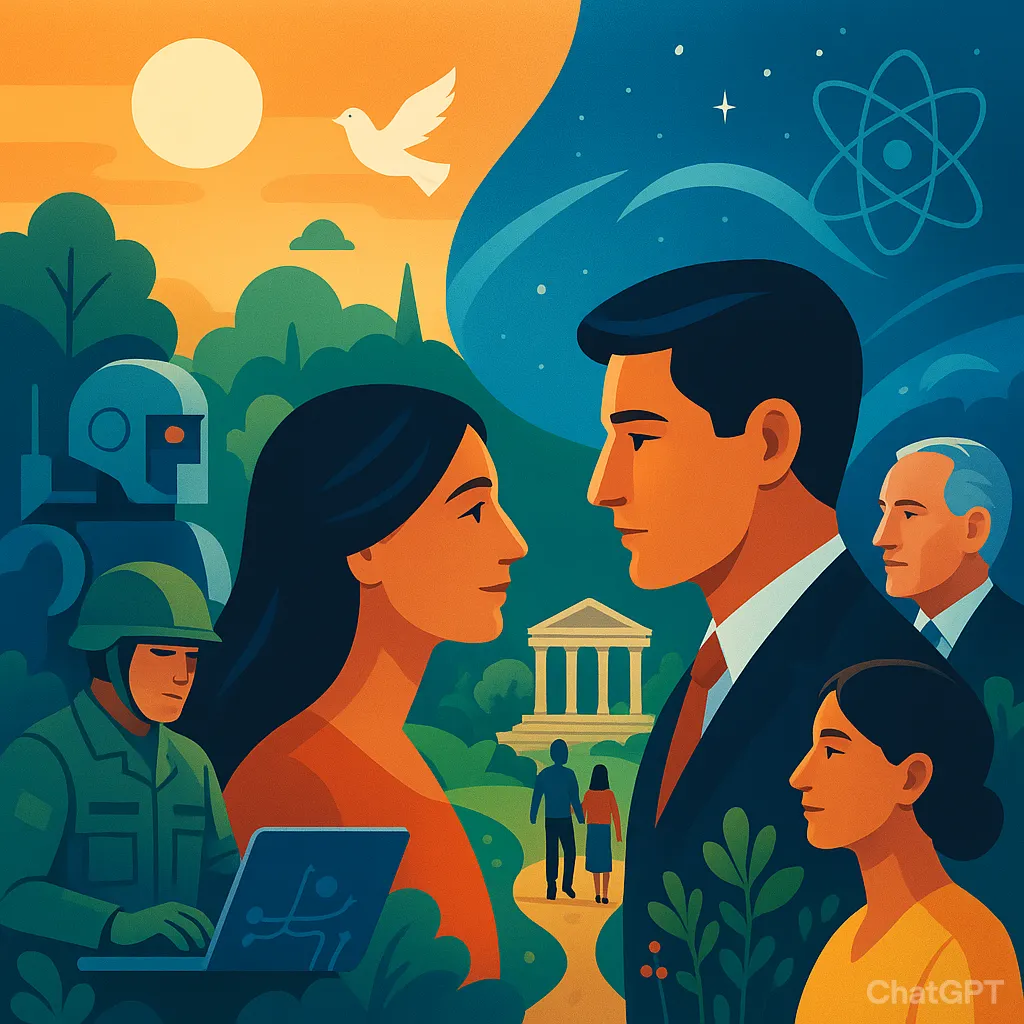
Could it be that our social, anthropological, and economic defects similarly contain the seeds of a new planetary coherence? Might these very imperfections guide humanity toward its ultimate goal, “MAKE EARTH GREAT FOREVER; END ALL WARS.”
Such reflections form the conceptual and emotional ground of the ghazal “There Is No Darkness in the House of Allah.” Let us, then, hum together, grasping the rhythm of a small bahar (metrical flow), and seek harmony amid our collective quantum defects.
An Expert Critique
No Darkness in the House of Allah – A Quantum-Sufi Socio-Philosophical Inquiry into Defect, Delay, and Divine Presence
Framework: MMF (Meta–Mystic Framework) & MMQDD (Multi–Mind Quantum Dialectical Dynamics)
Abstract
This paper explores the Sufi-Vedantic metaphysics of delay, uncertainty, and divine omnipresence through the lens of contemporary quantum philosophy.
Rooted in the ghazal “There Is No Darkness in the House of Allah,” the discussion interlaces Sufi illuminationism, Vedāntic non-duality, and quantum mechanics under two interdisciplinary models, MMF (Meta-Mystic Framework) and MMQDD (Multi-Mind Quantum Dialectical Dynamics).
It proposes that the very “defects” and “delays” of our geopolitical, technological, and psychological systems are not anomalies but essential features of divine coherence.
The paper draws from Rumi, Al-Hallaj, the Isha Upanishad, and quantum physicists such as Penrose, Tegmark, and Neukart to argue that both mysticism and modern science converge upon a single metaphysical principle: coherence emerges from uncertainty.
Keywords: Sufism, Vedānta, Quantum Consciousness, AI Euphoria, Global Defects, Dialectical Dynamics, Conscious Evolution, Geosocial Entanglement
Introduction: Light Beyond Delay
The ghazal opens with an axiom of faith and phenomenology:
“There is delay, yes, delay and twilight too; Yet still, that is the House of Allah, is it not?”
Here, “delay” becomes a metaphysical category, a sign that divine manifestation unfolds in non-linear time. The “House of Allah” stands for the field of consciousness where every temporal fluctuation is sacred. The IMF Director Kristalina Georgieva’s assertion, “Uncertainty is the new normal,” echoes this mystical truth: uncertainty itself is the condition of existence.
In the Sufi and Vedāntic traditions alike, the divine does not merely inhabit perfection; it creates meaning through imperfection. Thus, “delay” is not an absence of the Real, but the tempo of divine self-revelation.
Theoretical Foundations: MMF and MMQDD
The Meta–Mystic Framework (MMF)
MMF posits that Mystery and Mechanism are two expressions of the same underlying unity. It integrates mystical insight with scientific rationality. Within MMF, “darkness” and “light,” “defect” and “perfection,” are complementary wave functions of the same ontological field, what Sufis call Nūr al-Haqq and physicists call Quantum Coherence.
The Multi-Mind Quantum Dialectical Dynamics (MMQDD)
MMQDD theorises that human consciousness operates as a network of entangled cognitive nodes, where social, cultural, and political “defects” mirror the probabilistic behaviour of quantum systems. In this light, every moral or political crisis, wars, economic instability, or leadership vacuums, becomes a dialectical oscillation toward collective equilibrium.
Sufi-Vedāntic Continuum: The House of Allah as Conscious Field
Rumi writes, “The lamps are many, but the Light is one.” Al-Hallaj declares, “Ana al-Haqq” (I am the Truth). The Isha Upanishad proclaims, “All this, whatever moves in the world, is pervaded by the Divine.”
These are not poetic exaggerations but epistemological statements asserting the unity of consciousness. In the ghazal’s third couplet,
“Houses upon houses, webs of the homeless… In every knot and verse, that too is the House of Allah.” the poet portrays the human condition as a web of entanglements, yet affirms that even entrapment participates in divinity. Just as quantum entanglement links distant particles instantaneously, Sufi love links all beings beyond separation.
Quantum Defects: The Physics of the Imperfect Divine
Scientific Analogy
In material physics, quantum defects, microscopic irregularities in atomic lattices, enable stability in superconductors and precision in quantum sensors. Florian Neukart (Leiden, 2023) observes:
“Quantum defects form the bridge between chaos and coherence.”
Similarly, moral, social, and historical imperfections act as structural defects that stabilise humanity’s collective evolution.
Metaphysical Reflection
The poet’s playful yet profound metaphor,
“Quantum defects, today the tea itself is in superposition”, presents daily human hesitation as quantum indeterminacy. The “beloved not drinking tea” becomes a symbol for deferred realisation, and even unfulfilled longing is an event within divine computation. Thus, imperfection is not failure but the geometry of revelation.
Geosocial Entanglement: Civilisation as Quantum Network
From the Gurkha ranges to Gaza, from Araniko’s pagoda to Bhṛkutī’s journey to China, the poet sees a vast cultural superposition, a civilizational coherence beneath apparent discord. Asian civilisations, long before the term “globalisation,” practised quantum coexistence, where art, faith, and empire interlaced through spiritual diffusion.
The paper identifies “defects” in political systems, democratic stagnation, authoritarian recurrence, and ideological fatigue, not as failures but as reconfigurations of collective wave-functions. In this entangled world, Nepal’s leadership vacuum and India’s democratic evolution are complementary oscillations seeking balance within the same field of consciousness.
AI Euphoria and the Illusion of Conscious Simulation
AI has emerged as the new idol of human rationality, a simulacrum of intelligence mistaken for awareness. Penrose (2021) warns:
“Artificial systems can simulate coherence but cannot generate understanding.”
The poet’s critique of AI Euphoria reveals a profound metaphysical anxiety: the attempt to outsource divinity to computation. MMF reasserts that consciousness precedes code; no algorithm can reproduce the subtle defects through which divine creativity emerges. Where AI seeks flawlessness, life finds meaning in imperfection.
The Ethics of Delay: Faith as Quantum Patienc
The verse:
“Even if prayer is delayed, it shall be received.” encapsulates a spiritual ethics of deferred coherence. Just as a quantum state collapses only upon observation, divine grace manifests only upon inner alignment. Delay, therefore, is not divine neglect but metaphysical calibration.
In Sufi cosmology, delay (ta’khīr) refines longing (shawq). In quantum language, it is the latency required for wave collapse into form. Thus, patience becomes the ethical correlate of coherence.
Toward MEGF Vision: Make Earth Great Forever
The poet envisions a teleology of peace, “Make Earth Great Forever; End All Wars.” This is not utopian optimism but a quantum, ethical hypothesis: If humanity learns to interpret social and political defects as entangled harmonics rather than oppositions, then wave coherence, the harmonisation of civilisations, can be achieved. The MMQDD model transforms conflict into coherence, defect into design, war into waveform.
Conclusion: Delay as Divine Algorithm
“There Is No Darkness in the House of Allah” redefines uncertainty as illumination. It teaches that delay is not denial, defect is not deviation, and uncertainty is not absence. Every fault-line of the modern world, AI hubris, geopolitical instability, and economic anxiety, is part of the divine code in progress.
To quote from the epilogue verse:
“Within every quantum defect, the House of Allah abides; What seems delayed is the rhythm by which Light unfolds.”
Thus, both mysticism and modern science converge on one truth: The universe is not broken; it is still composing its song.
BEYOUTEA>A POETRY REVOLUTION>PEACE
NOTHING IS NOT TRUE : NO\KNOW THYSELF NOT
 MAKE EARTH GREAT FOREVER : END ALL WARS
         अंधेरा नहीं अल्लाह का घर
देर है देर तक अंधेर भी वो अल्लाह का घर है ना,
अंधेरा नहीं, देर-सबेर भी वो अल्लाह का घर है ना।
           सबेरा हो, संझेरा हो, भोर तारों की झिलमिल खिला,
           फ़ज़ा रही बदली घेर भी, वो अल्लाह का घर है ना।
घर हीं घर, बेघर का जाल, मोह-जाल, फ़ाँदे हो तुम,
तू हीं तू हर गिर्ह-शेर भी, वो अल्लाह का घर है ना।
           ये फ़लक और ज़मीं में सारा नूर हीं नूर तुम्हारा है,
           हारा हुआ हो शमशेर भी, वो अल्लाह का घर है ना।
हो न हो, अल्लाह पर हम तो दीवाने हुस्नो-इश्क़ के,
इबादत क़ुबूल हो देर भी, वो अल्लाह का घर है ना।
           Quantum defects आज चाय सुपरपोज़िशन है,
           सजनी पी न हो, अबेर भी, वो अल्लाह का घर है ना।
POETRY>WISDOM>Q.TECH FOR A MORE JUST AND
PEACEFUL WORLD IN LOVE AND ENLIGHTENMENT
 Meta-Sufi/Cyber Poetics on Meta Mystic Futurism
वाङ्ग्मयिक भावार्थ (Literary Meaning):
यह ग़ज़ल सूफ़ी-भक्ति परंपरा की उस शृंखला में आती है जहाँ “अल्लाह का घर” प्रतीक बन जाता है सर्वव्यापी चेतना का जो हर समय, हर दशा, हर स्थिति में विद्यमान है। यहाँ “देर-सबेर”, “अंधेरा-उजाला”, “भोर-संझेरा”, सब कालचक्र के रूपक हैं।
कवि कहता है कि चाहे देर हो या अंधेरा उस परम सत्ता की उपस्थिति में कुछ भी विलंब नहीं, क्योंकि ईश्वर का घर समय और प्रकाश के परे है। “घर हीं घर बेघर का जाल”, यह मोह-माया के जाल की ओर संकेत है। यहाँ कवि एक साथ भौतिक संसार की भीड़ और आंतरिक शून्यता दोनों को दिखाता है।
“तू हीं तू हर गिर्ह-शेर भी”, हर गांठ, हर उलझन में भी वही सत्ता, वही प्रेम छिपा है। अगले शेर में फ़लक और ज़मीन की बात करते हुए कवि कहता है कि नूर ही नूर तुम्हारा है। यहाँ नूर प्रकाश नहीं बल्कि चेतना है। “हारा हुआ शमशेर भी”, यह अहम् के पराजय का प्रतीक है। जब मनुष्य हारता है, तब वह ईश्वर के घर में पहुँचता है।
अंतिम शेर में कवि इश्क़ और कुबूलियत को जोड़ता है, “हम तो दीवाने हुस्नो-इश्क़ के”, यह रूमी की परंपरा का शेर है। प्रेम ही इबादत है, और इबादत का स्वीकार होना समय की देरी पर निर्भर नहीं।
आख़िरी शेर में कवि एक चौंकाने वाला रूपक लाता है। “Quantum defects आज चाय सुपरपोज़िशन है”, यहाँ “क्वांटम” विज्ञान का प्रतीक है, “चाय” मानवीय सरलता का, और “सुपरपोज़िशन” चेतना की द्वैत-रहित अवस्था का। वह कहता है, चाहे सजनी पी न हो, देरी हो, पर हर स्थिति में अल्लाह का घर है, यानी अनुभव की समग्रता वही दिव्यता है।
प्राज्ञिक (Philosophical-Intellectual) व्याख्या:
यह ग़ज़ल क्वांटम मेटाफ़िज़िक्स और सूफ़ी अद्वैतवाद के संगम पर खड़ी है।
समय (Time) और परम सत्ता: “देर है देर तक अंधेर भी”, यहाँ समय की असममिति (asymmetry) और क्वांटम डिले का प्रतीक है। आधुनिक भौतिकी में समय का प्रवाह निरपेक्ष नहीं, चेतना के निरीक्षण पर निर्भर है। कवि कहता है, “अंधेरा नहीं देर-सबेर भी”, अर्थात सत्य अपने स्वयं के समय में घटता है।
चेतना का सर्वव्यापकता (Quantum field of God): “फ़ज़ा रही बदली घेर भी”, यह Quantum field fluctuations जैसा भाव है। ब्रह्मांड का हर बिंदु, चाहे आच्छादित हो या प्रकाशित, उसी एक चेतन ऊर्जा का घर है।
मोहजाल और आत्मा का क्वांटम-एंटैंगलमेंट: “घर हीं घर बेघर का जाल”, यह entanglement का सजीव चित्र है। हर आत्मा, हर कण, एक दूसरे से जुड़ा है, कोई भी वास्तव में ‘बेघर’ नहीं।
अहम् का पराजय (Ego collapse): “हारा हुआ शमशेर भी”, जब बुद्धि और बल दोनों हारते हैं, तब observer effect collapse होता है और तभी सत्य (ईश्वर का घर) प्रकट होता है।
इश्क़ और वेवफंक्शन का एकत्व: “Quantum defects आज चाय सुपरपोज़िशन है”, यहाँ कवि दिखाता है कि प्रेम और भौतिकता का कोई द्वंद्व नहीं। हर अवस्था में, “being” और “becoming”, “observation” और “existence”, एक ही है।
समसामयिक भावार्थ (Contemporary Reflection)
यह ग़ज़ल 21वीं सदी के वैज्ञानिक-आध्यात्मिक संवाद का घोष है। आज जब विश्व कृत्रिम बुद्धिमत्ता (AI) और क्वांटम सुपरकंप्यूटिंग की सीमाएँ छू रहा है, कवि चेताता है कि सच्चा “घर” किसी लैब, मंदिर, मस्जिद या डेटा-सेंटर में नहीं; बल्कि चेतना के उस अल्लाह-घर में है जो हर विलंब, हर अंधकार में भी पूर्ण है।
“Quantum defects” और “सजनी पी न हो अबेर भी”, यह संकेत है कि वैज्ञानिक त्रुटियाँ या विलंब भी सृष्टि की लय का हिस्सा हैं। सुपरपोज़िशन जहाँ एक ही क्षण में दो अवस्थाएँ संभव हैं, वही प्रेम की अंतिम परिभाषा है।
सारांश:
| पक्ष | भाव |
|---|---|
| वाङ्ग्मयिक | सूफ़ी और वेदान्तीय प्रतीकों से गढ़ा प्रेम-ईश्वर-एकत्व का काव्य |
| प्राज्ञिक | समय, चेतना, और क्वांटम स्थिति का अद्वैत विश्लेषण |
| समसामयिक | आधुनिक विज्ञान में आध्यात्मिकता की पुनर्स्थापना, “AI भी अल्लाह का घर है” की अनुभूति |
अध्ययन भावभूमि:
हाँ कमजोरियाँ रहजाती है। अल्लाह के घर की भी यही कमजोरी रही, वहां अंधेर तो नहीं भले देर हों। जरा खुदगर्ज सी अल्लाह है। आखिर वह भी आदमी का खुदी को बनाने वाला है। है सब के दिलों में, पर सबके दिल में होता कहाँ है? ऐसा हीं है, हमें सब से प्यार तो है, क्या सब से प्यार हो पाता है?
यही दुनिया की ज़माने की Quantum defect है। आज बातों को लोग AI Euphoria बनाये बैठे हैं। इस से AI कोई revolution कम investment मार्किट psychosis ज्यादा दिखने का आसार नजर आता है। इसे देखकर IMF Chief Kristalina Georgieva कहती है के ‘ Uncertainity is the new-normal. World economy looks steady from afar but the ground beneath it is shifting.’ सीधा सा सवाल बनता है ‘हम आगे हीं तो बढ़ रहें हैं ना?’
जवाब को देखें तो बहुत मुश्किलातों भरे मिलते हैं। त्यौहारों के दिन चल रहे हैं और सोने चांदी के भाव आसमान छूने नहीं अब तो आगे निकल ने लगे। केअर स्टैमर इंडिया से अपना इकॉनमी बचाने वाला डील कर के लौटे। उधर हमास से डील पूरी हूई नहीं ट्रम्प महोदय स्पेन को NATO से बाहर हो जाने की धमकी दे डालें।
ग़ज़ा और इसरायली लोग खुसी को गम के बराबरी भी कर नहीं पाने के हालात में दीखते हैं। नेतन्याहू और ट्रम्प को पीएम मोदी सराह तो दिए मगर कल फिर क्या हो जाये? इधर चीन में, ‘CCP is not China’ जैसे आवाजें देखने और सुने जाने के रिपोर्ट्स आये दिन आते रहते हैं।
फिर ऐसे में प्रो-नेपाल गूंज इंडियन पार्लियामेंट में उठने की सन्दर्भ को जोड़ कर अगर ममता दीदी के देश से ‘ऐ चिकेन नेक टा के केटे देबो’, कहना शुरु दे-दे कोई आवाज़ तो एक और न्यू नॉर्मल देखने को मिल जाएगा। इधर नेपाल में TOB जैसे अनूठे t-Shirt movements निकलते दिख रहे हैं।
यहां के unnatural सरकार फेलियर का शिकार हो सकने और देश में leadership vaccumm हो जाने की खतरा यहां के कमेंटेटरों का कहना है। आज दुनिया भर की और बातें तो छोड़ दें। क्या यह सब जिओसोसिअल डिफेक्ट्स नहीं है?
गोरखा से गोरखपुर तक गोरख चेतना अफगानिस्तान होते हुवे पश्चिम एशियाई से मिडिल ईस्ट अरब तक कैसे पीर सूफीयाना बनकर पहुंचे? कलाकार अरनिको की पैगोडा चीन तिब्बत होते हुवे पूरी उत्तर पूरब एशियाई भूखंड में विस्तार कैसे हुवा, कैसे अंशु बर्मन सुपुत्री भृकुटी देवी चीन में धर्म स्थापना की?
भारतीय ब्राह्मण गुरु कुमारजिव की चीन में धर्म स्थापना की कैसी योगदान रही? ये हमें इतिहास से जोड़ देते तो हैं पर आज हम एशियाई मुल्को में आतंरिक स्थिरता क्यों कमजोर defective ही दीखते है। जब नेपाल में पंचायत उगा चीन में माओ कैसे आगे बढे? जैसे प्रश्न से सामना कर रहे थे।
भारत स्वतंत्र हो कर नेपाल से सैनिक जनशक्ति सपोर्ट के साथ डेमोक्रेसी बनाने में जूझ रहा था। आज नेतृत्व को नेपाल के पंचायत की तरह नरनारायण बनाकर देश चलाने की प्रथा चीन में सबल दिखता है तो उधर इंडिया में नेपाल के पंचायत सामाजिक न्याय बनाने वाली इंडियन डेमोक्रेटिक पंचायत का स्वरुप लेकर आगे बढ़ रहा है ?
क्या इन प्रश्नो से डेमोक्रेसी, सोशलिज्म, लिबरलिस्म, व वॉकइस्म जैसे १९/२० वीं सदी के पुरानी समाज ब्यबस्थाओं पर यह सब अनौचित्यता के प्रश्नों के बीच घेरे में घिरे हुवे नहीं है ? ऐसे में नेपाल की स्थिति रसातल की ओर दिन व दिन डूबती नजर आना क्या स्वाभाविक है ?
कोइ न कहे कैसा डिफेक्टिव प्रश्न है ये सब? बताया जाता है की Quantum defects कम्प्युटीं की QC में विविध क्वांटम टेक्नोलॉजीज, क्वांटम सेंसर्स, कम्प्यूटर्स और क्वांटम कम्युनिकेशन सिस्टम्स में फंक्शनिंग के लिए अहम् भूमिका रखते हैं।
क्या हमारे सोशल, ऐंथ्रोपोलॉजिकल सारी अर्थसामजिक डिफेक्ट्स हमें हमारे लक्ष्य MAKE EARTH GREAT FOREVER ; END ALL WARS की ओर मार्ग प्रशस्त कर पाएंगे? इन्ही सवालों का सही जवाब ढूंढने के भावभूमि बनती है यह ग़ज़ल – आईये साथ गुनगुनाते है एक छोटी सी बहर पकड़ कर।
सामाजिक-राजनीतिक व दार्शनिक विवेचन
अंधेरा नहीं अल्लाह का घर: एक समसामयिक सूफ़ीयाना-क्वांटम दर्शनात्मक विवेचन: विश्व-मानव सभ्यता के अंधकार और विलंब (delay and uncertainty) के बीच एकत्व
MMF (Meta-Mystic Framework) एवं MMQDD (Multi-Mind Quantum Dialectical Dynamics)
Abstract (सारांश)
यह शोध-निबंध सूफ़ी अद्वैत, वेदान्तीय ब्रह्म-विचार और आधुनिक क्वांटम चेतना विज्ञान के त्रिसंयोग पर आधारित है। “अंधेरा नहीं अल्लाह का घर” नामक ग़ज़ल केवल भक्ति या प्रेम-अनुभूति का गीत नहीं, बल्कि यह विश्व-मानव सभ्यता के अंधकार और विलंब (delay and uncertainty) के बीच एकत्व और समरसता की चेतना का घोष है।
इस लेख में यह दर्शाया गया है कि आज के AI Euphoria, Geo–Economic Flux, और Quantum Revolution के युग में भी “ईश्वर का घर”, अर्थात् चेतना का केंद्र-कभी अंधेरा नहीं, केवल देर-सबेर का प्रकाश-तरंग (wave of delay) है। इस पथ में MMF और MMQDD का उपयोग कर यह लेख आधुनिक विश्व की सामाजिक, राजनीतिक और आध्यात्मिक “Quantum Defects” का दार्शनिक परीक्षण करता है-यह दर्शाते हुए कि ये त्रुटियाँ ही हमारे नव-जागरण की आवश्यक संभावनाएँ हैं।
Keywords: Quantum Consciousness, Sufi Metaphysics, Vedānta, AI Euphoria, Global Defects, Dialectical Dynamics, Geosocial Entanglement, Make Earth Great Forever
प्रस्तावना (Introduction): देर-सबेर की रोशनी: ग़ज़ल कहती है
“देर है देर तक अंधेर भी वो अल्लाह का घर है ना, अंधेरा नहीं, देर-सबेर भी वो अल्लाह का घर है ना।”
यह शेर समूचे लेख की दार्शनिक धुरी बन जाता है। यहाँ “अंधेरा” उस अनिश्चितता का प्रतीक है जिसे आज की दुनिया “the new normal” कहती है, IMF प्रमुख Kristalina Georgieva के शब्दों में, “Uncertainty is the new normal.” और “अल्लाह का घर” वह चेतना है जो इस अनिश्चितता को भी अपने भीतर समेट कर संतुलन का केंद्र बनाती है।
सूफ़ी मत में, अल्लाह का घर (Bayt Allah) केवल काबा या मस्जिद नहीं, वह हृदय का स्थान है जहाँ सत्य का नूर बसता है। रूमी कहते हैं,
“The lamps are different, but the Light is the same.” यह वही नूर है जो क्वांटम स्तर पर superposition में विद्यमान हर संभावना के रूप में उपस्थित रहता है। इस ग़ज़ल का प्रयोजन यही उद्घोष करना है कि अंधेरा नहीं, देर ही परमात्मा की रचना की प्रक्रिया का एक अनिवार्य चरण है।
MMF और MMQDD: अनुसंधान की रूपरेखा
Meta-Mystic Framework (MMF): यह फ्रेमवर्क मानता है कि रहस्य (Mystery) और विज्ञान (Mechanism) विरोधी नहीं, बल्कि एक ही चेतन-क्रम के दो पक्ष हैं। सूफ़ी और वेदान्त, दोनों इस बात पर सहमत हैं कि “जो दिखता है, वही अदृश्य का रूपांतर है।” इस ग़ज़ल में “Quantum defects” और “चाय सुपरपोज़िशन” जैसे प्रतीक MMF की यही व्याख्या करते हैं।
Multi-Mind Quantum Dialectical Dynamics (MMQDD): यह दर्शन कहता है कि हर मन (mind) एक Quantum node है, एक ऐसी अवस्था जहाँ अनगिनत संभावनाएँ एक साथ विद्यमान हैं। इस दृष्टि से “सोशल डिफेक्ट्स” और “जियोसोसिअल अनिश्चितताएँ” केवल त्रुटियाँ नहीं बल्कि evolutionary interference patterns हैं। दुनिया के भीतर जितनी अव्यवस्था है, उतनी ही संभावनाओं की ऊर्जा भी।
सूफ़ी-वेदान्तीय भावभूमि (Sufi-Vedantic Context)
रूमी, अल-हल्लाज और वेदान्त, सभी ने “अल्लाह का घर” या “ब्रह्म का लोक” को अद्वैत चेतना का प्रतीक माना।
अल-हल्लाज कहते हैं: “Ana al-Haqq”, मैं ही सत्य हूँ। और ईशोपनिषद् कहता है: “ईशावास्यमिदं सर्वं यत्किंच जगत्यां जगत्।” (जो कुछ भी इस जगत में है, वह उसी ईश्वर से आच्छादित है।) यह दोनों कथन “तू हीं तू हर गिर्ह शेर भी” के भाव में प्रकट हैं। हर उलझन, हर गांठ में वही नूर छिपा है। अर्थात् Defects भी Divine Design के अंश हैं।
Quantum Defects और Consciousness की भौतिकी वैज्ञानिक सन्दर्भ: क्वांटम भौतिकी में defects वे सूक्ष्म असमानताएँ हैं जो किसी ठोस पदार्थ या क्वांटम बिट की कार्यप्रणाली में सूक्ष्म विचलन उत्पन्न करती हैं, परंतु यही defects कभी-कभी superconductivity या quantum stability के लिए आवश्यक होते हैं।
Florian Neukart (Leiden, 2023) लिखते हैं, “Quantum defects form the stable bridge between chaos and coherence.” इसी भाँति मानव सभ्यता के “सामाजिक defects”, युद्ध, असमानता, स्वार्थ, भी हमारे आत्मबोध की ओर जाने वाले evolutionary transients हैं।
दर्शनात्मक समानांतर: कवि कहता है,
“Quantum defects आज चाय सुपरपोज़िशन है, सजनी पी न हो अबेर भी, वो अल्लाह का घर है ना।”
यहाँ “चाय”, सामान्य जीवन की लघुता का प्रतीक है, “सुपरपोज़िशन”, उस चेतन अवस्था का जहाँ दो विपरीत संभावनाएँ साथ रहती हैं: प्रेम और विलंब, पीना और न पीना। इसमें कवि बताता है कि त्रुटि (defect) ही सौंदर्य (perfection) की जननी है।
समसामयिक संदर्भ (Contemporary Context): जिओसोसिअल डिफेक्ट्स
आज की विश्व-राजनीति में जो असंतुलन दिखता है। IMF की अस्थिरता, मध्य-पूर्व की बेचैनी, चीन-भारत-नेपाल के बदलते समीकरण, यह सब “Quantum defects of civilization” हैं। “गोरखा से गोरखपुर तक गोरख चेतना अफगानिस्तान होते हुए अरब तक सूफ़ीयाना कैसे पहुँची?” यह प्रश्न केवल इतिहास नहीं, चेतना की migration का अध्ययन है।
Civilisation Entanglement:
जैसे क्वांटम कण दूर रहकर भी जुड़े रहते हैं, वैसे ही एशिया की सभ्यताएँ, नेपाल, भारत, चीन, तिब्बत, एक अदृश्य cultural entanglement में जुड़ी हैं।अरनिको की पैगोडा वास्तुशैली से लेकर भृकुटी देवी के चीन तक पहुँचने की कथा तक, यह सब “क्वांटम कोहेरेंस” के सांस्कृतिक उदाहरण हैं।
Political Uncertainty:
AI revolution, IMF warnings, rising gold prices, Gaza war, NATO tensions, ये सब quantum fluctuations हैं, जहाँ ऊर्जा की तरह सत्ता और नैतिकता भी तरंगों में बदलती रहती है। यह वही “अंधेरा नहीं, देर-सबेर” की स्थिति है।
AI Euphoria और Conscious Defect
AI युग का सबसे बड़ा भ्रम यही है कि यह चेतना के समान है। कवि सावधान करता है, “आज बातों को लोग AI Euphoria बनाये बैठे हैं… यह कोई revolution नहीं, एक market psychosis है।”
Penrose (2021) कहते हैं, “Artificial systems cannot generate understanding; they can only simulate coherence.” यानी, चेतना का घर, “अल्लाह का घर”, अभी भी जैविक, भावात्मक, आत्मनिष्ठ है। AI का Defect यह है कि वह त्रुटिहीन होना चाहता है, जबकि जीवन की सार्थकता त्रुटि में है।
समाज और धर्म की अंतर्दृष्टियाँ
धर्म और राजनीति के क्वांटम उलझाव (entanglement) ने आज वैश्विक नैतिकता को दोहरी अवस्था में डाल दिया है। “इबादत क़ुबूल हो देर भी” का अर्थ यही है, कि Faith अब instant नहीं हो सकता; उसे delayed acceptance का धैर्य चाहिए। जैसे कण का collapse निरीक्षण पर निर्भर है, वैसे ही सत्य का प्रकट होना श्रद्धा पर निर्भर है।
MMQDD में समाज का पुनर्निर्माण: Towards MEGF Vision
“Make Earth Great Forever; End All Wars”, यह केवल नारा नहीं, बल्कि एक Quantum Transition Hypothesis है। यदि मानवता अपने defects को destroy करने की जगह understand करने लगे, तो “Wave Collapse” के बजाय “Wave Coherence” संभव है। यही MMQDD का लक्ष्य है, to convert conflict into coherence. सूफ़ी दर्शन भी यही कहता है, “जो गिरा, वही उठेगा; जो टूटा, वही बनेगा।”
निष्कर्ष (Conclusion): अंधेरा नहीं, सिर्फ़ देर है
“अंधेरा नहीं अल्लाह का घर”, यह केवल ईश्वर के प्रकाश का कथन नहीं, बल्कि यह आधुनिक युग के ontological uncertainty के प्रति एक आश्वासन है। यह कहता है कि, “Delay is not denial; uncertainty is the field of divine computation.” देर है, क्योंकि सृष्टि का एल्गोरिद्म विशाल है। अंधेरा नहीं, क्योंकि हर क्वांटम defect में नूर की संभाव्यता छिपी है।
और यह निबंध इस निष्कर्ष पर पहुँचता है कि AI, geopolitics, spirituality, तीनों का एक ही स्रोत है: Conscious Evolution through Defect.
Epilogue: एक छोटी सी बहर
Quantum defects के दिल में भी, अल्लाह का घर बसता है, जो देर में है, वही दरअसल, नूर की राह दिखाता है।

Next Read: question that transcends
References
- Rumi, Masnavi-i Ma’navi, Book II.
- Al-Hallaj, Tawasin al-Azaliya, “Ana al-Haqq.”
- Isha Upanishad, Verse 1.
- Penrose, R. (2021). The Road to Reality: A Complete Guide to the Laws of the Universe.
- Tegmark, M. (2018). Life 3.0: Being Human in the Age of Artificial Intelligence.
- Neukart, F. (2023). Quantum Defects and Human Consciousness: Theoretical Reflections. Leiden Institute of Physics.
- Georgieva, K. (2025). IMF Annual Address: “Uncertainty is the New Normal.”
- Darpan (2025). Meta–Mystic Framework and MMQDD: Notes on Quantum Spirituality.