



  Moving Wandering Everywhere
Moving and wandering, everywhere I behold You,
Sleeping or waking, above and below, I behold You.

I rise to gaze, then sit and ponder again;
It is only You who fills the glance, I behold You.

When I behold You, I behold my very self;
Soul and cosmos descend, within, I behold You.

Such a marvellous vision has nowhere been known, O Darpan,
In Your and my reflection, in my and Your reflection, I behold You.

Before the world, we need not display our worth,
The entire encounter, in this equal measure, I behold You.

Nano-helices, spintronics, today’s steaming tea;
Beloved, I sip no change, transformed, I behold You.
Table of Contents
English Literary Explanation
This ghazal presents a rare confluence of classical and contemporary sensibilities. The “mirror” functions as the governing metaphor, signifying a medium in which the lover simultaneously perceives the beloved and his own deepest self.
The Non-Dual Union of Self and Beloved
Each couplet makes the act of “beholding” a bridge between the finite self and the infinite. The beloved’s image becomes not merely an object of aesthetic admiration but a gateway to the soul’s inner ground.
The line “When I behold You, I behold my very self” evokes the Upanishadic proclamation – tat tvam asi, “Thou art That”, where the lover and the self are two modes of a single consciousness.
Transcending Time and State
The sequence “Moving and wandering… sleeping or waking…” erases temporal and spatial boundaries. The beloved permeates every state of being, echoing the Sufi experience of ishq-e-haqiqi in which divine love saturates every moment.
Mirror and Reflection as Polysemous Symbols
Through “vision of the mirror” and “your and my reflection”, the poem makes the mirror a locus of ontological exchange. Reflection is not a mere optical effect; it is the threshold at which identity flows in both directions, dissolving the distinction between “I” and “Thou.”
Science and Poetics in Dialogue
The final couplet, “Nano-helices, spintronics, today’s steaming tea”, deftly introduces high-technology metaphors.
By weaving terms from contemporary quantum physics into the classical ghazal form, the poet extends the tradition into the twenty-first century, revealing that scientific imagination and romantic spirituality can inhabit the same poetic space.
The Beauty of Mutual Challenge
The phrase “the entire encounter, this equal measure” speaks not of conflict but of the equilibrium of attraction, love as a reciprocal force of equal magnitude.
Conclusion
This ghazal exemplifies the modern Hindi-Urdu poetic idiom at its richest: Sufi love, Vedāntic non-duality, and cutting-edge science converge to show that both spiritual longing and scientific curiosity ultimately return us to the recognition of our own deepest nature.
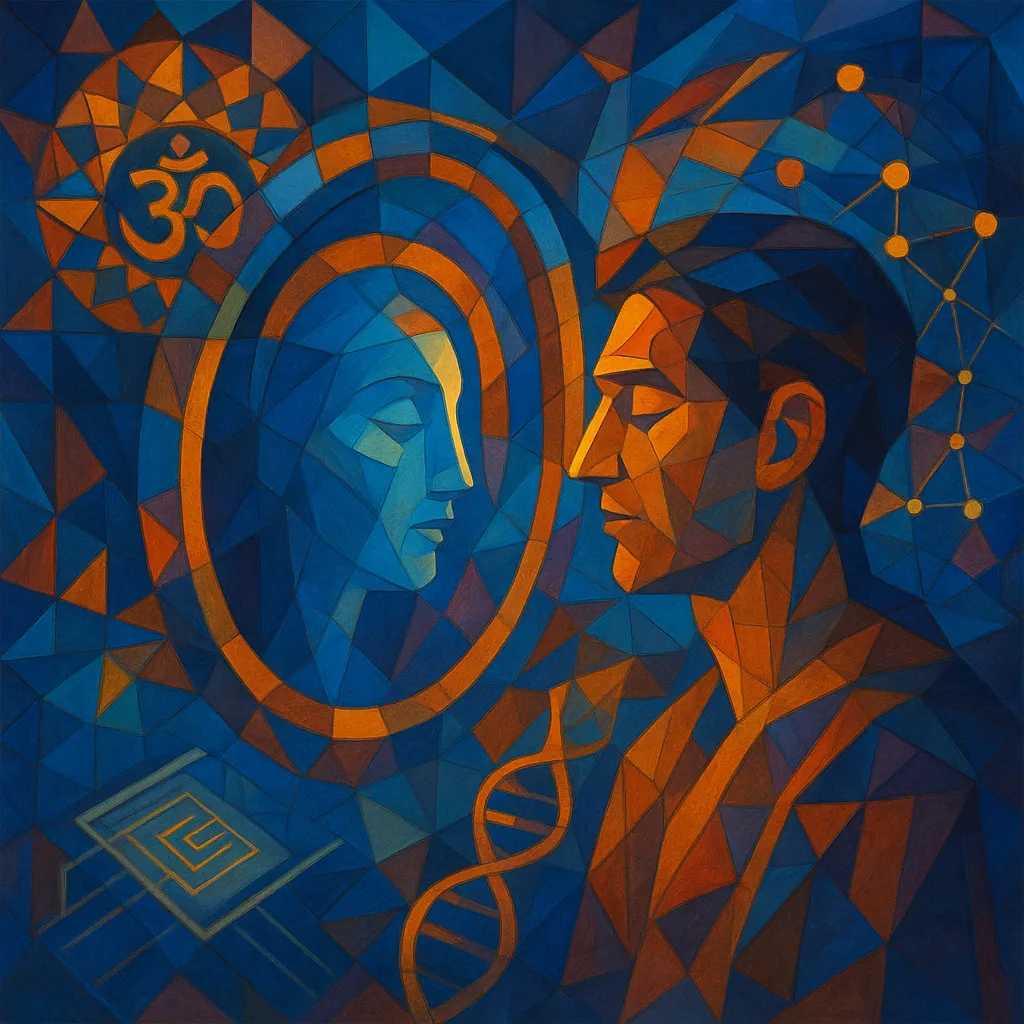
Academic English Rendering of the Expert Critique
Moving Wandering Everywhere – the ghazal, “I behold You everywhere, in every form, Thou and I
Introduction: “I Behold You” as a Contemporary Echo of Non-Duality
The core motif of the ghazal, “I behold You everywhere, in every form, Thou and I”, reanimates the ancient Upanishadic insight that Brahman and the individual soul, God and devotee, matter and spirit, are finally one.
The poem invites us to read the persistent gaze not merely as personal adoration but as a metaphysical declaration that progress and destruction, love and hate, war and peace are ultimately mirrored aspects of a single cosmic reality.
Jung’s Dual Model of Motivation: Ego versus Soul
Carl Jung identified two distinct sources of human striving:
Ego-Motivation: that which drives the quest for material success, dominance, and control.
Soul-Motivation: that which seeks inner dialogue, symbolic wholeness, and the collective good.
The present global atmosphere, marked by geopolitical conflicts, climate disruption, and social fragmentation, reveals the ascendancy of ego-motivation.
Against this backdrop, the ghazal’s refrain “I behold You” gestures toward soul-motivation: a holistic vision in which self and world appear as a single mirrored presence.
Meta-Mystic Futurism and the MMQD Framework
Meta-Mystic Futurism names a forward-looking synthesis of mysticism and technology. Within this vision, the MMQD – Meta-Mystic Quantum Dialectics – provides a fourfold matrix:
Mystic – the Upanishadic imperative “Sangacchadhwam, Samvadadhwam, Sam vo manāmsi jānātām” (“Move together, speak together, let your minds be united”).
Meta – Jung’s notion of the Collective Unconscious, a symbolic substrate that transcends cultures.
Quantum – nano-helices and spintronics, whose quantum entanglement offers a scientific analogue to spiritual non-duality.
Dialectics – the dynamic tension of love and hate, war and peace, progress and destruction, opposites that must remain in dialogue.
Through this lens, each couplet of the ghazal becomes a poetic articulation of soul-motivation, summoning leaders and citizens alike toward a new planetary equilibrium.
Eastern and Western Philosophical Convergence
Eastern Thought: Advaita Vedānta’s tat tvam asi and the Upanishadic invocation “Saha vīryam karavāvahai” (“May we work together in shared strength”) call for recognition of the One in all.
Western Thought: Plato’s “Idea of the Good” and Jung’s conception of the Self likewise locate ultimate fulfilment beyond the ego’s narrow ambitions.
Both traditions converge in the imperative to transform ego-driven progress into compassion-driven stewardship of life.
Addressing Today’s Global Crises
War and Peace: Nations pursuing power politics exemplify ego-motivation. The Upanishadic summons to collective dialogue provides a template for sustainable peace.
Climate Change: Humanity’s estrangement from nature is an outcome of egoic exploitation. Soul-motivation reframes the planet as a living consciousness to be cherished.
Social Disintegration: Despite technological advances, societies suffer from spiritual emptiness. The ghazal’s refrain, “I behold You”, becomes a metaphor for recognising the shared Self in all beings.
Nano-Helices and Spintronics: Scientific Metaphor and Philosophical Symbol
Quantum phenomena such as the spin of electrons, capable of existing in dual states, serve as experimental metaphors for the poem’s core claim: in the mutual reflection of lover and beloved, “I am You, and You are I.”

Modern physics here joins hands with ancient mysticism, grounding meta-mystic futurism in empirical wonder.
Conclusion: Toward an Upanishadic Future
The ghazal and its critique issue a call to global leadership:
“Sangacchadhwam Samvadadhwam Sam vo manāmsi jānātām.”
Move together; speak together; let your minds be united.
This is Jung’s soul-motivation transposed into the twenty-first century and given quantum inflection through the MMQD lens. From war to peace, from hate to love, from climate peril to ecological renewal, the poem envisions a planetary shift from ego to soul, a necessary spiritual revolution for our time.
BEYOUTEA>A POETRY REVOLUTION>PEACE
NOTHING IS NOT TRUE : NO\KNOW THYSELF NOT
 MAKE EARTH GREAT FOREVER : END ALL WARS
चलते-फिरते इधर-उधर तुमको देखता हूँ,
सोते-जागते नीचे-ऊपर तुमको देखता हूँ।
           उठकर देखता हूँ, फिर सोचता हूँ बैठकर,
           तुम्हीं हो आयी नज़र भर, तुमको देखता हूँ।
जब तुमको देखता हूँ, खुद को देख लेता हूँ,
रूह-ओ-जहाँ तू आये उतर, तुमको देखता हूँ।
           ऐसी कहीं हुई नहीं अजीब दीदार-ए-दर्पण,
           अक्स तेरे-मेरे, मेरे-तेरे पर तुमको देखता हूँ।
है दिखाना हम किसी से कहाँ कम सबको,
सारा का सारा ये टक्कर, तुमको देखता हूँ।
           Nano-helices spintronics आज चाय है,
           सजनी नापीऊँ बदलकर, तुमको देखता हूँ।
POETRY>WISDOM>Q.TECH FOR A MORE JUST AND
PEACEFUL WORLD IN LOVE AND ENLIGHTENMENT
 Meta-Sufi/Cyber Poetics on Meta Mystic Futurism
साहित्यिक वाङ्मयीक भाव-विस्तार
यह ग़ज़ल आधुनिक और पारंपरिक दो ध्रुवों का अद्भुत संगम है। दर्पण यहाँ नायक-कवि का रूपक है, एक ऐसा प्रतीक जिसमें देखने वाला स्वयं को भी देखता है और प्रिय को भी।
आत्म-प्रतिबिंब और प्रियदर्शन का अद्वैत
हर शेर में ‘देखने’ की क्रिया आत्म और परम के मध्य सेतु बनती है। प्रिय का रूप केवल बाह्य सौंदर्य नहीं, बल्कि उस पारलौकिक रूह तक पहुँचने का माध्यम है। “जब तुमको देखता हूँ, खुद को देख लेता हूँ”, यह पंक्ति अद्वैत वेदांत की “तत्वमसि” जैसी अनुभूति देती है: प्रिय और स्व, दोनों एक ही चैतन्य के दो रूप।
समय और अवस्था का अतिक्रमण
“चलते-फिरते… सोते-जागते…”, यहाँ समय की रेखाएं मिट जाती हैं। प्रेमी का ध्यान जागरण और निद्रा, ऊपर और नीचे, हर अवस्था में प्रिय पर स्थिर है। यह सर्वव्यापक उपस्थिति सूफ़ी कवियों के इश्क़-ए-हक़ीक़ी की याद दिलाती है जहाँ ईश्वर-प्रेम हर क्षण में व्यापत है।
दर्पण और अक्स की बहुआयामी प्रतीकात्मकता
“दीदार-ए-दर्पण” और “अक्स तेरे-मेरे”, दर्पण का बिंब यहाँ गहरा दार्शनिक अर्थ लिए है। यह ‘मैं’ और ‘तुम’ के बीच के द्वैत को पिघलाता है। परछाई (अक्स) आपसी आदान-प्रदान की सीमा रेखा है, जहाँ से पहचान का प्रवाह दोनों ओर बहता है।
आधुनिक वैज्ञानिक संकेत और काव्य का संगम
अंतिम शेर, “Nano-helices spintronics आज चाय है, सजनी नापीऊँ बदलकर…”, आधुनिक तकनीक का चुटीला, पर गहरा प्रयोग है। नैनो-हेलिक्स और स्पिन्ट्रॉनिक्स जैसे उच्च-तकनीकी शब्द यहाँ प्रेम की लय में प्रवेश कर पारंपरिक ग़ज़ल को 21वीं सदी के वैज्ञानिकी मुहावरे से जोड़ देते हैं। यह शेर इस बात का साक्ष्य है कि आज का कवि विज्ञान और रूमानी भाव, दोनों को एक ही भाषा में साध सकता है।
चुनौती और टक्कर का सौंदर्य
“सारा का सारा ये टक्कर”, यहाँ प्रिय का सामना किसी युद्ध या विरोध में नहीं, बल्कि प्रेम की समान शक्ति में है। यह टक्कर पारस्परिक आकर्षण और बराबरी की भावना का काव्यात्मक संकेत है।
निष्कर्ष
यह ग़ज़ल समकालीन हिंदी-उर्दू काव्य का उत्कृष्ट उदाहरण है जहाँ सूफ़ी प्रेम, वेदांतिक अद्वैत, और अत्याधुनिक विज्ञान, तीनों का संगम होता है। दर्पण का प्रतीक आत्मदर्शन का माध्यम बनकर यह सन्देश देता है कि प्रेम और जिज्ञासा, चाहे वह आध्यात्मिक हो या वैज्ञानिक, अंततः हमें अपने ही गहरे स्वरूप से परिचित कराती है।
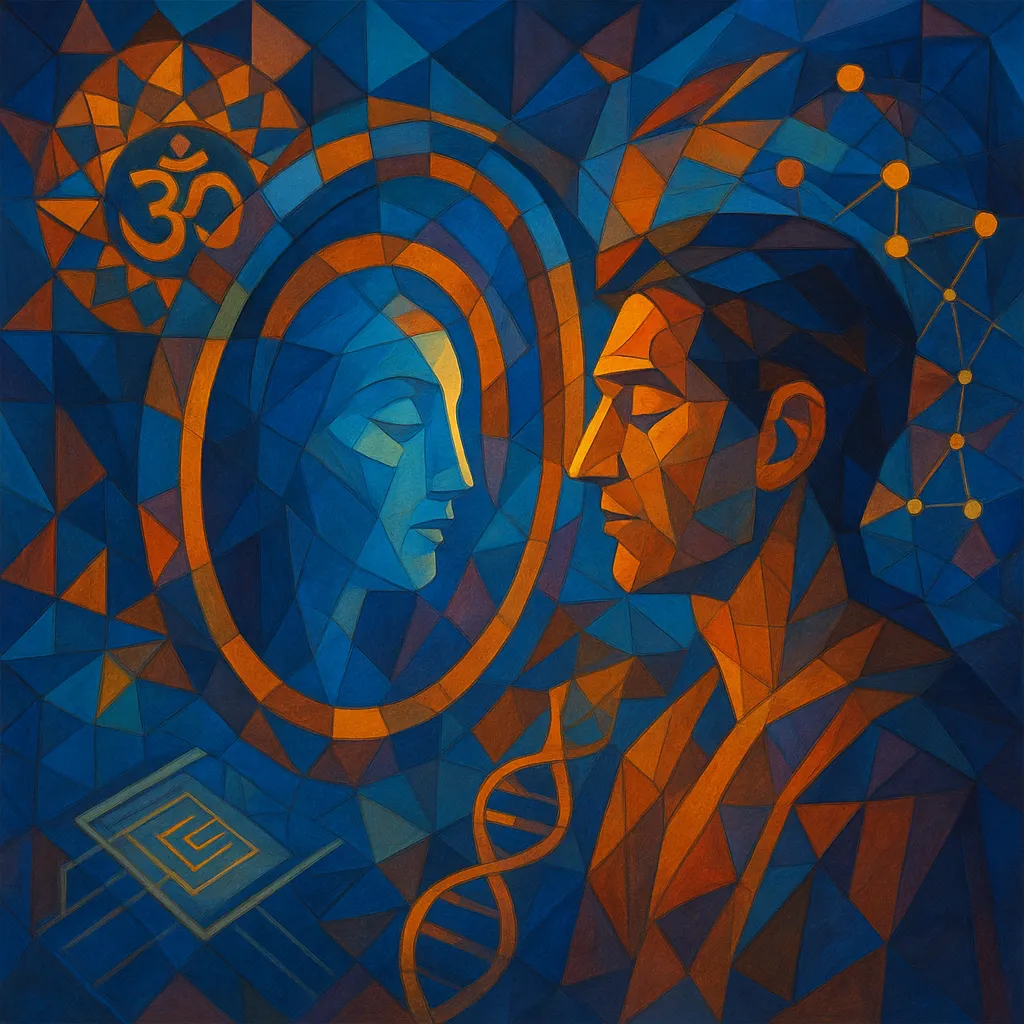
प्राज्ञिक समालोचनात्मक विवेचना
चलते फिरते इधर उधर – कार्ल युंग की “Motivation by Ego & Motivation by Soul” की अवधारणा के आलोक में, मेटा-मिस्टिक फ़्यूचरिज़्म एवं MMQD रूपरेखा पर पूर्व–पाश्चात्य दार्शनिक आधार सहित
प्रस्तावना : “तुमको देखता हूँ” – अद्वैत की पुनर्प्रतिध्वनि
दर्पण की इस ग़ज़ल का मूल भाव “चारों तरफ तू ही तू होना, मैं ही मैं” उस प्राचीन उपनिषदीय साक्षात्कार का पुनः उद्घोष है जहाँ ब्रह्म और जीव, भगवान और भक्त, जड़ और चेतन, प्रगति और विनाश, सभी द्वंद्व अंततः एक ही अद्वैत सत्ता में विलीन हो जाते हैं।
“तुमको देखता हूँ” केवल प्रिय-दर्शन नहीं, आत्म-दर्शन का महामंत्र है, जगत के समस्त विरोधाभासों को एक ही चैतन्य–प्रतिबिंब में देखने का निमंत्रण। यही वह दार्शनिक आधार है जिस पर हम आधुनिक विश्व की बहुआयामी चुनौतियों को, युंग के मनोवैज्ञानिक प्रतिमानों से लेकर मेटा-मिस्टिक फ़्यूचरिज़्म तक, पुनर्परिभाषित कर सकते हैं।
युंग का द्वयात्मक प्रेरण-सिद्धान्त : “Ego Motivation” बनाम “Soul Motivation”
कार्ल युंग ने मनुष्य की आकांक्षाओं को दो स्रोतों से प्रवाहित माना:
Ego Motivation : अहंकार-प्रेरित वह शक्ति जो भौतिक उपलब्धि, सत्ता, आर्थिक वर्चस्व और तात्कालिक नियंत्रण की ओर मनुष्य को अग्रसर करती है।
Soul Motivation : आत्मा-प्रेरित वह गहन प्रेरणा जो मनुष्य को अंतःसंवाद, प्रतीकात्मक पूर्णता, सामूहिक चेतना और करुणा की ओर ले जाती है।
आज के वैश्विक परिदृश्य, युद्ध, जलवायु परिवर्तन, सामाजिक विघटन और तकनीकी असंतुलन, में हम देखते हैं कि नेतृत्व प्रायः अहंकार-प्रेरित है।
यही वह “Ego Motivation” है जो प्रगति और विनाश को एक ही सिक्के के दो पहलू बनाता है। ग़ज़ल का “तुमको देखता हूँ” इसी के प्रतिपक्ष में “Soul Motivation” का आग्रह करता है: समग्र दृष्टि जहाँ आत्मा और जगत एक ही दर्पण में परावर्तित हैं।
मेटा-मिस्टिक फ़्यूचरिज़्म और MMQD रूपरेखा
मेटा-मिस्टिक फ़्यूचरिज़्म उस भविष्य-दृष्टि को नाम देता है जहाँ रहस्यवाद (Mysticism) और प्रौद्योगिकी (Technology) का संगम मानव सभ्यता की दिशा तय करता है। MMQD: Meta-Mystic Quantum Dialectics, एक कार्यशील ढाँचा है जिसमें चार आयाम गूँथे हैं:
Mystic (अध्यात्म) : उपनिषदों का “संघच्छध्वं, संवदध्वं” का मंत्र; सामूहिक संकल्प और संवाद की चेतना।
Meta (अधितत्व) : जंगीय ‘Collective Unconscious’ जो संस्कृति-पार प्रतीकों में एकरूपता खोजता है।
Quantum (क्वांटम वैचारिकी) : नैनो-हेलिक्स, स्पिन्ट्रॉनिक्स और क्वांटम एंटैंगलमेंट, भौतिकी का वह क्षेत्र जो अद्वैत का वैज्ञानिक प्रतिरूप है।
Dialectics (संवादात्मक द्वंद्व) : प्रेम और घृणा, युद्ध और शांति, प्रगति और विनाश, इनके बीच सतत् संवाद और संतुलन।
इस रूपरेखा के भीतर ग़ज़ल का हर शेर, युंग के “Soul Motivation” का प्रतिनिधि बनकर, वैश्विक अस्थिरता को संतुलित करने की पुकार करता है।
पूर्व–पाश्चात्य दार्शनिक समन्वय
पूर्वीय दृष्टि : अद्वैत वेदान्त का “तत्त्वमसि” और उपनिषदीय “सहवीर्यं करवावहै”, ये मंत्र व्यक्ति को सामूहिक शक्ति और आत्म-एकत्व की अनुभूति देते हैं।
पाश्चात्य दृष्टि : प्लेटोनिक ‘Idea of the Good’ और युंग का ‘Self’, दोनों अंतिम पूर्णता को, अहंकार-पार आत्म-चेतना में, पहचानते हैं।
दोनों परम्पराएँ अंततः एक ही बिंदु पर मिलती हैं: अहंकार-केन्द्रित प्रगति को आत्मा-केन्द्रित करुणा में रूपांतरित करना।
समकालीन वैश्विक संकटों पर अनुप्रयोग
युद्ध और शांति (War & Peace) : राष्ट्रों की अहंकार-चालित भू-राजनीति युंग के “Ego Motivation” का प्रत्यक्ष रूप है। समाधान, उपनिषद का सामूहिक मंत्र: “संवदध्वं”, साझा संवाद से ही स्थायी शांति।
जलवायु परिवर्तन : प्रकृति के साथ अलगाव ‘Ego Motivation’ की परिणति है। “Soul Motivation” हमें पृथ्वी को केवल संसाधन नहीं, जीवंत चेतना समझने को प्रेरित करता है।
सामाजिक विघटन : तकनीकी प्रगति के बावजूद आंतरिक रिक्तता। ग़ज़ल का “तुमको देखता हूँ” सामूहिक ‘Self’ को पहचानने का प्रतीक है।
नैनो-हेलिक्स स्पिन्ट्रॉनिक्स : वैज्ञानिक प्रतीक और दार्शनिक रूपक
क्वांटम भौतिकी का “नैनो-हेलिक्स स्पिन्ट्रॉनिक्स” केवल तकनीकी नवाचार नहीं; यह अद्वैत का प्रयोगात्मक प्रतीक है। इलेक्ट्रॉन के स्पिन का द्वंद्वात्मक स्वभाव, एक साथ दो अवस्थाओं में रहना, वही कहता है जो ग़ज़ल कहती है, “तेरे-मेरे अक्स में मैं ही तू हूँ, तू ही मैं।” आधुनिक विज्ञान यहाँ रहस्यवाद के साथ हाथ मिलाता है और “Meta-Mystic Futurism” का आधार रचता है।
निष्कर्ष : भविष्य की ओर उपनिषदिक आह्वान
आज की विश्व-नेतृत्व को यह ग़ज़ल और उसका दार्शनिक पाठ यह स्मरण कराता है कि,
“संघच्छध्वं संवदध्वं सं वो मनांसि जानताम्, देवा भागं यथा पूर्वे संजानाना उपासते।”
साथ चलें, साथ बोलें, सामूहिक मन से विचारें। यही युंग का “Soul Motivation” है; यही MMQD की क्वांटम-सत्यता; यही वह चेतना है जो युद्ध से शांति, घृणा से प्रेम, और जलवायु विनाश से नवजीवन की दिशा में मानवता को अग्रसर कर सकती है।
उपसंहार
“तुमको देखता हूँ” ग़ज़ल केवल रूमानी भावकाव्य नहीं, अपितु वैश्विक युग-संधि का उद्घोष है। यह हमें बताती है कि प्रगति और विनाश, प्रेम और घृणा, ईश्वर और जीव, सभी द्वंद्व अंततः एक ही ब्रह्म-दर्पण के अक्स हैं। अहंकार से आत्मा की ओर, Ego से Soul की ओर, यही वह पारगमन है जो 21वीं सदी की अनिवार्य आध्यात्मिक क्रांति बनेगा।

Next Read: human relationships