


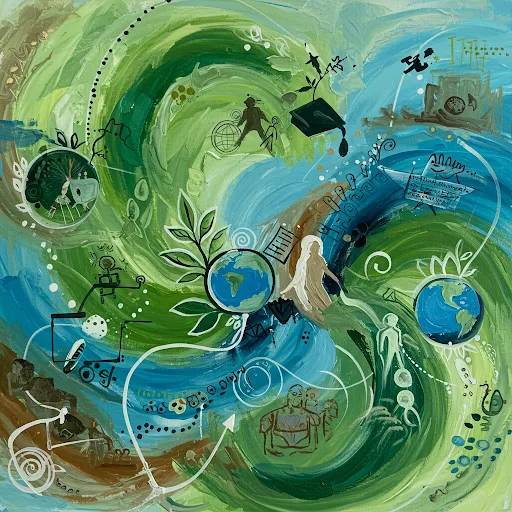
The Power of Love Nature Poems in Educational Curricula: Cultivating Global Humanitarian Resilience and World Citizenship
Education is the fundamental pillar in shaping young minds and plays a pivotal role in fostering afore mentioned qualities. The need to nurture compassionate, empathetic, and globally-minded citizens has never been more urgent in an increasingly present interconnected world. An aid to it, thus love nature poems in curricula, stands a must.
Among the various genres of poetry, love nature poems stand out as a remarkable tool for promoting peace, resilience, and a sense of world citizenship. Particularly, literature, especially poetry, has the unique power to transcend boundaries, evoke deep emotions, and inspire profound shifts in consciousness free of even bias of free thinking.
This article explores how love nature poems in educational curricula, when integrated with the syllabus, can help cultivate global humanitarian resilience, encourage dialogue, and work toward the end of all forms of political, diplomatic, economic, and socio-cultural conflicts, even devastating war.
Table of Contents
The Role of Education in Shaping Global Citizens
Education is one of the most powerful instruments for change in the modern world. It shapes our values, attitudes, and beliefs, influencing how we view ourselves, others, and the world at large.
One of its most crucial roles is to develop young individuals into responsible, compassionate citizens of the world. The concept of global citizenship involves fostering an awareness of shared human experiences, empathy for diverse cultures, and a commitment to addressing global challenges of misunderstanding.
Education should not only teach students facts but also help them build the social and emotional intelligence needed to navigate an increasingly complex and often divided world.
A curriculum that prioritizes peace, tolerance, and mutual respect can serve as the foundation for solving global issues like conflict, inequality, and environmental degradation. In this context, poetry, especially nature-based poetry, can be an invaluable tool for developing these values.
Through getting into nature, interconnectedness, and the shared beauty of the world, love nature poems create a fertile ground for developing empathy and understanding across borders among humans.
What Are Love Nature Poems?
Love nature poems are a genre of poetry that highlight the beauty, peace, and interconnectedness found in nature, often infused with a deep sense of love and reverence for the charm and beauty of the natural world.
These poems explore themes of unity, peace, harmony, and the profound emotional and spiritual connections humans have with the environment. The natural world serves as a metaphor for broader concepts of interconnectedness and human solidarity, making it a powerful tool for teaching empathy, compassion, and humanitarian values.
Prominent poets such as William Wordsworth, Rumi, and contemporary poets like Mary Oliver have written extensively about the intrinsic connection between humans and nature, celebrating its beauty and seeking solace in its simplicity.
The emotional impact of these poems can resonate deeply with readers, inspiring them to reflect on their place in the world and their responsibility toward others. Poetry, particularly nature poetry, can transcend cultural, linguistic, and national boundaries.
The universal themes of love, nature, and peace speak to our shared humanity, making love nature poems an ideal medium for fostering cross-cultural understanding and empathy.
Integrating Love Nature Poems into Educational Curricula
Integrating love nature poems into educational curricula offers numerous opportunities for students to engage with pressing global issues and reflect on the human condition of the time we live.
Teachers can incorporate these poems into a variety of subjects, including language arts, social studies, and environmental science, creating an interdisciplinary approach that enhances students’ understanding of global citizenship.
Curriculum Design: A curriculum that incorporates love nature poems should be designed with specific learning objectives in mind. These objectives should focus on developing empathy, promoting peace, and fostering an understanding of the interconnectedness of all life.
For example, students can analyze poems that explore themes of environmental stewardship, unity, and the healing power of nature, tying these themes to real-world challenges such as climate change and conflict resolution.
Creating Discussion Spaces: Poetry provides an excellent platform for discussion. Teachers can encourage students to reflect on the deeper meanings behind love nature poems, prompting them to consider how these ideas can be applied to contemporary global issues.
Moreover, this can help to build critical thinking with questions like: How do these poems challenge our perceptions of war, poverty, or injustice? How can the message of unity in nature help bridge political, cultural, and social divides? How to grow unity?
Cross-Disciplinary Connections: Love nature poems can also be linked to other areas of study, such as environmental education, philosophy, and ethics. By connecting the themes of nature poetry to broader issues like environmental conservation, human rights, and social justice, educators can create a holistic learning experience that encourages students to view global challenges through a compassionate, empathetic, interdisciplinary lens.
Teaching Objectives for Promoting Humanitarian Resilience
Love nature poems can play a vital role in fostering resilience by encouraging students to reflect on the value of empathy, compassion, and solidarity. Humanitarian resilience refers to the capacity to recover from adversity while maintaining a commitment to human dignity, peace, and social justice in societies.
Cultivating Empathy through Poetry: By exploring themes of love, loss, and the beauty of nature, students can develop a heightened sensitivity to the suffering of others. One of the key benefits of love nature poems is their ability to evoke deep emotions, fostering empathy among readers.
This emotional engagement is a critical component of humanitarian resilience, as it allows individuals to connect with people from different backgrounds and cultures on a human level.
Promoting Conflict Resolution: By analyzing poems that promote harmony and interconnectedness, students can learn to approach conflicts with empathy and a willingness to find common ground.
Poetry has the power to create spaces for reflection and dialogue, enabling students to explore and understand diverse perspectives. Nature poems, with their focus on unity and interconnectedness, provide a framework for addressing political and diplomatic tensions by highlighting our shared humanity.
Building Resilience in the Face of Global Challenges: Love nature poems can also serve as a source of hope and inspiration in times of crisis. The themes of renewal, healing, and harmony that run through many nature poems provide students with a sense of optimism and resilience.
By reflecting on the beauty and strength of the natural world, students can develop the emotional fortitude needed to face global challenges such as climate change, war, and poverty with hope and determination.
Bridging Political, Diplomatic, and Economic Divides
In a world fraught with political, diplomatic, and economic tensions, love nature poems can help bridge divides by promoting dialogue, understanding, and shared values. Poetry, with its ability to transcend linguistic and cultural barriers, serves as a universal language for peace and reconciliation, which is a must for societies undergoing chaos..
Using Poetry to Promote Global Dialogue: Love nature poems can facilitate conversations about the importance of peace and diplomacy in resolving conflicts. Through the lens of nature, students can reflect on the futility of war and the power of collaboration.
The interconnectedness of nature, as expressed in these poems, offers a compelling metaphor for the importance of international cooperation in addressing global issues.
Building Bridges Across Cultures: By exploring nature poetry from various cultures and traditions, students can gain a deeper appreciation for the diversity of human experiences.
Love nature poems provide a common ground for people from different cultural and religious backgrounds to come together and share their insights on the world, fostering a spirit of respect and mutual understanding.
Empathy as a Tool for Global Peace: The themes of empathy, compassion, and unity found in love nature poems are essential for promoting peaceful coexistence. Students should be taught to recognize and embrace the shared humanity and its significance.
By teaching students to embrace their shared humanity, educators can help dismantle the walls that divide nations and communities. Poetry encourages individuals to see beyond their differences and find common ground, creating the foundation for lasting peace and prosperity.
Fostering a Sense of World Citizenship
Ultimately, the goal of integrating love nature poems into educational curricula is to foster a sense of world citizenship. Students must understand that they are part of a global community and that their actions have consequences not only for their immediate surroundings but for the world as a whole.
Creating a Global Perspective: Love nature poems encourage students to see the world from a global perspective. Through poetry, students can learn that the challenges faced by one community are not isolated but part of a larger web of global issues. By recognizing the interconnectedness of humanity and nature, students can develop a sense of responsibility to the world beyond their borders.
Raising Awareness of Global Issues: Love nature poems can serve as a springboard for discussions on global challenges such as climate change, poverty, and human rights. By reflecting on the themes of interconnectedness and environmental stewardship, students can be inspired to take action on these issues and become advocates for a more just and sustainable world for the progeny.
Encouraging Young Minds to Act as Global Citizens: The sense of unity and compassion fostered by love nature poems can inspire students to become active participants in creating positive change.Whether through activism, volunteerism, or simply promoting kindness and understanding, students can apply the values learned through poetry to make a tangible difference in the world.
Conclusion
Incorporating love nature poems into educational curricula offers a powerful way to promote global peace, humanitarian resilience, and world citizenship. Exploring through the beauty of nature and interconnectedness, students can develop the empathy, compassion, and understanding needed to address global conflicts and challenges.
By fostering a sense of shared humanity, love, and nature, poems can help shape the next generation of global citizens committed to building a more peaceful, just, and sustainable world. Let us embrace the transformative power of poetry in education and work together to cultivate a generation that sees the world not as a collection of divided nations but as a unified, interconnected community of worlds as one family.
Read for more