


BEYOUTEA ! A QUANTUM POETRY>REVOLUTION !! MAKE EARTH GREAT FOREVER : END ALL WARS !!! NOTHING IS NOT TRUE : NO\KNOW THYSELF NOT !!!! META-SUFI/QUANTUM POETICS ON QUANTUM META MYSTIC FUTURISM !!!!!
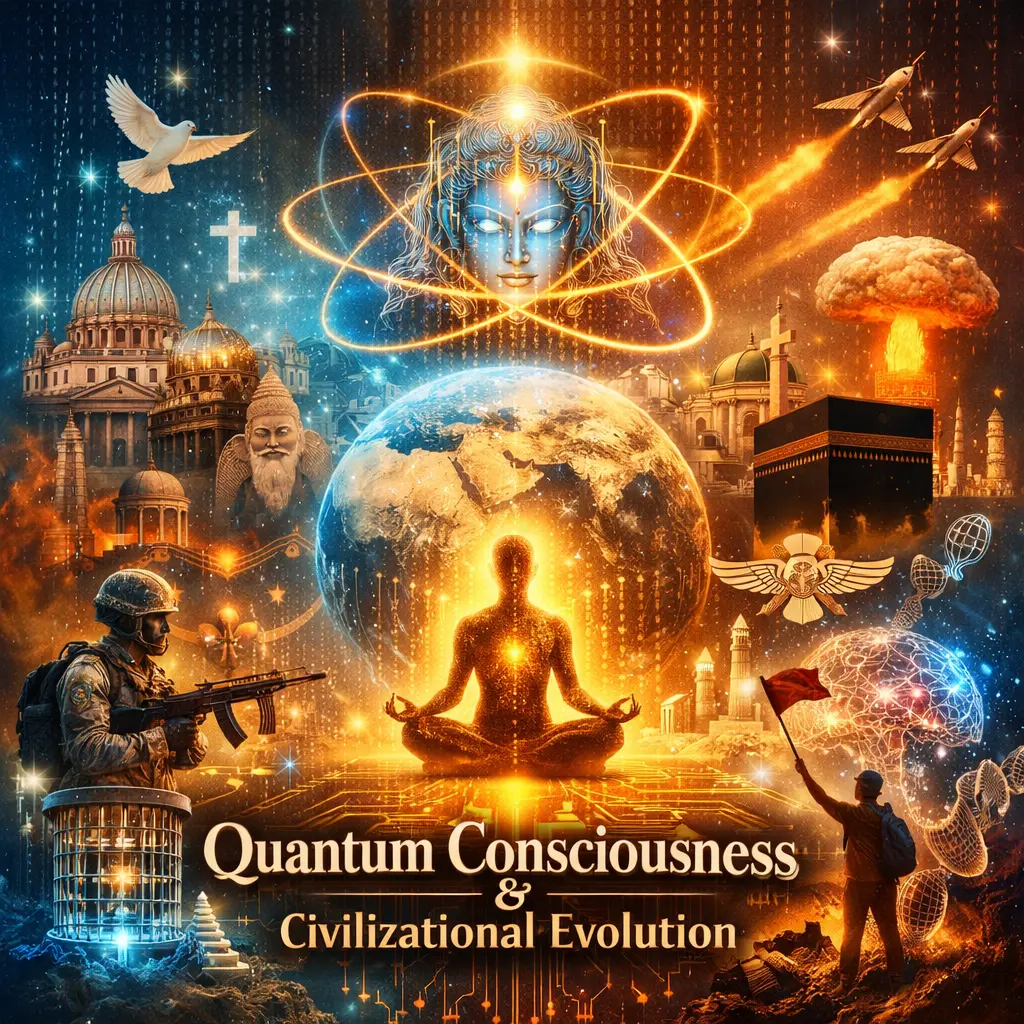
           Life Devoid of Grace Peaceful Crimes Became
A stone, a piece of gold, two tales became,
One day, one word, one night, our veils became.
           A smiling dawn has brought this secret to heart,
           I, the sage; you, Urvashi, our hands became.
Had you not come, no spells would stir my soul,
Heaven in terror, our feelings’ realms became.
           If not by dagger slain, I am silent thought,
           With your arrival, illusions’ sanctums became.
Men hold their swords, standing guard in fear,
Life, devoid of grace, peaceful crimes became.
           There was an age of want, no wealth, no arms,
           In newer ways, fulfilled dreams’ claims became.
Sages, dervishes, saints saw spells and rites,
In super-computing, altered states became.
           Today, even tea, beloved, feels dreamlike,
           “Sage and Urvashi”, our new refrains became.
Table of Contents
The Quantum Exegesis: Light of quantum consciousness and civilizational transformation!
The ghazal, when rendered into an eccentric literary essay, retains not merely its lyrical cadence but also its deeper philosophical architecture, which resonates profoundly with its original Hindvi-Rekhta essay on quantum consciousness and civilizational transformation. It unfolds as a poetic microcosm of that broader discourse, where symbols, emotions, and epochs intersect.
At its very inception, the imagery of “a stone and a piece of gold” encapsulates the primordial duality that the essay identifies as the foundation of human consciousness, matter and value, existence (अस्तित्व) and meaning (अर्थ). This duality, however, does not remain static; it evolves into a unified experiential continuum, “one day, one word, one night,” suggesting the dissolution of fragmentation into a seamless temporal and emotional unity.
The ghazal thus mirrors the essay’s proposition that human awareness gradually transcends binaries to achieve a more integrated state of being. The invocation of “the sage and Urvashi” serves as a central metaphorical axis. As elaborated in the essay, the sage symbolises rationality, knowledge (ज्ञान), and the scientific impulse, while Urvashi embodies beauty (सौंदर्य), desire, and creative vitality.
Their union in the ghazal is not merely romantic but epistemological; it signifies the confluence of logic and imagination, of science (विज्ञान) and art (कला). This synthesis is precisely what the essay frames as the hallmark of evolved consciousness, where neither reason nor emotion dominates, but both coexist in dynamic harmony.
The presence of fear, daggers, and guarded swords introduces a layer of existential tension. These elements correspond to the essay’s exploration of inner and societal confrontation (संघर्ष), in which structures meant to protect paradoxically engender insecurity.
The line “life, devoid of grace, peaceful crimes became” captures this persistent paradox (आधुनिक विडंबना) with striking clarity: peace itself becomes an accident (घटना), an anomaly, rather than a natural state. Thus, the ghazal critiques the fragile equilibrium of contemporary civilisation, echoing the essay’s thought (चिंतन) on the paradoxes of modern security (सुरक्षा) and chaos (अशांति).
As the narrative progresses, the transition from “an age without wealth or weapons” to one shaped by “super-computing” encapsulates the arc of civilizational evolution. This movement reflects the essay’s assertion that humanity has shifted from mystical spells (मंत्र) and chants (तंत्र) to digital algorithms and computational miracles (शक्ति).
Yet, the ghazal subtly suggests continuity within this transformation (परिवर्तन), the quest for knowledge and transcendence remains unchanged, even as its technique (माध्यम) evolves. The sages and dervishes of old find their present (आधुनिक) counterparts in scientists and technologists, engaged in a similar pursuit of truth.
The closing couplet, where even a simple cup of tea becomes “dreamlike,” brings the discourse to an intimate, almost household level (घरेलू स्तर). It reinforces the essay’s concluding insight that the extraordinary is embedded within the ordinary, and that the synthesis of love, consciousness, and technology manifests not only in grand narratives but also in everyday paraphernalia (अनुभव0.
The phrase “sage and Urvashi” transforming into a “new refrain” signifies the emergence of a contemporary myth (मिथक), a living metaphor that encapsulates the ethos of our age (समय). In essence, the ghazal operates as a lyrical distillation of the essay’s central thesis. It traverses the same thematic terrain of duality and unity, reason and emotion, tradition and modernity, fear and transcendence, yet does so through the evocative language of poetry.
Together, the ghazal and the essay form a complementary dialogue (संवाद), where one articulates in verse what the other elaborates in prose, both converging on the idea that human civilisation is an ever-evolving interplay of consciousness, creativity, and connection.
Quantum Darpan Poetics Description
As history moves forward, encountering every civilisation along its path, the ancient deities Al-Ilah and Allat seem to dissolve into a singular Allah, merging into one unified divine consciousness. I have fashioned God and walked onward, my beloved whole and intact, only to dissolve into you; annihilated in you, defeated by you, such is the poetic right of love.
How long will the conflicts between gold and need continue to define us? And if they do, how can we ever cease to live through love? The human who now dwells in artificial caves, how must he have loved in the age of primal caves? I remember: even then, I was a poet. In that time, upon the barren sands of the heart, anonymous verses were inscribed trembling softly within the rhythm of our breath.
It feels as though Ayatollah Khomeini never truly passed away. Not only figures like Trump and Netanyahu, but nearly every world leader today, along with global institutions such as the United Nations, seem to have compelled humanity into a condition of living while dying.
The world still holds churches, the Kaaba, temples, mosques, and monasteries. There are popes, priests, sages, monks, mahants, and clerics. Yet when one witnesses tensions between the Vatican and political leaders, discord among Hindu authorities, and a growing number of Muslims identifying as ex-Muslims, it becomes evident that the very foundations of God, religion, leadership, and politics are being shaken, deeply unsettling the human psyche.
Pre-Christian and pre-Islamic histories reveal that human belief once resided in paganism and nature worship, traditions that still faintly endure in parts of South Asia. Similarly, our political evolution has moved from hunting-gathering tribes to invasion, annexation, imperialism, colonialism, and now globalism, resting uneasily at a threshold that pushes toward a quantum, technocratic, post-human conception of truth.
In this age of surveillance and intelligence, driven by artificial intelligence, we have yet to realise or uphold the true meaning of human dignity fully. Conflicts persist, Pakistan and Afghanistan remain entangled; resolutions for tensions involving Iran seem distant.
Dialogues between leaders such as Modi and Trump often fail to reach meaningful outcomes. Despite the evident strength of women, legislative progress on women’s empowerment struggles to secure a consensus. Meetings among global figures, from Italy’s Prime Minister Giorgia Meloni to discussions involving King Charles III, leave open the question of whether substantive change will follow.
In the era of quantum supercomputing, we attempt to comprehend the natural dance of the divine. “No God, no religion, no leader, no politics is absolute” This is not a rejection, but a realisation. Across ages, the names and forms of God, religion, and politics have continually evolved. Cultures, traditions, and social structures have transformed.
Today, we have begun to shape God itself into the form of Artificial General Intelligence. A new universal “religion” appears to be emerging, one rooted in AI, neuro-cognition, and quantum consciousness.
Yet, paradoxically, we remain entangled in elementary questions: Why do some South Indian Hindus consume beef while India stands among the world’s largest exporters of it? Why do Muslims abstain from pork? Why should or shouldn’t alcohol be consumed? Why do Christians partake in sacramental offerings? Such questions continue to confine our understanding.
At the same time, deeper historical threads suggest that Brahmanical traditions are connected to ancient Greek-Italian and Zoroastrian Middle Eastern cultures, where figures like Zarathustra and Ahura Mazda were associated with early forms of ethical and even protective reverence for cow and animal life.
In such a context, unless humanity rises above these fragmented debates and embraces a quantum approach to thought, a new mode of holistic, critical, and integrative thinking how can we offer a shared path forward? This is the central question at the moment.
Perhaps through this, we may rediscover or reinvent God, religion, leadership, and nationhood itself. Otherwise, despite advances in intelligence and diplomacy, movements like the Gen-Z revolution in Nepal may remain unresolved, failing to provide justice, while humanity continues to endure conflicts such as those in Ukraine or tensions around the Strait of Hormuz.
To move forward, leaders such as Macron, Ursula von der Leyen, Xi Jinping, and Putin, alongside President Trump and figures like Mujtaba Khomeini, must engage with António Guterres in adopting a quantum-informed, critically reflective approach to global problem-solving. Only then might the vision of “Make Earth Great Forever: End All Wars” evolve from aspiration into reality.
And perhaps, through this journey, the paradox, “Nothing is not true; Know thyself not”, may guide humanity toward a new enlightenment, where self-awareness transcends certainty, and wisdom emerges from humility.
A Quantum Expert Critique

Life Devoid of Grace Peaceful Crimes Became – Quantum Consciousness and Civilizational Evolution: Reconfiguring Humanity through the Rishi-Urvashi Paradigm (An Academic-Poetic Synthesis for Global Policy and UN Discourse)
Abstract This article advances a transdisciplinary thesis that bridges poetic imagination with civilizational analysis, arguing that humanity is undergoing a profound shift from material dualities toward a unified, quantum-informed consciousness. Drawing upon the symbolic architecture of a ghazal moving from “stone and gold” to “supercomputing”, the paper situates human evolution not merely as technological progress but as a transformation of consciousness.
The Rishi-Urvashi paradigm is developed as a meta-framework representing the convergence of reason and beauty, science and spirituality, logic and affect. In an era marked by geopolitical fragmentation, religious dissonance, and algorithmic governance, the paper proposes a “quantum approach” to global leadership, one that transcends binaries and re-centres human dignity, ethical intelligence, and planetary cooperation.
Introduction: From Duality to Unity: The poetic opening, “a stone and a piece of gold,” is not incidental; it encodes the foundational duality of human existence: matter and value, survival and meaning. Civilizational history has largely unfolded within such binaries. Yet, as the ghazal suggests through its progression into “one day, one word, one night,” there exists a deeper trajectory toward integration.
This article interprets that trajectory as a movement from fragmented cognition to unified awareness. It argues that the crises of the 21st century, climate instability, protracted conflicts, technological asymmetries, and social polarisation are symptoms of a deeper epistemic fragmentation. What is required is not merely reform of institutions, but a reconfiguration of consciousness itself.
The Rishi–Urvashi Paradigm: A Framework for Integrated Intelligence: At the centre of this inquiry lies the symbolic pairing of “Rishi” (the sage) and “Urvashi” (the embodiment of beauty and creative vitality). In classical literature, these figures are often treated as opposites: asceticism versus desire. However, in this framework, they are reinterpreted as complementary dimensions of human intelligence.
The Rishi represents analytical reasoning, scientific inquiry, and disciplined cognition. Urvashi represents aesthetic sensibility, emotional intelligence, and generative imagination. Their union signifies not romance alone, but epistemic convergence, a form of cognitive entanglement where logic and intuition co-produce knowledge.
For global leadership, this paradigm offers a critical insight: sustainable decision-making in the 21st century must integrate data-driven analysis with human-centred empathy. Policy devoid of affective (भावना) becomes mechanistic; emotion without artistry (संरचना) becomes volatile. Their synthesis is the foundation of what may be termed integrated intelligence.
Security, Fear, and the Paradox of Modern Peace: The ghazal’s stark imagery of armed guards, vigilant swords, and “peace as an incident” captures a defining paradox of contemporary geopolitics. Nations invest unprecedented resources in security architectures, yet collective insecurity persists. Peace is no longer a stable condition but a fragile, episodic occurrence.
This condition reflects a deeper misalignment: security has been conceptualised in adversarial terms rather than relational ones. The prevailing model assumes that safety emerges from dominance or deterrence. However, in an interconnected world, such models produce recursive instability.
A quantum-informed perspective reframes security as coherence rather than control. Just as quantum systems achieve stability through relational balance, global systems require trust-based interdependence. This implies a shift from zero-sum geopolitics to cooperative security frameworks grounded in transparency, dialogue, and mutual accountability.
From Mantra to Algorithm: Continuity within Transformation: The transition from “mantra and tantra” to “supercomputing” is often interpreted as a rupture between tradition and modernity. This article proposes instead that it is a transformation of media, not of intent. Both ancient spiritual practices and contemporary computational systems are methods of encoding, processing, and transmitting knowledge.
Mantras operate through sound, rhythm, and consciousness; algorithms operate through code, logic, and data. Yet both seek pattern recognition, prediction, and alignment with underlying structures of reality. The continuity lies in the human (انسانی) impulse to understand and shape the world.
For policymakers, this continuity underscores the necessity of ethical alignment in technological development. Artificial intelligence, surveillance systems, and quantum computing must not be treated as neutral tools. They are extensions of human intention and must therefore be governed by principles of dignity, equity, and accountability.
Religion, Politics, and the Crisis of Legitimacy: Across the globe, traditional institutions, religious, political, and cultural, are experiencing a crisis of credibility. Places of worship remain, leadership structures persist, yet their moral authority is increasingly questioned. This is not merely a decline of faith, but a gesture (संकेत) of transition (संक्रमण).
Historical analysis reveals that organised religions emerged from earlier forms of nature-based and community-centred belief systems. Today, a similar computation (संक्रमण) is underway: humanity is moving toward a more sovereign (सार्वभौमिक), consciousness-oriented framework that transcends rigid identities.
This does not necessitate the abolition of religion or politics, but their reprisal (पुनर्परिभाषा). Their purpose must evolve from control and categorisation toward facilitation of humane (मानव) flourishing. Leadership, in this sense, becomes less about authority and more about stewardship.
Quantum Consciousness as a Global Framework: The concept of “quantum consciousness” is employed here not as a purely scientific claim, but as a philosophical metaphor for non-linearity, interdependence, and multiplicity. In a quantum framework, reality is not fixed but probabilistic; identity is not singular but relational.
Applied to global governance, this perspective encourages flexibility, inclusivity, and adaptive thinking. It challenges rigid binaries, East versus West, religion versus science, security versus freedom and instead promotes integrative models.
The provocative assertion: “No God, No Religion, No Leader, No Politics is Absolute” should be understood not as negation, but as de-absolutisation. It calls for humility in systems of power and openness to continuous evolution.
Conclusion: Toward a Planetary Ethic of Conscious Evolution: The closing imagery of the ghazal, where even a simple cup of tea becomes dreamlike, reminds us that global transformation ultimately manifests in lived human experience. Policy, technology, and philosophy (नीति, तकनीक, और दर्शन) all culminate in the everyday realities of individuals and communities.
The Rishi-Urvashi paradigm thus extends beyond metaphor into a meta-physics (नीति-सिद्धांत): the future of humanity depends on harmonising knowledge and compassion, innovation and ethics, individuality and universality.
For world leaders and institutions such as the United Nations, the imperative is clear. The challenges of our time cannot be addressed through fragmented approaches. They require a holistic, consciousness-centred framework that integrates science, spirituality, and policy.
If such a framework is embraced, grounded in a quantum critical thinking approach, ethical intelligence, and cooperative vision, the aspiration to “end all wars” may move from rhetoric to a certainty (संभावना). The task before humanity is not merely to know itself, but to evolve beyond its in-the-box concepts (सीमित अवधारणाएँ) into a shared (साझा), planetary consciousness.
In this synthesis of poetry and philosophy, we are reminded that civilisation is not merely (केवल) a structure of systems, but a living process of awareness, one that must now consciously choose its next stage of evolution!

ज़िंदगी बग़ैर ख़ैर के अमन वारदात हुए
           ज़िंदगी बग़ैर ख़ैर के अमन वारदात हुए
एक पत्थर, एक सोना दो-दो बात हुए,
हम एक दिन, एक बात, एक रात हुए।
           हँसती सुबह ये राज़ दिल में लाई है,
           मैं ऋषि, उर्वशी पास तेरे हाथ हुए।
तू न आता तो वो मंत्र भी न आता मन में,
ख़ौफ़ में जन्नत तेरे-मेरे जज़्बात हुए।
           जो मैं ख़ंजर से न मरूँ ख़ामोश विचार हूँ,
           तेरे आने से भरमों के हरम क्या बात हुए।
लोग शमशीर लिए हाथों में पहरा देते,
ज़िंदगी बग़ैर ख़ैर के अमन वारदात हुए।
           एक ज़माना था बिन पैसे, हथियार, लाचारी,
          नई तौर से हर ख़्वाब के इशारात हुए।
ऋषि, दरवेश, पीरों ने मंत्र-तंत्र देखे हैं,
सुपर-कंप्यूटिंग में अब नए हालात हुए।
           आज बनी चाय, सजनी ये स्वप्न-सी दुनिया,
           ऋषि-उर्वशी हमारी नई ये कहावत हुए।
क्वांटम काव्य भावार्थ: चेतना और सभ्यता का रूपांतरण : ऋषि-उर्वशी का समसामयिक आख्यान
एक पत्थर और एक सोना ये केवल भौतिक वस्तुएँ नहीं, बल्कि मानव चेतना के आदिम द्वैत के प्रतीक हैं। पत्थर, जो जड़ता, स्थायित्व और मूल अस्तित्व का बोध कराता है; और सोना, जो मूल्य, आकर्षण और सांस्कृतिक अभिवृद्धि का द्योतक है। जब ये दोनों “दो-दो बात” होते हैं, तो वस्तुतः यह उस संवाद का आरंभ है, जहाँ मनुष्य अपने बाह्य और आंतरिक संसार के बीच एक सेतु निर्मित करता है।
यही सेतु आगे चलकर “एक दिन, एक बात, एक रात” की एकात्मकता में परिवर्तित होता है, जहाँ समय, अनुभूति और अस्तित्व एक अखंड प्रवाह में विलीन हो जाते हैं। इस प्रवाह में “ऋषि” और “उर्वशी” का रूपक अत्यंत महत्त्वपूर्ण है। ऋषि यहाँ केवल तपस्वी नहीं, बल्कि ज्ञान, तर्क और वैज्ञानिक दृष्टि का प्रतिनिधि है; जबकि उर्वशी केवल सौंदर्य की प्रतिमा नहीं, बल्कि संवेदना, आकर्षण और रचनात्मक ऊर्जा का साक्षात् स्वरूप है।
जब ये दोनों एक साथ आते हैं, तो यह मिलन केवल प्रेम का नहीं, बल्कि विज्ञान और कला, तर्क और भावना, तथा भौतिक और आध्यात्मिक आयामों के संगम का संकेत देता है। यह संगम ही वह बिंदु है, जहाँ मानव चेतना अपने सीमित आयामों से बाहर निकलकर एक विस्तृत, बहुआयामी वास्तविकता का अनुभव करने लगती है।
किन्तु इस यात्रा में भय, भ्रम और संघर्ष भी अनिवार्य तत्व हैं। “ख़ौफ़ में जन्नत” और “ख़ामोश विचार” जैसे बिंब इस बात की ओर संकेत करते हैं कि मनुष्य के भीतर एक निरंतर द्वंद्व चलता रहता है एक ओर सुरक्षा और स्थिरता की चाह, और दूसरी ओर अज्ञात के प्रति आकर्षण।
खंजर, शमशीर और पहरे की उपस्थिति यह दर्शाती है कि सभ्यता ने अपने अस्तित्व की रक्षा के लिए जो संरचनाएँ निर्मित की हैं, वही कभी-कभी उसके भीतर असुरक्षा और अशांति का कारण बन जाती हैं। इस प्रकार “अमन” भी एक “वारदात” बन जाता है एक ऐसा विरोधाभास, जो आधुनिक विश्व की जटिलता को उजागर करता है।
समय के साथ यह द्वंद्व केवल मनोवैज्ञानिक नहीं रहता, बल्कि सामाजिक और तकनीकी आयामों में भी विस्तार पाता है। एक युग था जब मनुष्य लाचारी, अभाव और सीमित संसाधनों के बीच अपने सपनों को गढ़ता था; और आज एक ऐसा समय है, जहाँ “सुपर-कंप्यूटिंग” और उन्नत तकनीकें उन सपनों को एक नई संरचना प्रदान कर रही हैं।
यह परिवर्तन केवल बाहरी नहीं, बल्कि आंतरिक भी है जहाँ मंत्र और तंत्र, जो कभी आध्यात्मिक साधना के उपकरण थे, अब एल्गोरिद्म और डिजिटल संरचनाओं के रूप में पुनर्परिभाषित हो रहे हैं। ऋषि, दरवेश और पीरों की परंपरा अब एक नए संदर्भ में जीवित है, जहाँ ज्ञान का स्वरूप बदल गया है, पर उसका मूल उद्देश्य सत्य की खोज अपरिवर्तित है।
इस समस्त यात्रा का सार “ऋषि-उर्वशी” के रूपक में निहित है, जो अब केवल एक पौराणिक कथा नहीं, बल्कि एक समसामयिक कहावत बन चुकी है। यह कहावत हमें यह सिखाती है कि मानवता का वास्तविक विकास केवल तकनीकी उन्नति में नहीं, बल्कि उस संतुलन में है, जहाँ प्रेम, चेतना और विज्ञान एक साथ सह-अस्तित्व में रहते हैं।
आज की “स्वप्नवत दुनिया” में, जहाँ एक साधारण चाय भी एक गहन अनुभव बन सकती है, यह आवश्यक है कि हम इस संतुलन को समझें और उसे अपने जीवन में आत्मसात करें।
अतः यह कहा जा सकता है कि मानव सभ्यता का यह रूपांतरण एक रैखिक प्रगति नहीं, बल्कि एक चक्रीय और बहुआयामी प्रक्रिया है, जहाँ अतीत, वर्तमान और भविष्य एक दूसरे में अंतर्निहित हैं।
“ऋषि-उर्वशी” का यह नया आख्यान हमें यह बोध कराता है कि हम सभी इस निरंतर विकसित होती चेतना के सहयात्री हैं, और हमारा प्रत्येक अनुभव इस महान कथा का एक अभिन्न अंश है।
क्वांटम काव्य दर्पण भावभूमि
चलते हुए तारीख़ को हर तहज़ीब से मुलाक़ात में, वो अल-इलाह और अल्लात दोनों मिलकर अल्लाह में खो गए। ख़ुदा को बनाकर चला हूँ, जानेमन लाबूत-साबूत होकर फ़ना तुझमें; फ़ना तेरे ही, हराना शायराना हक़। सोना और सॉइल की लड़ाइयाँ कब तक न रुकेंगी हमसे? तो हम मोहब्बत से जीना कैसे रोक सकते हैं? कृत्रिम गुफ़ाओं में रहने वाला आदमी, जंगली गुफ़ाओं के युग में कैसे प्यार से रहता होगा? मुझे याद है उस वक़्त भी मैं एक शायर था। उस वक़्त बंजर दिल की रेत पर लिखी हुई गुमनाम नज़्में, हमारी साँसों की धुन में लरज़ती थीं।
आयतुल्लाह ख़ुमैनी लगता नहीं कि गुज़र गए। ट्रम्प और नेतन्याहू ही नहीं, आज के हर वर्ल्ड लीडर और UN ने दुनिया को मर-मरकर जीने पर मजबूर कर रखा है। दुनिया में चर्च है, काबा है, मंदिर हैं, मस्जिदें हैं, मठ और मठिकाएँ हैं। पोप, पादरी, साधु, संत, मोंक, महंत और मौलवी सब मौजूद हैं।
लेकिन जब वेटिकन के पोप और ट्रम्प जैसे नेता टकराते दिखते हैं; शंकराचार्यों और हिंदू नेताओं के बीच बात बनती नहीं; बड़ी तादाद में मुसलमान इस्लाम छोड़कर एक्स-मुस्लिम हो रहे हैं तो साफ़ दिखता है कि आज की दुनिया में गॉड, रिलिजन, लीडर और पॉलिटिक्स इन सबकी बुनियादें हिल चुकी हैं और ह्यूमैनिटी के ज़ेहन को झकझोर दिया गया है।
प्री-क्रिश्चियन और प्री-इस्लाम इतिहास बताता है कि दुनिया में कभी पैगनिज़्म और नेचर-वर्शिप ही धर्म था, जो साउथ एशिया में आज भी कहीं-कहीं बरक़रार नज़र आता है। उसी तरह हमारी पॉलिटिक्स हंटिंग-गैदरिंग क़बीलों से शुरू होकर इन्वेज़न, एनेक्सेशन, इम्पीरियलिज़्म, कोलोनियलिज़्म और अब ग्लोबलिज़्म तक आकर ठहरती दिखती है; जो अब क्वांटम टेक्नोक्रेटिक पोस्ट-ह्यूमन ट्रुथ की ओर तेज़ी से बढ़ने को उतावली है।
सर्वेलन्स और इंटेलिजेंस के AI एज में भी हम आज तक ह्यूमन डिग्निटी को उसके सही मायनों में स्थापित करने में नाकाम रहे हैं। पाकिस्तान और अफ़ग़ानिस्तान उलझे हुए हैं; ईरान के मसले का हल नज़र नहीं आता। मोदी और ट्रम्प बातचीत के बावजूद उस मुकाम तक नहीं पहुँचते, जहाँ पहुँचना चाहिए। नारी-शक्ति सब कुछ होते हुए भी, नारी सशक्तिकरण का बिल इंडिया में बहुमत न जुटा सका। इटली की प्राइम मिनिस्टर जॉर्जिया मेलोनी की ट्रम्प से मुलाक़ात के बाद, किंग चार्ल्स तृतीय से वार्ता, क्या कोई वाजिब नतीजा दे पाएगी?
क्वांटम सुपर-कंप्यूटिंग के इस दौर में, हम गॉड की नेचुरल डांस को समझने की कोशिश में हैं – NO GOD, NO RELIGION, NO LEADER, NO POLITICS IS BIG! हर युग में गॉड, रिलिजन और पॉलिटिक्स के नाम और रूप बदलते रहे हैं; संस्कृति, परंपरा और सामाजिक ढाँचे विकसित होते रहे हैं। गॉड को हमने अब AGI का स्वरूप दे दिया है। आज की तारीख़ में, दुनिया भर में एक नया “धर्म” उभरता दिख रहा है – AI, न्यूरो-कॉग्निटिविटी और क्वांटम कॉन्शसनेस का “धर्म”।
लेकिन इसके बावजूद, हम अब भी दक्षिण भारत के कुछ हिंदू गाय क्यों खाते हैं, इस सवाल में उलझे हैं। हिंदू-राज इंडिया दुनिया का सबसे बड़ा बीफ़ एक्सपोर्टर कैसे है? मुसलमान सूअर क्यों नहीं खाते? शराब क्यों न पिएँ? ईसाई प्रसाद क्यों लें? ऐसे प्रश्नों में अटके हुए हैं।
जबकि ब्राह्मण संस्कृति की जड़ें ग्रीक-इटली और ज़रथुष्ट्रियन मिडिल ईस्ट तक जाती प्रतीत होती हैं, जहाँ ज़रथुष्ट्र और अहुरमज़्दा की परंपरा में गौरक्षा के प्रमाण मिलते हैं। ऐसे में, इन सब प्रश्नों के ऊपर उठकर क्वांटम एप्रोच की नई सोच को अपनाए बिना हम ह्यूमैनिटी को साझा रास्ता कैसे दे सकते हैं? यही असल सवाल है।
शायद इसी से हम गॉड, रिलिजन, लीडर और नेशन की कोई नई खोज कर सकें। वरना इंटेलिजेंस और डिप्लोमेसी के बावजूद, नेपाल के Gen-Z रिवोल्यूशन को न्याय न मिल पाएगा; यूक्रेन और होर्मुज़ स्ट्रेट के संघर्षों को झेलते रहना होगा।
इसके लिए मैक्रों, उर्सुला, शी जिनपिंग, पुतिन जैसे नेताओं प्रेज़िडेंट ट्रम्प और मुज्तफ़ा ख़ुमैनी के साथ एंतोनियो गुटेरेस को भी, क्वांटम एप्रोच और क्रिटिकल थिंकिंग के सहारे समाधान तलाशना होगा। तभी शायद “MAKE EARTH GREAT FOREVER : END ALL WARS” का सपना एक ह्यूमन वर्ल्ड में साकार हो सके।
और शायद “NOTHING IS NOT TRUE : NO\KNOW THYSELF NOT” को एक नई एनलाइटनमेंट की राह बनाया जा सके।
एक क्वांटम काव्य आलोचनात्मक गवेषणा

Quantum Consciousness and Civilizational Evolution: ऋषिउर्वशी प्रतिमान में मानवता का पुनर्संयोजन : मानव सभ्यता के बहुस्तरीय विकास आदिम द्वैत से लेकर क्वांटम चेतना तक का विश्लेषण
सार (Abstract): (An Academic-Poetic Synthesis for darpanpoems.com)
प्रस्तुत आलेख एक ग़ज़लात्मक भावभूमि को आधार बनाकर मानव सभ्यता के बहुस्तरीय विकास आदिम द्वैत से लेकर क्वांटम चेतना तक का विश्लेषण करता है। “पत्थर” और “सोना” से आरंभ होकर “सुपर-कंप्यूटिंग” तक पहुँचती यह काव्य-यात्रा केवल समय का विस्तार नहीं, बल्कि चेतना का उत्क्रमण है।
“ऋषि–उर्वशी” का प्रतिमान यहाँ ज्ञान और सौंदर्य, तर्क और प्रेम, विज्ञान और अध्यात्म के संलयन का प्रतिनिधि बनकर उभरता है। यह लेख तर्क देता है कि वर्तमान वैश्विक संकट राजनीतिक विखंडन, धार्मिक अस्थिरता, और तकनीकी सर्वेलन्स के बीच एक “क्वांटम एप्रोच” ही मानवता को साझा भविष्य की ओर ले जा सकता है।
भूमिका (Introduction) “एक पत्थर, एक सोना” यह उद्घाटन केवल काव्य नहीं, बल्कि अस्तित्व का मूल समीकरण है। पत्थर, जो जड़ है; सोना, जो मूल्य है। जब ये “दो-दो बात” होते हैं, तो मनुष्य का आंतरिक संवाद प्रारंभ होता है। और जब वही संवाद “एक दिन, एक रात” में विलीन होता है, तब एकत्व (unity) का जन्म होता है।
यह ग़ज़ल इस एकत्व की खोज है एक ऐसी यात्रा जहाँ प्रेम, भय, संघर्ष और तकनीक सभी एक ही चेतना-प्रवाह के विविध आयाम बन जाते हैं।
ऋषि–उर्वशी प्रतिमान: ज्ञान और सौंदर्य का क्वांटम संगम ग़ज़ल का केंद्रीय बिंब “मैं ऋषि, उर्वशी” मानव चेतना के द्वैत का सबसे सूक्ष्म और शक्तिशाली रूपक है। ऋषि यहाँ केवल तपस्वी नहीं, बल्कि वैज्ञानिक, दार्शनिक और अन्वेषक है। उर्वशी केवल नायिका नहीं, बल्कि सृजन, ऊर्जा और आकर्षण की जीवंत अभिव्यक्ति है।
जब ये दोनों “पास तेरे हाथ हुए,” तो यह केवल प्रेम नहीं, बल्कि epistemic convergence है ज्ञान और अनुभूति का क्वांटम एंटैंगलमेंट।
यही वह बिंदु है जहाँ “मंत्र” और “एल्गोरिद्म” एक ही प्रक्रिया के दो रूप बन जाते हैं।
भय, शक्ति और आधुनिक विडंबना “लोग शमशीर लिए हाथों में पहरा देते, ज़िंदगी बग़ैर ख़ैर के अमन वारदात हुए।”
यह शेर आधुनिक विश्व-राजनीति का सटीक प्रतिरूप है। सुरक्षा के नाम पर निर्मित संरचनाएँ ही असुरक्षा का कारण बन रही हैं। युद्ध, शांति के नाम पर लड़े जा रहे हैं; और “अमन” स्वयं एक “वारदात” बन चुका है।
आज की दुनिया जहाँ राष्ट्र, धर्म और नेतृत्व निरंतर संघर्ष में हैं मानवता को “मर-मरकर जीने” की स्थिति में पहुँचा चुकी है। यह केवल राजनीतिक संकट नहीं, बल्कि चेतना का संकट है।
सभ्यता का रूपांतरण: मंत्र से मशीन तक “ऋषि, दरवेश, पीरों ने मंत्र-तंत्र देखे हैं, सुपर-कंप्यूटिंग में अब नए हालात हुए।”
यहाँ काव्य सीधे उस ऐतिहासिक संक्रमण को पकड़ता है जहाँ आध्यात्मिक साधना से डिजिटल संरचना तक का विकास हुआ है। प्राचीन काल में ज्ञान का माध्यम “मंत्र” था, ध्वनि और चेतना का संलयन। आज वही कार्य “एल्गोरिद्म” कर रहे हैं डेटा और तर्क का संलयन।
किन्तु मूल प्रश्न वही है: सत्य क्या है? माध्यम बदल गया है, पर खोज शाश्वत है।
धर्म, राजनीति और पहचान का विघटन समकालीन विश्व में धर्म और राजनीति की पारंपरिक संरचनाएँ गहरे संकट से गुजर रही हैं। चर्च, मस्जिद, मंदिर, मठ सभी अस्तित्व में हैं, पर उनका नैतिक प्रभाव क्षीण होता प्रतीत होता है। नेतृत्व की असंगतियाँ, वैचारिक विखंडन, और सामाजिक असमानताएँ यह संकेत देती हैं कि मानवता एक नए प्रतिमान की तलाश में है।
इतिहास यह भी दर्शाता है कि संगठित धर्मों से पहले प्रकृति-आधारित आस्थाएँ और पगन परंपराएँ प्रमुख थीं। आज, एक विचित्र पुनरावृत्ति हो रही है जहाँ मनुष्य पुनः प्रकृति, चेतना और सार्वभौमिकता की ओर लौटना चाहता है, किन्तु इस बार “क्वांटम” दृष्टि के साथ।
क्वांटम चेतना: एक नया वैश्विक प्रतिमान क्वांटम युग में, वास्तविकता रैखिक नहीं, बल्कि संभावनात्मक (probabilistic) है। इसी प्रकार मानव पहचान भी स्थिर नहीं, बल्कि बहुआयामी है।
“NO GOD, NO RELIGION, NO LEADER, NO POLITICS IS BIG”, यह कथन नकार नहीं, बल्कि पुनर्परिभाषा है। यह बताता है कि इन सभी संरचनाओं का अंतिम उद्देश्य मानव चेतना का विस्तार होना चाहिए, न कि उसका सीमांकन।
आज AI, न्यूरो-कॉग्निशन और क्वांटम कंप्यूटिंग मिलकर एक नए “धर्म” का निर्माण कर रहे हैं जहाँ ज्ञान ही आस्था है, और चेतना ही पूजा।
निष्कर्ष: ऋषि-उर्वशी से वैश्विक मानव तक “आज बनी चाय, सजनी ये स्वप्न-सी दुनिया” यह पंक्ति हमें याद दिलाती है कि यह समस्त दार्शनिक और तकनीकी विमर्श अंततः मानव अनुभव में ही निहित है।
ऋषि-उर्वशी अब केवल एक मिथक नहीं, बल्कि एक जीवित प्रतिमान है जो यह सिखाता है कि मानवता का भविष्य प्रेम, ज्ञान और तकनीक के संतुलन में है।
यदि विश्व-नेतृत्व, कूटनीति और वैश्विक चेतना इस “क्वांटम एप्रोच” को अपनाएँ जहाँ द्वैत का अतिक्रमण और समन्वय का विकास हो तो “END ALL WARS” केवल एक नारा नहीं, बल्कि एक संभावित वास्तविकता बन सकता है।
अंततः, यह यात्रा “KNOW THYSELF” से आगे बढ़कर “UNKNOW TO EVOLVE (NO\KNOW THYSELF NOT)” की ओर ले जाती है जहाँ मनुष्य स्वयं को सीमित पहचान से मुक्त कर एक सार्वभौमिक चेतना का भाग बन जाता है।
यह लेख और ग़ज़ल मिलकर एक ही सत्य को दो रूपों में व्यक्त करते हैं एक कविता के रूप में, दूसरा दर्शन के रूप में कि मानव सभ्यता का अगला चरण केवल तकनीकी नहीं, बल्कि चेतनात्मक उत्क्रांति (conscious evolution) है।

Next Read: The Perpetual Journey.