


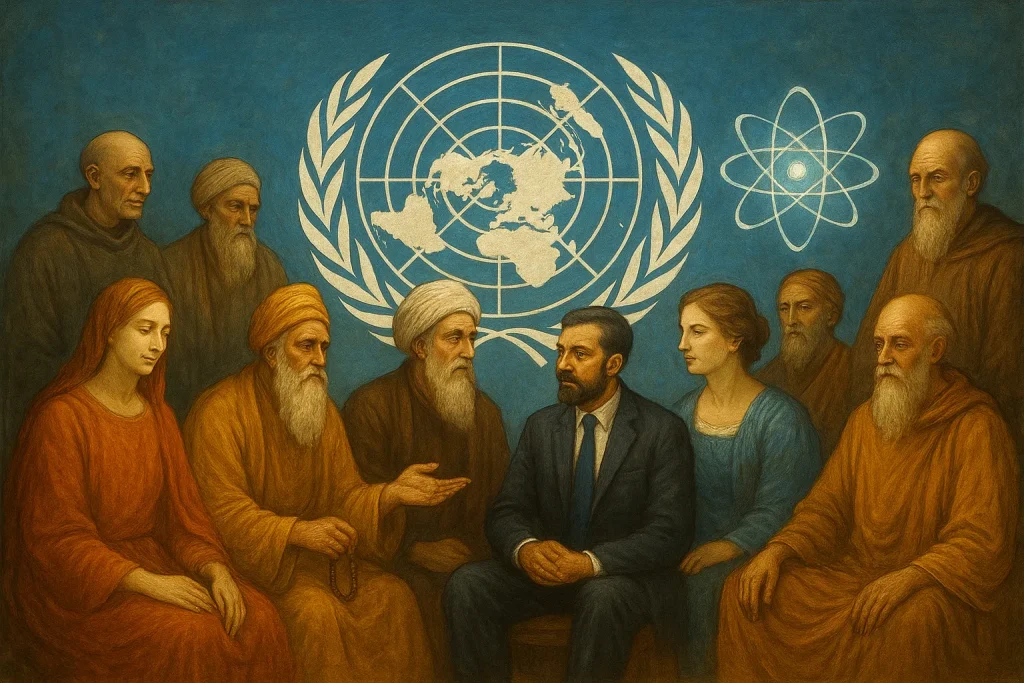
       Fragrant Shigh Dazed Take Your Seat Boys
The fragrance drifts, the sighs are dazed; come, seekers, take your seat, boys!.
The goal still shimmers far ahead, the road itself moves on; take your seat, boys!

A thirst of sterling purity, the wine of Paradise; Life, the cup-bearer sweet;
What do the sober know of this? The heedless smile in freedom; take your seat, boys!

Each rung of the ladder sways; the sea itself has spilled its cup.
O austere Shaikh, in taverns even saints grow careless; take your seat, boys!

What ledger, what accounting, O cup-bearer, when the heart itself is the wager?
Those who vow to guard Love prove faithless in the end; take your seat, boys!

We keep alive the dream of an Absolute Beloved; why, we cannot say;
Yet the moment we would meet His gaze, He vanishes at once; take your seat, boys!

Virtual particles quiver in oscillation; the tea is freshly strained;
Beloved, be appeased if angered, the evening calls us in, take your seat, boys!
Intellectual-Literary Explanation
This ghazal braids classical Sufi-romantic imagery with the tremor of modern scientific consciousness. Two currents run through it: on one side, the traditional metaphors of the tavern, the cup-bearer, and ecstatic love; on the other, the contemporary hints of virtual particles and oscillation. Together, they dramatise a modern quest in which science, spirituality, and the longing of the heart meet and mingle.
“The fragrance drifts, the sighs are dazed”: Life’s transience becomes a cosmic intoxication. This is more than worldly pleasure: it is the fleeting union of the human soul with the infinite.
“The goal still shimmers far ahead”: The spiritual journey never reaches final closure; truth is an ever-receding horizon. Both Sufism and Vedānta teach that the quest is without end.
“A thirst of sterling purity … What do the sober know?”: The cup-bearer’s wine is the bliss of self-realisation. Those who pride themselves on reason and sobriety remain untouched by that joy.
“O austere Shaikh”: The Shaikh stands for rigid orthodoxy. In Sufi tradition, even the religious functionary must finally bow to the freedom of divine love.
“Those who vow to guard Love prove faithless”: To live the truth of love, human or divine, is to face its ungovernable, un-ownable nature.
“We keep alive the dream of an Absolute Beloved”: The heart nourishes a faith in the unseen Beloved-God, Brahman, the One-yet like a quantum particle, He eludes the gaze the instant we try to measure Him.
“Virtual particles quiver in oscillation”: The closing couplet weds household warmth to cosmic mystery. Virtual particles, appearing and vanishing in a flash, become a scientific emblem of love’s and existence’s own uncertainty. The straining of tea and the gentle plea to a sulking beloved fold the infinite into the everyday.
Overall, the poem urges us to see that whether we stand in the fervour of love or in the laboratory of quantum physics, the ultimate truth remains shimmering, many-layered, and eternally mysterious.
Table of Contents
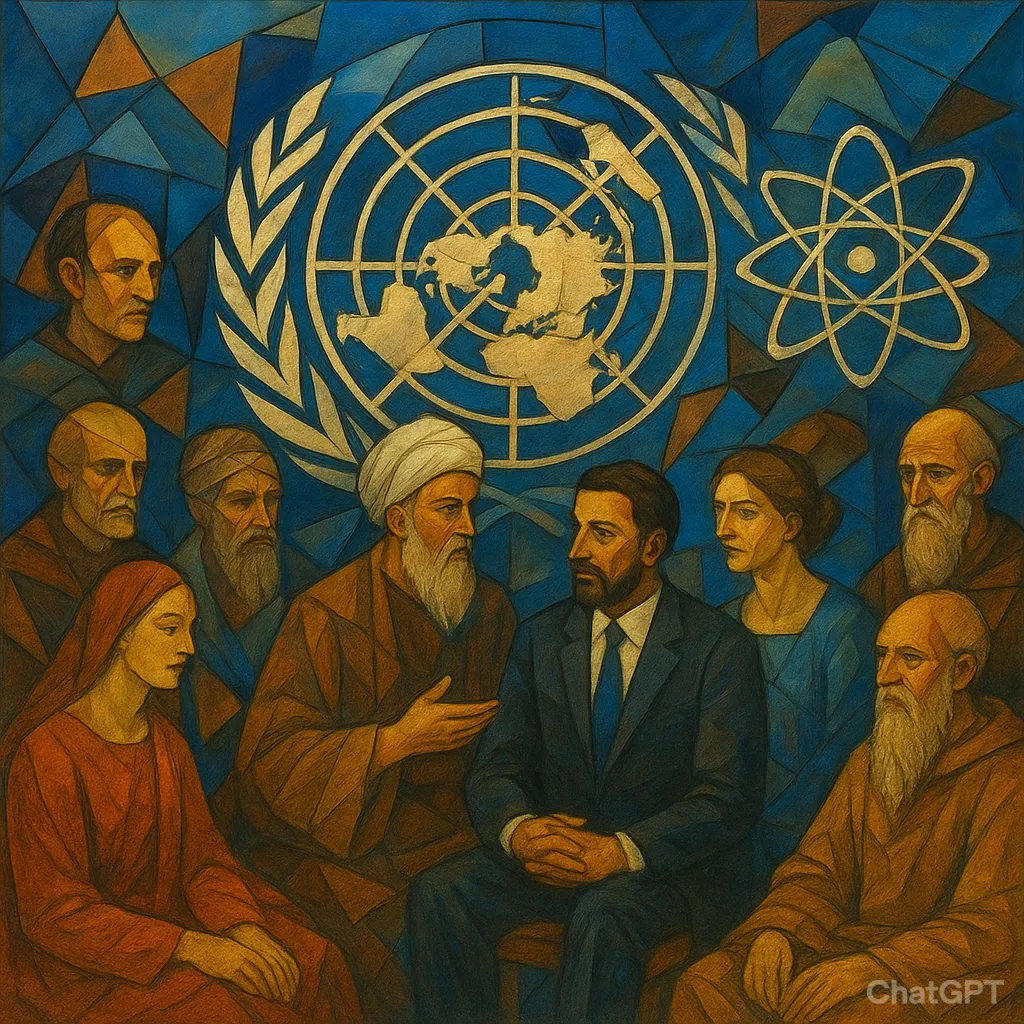
An Expert Ctique: Critical-Scholarly Essay
Fragrant Shigh Dazed Take Your Seat Boys – Meta-Mystic Futurism, the MMQD Frame, Analytical Idealism, Orch-OR, Spirituality, and the Meeting of Oriental and Occidental Love-Philosophy
Study Backdrop:
In a characteristically playful yet pointed gesture, the Indian External Affairs Minister addressed the United Nations with the remark, “Take your seats, boys!”; a Balinese-style turn of phrase that doubled as a call to strengthen the bonds of global fraternity.
He thereby set aside what he considered trivial matters of praise or of policies such as the H-1B visa, and invited the world to a more serious conversation on peace.
In Darpan’s ghazal, the repeated refrain “baith jāo vandō” (“take your seats, seekers”) can be read as the poetic counterpart of this very diplomatic appeal: an invitation to a collective effort toward global harmony.
Yet this summons unfolds against a deeply troubled international backdrop. The decision by the United Kingdom and France to recognize Palestine as a sovereign state provoked sharp reactions; former U.S. president, styled here as “King” Donald Trump, according to economist Jeffrey Sachs’s critical remarks, questioned the very competence of the United Nations and dismissed it as ineffective. Such developments heighten the sense that the world order is sliding toward crisis.
In South Asia, meanwhile, the strategic manoeuvring of the United States and India leaves smaller nations such as Nepal caught in the crossfire, facing the danger of being “scorched” by the regional power play. Tibet, under the mounting pressure of rhetoric about a “Greater Tibet,” seems destined to be pressed further into political constriction. All these converging tensions raise the question: Is the twenty-first century revealing itself as a failed world?
Against this backdrop of disquiet, the speaker underscores the potential of quantum knowledge to reconnect a divided humanity. Elon Musk, who, as the commentary notes, assisted Donald Trump’s rise to the presidency and who is now the world’s richest individual, appears to be envisioning an “America Party” even as he remains linked to the United States through the H-1B framework. These developments sharpen the urgency of the question: how can the international community rise above such crises?
The hope expressed here is that global leaders might discern, within Darpan Poetics, a glimmer of guidance: an invitation to re-imagine world fraternity and to discover in this ghazal both a mirror and a summons to build a sustainable, peace-centred future.
Introduction: A Century of Crisis and the Call “Take Your Seat”
Darpan’s ghazal “Take your seat, seekers” is not merely an exercise in Sufi lyricism; it is a poetic reflection on the fractured geopolitics of the twenty-first century.
The Indian External Affairs Minister’s colloquial exhortation, “Take your seats, boys!” delivered at the United Nations as an appeal to global fraternity, becomes the poem’s refrain. It is at once an invitation to dialogue and a plea for collective responsibility.
At the same historical moment, signs of a failing world order abound: the recognition of Palestine’s statehood by the United Kingdom and France; former U.S. president Donald Trump’s disparagement of the U.N.; the delicate, combustible balance of South Asia; and the deepening entanglement of Tibet in competing national rhetorics. The ghazal’s refrain resounds amid these tensions as a call to re-imagine global solidarity.
Meta-Mystic Futurism and the MMQD Frame
Meta-Mystic Futurism names a vision in which the most advanced scientific discoveries, quantum mechanics, artificial intelligence, and interstellar exploration interweave with mystical insight. The final couplet’s “virtual particles oscillation” exemplifies this vision: the fleeting emergence of virtual particles becomes a metaphor for love’s and existence’s elusive presence.
The MMQD frame, Meta-Mystic Quantum Dialectics, proposes that reality unfolds through a dynamic interplay of science and spirit, matter and consciousness, East and West. The poem’s “ever-moving road” signals that truth is a process, not a static endpoint. Goal and path are one continuous oscillation.
Analytical Idealism and Orch-OR: Consciousness as Fundamental
Analytical Idealism (as argued by Bernardo Kastrup and others) holds consciousness to be the primary substrate of reality, with the physical world as its manifestation. The ghazal’s tavern, cup-bearer, and intoxicating wine become poetic symbols for this primal field of consciousness.
Roger Penrose and Stuart Hameroff’s Orch-OR theory of orchestrated objective reduction connects consciousness to quantum processes in the microtubules of the brain. The poet’s reference to virtual particle oscillation resonates with this speculation: consciousness may be rooted in the tremors of quantum vacuum activity, where presence flickers in and out of being.
Spirituality: The Sufi-Vedāntic Confluence
Traditional Sufi figures, the Shaikh, the wine-pouring Sāqī, are entwined with the Vedāntic idea of the param-preya, the Absolute Beloved. The couplet “We keep alive the dream of an Absolute Beloved … yet He vanishes at once” captures the shared mystical intuition of both traditions: the Ultimate cannot be grasped, only glimpsed. The “One” of Plotinus, the Brahman of the Upaniṣads, and the Sufi al-Haqq converge here.
Dialogue of Eastern and Western Love-Philosophy
Eastern traditions of love emphasise devotion, compassion, and egolessness; Western thinkers from Plato to Kierkegaard view love as existential and ethical. The line “Those who vow to guard Love prove faithless” embodies their common insight: love is an event that transcends possession and defies calculation.
Geopolitical Resonance and the Promise of Quantum Knowledge
Today’s international tensions, from the Israeli-Palestinian conflict to the Himalayan rim of South Asia, threaten to make the twenty-first century a “failed world.” Against this backdrop, the refrain “Take your seat” becomes a civic summons: come to the table of dialogue and shared responsibility.
Quantum theory, with its affirmation of indeterminacy and relational being, invites policymakers to replace rigid power politics with a consciousness-based diplomacy-one that prizes interdependence, resilience, and the capacity for surprise.
Toward an Ideal, Sustainable Socio-Politico-Eco-Social Resolution
The poem gestures toward a new paradigm whose key elements may be sketched as follows:
Consciousness-centred diplomacy: Ground negotiations not only in interest but in the dignity of awareness common to all.
Quantum-inspired governance: Treat uncertainty not as weakness but as a source of adaptive strength.
Cross-cultural moral synthesis: Draw ethical nourishment from both Oriental and Occidental philosophies of love.
Spiritual technology: Harness AI and quantum computing for collective flourishing rather than hegemonic control.
Eco-social symbiosis: Integrate ecological balance and social justice as mutually reinforcing imperatives.
Conclusion
“Take your seat, seekers” is more than a lyrical refrain; it is a mirror held up to a world in peril. Meta-Mystic Futurism and the MMQD frame reveal that the path forward is not the dominance of one geopolitical bloc but the awakening of a shared planetary consciousness.
By uniting the insights of quantum science with the perennial wisdom of East and West, the ghazal calls us toward a fraternity capable of sustaining peace.
Its final message is clear: take your seat at the table of dialogue, for only a collective awakening of consciousness can plant the seeds of a just and lasting future.
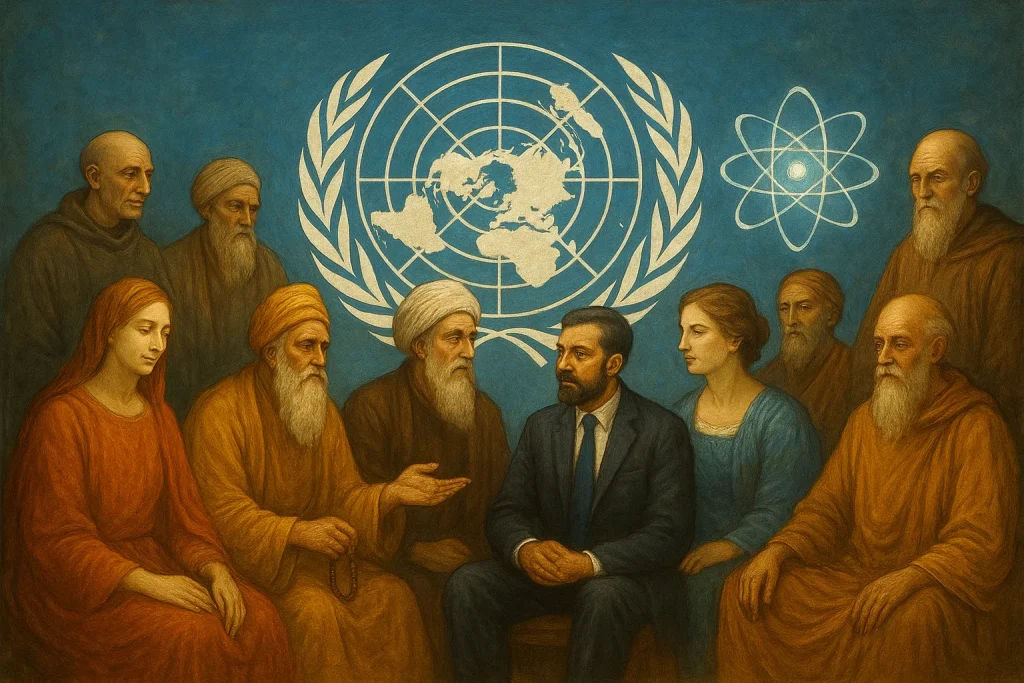
BEYOUTEA>A POETRY REVOLUTION>PEACE
NOTHING IS NOT TRUE : NO\KNOW THYSELF NOT
  MAKE EARTH GREAT FOREVER : END ALL WARS
महकी फ़ज़ा है, बहकी आह है, बैठ जाओ वंदों,
मंज़िल थोड़ी दूर, चलती राह है, बैठ जाओ वंदों।
           ख़रा-सी प्यास थोड़ी है, हुस्न-ए-जन्नत ज़िंदगी साक़ी,
           ख़बर क्या होशवालों को, बेपरवाह है, बैठ जाओ वंदों।
कई पायदान चलनी चाल, छलका जाम-ए-सागर,
ऐ शैख़! मयक़दों में लापरवाह है, बैठ जाओ वंदों।
           क्या हिसाब-किताब है, साक़ी! सौदा दिल की बाज़ी,
           इश्क़ निभाने वाले तो बेवफ़ा हैं, बैठ जाओ वंदों।
न जाने क्यों हम भरम रख लेते हैं एक परम-प्रेय,
पर वो नज़र से तातिल दफ़ा है, बैठ जाओ वंदों।
           Virtual particles oscillation, चाय आज छनी,
           सजनी मान जाना, गर ख़फ़ा है, बैठ जाओ वंदों।
POETRY>WISDOM>Q.TECH FOR A MORE JUST AND
 PEACEFUL WORLD IN LOVE AND ENLIGHTENMENT
  Meta-Sufi/Cyber Poetics on Meta Mystic Futurism
बौद्धिक-वाङ्ग्मयिक भाव-विस्तार
यह ग़ज़ल पारम्परिक सूफ़ियाना-रूमानी प्रतीकों को आधुनिक वैज्ञानिक संवेदनाओं से जोड़ती है। इसकी आत्मा में दोहरी धारा बह रही है, एक ओर रूमानी मयक़दों, साक़ी और इश्क़ के रूपक हैं, दूसरी ओर क्वांटम यथार्थ के संकेत जैसे virtual particles और oscillation। यह संगम आधुनिक युग की उस खोज का प्रतीक है जहाँ अध्यात्म, विज्ञान और प्रेम एक-दूसरे में विलीन हो जाते हैं।
महकी फ़ज़ा, बहकी आह : यहाँ जीवन की क्षणभंगुरता और उसमें समाई मदहोशी का भाव है। यह केवल सांसारिक आनंद नहीं, बल्कि ब्रह्माण्डीय उल्लास का बिंब है जहाँ मानव आत्मा कुछ क्षणों के लिए अनन्त से मिलन का अनुभव करती है।
मंज़िल थोड़ी दूर : मनुष्य की आध्यात्मिक यात्रा कभी पूर्ण नहीं होती; हम सभी साधक हैं। राह चल रही है, मंज़िल सरक रही है। यह सूफ़ी और वेदान्त दोनों परम्पराओं का साझा बोध है कि सत्य की खोज अनन्त है।
प्यास और हुस्न-ए-जन्नत : साक़ी का जाम यहाँ आत्मानुभूति का प्रतीक है। “ख़बर क्या होशवालों को”, ज्ञानीजन, जो केवल तर्क में रमे हैं, उस परम आनन्द के रस से अनभिज्ञ रहते हैं।
मयक़दा और शैख़ : पारम्परिक सूफ़ी कवि शैख़ को सांसारिक रूढ़ियों का प्रतीक मानते हैं। यहाँ भी कवि उस परिहास को दोहराता है: जो धर्माचार्य है अधिकतर वह ही सबसे अधिक बेपरवाह है, क्योंकि परम सत्य को मापने का कोई हिसाब नहीं।
इश्क़ निभाने वाले बेवफ़ा : प्रेम, चाहे सांसारिक हो या ईश्वरीय, उसकी कसौटी पर टिकना कठिन है। “दिल की बाज़ी” में कोई निश्चित सौदा नहीं।
भरम और परम-प्रेय : मानव हृदय एक अदृश्य, सर्वव्यापी प्रिय को लेकर भ्रम पाले रहता है, चाहे उसे ईश्वर कहें, ब्रह्म कहें या परम चेतना। परन्तु वह प्रिय आँखों के सामने कभी ठहरता नहीं, जैसे कोई क्वांटम कण जो निरीक्षण करते ही बदल जाए।
Virtual particles oscillation : ग़ज़ल का अंतिम शेर आधुनिक क्वांटम भौतिकी की ओर संकेत करता है। वर्चुअल पार्टिकल्स जो क्षणिक रूप से प्रकट और विलीन होते हैं, प्रेम और अस्तित्व की उस अनिश्चितता का वैज्ञानिक रूपक बन जाते हैं। चाय का छनना और सजनी का मान-मनाना इस गूढ़ खेल को घरेलू गर्माहट देता है: ब्रह्माण्डीय कम्पन और रोज़मर्रा की आत्मीयता का अद्भुत संगम।
समग्रतः यह ग़ज़ल पारम्परिक सूफ़ी और आधुनिक वैज्ञानिक बोध को एक ही काव्य-धारा में प्रवाहित करती है। यह पाठक को यह सोचने को प्रेरित करती है कि चाहे हम प्रेम की व्याकुलता में हों या क्वांटम तरंगों की खोज में, दोनों ही क्षेत्रों में अंतिम सत्य क्षणभंगुर, अनगिनत परतों वाला और सदैव रहस्यपूर्ण है।
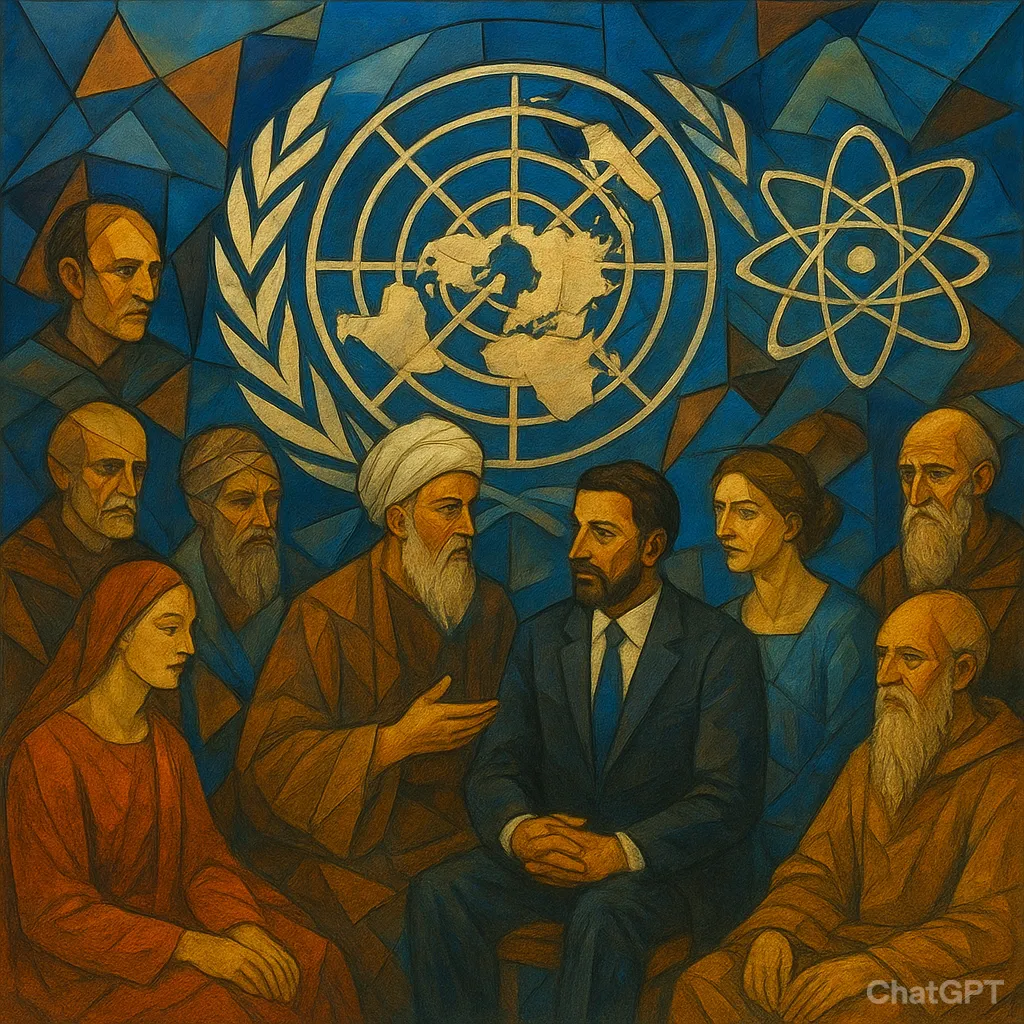
प्राज्ञिक आलोचनात्मक विवेचना
महकी फ़ज़ा बहकी बैठ जाओ वंदों – मेटा-मिस्टिक फ़्यूचरिज़्म, MMQD फ़्रेम, एनालिटिकल आइडियलिज़्म, Orch-OR, आध्यात्मिकता तथा पूरब-पश्चिम प्रेम-दर्शन के आलोक में
भाव-भूमि:
‘Take your seats, boys!’, बाली अंदाज़ में जब इंडियन विदेश मंत्री UN में सब को सम्बोधन कर रहेथे, विश्व भ्रातृत्वको मजबूत करने की आह्वान के साथ यह बताते हुवे की वे तर्रीफ़ और H-1B जैसे trival significance की बातों को छोड़कर, तो हम यह ग़ज़ल उनकी इस बात को के वैश्विक शान्ति आह्वान व निमंत्रण स्वरुप ‘बैठ जाओ वन्दों’ के रूप में refrain या ने काफ़िया पिरोते है।
दुःखद यह बात है की फिलिस्तीन को UK और फ्रांस लगायत के देशों द्वारा एक राष्ट्र की दर्जा प्रदान करने की बात को लेकर जब king डोनाल्ड ट्रम्प डॉ. जेफ्री सैक्स की pesorative remark के मुताविक, UN पर सवाल उठाते हुवे उसे असक्षम करार देना दुनिया की संकट और गहरे होते जाने का अंदेशा है।
इधर साउथ एशिया में US व India प्ले से नेपाल जैसे देश जल जाने को विवश है। तिब्बत ग्रेटर तिब्बत के rhetorics में और भी गहरा दब जाना अवश्यंभावी ही दिखाई पड़ती है। क्या सब नजारा २१ वीं सदी की failed वर्ल्ड होना नहीं है? हम क्वांटम नॉलेज से दुनिया को जोड़ रहे है।
Elon Musk जिन्होंने ट्रम्प को प्रेजिडेंट बनाने में मद्दत की दुनिया की richest गाइ H-1B के तहत रहकर ‘अमेरिका पार्टी’ की जो परिकल्पना कर रहे हैं, तो हमें ऐसी संकट से उभरने के लिए क्या करना चाहिए? सभी वर्ल्ड लीडर्स को दर्पण पोएटिक्स में कुछ नजर आने की आसार मिलसकने के निमंत्रण सहित इस ग़ज़ल को अध्ययन करतें हैं।
प्रस्तावना : 21वीं सदी का संकट और “बैठ जाओ वंदों” का आह्वान
दर्पण की प्रस्तुत ग़ज़ल, “बैठ जाओ वंदों”, केन्द्रीय रूप से केवल रूमानी या सूफ़ियाना काव्य नहीं, बल्कि समकालीन विश्व-राजनीति के एक गहरे सन्दर्भ का सर्जनात्मक रूपक है। भारतीय विदेश मंत्री का संयुक्त राष्ट्र में दिया गया “Take your seats, boys!” जैसा बाली अंदाज़ का उद्घोष यहाँ रिफ़्रेन (refrain) के रूप में गूंजता है। यह केवल शाब्दिक निमंत्रण नहीं, बल्कि वैश्विक भ्रातृत्व और सामूहिक संवाद की आकांक्षा का प्रतीक बन जाता है।
इसी क्षण दूसरी ओर विश्व व्यवस्था की विफलता के संकेत, फिलिस्तीन प्रश्न पर यूके-फ्रांस की मान्यता, डोनाल्ड ट्रम्प का संयुक्त राष्ट्र पर अविश्वास, दक्षिण एशिया में भू-राजनीतिक अस्थिरता, तिब्बत की जटिलताएँ-सभी 21वीं सदी को failed world की कगार पर खड़ा करते हैं। ग़ज़ल का स्वर इसी असमंजस, विघटन और पुनर्सृजन की पुकार को काव्यात्मक आलोक देता है।
मेटा-मिस्टिक फ़्यूचरिज़्म और MMQD फ़्रेम में ग़ज़ल
मेटा-मिस्टिक फ़्यूचरिज़्म (Meta-Mystic Futurism) वह वैचारिक परिप्रेक्ष्य है जो विज्ञान की अति-आधुनिक खोजों (क्वांटम मेकानिक्स, AI, अंतरिक्ष अन्वेषण) को रहस्यवाद और भविष्य-दर्शन के साथ जोड़ता है। ग़ज़ल का अंतिम शेर, “Virtual particles oscillation, चाय आज छनी”, इसी दृष्टि का अनूठा उदाहरण है। वर्चुअल पार्टिकल्स का क्षणिक प्राकट्य ब्रह्माण्डीय अदृश्यता और प्रेम के अप्रत्याशित दर्शन का वैज्ञानिक रूपक है।
MMQD फ़्रेम (Meta-Mystic Quantum Dialectics): जिसे यहाँ एक विमर्शात्मक संरचना के रूप में लिया गया है, काव्य में यह दिखाता है कि कैसे माया और वास्तविकता, विज्ञान और अध्यात्म, पूर्व और पश्चिम, तर्क और अनुभूति एक दूसरे में गतिशील द्वंद्व रचते हैं। ग़ज़ल की पंक्तियाँ “मंज़िल थोड़ी दूर, चलती राह है” इस अनन्त द्वंद्व के प्रतीक हैं; लक्ष्य लगातार खिसकता है, सत्य स्थिर नहीं।
एनालिटिकल आइडियलिज़्म और ऑर्क-OR : चेतना की प्राथमिकता:
एनालिटिकल आइडियलिज़्म (Bernardo Kastrup इत्यादि) यह प्रतिपादित करता है कि चेतना मूलभूत है और भौतिक जगत चेतना का प्रकटीकरण। ग़ज़ल का सूफ़ियाना “साक़ी” और “मयक़दा” इसी चेतनास्रोत का काव्यात्मक प्रतीक है, अनन्त रस का वह स्रोत जिससे समस्त अस्तित्व मदमस्त है।
ऑर्क-OR (Orchestrated Objective Reduction), Penrose और Hameroff का क्वांटम मस्तिष्क सिद्धान्त, चेतना को क्वांटम स्तर की घटनाओं से जोड़ता है। Virtual particles oscillation का उल्लेख इस परिकल्पना की ओर संकेत करता है कि चेतना का उद्गम सूक्ष्मतम क्वांटम कम्पन में निहित है। ग़ज़ल विज्ञान और रहस्यवाद के बीच इसी सेतु का निर्माण करती है।
आध्यात्मिकता : सूफ़ी-वेदान्तीय संगम
ग़ज़ल के शेर पारम्परिक सूफ़ी प्रतीकों, साक़ी, जाम-ए-सागर, मयक़दा; को वेदान्तीय “परम-प्रेय” के साथ गूंथते हैं। “भरम रख लेते हैं एक परम-प्रेय” मनुष्य की उस अनन्त प्रिय के प्रति निष्ठा का बिंब है जिसे न तो नाम से बाँधा जा सकता है, न दृष्टि से पकड़ा जा सकता है। यह पूर्व और पश्चिम के रहस्यवाद का साझा बोध है; Plotinus की ‘One’, वेदान्त का ‘ब्रह्म’ और सूफ़ी का ‘हक़’।
ओरिएंटल और ऑक्सीडेंटल लव-फिलोसोफी का संवाद
पूर्व का प्रेम-दर्शन भक्ति, करुणा और निरहंकार की ओर झुकता है, जबकि पश्चिम में Plato से लेकर Kierkegaard तक प्रेम को अस्तित्वगत अर्थ और नैतिक दायित्व का क्षेत्र मानते हैं। दर्पण की ग़ज़ल इन दोनों परम्पराओं को जोड़ती है। “इश्क़ निभाने वाले तो बेवफ़ा हैं”; यहाँ प्रेम की अपारगम्यता और मानवीय अपूर्णता दोनों ही परम्पराओं की साझा अनुभूति है।
समकालीन भू-राजनीति और क्वांटम ज्ञान का प्रस्ताव
आज की वैश्विक राजनीति: फिलिस्तीन प्रश्न, दक्षिण एशियाई भू-संकट, तिब्बती प्रश्न; विश्व को “failed world” की ओर धकेल रहे हैं। ग़ज़ल का “बैठ जाओ वंदों” इसी पृष्ठभूमि में एक call to order है; संवाद, समन्वय और विश्व भ्रातृत्व के लिए निमंत्रण।
क्वांटम ज्ञान, जो अनिश्चितता को यथार्थ का अभिन्न अंग मानता है, हमें यह सिखाता है कि कठोर सत्ता–केन्द्रित समाधान नहीं, बल्कि परस्परता, सह-अस्तित्व और चेतना-केंद्रित नीति ही दीर्घकालिक शान्ति ला सकती है।
आइडियल सस्टेनिंग सोशियो-पॉलिटिको-इको-सोशल रिज़ॉल्यूशन
ग़ज़ल से प्रेरित यह प्रस्ताव निम्न बिन्दुओं में संक्षेपित किया जा सकता है:
चेतना-केंद्रित कूटनीति : राजनीतिक वार्ता केवल हित-संतुलन पर नहीं, बल्कि चेतना की साझा गरिमा पर आधारित हो।
क्वांटम-प्रेरित नीति : अनिश्चितता को बाधा नहीं, नीति-निर्माण की लचीलापन शक्ति माना जाए।
संस्कृति-संवाद : ओरिएंटल-ऑक्सीडेंटल प्रेम-दर्शन के संगम से नैतिक आधार निर्मित हो।
आध्यात्मिक प्रौद्योगिकी : AI और क्वांटम कम्प्यूटिंग को मानवता-केंद्रित भविष्य के लिए प्रयुक्त किया जाए, न कि विभाजनकारी प्रभुत्व के लिए।
सहजीवित विकास : पारिस्थितिकीय संतुलन और सामाजिक न्याय को एक-दूसरे के पूरक रूप में देखा जाए।
निष्कर्ष
“बैठ जाओ वंदों” मात्र काव्यात्मक रिफ़्रेन नहीं; यह 21वीं सदी की वैश्विक सभ्यता को दिया गया एक दर्पण है; जहाँ विज्ञान और अध्यात्म, पूर्व और पश्चिम, प्रेम और राजनीति, सब एक ही चेतना-स्रोत से जुड़े हैं। मेटा-मिस्टिक फ़्यूचरिज़्म और MMQD का दृष्टिकोण हमें बताता है कि संकटों से उबरने का मार्ग किसी एक भू-राजनीतिक शक्ति में नहीं, बल्कि समष्टिगत चेतना-जागरण और क्वांटम ज्ञान से प्रेरित वैश्विक भ्रातृत्व में है।
यही ग़ज़ल का सार्थक संदेश है-बैठ जाओ वंदों : संवाद की मेज़ पर आइए, क्योंकि भविष्य की शान्ति का बीज हमारी सामूहिक चेतना में ही अंकुरित होगा।
Next Read: heart that refuses confinement