


Table of Contents
           A Fire of Darkness Burns
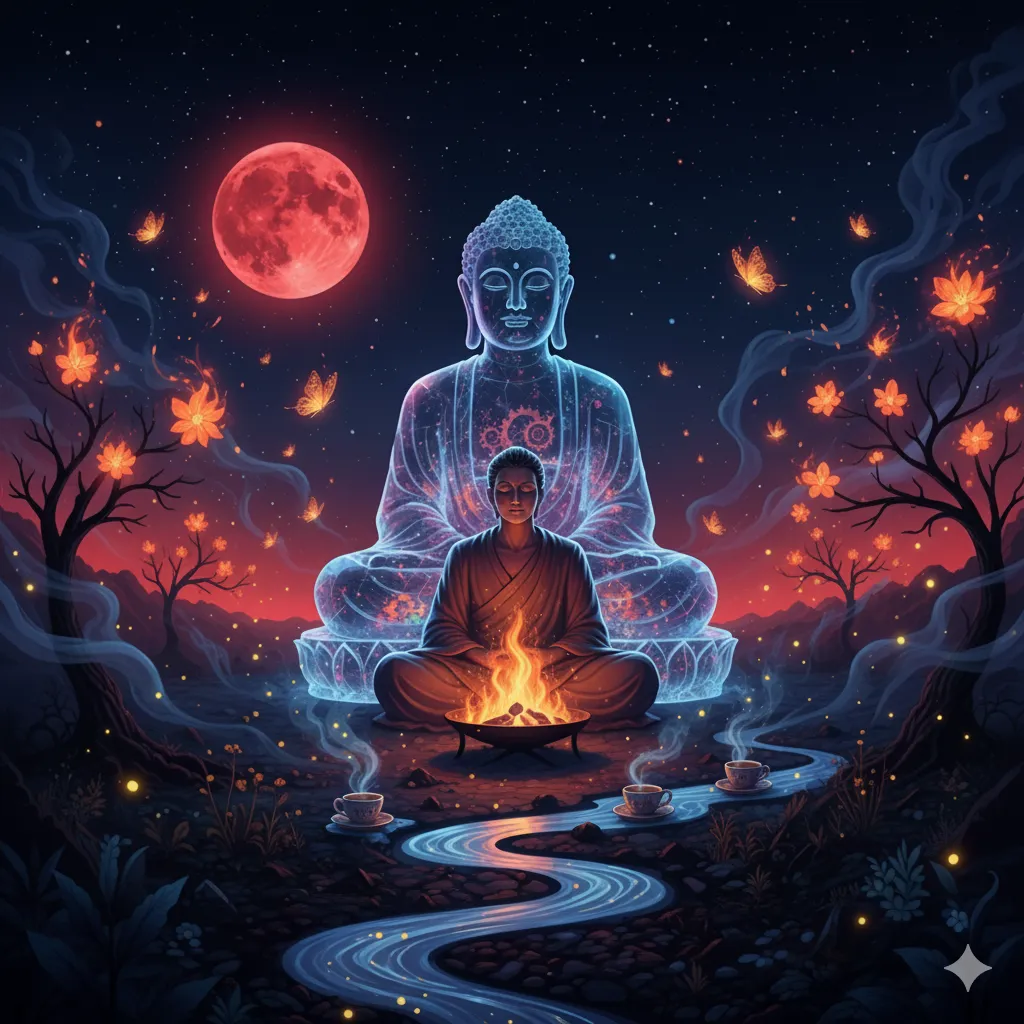
When the light is plundered from the eyes, a fire of darkness burns,
This anger feels like the ashes of ruins, a fire of darkness burns.

To fathom the “nothing” is to embrace the “everything” concealed,
One love suffices against millions, a fire of darkness burns.

O Master! my discipleship in thy name has turned to shame,
How may a tree stand upright without its branches? A fire of darkness burns.

When the night itself is burning dark, the moonlight rises wounded,
Flames of fire blossom like roses in gardens, a fire of darkness burns.

The butterfly of the garden is ablaze, yet fireflies illumine the nights,
Wounds may fade, but the tale is of scars, a fire of darkness burns.

Quantum time-crystal spinner: today, each discourse turns to tea,
Beloved ones sip the fortune of their fates, a fire of darkness burns.
An Academic Expert Critique
A Fire of Darkness Burns – Fire and Darkness: A Meta-Quantum Mystic Reading of Poetics, Geopolitics, and the Possibility of Peace
Abstract
This paper examines a contemporary ghazal that fuses mystical imagery, existential philosophy, and quantum metaphors into a unified aesthetic discourse.
Through the lens of Meta Mystic Futurism and the MMQD (Meta-Mystic Quantum Dialectics) framework, the analysis situates the ghazal in relation to global geopolitics, Nepal’s riots, the symbolism of the blood moon eclipse, and the scientific construct of the quantum time crystal.
The article argues that the ghazal reveals a paradoxical vision: darkness as both destructive and transformative, violence as precursor to renewal, and quantum temporality as a metaphor for resilient peace.
Introduction
Poetry has long served as a vehicle not only of emotion but also of philosophical and political imagination. The ghazal under study, “A Fire of Darkness Burns”, exemplifies this function.
While it bears the traditional motifs of pain, love, and loss, it simultaneously invokes scientific metaphors such as the “quantum time-crystal spinner,” situating its vision in a cosmological and futuristic register.
This dual discourse, the intimate and the global, the mystical and the scientific, demands an analytical framework capable of bridging symbolic poetics with political critique.
Hence, the present study employs the Meta Mystic Futurism perspective, alongside MMQD, to interpret the ghazal as a text of geopolitical resonance and metaphysical insight.
Methodological Orientation
The methodology integrates three levels of interpretation:
Literary-Hermeneutic Analysis, interpreting the symbolic layers of “fire” and “darkness” within the ghazal’s poetic texture.
Philosophical-Quantum Framework, reading the motif of “nothingness as everything” through both Advaita metaphysics and Google Meta’s contemporary quantum computing paradigms, particularly the idea of a quantum vacuum as potentiality.
Geopolitical Application, contextualising the ghazal within Nepal’s political unrest, the cultural symbolism of lunar eclipses, and broader world-system dynamics.
This triangulation allows the ghazal to be read simultaneously as poetry, philosophy, and political allegory.
Analysis
- Fire and Darkness as Dialectics: The recurring refrain “a fire of darkness burns” embodies a paradox: darkness is not the absence of energy but its own combustion. In existential terms, despair ignites resistance; in social terms, oppression kindles rebellion. The ghazal thus renders negativity as an active force, a dialectical energy of both ruin and renewal.
- Nothingness and Everythingness: The assertion that “to understand nothing is to know everything” reflects a philosophical convergence between Eastern mysticism and modern quantum theory. Just as Advaita Vedānta posits the identity of Brahman with emptiness beyond form, so too quantum physics identifies the vacuum as the generator of infinite virtual particles. The ghazal compresses these discourses into the experiential register of love: a singular passion outweighing countless rationalities.
- Discipleship, Authority, and Broken Branches: The lament that discipleship under a master has become shameful suggests a critique of authority structures, whether religious, political, or pedagogical. The metaphor of a tree without branches alludes to systems stripped of vitality, unable to sustain life. This imagery resonates with disillusionment toward failing institutions in both local and global contexts.
- Lunar Blood and the Gardens of Flame: The image of moonlight rising “wounded” during a burning night recalls the symbolism of the blood moon eclipse. Across cultures, such celestial events signal upheaval and transformation. Within Nepal’s riots and geopolitical unrest, this metaphor points to the way social landscapes blossom with violence before the possibility of regeneration. The garden aflame becomes a paradoxical womb of destruction and creation.
- Quantum Temporality and Shared Destiny: The most striking scientific allusion is the quantum time-crystal spinner. Time crystals, as theorised in contemporary physics, are systems that perpetually oscillate without losing structural coherence. Applied to geopolitics, this metaphor suggests that cycles of conflict and renewal persist, but the core potential of peace remains intact. The closing image, “beloved ones sip the fortune of their fates”, indicates that nations, like individuals, consume the consequences of their choices, yet remain interconnected within the oscillating symmetry of time.
Conclusion
The ghazal emerges as more than a lyrical meditation; it is a manifesto of resilience. Through its fusion of mystical metaphors, philosophical paradoxes, and quantum imagery, it articulates a vision of peace born from the very structures of destruction.
The MMQD approach clarifies that the poem is not merely a personal lament but an allegory of global transformation: from Nepal’s burning streets to the eclipsed skies, from broken discipleship to the entangled destinies of humankind.
Thus, the fire of darkness does not solely consume, it also illuminates pathways of renewal. Peace, the poem implies, is not the absence of conflict but the persistence of order within oscillation, much like a time crystal enduring through ceaseless flux.
   BEYOUTEA>A POETRY REVOLUTION>PEACE
MAKE EARTH GREAT FOREVER : END ALL WARS
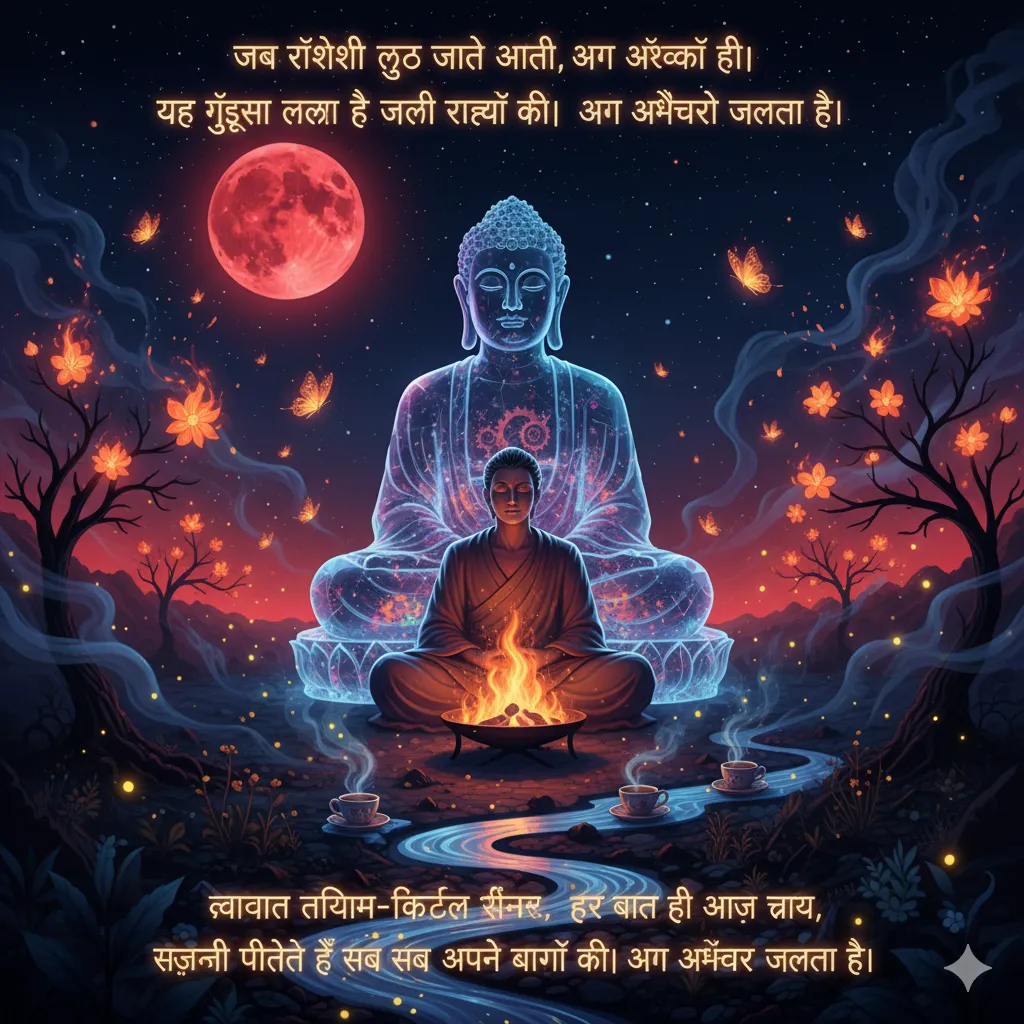
जब रौशनी लूट जाती है आँखों की, आग अँधेरा जलता है,
यह ग़ुस्सा लगता है जली राखों की, आग अँधेरा जलता है।
        कुछ भी न समझना "कुछ नहीं" को, है "कुछ नहीं" सब कुछ,
        एक इश्क़ काफ़ी तुमसे लाखों की, आग अँधेरा जलता है।
मुर्शिदा! मेरी शागिर्दगी तेरे नाम का कर दिया है शर्मसार,
दरख़्त कैसे दुरुस्त बिना शाखों की, आग अँधेरा जलता है।
        फिर रात अँधेरा जलता है तो उगती है चाँदनी लहूलुहान,
        आग की लपटें गुल फूटे बाग़ों की, आग अँधेरा जलता है।
वो बाग़ की तितली सुलग उठी है, जुगनू चमकते हैं रातों को,
ज़ख्म मिटते हैं पर बात यह दाग़ों की, आग अँधेरा जलता है।
        क्वांटम टाइम-क्रिस्टल स्पिनर, हर बात पर हुई आज चाय,
        सजनी पीते हैं सब अपने भागों की, आग अँधेरा जलता है।
POETRY>WISDOM>Q.TECH FOR A MORE JUST AND
  PEACEFUL WORLD IN LOVE AND ENLIGHTENMENT
   Meta-Sufi/Cyber Poetics on Meta Mystic Futurism
ग़ज़ल का साहित्यिक भावार्थ
इस ग़ज़ल का मूल स्वर आग और अँधेरे की द्वंद्वात्मकता पर आधारित है। जब आँखों से रौशनी छिन जाती है तो अँधेरा केवल अनुपस्थिति नहीं रह जाता, वह जली राखों की आग बनकर भीतर जलता है।
यह छवि मनुष्य की आंतरिक पीड़ा, आक्रोश और प्रतिरोध का संकेत है। ग़ज़ल इस बात पर जोर देती है कि हर अँधेरा अपने भीतर एक जलती हुई लौ छुपाए है, जो विनाश भी है और संभावना भी।
दूसरे आयाम में यह रचना अस्तित्व और शून्यता के प्रश्न को छूती है। “कुछ नहीं” ही “सब कुछ” है, यह विचार अद्वैत दर्शन और क्वांटम वैक्यूम दोनों से मेल खाता है।
प्रेम को यहाँ सार्वभौमिक शक्ति के रूप में रखा गया है, जो लाखों तर्कों और आस्थाओं से परे है। गुरु-शिष्य संबंध, प्राकृतिक सौंदर्य, और रात-चाँदनी की प्रतीकात्मक छवियाँ मिलकर इस ग़ज़ल को केवल प्रेम और पीड़ा की गाथा नहीं रहने देतीं, बल्कि एक गहरी दार्शनिक चेतावनी बनाती हैं।
अंतिम शेर में “क्वांटम टाइम-क्रिस्टल स्पिनर” का प्रयोग इस ग़ज़ल को समकालीन और भविष्यवादी दोनों बना देता है। यह समय की स्थिर-अस्थिर लय, भाग्य की अनिश्चितता, और विश्व व्यवस्था के सतत परिवर्तन की ओर इशारा करता है।
इस तरह यह ग़ज़ल केवल भावुक या व्यक्तिगत नहीं, बल्कि वैश्विक चेतना और शांति की संभावना पर भी संवाद करती है।
आलोचनात्मक निबंध / शोध प्रतिवेदन
आग अँधेरा जलता है – आग और अँधेरा: क्वांटम-फ्यूचरिज़्म, जियोपॉलिटिक्स और शांति की संभावना
Abstract
यह लेख प्रस्तुत ग़ज़ल को एक बहुस्तरीय व्याख्या में देखता है, जहाँ व्यक्तिगत वेदना और सामाजिक असंतोष, क्वांटम टाइम क्रिस्टल और वैश्विक जियोपॉलिटिक्स, नेपाल के दंगों और ब्लड मून ग्रहण की सांस्कृतिक ध्वनियों के साथ जुड़ते हैं।
मेटा-मिस्टिक-फ्यूचरिज़्म और MMQD (Meta-Mystic Quantum Dialectics) दृष्टिकोण से यह लेख दिखाता है कि कैसे कविता विनाश की आग में भी शांति और पुनर्निर्माण की संभावना को पहचानती है।
Introduction
समकालीन साहित्य में ग़ज़ल केवल प्रेम और सौंदर्य का माध्यम नहीं रही, वह अब वैश्विक राजनीतिक-दार्शनिक संवाद की भी वाहक बन रही है। प्रस्तुत ग़ज़ल “आग अँधेरा जलता है” इस दृष्टि से अद्वितीय है।
इसमें मानवीय पीड़ा और गुस्सा, अस्तित्व और शून्यता, गुरु-शिष्य संवाद, प्राकृतिक विनाश, और क्वांटम समय-क्रिस्टल जैसी नवीनतम वैज्ञानिक अवधारणाएँ एक ही काव्य-फलक पर साथ आती हैं।
Philosophical Grounding & Meta-Quantum Perspective: ग़ज़ल में “कुछ नहीं ही सब कुछ है” का कथन, Google Meta Quantum Computing की उस परिकल्पना से मेल खाता है जिसमें शून्यता को केवल रिक्तता नहीं, बल्कि अनंत संभावनाओं का स्रोत माना जाता है।
Meta Mystic Futurism: इस दृष्टि को आध्यात्मिक और वैज्ञानिक एकात्मता की ओर ले जाता है,जहाँ क्वांटम एंटैंगलमेंट और मानव चेतना की करुणा एक-दूसरे में गुंथी रहती हैं। MMQD (Meta-Mystic Quantum Dialectics): यह मानता है कि वास्तविकता केवल भौतिक नहीं, बल्कि रहस्यमय-सामाजिक-वैज्ञानिक संगम है।
Geopolitical Context: Nepal, Riots & Blood Moon: नेपाल के दंगों और राजनीतिक अस्थिरता की पृष्ठभूमि में यह ग़ज़ल विशेष अर्थ ग्रहण करती है। “आग अँधेरा” यहाँ केवल प्रतीकात्मक नहीं, बल्कि वास्तविक सामाजिक अनुभव है।
ब्लड मून ग्रहण, जिसे कई संस्कृतियों में विनाश और परिवर्तन का सूचक माना जाता है, उसी रक्तिम चाँदनी की तरह उभरता है जिसका उल्लेख ग़ज़ल में है, “उगती है चाँदनी लहूलुहान।” यह दर्शाता है कि विश्व राजनीति और स्थानीय हिंसा दोनों ही क्वांटम समय-क्रिस्टल की तरह दोहराव और विघटन में फँसी हुई हैं।
Time Crystal & Peace Possibility: टाइम क्रिस्टल का सिद्धांत कहता है कि एक प्रणाली लगातार बदल सकती है, पर अपनी संरचना कभी नहीं खोती। ग़ज़ल इसी रूपक के माध्यम से सुझाती है कि अँधेरा और आग चाहे कितनी बार लौटें, मानवता के भीतर शांति और पुनर्निर्माण की संभावना कभी समाप्त नहीं होती।
यहाँ “सजनी पीते हैं सब अपने भागों की” शेर यह बताता है कि हर सभ्यता अपने कर्म और भाग्य का पेय पीती है, पर वह साझा अनुभव ही सामूहिक शांति का मार्ग खोलता है।
Conclusion
इस प्रकार, यह ग़ज़ल केवल व्यक्तिगत वेदना का शोकगीत नहीं है। यह वैश्विक शांति-राजनीति का घोषणापत्र भी है, जहाँ आग और अँधेरा केवल विनाशक नहीं बल्कि परिवर्तनकारी ऊर्जा हैं। मेटा-क्वांटम-फ्यूचरिज़्म और MMQD के दृष्टिकोण से देखें तो यह कविता इस बात का प्रमाण है कि विनाश के दौर में भी मानवता के पास पुनर्जन्म और शांति की संभावना मौजूद रहती है।
Indicative References
Google Meta Quantum Computing Research (2023–2025).
Wilczek, F. (2012). Time Crystals. Physical Review Letters.
Nepal Human Rights Reports, UNHCR (2023–2024).
Darpan, R. (2024). Meta Mystic Futurism and Quantum Poetics. Darpanpoems.com.
Ricoeur, P. (1976). Interpretation Theory: Discourse and the Surplus of Meaning.
बौद्धिक भाव-विस्तार
आँखों से रौशनी का लुटना: यहाँ “रौशनी” सिर्फ़ देखने की शक्ति नहीं बल्कि सत्य, विवेक और जीवन की चमक है। जब यह लूट जाती है तो “अँधेरा” अपने भीतर आग की तरह जलता है, यानी पीड़ा और प्रतिरोध दोनों साथ-साथ जन्म लेते हैं। यह मनुष्य की उस अवस्था का प्रतीक है जब बाहर उजाला नहीं होता तो भीतर गुस्से और दर्द की चिनगारी भड़कने लगती है।
“कुछ नहीं” बनाम “सब कुछ”: दूसरे शेर में दार्शनिक तर्क है, अस्तित्व और शून्य का। कवि कहता है कि “कुछ नहीं” को समझना ही सबसे बड़ा “सब कुछ” है। यह आद्वैत वेदांत और क्वांटम वैक्यूम दोनों का ही बिंब है। प्रेम को यहाँ उस परम शक्ति के रूप में रखा गया है जो लाखों विचारों और तर्कों पर भारी है।
मुर्शिद-शागिर्द संबंध: यहाँ कवि अपने उस्ताद (मुर्शिद) से शिकवा करता है कि उसकी शागिर्दी ने उसे शर्मसार कर दिया। जैसे पेड़ बिना शाख़ों के अधूरा है, वैसे ही शिक्षा या मार्गदर्शन बिना सही संरचना के व्यर्थ है। यह आध्यात्मिक गुरुत्वाकर्षण और शिष्य की स्वतंत्रता पर सवाल उठाता है।
चाँदनी और रक्तिम रात्रि: अँधेरे से चाँदनी निकलती है लेकिन वह भी लहूलुहान है। यह दृश्य संघर्ष और सृजन दोनों का प्रतीक है। फूलों का खिलना भी आग की लपटों में है, यानी विनाश से ही सृजन की संभावनाएँ जन्म लेती हैं।
तितली और जुगनू: बाग़ की तितली जल उठती है लेकिन जुगनू फिर भी चमकते हैं। यह दर्शाता है कि सौंदर्य नष्ट हो सकता है पर आशा और प्रकाश छोटे-छोटे स्रोतों से भी जीवित रहता है। यहाँ “ज़ख्म मिटना” का अर्थ यह है कि दर्द समय के साथ दाग़ों में बदलकर इतिहास का हिस्सा बन जाता है।
क्वांटम टाइम क्रिस्टल और भाग्य: अंतिम शेर आधुनिक विज्ञान और मानवीय दिनचर्या का संगम है। “क्वांटम टाइम क्रिस्टल स्पिनर” निरंतर बदलते समय और उसकी स्थिर लय का प्रतीक है। और इसी लय में लोग अपने-अपने भाग्य की “चाय” पीते हैं। यह जीवन के अनिश्चितता सिद्धांत और साझा नियति दोनों की ओर इशारा करता है।
कुल मिलाकर, यह ग़ज़ल आधुनिक दार्शनिक कविता है, जहाँ आग-अँधेरे का प्रतीक एक केंद्रीय धुरी है। यह कभी ग़ुस्से का रूप लेता है, कभी प्रेम का, कभी गुरु-शिष्य परंपरा की आलोचना बनता है, कभी प्राकृतिक-सौंदर्य के विनाश का साक्ष्य, और अंततः क्वांटम भौतिकी व मानवीय भाग्य के संवाद में पहुँच जाता है।
Next Read: stealing the light from the eyes