


          A Failed Attempt to Let Go
Memories slipped away, those gentle nights were torn apart,
All feelings of the heart were lies the heart believed at heart.

A failed attempt to let you go keeps wounding breath and bone,
Sweet-sorrow’s ancient habit steals the sighing of my heart.

Birdflight, waves, the sea, the moon descending from the rims of dusk,
On every mountain crest, the clouds, once held, depart.

Each time your gaze received me, drawing me into its depths,
Night melted like kohl into dreams that gather in the dark.

From lashes broke a river of grief; it flowed untamed,
Mirror-shards of my heart lay scattered, robbed of laughter’s spark.

Today, my supreme tea is trilayer graphene’s strength and light.
Beloved, your memories brew the life-elixir I embark.
Table of Contents
Scholarly Exegesis and Interpretive Commentary
This ghazal operates simultaneously on three planes: personal memory, civilizational consciousness, and a technologically transformed future. It uses the classical idiom of love and loss as an interpretive gateway into contemporary human dilemmas: fractured identity, political turbulence, sensory overload, and the overwhelming speed of technological change.
The poet’s insistence that memories are lived, not written, is a reminder that human continuity is embodied before it becomes archival. Childhood symbols such as glass marbles, muddy monsoon paths, mountain crests and sea-suns serve as mnemonic scaffolds of innocence, resilience, and community-bound identity.
These memories contrast sharply with the present world of quantum AI, supercomputing economies, drone warfare, sexual-political scandals, and geostrategic brinkmanship, whose psychic impact is portrayed as “melting kohl” darkening the very nights of human consciousness.
The ghazal frames personal pain as a microcosm of global trauma. Broken mirrors and scattered heart-shards echo a civilisation unable to recognise its own reflection.
The trilayer graphene metaphor brings scientific futurity into poetic discourse: a material that is light, strong, conductive, and foundational to next-generation technology becomes a symbol of the three-layered human mind: memory, experience, and moral foresight.
Its “supreme tea” signifies a fusion where ancient emotional wisdom and new technological power coexist, rather than collide.
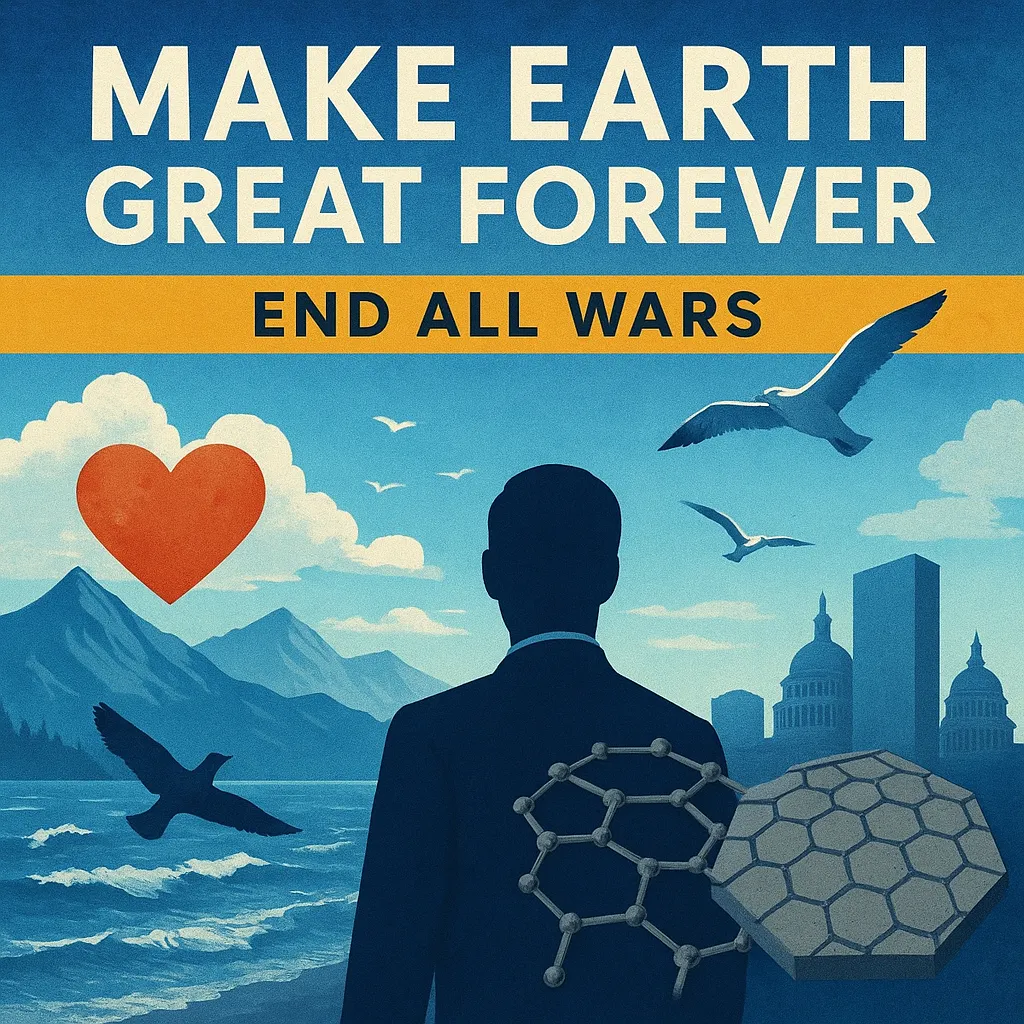
The poet’s mission aligns with the global vision of MAKE EARTH GREAT FOREVER: END ALL WARS, advocating a model of governance and technology grounded in remembrance, empathy, and nonviolence, resisting the normalisation of conflict.
The Quantum Description
Memory is the very condition of our being alive. The moments that pass, if committed to writing, may take the form of recorded history, but in truth, we do not write memories; we live them. These memories are capable of making us weep, and at other times, of making us laugh.
The glass marbles we played with in childhood, jingling in the small cloth pouches sewn into our shorts, seemed to echo like a celestial melody. Today, paved roads slice through the villages, but there was a time when monsoons were walked through knee-deep mud, and winter winds swept dust across open fields.
Birds rising from the mountain peaks, the ocean wrapped in clouds, and the setting sun along the shore, all carried with them the promise of a new dawn.
The economic bubbles of supercomputing and quantum AI that dominate our present will themselves become tomorrow’s memories.
For now, however, we witness the age shaping itself through events such as Zohran Mamdani’s political ascent, the warnings and threats issued by Donald Trump, the drone-war tragedies of Central Europe, and the psychological turmoil surrounding incidents of sexual harassment upon the Mexican president.
All of this marks our era, like the dark streak of melting kohl spreading across the night, recording itself quietly yet indelibly in our collective consciousness.

An Expert Critique
A Failed Attempt to Let Go – Memory, War, and Quantum Consciousness: A Literary-Philosophical Framework for Peace in the Age of AI: a sophisticated commentary on contemporary humanity
Introduction: The ghazal under study is not merely a lyrical meditation on personal loss; it is a sophisticated commentary on contemporary humanity. Through memory, emotional rupture, and natural metaphors, the poem constructs a philosophical critique of war, technology-driven governance, and the erosion of human empathy.
This document seeks to translate those insights into a policy-relevant framework for global leadership, with specific relevance to UNESCO, the UN General Assembly, and international peace movements.
Memory as Humanity’s Primary Ethical Infrastructure: The poem argues that memory is not a passive record; it is the existential medium through which individuals and cultures remain human. Childhood experiences, simple, unoptimized, and un-instrumentalised, represent a cognitive and ethical grounding that modern hyper-technological societies risk losing.
From a policy perspective, this suggests: UNESCO should strengthen memory-preservation programs not only for heritage sites, but for intangible human experience, indigenous knowledge, childhood cultural practices, and intergenerational narratives.
AI and digital governance frameworks must include the protection of cultural memory as a non-negotiable global human right.
The Psychological Normalisation of Conflict: Lines describing “melting kohl nights” and “heart-mirrors shattered” articulate a deeper global condition: societies have begun accepting suffering, especially war-related suffering, as normal and inevitable.
For world governance: The UN must resist the global desensitisation to conflict by elevating civilian trauma and cultural erosion to primary indicators of global security risks.
Peace must be evaluated not only militarily but psychologically, using metrics of collective well-being and cultural wholeness.
Technology, Power, and the Crisis of Human Agency: The poem’s integration of trilayer graphene, quantum AI, drones, and political threats mirrors a world where technological acceleration outpaces ethical governance.
Recommendations include: Establishing a UNESCO/UN Joint Commission on Ethical Technological Acceleration, tasked with ensuring that scientific innovation remains aligned with humanitarian objectives.
Increasing global regulation of autonomous weapons systems (drones, lethal AI), treating them as violations of human moral agency.
The Civilizational Imperative: A Quantum Model of Peace – The ghazal’s imagery suggests a tripartite model of consciousness, memory, experience, and foresight, which parallels trilayer graphene’s structure. This symbolism can guide peace-building frameworks:
Memory – grounding communities in cultural and emotional continuity.
Experience – acknowledging present suffering and socio-political fractures.
Foresight – creating ethical, multigenerational strategies for peace.
For UNESCO and the UN Security Council, this implies designing peace policies that are not reactionary but anticipatory, integrating cultural, psychological, and technological dimensions.
Conclusion: Toward a New Global Peace Architecture: The poem ultimately calls for a human-centred future where emotional intelligence, cultural memory, and technological progress coexist harmoniously. The proposal of MAKE EARTH GREAT FOREVER: END ALL WARS aligns with key UN/UNESCO mandates:
Preservation of human dignity
Cultural continuity
Ethical scientific progress
Global nonviolence
This ghazal, therefore, functions as both literature and policy philosophy, a reminder that peace is not merely the absence of war, but the presence of memory, empathy, and enlightened governance.
BEYOUTEA>A POETRY REVOLUTION>PEACE
NOTHING IS NOT TRUE : NO\KNOW THYSELF NOT
 MAKE EARTH GREAT FOREVER : END ALL WARS
     एक नाकाम सी कोशिश
तुमसे यादें छूटीं वो सभी हसीँ रातें टूटीं,
दिल के सारे अहसासों की बातें भी झूटीं।
           एक नाकाम-सी कोशिश है तुम्हें भुलाने की,
           मीठे  दर्द  की आदत ने साँसों को भी लूटीं।
उड़ते परिंदे,लहरों,समंदर,उतरता चाँद,
हर  चोटी-ए-कूहे  पर  बदली भी छूटीं।
           जब भी नज़रों में तुमने हमें उतार लिया,
           पिघले काजल-सी रातें  ख़्वाबों में जुटीं।
पलकों से दरिया-ए-दर्द भी टूटा बह निकला,
दर्पण  के  टुकड़े-टुकड़े  दिल की हँसी  लूटी।
           ट्रिलयर ग्रैफीन बना आज मेरी ‘सुप्रीम चाय’,
           सजनी ! तेरी यादों में पीना अब जीवन-बूटी।
POETRY>WISDOM>Q.TECH FOR A MORE JUST AND
PEACEFUL WORLD IN LOVE AND ENLIGHTENMENT
Meta-Sufi/QuantumPoetics on MetaMysticFuturism
भावार्थ: समसामयिक एवं वाङ्ग्मयिक विस्तार
यह ग़ज़ल स्मृति, हानि, और अस्तित्व के आधुनिक द्वंद्व को पारंपरिक उर्दू शायरी की सौंदर्य-परंपरा में रखती है। काव्य-वाचक प्रेम की असफलताओं को किसी टूटे संबंध की निजी परिणति भर नहीं मानता; वह उन्हें एक व्यापक भाविक-ब्रह्मांड के रूप में कहता है जहाँ स्मृति स्वयं एक क्वांटम-तरंग की तरह उपस्थित-अनुपस्थित होती रहती है।
१. स्मृति का द्वंद्व और ‘टूटी रातें’: कवि कहता है कि जो बीत चुका है, वह केवल बीता नहीं, उसने आतंरिक संरचना बदली है। प्रेम-संबंध के टूटने का असर केवल भावनाओं तक सीमित नहीं रहता; यह पूरे अनुभव-जगत का पुनर्रचना करता है। “हसीं रातें टूटीं” में रात एक निजी स्मृति नहीं, बल्कि सौंदर्य के टूटे प्रतिरूप का प्रतीक है।
२. मीठा दर्द: आधुनिक मनोविज्ञान की प्रतिध्वनि: “मीठे दर्द की आदत” समकालीन मनोविज्ञान के उस विचार को छूती है कि मनुष्य अक्सर परिचित पीड़ा को भी “सुरक्षा” की अनुभूति की तरह पकड़ कर रखता है। ‘आदत’ यहाँ भावनात्मक पुनरावृत्ति की ओर संकेत करती है, मानो स्मृति का दर्द ही अब श्वास का स्थायी प्रतिरोध बन गया हो।
३. प्रकृति और अंतर्जगत का संगम: उड़ते परिंदे, समुद्र की लहरें, उतरता चाँद, पहाड़, यह सब बाहरी दृश्य नहीं, बल्कि मन की अवस्थाएँ हैं। कवि इन सबको ‘छूटने’ की क्रिया में रखता है, जिससे पता चलता है कि प्रेम-विछोह केवल आंतरिक खालीपन नहीं रचता, वह जगत के अर्थ-निर्माण को भी विघटित करता है।
४. काजल-रात और क्वांटम-स्मृति: नज़रों में उतार लेना और रात का पिघल जाना, यह स्मृति के तरलीकरण की आधुनिक अवधारणा को छूता है। प्रेम और स्मृति द्रव्य-जैसी हैं, रूप बदलती हैं, बहती हैं, और आकार खोकर अर्थ बनाती हैं।
५. दरिया-ए-दर्द और आधुनिक वैश्विक विखंडन: दिल के दर्पण के टूटने का रूपक न केवल व्यक्तिगत पीड़ा का चित्र है, बल्कि समकालीन मानव-विश्व के टूटे प्रतिबिंबों को भी दर्शाता है, युद्ध, असमानता, तकनीकी व्यवधान, सामाजिक ध्रुवीकरण। कवि का दिल यहाँ उस वैश्विक दर्पण का प्रतीक है जो दरकता जा रहा है।
६. ट्रिलयर ग्रैफीन और प्रेम का तकनीकी युग: अंतिम शेर आधुनिकता की वैज्ञानिक प्रगति (trilayer graphene) और गहन निजी भावनाओं को एक साथ रखता है। यह तकनीक और स्मृति के विलक्षण संगम की ओर संकेत है, हम आज अत्याधुनिक सामग्रियों और क्वांटम तकनीकों के युग में भी भावनाओं के प्राथमिक कच्चेपन से बने हैं।
‘ग्रैफीन’ यहाँ शक्ति, स्थायित्व और प्रगति का प्रतीक है; जबकि ‘यादें’ उस पर छायी नर्म धुंध, कवि कहता है कि विज्ञान चाहे कितना भी आगे बढ़ जाए, प्रेम-स्मृति ही जीवन की वास्तविक ‘बूटी’ है।
अध्ययन भावभूमि
यादों से ही हम ज़िंदा होते हैं। गुज़रे हुए लम्हे यदि लिख दिए जाएँ तो वे किसी तहरीरी तारीख़ का रूप ले लेते हैं; वरना यादों को हम लिखते नहीं, बल्कि जीते हैं। यही यादें कभी हमें रुलाती हैं, तो कभी हँसाती भी हैं। बचपन में खेली गई वे काँच की गोलियाँ जो जाँघिये की छोटी बटुओं में खनकती थीं मानो किसी जन्नत की राग को गूँजती थीं।
अब तो गाँवों में पक्के रास्ते दौड़ते चले गए; कभी जाँघ तक आने वाले कादो को चीरते हुए बरसात बीतती थी, और जाड़ों में धूल उड़ाती हवाएँ चलती थीं। पहाड़ों की चोटियों से उड़ते परिंदे, बादलों से घिरा समंदर और डूबता सूरज ये सब नई सुबह का संदेश देते हुए गुजर जाते थे।
आज सुपर-कम्प्यूटिंग और क्वांटम AI की जो आर्थिक बुलबुले हैं वही कल की यादें बनेंगे। हम आज, कम से कम, ज़ोहरान मंदानी की जीत, ट्रम्प की चेतावनियों और धमकियों, मध्य यूरोप में ड्रोन-युद्ध की त्रासदी, तथा मेक्सिकन राष्ट्रपति पर यौन उत्पीड़न के जैसी घटनाओं के बीच इस युग को पिघलते काजल-सी आँखों वाली रातों में दर्ज होते देखते हैं।

एक वाङ्ग्मयिक-दार्शनिक विश्लेषण
एक नाकाम सी कोशिश – दर्पण की ग़ज़ल के आलोक में “MAKE EARTH GREAT FOREVER : END ALL WARS” का: यादों, युद्धों और क्वांटम चेतना के अंतर्संबंध:
भूमिका: प्रस्तुत ग़ज़ल केवल निजी स्मृतियों की टूटन, प्रेम की परछाइयों और दर्द की मीठी आदत का काव्य नहीं है; यह समकालीन मानव सभ्यता की थरथराती धड़कनें भी दर्ज करती है जहाँ व्यक्तिगत मन, वैश्विक राजनीति, क्वांटम तकनीक, युद्ध की अर्थव्यवस्था और मानवता के संघर्ष एक-दूसरे में घुले हुए हैं।
दर्पण की काव्यरेखा निजी बिछोह से आगे बढ़कर उस वैश्विक विवेक को छूती है जिसे “MAKE EARTH GREAT FOREVER : END ALL WARS” मिशन पर केंद्रित मानव-सभ्यता आज सबसे अधिक आवश्यकता के रूप में पहचानती है।
ग़ज़ल के पीछे की स्मृतियाँ, बचपन की काँच की गोलियाँ, कादो में डूबे रास्ते, पहाड़ों की चोटियाँ, समंदर, डूबता सूरज, और आज के सुपरकम्प्यूटिंग, क्वांटम AI, युद्ध की ड्रोन-त्रासदी, राजनीतिक धमकियों तथा वैश्विक अशांति, यह सब मिलकर मानव चेतना का एक बहुस्तरीय, क्वांटम-सा परिदृश्य बनाते हैं।
यही बहुस्तरीयता इस आलोचनात्मक शोध लेख का आधार है।
१. स्मृति: मानव सभ्यता का अदृश्य डेटा-आर्काइव ग़ज़ल की पहली परत स्मृति है। कवि कहता है, “यादों से हम ज़िंदा होते हैं… यादों को हम लिखते नहीं, जीते हैं।”
यह एक दार्शनिक स्थापना है कि मानवता की वास्तविक प्रगति स्मृतियों के संचयन से नहीं, स्मृतियों के जीवित अनुभव से होती है।
बचपन की काँच की गोलियाँ, जांघिए की जेब में खनकती धूप, कादो से भरे रास्ते, ये सब केवल नॉस्टैल्जिया नहीं; ये मानव इतिहास के स्वाभाविक, अनकम्प्यूटेड, अनऑप्टिमाइज़्ड डेटा-पॉइंट्स हैं।
आज की क्वांटम AI दुनिया जहाँ सुपरकम्प्यूटिंग भविष्य की स्मृतियाँ लिख रही है एक खतरनाक, पर सच्चा प्रश्न उठाती है:
क्या भविष्य की सभ्यता प्राकृतिक स्मृति से कटकर केवल “डेटा-स्मृति” पर टिकेगी?
यदि ऐसा हुआ, तो युद्धों को रोकने का पहला माध्यम मानवतावादी स्मृति धीमे-धीमे क्षरित हो जाएगा।
२. ग़ज़ल का रूपक: प्रेम का दर्द और विश्व-राजनीति का घाव ग़ज़ल का दर्द केवल प्रेम-वियोग का दर्द नहीं; यह विश्व-संघर्ष का सौन्दर्यवादी रूपक भी है।
“पिघले काजल-सी रातें…” यह छवि आज की वैश्विक राजनीति के लिए अत्यंत अनुकूल रूपक है, जब सत्य, सौंदर्य और नीति सभी एक पिघले काजल की तरह धुंधले होकर गिरते जा रहे हों।
ट्रम्प की धमकियाँ, ज़ोहरान मंदानी की जीत का राजनीतिक अर्थ, केंद्रीय यूरोप में ड्रोन-युद्ध, मेक्सिकन राष्ट्रपति पर यौन दूरब्यबहार ये सब विश्व की वर्तमान रात को पिघलाते हुए काले काजल के स्त्रोत हैं।
कवि का दर्द “दर्पण के टुकड़े-टुकड़े दिल की हँसी लूटी” आज की मानवता के दर्पण से मेल खाता है जो टूट चुका है और जिसमें मानव सभ्यता अपना चेहरा पहचान नहीं पा रही।
३. क्वांटम चेतना और Trilayer Graphene का रूपक: अंतिम शेर, “ट्रिलयर ग्रैफीन बना आज मेरी सुप्रीम चाय…” तकनीक और भावनाओं की एक ऐसी अंतर्ध्वनि है, जहाँ विज्ञान और प्रेम एक ही कप में घुल जाते हैं।
Trilayer graphene ऊर्जा, हल्केपन, उच्च चालकता और भविष्य की तकनीक का आधार यहाँ मानव चेतना के त्रिस्तरीय स्वरूप का संकेत है:
स्मृति
अनुभव
भविष्य का निर्णयात्मक विवेक
कवि अपने निजी दर्द को त्रि-स्तरीय, त्रि-चेतनिक रूप में पृथ्वी की चेतना से जोड़ता है।
यह तकनीकी रूपक इस मिशन का वैज्ञानिक आयाम खोलता है:
युद्ध रोकने के लिए हमें केवल राजनीतिक समाधान नहीं चाहिए; हमें चेतना के क्वांटम अपग्रेड की आवश्यकता है।
४. राजनीतिक-दार्शनिक विश्लेषण: युद्ध की अर्थव्यवस्था का मनोवैज्ञानिक ढांचा आज की वैश्विक स्थिति, • यूरोप में ड्रोन-युद्ध • महाशक्तियों के धमकी-भाषण • तकनीकी वर्चस्व की प्रतिस्पर्धा • भ्रष्टाचार, उत्पीड़न और शक्ति-व्यवहार
यह सब एक “पोस्ट-ट्रुथ” विश्व बना रहा है जहाँ तथ्य, सत्य और शांति सब कुछ धुंधला हो चुका है।
ग़ज़ल कहती है, “मीठे दर्द की आदत ने साँसों को भी लूटीं।” यह वह मनोवैज्ञानिक यथार्थ है जहाँ समाज दर्द को सामान्य मानने लगा है। युद्धों का दर्द भी अब असामान्य नहीं लगता। यही सबसे बड़ा खतरा है।
५. “MAKE EARTH GREAT FOREVER : END ALL WARS”, एक काव्यात्मक-वैज्ञानिक ढांचा दर्पण की ग़ज़ल इस मिशन को पाँच स्तरों का बौद्धिक आधार देती है:
(क) स्मृतियों का पुनर्जीवन युद्ध रोकने की शुरूआत भावनात्मक, ऐतिहासिक और बचपन जैसी स्मृतियों के पुनर्स्थापन से होती है।
(ख) वैश्विक मानवता को निजी पीड़ा के रूपकों से जोड़ना जब निजी दर्द को सामूहिक संदर्भ मिल जाता है, तब समाज युद्ध को भावनात्मक स्तर पर अस्वीकार करता है।
(ग) तकनीक का मानवीकरण क्वांटम AI मनुष्य के विरोध में नहीं, मानवता के अधीन चाहिए।
(घ) विश्व-राजनीति की आलोचनात्मक व्याख्या ग़ज़ल एक सौन्दर्यात्मक आलोचना है, जो युद्ध-राजनीति की क्रूरता को भावनात्मक दर्पण देती है।
(ङ) पृथ्वी को एक चेतन काव्य-क्षेत्र की तरह देखना यह मिशन केवल राजनीतिक नहीं; यह सभ्यता का आध्यात्मिक उत्थान है।
६. निष्कर्ष: स्मृति, विज्ञान और शांति तीन स्तंभ ग़ज़ल और उसके विस्तार से यह स्पष्ट है कि दर्पण की काव्यदृष्टि तीन मूल आयामों को एक सूत्र में पिरोती है,
स्मृति – जो मानवता को जोड़ती है विज्ञान – जो भविष्य को आकार देता है शांति – जो सभ्यता को बचाती है इन तीनों को एक ही संहिता में बदलने का नाम है: MAKE EARTH GREAT FOREVER : END ALL WARS
ग़ज़ल इसलिए केवल साहित्य नहीं; यह शांति-सभ्यता का घोषणापत्र है, जहाँ दर्पण का निजी दर्द पृथ्वी की सामूहिक चेतना बन जाता है।
Next Read: memory’s quantum entanglement

Please Support: MAKE EARTH GREAT FOREVER; END ALL WARS