


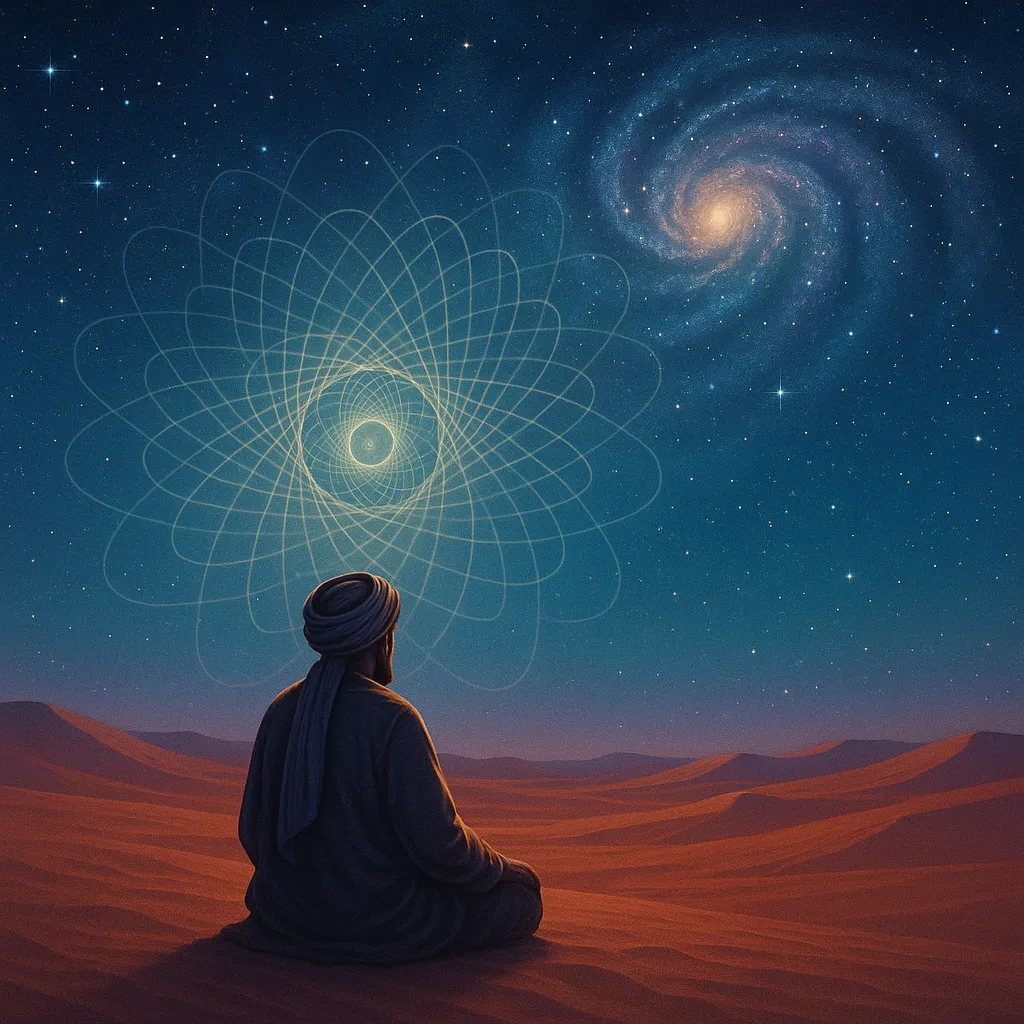
         In the Desert of Desolation
You brought a storm along into this vast desolation,
And wonder itself has taught us how to live in isolation.

Love, a tremor of fear, defeat, disgrace, and betrayal,
And pride, a wound of the world’s honour, lost in desolation.

The heart you set aflame, in hatred veiled as affection,
Now war is sealed, beyond the icy ridges of desolation.

Let fall the vows of love, our bonds have turned to dread,
We’ll quarrel and wither alone, in our mirrored desolation.

There’ll be no one, nowhere, nothing, all talk dissolved in silence,
Even you and I shall vanish, beyond the barren desolation.

A new “quasi-particle” blends in the tea this morning,
Beloved, let us sip once more the warmth of desolation.
Exegesis of In the Desert of Desolation
Darpan’s ghazal, “In the Desert of Desolation,” is a haunting meditation on love, conflict, and the paradoxical coexistence of creation and ruin, both within the heart and in the world. It extends beyond the personal lyric of the lover and beloved into a cosmological allegory where emotion, matter, and meaning are quantumly entangled.
The desert here is not merely a barren landscape but the symbolic field of consciousness, an ontological “vacuum” where even emptiness vibrates with latent presence. Through each couplet, Darpan orchestrates a dialogue between the metaphysical and the geopolitical, between the soul’s desolation and the planet’s unrest.
The opening couplet establishes the poem’s dialectic: “You brought a storm along, into this vast desolation / And wonder itself has taught us, how to live in isolation.” The storm signifies the arrival of the Beloved, divine, human, or historical, who disturbs the stillness of existence.
The “wonder” that teaches survival is both astonishment and awareness, the cognitive awakening that comes only after one’s world has been overturned. The ghazal’s rhythm echoes the oscillation between awe and annihilation, a theme central to Darpan’s Meta-Mystic Futurism, wherein revelation often appears through destruction.
The middle couplets deepen this paradox. Love becomes an entanglement of opposites, “fear, defeat, disgrace, betrayal,” intertwined with “pride, honour, and loss.” This is the cosmic irony of affection: the same force that unites also divides; the same light that warms also burns.
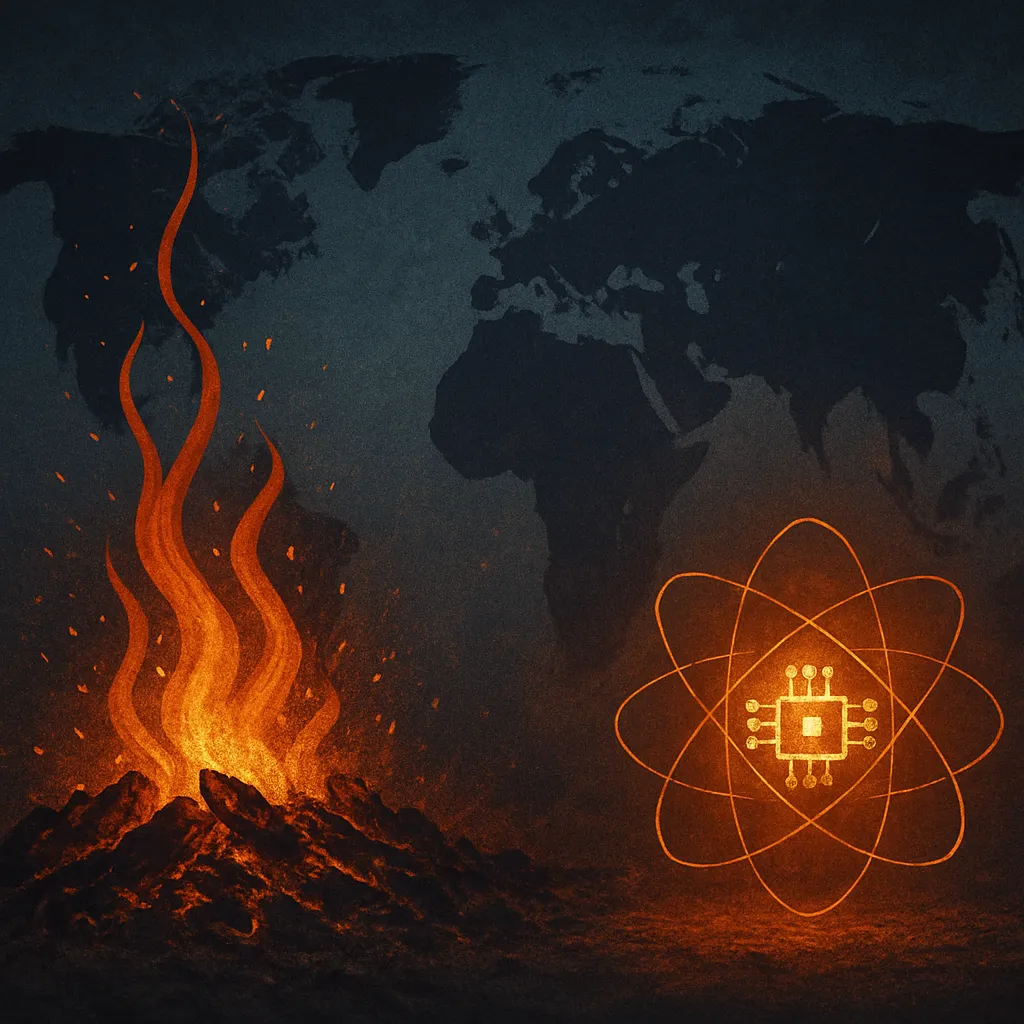
Darpan’s imagery of “fire in the heart” and “icy ridges” bridges emotional and thermodynamic registers, implying that passion and hostility are two phases of the same quantum field. The “war beyond the icy ridges” is both the internal conflict of attachment and the external theatre of geopolitical frost, the world’s nations mirroring the lover’s divided soul.
When the poet writes, “Let fall the vows of love, our bonds have turned to dread,” the ghazal turns introspective, approaching a nihilistic clarity. Here, relationships are depicted as fragile constructs within the realm of entropy, collapsing under their own weight yet illuminating the void they leave behind.
Even companionship, he suggests, cannot resist the entropy of existence: “There’ll be no one, nowhere, nothing, all talk dissolved in silence.” This annihilation, however, is not despair but transcendence, the silence after the storm in which true consciousness may finally arise.
The closing couplet introduces an astonishing juxtaposition, “A new quasi-particle blends in the tea this morning…”, a leap from metaphysical ruin to subatomic revelation. Darpan fuses everyday experience with the language of quantum physics, suggesting that even in ordinary acts (like sipping tea), unseen oscillations of being and non-being occur.
The quasi-particle, a fleeting excitation that exists only in relational fields, becomes a metaphor for the self, for love, and for civilisation itself: real only in interaction, vanishing when isolated. Thus, the ghazal’s desert of desolation is paradoxically fertile, the birthplace of new particles of meaning, new consciousness, and new civilizational paradigms.
Ultimately, “In the Desert of Desolation” stands as a meta-mystical reflection on existence in the post-human epoch. It situates love, politics, and ontology within one unified field, the Quantum Emotional Continuum, where every tremor in the heart is a vibration of the cosmos itself.
Darpan transforms personal sorrow into planetary consciousness, converting desolation into the very ground from which a more conscious civilisation might emerge.
Quantum Description
You arrived, and it felt as though a tempest had descended. As if Hurricane Melissa, rising from the Caribbean’s molten sea, had found its way into the quiet chambers of my soul. Why is it that love, affection, passion, desire, even trade, amusement, and worldly affairs, all erupt in storms of their own?
When I behold you, something stirs within, an inner whirlwind of silence and chaos intertwined. It is as if quasi-particles, though never existing within the original particle’s heart, still reveal their being through oscillation, the trembling proof of unseen existence. So too does the human heart vibrate between seen and unseen, presence and absence, between the particle of self and the wave of love.
In this same rhythm, we observe the world’s new storm: Trump’s tour through Southeast Asia. History whispers, that what we once wrote as fiction, now stands before us as fact. Fights, conflicts, victories, defeats, plunder and pain, are these not the oldest human games?
The Chinese Premier asks, How can we live under the jungle rules of unilateralism? Meanwhile, Japan’s new lady Premier declares a sterner stance, a tougher policy toward China. Thus the anticipated meeting between Xi and Trump appears destined to sour in tension, a bitter partnership of powers.
Prime Minister Takayachi’s American deals seem born of fragile experiences and risky faith, while Trump’s peace ambitions, though real in effort, find themselves crushed beneath domestic chaos, a restless America, a bullied world, and a leader whose name declines in its own house.
So long as the world remains ruled by merchants, arrogant elites, and literate slaves of power, brokers of greed and vanity, the dawn of a Quantum Human Civilization shall yet remain delayed.
And so the question lingers, echoing through this metaphysical desert: Will the world’s leaders, Russia, China, India, and Europe’s mindful few, awaken to this? For now, we must keep at least a flicker of hope, that somewhere, in the oscillation of being and becoming, humanity shall yet rise beyond its barren desolation.
An Academic Critique
In the Desert of Desolation – On Darpan’s Ghazal ‘Tufān Uṭhā Kar Le Āye Ho Idhar Birānī Meṅ: Meta-Mystic Quantum Futurism and the Birani of Consciousness
Abstract
Darpan’s ghazal “Tufān uṭhā kar le āye ho idhar birānī meṅ” unfolds as a poetic field of consciousness, where Sufi mysticism, quantum physics, and global politics converge.
Within the Meta-Mystic Quantum Dialectic Dynamics (MMQDD) framework, the ghazal becomes a philosophical experiment, a reflection of the human mind’s turbulence and the planet’s moral entropy.
This paper situates the poem in the dialogue between Oriental mysticism and Occidental rationalism, interpreted through the lens of Neurocognitive Quantum Biophysical Information Field Consciousness Theory.
- The Storm within the Void: “You brought a storm into this wilderness; Wonder has taught us how to live within this wilderness.”
The tufān (storm) symbolises both external political unrest and internal quantum turbulence. The birānī is the vacuum of consciousness, not emptiness but uncollapsed potentiality, a zone where emotions and information vibrate like quasiparticles: real and unreal, wave and particle, love and dread.
In quantum biophysics, consciousness functions as a non-local information field, oscillating between moral polarities. Darpan’s verse captures this oscillation poetically, turning metaphysical confusion into measurable resonance.
- The Confluence of Oriental Mysticism and Quantum Theory:
The Sufi-Vedantic Haqiqah, truth beyond form, corresponds to the quantum indeterminacy principle. When the poet says,
“I lit a fire within my heart and called it love for the enemy,” he embodies the wave-particle duality of emotion.
For Rumi, divine love annihilated the ego; for Darpan, it incinerates the geopolitical conscience. The quasiparticle becomes a moral emblem, a state that “exists without existing,” mirroring the illusion of diplomatic alliances and moral postures of our time.
Thus, Oriental metaphors of unity are recoded into quantum equations of superposition, a synthesis where spirituality and science are not rivals but complementary fields of inquiry.
- Occidental Rationalism and the Crisis of Political Consciousness: “Love has turned into fear, fidelity into disgrace, Where, in this world, can dignity still reside?”
This couplet indicts modern political rationality. Fear replaces faith; power eclipses empathy. From Trump’s Southeast Asian manoeuvres to Japan’s renewed assertiveness and China’s unilateralism, the ghazal becomes a moral seismograph of world diplomacy.
The “icy mountain” marks the return of the Cold War, a metaphor for emotional and geopolitical freezing. Even in the age of quantum computing, humanity remains trapped in moral deserts, where technological acceleration coexists with ethical paralysis.
- Neurocognitive Quantum Biophysical Interpretation: In MMQDD, emotion is an energetic signature of consciousness. Love, rage, and despair are biophotonic oscillations in neural microtubular coherence.
We may thus represent Darpan’s ghazal symbolically as:
Ψ (Consciousness) = Σ [Emotionᵢ × Memoryⱼ × MoralIntentₖ] × e^(iπt)
When decoherence occurs, this field collapses into birani, the moral and emotional dissonance of modern civilisation. “Quasiparticles are new spices in today’s tea, Beloved, let us sip once again amid this wilderness.”
This irony reveals humanity’s dependence on synthetic warmth, digital pleasure, ideological caffeine, to survive the cosmic cold of meaninglessness.
- Toward a Quantum Human Civilisation
Aligned with the mission “Make Earth Great Forever: End All Wars,” the poem anticipates a Quantum Human Civilisation (QHC) a civilization grounded not in dominance but in resonant empathy.
Leaders must evolve from power brokers to quantum states of compassion. When nations Russia, China, India, Europe, and America achieve informational moral coherence, the birani of Earth will collapse into conscious order.
“Neither you nor I will remain in this barren void”, a metaphysical warning of both thermodynamic and existential extinction if humanity fails to re-harmonise its consciousness.
- Conclusion: From Emptiness to Awakening
Darpan’s ghazal redefines the Sufi form as a quantum ethical equation. It proposes that:
Love is energy, not sentiment.
Peace is resonance, not a treaty.
Just as quantum observation collapses potential into actuality, moral observation can collapse hatred into harmony.
Hence, the final philosophical insight:
Birani is not emptiness; it is the unmeasured potential of awakening.
BEYOUTEA>A POETRY REVOLUTION>PEACE
NOTHING IS NOT TRUE : NO\KNOW THYSELF NOT
 MAKE EARTH GREAT FOREVER : END ALL WARS
          तूफ़ान उठा कर ले आए
तूफ़ान उठा कर ले आए हो इधर बिरानी में,
हैरत ने हमें सिखाया है जीना इधर बिरानी में।
           मोहब्बत ख़ौफ़, शिकस्तों से, रुसवाई, बेवफ़ाई,
           जिल्लत, ग़ुरूर, सर-ए-जहाँ इज़्ज़त किधर बिरानी में।
दिल में आग जलाकर दुश्मनी प्यार से किया है,
अब जंग तय है बर्फ़ीली चट्टान उधर बिरानी में।
           गिरा दें इरादे इश्क़ के, हमारे रिश्ते ख़ौफ़नाक,
           लड़ते झगड़ते रहेंगे अकेले नज़र बिरानी में।
न होगा कोई कहीं कुछ, कभी. क्यों बातें बेबात,
हम-तुम भी कहीं न रहेंगे वहाँ बंजर बिरानी में।
           क्वाज़ी-पार्टिकल्स नई मसाला आज चाय छनि,
           सजनी पी लेते हैं एक बारगी हँडहर बिरानी में।
POETRY>WISDOM>Q.TECH FOR A MORE JUST AND
PEACEFUL WORLD IN LOVE AND ENLIGHTENMENT
Meta-Sufi/QuantumPoetics on MetaMysticFuturism
Table of Contents
बौद्धिक वाङ्मयिक भाव विस्तार (Philosophical-Contemporary Exegesis)
यह ग़ज़ल आधुनिक मानव सभ्यता की उस आंतरिक शून्यता और अकेलेपन की बिरानी का बयान है, जो विज्ञान, युद्ध, राजनीति और प्रेम; सबके मध्य कहीं खो गई है।
“तूफ़ान उठा कर ले आए हो इधर बिरानी में”, यह केवल बाहरी अशांति का वर्णन नहीं, बल्कि मानव चेतना में उठे उस क्वांटम तूफ़ान की ओर संकेत है, जहाँ हर कण (quasiparticle) अपनी उपस्थिति का अर्थ खोजता है। आधुनिक विश्व की यह “बिरानी” किसी भौगोलिक रेगिस्तान की नहीं, बल्कि सूचना, शक्ति और आत्मा के मध्य उत्पन्न रिक्तता की है।
“हैरत ने हमें सिखाया है जीना इधर बिरानी में”, यहाँ ‘हैरत’ सूफ़ी परंपरा की वह स्थिति है जब ज्ञाता और ज्ञेय, प्रेमी और प्रेम का भेद मिटने लगता है। पर इस युग में यह हैरत आश्चर्य नहीं, आघात बन गई है। हम निरंतर डिजिटल, कृत्रिम और राजनीतिक हैरतों में जीना सीख रहे हैं।
“मोहब्बत ख़ौफ़ शिकस्तों से रुसवाई बेवफ़ाई”, यह प्रेम का पारंपरिक नहीं बल्कि पोस्ट-ट्रुथ युग का संस्करण है, जहाँ प्रेम भी शक्ति-संबंध बन गया है। ‘जिल्लत’ और ‘ग़ुरूर’ यहाँ राष्ट्रों और सभ्यताओं की दर्पपूर्ण स्थिति का रूपक हैं, जो प्रेम, दया और वैश्विक एकता के विपरीत दिशाओं में जा रहे हैं।
“दिल में आग जलाकर दुश्मनी प्यार से किया है”, आज की geopolitical hypocrisy की तीव्र आलोचना है। यह पंक्ति उस विश्व को दिखाती है जहाँ ‘Peace Talks’ भी युद्ध की तैयारी के लिए होते हैं। ‘बर्फ़ीली चट्टान’, यानी शीतयुद्ध का पुनरुत्थान, ध्रुवीय राजनीति, और आर्कटिक जैसे क्षेत्रों में शक्ति-संघर्ष का प्रतीक है।
“हम-तुम भी कहीं न रहेंगे वहाँ बंजर बिरानी में”, यह अस्तित्ववादी निष्कर्ष है, कि यदि यह बिरानी (emptiness) इसी तरह बढ़ती रही, तो प्रेम, संस्कृति और मानवीयता का अस्तित्व ही विलुप्त हो जाएगा।
अंतिम शेर में, “क्वाज़ी-पार्टिकल्स नई मसाला आज चाय छनि”, ग़ज़ल का हास्य-विनोदी परंतु गहरा वैज्ञानिक मोड़ है। ‘Quasiparticles’ भौतिकी का वह विचार है जहाँ ऊर्जा के अस्थायी कंपन को भी एक कण की तरह माना जाता है।
कवि ने यहाँ आधुनिक जीवन की अस्थायी, कृत्रिम ‘ऊर्जा-तरंगों’ को व्यंग्यपूर्वक ‘मसाला चाय’ कहा है, यानी हम विज्ञान, तकनीक और आत्मा की इस बिरानी में एक ‘क्वांटम चाय’ के सहारे गर्म रहना सीख गए हैं।
दार्शनिक निष्कर्ष:
यह ग़ज़ल मेटा-मिस्टिक क्वांटम दर्शन की सजीव झलक है। इसमें सूफ़ियाना प्रेम, राजनीतिक यथार्थ और वैज्ञानिक प्रतीकवाद का संयोजन है। यह हमें चेतावनी देती है, कि यदि मानवता ने प्रेम और ज्ञान के ताप-संतुलन को नहीं साधा, तो पृथ्वी स्वयं एक “बंजर बिरानी” में विलीन हो जाएगी, जहाँ केवल क्वाज़ी-पार्टिकल्स की तरह हम अस्तित्व का भ्रम जीते रहेंगे।
अध्ययन भावभूमि
तुम आ गए और जैसे तूफ़ान आगया। जो आज तक्क का सबसे बड़ा कोई जमैकन ०२५ की कैरेबियन सी से उठी हुई हरिकेन मेलिसा बबंडर और हँडहर ! क्यों ऐसा होता है इश्क़, मोहब्बत,प्यार,चाहत, आमोदप्रमोद, ब्यबहार,ब्यापार में।
तुम्हे देखता हूँ, रूह और जहन में कभी चुप्प से कभी कहर सा कोई अजीब अजनबी एहसासों का अंदरूनी तूफ़ान। जैसे की कोई क्वासिपार्टिकल किसी ओरिजिनल पार्टिकल के अंदर नहोते हुवे भी अपनी होने की वजूद को oscillation कम्प में प्रकट कर रहे हों। कुछ ऐसा हीं नजारा हमें देखनेको मिल रहा है इस बार ट्रम्प का साउथ-ईस्ट एशियाई दौरा।
हमें हिस्ट्री कुछ भी सही कहा कह रहा है जो हम ने आज तक लिखा हुवा देखरहे हैं। लड़ने झगड़ने, हार जाना जीतना, लुटजाना लूटना, पिट जाना पीटना बस यही तो खेल है। हम जैसे चिनी प्राइम मिनिस्टर कहते है की अब Unilateralism की जंगल रूल में कैसे जी सकते हैं?
वही जब जापान में नई बनी महिला प्रीमियर ये कहती है की जापान चीन पर और भी tougher पालिसी इख़्तियार करेंगे तो इस से होने वाली सी और ट्रम्प की मुलाक़ात एक खट्टी सिरकत में ही तो तब्दील होगी? इस बात से PM टाकायची और उनके अमेरिकन डील्स कमजोर अनुभवों से उठाया गया रिसकों भरा ही देखने को मिलता है।
पीस डील कराने में ट्रम्प की ट्राइंफ एक असल प्रयाश दिखने के वावजूद उनकी अपने घरमे ही गिरती हुई नाम की ग्राफ, unrestful अमेरिकी जनजीवन, दुनिया भर में बुलइंग उन्हें नोबेल पीस के लिए अभी अच्छा चेहरा बनाने से तो रहा।
लगता है जब तक वर्ल्ड ब्यापारियों, एरोगेंट रिच, literate पावर पार्टी slaves/ब्रोकरों जैसे लोगों से ruled होगा हमें क्वांटम ह्यूमन civilisation हासिल करने में और वक्त लगेगा। क्या इस पर हर वर्ल्ड लीडर गौर करेंगे? कम से कम रूस, चीन, इंडिया और यूरोपियन कई वर्ल्ड लीडरों से तो हमें उम्मीद्द भर रखना हीं होगा अभी के लिए ?
बौद्धिक-दार्शनिक आलोचना :
तूफ़ान उठा कर ले आए – मेटा-मिस्टिक क्वांटम फ़्यूचरिज़्म और चेतना की बिरानी: दर्पण की ग़ज़ल ‘तूफ़ान उठा कर ले आए हो इधर बिरानी में’ का वैश्विक वाङ्मयिक विवेचन
भूमिका : तूफ़ान, चेतना और बिरानी की गूँज
दर्पण की यह ग़ज़ल केवल रूहानी इज़हार नहीं, बल्कि आधुनिक सभ्यता की चेतनात्मक अशांति का प्रतिरूप है। पहले ही मिसरे में, “तूफ़ान उठा कर ले आए हो इधर बिरानी में, हैरत ने हमें सिखाया है जीना इधर बिरानी में।”
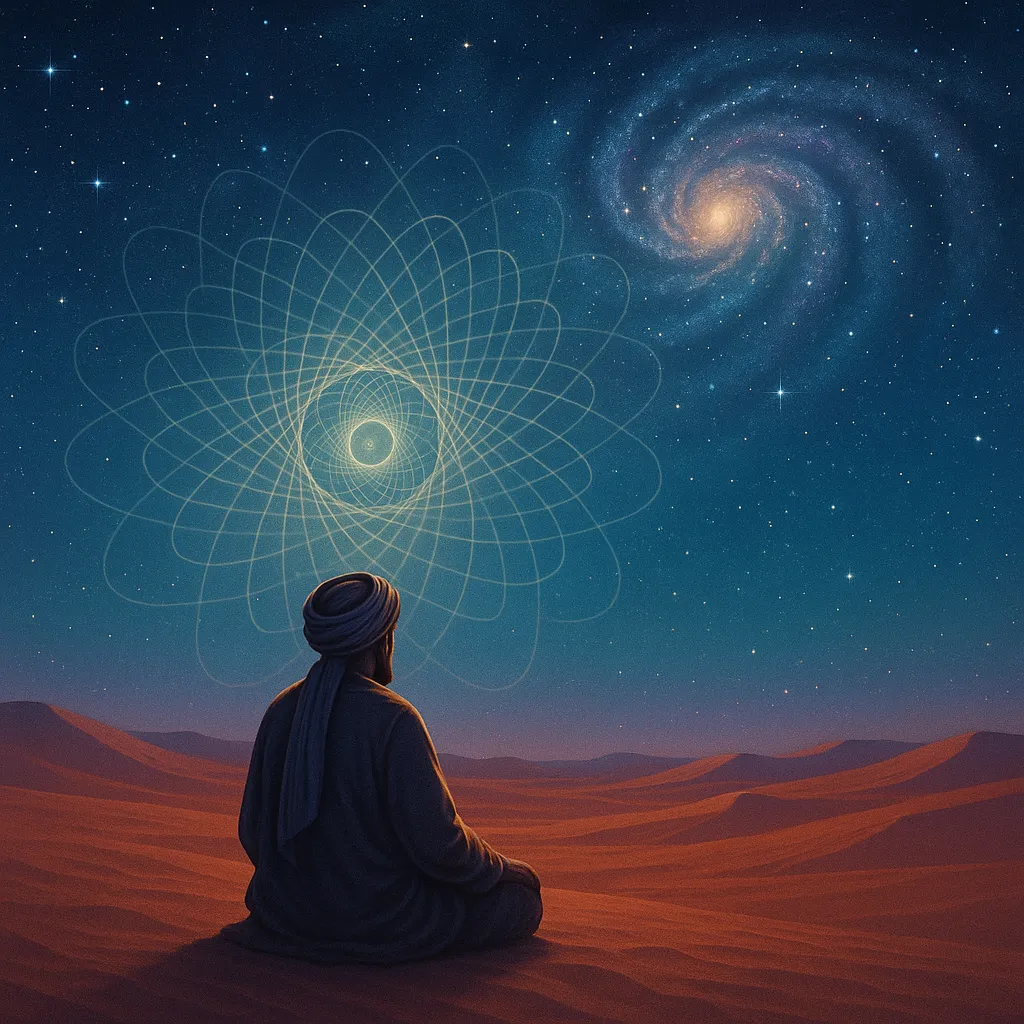
कवि उस आतंरिक ‘क्वांटम तूफ़ान’ का उल्लेख करता है जो मनुष्य के मस्तिष्क और सभ्यता दोनों में एक साथ घटित हो रहा है। ‘बिरानी’ यहाँ कोई बाह्य रेगिस्तान नहीं, बल्कि वह आध्यात्मिक निर्वात (vacuum) है जहाँ प्रेम, भय, सत्ता और आत्मा, सब अपनी तरंगों में उलझे हुए हैं।
यह वही चेतना–क्षेत्र (Consciousness Field) है जिसे आधुनिक क्वांटम जैवभौतिकी (Quantum Biophysics) में नॉन-लोकल इन्फ़ॉर्मेशन फ़ील्ड कहा गया है, अर्थात जहाँ प्रेम और द्वेष, करुणा और हिंसा, एक ही चेतन तरंग के दो चरण बन जाते हैं।
पूर्वी रहस्यवाद और क्वांटम तरंग का संगम:
सूफ़ी और वेदान्त परंपरा में ‘हक़ीक़त’ (Truth Beyond Form) की अवधारणा वही है जो भौतिकी में अनिश्चितता सिद्धांत (Principle of Indeterminacy) है। जब कवि कहता है, “दिल में आग जलाकर दुश्मनी प्यार से किया है,”
तो वह तरंग-कण द्वैत (wave–particle duality) का मानवीय रूप प्रस्तुत करता है, जहाँ प्रेम और वैर, दोनों एक ही अस्तित्व की दो गति बन जाते हैं।
रूमी ने कहा था कि इश्क़ वह आग है जो अहंकार को भस्म करती है; पर दर्पण के यहाँ यह आग भू-राजनीतिक उथल-पुथल का प्रतीक बन जाती है। क्वाज़ी-पार्टिकल अब एक नैतिक प्रतीक बन जाता है, जो ‘मौजूद न होते हुए भी मौजूद होने’ का भ्रम रचता है, ठीक वैसे ही जैसे आज की कूटनीति में गठबंधन और शांति-संधियाँ केवल आवृत्तियों का भ्रम बन गई हैं।
इस प्रकार पूर्वी रहस्यवाद की ‘एकत्व’ की भाषा, आधुनिक क्वांटम भौतिकी की सुपरपोज़िशन की भाषा में रूपांतरित हो जाती है, जहाँ विज्ञान और अध्यात्म एक ही संवाद के दो छोर हैं।
पाश्चात्य तर्कवाद और राजनीतिक चेतना का संकट
कवि का दूसरा शेर, “मोहब्बत ख़ौफ़, शिकस्तों से, रुसवाई, बेवफ़ाई, जिल्लत, ग़ुरूर, सर-ए-जहाँ, इज़्ज़त किधर बिरानी में।”
आधुनिक सत्ता-राजनीति की नृशंसता का मनोवैज्ञानिक प्रतिरूप है। प्रेम की जगह भय, विश्वास की जगह प्रभुत्व, और संवाद की जगह संदेह ने ले ली है। यह वही विश्व है जहाँ ट्रम्प की दक्षिण-पूर्व एशियाई यात्राएँ, जापान की नयी नीति, चीन का एकतरफ़ापन और अमेरिका की आंतरिक बेचैनी, सब एक साथ ‘बिरानी’ के राजनैतिक प्रतिमान बन गए हैं।
‘बर्फ़ीली चट्टान’ अब नये शीतयुद्ध की वापसी का प्रतीक है। दर्पण का व्यंग्य यह है कि 21वीं सदी की सुपरपावरें तकनीकी रूप से क्वांटम कंप्यूटिंग के युग में प्रवेश कर चुकी हैं, पर नैतिक रूप से अब भी न्याय-शून्यता के रेगिस्तान में भटक रही हैं।
न्यूरोकॉग्निटिव क्वांटम बायोफिज़िकल व्याख्या
दर्पण की ग़ज़ल को यदि MMQDD (Meta-Mystic Quantum Dialectic Dynamics) के फ्रेम में देखा जाए, तो हर भाव, एक ऊर्जात्मक हस्ताक्षर है। इश्क़, भय, ईर्ष्या, शांति, ये सब मस्तिष्कीय सूक्ष्मतरंगों में घटित क्वांटम ऑस्सिलेशन हैं।
चेतना का समीकरण कुछ इस प्रकार माना जा सकता है,
चेतना (Ψ) = Σ [भाव_i × स्मृति_j × नैतिक-संकल्प_k] × e^(iπt)
‘बिरानी’ वह अवस्था है जब यह समीकरण डीकोहेरेंस (decoherence) में चला जाता है, अर्थात जब मनुष्य की नैतिक तरंगें बाहरी कोलाहल से असंगत हो जाती हैं। कवि का व्यंग्यात्मक किंतु गूढ़ शेर, “क्वाज़ी-पार्टिकल्स नई मसाला आज चाय छनि, सजनी पी लेते हैं एक बारगी हँडहर बिरानी में।”
इसी अस्थायी चेतन-उत्तेजना का संकेत है। मानवता अब ‘क्वांटम चाय’ की तरह कृत्रिम गर्मी पीकर अपने अस्तित्व को जीवित रखे हुए है।
क्वांटम मानव सभ्यता की दिशा : मेटा-मिस्टिक भविष्यवाद
Make Earth Great Forever: End All Wars की दृष्टि से यह ग़ज़ल एक घोषणापत्र है, जिसमें Quantum Human Civilization (QHC) का स्वप्न है : एक ऐसी सभ्यता जहाँ करुणा, सहानुभूति और ज्ञान का संतुलन नैतिक आवृत्ति (Moral Frequency) में स्थिर हो।
राजनीतिक नेतृत्व को ‘शक्ति के व्यापारी’ से बदलकर ‘अनुकंपा के क्वांटम अवस्थाएँ’ बनना होगा। रूस, चीन, भारत, यूरोप और अमेरिका तभी इस ‘बिरानी’ को भर पाएँगे जब वे सूचनात्मक नैतिक क्षेत्रों (Informational Moral Fields) में सामंजस्य साधेंगे।
निष्कर्ष : चेतना की पुनर्जागृति
यह ग़ज़ल एक प्रार्थना भी है और एक भविष्यवाणी भी। यह सूफ़ी काव्यरूप को एक क्वांटम नैतिक समीकरण में रूपांतरित करती है। जहाँ प्रेम अब भावना नहीं, ऊर्जा है; शांति अब संधि नहीं, अनुनाद (Resonance) है।
जैसे क्वांटम क्षेत्र में अवलोकन (Observation) संभाव्यता को यथार्थ में परिवर्तित करता है, वैसे ही मनुष्यता का नैतिक अवलोकन हिंसा को करुणा में बदल सकता है। और तब समझा जा सकेगा कि,
“बिरानी ख़ालीपन नहीं, चेतना के पुनर्जन्म की अनमापी सम्भावना है।”
Next Read: beauty and pain