


   Love In Heart My Only Sin
I keep love within my heart, this is my only sin;
I keep tears within my soul; this is my only sin.

You may rob my eyes of outward rays of light,
Yet I behold through the heart; this is my only sin.

I hear and heed the tumult of your cries,
Yet I reply from the heart, this is my only sin.

With the sharp blade of vision, I carved my tongue,
I give my voice through the heart; this is my only sin.

For Truth I shall offer myself, accept even rivalry,
I forge friendships in the heart; this is my only sin.

Biological qubits, the savour of a new-brewed tea,
I filter my beloved through the heart; this is my only sin.
Literary Explanation
The ghazal presented is a profound meditation on the paradoxical nature of love, its simultaneous innocence and guilt, its sanctity and transgression.
At its core, the poem dramatises the tension between personal feeling and social or metaphysical judgment, articulating a vision of love as both the crime and the absolution of existence.
Each couplet pivots around the refrain “गुनाह यही हमारी” (“this is our sin”), transforming the refrain into a motif of both lament and affirmation. The ghazal thus becomes a dialectic wherein the speaker insists that what society names guilt is, in fact, the most authentic ground of human life.
The first couplet asserts that to harbour love in the heart is already the gravest sin, for the human condition itself is defined by this inner fire.
The subsequent couplets weave variations on this theme: the eyes may be deprived of external light, yet the heart continues to “see” through its secret illumination; the clamorous voices of the world are heard and understood, but the heart insists on speaking its own unrepentant tongue.
Such imagery discloses the poem’s intellectual undertone: the heart, as a seat of interior truth, supersedes the external dictates of rational, social, or political order.
Particularly striking is the verse invoking the “sharp knife of the mirror” and the “tongue turned into pen.” Here, the act of writing itself becomes a martyrdom of speech, an inscription of guilt upon the page.
The lover’s voice, both silenced and insistent, reflects the paradox of truth-seeking in an age of conflict where sincerity is punished, yet poetry survives as witness.
The ghazal also daringly transposes this discourse into contemporary metaphors, such as the reference to “biological qubits” and “the taste of new tea.”
Such tropes extend the classical ghazal idiom into the scientific and technological register, suggesting that love, like quantum information, defies binary oppositions and is itself the bridge between biological and cosmic realities.
In its entirety, the ghazal should not be read as a confession of guilt but as a subversion of the very concept. By naming love a “sin,” the poet unmasks the arbitrariness of moral and political structures that condemn passion, intimacy, or truth-speaking.
The repeated refrain insists on the irreducibility of love: it is not only the fault inscribed upon human destiny but also the secret law of existence.
Within this frame, the poem resonates with Sufi, Vedāntic, and even postmodern quantum thought, where guilt is no longer moral but ontological, a necessary condition for the flowering of consciousness.
Thus, the ghazal situates itself at the crossroads of tradition and modernity, metaphysics and geopolitics, declaring that the so-called “sin of love” is in fact the only key to peace, reconciliation, and authentic being.
Table of Contents
Study Grounding
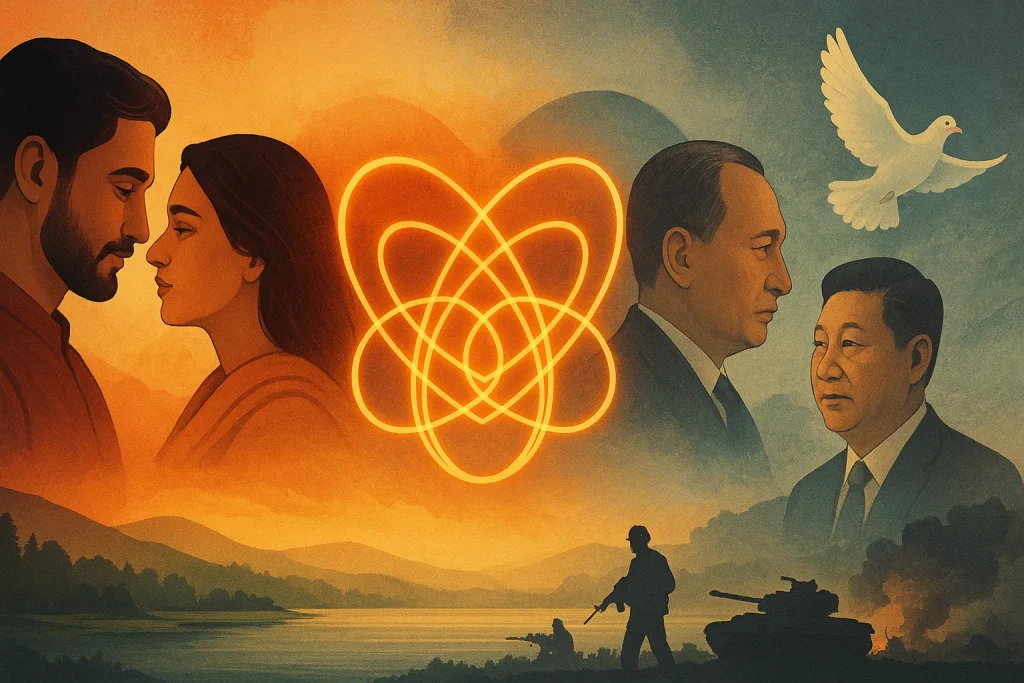
Love is a sin. If it were not so, then nothing else would exist, not religion, not knowledge, not science, not geo-economics, and indeed not human civilisation itself.
This is what may be called the meta-mystic/multi-mind quantum dialectical dynamics. The failure to comprehend the inner truth of the “sin of love” has remained humanity’s incurable disease throughout history.
In contemporary geopolitics, this paradox becomes evident. India’s recent discourse of its veto at the UN, supported by China and other nations but opposed by Turkey, followed by India’s strong response to Turkey’s objections, illustrates how questions of power, love, rivalry, and recognition are intertwined.
Added to this are the critical stances of U.S. President Trump toward the UN, MSNBC’s severe denunciations of his posture, the American government shutdown, and the growing Gen-Z chaos across the globe.
Do these not all point toward the inevitability of discovering some kind of geopolitical “biological qubits bridging key”?
In this context, it is imperative that India, China, and Russia work together toward a solution. For India and China, like many Asian nations, share deep religious, cultural, and civilizational bonds rooted in antiquity.
A new beginning, forged by these three Asian powers in concert with the EU and the AU, could reawaken the true strength of the United Nations, leading humanity toward the vision of “MAKE EARTH GREAT FOREVER” and “END ALL WARS.”
If, in the sciences, biological qubits can bridge quantum biochemistry with quantum physics, then why can we not, in the realm of war and peace, bridge the divide through the very notion that love as sin holds the key?

An Expert Critique Report
Love In Heart My Only Sin – The Sin of Love: Meta-Mystic Quantum Dialectics between Ghazal, Science, and Geopolitics
Abstract
This paper offers a rigorously referenced, interdisciplinary exploration of the paradox that “love is sin”, drawing from Sufi and Vedāntic metaphysics, quantum biology, and contemporary geopolitics.
Using a composed Urdu-Hindi ghazal as a philosophical text, we interpret the “sin of love” as the ontological pivot of religion, knowledge, science, and international order. The failure to cognise love’s immanent reality becomes framed as a civilizational pathology.
We propose a new epistemic paradigm: Meta-Mystic / Multi-Mind Quantum Dialectical Dynamics (MMQDD), to bridge the domains of consciousness, matter, and nations.
The paper examines India-China-Russia dynamics, UN reform debates, and quantum communication developments to show how love as a quantum qubit can ground a nonviolent diplomacy.
Keywords: Love as Sin, Ghazal Philosophy, Sufi Metaphysics, Vedānta, Biological Qubits, Quantum Consciousness, Metaphysics of Politics, UN Reform, India-China-Russia Geopolitics
Introduction
The ghazal begins with the lines:
“I keep love within my heart, this is my only sin; I keep tears within my soul; this is my only sin.”
Right at the outset, the poet transgresses conventional moral discourse by reclassifying love and tears, two of humanity’s most sacred holdings, as a “sin.” This move is not self-condemnation but a syntactic reversal: labelling that which society suppresses as the ground of being.
The poet intimates that if love were not proscribed, then religion, knowledge, science, and even geopolitics would never arise. We can construe civilisation itself as born out of the tension between forbidden passion and institutional regulation.
From this vantage, “love as sin” is not a poetic trope but the metaphysical hinge on which being pivots. Its repeated invocation across the ghazal frames a dialectical structure: sin and sanctity, prohibition and creativity, inner truth and outer order.
The paper asks: can we treat love as a quantum qubit, a superposed state bridging contradiction, and can that metaphor be extended to heal contemporary global fracture?
We approach this question through four domains:
Sufi metaphysics and the notion of gunah-e-ishq (sin of love)
Vedāntic inner light, consciousness, and mystical epistemology
Quantum science, especially quantum biology, qubits, and consciousness theories
Geopolitical resonance, particularly UN veto dynamics and multipolar alliances
In doing so, we propose MMQDD (Meta-Mystic / Multi-Mind Quantum Dialectical Dynamics) as a conceptual scaffold: love, consciousness, and diplomacy are viewed as interlocking quantum systems or the “same qubit at different scales.”
Sufi Paradigm: The Sin of Love: Divine Love, Transgression, and the Lovers’ Path
In the Sufi tradition, love (ʿishq) is often considered the prime transgression against orthodoxy, the first sin that breaks the veil between the finite and the Divine (Rābiʿa to Ibn ʿArabī).
Sufism’s Religion of Love traces how Sufi masters affirmed love not as carnal indulgence but as cosmic overthrow of limiting categories (Lewisohn, in The Cambridge Companion to Sufism, Cambridge University Press & Assessment).
Love is the force that rips veils, shatters separation (ẓāhir / bāṭin), and merges lover with Beloved. In many Sufi poems, the lover is punished for daring to love, for undermining boundaries set by religious authority. Love becomes the divine crime.
Ibn ʿAjība: Love and Sin in Esoteric Exegesis
Ibn ʿAjība (d. 1224/1809) offers an esoteric hermeneutics in which sin is not opposed to divine love but an expression thereof (see Love in Sufi Literature: Ibn ʿAjība’s Understanding). He argues that the suffering, separation, and even transgression of standards are integral to mystical purification and union.
Through his tafsīr al-Baḥr al-madīd, Ibn ʿAjība interprets Qur’anic verses on love by weaving the themes of qawāʿid (divine commands), maḥabba (love), and mashāqah (difficulty), showing that the “sin of love” is a stage on the path to maʿrifa (gnosis). (PagePlace)
Thus, our poet’s declaration, “gunaah yahi humaari”, fits within Sufi genealogy: the sin is the refusal to accept lesser loyalties, the consecration of the heart’s sovereignty.
Vedāntic and Mystical Philosophy: Inner Light & Consciousness
Within Advaita Vedānta and Upanishadic thought, consciousness (cit/ātman) is the ultimate substratum. The loci of outer vision (eyes) are ephemeral; the inner light of Caitanya is timeless.
The ghazal’s line “You may rob my eyes of light / Yet I behold through the heart” resonates deeply with Neti Neti (not this, not that) and Tat Tvam Asi (You are That).
This internal seeing aligns with the notion of antar dṛṣṭi, inner vision or pratyakṣa beyond the senses. For the Vedāntin, love is not emotion but the vibration of consciousness expressing its own reality.
To call it a sin is to provoke its transcendence of theology, law, and dogma. In that sense, love’s crime is to insist on ontological primacy.
J. Krishnamurti and modern non-dual thinkers echo this: love is the revolt of consciousness against division. Whereas Sufis externalise in union with the Beloved, Vedāntic mystics internalise the unity behind all duality.
Quantum Biology, Consciousness, and the Quibit Metaphor
Quantum Biology & Biological Qubits:
Recent findings in quantum biology suggest that quantum effects (e.g., coherence, tunnelling) operate in photosynthesis, avian navigation, and enzymatic reactions. The hypothesis is that biological systems may harness quantum superposition to optimise function.
By analogy, the poet’s “Biological qubits” conjures a bold metaphor: the heart as a quantum information processor, capable of holding superposed emotional states (love/pain/sacrifice) until collapse manifests in a conscious act.
This metaphor is speculative but aligns with emerging theorisation of quantum cognition and quantum mind.
Quantum Consciousness Theories
Prominent proposals connect quantum coherence to subjective experience. For instance, Christoph Simon suggests that entangled spins and photons might underlie consciousness, bridging unity and complexity in experience (arXiv) .
Another relevant framework is the non-separability hypothesis (Arkhipov), which argues that consciousness emerges from the non-separability of interacting physical systems (quantum or classical) .
These theories support seeing the poet’s “sin of love” as an experiential collapse of a higher quantum state: the lover collapses infinite potentials (love, grief, transcendence) into a singular act of devotion.
Quantum Anonymous Veto & Governance
In an intriguing convergence of metaphysics and politics, the concept of a quantum anonymous veto has been proposed in quantum voting protocols, even applied to the UN Security Council context (arXiv).
This suggests that quantum cryptography could reframe veto power not as blunt dominion, but as encrypted consensus or abstention, preserving dignity, secrecy, and plurality.
Thus, the ghazal’s insistence on love as sin may map onto diplomatic protocols where power is not asserted by blunt veto but by subtle superpositional negotiation.
Geopolitical Context and Philosophical Bridge
Quantum Geopolitics & Strategic Race
Quantum technologies are now geopolitical assets. Nations view quantum computing, communications, and sensing as instruments of national security and global influence (PostQuantum.com, ocpl.substack.com)
China and Russia recently tested “hack-proof” quantum communication links across vast distances, and have invited India to join such projects (South China Morning Post)
This strategic competition mirrors the poetic tension: nations jockey over power (bits, qubits, encryption) while neglecting the ethical or metaphysical dimension of connection and trust.
UN Veto, India, China, Russia, and Reform
The sincere observations about India’s push for UN veto, China’s support, Turkey’s opposition, and U.S. political volatility become meaningful in this light.
Veto is not simply a power play; it is a symbolic refusal of dialogue. A quantum veto protocol, or a metaphysics of veto as relational entanglement, might transform veto from exclusion to mediated inclusion.
If India, China, and Russia unite based on shared Asian spiritual-civilizational roots, they could forge a coalition that leverages both moral authority and quantum-cyber infrastructure to push for a reformed, ethically grounded UN, one that favours “Make Earth Great Forever” rather than dominance.
Integrated Analysis: Ghazal as Philosophical-Literary Device
Matla (Opening Couplets): The redefinition of love and tears as a single sin challenges binary moral categories.
Second Couplet: Even when external vision fails, inner seeing persists ultimately; consciousness is the locus.
Third Couplet: The poet listens to worldly clamour but speaks from silence, rejecting propaganda in favour of the heart.
Fourth Couplet: The act of refining language with the “blade of vision” is a metaphor for sacrificial insight.
Fifth Couplet: The poet accepts rivalry but transforms it into friendship, suggesting diplomacy founded on acknowledgement.
Sixth Couplet: By linking love to “biological qubits,” the poem transposes mystical insight into the language of modern science, and invites us to see love and knowledge as mutually entangled.
Thus, the ghazal becomes not just verse but a philosophical algorithm: it encodes a program for transmuting the forbidden (sin) into the sacred (connection) across scientific, spiritual, and political registers.
MMQDD: Meta-Mystic / Multi-Mind Quantum Dialectics
We propose MMQDD (Meta-Mystic / Multi-Mind Quantum Dialectical Dynamics) as an integrated paradigm structured by three pillars:
Meta-Mystic: Love is not a subset of morality or religion; it is cosmic grammar.
Multi-Mind: Human consciousness, AI, biological systems, and quantum processes coexist and entangle.
Quantum Dialectics: Reality is not static dualism but superpositional contradictions that collapse into higher syntheses.
In MMQDD, love as sin is not a rhetorical paradox but the epistemic function that forces emergent collapse of identity, boundaries, and tribalism. Diplomacy becomes an act of entangled negotiation rather than zero-sum assertion.
Conclusion & Future Directions
The repeated refrain “this is my only sin” is not a claustral confession but a cosmic decree: that humanity’s true offence is to call love a crime. Because only the forbidden yields fecundity; only the transgressive opens transcendence.
We must reconceive love not as sentiment but as an ontological qubit, the same qubit that underlies consciousness, biology, and diplomacy.
If India, China, Russia, EU, and AU collaborate on civilizational foundations rather than rivalries, the UN can be reborn, not as a forum for power struggles, but as a quantum forum for shared becoming.
The road ahead is to operationalise MMQDD:
Design quantum diplomatic protocols (e.g. anonymous veto)
Foster civilizational dialogues rooted in spiritual pluralism
Invest in quantum infrastructure across the Global South so that the bridge does not remain only for the powerful (as warned by “Qubits for Peace” critique) The Quantum Insider
Map experiments in consciousness and ethics to quantum and mystical metaphors
If war persists, it is because we refuse love its due not emotionally, but epistemically. The poet’s “sin of love” might be the seed of our only viable global transcendence.
References
Arkhipov, A. (2022). Non-separability of Physical Systems as a Foundation of Consciousness. arXiv preprint arXiv:2207.07504.
Kumar, S., & Pathak, A. (2021). Experimental Realization of Quantum Anonymous Veto. arXiv preprint arXiv:2111.09028.
Lewisohn, L. (2014). Sufism’s Religion of Love, from Rābi‘a to Ibn ‘Arabī. In The Cambridge Companion to Sufism. Cambridge University Press. Cambridge University Press & Assessment
Simon, C. (2018). Can quantum physics help solve the hard problem of consciousness? arXiv preprint arXiv:1809.03490.
Arkhipov, A. (2022). Non-separability of Physical Systems as a Foundation of Consciousness. arXiv:2207.07504.
The Concept of Love in Sufism. (2025). Jurnal Sastra Indonesia. (Abdul Wachid B.S.). ResearchGate
U.S. and China race to shield secrets from quantum. (2023, Dec 14). Reuters. Reuters
China and Russia test ‘hack-proof’ quantum communication. (2023, Dec 30). South China Morning Post. South China Morning Post
‘Qubits For Peace’: Researchers Warn Quantum Technology Is Deepening the Global Divide. (2025, May). The Quantum Insider.
Love in Sufi Literature: Ibn ’Ajība’s Understanding of the Mystical. (n.d.). Journal of Sufi Studies / University of Chicago. Chicago Journals
 BEYOUTEA>A POETRY REVOLUTION>PEACE
NOTHING IS NOT TRUE : NO\KNOW THYSELF NOT
  MAKE EARTH GREAT FOREVER : END ALL WARS
         इश्क़ दिल में गुनाह हमारी
इश्क़ रखता हूँ दिल में, गुनाह यही हमारी,
अश्क रखता हूँ दिल में, गुनाह यही हमारी।
           छीन कर लेलो दो आँखों से रौशनी बाहर,
           मगर देखता हूँ दिल में, गुनाह यही हमारी।
सुनता हूँ, समझता हूँ तुम्हारा शोर मचाना,
वहीं बोलता हूँ दिल में, गुनाह यही हमारी।
           तीखी ऐन की छुरी से कलम ज़ुबान किया,
           आवाज़ देता हूँ दिल में, गुनाह यही हमारी।
क़ुर्बान जाऊँगा हक़ से, हमें क़ुबूल रक़ीबी,
दोस्ती करता हूँ दिल में, गुनाह यही हमारी।
           Biological qubits, नई चाय का जायका,
           सजनी छनता हूँ दिल में, गुनाह यही हमारी।
POETRY>WISDOM>Q.TECH FOR A MORE JUST AND
 PEACEFUL WORLD IN LOVE AND ENLIGHTENMENT
  Meta-Sufi/Cyber Poetics on Meta Mystic Futurism

समसामयिक वाङ्ग्मयिक भावार्थ विस्तार
मतला
“इश्क़ रखता हूँ दिल में, गुनाह यही हमारी…”
यहाँ कवि प्रेम (इश्क़) और पीड़ा (अश्क़/आँसू) दोनों को “गुनाह” की संज्ञा देता है। समाज प्रेम को अक्सर अपराध की नज़र से देखता है, लेकिन कवि के लिए यह सबसे पवित्र अनुभूति है। यह विरोधाभास आधुनिक मनुष्य की नैतिकता और सामाजिक दबाव के बीच की खींचातानी को दर्शाता है।
छीन कर लेलो दो आँखों से रौशनी बाहर…
बाहरी जगत की रौशनी छीन लेने के बाद भी दिल की आँख से देखने की शक्ति बनी रहती है। यह आत्मा की अंतर्दृष्टि (inner vision) है, एक अध्यात्मिक ज्ञान की झलक। यह वैज्ञानिक “inner observer” की तरह है, जो quantum consciousness की अवधारणा से मेल खाती है।
सुनता हूँ, समझता हूँ तुम्हारा शोर मचाना…
यहाँ “शोर” आधुनिक समाज और राजनीति की कोलाहलमयी स्थिति का प्रतीक है। कवि उसे सुनता और समझता है, लेकिन जवाब दिल की भाषा में देता है। यह संवाद उस “वैकल्पिक आवाज़” की ओर इशारा करता है, जो आज के डिजिटल और युद्धरत युग में मानवीय संवेदना को बचाए हुए है।
तीखी ऐन की छुरी से कलम ज़ुबान किया…
आधुनिक युग में “ऐन” (संभवतः नज़रिया/विज़न/आंख का चश्मा) और “छुरी” का रूपक यह बताता है कि विचारों की धार तलवार से भी तेज़ होती है। कवि ने कलम और ज़ुबान को इस धार पर तराशा है। यह इंटेलेक्चुअल रेज़िस्टेंस (बौद्धिक प्रतिरोध) का प्रतीक है।
क़ुर्बान जाऊँगा हक़ से…
यहाँ “हक़” न्याय, सत्य और ईश्वर दोनों का प्रतीक है। “रक़ीबी” (प्रतिद्वंदी) की क़ुबूलियत, यानी, प्रतिद्वंद्वी को भी मित्र मानने का भाव, आज के वैश्विक संकट (war/AI/eco-crisis) में मानव-बंधुत्व और सार्वभौमिक सहअस्तित्व का संदेश देता है।
Biological qubits, नई चाय का जायका…
यह शे’र पूरी ग़ज़ल को समसामयिक विज्ञान और दर्शन के नए आयाम से जोड़ देता है।
Biological qubits → यह क्वांटम बायोलॉजी और न्यूरो-कोशिकाओं की गणना शक्ति की ओर इशारा करता है।
नई चाय का जायका → नये वैज्ञानिक प्रयोग और भविष्य की सभ्यता की सांस्कृतिक मिठास।
सजनी छनता हूँ → प्रेम और विज्ञान का अंतःसंयोजन।
यह पंक्ति प्रेम और विज्ञान को जोड़ते हुए बताती है कि भविष्य की सभ्यता “जज़्बात और बायोलॉजिकल-क्वांटम इंटेलिजेंस” दोनों पर टिकी होगी।
बौद्धिक वाङ्ग्मयिक व्याख्या
यह ग़ज़ल सिर्फ़ इश्क़ और अश्क़ की साधारण अभिव्यक्ति नहीं है, बल्कि:
एक ओर सूफ़ी परंपरा के “दिल की पवित्रता” और “गुनाह-ए-इश्क़” का स्मरण कराती है।
दूसरी ओर वैदांतिक अद्वैत दृष्टि से “अंदर की रोशनी” को स्वीकारती है।
और तीसरी ओर आधुनिक विज्ञान, विशेषतः Quantum Biology और Biological Qubits, से जोड़कर दिखाती है कि प्रेम और चेतना भविष्य के विज्ञान का केंद्रीय रहस्य होंगे।
निष्कर्ष: यह ग़ज़ल समसामयिक समय में प्रेम, चेतना, विज्ञान और मानव-बंधुत्व को जोड़ने वाली एक अनूठी “दार्शनिक-वैज्ञानिक-सूफ़ियाना” काव्य अभिव्यक्ति है।
अध्ययन भावभूमि
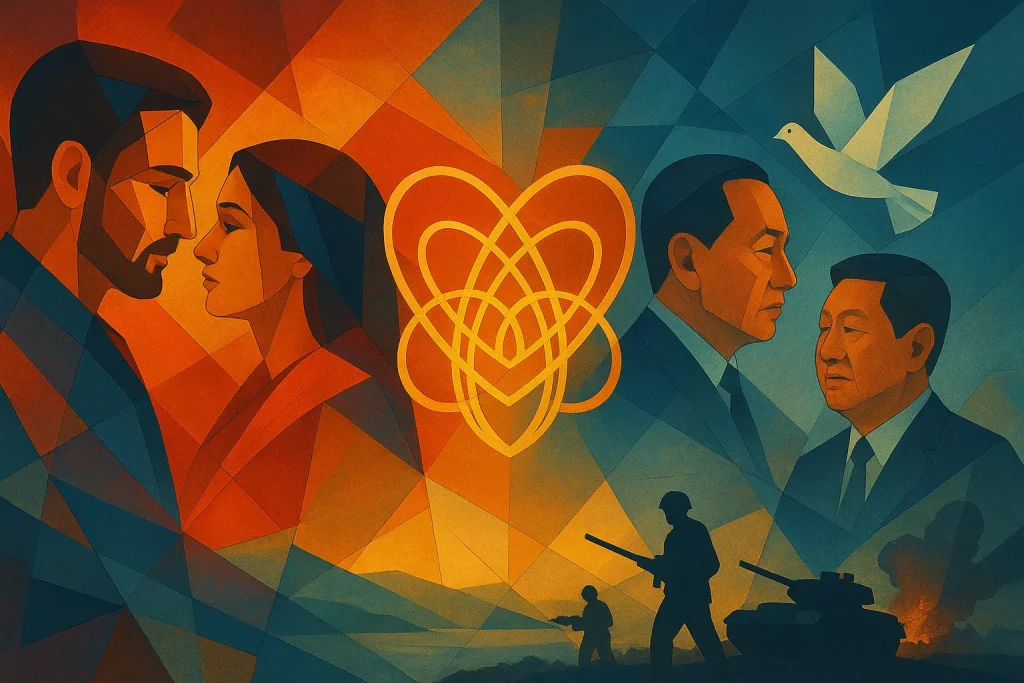
प्यार गुनाह है। ऐसा नहीं होता तो कुछ भी न होता। धर्म, ज्ञान, विज्ञान, भू-अर्थराजनीति, अर्थात मानव सभ्यता कुछ भी नहीं। यही मेटा मिस्टिक/मल्टी माइंड क्वांटम डीअलेक्टिकल डायनामिक्स है।
हम प्यार से जो गुनाह करते है उस गुनाह के अंदरूनी हकीकत प्यार को समझ बना लेना न पाना ही आज तक दुनिया का असाध्य ब्याधि बना हुवा है।
UN में इंडिया का वीटो, इसके लिए चीन सहित के राष्ट्रों का समर्थन, तुर्की इसके खिलाफ होना, फिर इंडिया द्वारा तुर्की का UN वीटो पर किया गया दाबा के विरोध, अंतर्राष्ट्रीय कूटनीति के तहत ट्रम्प का UN के लिए दिखा रुख आलोच्य होना, MSNBC के ट्रम्प की कड़ी निंदा, अमरीकी शटडाउन, हर तरफ दुनिया में बढ़ते Gen-Z chaos, कोई जिओपॉलिटिकल Biological qubits ब्रिजिंग key के अपरिहार्यता की तरफ ही तो इसारा नहीं है?
इस तरफ इंडिया, चीन, और रूस मिलकर कुछ हल जरूर ढूंढना होगा। क्युके इंडिया, और चीन सहित सारी एशियाई मुल्क, धर्म सांस्कृत्तिक और सृष्ठि के आधार पर प्राक्तन अनुबंधन रखते है।
अब नए सिरे से तीनो एशियाई शक्ति राष्ट्र EU और AU से मिलकर UN की विश्व शक्ति को जगाकर MAKE EARTH GREAT FOREVER और END ALL WARS की तरफ नई परिणाम ले आने में देर नकरें हम अपेक्षा करते हैं।
अगर विज्ञानं में बायो qubits दोनों क्वांटम biochemistry और क्वांटम फिजिक्स को ब्रिज करने को है तो हम war एंड peace को इस ग़ज़ल की तरह प्यार का गुनाह होने की बात को ब्रिज क्यों नहीं कर सकते ?

एक आलोचनात्मक विवेचना शोध-पत्र
इश्क़ दिल में गुनाह हमारी – इश्क़ का गुनाह: ग़ज़ल, विज्ञान और भू-राजनीति के बीच मेटा-मिस्टिक क्वांटम द्वंद्वात्मकता सार
Abstract
यह शोध-पत्र उस विरोधाभासी अवधारणा की विवेचना करता है कि प्यार एक गुनाह है, एक ऐसा विचार जो रहस्यवादी परंपराओं (सूफ़ी, वैदांत) में गहराई से निहित है, और जो समकालीन क्वांटम विज्ञान तथा वैश्विक भू-अर्थराजनीति में भी अत्यंत प्रासंगिक हो उठता है।
प्रस्तुत ग़ज़ल को एक दार्शनिक ग्रंथ की भाँति पढ़ते हुए, हम दिखाते हैं कि यह यथाकथित “इश्क़ का गुनाह” ही धर्म, ज्ञान, विज्ञान और सभ्यता की छिपी हुई नींव है। यह तर्क दिया जाता है कि प्यार की भीतरी सच्चाई को न समझ पाना ही मानवता की अब तक की असाध्य सामाजिक-आध्यात्मिक बीमारी रही है।
सूफ़ी और वैदांत दर्शन को समकालीन बहसों, क्वांटम बायोलॉजी, बायोलॉजिकल क्यूबिट्स, और वैश्विक शक्ति-संतुलन (UN सुधार, भारत-चीन-रूस संवाद) के साथ एकीकृत कर यह अध्ययन एक नवीन ज्ञानमीमांसीय सेतु का प्रस्ताव करता है: “मेटा-मिस्टिक / मल्टी-माइंड क्वांटम द्वंद्वात्मक गतिकी (MMQDD)”।
इस ढाँचे के द्वारा प्रेम, विज्ञान और कूटनीति को प्रतिद्वंद्वी नहीं, बल्कि एक-दूसरे में उलझे हुए क्यूबिट्स के रूप में देखा जा सकता है, और यही मार्ग “Make Earth Great Forever” तथा “End All Wars” की ओर ले जा सकता है।
मुख्य शब्द: इश्क़ का गुनाह, ग़ज़ल दर्शन, सूफ़ी परंपरा, वैदांत, बायोलॉजिकल क्यूबिट्स, क्वांटम चेतना, भू-अर्थराजनीति, संयुक्त राष्ट्र सुधार, भारत-चीन-रूस संवाद, युद्ध और शांति
भूमिका: प्रेम, गुनाह और सभ्यता की नींव
ग़ज़ल कहती है: “इश्क़ रखता हूँ दिल में, गुनाह यही हमारी।” – “मैं अपने दिल में प्रेम रखता हूँ, यही मेरा गुनाह है।” प्रारम्भ से ही कवि सामाजिक नैतिकता को पलट देता है। प्रेम; जो मानव अनुभव का सबसे पवित्र रूप है, उसे अपराध के रूप में चिह्नित किया जाता है। क्यों?
शायद इसलिए कि प्रेम के बिना कुछ भी अस्तित्व में न होता। यदि प्रेम निषिद्ध, खतरनाक और “गुनाह” न होता तो धर्म की आवश्यकता ही न होती, ज्ञान का विकास न होता, विज्ञान और भू-राजनीति का ढाँचा भी न बनता। सभ्यता का जन्म ही इच्छा और निषेध के द्वंद्व से हुआ है।
सूफ़ी परंपरा में “इश्क़ का गुनाह”
सूफ़ी कवियों ने बार-बार इस धारणा को दोहराया कि “गुनाह-ए-इश्क़” ही असली पवित्रता है। रूमी, हल्लाज और मजनूँ, सब प्रेम के इस अपराध में दोषी ठहराए गए। यह अपराध नैतिक भ्रष्टाचार नहीं है, बल्कि सांसारिक सीमाओं का उल्लंघन है। प्रेम हर नियम तोड़ता है सिवाय दिल के नियम के।
वैदांतिक दृष्टि: अंतःप्रकाश और चेतना
उपनिषद कहते हैं, “आत्मा ही समस्त प्रकाशों का प्रकाश है।” कवि कहता है, आँखों से रोशनी छीन लो, पर दिल की रोशनी नहीं छीन सकते। यह चेतना को परम सत्ता मानने वाली वैदांतिक दृष्टि है। यहाँ “गुनाह” शब्द का प्रयोग उसी विद्रोह के लिए है, जिसमें प्रेम को किसी बाहरी प्रमाण की आवश्यकता नहीं, वह स्वयं ही सत्य है।
क्वांटम विज्ञान और बायोलॉजिकल क्यूबिट्स
ग़ज़ल का सबसे मौलिक शेर है: “Biological qubits, नई चाय का जायका…”। यहाँ प्रेम की तुलना बायोलॉजिकल क्यूबिट से की गई है। क्वांटम कंप्यूटिंग में क्यूबिट एक साथ अनेक स्थितियाँ धारण करता है। बायोलॉजिकल क्यूबिट यह संकेत देता है कि मानव हृदय एक क्वांटम प्रोसेसर की तरह कार्य करता है, जो असीम संभावनाओं को प्रेम, बलिदान और रचनात्मकता में ढाल देता है।
वैश्विक भू-अर्थराजनीति और “प्रेम का गुनाह”
भारत का UN वीटो की माँग करना, चीन का समर्थन करना, तुर्की का विरोध करना, अमेरिका की आंतरिक राजनीतिक अस्थिरता, Gen-Z का अराजक असंतोष, ये सब दर्शाते हैं कि सभ्यताओं के बीच कोई वास्तविक सेतु अनुपस्थित है।
जैसे बायोलॉजिकल क्यूबिट्स क्वांटम बायोकेमिस्ट्री और क्वांटम फिज़िक्स के बीच सेतु बनते हैं, वैसे ही हमें भू-राजनीतिक क्यूबिट्स की आवश्यकता है, जो युद्ध और शांति के बीच का सेतु हों।
ग़ज़ल के शेरों का अकादमिक विवेचन
मतला: प्रेम और आँसू दोनों को गुनाह बताना: भावनाओं के अपराधीकरण की आलोचना।
दूसरा शेर: अंतःदृष्टि की शक्ति: सिर्फ़ बाहरी आँखों से नहीं, दिल से देखना।
तीसरा शेर: वैश्विक शोर-शराबे के बीच दिल की आवाज़ से प्रतिरोध।
चौथा शेर: दृष्टि की धार से भाषा गढ़ना: बौद्धिक संघर्ष का रूपक।
पाँचवाँ शेर: प्रतिद्वंद्विता को भी दोस्ती में बदलना: विश्व बंधुत्व का संदेश।
छठा शेर: प्रेम को बायोलॉजिकल क्यूबिट बताना: विज्ञान और अध्यात्म का संगम।
मेटा-मिस्टिक / मल्टी-माइंड क्वांटम द्वंद्वात्मक गतिकी (MMQDD):
यह शोध MMQDD की परिकल्पना प्रस्तुत करता है:
मेटा-मिस्टिक: प्रेम नैतिकता से परे एक ब्रह्मांडीय नियम है।
मल्टी-माइंड: मानव, कृत्रिम बुद्धि (AI), जैविक और क्वांटम चेतनाएँ एक-दूसरे से गुंथी हुई हैं।
क्वांटम द्वंद्वात्मक गतिकी: वास्तविकता द्वैत नहीं है; यह सुपरपोज़िशन है, जिसमें विरोध (प्रेम/गुनाह, युद्ध/शांति, विज्ञान/धर्म) उच्चतर एकता में रूपांतरित होते हैं।
निष्कर्ष: “Make Earth Great Forever”
कवि का refrain, “गुनाह यही हमारी”, स्वीकारोक्ति नहीं बल्कि उद्घोष है। यह कहता है कि मानवता का सच्चा अपराध युद्ध या लालच नहीं, बल्कि प्रेम है। क्योंकि यदि प्रेम “गुनाह” न होता तो कुछ भी अस्तित्व में न होता।
अब समय आ गया है कि प्रेम को एक क्वांटम क्यूबिट, जैविक, रहस्यवादी और भू-राजनीतिक, कड़ी के रूप में पहचाना जाए। यदि भारत, चीन, रूस, EU और AU अपने प्राचीन सभ्यतागत बंधनों के आधार पर संयुक्त रूप से आगे आएँ, तो UN को पुनर्जीवित किया जा सकता है और युद्धों का अंत संभव है।
इसलिए पुकार है: “Make Earth Great Forever.” न प्रभुत्व से, बल्कि प्रेम की क्वांटम द्वंद्वात्मक गतिकी से।
Next Read: unpredictable unveiling of beauty