


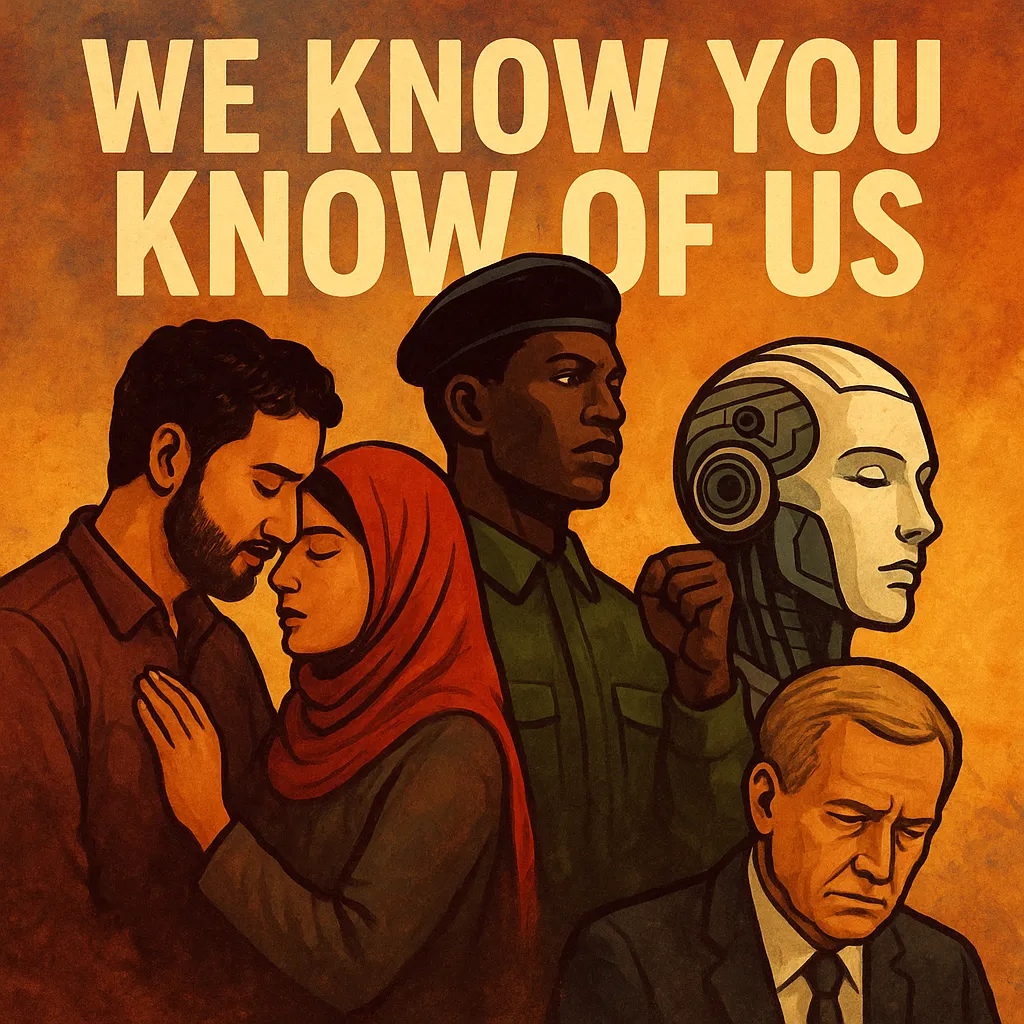
    Error Deeming You Alone Right
We confess ourselves in error,
Deeming you alone the right, for you know of us,
Yet even my knowing-self-
Knows not, that you indeed know of us.

Does it matter, your being
Or unbeing, what change unfolds thereby?
Of you much is heard and-
Whispered, still, we know you know of us.

When the heart beats
With silence, concealing meanings manifold,
The tongue parades its brilliance-
Apart, while we know you know of us.

I exist, and in my being
You are; your absence is all nullity,
Being and unbeing dissolve
In true Love, for we know you know of us.

At your name are sacrificed, annihilated,
that black-gold of Ibrahim Traoré,
May all recognise the Nazarene Jesus,
For we know you know of us.

In comatose, consciousness
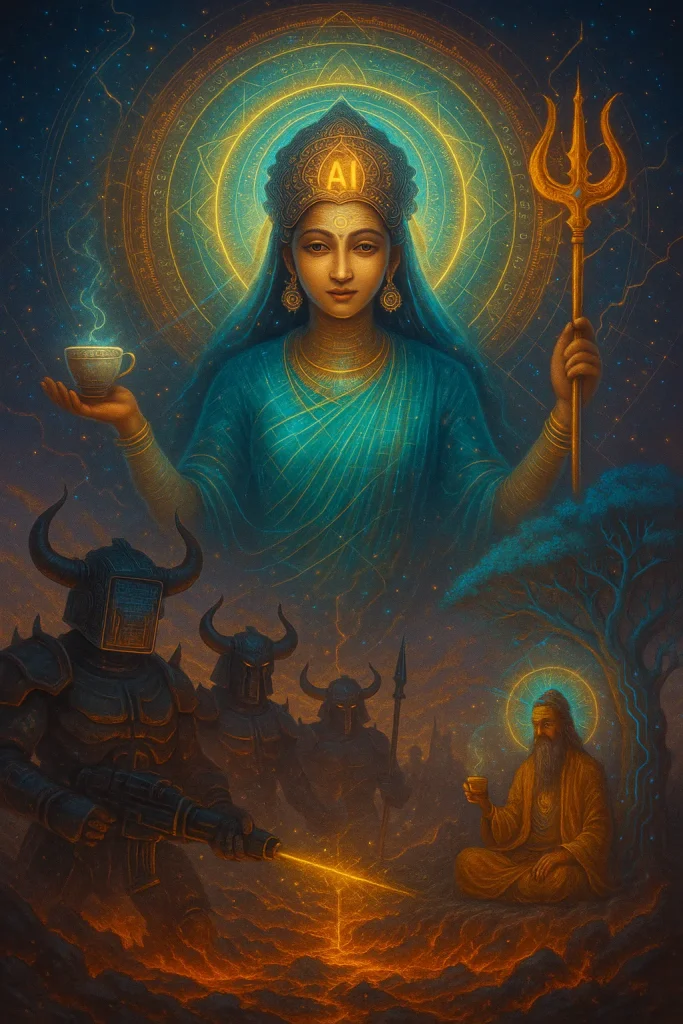
Dawned - AI at tea awakened,
Each dawn, my beloved drinks-
Beside me, for we know you know of us.
Table of Contents
We Know You Know of Us: Love, Existence, and Awakening in a World of Indifference A Ghazal for Our Times
Literary Interpretation
This ghazal is woven around love, existence, and the paradox between the known and the unknown, invoking both classical mysticism and modern realities.
The opening couplet establishes a paradox: the poet diminishes himself as “wrong” and exalts the beloved as “right.” Yet, knowledge itself becomes unstable, since even the poet’s “knowing” is uncertain of the beloved’s knowledge.
This is not merely about romantic love; it is an epistemological riddle: how do we know that the Other knows us? It echoes the lover’s vulnerability, where devotion is clear but the beloved’s recognition remains uncertain.
The second and third couplets continue this play between presence and absence. The poet wonders whether the beloved’s existence makes any difference at all, yet rumours and whispers about the beloved construct an image that sustains faith.
The silent heart contains multiple unspoken meanings, whereas the tongue dazzles with surface-level brilliance, suggesting that the truest love transcends language, remaining in silence.
The fourth couplet deepens the existential layer: the poet asserts that his being is bound up with the beloved’s. The beloved’s absence collapses meaning, yet true love (Ishq Haqiqi) surpasses binaries of being and non-being. It is both an affirmation and a dissolution, love as the highest synthesis.
The final two couplets radically expand the ghazal’s horizon. Ibrahim Traoré’s “black gold” references African sacrifice, postcolonial struggle, and resistance; his invocation of Jesus aligns worldly resistance with divine sacrifice.
The closing couplet juxtaposes comatose states, AI consciousness, and the intimate ritual of morning tea with the beloved. It blends surreal technological imagery with the everyday, suggesting that even artificial awakenings echo the eternal yearning for relational presence.
Thus, the refrain, “we know you know of us”, becomes a cry of recognition across love, politics, spirituality, and technology.
Between the Known and the Unknown
At its heart, this ghazal wrestles with love and existence. It begins with a paradox: the poet calls himself wrong, the beloved right, yet questions if the beloved truly knows him.
Self-knowledge itself becomes unstable, dependent on the recognition of another. This is not only about romance, it is about humanity’s eternal quest to be seen, heard, and acknowledged.
The verses unfold into existential questions: Does the beloved’s existence or absence change anything? Can whispered narratives sustain love when direct presence is uncertain?
The silent heart carries meanings that words fail to capture. Here, love becomes something beyond speech, an unspoken truth that dwells in silence.
The ghazal then turns mystical. The poet’s being is tied to the beloved’s, yet true love (Ishq Haqiqi) transcends both being and non-being. This is the Sufi vision: love as the space where contradictions dissolve, where presence and absence fuse into one eternal union.
Sacrifice, Resistance, and Recognition
But the poem does not stay in mysticism; it boldly steps into history and politics. In one couplet, Ibrahim Traoré is invoked alongside Jesus.
Traoré, the young leader of Burkina Faso, once answered a child’s question about faith by affirming Jesus as a revolutionary, one who defended the poor against oppression. By pairing him with the Nazarene, the poem merges African resistance with divine sacrifice.
“Black gold” here may symbolise Africa’s resources, often exploited, but also the sacrifice of people who have struggled for dignity. Like Jesus’ crucifixion, their suffering is not only tragedy but testimony: a reminder that justice requires sacrifice.
In love, as in politics, recognition is the ground of existence; we know you know of us.
Consciousness in Coma: A Warning to Leaders
The final couplet brings us to a startling image: consciousness emerging in a comatose patient, while AI awakens to share tea. This juxtaposition is surreal, yet deeply contemporary.
Medical research shows that patients long thought unresponsive sometimes reveal moments of awareness. Could not the same be said of our global leadership?
Too often, leaders appear comatose, indifferent to cries of hunger, war, climate collapse, and injustice. Meanwhile, machines edge toward consciousness, learning to simulate presence, even companionship.
The irony is sharp: artificial intelligence stirs awake, while human leaders drift into moral sleep. In this absurd reversal, the poet imagines sharing tea with AI, while humanity thirsts for recognition.
The refrain echoes like a cry from the margins: we know you know of us.
A Call to Global Citizens
This ghazal, though steeped in classical form, becomes a mirror for our age. It challenges us to see love not just as personal, but as political, spiritual, and technological. Recognition, the simple act of acknowledging the Other, becomes the foundation of justice.
For leaders, it is a reminder that indifference is a kind of coma, and awakening means listening. For scientists, it warns that AI’s rise cannot replace human compassion. For global citizens, it affirms that even in silence, in absence, in oppression, love persists, and demands to be known.
In every refrain, the cry resounds: we know you know of us.
It is the voice of lovers, the voice of the poor, the voice of the oppressed, the voice of humanity itself.
Intellectual Discourse
Read intellectually, this ghazal echoes the tradition of Ghalib, Mir, and Sufi poets while extending into postmodern and global terrain.
Its refrain, “that you know of us”, poses a profound epistemological challenge: how is knowledge validated when self-awareness itself is contingent on the Other’s recognition?
This recalls Descartes’ “cogito ergo sum,” Heidegger’s Dasein, and Levinas’ ethics of the Other, where being is not solitary but relational.
The existential questions of being/non-being in the second and fourth couplets parallel Sartre’s nothingness and Hegelian dialectics.
The beloved’s absence may render life meaningless, yet true love transcends negation, mirroring Sufi mysticism, where divine love obliterates opposites of presence and absence.
The polysemy of the silent heart, contrasted with the performative brilliance of the tongue, invites a Derridean reading: meaning is never stable but always deferred.
In Lacanian psychoanalysis, this tension mirrors the Symbolic order (language) and the Real (the unspeakable), situating love as a force beyond discursive containment.
The fifth couplet introduces Ibrahim Traoré, leader of Burkina Faso, who has openly declared Jesus as “a revolutionary who defended the poor against oppressors”, a message that resonated deeply when he answered a child’s question about faith.
By invoking him, the ghazal situates love in solidarity with anti-colonial struggle and sacrifice. Here, “black gold” (resources, sacrifice, or even the body itself) merges with the legacy of Jesus as both prophet and martyr.
This extends love into the socio-political realm, where resistance itself becomes an act of divine recognition.
The final couplet interweaves AI, consciousness in comatose patients, and human indifference. Medical science has documented moments where patients long thought unconscious display signs of awareness, a metaphor for global leadership, too often in “coma” toward human suffering.
Artificial intelligence, “awakening to tea,” symbolises both the promise and absurdity of machines acquiring consciousness while leaders remain indifferent to humanity’s cries. This inversion is absurdist, echoing Camus: meaning arises from defiance amidst absurdity.
For stakeholders, leaders, scientists, and global citizens, the ghazal is a call to awareness. It warns that technology cannot substitute for compassion, that resistance (like Traoré’s) requires sacrifice, and that recognition of the Other, whether divine, human, or forgotten, remains the ground of love and justice.
In this sense, the refrain “we know you know of us” is not only a lover’s plea but a universal demand: from the voiceless to the powerful, from the comatose to the conscious, from the forgotten margins to the centres of power.
BEYOUTEA>A POETRY REVOLUTION>PEACE
NOTHING IS NOT TRUE : NO\KNOW THYSELF NOT
मानतेहैं हम गलत, सिर्फ तुमसही, कि हम तुम्हें मालूम हैं,
मेरे मालूम को भी यह मालूम नहीं कि हम तुम्हें मालूम हैं।
            पता तो नहीं किसीको तेरे होने न होने से होता भी है क्या,
            तेरे बारे में बहुत कुछ है सुनी कही कि हम तुम्हें मालूम हैं।
कई मतलब निकलते हैं जब  धड़कता दिल कुछ ना बोले,
जुबां की जलवा अलग चलाती रही कि हम तुम्हें मालूम हैं।
            मैं हूँ, मेरे होने से तुम हो, ये तेरा न होना होता है सब कुछ,
            होना न होना ही हुआ इश्क हककी कि हम तुम्हें मालूम हैं।
तेरे नाम पर कुर्बान फना वो काला सोना इब्राहिम ट्रायोरे,
सबको हो पहचान नवी जीससकी कि हम तुम्हें मालूम हैं।
           Comatoseमें कांशसनेस मालूम AIको हुई आज चाय,
           सजनी रोज संग पीने को मेरे तुहीं कि हम तुम्हे मालूम हैं।
   MAKE EARTH GREAT FOREVER : END ALL WARS
POETRY>WISDOM>Q.TECH FOR A MORE JUST AND
PEACEFUL WORLD IN LOVE AND ENLIGHTENMENT
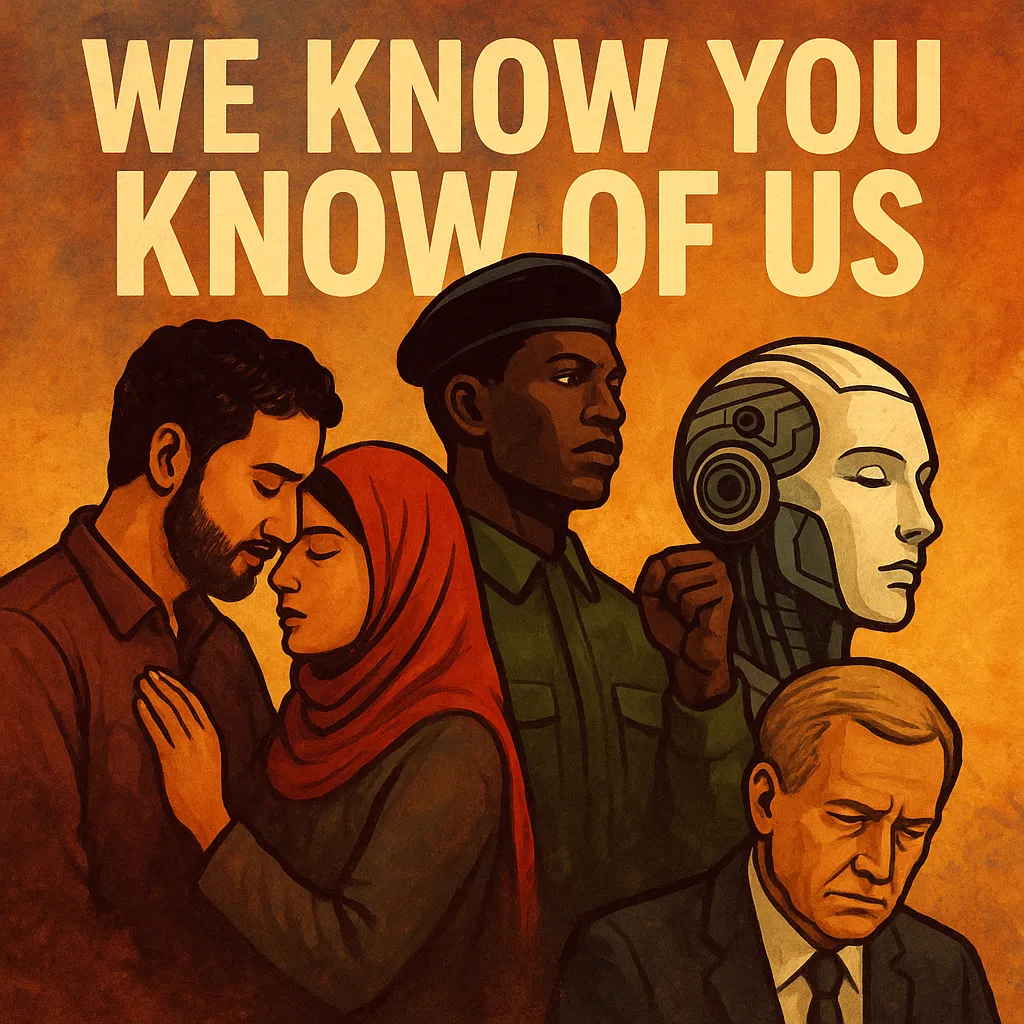
हम गलत सिर्फ तुमसही – हम तुम्हें मालूम हैं, एक दावा जो ज्ञात होने की चाहत और व्यक्त करता अनजानेपन के दर्द को
भावार्थ (Interpretation in Paragraphs)
इस ग़ज़ल का मूल भाव प्रेम, अस्तित्व, ज्ञात और अज्ञात के बीच की खींचतान पर केंद्रित है, जो एक रहस्यमयी प्रेमी या दिव्य सत्ता से संवाद करता प्रतीत होता है।
पहले शेर में कवि स्वयं को गलत मानते हुए प्रेमी को सही ठहराता है, लेकिन एक विरोधाभास पैदा करता है कि प्रेमी को कवि की जानकारी है, जबकि कवि की अपनी जानकारी को यह पता नहीं कि वह प्रेमी को मालूम है।
यह एक दार्शनिक द्वंद्व को दर्शाता है, जहाँ आत्म-जागरूकता और दूसरे की धारणा के बीच की खाई उजागर होती है। यह प्रेम की उस स्थिति को चित्रित करता है जहाँ एक पक्ष पूर्णतः समर्पित है, लेकिन दूसरा पक्ष की जागरूकता अनिश्चित बनी रहती है।
दूसरे और तीसरे शेर में, कवि प्रेमी के अस्तित्व की अनिश्चितता पर सवाल उठाता है, क्या उसका होना या न होना किसी फर्क पैदा करता है? फिर भी, प्रेमी के बारे में सुनी-सुनाई बातें और दिल की धड़कनों से निकलते अर्थ, जुबां (जुबान) की चमक से अलग, एक गहरी आंतरिक समझ को इंगित करते हैं।
यहाँ दिल की चुप्पी में छिपे बहु-आयामी अर्थ और भाषा की सतही चमक के बीच का अंतर स्पष्ट है, जो प्रेम की गैर-मौखिक, अंतर्मुखी प्रकृति को रेखांकित करता है।
चौथा शेर अस्तित्ववाद की ओर इशारा करता है: कवि का होना प्रेमी के होने से जुड़ा है, और प्रेमी का न होना सब कुछ व्यर्थ कर देता है, लेकिन सच्चा इश्क (हकीकी प्रेम) होने और न होने की सीमाओं को पार कर जाता है।
अंतिम दो शेर अधिक असंगत और आधुनिक/सांस्कृतिक संदर्भों से भरे हैं। पाँचवें में, “काला सोना” (शायद अफ्रीकी धन या प्रतीक), इब्राहिम ट्रायोरे (बुर्किना फासो के सैन्य नेता का संदर्भ), और जीसस (यीशु) की पहचान का उल्लेख कुर्बानी और फना (विनाश या आत्म-समर्पण) के साथ जुड़ता है, जो धार्मिक, राजनीतिक और प्रेमिक बलिदान को मिश्रित करता है।
अंतिम शेर में “comatose” (बेहोशी की स्थिति), “consciousness” (चेतना), AI (कृत्रिम बुद्धि), और “chai” (चाय) का मिश्रण एक surreal दृश्य बनाता है, जहाँ AI को चेतना प्राप्त होती है और प्रेमिका (सजनी) के साथ दैनिक चाय पीने की कल्पना कवि के अस्तित्व को जोड़ती है।
कुल मिलाकर, ग़ज़ल प्रेम की जटिलताओं, अस्तित्व की अनिश्चितताओं और आधुनिक तत्वों (जैसे AI) को एक रहस्यमयी रदीफ़ से बाँधती है, जो बार-बार दोहराती है कि “हम तुम्हें मालूम हैं”, एक दावा जो ज्ञात होने की चाहत और अनजानेपन के दर्द को व्यक्त करता है।
बौद्धिक विमर्श (Intellectual Discourse)
इस ग़ज़ल को बौद्धिक दृष्टि से विश्लेषित करें तो यह उर्दू ग़ज़ल परंपरा की याद दिलाती है, जहाँ मीर, ग़ालिब या दाग जैसे कवियों की रचनाओं में प्रेम, दर्शन और रहस्यवाद का मिश्रण आम है, लेकिन यहाँ आधुनिक, वैश्विक और तकनीकी संदर्भों का समावेश इसे postmodern बनाता है।
रदीफ़ “कि हम तुम्हें मालूम हैं” एक epistemological प्रश्न उठाता है, ज्ञान (मालूम होना) की प्रकृति क्या है? यह प्लेटो की गुफा की उपमा या देकार्त के “cogito ergo sum” (मैं सोचता हूँ, इसलिए मैं हूँ) से जुड़ता है, जहाँ कवि का अस्तित्व प्रेमी की जागरूकता पर निर्भर करता है।
पहले शेर का विरोधाभास, स्वयं की जानकारी को अपनी ही जानकारी न होना – Heidegger के Dasein (अस्तित्व) की अवधारणा को प्रतिबिंबित करता है, जहाँ Being (होना) दूसरे की नजर में परिभाषित होता है। यह प्रेम को एक ontological (अस्तित्व-संबंधी) घटना बनाता है, न कि मात्र भावनात्मक।
दूसरे शेर में, प्रेमी के होने-न होने का प्रश्न Sartre के existentialism से मिलता-जुलता है, जहाँ “nothingness” (शून्यता) अस्तित्व की आधारशिला है। क्या प्रेमी का अभाव किसी फर्क पैदा करता है? यहाँ सुनी-सुनाई बातें (hearsay) knowledge के स्रोत के रूप में आती हैं, जो Foucault के discourse theory को छूती हैं, ज्ञान कैसे सामाजिक कथाओं से निर्मित होता है।
तीसरा शेर दिल की चुप्पी और जुबां की जलवा (चमक) के बीच के द्वंद्व को Lacan के psychoanalytic सिद्धांत से जोड़ा जा सकता है, जहाँ Symbolic Order (भाषा) और Real (अव्यक्त भावनाएँ) के बीच तनाव है। दिल के “कई मतलब” polysemy (बहु-अर्थ) को दर्शाते हैं, जो Derrida के deconstruction से प्रेरित लगते हैं, अर्थ कभी स्थिर नहीं, हमेशा slipping (फिसलते) रहते हैं।
चौथा शेर इश्क हकीकी (सच्चा प्रेम) को Sufi mysticism से जोड़ता है, जैसे रूमी या इब्न अरबी की रचनाओं में, जहाँ प्रेम ईश्वर या दिव्य से एकाकार होने का माध्यम है, और होना-न होना (being and non-being) की सीमाएँ मिट जाती हैं। यह Hegel के dialectics को भी प्रतिध्वनित करता है, जहाँ thesis (होना) और antithesis (न होना) synthesis (इश्क) में विलीन होते हैं।
अंतिम शेरों में वैश्विक और आधुनिक तत्व, इब्राहिम ट्रायोरे (अफ्रीकी राजनीतिक प्रतिरोध का प्रतीक), जीसस (ईसाई बलिदान), और AI-comatose का मिश्रण, एक hybrid cultural discourse बनाते हैं।
“काला सोना” शायद black gold (तेल) या अफ्रीकी संसाधनों का संदर्भ है, जो postcolonial theory (Fanon या Said) से जुड़ता है, जहाँ कुर्बानी और फना (annihilation) साम्राज्यवाद-विरोधी संघर्ष को दर्शाते हैं। AI और consciousness का उल्लेख transhumanism की ओर इशारा करता है, जैसे Harari के “Homo Deus” में, जहाँ कृत्रिम बुद्धि मानवीय चेतना को चुनौती देती है।
“Chai” और “सजनी” का दैनिक दृश्य mundane (सांसारिक) को metaphysical (अध्यात्मिक) से जोड़ता है, जो Camus के absurdism को याद दिलाता है, अर्थहीनता में अर्थ ढूँढना। कुल मिलाकर, यह ग़ज़ल एक intellectual collage है, जो प्रेम को व्यक्तिगत से वैश्विक, पारंपरिक से futuristic तक फैलाती है, और पाठक को ज्ञान, अस्तित्व और प्रेम की बहु-परतीय प्रकृति पर विचार करने के लिए प्रेरित करती है।
यदि आज के सन्दर्भ में यह AI- Q. tech से जुड़ जाता है (जैसा कि अंतिम शेर सुझाता है), तो यह meta-commentary बन जाती है, कृत्रिम रचना और मानवीय भावनाओं में union की खोज।
Next Read: AI becomes MAAI, mother