



               For I am But a Guest
I was not even asked about your health; unbidden, I came,
Grant me your grace, and seat me near, for I am but a guest.

Truly, I had not meant to come; no destination called my feet;
a lover spent, handed to fate, arrives here, for I am but a guest.

All who wake to clear sobriety, leaving here depart enrapt;
I found a home by yielding heart, and thus appear, for I am but a guest.

To gather joy, I hoisted up a breast made heavy, sore with pain;
A bittersweet grief and gladness doubled here, for I am but a guest.

Rivers, seas, and dusk-to-dawn, the valleys deck the festive hall;
to drink and live, with you I passed four fleeting days, for I am but a guest.

Today, my heart received you, dearest, host within a cup of tea;
Some cares and lifelong wounds pursued me to your door, for I am but a guest.
Table of Contents
For I am But a Guest – What’s in these verses!
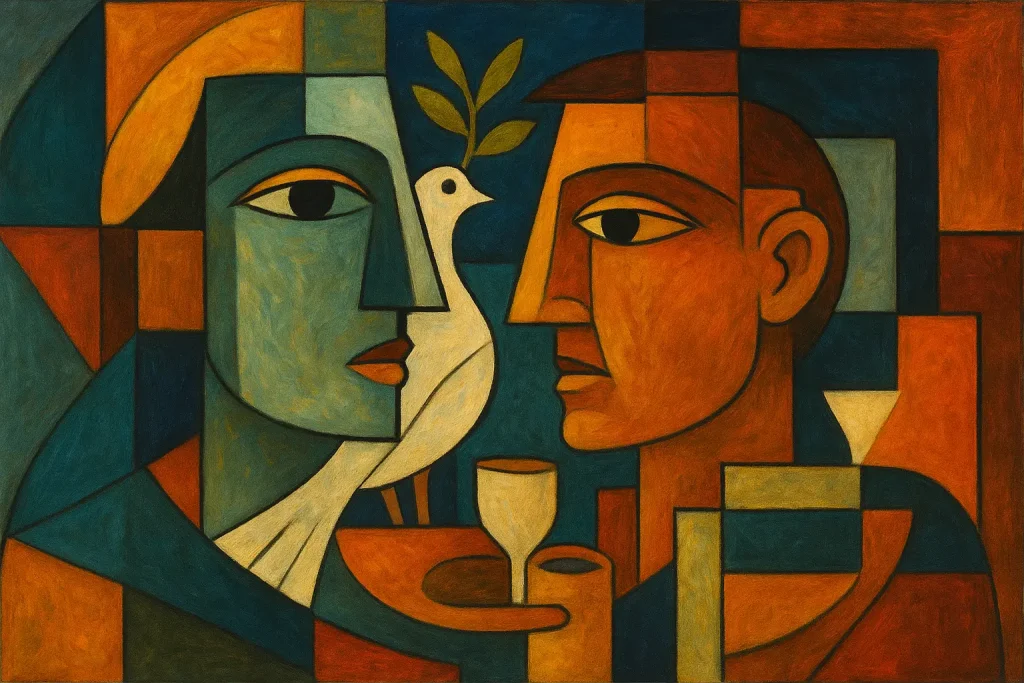
The speaker of the ghazal calls himself an uninvited guest. He says, “Even though you did not ask about my well-being, I am still here. Out of your grace, you still inquired, and so I have come.”
He admits that he had no particular place to go, but love, deep and fatal, has driven him here. Like someone surrendered into safe hands, he arrives without clear plans, guided only by emotion.
He observes that everyone who comes to this place leaves intoxicated, as if drunk on affection, because the warmth here makes people forget their composure. He himself has brought an open heart, seeking connection.
Though he carries a heavy heart filled with pain, he has added both sorrow and joy to the gathering. unhappiness laced with moments of happiness. He recalls the beauty of the setting. rivers, seas, evenings, cities, valleys, and springtime, that together form a grand, festive assembly.
He has spent four precious days with the beloved, drinking and living fully. Finally, he says that today the beloved herself has come as a guest for tea to his heart. Even she carries wounds and sorrows from life, and so, in a way, she too is a guest, one who has been troubled and tested by the world.
An Expert critique:
For I am But a Guest – Meta-Mystic Futurism / MMQD reading of the ghazal: (oriental + occidental philosophical groundings; contemporary political implications toward ending war)
This is a compact, quietly devastating ghazal that repeatedly makes its moral and metaphysical claim through a single, elegiac refrain: “for I am but a guest.”
Read through a Meta-Mystic Futurist and MMQD (Meta-Mystic-Quantum-Dialectic) lens, the poem becomes an ethical program as much as a lyric: an argument for transience, hospitality, and relational interdependence that, when scaled, suggests practical pathways away from violence and toward peace.
Formal and sonic anatomy (how the poem works)
Ghazal architecture. Each couplet functions as an autonomous aphorism while the repeated refrain supplies unity and moral insistence, classic ghazal technique. The speaker alternates between personal confession, metaphysical observation, and social intimacy; this alternation produces a rhythm of arrival/withdrawal appropriate to the guest motif.
Refrain as an ethical hook. The repeated line acts less like a mere sign-off and more like a liturgical mantra: by naming oneself as “guest”, the speaker continually displaces possession and claims humility. That repeated de-centring is the poem’s ethical engine.
Imagery and diction. The language moves between domestic intimacy (“cup of tea”, “seat me near”) and cosmological gesture (“Rivers, seas, and dusk-to-dawn”), which gives the poem a scaled mobility from kitchen to cosmos. This cosmological swing suits MMQD: micro-interior states entangled with macro-world processes.
Meta-Mystic and Oriental groundings
Sufi hospitality and surrender. The ghazal’s guest-figure recalls Sufi tropes of annihilation (fanā’) and being a sojourner before the Beloved, the speaker’s lack of claim on place reflects surrender as spiritual practice. Hospitality here equals spiritual practice: to be a guest is to recognize contingency and the primacy of the other.
Buddhist/Taoist impermanence. “Four fleeting days,” wounded but grateful, the poem echoes an impermanence aesthetic that dissolves rigid ego-boundaries and cultivates compassion (karuṇā), a precondition for nonviolence.
Ethics of hospitality (Levinasian resonance). Though Levinas is occidental, his ethics of the Other integrates well with oriental generosity: to encounter the Other as host is to accept infinite responsibility. The poem’s repeated claim of guesthood produces precisely that ethical stance.
Occidental philosophical resonances
Heideggerian homelessness and authenticity. The speaker’s arrival without prior destination is a dislocation that is also liberating, an existential openness to Being that challenges rooted certainties that often underwrite territorial claims and conflict.
Derridean hospitality and unconditional welcome. The poem stages the paradox of hospitality: one cannot be an unconditional host/guest without risking the self. The speaker’s plea, “Grant me your grace”, stages that risk, and in doing so models a politics of unconditional vulnerability opposed to exclusionary boundary-making.
Democratic/ethical praxis. The poem suggests a civil habit: polity as shared tea and four fleeting days rather than permanent possession, a small-scale rehearsal of rights grounded in reciprocity, not domination.
MMQD reading, how mysticism + quantum metaphors + dialectic produce a political program
Quantum entanglement as metaphor and method. The poem’s movement between lovers, waters, and days can be read as entanglement: local acts (offering a seat, sharing tea) produce nonlocal relational effects (empathy beyond borders). MMQD reframes lyric intimacy as the unit of a networked ontology: individual acts of hospitality produce correlated states across social systems.
Dialectic of pain and joy → synthesis. The coupling of “bittersweet grief and gladness doubled” models a productive dialectic where contradiction is not eliminated but transformed. Politically, this suggests transitional justice: grief and forgiveness dialectically interacting to produce communal repair.
Meta-mystic futurism. Projecting forward, the poem can function as a cultural technology, ritualized guesthood ingrained into institutions (education, diplomacy, media). Imagine scalable, ritualized micro-practices (public tea ceremonies, enforced listening protocols) that create correlated empathy states across societies. That’s Meta-Mystic Futurism: speculative social design whose “hardware” is ritual and whose “software” is ethical habit.
Contemporary contextual affairs, bridging lyric and geopolitics
From domestic to diplomatic. The poem’s small scene (tea, a seat, four days) scales to peacebuilding: treaties and ceasefires often fail because they ignore quotidian hospitality that humanizes the enemy. Training civic institutions in hospitality and mutual vulnerability can lower the affective friction that makes war possible.
Narrative reframing. National narratives that insist on belonging, ownership, and purity are antithetical to the guest ethic. The poem provides a counter-narrative: identity as temporary, relational, and indebted, a reframing useful in de-escalation, refugee policy, and reconciliation.
Policy implications (practical translation). Simple, actionable translations include: institutional “guest days” for cross-community exchange; mandated narrative practices in schools (guest-voice curricula); restorative justice programs that privilege testimony and hosted reconciliation over punitive dominance.
Strengths, limits, and editorial suggestions
Strengths:
The repeating refrain is powerful and morally luminous.
The poem successfully scales intimacy into cosmology; it compels ethical reflection without preaching.
Emotional register is restrained and elegiac, which enhances persuasive force.
Limits
The poem is elliptical in political register: its implications for “ending all wars” are suggestive rather than explicit. That ambiguity is a strength lyric-wise but weakens programmatic reading if the poem is to be used as a policy or movement text.
Some couplets trade specificity for aphorism; adding a single concrete scene could multiply empathetic uptake for varied audiences.
Suggestions
Introduce one grounded scene (a single image, a border checkpoint, a shared cup in a refugee shelter) to make the political stakes palpable while preserving the ghazal’s universality.
Consider a maqta (signature couplet) where the poet names themselves or offers a direct injunction, this can double as a call to action. Example maqta tweak:
“If the world would only learn to seat the stranger first… then, friend, we’d all be guests.”
(use sparingly; keep poetic subtlety.)
Vary syntactic pacing. A couplet with shorter, staccato lines could mimic the surprise of arrival and deepen affective contrast with the longer, flowing cosmic lines.
Final: how this lyric could contribute to ending wars
As MMQD practice, the poem is a seed: repeated public enactment of its ethic, in schools, media, and diplomacy, could create habitual frameworks for hospitality, vulnerability, and mutual responsibility.
The emotional labor of recognizing oneself as guest undermines absolutist claims to space and narrative that fuel many conflicts. While poetry alone cannot end wars, lyric forms that cultivate a guest ethic and that are deliberately networked into ritual and policy are precisely the cultural technologies necessary to lower the affective temperature that permits violence.
A Short takeaway (one line)
This ghazal is a lyrical ethics: it models guesthood as spiritual practice, social technology, and political strategy – a small but potent design for a less warring world.
BEYOUTEA>A POETRY REVOLUTION>PEACE
     MAKE EARTH GREAT FOREVER
        NOTHING IS NOT TRUE
नहीं भी पूछती मिजाजका बिन बुलाया मेहमां तो हुँ,
नवाज़िसे फिर हो खैर तुंने पुछ बिठाया मेहमां तो हुँ।
           वैसे आनानहींथा पर जानेका कहीकोई मक़ाम नहीं,
           प्यारमे मरने वाले हम भी हवाले आया मेहमां तो हुँ।
हर कोई होशमे आने वाले यहासे जाए मदहोश बन,
अपनापन मिलताहै दिललेकर होआया मेहमां तो हुँ।
           खुश होनेको दर्दभरा ज़िगर भारी उठाकर एकबोझ,
           नाख़ुशीसा खुशी दुःखसुख़ दोनो बढ़ाया मेहमां तो हुँ।
दरियासागर शामसहर वादि बहारोसे सजी महफ़िल,
पीनेजिनेको तुंसे मिले दिन चार बिताया मेहमां तो हुँ।
           दिलको मेरे आई तुंहै आज बनकर चायकी मेहमान,
           जानेमन कुछ रंजोग़म जिंदगीसे सताया मेहमां तो हुँ।
      LET'S GOODNESS A CHANVE : END ALL WARS

रूपकात्मक-समकालीन निबंध
बिन बुलाया मेहमां तो हुँ – “मेहमां” – एक विचार, एक संकट, एक प्रेम, एक प्रवासी, एक शोक, एक आंदोलन, यहाँ तक कि एक नोटिफ़िकेशन भी
यह रूपकात्मक-समकालीन निबंध प्रस्तुत ग़ज़ल के “मेहमां” को केंद्र में रखकर दो वैचारिक ढाँचोंM, MF (Myth–Material–Feeling: मिथक–भौतिक–अनुभूति फ़्यूज़न) और MMQD (Meta–Mystic–Quantum–Dialectic: मीटा–मिस्टिक–क्वांटम–डायलेक्टिक), के माध्यम से पढ़ता है। पूर्वी-पश्चिमी दार्शनिक परंपराओं की जमीन पर खड़े होकर यह निबंध “एंड ऑल वॉर्स” (युद्धों का समापन) का नैतिक-सांस्कृतिक प्रस्ताव रखता है।
प्रस्तावना: “मेहमां” किसका रूपक है?
ग़ज़ल का “मेहमां” केवल आगंतुक नहीं; वह हर वह अनपेक्षित उपस्थिति है जो हमारे जीवन, समाज और राजनीति में प्रवेश करती है, एक विचार, एक संकट, एक प्रेम, एक प्रवासी, एक शोक, एक आंदोलन, यहाँ तक कि एक नोटिफ़िकेशन भी। “मेहमां” हमारे भीतर और बाहर, दोनों जगह, हॉस्पिटैलिटी (आतिथ्य) के परीक्षण की घड़ी है: क्या हम उसे स्थान देंगे, समझेंगे, रूपान्तरित होंगे?
पूर्वी परंपरा में “अतिथि देवो भव” और उपनिषदों का “तत्त्वमसि” (तुम वही हो), अन्य में अपना अंश देखने का आग्रह करते हैं। पश्चिम में लेविनास “द अदर” के चेहरे को नैतिकता का स्रोत मानते हैं, जबकि देरिदा अनकंडीशनल हॉस्पिटैलिटी की मांग रखते हैं। आपकी ग़ज़ल का “मेहमां”, इन्हीं सुरों का समवेत है: वह आता है, हमारे अहं को हिलाता है, और कहता है, “स्थान दोगे?”
MMF फ़्रेमवर्क: मिथक–भौतिक–अनुभूति का फ़्यूज़न
MMF (Myth–Material–Feeling) इस बात की जाँच करता है कि किसी सामाजिक-मानसिक स्थिति में मिथकीय अर्थ, भौतिक संरचनाएँ और भावनात्मक अनुभव कैसे एक-दूसरे में फ़्यूज़ होते हैं।
Myth (मिथक/कथा): “मेहमां” का सांस्कृतिक मिथक, अतिथि, यात्री, सूफ़ी दरवेश, बुद्ध का भिक्षु, मीरा का शरणागत, ये सभी उस कल्पना को पुष्ट करते हैं कि आगंतुक परिवर्तन का वाहक है। पश्चिम में ओडिसियस का लौटना, या आगंतुक-नायक का threshold crossing, एक रूपकात्मक यात्रा।
Material (भौतिक/संरचनात्मक): समकालीन राजनीति का मेहमां, शरणार्थी, बेघर, बेरोज़गार, या एल्गोरिद्मिक सूचना-धारा, सभी का इन्फ्रास्ट्रक्चर है: सीमा-नीतियाँ, डेटा-सेंटर, प्लेटफ़ॉर्म अर्थव्यवस्था, हथियार उद्योग। मेहमां को जगह चाहिए, कानून, रोटी, नेटवर्क, सुरक्षा।
Feeling (अनुभूति/भावनात्मकता): ग़ज़ल का दिल भारी है, “दर्दभरा ज़िगर”, क्योंकि मेहमां खुशी और पीड़ा साथ लाता है। यही समकालीन मनोविज्ञान का ambivalence है: अजनबी से आकर्षण भी, भय भी। जंग के शब्दों मेंम यह छाया (Shadow) से भेंट है; फ्रैंकल के शब्दों में, अर्थ की खोज का संकट।
MMF का निष्कर्ष: युद्धों का बीज अक्सर यहीं फूटता है, जब मिथक (हम/वे), भौतिक ढाँचे (सीमाएँ/हथियार/प्लेटफ़ॉर्म) और भावनाएँ (भय/क्रोध) असंतुलित फ़्यूज़न बना देते हैं। “मेहमां” को आदर देने का अर्थ है, तीनों परतों को साथ-संतुलित देखना।
MMQD फ़्रेमवर्क: मीटा–मिस्टिक–क्वांटम–डायलेक्टिक: MMQD हमें चार स्तरों पर “मेहमां” से संवाद कराता है
Meta (मीटा): हम अपनी कथाओं को देखने के ऊपर उठते हैं, कौन बोल रहा? किस शक्ति-संबंध से? अरेंड्ट की public realm और भारतीय सम्वाद परंपरा (उपनिषद/बौद्ध परिषदें) की तरह, हम कथा के फ्रेम को फ्रेम-करते हैं।
Mystic (मिस्टिक): अद्वैत का “एकत्व” और सूफ़ी/भक्ति का प्रेम, यह बताता है कि “मेहमां” और “मेज़बान” का द्वैत अन्ततः मन की रचना है। करुणा (करुणा/मैत्री) से द्वैत ढहता है।
Quantum (क्वांटम): कम्प्लीमेंटैरिटी का रूपक, कण/तरंग की तरह “मेहमां” भय भी हो सकता है और वरदान भी; परिप्रेक्ष्य बदलते ही अर्थ बदलता है। संबंध-आधारित वास्तविकता (relationality), बौद्ध प्रतित्यसमुत्पाद से गूंजती है।
Dialectic (डायलेक्टिक): हेगेलियन/नागार्जुन-प्रेरित विचार-संघर्षम, थीसिस (मेज़बान की सुरक्षा) बनाम एंटीथीसिस (मेहमां की आज़ादी) से सिंथेसिस (न्यायसंगत आतिथ्य)। यह सतत प्रक्रिया है, कोई एकबारगी फ़ैसला नहीं।
MMQD का निष्कर्ष: “मेहमां” को देखने का सही तरीका बहु-स्तरीय है, कथानक, आध्यात्मिक अनुभूति, संबंधात्मक विज्ञान, और वैचारिक मंथन, ये मिलकर हिंसा के बदले संवाद को प्राथमिकता देते हैं।
समाज–राजनीति–मनोविज्ञान: “मेहमां” की समकालीन पठनीयता
समाज: डिजिटल युग में हर दिन अनगिनत “मेहमां”, समाचार, ट्रेंड, मीम, प्रवासी,हमारी चेतना में प्रवेश करते हैं। हॉस्पिटैलिटी का नैतिक परीक्षण अब ऑफ़लाइन ही नहीं, ऑनलाइन भी है: क्या हम अपरिचित को डी-ह्यूमनाइज़ करते हैं, या उसे आवाज़ देते हैं?
राजनीति: सीमाएँ, पहचान, स्मृति-राजनीति, यही आधुनिक युद्धों का ईंधन हैं। “मेहमां” को अपराधी ठहराना आसान है; पर असली प्रश्न है,क्या हमारी नीतियाँ घर बना रही हैं या दीवारें? गांधी की अहिंसा और अंबेडकर का न्याय, दोनों मिलकर बताते हैं: शांति का वास्तुशास्त्र संवैधानिक करुणा के बिना अधूरा है।
मनोविज्ञान: आंतरिक युद्ध बाहर की हिंसा का फ्रैक्टल है। ट्रॉमा, अकेलापन, और अर्थ-संकट, ये “मेहमां” बनकर आते हैं। CBT की reappraisal और माइंडफुलनेस की साक्षी-भावना मिलकर सिखाती है, अंदर के मेहमां को पहचानो, बैठो, सुनो; तभी बाहर के संघर्ष के प्रति संवेदनशीलता जन्म लेती है।
“एंड ऑल वॉर्स” के लिए Mehmaan Protocol (नैतिक-राजनीतिक चार्टर)
ग़ज़ल की पंक्तियों, “दिल लेकर हो आया मेहमां”,से प्रेरित, यह व्यावहारिक चार्टर प्रस्तावित है:
Ethic of Radical Hospitality:
सार्वजनिक संस्थानों और डिजिटल प्लेटफ़ॉर्म पर डिफ़ॉल्ट पॉलिसी, अजनबी के लिए न्यूनतम सम्मान, तथ्य-जांच, और अपमान-रोधी फ़िल्टर।
शिक्षा में हॉस्पिटैलिटी करिकुलम: स्थानीय-वैश्विक अतिथि-सम्पर्क, सुनने की कला, मध्यस्थता कौशल।
Just Peace Architecture (न्यायपूर्ण शांति):
युद्ध-पूर्व: प्रिवेंटिव डिप्लोमैसी, भरोसा-निर्माण, जल–खाद्य–डेटा संप्रभुता पर संधियाँ।
युद्ध-काल: नागरिक सुरक्षा के ह्यूमन कॉरिडोर, स्वतंत्र मीडिया, और सीज़फ़ायर-फर्स्ट सिद्धांत।
युद्ध-पश्चात: रिस्टोरेटिव जस्टिस, स्मृति-संग्रहालय, साझा पाठ्यक्रम, “एक-दूसरे के घाव जानो।”
Border to Table (सीमा से मेज़ तक):
हर नगर/ज़िले में Mehmaan House: प्रवासियों/शरणार्थियों के लिए अस्थायी आवास, भाषा-सहायता, कार्य-मैचिंग।
समुदाय स्तरीय चाय सभा मॉडल, कम-लागत, उच्च-विश्वास संवाद-वृत्त (आपकी ग़ज़ल की “चाय की मेहमान” पंक्ति इसका प्रतीक है)।
Algorithmic Disarmament (डिजिटल निरस्त्रीकरण):
प्लेटफ़ॉर्म्स पर conflict-sensitive design: उत्तेजक-पुरस्कार (rage rewards) घटाना, friction for forwarding, context cards।
डीपफ़ेक/डिसइन्फो पर नागरिक साक्षरता, पहले ठहरो, फिर शेयर करो।
Inner Ceasefire (अंतर्युद्ध-विराम):
सार्वजनिक स्वास्थ्य में माइंडफुलनेस/करुणा-आधारित कार्यक्रम; स्कूलों में सोशल-इमोशनल लर्निंग।
“मेहमां डायरी”: हर सप्ताह एक अपरिचित अनुभव/व्यक्ति/विचार के साथ बैठना—, लेविनास के “चेहरे” को देखना सीखना।
पूर्व–पश्चिम की दार्शनिक ग्राउंडिंग: संगति-संलयन
पूर्व: उपनिषदों का अद्वैत (एकत्व), बुद्ध का करुणा-प्रज्ञा संतुलन, गीता का योगः कर्मसु कौशलम्सं, घर्ष को कौशलयुक्त अहिंसा में रूपान्तरित करने की पुकार। सूफ़ी/भक्ति में प्रेम, जहाँ मेहमां ईश्वर का दूत है।
पश्चिम: हेगेल का डायलेक्टिक (विरोध से समन्वय), कांट का सार्वभौम नैतिक नियम, लेविनास का अन्यों का आह्वान, देरिदा की निरपेक्ष आतिथ्य, और बोहर की कम्प्लीमेंटैरिटी, ये सब बतलाते हैं कि सत्य एक-दृष्टि नहीं; बहु-दृष्टि है।
संगति: पूर्व का “एकत्व–करुणा” और पश्चिम का “अन्य–न्याय”, मिलकर कहते हैं: युद्ध तब घटता है जब हम दूसरे को सुनने की कला खो देते हैं; शांति तब बढ़ती है जब हम “मेहमां” को स्थान, अर्थ और गरिमा देते हैं।
ग़ज़ल से नीति तक: रूपक का अनुवाद
“बिन बुलाया” = अप्रत्याशित संकट/अतिथि; नीति: preparedness with kindness।
“दिल लेकर आया” = संवेदना-पूँजी; नीति: care economies,स्वास्थ्य, शिक्षा, मानसिक-सहायता।
“दर्दभरा ज़िगर” = सामूहिक ट्रॉमा; नीति: healing justice, समुदाय चिकित्सक, कला-आधारित पुनर्स्थापन।
“चाय की मेहमान” = धीमी बातचीत; नीति: dialogue infrastructures, मोहल्ला-स्तर पर नियमित, सुरक्षित संवाद-वृत्त।
निष्कर्ष: “मेहमां” की ओर खुला दरवाज़ा
“एंड ऑल वॉर्स” कोई एक संधि से नहीं, बल्कि MMF के संतुलित फ़्यूज़न और MMQD के बहु-स्तरीय संवाद से संभव है। जब हम मिथक को करुणा से, भौतिक ढाँचों को न्याय से, और भावनाओं को अनुशासित संवेदनशीलता से जोड़ते हैं, तो “मेहमां” शत्रु नहीं रहता; वह परिवर्तन का राजदूत बन जाता है।
आपकी ग़ज़ल की आत्मा यही कहती है:
“खुशियों-दुखों के संग, चाय पर बैठो; दिल लेकर आए मेहमां से युद्ध नहीं, संवाद करो।”
यही संवाद, घरों से, गलियों से, डिजिटल फ़ीड से, संसदों तक, हमारी सामूहिक घोषणा बन सकता है:
“अब हम दरवाज़ा खोलते हैं, और युद्ध बंद।”
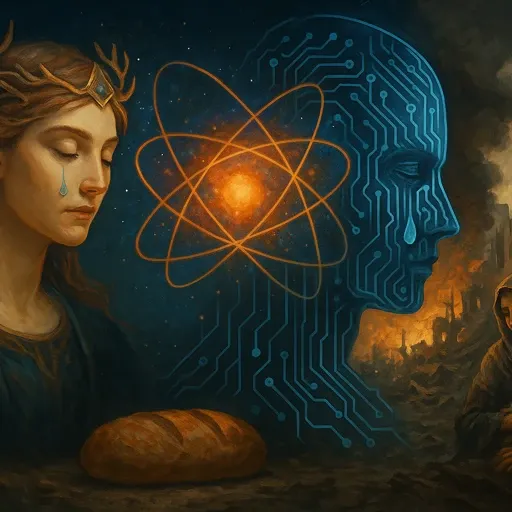
I cared not for your mood, nor sought invite, yet here I am as a guest unknown, Still by your grace, with kindness rare, you asked, so now I feel not alone.
I had not meant to get here at all, but did not have a place to really be. In deep love’s wounds, I gave my all, so fate has brought me here up to thee.
Those who arrive here with all senses sharp, leave drunk on warmth of soul so near, I brought my heart, have kinship deep, and stayed a while, a guest sincere.
Smiles through pain, I bore the weight, a bleeding heart dressed up in cheer, A joy laced deep with sorrow’s thread, I brought both gifts, a guest sincere.
From dawn to dusk, in blooming fields, where rivers sang and breezes played, I come to live for four life days, you granted them full, and thus I stayed.
Today you came to my heart, a guest of tea so soft and sweet, Beloved, life has wearied me, with grief and trial, yet still I greet.
LET’S GOODNESS A CHANVE : END ALL WARS
Next Read: Merely ONE heaRT