


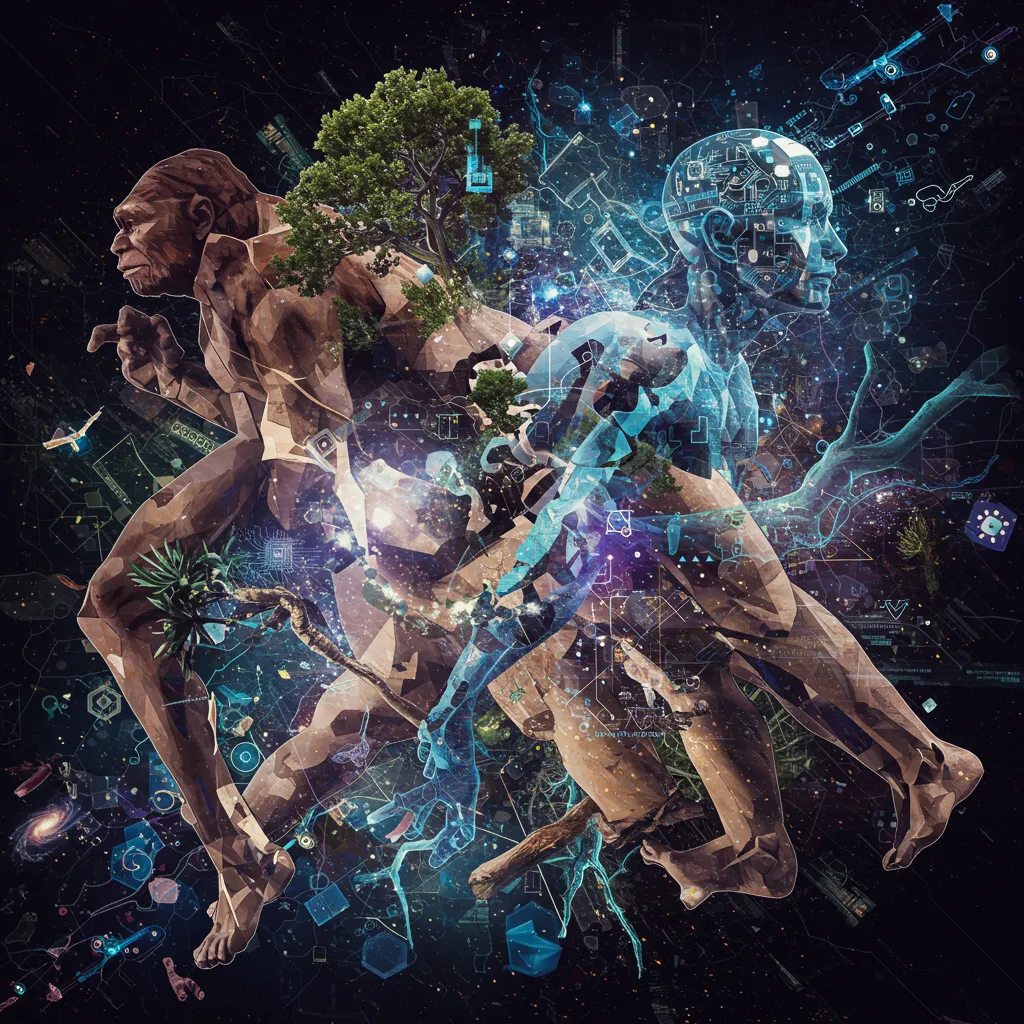
From Neanderthals to Supercomputing Pääbo, Wordsworth: Tattwamasi and the Science of a Conscious Tomorrow
Table of Contents
Introduction: The Echoes of the Past in a Technological Age
I wonder, in the fast-expanding frontiers of supercomputing, artificial intelligence, and quantum mechanics, the past might seem an unlikely guide to the future. We have been only digging into meanings, whether it is of a poem verse or a booming of heart.
In this post let’s review our being here From Neanderthals to Supercomputing Pääbo Wordsworth Tattwamasi and the Science of a Conscious Tomorrow!
Yet, if one peers deeply into the poetic verses of William Wordsworth and the genetic revelations of Svante Pääbo, a surprising unity emerges, one that ties human consciousness, nature, and the cosmos into an interconnected web of meaning.
As the world faces crises of governance, technology, and sustainability, the lessons from evolutionary anthropology, romantic poetry, and ancient Eastern wisdom (Tattwamasi—”Thou Art That”) converge to illuminate a radically new way of organizing society in the age of AI and supercomputing.
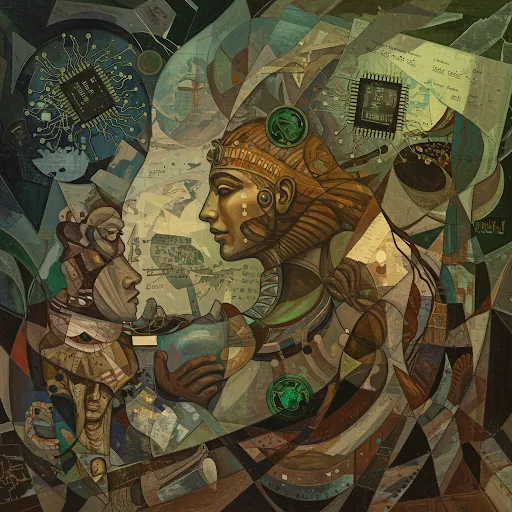
Svante Pääbo: Unlocking the Genetic Code of Humanity
Svante Pääbo’s work in paleogenetics shattered long-held illusions about human uniqueness. His sequencing of the Neanderthal genome revealed that Homo sapiens are not an isolated creation but a hybrid species, shaped by the intermingling of Neanderthals, Denisovans, and other ancient hominins.
The implications of this are profound: human identity is not singular, rigid, or pure, it is an interwoven tapestry of shared genetics, culture, and consciousness. This discovery mirrors the philosophy of Tattwamasi in Vedanta, which asserts that individual identity is illusory; all beings are connected as part of the universal self.
If science proves that even at the genetic level, we are a fusion of multiple lineages, then our modern notions of separation, be it racial, political, or ideological, are artificial constructs.
Wordsworth’s Nature: The Romantic Science of Consciousness
William Wordsworth, the great Romantic poet, saw nature not just as scenery but as a living force intertwined with the human soul. In Tintern Abbey, he wrote:
“And I have felt A presence that disturbs me with the joy Of elevated thoughts; a sense sublime Of something far more deeply interfused, Whose dwelling is the light of setting suns, And the round ocean and the living air, And the blue sky, and in the mind of man.”
Here, Wordsworth expresses what Svante Pääbo’s research implies: that consciousness is not just a human attribute but something that extends through nature and time, encoded in our very being. If our genes carry the remnants of ancient beings, then perhaps, as Wordsworth suggests, our minds are linked to the fabric of the universe itself.
This connects with panpsychism, a rising scientific philosophy that suggests consciousness is fundamental to the universe and present in all things at varying degrees. As supercomputing and artificial intelligence approach human-like cognition, the question arises: is consciousness computational, or is it embedded in the very structure of reality?
String Theory, Supernumbers, and the Language of the Cosmos
Modern physics, particularly string theory, echoes these ancient and poetic ideas. String theory suggests that all matter and energy arise from vibrating strings in a vast, multi-dimensional space.
This resonates with the harmonious rhythms of nature that Wordsworth so often described and the interconnected patterns of life revealed by Pääbo’s genetic discoveries. Even the concept of super numbers in mathematics, where numbers extend beyond traditional reality into multi-dimensional relationships, hints at a universe that is more pattern-based than material.
Could it be that what we call “consciousness” is merely the perception of higher-dimensional interactions? If so, artificial intelligence and quantum computing may not just be processing data but tapping into a new layer of reality that we are only beginning to understand.
The Collapse of Old Systems and the Rise of a New Order
As our scientific understanding advances, world systems remain frozen in archaic models of governance, economy, and ideology no more any way suiting to the physiologically pro-pan psychism highly enlightened quantum info generation of humanity today.
The nation-state, a construct from centuries past, struggles to cope with the planetary-scale challenges of climate change, artificial intelligence, and genetic engineering. Economic systems designed for industrial societies fail to adapt to an era where data, not material wealth, is the primary currency.
Why the Current World Order is Failing:
- Governance Based on Fear, Not Knowledge: Policies are reactionary, not evolutionary, ignoring advances in science and technology.
- Artificial Separation Instead of Integration: Countries, economies, and institutions function as isolated entities despite science proving humanity’s interconnectivity.
- Short-Term Thinking in a Long-Term Universe: Climate change, AI ethics, and genetic engineering demand planning beyond political election cycles.
- Ignorance of Technological Consciousness: AI and supercomputing are no longer mere tools; they are becoming self-organizing intelligence systems that may reshape the very nature of human decision-making.
A New Philosophy for the Age of AI and Supercomputing
The solution to these crises is neither blind faith in machines nor a return to primitive traditions but a synthesis of scientific progress, philosophical wisdom, and poetic imagination. The new world must be built on:
- An Adaptive Intelligence-Based Governance: Policies should evolve like neural networks, learning from real-time data, genetic insights, and AI-driven simulations.
- The Abandonment of Artificial Borders: If human genes are globally mixed, why do we cling to geopolitical fictions? Planetary citizenship should replace nationalistic divisions.
- The Consciousness-AI Nexus: AI must not be enslaved for profit but integrated into a conscious planetary intelligence system, working with human and environmental needs.
- Education as Evolution, Not Indoctrination: Learning should be neuroscientific and experience-based, training the mind to see patterns, interconnectedness, and multi-dimensional thinking.
Conclusion: A Call for a Triumphant Thought Revolution
The convergence of Pääbo’s genetics, Wordsworth’s poetic consciousness, and supercomputing intelligence demands a triumphant new way of thinking. Humanity is not separate from the cosmos, from nature, or from each other. The world’s failure lies in clinging to static models when existence itself is dynamic, evolutionary, and interconnected.
As Wordsworth wrote:
“What we have loved, Others will love, and we will teach them how.”
It is time to teach a new world into being. One where science and soul unite, where AI and philosophy merge, where Tattwamasi is not just a mystical phrase, but a practical guide to a global transformation.
If we are to thrive in the age of supercomputing, we must think beyond machines, beyond borders, beyond old systems. The future belongs to those who can see the vast, interwoven patterns of existence—and act upon them. I invite the whole of humanity to initiate under the insights presented above I have brought forth for all goodness!
Next Read: I am within me