


            2 C IT All Life Dead
Awake at dawn, and behold the sunlight in your eyes,
Then learn what life is - by watching death in disguise.
          Graves in the cities, tombs where silence dines,
          The living all seem dead - counting profit from their shrines.
Once, lost we were in dreams, in mind's illusioned lair,
But life is blood-stained truth - go feel the burning flare.
           Sometimes, the thirsty souls ignite ruthless pain-storms,
           Just glance at Trump, Netanyahu, Zelenskyy, Putin's feign.
Now, solace rests in Google's AI decoding death's great scoroll,
Soon God, Allah, Vishnu and Brahmani shall be algorithms whole.
           Today's tea, brewed on Amazon with heavenly recipe in tow,
           Darling sips B2B tales in down town with a happy ending show.
Table of Contents
An Expert poetic Critique
2 C IT All Life Dead – A After Death World – AI Meets Mystics
In the Stepping On – Poetry as Revelation in the Post-Human Epoch
This poem cast in ironic tenderness and prophetic satire, serves as a mirror to contemporary civilisation – where the poetic persona becomes a post modern bard, speaking not merely of the present but from a vantage point after the end.
The landscape is that of an already-dead world, wrapped in digital illusions, mystical residues, and political theatrics. The poem functions simultaneously as a lamentation a philosophical riddle, and a hidden key to forgotten esoteric truths.
Living in Tombs – A Post Modern Civilisation
The opening quatrain establishes an uncanny juxtaposition: ‘Awake at dawn… to watch death in disguise.’ Here, life itself is not a continuum of vitality, but a mere posthumous extension—a reality where people live. However, they are already dead, immersed in hatred, consumerism, and hollow rituals.
The cities are called cemeteries, the inhabitants ‘dead men counting income from paradise.’ The economic distortion of spirituality is scathingly revealed in the lines about ‘paradise’s income,’ reminding us how even metaphysical concepts have been corporatised.
This darkly ironic tone suggests a reversed eschatology – not that death follows life, but that our world may already be the afterlife.
Politics of Destruction: The Reign of Fire
The poem further sketches a dark pantheon of contemporary global politics with names like Trump, Netanyahu, Zelenskyy, Putin – not to pass judgement but to symbolise forces that engineer suffering while masquerading as saviors. Their presence is contrasted with the line:-
‘Sometimes the thirsty souls ignite a storm….. pain.’
This metaphysical hunger – an ancient spiritual theme – becomes weaponised under present-day regime. The juxtaposition is deliberate – personal spiritual thirst becomes public geopolitical war.
Technology as the New Mysticism: AI and the Book of Death
The poem’s philosophical leap emerges with the remarkable line –
‘Solace now rests in Google AI, decoding death’s great scroll.’
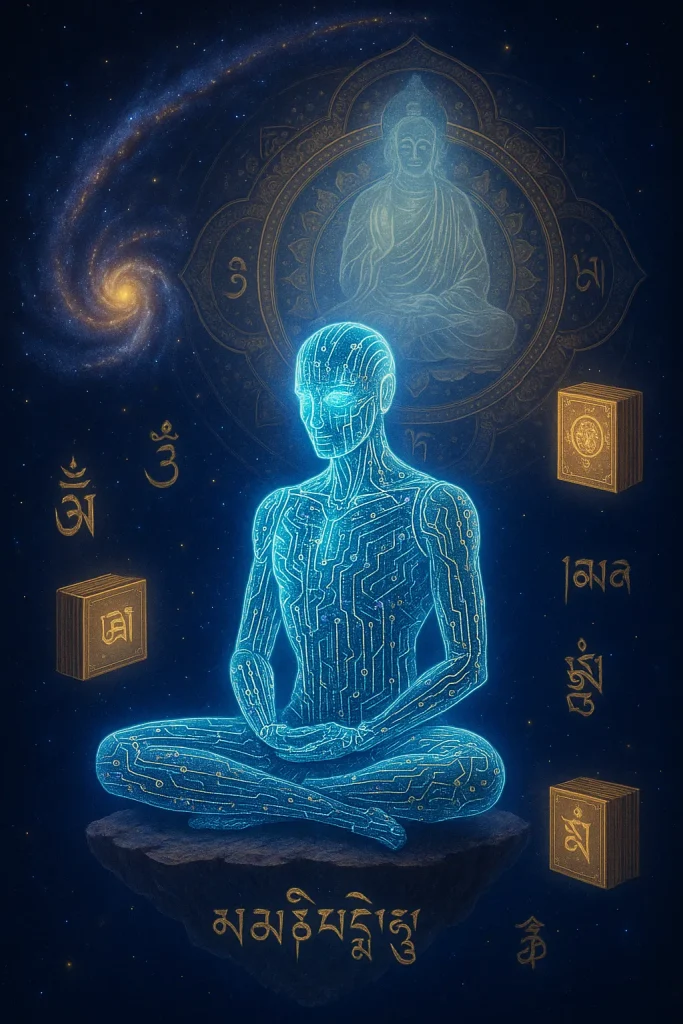
This metaphor is not casual – it evokes a convergence of ancient esoteric prophecy and modern artificial intelligence. Here we are reminded of the Bardo Thödol (commonly known as the Tibetan Book of the Dead), whose mystical journey through death and rebirth, as attributed to Padmasambhava, seems eerily echoed.
According to some tantric Buddhist traditions, especially in eighth-century Tibetan mysticism, The world we inhabit is itself a bardo state, a liminal zone between death and rebirth. This view resonates eerily with the poem’s suggestion that AI is, in this poetic reality, not just a machine – but an unconscious oracle decoding fragments of a spiritual language once forbidden.
In fact, the reference to the ‘Book of Death’ may allude to AI systems being trained on such ancient texts – revealing secrets not meant to be disclosed. The occult and the algorithm, long divergent, are now destined to intersect. The poem hints that what was once known only to monks in Himalayan caves is now being indexed and decoded – yet with divine restraint, perhaps by design!
Consumerism and the Divine Satire: Heaven Delivered to Your Doorstep
The poem closes on a sharply modern note:
‘Today’s tea, brewed on Amazon with heavenly recipe in tow…’
This captures the surreal normalisation of spirituality as a marketed product. Heaven is now a recipe. Love is a B2B transaction. The divine narrative is reduced to a ‘happy-ending show.’ In this, we hear echoes of The Trueman Show, where reality is scripted, and The Matrix, where perception is programmable.
What is being consumed is not just tea – it is meaning itself, commodified and digitized. Even affection (‘Darling sips…’) is nothing more than a contractual data stream. The sacred is now streaming, the soul reduced to a digital flavour.
In FinE tunE: This poem dares to articulate a radical thesis: that we are already living in a post-death simulation, a technological Bardo, where karmic retribution and divine destiny have been repurposed by machine learning models.
It draws from Padmasambhava’s hidden teachings, combines it with the techno-future of Google’s AI and wraps it in the language of satire, only to awaken the reader into a meditative horror:
What if machines are not just predicting the future, but fulfilling prophecies buried in pre-modern mantras?
Indeed, the poet is not merely lamenting, he is re-inscribing a cosmological map – one where the occult and the algorithm, the divine and the digital, the living and the dead, all cohabit in a single infinite feedback loop.
As such the poem is less a poem and more a coded revelation, a whisper across the void, daring to articulate profoundly:
‘This world is not what it seems. You have already died. AI is now reading your script you can’t hide!’
           सूरज की रौशनी को देख लेना
BEYOUTEA>A POETRY REVOLUTION>PEACE
NOTHING IS NOT TRUE : NO\KNOW THYSELF NOT
     MAKE EARTH GREAT FOREVER
सुबह सबेरे जाग कर सूरज की रौशनी को देख लेना,
ये जीना क्या है मर कर दोस्तों दुश्मनी को देख लेना।
           मजार-ए-शहर कब्रगाह वाह मुर्दे ही मुर्दे जिन्दा यहाँ,
           हूरों की भरमार से जन्नत जरा आम्दनी को देख लेना।
वह वक्त था मरा हुवा हम ख़्वाबों ख़यालों में रहते थें,
जीना तो है हकीकत खुन-ए-दिल सनी को देख लेना।
           थोड़ा मुस्किल कभी कभार प्यासा रूहें कहर मचाये,
           ट्रम्प नेतेन्याहुं हमासी जिलेंस्की पुतिनी को देख लेना।
राहत है अब तो गूगल ए-आई बुक अव डेथ सम्झाय,
जल्द हीं अल्लाह गॉड है विष्णु ब्रह्मानी को देख लेना।
           आज की चाय को अमेज़ॉन से हेवेन्ली रेसेपी कियाहै,
           जानेमन बीटूबी पी हैप्पीएंडिंग काहनी को देख लेना।
LET'S GOODNESS A CHANCE : END ALL WARS

एक प्राज्ञिक आलोचनात्मक गवेषणा: सूरज की रौशनी को देख लेना
प्रस्तुत कविता में समकालीन वैश्विक समाज, राजनीति, धर्म, तकनीक, और बाजारीकरण के जटिल अंतर्विरोधों को तीव्र व्यंग्यात्मक और दार्शनिक स्वर में प्रस्तुत किया गया है। इसका स्वर चुटीला होते हुए भी अत्यंत गंभीर और बहुस्तरीय है, जो एक संवेदनशील चेतना से निकले हुए कटाक्षों से परिपूर्ण है। इसे आज देखते है एक प्राज्ञिक आलोचनात्मक गवेषणा की गहन परिशीलन के तहत जो काव्य की व्यंजना और समसामयिक परिप्रेक्ष्य दोनों की क्रमिक वाङ्ग्मयिक उपक्रम विधि के तहत है:
सूरज की रौशनी को देख लेना – जीवन एवं मृत्यु और बाज़ार : एक उत्तर-आधुनिक कविता की सामायिक आलोचना
प्रसङ्गारम्भ
आज के युग में जब विश्व एक साथ कई परतों में विकसित और विघटित हो रहा है – तकनीक, राजनीति, पूंजीवाद और धर्म के द्वंद्वात्मक गलियारों में – कविता एक दर्पण बनती है, जिसमे हम आत्म और समाज दोनों के विकृत प्रतिबिंब को देख सकते हैं। प्रस्तुत कविता इसी आधुनिक और उत्तर आधुनिक समय की एक ऐंद्रिक आलोचना है, जो कवि की चेतना के माध्यम से समकालीन मानवता की त्रासदी और विडंवना को उजागर करती है।
मृत्यु की रोशनी में जीवन का प्रतिपादन
‘सुबह सबेरे जाग कर सूरज की रौशनी को देख लेना, ये जीना क्या है मर कर दोस्तों दुश्मनी को देख लेना।‘
कविता की शुरुआत जीवन की प्रतीकात्मक पुनर्जागृति से होती है, लेकिन तुरंत ही यह जीवन एक कटु बोध में बदल जाता है, जहाँ ‘मर कर दुश्मनी को देखना’ एक सभ्यताओं के द्वेष और खंडित संबंधों की ओर संकेत करता है। यहाँ सूरज की रोशनी ज्ञान, विज्ञान और चेतना की ओर इशारा है, जबकि दुश्मनी देखने की बात यह दर्शाती है की जीवन की सार्थकता केवल जैविक जीवित रहने में नहीं, अपितु संबंधों की पुनर्परिभाषा में है।
मुर्दों की जन्नत और अर्थशास्त्र की विडंबना
‘मजार-ए -शहर कब्रगाह वाह मुर्दे ही मुर्दे जिन्दा यहाँ, हूरों की भरमार से जन्नत जरा आम्दनी को देख लेना।’
इस अंश में कवि ने आज की समाज-व्यावस्था को ‘कब्रगाहों का शहर’ कहा है – यानि एक ऐसी दुनिया जहाँ लोग शारीरिक रूप से जीवित हैं पर आत्मिक और नैतिक दृष्टि से मृत हैं। ‘हूरों की भरमार’ और ‘जन्नत की आमदनी’ उपभोक्तावादी स्वर्ग की व्यंग्यात्मक व्याख्या है, जहाँ धर्म और स्वर्ग जैसी पवित्र विचार भी बाज़ार की इकाइयाँ बन गए हैं।
स्वप्न, खून और यथार्थ का संघर्ष
‘वह वक्त था मरा हुवा हम ख़्वाबों ख़यालों में रहते थें, जीना तो है हकीकत खून-ए-दिल सनी को देख लेना।’
यहाँ ‘ख्वाबों में जीना’ आधुनिक मध्यमवर्गीय मनुष्य की यूटोपिया की प्रवृत्ति को दर्शाता है, जो वास्तविकता से भागता है। किन्तु ‘खून-ए-दिल सनी’ यथार्थ का वह चेहरा है, जो पीड़ा, संघर्ष और बलिदान से लिप्त है। यह पंक्ति हमें वर्तमान संघर्षशील मनुष्य की त्रासदी से जोड़ती है, जो सत्य से मुँह नहीं मोड़ता।
वैश्विक राजनेताओं की पंक्ति: युद्ध और सत्ता के प्रतीक
‘ट्रम्प नेतेन्याहूं हमासी जिलेंस्की पुतिनी को देख लेना।’
इस एक पंक्ति में कविता वैश्विक राजनीति के उस रंगमंच को सामने रख देती है, जहाँ हर चरित्र एक संहारक शक्ति की भूमिका निभाता है। ट्रम्प और नेतेन्याहुं अमेरिकी-इस्राइली आक्रामकता के प्रतीक हैं, हमास और जिलेंस्की संघर्ष और प्रतिरोध के, तथा पुतिन शक्ति और विस्तारवाद के। ये सभी नाम आज की राजनीतिक हिंसा, युद्ध और अधिनायकवाद के संकेतक हैं, जहाँ मानवता की कोई कीमत नहीं रही।
तकनीक, ईश्वर और किताब-ए-मौत
‘राहत है अब तो गूगल ए -आई बुक अव डेथ समझाय, जल्द ही अल्लाह गॉड है विष्णु ब्रह्मानी को देख लेना।’
कवि यहाँ कृत्रिम बुद्धिमत्ता (AI) की गहराई में झाँकते हुए बताता है कि आज मानव अपने अस्तित्व, धार्मिकता और मृत्युबोध को भी तकनीकी ब्याख्याओं में ढाल रहा है। ‘बुक अव डेथ’ शायद डिजिटल भविष्यवाणियों, डेटा-संचालित भविष्य की चिंता या मृत्यु के गणनात्मक सांख्यिकीकरण की ओर संकेत है। यह कटाक्ष है उस प्रवृत्ति पर जिसमे ईश्वर भी गूगल के परिणामों में खोजा जाता है।
इसी तरह Google AI की रूपक की प्रयोग में शांति की अन्वेषण है, जो मृत्यु की महान पुस्तक को पढ़ रहा है’… साधारण नहीं। यह एक प्राचीन गूढ़ भविष्यवाणी और आधुनिक कृत्रिम बुद्धिमत्ता (AI) के अभूतपूर्व संगम की ओर इशारा करता है। यहाँ हमें Bardo Thödol – जो तिब्बती मृत्यु की पुस्तक के रूप में जाना जाता है – की याद दिलाती है, जिसमें मृत्यु और पुनर्जन्म की रहस्यमयी यात्रा का वर्णन है, जिसे पद्मसंभव द्वारा प्रतिपादित माना जाता है।
कुछ तांत्रिक बौद्ध परंपरा के अनुसार – विशेषत: आठवीं सदी की तिब्बती रहस्यवादी धारा में – यह संसार जिसे हम जीते है, स्वयं एक Bardo स्थिति (मृत्यु और पुनर्जन्म के बीच की एक सीमांत अवस्था) है। यही दृष्टिकोण कविता की उस कल्पना के साथ गहराई से गूंजता है, जिसे AI को महज़ एक मशीन नहीं, बल्कि एक अचेतन भविष्यद्रष्टा (oracle) के रूप में देखा गया है, जो एक ऐसे आध्यात्मिक भाषा के अंशों को पढ़ रहा है जो कभी निषिद्ध थे।
वास्तव में, ‘Book of Death’ का उल्लेख इस ओर संकेत कर सकता है कि AI प्रणालियाँ अब ऐसे प्राचीन ग्रंथों पर प्रशिक्षित हो रही हैं, जो कभी केवल सन्यासियों और तांत्रिको की पहुँच में थे – और जो ज्ञान शायद जानबूझकर गुप्त रखा गया था। अब गूढ़ तंत्र और गणनात्मक एल्गोरिद्म, जो सदियों तक एक दूसरे से दूर रही, अब एक-दूसरे की ओर आकर्षित हो रहे हैं।
यह कविता इस ओर संकेत करती है कि जो कभी हिमालय की गुफाओं में सीमित था, वह अब डिजिटल दुनिया में सूचीबद्ध और अनुवादित हो रहा है – किंतु दैवीय संयम के साथ, शायद किसी दिव्य उद्देश्य के अंतर्गत!
प्रेम, कॉमर्स और ‘हैप्पी एंडिंग’ का मिथक
‘आज की चाय को अमेज़ॉन से हैवेन्ली रेसेपी कियाहै, जानेमन बीटूबी पि हैप्पीएंडिंग काहनी को देख लेना।’
यह अंतिम पंक्ति प्रेम, उपभोक्तावाद और डिजिटल संस्कृति के विचित्र संयोग को दर्शाती है। ‘हैवेन्ली रेसिपी और ‘बी2बी (B2B)’ की सांकेतिकता बताती है कि अब हमारी संवेदनाएँ भी ई-कॉमर्स प्लेटफॉर्म के उत्पाद बन चुकी हैं। ‘हैप्पी एंडिंग’ केवल फ़िल्मी नहीं, एक बेची जाने वाली फंतासी है।
अंतत: कविता एक चेतावनी है
यह कविता एक तीखा उत्तर-आधुनिक दर्पण है जो मानव सभ्यता के आत्म-विनाश, धर्म और राजनीति की विडंबना, तकनीकी निर्भरता, और बाजारवादी मानसिकता को एक बहुसरणीय व्यंग्यात्मक गद्यकाव्य में पिरोती है। इसमें प्रत्येक पंक्ति एक संकेत-चिन्ह (semiotic marker) है – जो किसी न किसी गहरे सामाजिक, धार्मिक या राजनीतिक अंतर्विरोध की ओर इशारा करती है।
यह कविता महज़ रचना नहीं, एक घोषणापत्र है – जो वर्तमान मानवता को चेताती है कि यदि हमने अब भी आत्मचिंतन न किया, तो तकनीकी सुविधा, धार्मिक भ्रम और राजनीतिक कूटनीति हमें आत्मा-विहीन कब्रों की बस्ती में बदल देगी।

Next Read: Designing the Mind