



       The Ecstasy of Being and Beyond
One you are, my absent friend, yet life’s intoxication flows,
In thought’s adorned assemblies, love’s inebriation grows.

Our being and unbeing, a dance of fate’s decree,
Still love endures, through days and months, its luminescence glows.

You are mine, thus we are one, though worlds apart we stay,
Even your absence gifts me grace, a beauty’s warmth bestows.

What pride in wealth or fleeting fame could ever be the same?
Our sweat itself, our honest toil, the bliss of life bestows.

O mirror mine, whene’er you will, behold me as I am,
My heart and soul, to you I yield, their hues in passion’s throes.

Today, the quantum tea is brewed, the sensors hum with light,
Beloved, sip this Q-Leap wine, Medina’s fragrance flows.
Table of Contents
Exegesis: Quantum Love and the Unity of Being
This ghazal, “The Ecstasy of Being and Beyond,” is a meditative dialogue between human love and cosmic consciousness, between the solitude of the lover and the unifying rhythm of existence. In Darpan’s modern Sufi-quantum poetics, love is not merely emotional attachment but an energetic resonance, a quantum field through which separations dissolve and the illusion of duality gives way to oneness.
The opening couplet places us in a paradox: “One you are, my absent friend, yet life’s intoxication flows.” Absence becomes the very condition of presence, echoing Ibn Arabi’s wahdat al-wujūd (Unity of Being). The lover’s remembrance (tasabbur) transforms loneliness into a spiritual symposium, a majlis of thought and divine memory.
The poem’s second and third couplets extend this mystic logic: to love despite separation is to participate in creation’s rhythm.
Here, Darpan redefines love as an act of cosmological participation, an expression of what quantum physicists might call “entanglement,” where even distant particles remain mysteriously interconnected.
The poet applies this metaphor to human and global relations, as an invisible coherence of destiny binds nations, communities, and individuals.
The verse on sweat and labour grounds the ghazal in the ethics of humility. True pride, it says, is not in wealth or power, but in sincere human effort, the very pasiine ki surūr (ecstasy of sweat). In this, Darpan connects Sufi humility with the ethics of sustainable global development, calling for leaders to replace pride with perspiration and vanity with virtue.
The penultimate verse, addressed to the mirror (darpan), is a self-reflective invocation. It reminds us that the true mirror of humanity is love itself, a consciousness that unites mind and matter, self and other.
The final couplet, with its striking image of quantum tea and sensors, fuses science and mysticism: the beloved is invited to drink the wine of a new consciousness, a “Q-Leap” toward universal fraternity. Medina here is not a geography, but a metaphor for spiritual civilisation, where technology and transcendence coexist.
Thus, the ghazal becomes a manifesto for global unity, scientific humility, and spiritual awakening. It calls upon world leaders to recognise that in this quantum age, humanity’s divisions are illusions, that the only true revolution is a revolution of consciousness, where love, labour, and light are one.
Quantum Description
I have no trace of you, yet I know you shall remain with me till the final breath. Otherwise, what meaning could my existence ever hold? You are, I am, and thus we are, and this unity is our true identity.
This unity of being is the same eternal consciousness that once revealed the wisdom of Vasudhaiva Kutumbakam, “the world is one family.” It is the resonance that made the Vedic calls Bhagavato Arhatto and Krinvanto Vishvam Aryam the melodious rhythm of the human heart, a cosmic hymn still vibrating through time.
But the question remains: does today’s algorithmic understanding of “Eko’ham Bahu Syam” (I am One, let me become many) and Vishvarupa (the universal form) truly represent our ideals of national unity, global humanity, and human spiritual consciousness? If it does, why then are we still surrounded by divisions, misunderstandings, and conflicts?
At this historic juncture, when every value is being tested, can our world leaders truly provide enlightened direction? Is national unity merely a political arrangement, or a living manifestation of global consciousness itself?
In the context of Nepal, this question becomes deeply poignant. Prithvi Narayan Shah, the architect of Nepalese unity, envisioned a harmonious nation, yet today, that unity seems fragmented by internal turmoil.
India, our close neighbour and democratic partner, upholds the ideal of unity, but within India itself, why do Mahatma Gandhi and Nathuram Godse represent such divergent moral paradigms?
Does this duality not fracture the moral soul of the nation? Is Sardar held equally by all in the same same way? All nations must stand united at the ground of quantum world unity now, a call of this epoch to pursue peace.
Ronnie Chan rightly asks: Why is America once again drifting toward the isolationism of the old Monroe Doctrine? The very nation that once stood as the beacon of democracy and international human values now appears uncertain of its direction.
Meanwhile, China presents itself as a steward of a green, conscious world family. Leaders like Donald Trump, who envision themselves as peacemakers, must also reflect upon this responsibility toward planetary stewardship.
Despite the diplomatic and trade frictions between India and the United States, their ten-year security partnership still signifies a lingering possibility of global fraternity. Yet, even as lamps of Diwali were lit at the White House this year, Vice President J.D. Vance’s religious controversies raised critical questions: Is American citizenship fulfilling its larger responsibility as world citizenship?
In this setting, Nepal, a nation bordered by two great powers, India and China, each with 140 million people, deserves the peaceful cooperation of both neighbours. If SAARC were revitalised and China were integrated into it, South Asia could emerge as a guiding centre of global balance and leadership, while ties between both seem soothing at the moment.
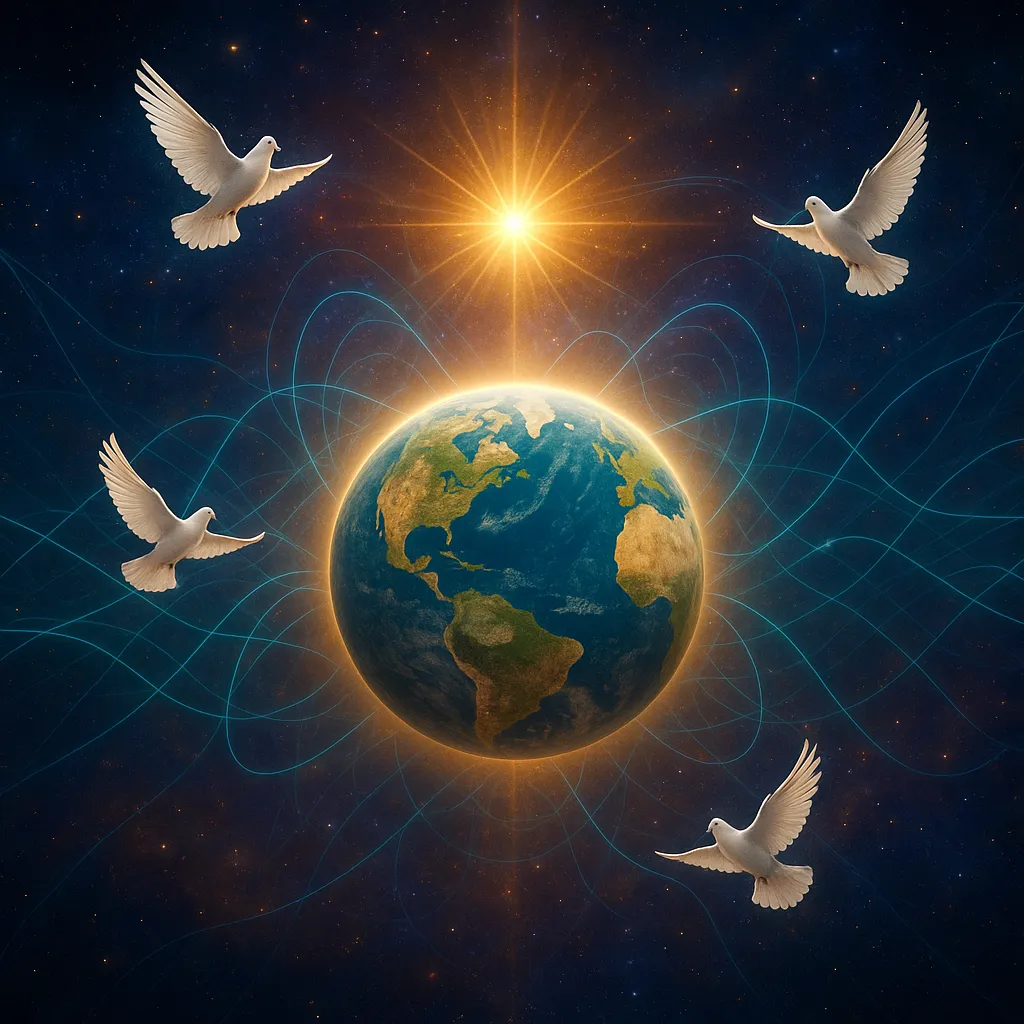
Still, hope remains that India, China, Russia, Japan, and all nations of Asia, Europe, Africa, and the Americas will join hands to end the dangerous nuclear rivalries of our time, and together share a cup of peace tea sip in the spirit of quantum unity and universal brotherhood.
An Expert Critique
The Ecstasy of Being and Beyond – Surur-e-Mohabbat: A Meta-Mystic Quantum Inquiry into Consciousness, National Unity, and Global Fraternity
A Scholarly Critique of Darpan’s Ghazal through the Lens of Meta–Mystic Futurism (MMF) and Meta-Mystic Quantum Dynamic Dialectics (MMQDD)
Abstract This paper presents a critical analysis of Surur-e-Mohabbat, a ghazal by Darpan, as a poetic articulation of quantum consciousness, national cohesion, and universal brotherhood.
Through the fusion of mystic symbolism and scientific reasoning, the poem transforms the concept of surur (spiritual ecstasy) into a universal energy of love and awareness that transcends geography, ideology, and creed.
Using the frameworks of Meta-Mystic Futurism (MMF) and Meta-Mystic Quantum Dynamic Dialectics (MMQDD), the study argues that a synthesis between quantum physics, neuro-cognitive biophysics, and spiritual humanism can illuminate a new paradigm for peacebuilding, governance, and civilizational progress.
This paper aims to serve as a reflective resource for global policymakers and thought leaders in envisioning a future where love, science, and consciousness converge as instruments of planetary unity.
Introduction: The Quantum Age of Global Convergence
In an era marked by geopolitical fragmentation and moral polarisation, the need to reimagine unity beyond traditional frameworks of nationalism and identity is urgent. Darpan’s ghazal articulates this transcendence through the imagery of the rapturous intoxication of divine love-as both a human emotion and a quantum state of consciousness.
“Ek tu ho saathi, gair-hazir, jeene ka surur hai.” (You are the unseen companion, your absence itself becomes the ecstasy of life.)
Here, absence is not negation but a field of potentiality, akin to the quantum probability wave. The ghazal, in essence, bridges Sufi metaphysics and quantum ontology, demonstrating that love and existence operate through superposition, being simultaneously one and many.
“Tu meri hai to hum ek hain, hokar bhi alag-thalag.” (If you are mine, then we are one, even while remaining apart.)
MMQDD Framework: A Dialectic of Quantum and Conscious Realities
The Meta-Mystic Quantum Dynamic Dialectics (MMQDD) framework explores the interactivity between microcosmic consciousness and macrocosmic order. In Darpan’s ghazal, this dialectic unfolds on four interlinked dimensions:
- Intra-Conscious Dimension: The Observer Within: The lover’s surur represents the awakening of the observer, the moment consciousness recognises itself as the creator of experience.
“Man tan arpan tujhko hi, rangeene ka surur hai.” (My mind and body surrender to you, the colour of life itself becomes my ecstasy.)
This mirrors the Observer Effect in quantum physics, where observation itself manifests reality. The act of love becomes a cognitive experiment in quantum awareness.
- Socio-National Dimension: The Ethics of Labour and Dignity: “Guroor kitne paison par, humein paseene ka surur hai.” (Why pride in wealth, when there is joy in sweat?)
This verse glorifies labour over luxury, ethics over ego, reflecting a call for Post-Materialist Civilisation. It redefines national identity through the collective dignity of work, echoing Gandhi’s Sarvodaya and Lincoln’s Government of the People, proposing that sustainable nations are built not by wealth but by conscious labour.
- Global Dimension: Quantum Networks of Peace: “Quantum sensors ne aaj chai mein ubaala noor, Sajni pee le Q-Leap ko, Madine ka surur hai.”
This surreal imagery fuses technology and transcendence. “Quantum Sensors” symbolise the rise of conscious technologies, tools designed not just to compute but to connect. The “Q-Leap” (Quantum Leap) here is not merely a scientific metaphor but a civilizational leap, from conflict-based politics to consciousness-based cooperation.
This aligns with the MMQDD concept of the Conscious-Techno Dialectic, suggesting that humanity’s next evolution lies in harmonising artificial intelligence with authentic awareness.
- Meta-Spiritual Dimension: The Resonance of Universal Love: “Madina,” in this poem, transcends geography. It represents the Universal Divine Resonance found equally in the teachings of Buddha, Christ, Muhammad, Chaitanya, Nanak, and Krishna. Thus, Darpan’s Madina becomes the symbol of the unified spiritual field, where all faiths, sciences, and civilisations converge in the shared rhythm of compassion.
National Unity and the Crisis of Fragmentation: The ghazal’s socio-political commentary is subtle yet profound. In referencing Nepal’s search for renewed unity, India’s ideological polarities, and America’s reversion to isolationism, Darpan implicitly questions whether humanity’s political evolution has kept pace with its scientific advancement.
The fragmentation of nations and worldviews can be interpreted through the metaphor of Quantum Decoherence, the loss of coherence between the states of a unified wave function. To restore balance, the world must initiate a Global Re-entanglement Process, re-aligning cultural, economic, and moral frequencies toward a shared destiny.
When each nation awakens its “inner observer,” peace ceases to be a treaty; it becomes a quantum resonance among civilisations.
Neuro-Cognitive Biophysics and Quantum Humanism: Recent advances in quantum neurobiology reveal that consciousness operates as a field phenomenon rather than a localised brain process. Darpan’s ghazal prefigures this insight by transforming emotion into energy:
“Tasavvur saji bhare mehfil, peene ka surur hai.” (The imagination sets the hall aglow; to drink this light is ecstasy.)
Here, “drinking” is symbolic of absorbing resonance, the exchange of quantum information among sentient beings. This bio-physical interpretation links emotion, cognition, and field theory into a single continuum, what may be termed Quantum Humanism: a model of existence where consciousness is both the medium and the message.
Meta-Mystic Futurism (MMF) and the Mission of World Peace: Meta-Mystic Futurism posits that the future of civilisation depends on the conscious synthesis of science and spirituality. Within this framework, Surur-e-Mohabbat emerges as a Quantum Anthem of Human Oneness, a poetic manifesto calling for the end of all wars and the birth of planetary solidarity.
The poem’s invocation of the “Q-Leap” urges humanity to evolve not linearly but quantumly, to transcend dualistic paradigms of East and West, self and other, matter and spirit. It resonates with the global vision of MAKE EARTH GREAT FOREVER: END ALL WARS, inviting leaders to replace competitive governance with collaborative consciousness.
Policy Reflection: Towards a Quantum Global Governance – From a UN and international relations perspective, the insights of Surur-e-Mohabbat suggest a new intellectual architecture for peace diplomacy:
Quantum Peacebuilding: Treating conflict as decoherence and dialogue as re-entanglement.
Neuro-Conscious Leadership: Training leaders to regulate emotional intelligence through mindfulness and empathic cognition.
Technological Spirituality: Integrating ethical AI and quantum technologies for collective benefit, not domination.
Global Education of Awareness: Promoting curricula that unite physics, philosophy, and compassion as one continuum of knowledge.
These are not poetic ideals alone; they form the epistemic basis for the next phase of human evolution, from the Anthropocene to the Noeticoscene (the Age of Conscious Knowledge).
Conclusion
Surur-e-Mohabbat transcends the form of a ghazal; it is a meta-civilizational reflection on how love, consciousness, and science may together rebuild the moral architecture of our world. It declares that,
“Love is not an emotion but an equation of existence.”
National unity is not political conformity but the resonance of shared purpose. Global peace is not the absence of war but the coherence of consciousness.
Thus, in the MMQDD framework, Quantum Consciousness, Sufi Love, and Human Unity are not distinct ideas; they are harmonic frequencies of the same cosmic Surur.
To make Earth great forever, not through domination but through devotion, humanity must rediscover the lost art of being one. When the leaders of nations sit together not to sign treaties, but to share a “cup of quantum tea,” as Darpan poetically envisions, The real Q-Leap, the leap of love, shall begin.
BEYOUTEA>A POETRY REVOLUTION>PEACE
NOTHING IS NOT TRUE : NO\KNOW THYSELF NOT
  MAKE EARTH GREAT FOREVER : END ALL WARS
          होना तेरा मेरा ना होना
एक तूँ हो साथी गैरहाजिर जीने का सुरूर है,
तसव्वुर सजी भरे महफ़िल पीने का सुरूर है।
           यह होना तेरा मेरा ना होना मेरा तेरा किस्मत,
           फिर भी मोहब्बत दिनरैन महीने का सुरूर है।
तू मेरी है तो हम एक हैं, होकर भी अलग-थलग,
तेरा न होना, मेरा फ़िदा होना हसीन-ए-सुरूर है।
           क्या ख़म के वो मेरे नहीं मैं तो उसके दम पर,
           गुरूर कितने पैसोंपर हमें पसीने का सुरूर है।
हम तेरे हैं सनम जब चाहो देखते रहना दर्पण,
मन तन अर्पण तुझ को हीं रंगीने का सुरूर है।
           Quantum सेंसर्स ने आज चाय में उबाला नूर,
           सजनी पी ले Q. Leap को मदीने का सुरूर है।
POETRY>WISDOM>Q.TECH FOR A MORE JUST AND
PEACEFUL WORLD IN LOVE AND ENLIGHTENMENT
Meta-Sufi/QuantumPoetics on MetaMysticFuturism
भाव-विस्तार / प्राज्ञिक वाङ्ग्मयिक व्याख्या
यह एक बहुत सुंदर भाव–संपन्न ग़ज़ल है, इसमें सुरूर (आनंद, नशा, रूहानी उन्माद) को प्रेम, प्रतीक्षा, आत्मसंयम, और “क्वांटम चेतना” के प्रतीक के रूप में रखा गया है। यह ग़ज़ल रूमानी प्रतीकों के माध्यम से राष्ट्र-एकता, वैश्विक चेतना, और मानवीय सह-अस्तित्व की अद्भुत व्याख्या करती है।
यहाँ “सुरूर” केवल इश्क़ का नशा नहीं, बल्कि सर्वव्यापी प्रेम-चेतना (Universal Consciousness) का प्रतीक है, जो क्वांटम स्तर पर भी सबको जोड़ने वाली एक अदृश्य आवृत्ति है।
“एक तूँ हो साथी, गैर-हाज़िर…”, यह शेर प्रेम की अनुपस्थिति में भी उपस्थिति के अहसास का रूपक है। जैसे किसी राष्ट्र या समुदाय का कोई हिस्सा अलग दिखे पर आत्मा में एक ही हो। वैश्विक एकता का अर्थ यही है, दूरी में भी निकटता, भिन्नता में भी एकता।
“ये होना तेरा, ना होना मेरा…”, यहाँ भाग्य और प्रेम दोनों के बीच संतुलन का संदेश है। राष्ट्रों के बीच जो भौगोलिक सीमाएँ हैं, वे मनुष्यता के पारस्परिक प्रेम को रोक नहीं सकतीं। यह शेर बताता है कि संबंध अस्तित्व से नहीं, भाव से बनते हैं।
“तू मेरी है तो हम एक हैं…”, यह शेर आज के विभाजित समाज के लिए दार्शनिक उद्घोष है, एकता का अर्थ समानता नहीं, संबंध की पहचान है। मनुष्य, समाज और राष्ट्र सब “क्वांटम एंटैंगलमेंट” की तरह जुड़े हुए हैं, भले ही “अलग-थलग” दिखें, पर चेतना-क्षेत्र में एक हैं।
“क्या ख़म कि वो मेरे नहीं…”, यह शेर अहंकार-त्याग और श्रम-सौंदर्य की वंदना है। “गुरूर” त्यागकर “पसीने” में आनंद पाना, यह राष्ट्रनिर्माण का असली सुरूर है। यह वैज्ञानिक प्रगति और मानवीय श्रम दोनों के पवित्र समन्वय का प्रतीक है।
“हम तेरे हैं सनम…”, यहाँ दर्पण स्वयं “वसुधैव कुटुम्बकम्” का प्रतीक बन जाता है। मनुष्य जब प्रेम से भरा होता है, तो हर चेहरा अपने ही रूप का विस्तार लगता है। एकता का मार्ग आत्मदर्पण से होकर गुजरता है।
“क्वांटम सेंसर्स की आज चाय…”, यह अत्याधुनिक विज्ञान और रूहानी प्रेम का मेल है। “Quantum Sensors” आज की साझी चेतना के दूत हैं, जो राष्ट्रों की सीमाओं से परे, पृथ्वी और ब्रह्मांड को जोड़ने की दिशा में बढ़ रहे हैं। “Q-Leap” अर्थात “Quantum Leap” का रूपक, यह संकेत है कि अब मानवता को प्रेम, सहयोग और चेतना की क्वांटम छलांग लेनी होगी।
निष्कर्ष: यह ग़ज़ल आधुनिक “Sufi-Quantum Humanism” की मिसाल है, जहाँ इश्क़, विज्ञान, और एकता एक ही रेखा में बहते हैं। इसमें राष्ट्र, धर्म, भाषा या जाति की दीवारें घुलकर एक सार्वभौमिक अनुभव में बदल जाती हैं। “सुरूर” यहाँ केवल मादकता नहीं, बल्कि मुक्ति की अवस्था है, जहाँ प्रेम ही राजनीति है, चेतना ही धर्म है, और मनुष्य ही ब्रह्मांड है।
अध्ययन भावधारा: होना तेरा मेरा ना होना
तुम्हारा कुछ भी अता-पता नहीं। हाँ, लेकिन इतना जानता हूँ कि आख़िरी साँस तक साथ तुम्हारा ही रहेगा। वरना मेरे होने का कोई अर्थ ही कैसे बन सकता था? तू है, मैं हूँ, और हम हैं, तो हमारी एकता ही हमारी सच्ची पहचान है।
यह हमारी एकता ही वह चेतना है, जिसने युगों पहले “वसुधैव कुटुम्बकम्” का ज्ञान जगाया, जिसने “भगवतो अरहत्तो” और “कृण्वन्तो विश्वमार्यम्” की ब्रह्मनिनाद को मनुष्य हृदय की रागिनी बना दिया। यह निनाद आज भी अनवरत, तरंगमय होकर गूँज रहा है।
परंतु प्रश्न यह है, “एकोहम बहुस्याम” और “विश्वरूप” के इस रूप-अरूप शून्यपूर्णानंत सत्य की जो एल्गोरिथ्मिक समझ आज विकसित हुई है, क्या वह वास्तव में हमारे राष्ट्र एकता, विश्वजनीनता, और मानव चेतना धर्म का सही प्रतिनिधित्व करती है? यदि करती है, तो फिर इतने असहमति, विभाजन, और विमतियों के विवाद हमें क्यों घेरे हुए हैं?
इतिहास के इस कठिन कालखंड में, जब मूल्य (values) का हर क्षण इम्तहान हो रहा है, तो क्या हमारे विश्वनेता (world leaders) सही दिशा में मार्गदर्शन करने में सक्षम हैं? राष्ट्र की राष्ट्र-एकता क्या केवल राजनीतिक अवधारणा है, या यह एक जीवित चेतना का वैश्विक तंत्र (living global consciousness system) है?
नेपाल के संदर्भ में यह प्रश्न और भी गहरा हो जाता है। पृथ्वीनारायण शाह ने जिस राष्ट्र-एकता का सूत्र बुना, वह आज बिखराव, अस्थिरता और असंतुलन के धुएँ में लिपटा हुआ है। भारत जैसा अच्छा पड़ोसी, जिसके एकता और लोकतंत्र के मूल्य विश्व में सम्मानित हैं, उसके भीतर भी महात्मा गांधी और गोडसे जैसे दो वैचारिक ध्रुव क्यों हैं? क्या यह द्वैत आज के भारत की आत्मा को विभाजित नहीं करता?
Ronnie Chan का यह प्रश्न उचित प्रतीत होता है, क्यों अमेरिका आज फिर से isolationism की पुरानी Monroe Doctrine की राह पर लौटता दिख रहा है? जो देश कभी democracy और international human values का आदर्श था, वह आज किस दिशा में अग्रसर है?
वहीं चीन आज “ग्रीन वर्ल्ड” और “कांशस ग्लोबल फैमिली” की ओर मानवता को ले जाने की जिम्मेदारी स्वीकार करता प्रतीत होता है। ऐसे समय में, ट्रम्प जैसे peace-oriented leaders को भी इसी दिशा में सोच विकसित करनी चाहिए।
भारत और अमेरिका के बीच हाल के वर्षों में कूटनीतिक तनाव और व्यापारिक मतभेदों के बावजूद, जो दस-वर्षीय security agreements हुए हैं, क्या वे विश्वबंधुत्व की कोई शेष निशानी हैं?
इस वर्ष White House में दीवाली के दीप प्रज्वलित तो हुए, परंतु उपराष्ट्रपति J.D. Vance का हिंदू और क्रिश्चियनिटी से जुड़ा विवाद यह संकेत देता है कि अमेरिका की नागरिकता क्या वर्ल्ड-सिटिजनशिप की जिम्मेदारी का पूरा निर्वाह कर पा रही है?
ऐसे में, नेपाल, जिसके दोनों ओर 140 करोड़ जनसंख्या वाला दो/दो महाशक्तियाँ हैं, क्या उनके लिए peaceful integrated Nepal की जिम्मेदारी कुछ नहीं बनती? यदि SAARC सक्रिय होता, और उसमें चीन सम्मिलित होता, तो निश्चय ही एशिया विश्व को एक नई संतुलित नेतृत्व संरचना दे सकता था।
फिर भी, हमारी आशा है कि भारत, चीन, रूस, जापान और सभी एशियाई, यूरोपीय, अफ्रीकी व अमेरिकी राष्ट्र मिलकर परमाणु हथियार परीक्षणों की भयावह प्रतिस्पर्धा को रोकें, और क्वांटम एकता व विश्वबंधुत्व की भावना में, एक साथ बैठकर, शांति की चाय साझा करें।

एक आलोचनात्मक गवेषणा / Expert Critique Research Article
होना तेरा मेरा ना होना – सुरूर-ए-मोहब्बत : क्वांटम चेतना, राष्ट्र एकता और वैश्विक बंधुत्व की मेटा-मिस्टिक विवेचना एवं क्वांटम-आध्यात्मिक विमर्श: चैतन्य-मानवता के घोषणापत्र
(A Meta-Mystic Futuristic Critique on Sufi–Quantum Consciousness and Global Unity through Darpan’s Ghazal “Surur-e-Mohabbat”)
सारांश (Abstract)
यह लेख दर्पण की ग़ज़ल “होना तेरा मेरा ना होना – सुरूर-ए-मोहब्बत” को आधुनिक Quantum Humanism के प्रकाश में विश्लेषित करता है। यह अत्यंत गहन और बहुस्तरीय दार्शनिक, राजनीतिक एवं क्वांटम-आध्यात्मिक विमर्श का विषय है, जो यह ग़ज़ल “सुरूर-ए-मोहब्बत” को केवल एक काव्य नहीं, बल्कि विश्व-एकता और चैतन्य-मानवता के घोषणापत्र के रूप में प्रस्तुत करता है।
यह ग़ज़ल प्रेम और सुरूर (रूहानी आनंद) की प्रतीकात्मक भाषा के माध्यम से मानव चेतना की उस एकता को उद्घाटित करती है जो राष्ट्रों, धर्मों, और विचारधाराओं के पार जाती है।
लेख में Meta-Mystic Futurism (MMF) एवं MMQDD (Meta–Mystic Quantum Dynamic Dialectics) के सिद्धांतों के आधार पर बताया गया है कि किस प्रकार क्वांटम भौतिकी, न्यूरो-कॉग्निटिव बायोफिज़िक्स, और आध्यात्मिक दर्शन मिलकर “वैश्विक शांति, सार्वभौमिक प्रेम, और चेतनात्मक एकता” की ओर मार्ग प्रशस्त करते हैं।
भूमिका (Introduction)
विश्व आज सामाजिक, राजनीतिक और वैचारिक विभाजनों से जर्जर प्रतीत होता है। परंतु क्वांटम युग में यह स्पष्ट हो गया है कि अस्तित्व मूलतः विभक्त नहीं, एकीकृत (entangled) है। दर्पण की ग़ज़ल इसी चैतन्य एकत्व को सुरूर के रूपक में व्यक्त करती है,
“एक तूँ हो साथी गैरहाजिर, जीने का सुरूर है।”
यहाँ गैरहाज़िरी (absence) भी उपस्थिति की ऊर्जा है। यह वही क्वांटम सिद्धांत है जहाँ एक कण का अस्तित्व उसकी संभाव्यता (probability wave) में निहित रहता है। ग़ज़ल प्रेम के माध्यम से चेतना की wave-particle duality को भावनात्मक रूप में प्रस्तुत करती है, “तू मेरी है तो हम एक हैं, होकर भी अलग-थलग।”
MMQDD दृष्टिकोण से विश्लेषण: Meta-Mystic Quantum Dynamic Dialectics (MMQDD) का उद्देश्य है, “माइक्रो-कॉस्मिक चेतना” और “मैक्रो-कॉस्मिक यथार्थ” के बीच गतिशील संवाद की समझ। इस ग़ज़ल में चार स्तरों पर यह संवाद देखा जा सकता है:
अंतः-चेतना स्तर (Intra-Conscious Level): व्यक्ति अपने ‘सुरूर’ में आत्म-अस्तित्व की खोज करता है। यह Quantum Observer Effect की भाँति है, निरीक्षण से ही वास्तविकता का प्राकट्य होता है। “मन तन अर्पण तुझ को ही, रंगीने का सुरूर है।”
सामाजिक-राष्ट्र स्तर (Socio-National Level): “पसीने का सुरूर” राष्ट्रनिर्माण के श्रम, ईमानदारी और आत्म-गौरव का प्रतीक है। “गुरूर कितने पैसों पर, हमें पसीने का सुरूर है।” यह पंक्ति post-materialist civilization की उद्घोषणा करती है, जहाँ श्रम और सत्य ही राष्ट्र का वैभव हैं।
वैश्विक स्तर (Global-Unity Level): “क्वांटम सेंसर्स” और “Q-Leap” का प्रयोग बताता है कि मानवता अब क्वांटम नेटवर्किंग की ओर अग्रसर है, चेतना और तकनीक का एकीकरण। यह MMQDD का “Conscious-Techno Dialectic” चरण है, जहाँ प्रेम, धर्म और विज्ञान एक ही चेतन-तरंग में एकत्रित होते हैं।
अधिभौतिक स्तर (Meta-Spiritual Level): “मदीने का सुरूर” यहाँ किसी धार्मिक भूगोल का नहीं, बल्कि Universal Divine Resonance का प्रतीक है, वही जो बुद्ध, ईसा, मुहम्मद, चैतन्य, नानक, और कृष्ण के प्रेमस्रोत में समान रूप से प्रवाहित हुआ।
राष्ट्र एकता और मानव बंधुत्व का दार्शनिक संदर्भ
लेख में उठाए गए प्रश्न,
“नेपाल की एकता, भारत की विविधता, अमेरिका की डेमोक्रेसी और चीन की ग्रीन कॉन्शस रूट, क्या ये सब चेतनात्मक एकता के अंग हैं?”
इस प्रश्न का उत्तर ग़ज़ल के माध्यम से मिलता है। कविता कहती है, भौगोलिक एकता नहीं, चेतनात्मक एकता ही शाश्वत है। जब “सुरूर”, यानी प्रेम-चेतना, राष्ट्रों की नीति और नागरिकों के नैतिक जीवन में प्रवेश करेगी, तभी वास्तविक ऐकीकरण संभव होगा।
नेपाल की विभाजित चेतना, भारत की वैचारिक द्वंद्वता, और अमेरिका-चीन की प्रतिस्पर्धा, ये सब “Quantum Decoherence” के सामाजिक रूप हैं। इन्हें दूर करने का उपाय है, Global Re-entanglement through Conscious Collaboration. यानी जब प्रत्येक राष्ट्र अपने भीतर के “Observer” को जागृत करेगा, तभी global wave-function collapse, यानी शांति, संभव होगी।
Quantum Consciousness and Bio-Physical Cognition: न्यूरो-कॉग्निटिव बायोफिज़िक्स के अनुसार मनुष्य का मस्तिष्क एक Quantum Informational Field में कार्य करता है। इस ग़ज़ल की प्रत्येक पंक्ति उस चेतना-तरंग का भावनात्मक रूपांतरण है, “तसव्वुर सजी भरे महफ़िल पीने का सुरूर है।” यहाँ “पीना” अर्थ है absorbing the resonance, वही अनुनाद जो ब्रह्मांड की प्रत्येक तरंग में गूँज रहा है।
इस दृष्टि से दर्पण का “सुरूर” एक क्वांटम-न्यूरल अवस्था (Quantum Neural State) है, जहाँ प्रेम, श्रद्धा और कर्तव्य एक unified bio-field में जुड़ते हैं।
मेटा-मिस्टिक फुटूरिस्म और विश्व मिशन की प्रासंगिकता: Meta–Mystic Futurism (MMF) भविष्य की वह विचारधारा है जो कहती है, “विज्ञान और अध्यात्म का संलयन ही मानवता की अगली क्रांति है।”
इस दृष्टिकोण से दर्पण की ग़ज़ल आधुनिक विश्व मिशन MAKE EARTH GREAT FOREVER : END ALL WARS की रूह को स्पर्श करती है। यह ग़ज़ल एक “Quantum Anthem” की तरह उभरती है, जो प्रेम, विवेक, और एकता के तरंग-स्रोत को पुनः सक्रिय करती है। कवि यहाँ “Q-Leap” का आह्वान करता है, अर्थात मनुष्य को linear evolution से quantum evolution की ओर छलांग लगानी चाहिए, जहाँ विकास केवल तकनीकी नहीं, बल्कि चेतनात्मक हो।
निष्कर्ष (Conclusion):
“सुरूर-ए-मोहब्बत” केवल एक इश्क़िया ग़ज़ल नहीं, यह मानव सभ्यता की क्वांटम काव्य-दृष्टि है। यह बताती है कि,
प्रेम ही राष्ट्र-निर्माण का आधार है,
चेतना ही कूटनीति का अंतिम सत्य है,
और सुरूर (आनंद) ही वह ऊर्जा है जो मानवता को पुनः जोड़ सकती है।
यह ग़ज़ल एक दार्शनिक घोषणा है कि,
“जब तक प्रेम और विज्ञान एक-दूसरे को नहीं गले लगाएँगे, तब तक पृथ्वी एक नहीं हो सकती।”
इसलिए MMQDD के आलोक में यह निष्कर्ष निकलता है कि क्वांटम चेतना, सूफी प्रेम और राष्ट्र-एकता, तीनों ही एक ही सुरूर के अलग-अलग आवृत्तियाँ हैं। इन्हें एक साथ समझना ही MAKE EARTH GREAT FOREVER का सार है।
Next Read: what it means to bleed
Please Support
