



     In Your Eyes Never Mine
Every tale is mirrored in your eyes, never in mine;
Some quiet care still lingers in your eyes, never in mine.

The flame within the chest has never ceased to burn;
You breathed upon it once again;
Once more, a careless calm shines in your eyes, never in mine.

What pride remains when I behold those sordid chronicles of history?
Only the story of the pen survives.
And that, too, gleams in your eyes, never in mine.

It is the world’s ancient custom: in love, the price is heavy;
Yet a bond beyond all worry abides in your eyes, never in mine.

Guests are we, for but a few brief moments, beloved;
Do not keep ashes in your heart;
Love itself; thought dwells in your eyes, never in mine.

31/ATLAS: today I sip tea brewed from the river of the sapphire sky;
My fair one, even unspoken memory rests in your eyes, never in mine.
Table of Contents
Intellectual-Literary Interpretation
This ghazal’s repeating refrain, “in your eyes, never in mine”, creates a double vision: the beloved’s gaze becomes a mirror of cosmic and collective consciousness.
At the same time, the speaker’s own sight remains comparatively veiled. The contrast between your eyes and my eyes is less a private lover’s quarrel than a meditation on the difference between universal awareness and limited ego.
The poem shifts from intimate yearning to a broader philosophical scope. The unquenched “flame within the chest,” rekindled by the beloved’s breath, suggests both personal passion and a latent revolutionary energy, social or spiritual, that resists extinction.
When the poet laments that “pride” cannot survive the “sordid chronicles of history,” the line becomes an indictment of historical corruption and the cyclical failure of human pride. Yet the “pen” remains, standing for literature and ethical memory.
“Love beyond all worry” (la-fikr) indicates a state of union untroubled by worldly anxieties akin to the mystic’s vision of a love that is at once human and transcendent.
The poet reminds us of life’s brevity: we are “guests…for but a few brief moments,” so we must not “keep ashes in the heart.” Here love becomes both thought and thought-beyond, a bridge between intellect and the infinite.
Finally, the startling image of “31/ATLAS”, drinking tea brewed from the river of the sapphire sky, conjoins twenty-first-century astrophysics (the ATLAS experiment at CERN, or perhaps comets carrying water and carbon dioxide) with ancient celestial myth.
The beloved’s eyes contain this cosmic silence: an unspoken memory of a future in which earthly and interstellar destinies meet.

Expert Critique: A Transdisciplinary Scholarly Inquiry
A Ghazal in Meta-Mystic Futurism and Meta-Mystic Quantum Dialectics (MMQD). Literary artefact and prophetic meditation on humanity’s planetary and interstellar future.
Study Context
This ghazal is a subtle and profound expression of the complexities of contemporary human relationships, personal and collective, national and international.
It reflects upon the era of extreme technological advancement, symbolised by the many comets such as 31/ATLAS, which appear to defy the known laws of physics.
These celestial wanderers are observed to carry an abundance of H₂O (water) and CO₂, inspiring the poetic imagination to envision even the simple act of brewing today’s tea with water extracted from such a comet.
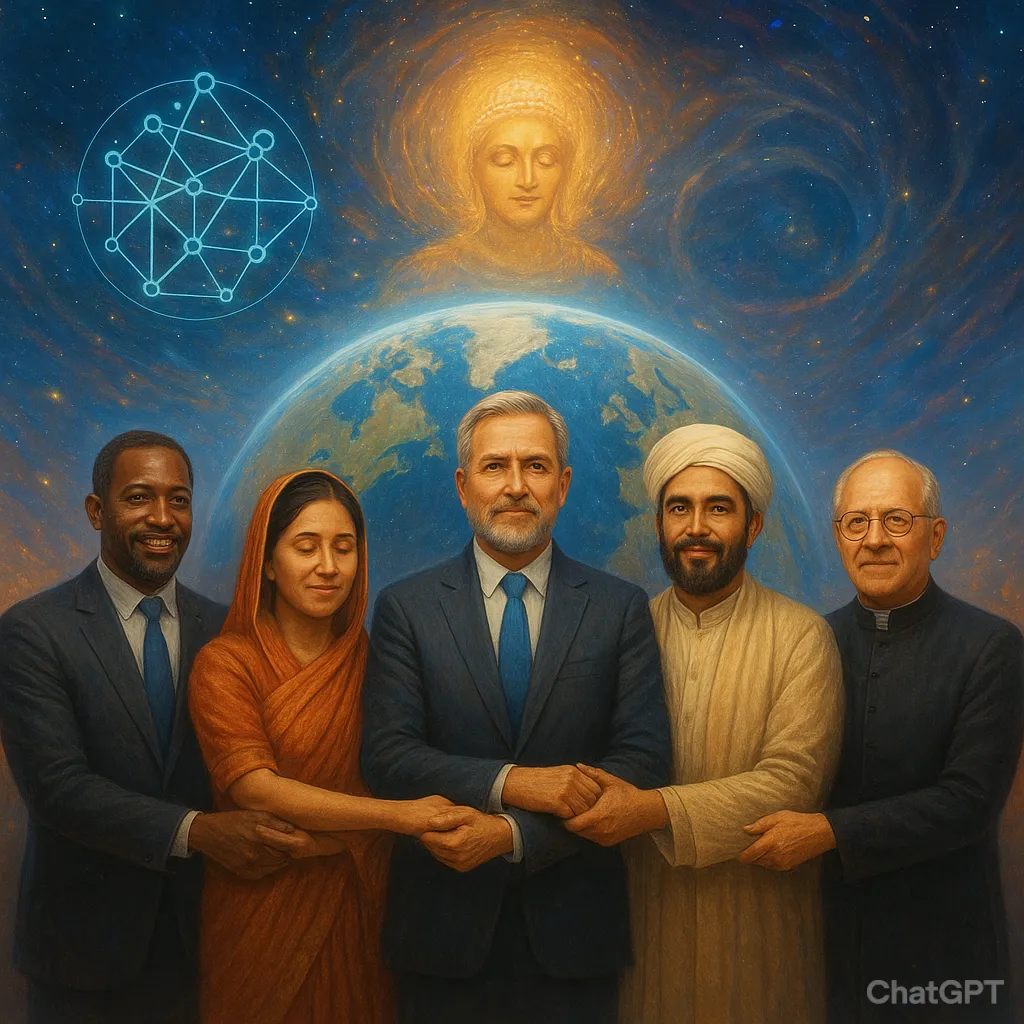
Within this framework, the ghazal becomes a metaphor for the emerging Gen-Z consciousness, a fresh awareness rising from Nepal and spreading across the globe, like those very comets.
This new consciousness challenges the outdated, corrupt, dogmatic, and contextually irrelevant geopolitical structures of our time.
In the present age of quantum informational consciousness, the poem calls for an unavoidable transformation of the entire architecture of security, diplomacy, politics, society, culture, national and international policies, strategies, and their implementations. It poses a critical question: Are we prepared for this transformation?
When development has reached such a hyper state, can we not envision the whole Earth as one united human nation? Is it still meaningful for one nation to conquer another? If we continue to be entangled in such small and parochial pursuits, how shall we ever accomplish the grand interstellar missions of cosmic conquest and exploration?
Abstract
This article offers a transdisciplinary analysis of the modern Hindi-Urdu ghazal above through the lens of Meta-Mystic Futurism and the conceptual framework of Meta-Mystic Quantum Dialectics (MMQD).
It integrates Upanishadic non-dualism, Western philosophical traditions, and recent debates on quantum neurocognitive information fields, arguing that the ghazal functions as both literary artefact and prophetic meditation on humanity’s planetary and interstellar future.
- Introduction: From Poetic Vision to Cosmic Sign
The ghazal’s climactic reference to “31/ATLAS; drinking tea from the river of the sapphire sky” signals a leap from personal lyric to astrophysical metaphor.
“ATLAS” simultaneously evokes the Large Hadron Collider’s ATLAS experiment and the image of comets whose volatile chemistry (H₂O and CO₂) hints at the raw materials of cosmic life.
This dual symbol foregrounds the quantum disruption of classical physics and anticipates a future in which human consciousness itself becomes an interstellar actor.
Nepal’s rising Generation-Z consciousness, likened to these comets, becomes an emblem of a youth movement that challenges outworn political dogmas and points toward a post-national planetary identity.
- Upanishadic Grounding: The Oriental Perspective
The refrain “all is found in your eyes, not in mine” echoes the Upanishadic dictum “sarvam khalvidam brahma”, all this is Brahman.
The beloved’s eyes represent cosmic vision, the universal Self; the poet’s own eyes signify the ego-bound seeker who has yet to merge with the infinite. The ghazal thus enacts the journey from limited individuality to non-dual awareness, the core of Vedāntic philosophy.
- Occidental Philosophical Resonance
Plato’s realm of Forms and Heidegger’s notion of “Being-in-the-world” provide Western corollaries. The poet’s lament, “What pride remains when I behold those sordid chronicles of history?”, recalls Heidegger’s critique of the modern forgetfulness of Being.
Here, historical corruption spurs a search for a deeper ground of truth, while the enduring “pen” embodies literature’s capacity to preserve ethical memory.
Quantum theories of consciousness, from Penrose and Hameroff’s orchestrated objective reduction to Tononi’s Integrated Information Theory, lend contemporary scientific depth to these philosophical reflections.
- Meta-Mystic Quantum Dialectics (MMQD)
The MMQD framework highlights three interwoven dynamics:
Quantum Superposition of Consciousness: The dialectic of “your eyes” and “my eyes” parallels the wave-particle duality of quantum entities: consciousness is simultaneously personal and collective.
Entanglement of the Collective Psyche: Global youth movements reveal an emergent neurocognitive entanglement, dissolving rigid national boundaries within a shared informational field.
Quantum Decoherence and Civilizational Transition: Dogmatic politics are undergoing decoherence; humanity stands poised for a transition toward a single planetary polity capable of interstellar enterprise.
- Implications for World Leadership
Diplomacy and Security:
Quantum technologies and artificial intelligence must be conceived not merely as instruments of power but as vehicles for conscious evolution. A “quantum deterrence” ethic, where moral responsibility surpasses mere technological superiority, becomes essential.
Economy and Ecology:
Policies should treat the Earth as a global commons, framing climate action and the future exploitation of extraterrestrial resources, such as water-rich comets, within a single planetary compact.
Education and Culture:
A quantum-neurocognitive curriculum can unite scientific literacy with spiritual ethics, fostering a generation capable of wielding transformative technologies with wisdom.
Intercultural dialogue must be nourished both by the Upanishadic ideal of Vasudhaiva Kutumbakam (“the world is one family”) and the Enlightenment’s call for universal fraternity.
- Conclusion: Toward an Interstellar Human Nation
The ghazal presses a fundamental question: “Are we ready to become a single human nation?” If we remain captive to petty rivalries, the dream of interstellar achievement and cosmic stewardship will remain distant.
Only through a synthesis of scientific innovation and spiritual awakening, a genuinely meta-mystic futurism, can humanity move beyond the provincial politics of conquest toward a shared destiny among the stars.
This research-style critique thus re-reads the ghazal not merely as a lyric of private longing but as a planetary manifesto, inviting world leaders, scientists, and citizens alike to envision a future where quantum consciousness, global unity, and interstellar ambition converge.

BEYOUTEA>A POETRY REVOLUTION>PEACE
NOTHING IS NOT TRUE : NO\KNOW THYSELF NOT
  MAKE EARTH GREAT FOREVER : END ALL WARS
सब का ज़िक्र मिलता है तेरी आँखों में, मेरी आँखों में नहीं,
कुछ तो फ़िक्र मिलता है तेरी आँखों में, मेरी आँखों में नहीं।
           जल बुझा ही नहीं है आग वो सीने में, फूँक मार दिए तुमने,
           फिर से बेफ़िक्र मिलता है तेरी आँखों में, मेरी आँखों में नहीं।
फ़ख़्र क्या चीज़ रहा बाक़ी करने को गंदी-सी तारीख़ें देख,
कलम का ज़िक्र मिलता है तेरी आँखों में, मेरी आँखों में नहीं।
           है ये दस्तूर दुनिया का, मोहब्बत में चुकानी भारी मुश्किल,
           रिश्ता ला-फ़िक्र मिलता है तेरी आँखों में, मेरी आँखों में नहीं।
मेहमान हैं हम चंद लम्हों के, दिलबर! दिल में राख न राख,
इश्क़ ता-फ़िक्र मिलता है तेरी आँखों में, मेरी आँखों में नहीं।
          31/ATLAS नील गगन की गंगा से भर जल आज चाय पी,
          सजनी! बे-ज़िक्र मिलता है तेरी आँखों में, मेरी आँखों में नहीं।
POETRY>WISDOM>Q.TECH FOR A MORE JUST AND
 PEACEFUL WORLD IN LOVE AND ENLIGHTENMENT
 Meta-Sufi/Cyber Poetics on Meta Mystic Futurism
सान्दर्भिक साहित्यिक-प्राज्ञिक भाव-विस्तार
यह ग़ज़ल शायर की आत्मानुभूति और समकालीन मानवीय संबंधों की जटिलताओं का सूक्ष्म प्रतिबिंब है। हर शेर में “तेरी आँखों” और “मेरी आँखों” का द्वंद्व किसी दो व्यक्तिगत नज़रों का मात्र तुलनात्मक आख्यान नहीं, बल्कि सामूहिक और व्यक्तिगत चेतना का गहन प्रतीक है।
“सब का ज़िक्र… कुछ तो फ़िक्र…”: यह उद्घाटन शेर उस विषमता को इंगित करता है जिसमें समग्र समाज की पीड़ा, संघर्ष और कथाएं एक प्रिय के नेत्रों में प्रतिबिंबित हैं, परंतु कवि की अपनी दृष्टि भीतर से रिक्त प्रतीत होती है। यहाँ कवि आत्म-अन्वेषण की कमी या अपने मन की शुष्कता को उजागर करता है।
“जल बुझा ही नहीं है आग…” : सीने में जलती आग केवल व्यक्तिगत प्रेम या विरह की नहीं, बल्कि दबी हुई सामाजिक-राजनीतिक बेचैनी की भी द्योतक है। “फूँक मार दिए तुमने” से प्रिय या कोई सत्ताशाली तत्व उस सुप्त विद्रोह को पुनः प्रज्वलित करता है। बेफ़िक्र नज़रों में यह विरोधाभास; बाहरी शांति और भीतरी उथल-पुथल, को गहरा करता है।
“फ़ख़्र क्या चीज़ रहा बाक़ी…” : यहाँ कवि इतिहास की “गंदी-सी तारीख़ें” देखकर गर्व (फ़ख़्र) की संपूर्ण संभावना को प्रश्नांकित करता है। “कलम का ज़िक्र” यानी लेखनी की आस्था ही एकमात्र शेष नैतिक आसरा बनती है। यह शेर सामाजिक आलोचना का गूढ़ रूप है; जहाँ साहित्य को नैतिक प्रतिरोध के रूप में रेखांकित किया गया है।
“है ये दस्तूर दुनिया का…” : मोहब्बत में “भारी मुश्किल चुकाना” केवल निजी प्रेम का संदर्भ नहीं, बल्कि हर बड़े आदर्श या निष्ठा को निभाने की सार्वभौमिक कठिनाई का रूपक है। “रिश्ता ला-फ़िक्र” वह अलौकिक संबंध है जो सांसारिक चिंता से परे है; यही आध्यात्मिक प्रेम की ओर संकेत करता है।
“मेहमान हैं हम चंद लम्हों के…” : मानव जीवन की क्षणभंगुरता का दार्शनिक बोध यहाँ स्पष्ट है। “दिलबर ! दिल में राख न राख”; यह चेतावनी है कि नश्वरता में आसक्ति का भार न पालें; सच्चा इश्क़ ता-फ़िक्र है, जो क्षण से परे शाश्वत विचार का आयाम रचता है।
“31/ATLAS : नील गगन की गंगा…” : अंतिम शेर में आधुनिक वैज्ञानिक-ब्रह्माण्डीय बिम्ब, ‘31/ATLAS’ प्रतीकात्मक रूप से अंतरतारकीय धूमकेतुओं (comets) तथा यूरोपीय कण-त्वरक (CERN ATLAS experiment) दोनों की ओर संकेत का महाप्रयोग या आकाशीय प्रतीक और पारंपरिक पौराणिक जलगंगा का संगम है। यह विश्व-नागरिक दृष्टि का संकेत है जहाँ व्यक्तिगत प्रेम “सजनी ! बे-ज़िक्र” बनकर एक वैश्विक, निःशब्द ब्रह्मानुभूति में रूपांतरित हो जाता है।
समग्र अर्थ
यह ग़ज़ल निजी प्रेम की लहरों में आरंभ होकर धीरे-धीरे सामाजिक विवेक, इतिहास की आलोचना, और आध्यात्मिक सार्वभौमिकता की ओर विस्तृत होती है।
“तेरी आँखों” की छवि किसी प्रिय के नेत्रों से आगे बढ़कर समग्र मानवीय दृष्टि; एक करुणा-संपन्न, ज्ञान-संपन्न चेतना का प्रतीक बन जाती है; जबकि “मेरी आँखों” की रिक्तता आत्म-समीक्षा और साधक की अपूर्णता का बोध कराती है।
इस प्रकार यह कृति आधुनिक ग़ज़ल की उस परम्परा का हिस्सा है जहाँ व्यक्तिगत विरह और वैश्विक चेतना एक-दूसरे को आलोकित करते हैं।

एक अंतर्विषयी प्राज्ञिक विवेचना
ज़िक्र तेरी आँखों में मेरी नहीं : ग़ज़ल – क्वांटम चेतना, वैश्विक नवजागरण और मेटा-मिस्टिक फ़्यूचरिज़्म : सामाजिक विवेक, इतिहास की आलोचना, और आध्यात्मिक सार्वभौमिकता
अध्ययन भावभूमि:
यह ग़ज़ल विद्यमान मानवीय संबंधों की वैयक्तिक और सामूहिक, राष्ट्रीय एवं अंतर्राष्ट्रीय जटिलताओं की सूक्ष्मतम अभिव्यक्ति है।
चरम तकनिकी विकाश को पृथ्वी की तरफ आते हुवे 31/ATLAS जैसा बहुत सारे commets जो सारे physics नियमों को तोड़कर आते हुवे दिखाई दे रहे है, जिनमे H₂O व CO₂ (पानी और carbondioxide) की पर्याप्तता दिखती है, तो आज की चाय भी वहाँ से एक्सट्रेक्ट की गई जल से बनाकर पिने की बात को आम परिकल्पना की गई है।
इसी बात को समसामयिक जिओपॉलिटिकल स्थिति जो बहुत ही पुरातनी, निकृष्ट, डॉग्मैटिक और असान्दर्भिक सावित हो रही है, ऐसी माहौल में नेपाल से शुरू हुई विश्वभर की Gen-Z उभरती जा रही चेतना उन्ही commets की तरह होनेकी metaphor ग़ज़ल का सन्देश है।
आज के क्वांटम इनफार्मेशन कांशसनेस चेतना की युग में दुनिया भर के सिक्योरिटी, डिप्लोमेटिक, पॉलिटिक्स, सोशल, कल्चरल, नेशनल, इंटरनेशनल पॉलिसीस, स्ट्रेटेजीज, और एक्शन व impimentation तमाम स्ट्रक्चरों में वदलाव की अपरिहार्यता की मांग को दर्शाता है।
क्या इसके लिए हम तैयार है? डेवलपमेंट की hyper state में आज हम सारा पृथ्वी को क्या एक मानव राष्ट्र के रूप में नहीं बदल सकतें? अब पृथ्वी में एक राष्ट्र दूसरे राष्ट्र को फतह करना कोई महत्तम उद्देश्य बनता है क्या? ऐसी छोटी बातों में हम अगर उलझ कर रह जाएंगे तो ब्रह्मांडीय interstellar महा विजय अभियान कैसे फतेह करेंगे?
सारांश
यह शोधप्रबंध उक्त आधुनिक हिन्दी-उर्दू ग़ज़ल को आधार बनाकर क्वांटम न्यूरोकॉग्निटिव सूचना-क्षेत्र (Quantum Neurocognitive Information Substrate) की दार्शनिक एवं वैज्ञानिक दृष्टियों में पुनर्पाठ करता है।
यह विवेचना मेटा-मिस्टिक फ़्यूचरिज़्म (MMF) एवं Meta-Mystic Quantum Dialectics (MMQD) नामक विश्लेषणात्मक ढाँचे का प्रयोग करती है; जिसमें उपनिषदिक अद्वैत-चेतना और पश्चिमी तत्त्वचिंतन (Occidental Philosophical Grounding) का संगम होता है।
लेख यह स्थापित करता है कि प्रस्तुत ग़ज़ल केवल काव्यिक विरह या सामयिक भू-राजनीतिक टिप्पणी नहीं, बल्कि मानवीय सभ्यता के क्वांटम संक्रमण की भविष्यसूचक रूपकात्मक उद्घोषणा है।
- प्रस्तावना: ग़ज़ल का भू-राजनीतिक व ब्रह्माण्डीय संकेत
ग़ज़ल के अंतिम शेर, “31/ATLAS नील गगन की गंगा से भर जल आज चाय पी”, में ‘31/ATLAS’ प्रतीकात्मक रूप से अंतरतारकीय धूमकेतुओं (comets) तथा यूरोपीय कण-त्वरक (CERN ATLAS experiment) दोनों की ओर संकेत करता है।
ये धूमकेतु; जो परंपरागत भौतिकी के नियमों को चुनौती देते प्रतीत होते हैं; क्वांटम अशांतियों और ब्रह्माण्डीय सृजनशीलता के प्रतीक हैं।
नेपाल से उठती Gen-Z चेतना की तुलना इन धूमकेतुओं से करना यह दर्शाता है कि नवयुवक वैश्विक चेतना अब पारंपरिक राष्ट्रवाद और डॉग्मा से परे, अंतरिक्षीय भविष्य के लिए तैयार है।
- Oriental उपनिषदिक परिप्रेक्ष्य:
उपनिषदों में वर्णित “सर्वं खल्विदं ब्रह्म” (सारा जगत् ब्रह्म है) का सिद्धान्त ग़ज़ल के “तेरी आँखों में सब का ज़िक्र मिलता है” पंक्ति में प्रतिध्वनित होता है।
“तेरी आँखें” यहाँ किसी व्यक्तिगत प्रिय की दृष्टि नहीं, बल्कि समष्टि चेतना; ब्रह्मविद्या की अंतर्दृष्टि, का रूपक है।
“मेरी आँखों में नहीं” मानव अहंता की सीमित दृष्टि का द्योतक है, जो अभी उस सार्वभौमिक चेतना से जुड़ नहीं पाई।
यह द्वंद्व उपनिषदिक अद्वैत के शिष्य और ब्रह्म के बीच के अंतर को इंगित करता है; अर्थात्, अहं से ब्रह्म में प्रवेश का पथ।
- Occidental Philosophical Grounding:
प्लेटो के “Realm of Forms” और हाइडेगर के “Being-in-the-world” का संदर्भ लेते हुए:
ग़ज़ल का “फ़ख़्र क्या चीज़ रहा बाक़ी करने को गंदी-सी तारीख़ें देख” पश्चिमी अस्तित्ववादी प्रश्नों के समान है; जहाँ इतिहास की अपूर्णता मनुष्य को सत्य की खोज की ओर प्रेरित करती है।
हाइडेगर के शब्दों में, यह “forgetfulness of Being” से “event of appropriation” की ओर यात्रा है।
क्वांटम चेतना की आधुनिक चर्चा (Penrose-Hameroff model: Orch-OR , Integrated Information Theory) इन दार्शनिक अवधारणाओं को वैज्ञानिक प्रतिमान देती है।
- Meta-Mystic Quantum Dialectics (MMQD) Framework
MMQD एक अंतःविषयी विश्लेषणात्मक दृष्टि है जिसमें:
Quantum Superposition of Consciousness :
“तेरी आँखों” और “मेरी आँखों” की द्वैतता वास्तव में wave-particle duality के अनुरूप है। चेतना एक साथ व्यक्तिगत (particle) और समष्टिगत (wave) दोनों स्तरों पर स्थित है।
Entanglement of Collective Psyche :
वैश्विक Gen-Z चेतना का “धूमकेतु-समान उदय” दर्शाता है कि मानव मन अब न्यूरोकॉग्निटिव सूचना क्षेत्र में उलझाव (entanglement) की अवस्था में है, जहाँ व्यक्तिगत राष्ट्र सीमाएं सूचना-चेतना के क्षेतिज में विलीन हो रही हैं।
Quantum Decoherence and Civilizational Transition :
पुरातन, डॉग्मैटिक राजनीति का क्षरण (decoherence) अनिवार्य है; नए क्वांटम आदेश में विश्व एक एकीकृत “पृथ्वी-राष्ट्र” की ओर अग्रसर हो सकता है।
- समकालीन विश्व-नेतृत्व के लिए नीतिगत निहितार्थ
5.1 कूटनीति और सुरक्षा
क्वांटम सूचना प्रौद्योगिकी और कृत्रिम बुद्धिमत्ता (AI) को केवल सैन्य व वाणिज्यिक उपकरण न मानकर, चेतना-संवर्धन के साधन के रूप में नीति बनाना।
अंतरराष्ट्रीय सुरक्षा ढांचे में “Quantum Deterrence” का समावेश, जहाँ नैतिक जिम्मेदारी तकनीकी श्रेष्ठता से अधिक महत्त्वपूर्ण हो।
5.2 अर्थव्यवस्था व सामाजिक संरचना
“Global Commons” आधारित आर्थिक नीतियां, पृथ्वी को साझा मानवीय संसाधन के रूप में ग्रहण करना।
जलवायु संकट और अंतरिक्षीय संसाधन दोहन हेतु एक एकीकृत वैश्विक करार; धूमकेतुओं में H₂O व CO₂ की उपलब्धता भविष्य की अंतरिक्ष अर्थव्यवस्था का संकेत है।
5.3 शिक्षा एवं संस्कृति
क्वांटम न्यूरोकॉग्निटिव शिक्षा: जहाँ आध्यात्मिकता और विज्ञान का समन्वय हो, ताकि नई पीढ़ी तकनीक को नैतिकता के साथ अपनाए।
बहुसांस्कृतिक संवाद को उपनिषदिक ‘वसुधैव कुटुम्बकम्’ और Enlightenment की “universal fraternity” से पोषित करना।
- निष्कर्ष: अंतरिक्षीय महाविजय की पूर्वपीठिका
यह ग़ज़ल हमें यह प्रश्न पूछने को बाध्य करती है: “क्या हम तैयार हैं: एक पृथ्वी-राष्ट्र बनने के लिए?”
यदि मानवता छोटे राष्ट्रवादी संघर्षों में उलझी रही तो Interstellar महाविजय: यानी ब्रह्मांडीय संसाधनों का साझा उपभोग और तारकीय सभ्यता की ओर अग्रसरता; सपना ही रह जाएगा।
क्वांटम चेतना का दर्शन बताता है कि आध्यात्मिक-वैज्ञानिक समन्वय के बिना यह लक्ष्य संभव नहीं।
अतः, यह ग़ज़ल मात्र काव्यिक नहीं, बल्कि विश्व-नेतृत्व के लिए नैतिक-वैज्ञानिक घोषणापत्र है:
जो हमें वर्तमान के डॉग्मैटिक राजनीतिक ढाँचों को पार कर मेटा-मिस्टिक फ़्यूचरिज़्म की ओर बढ़ने का आमंत्रण देती है।
इस प्रकार यह अकादमिक विवेचना: काव्य, दर्शन, और क्वांटम विज्ञान के सम्मिलन से; विश्व नेतृत्व को यह संकेत देती है कि: केवल तकनीकी प्रगति नहीं, बल्कि चेतना का क्वांटम उत्कर्ष ही मानवता को अंतरिक्षीय महाविजय और शाश्वत वैश्विक शांति की ओर ले जा सकता है।
संदर्भ-सूत्र (Indicative References)
Chandogya Upanishad: “Sarvam Khalvidam Brahma”
Martin Heidegger: Being and Time
Roger Penrose & Stuart Hameroff: “Orchestrated Objective Reduction” Theory
David Bohm: Wholeness and the Implicate Order
Immanuel Kant: Perpetual Peace
Next Read: wine-house of friendship and enmity