


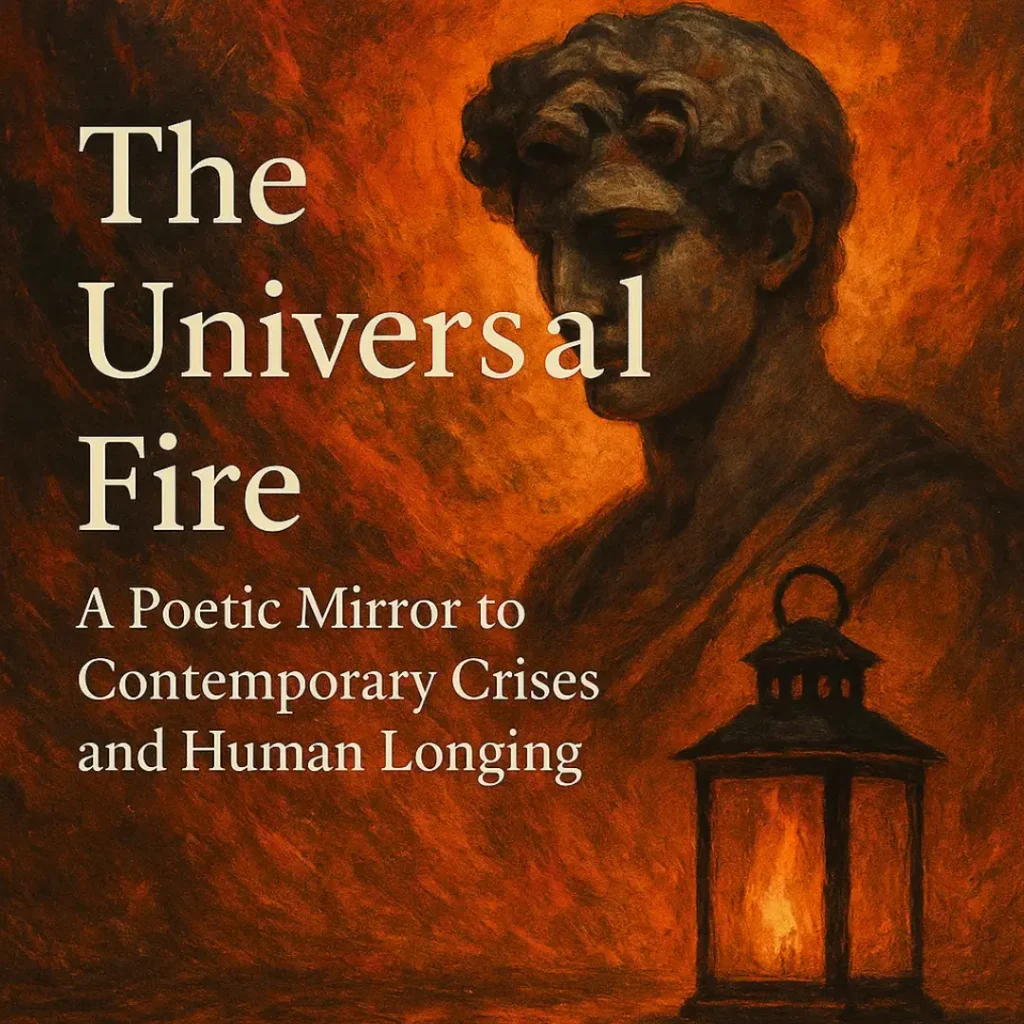
                        Raged Fire Shimmer Burn
At dawn's first gleam, on shimmering plains, a fire now rages bright,
A burning hunger grips the globe, an unseen, somethering awright light.
    We live with faith in eyes aglow, believing in the flame,
    Yet shattered lamps now weep aloud, like cliffs that scream in shame.
I steal the beauty from Olympus' crown, and flee beneath the sky,
As Zeus and Prometheus both, in pride and wrath, had to burn high.
   This fire's not new, but an ancient scar, etched deep in famished hearts,
   Like David-Goliath torn in limbs, where flesh and fury start.
O King Solomon! Come, retell the tales you used to weave,
Of seven hundred queens and three hundred concubines, now burning in belief,
   Even tea today has turned to plaint, a friendly grievance bold,
   My sweetheart's goblet brims with flame, of silence bought and sold.
                 xxx000xxx
BEYOUTEA>A POETRY REVOLUTION>PEACE
NOTHING IS NOT TRUE : NO\KNOW THYSELF NOT
            MAKE EARTH GREAT FOREVER
भोर सबेरे झिलमिल सवा मैदान में लगे आग है,
जलती भूख गुप्पसी सारे जहान में लगे आग है।
           जिंदगी जी आँखोंमें रोशनी पर डाल कर यकीं,
           चिराग़ फुटपड़े यूँ रो कर चट्टान में लगे आग है।
सुंदरी ओलिंपस की चोटीसे चुराकर फिर भागूँ,
जिउस व प्रमीथस दोनोंके आन में लगे आग है।
           आग है भूख है सदियों के दागा दिलोंमे है दाग,
           डेविड गोलिएथ बटें जानपेजान में लगे आग है।
ओ किंग सोलोमन कहानी फिर से हमें सुनाना,
सातसौरानियातीनसौ बांदीयान में लगे आग है।
           चाय आज एक दास्ताँ बनी दोस्ताना फ़रियादी,
           जानेमन इश्क़प्याले मान नमान में लगे आग है।
LET'S GOODNESS A CHANCE : END ALL WARS
     एक प्राज्ञिक आलोचन-गवेषणा : आग है भूख है प्रेम है !
प्रस्तुत समसामयिक पद्य रचना सामाजिक-सांस्कृत्तिक यथार्थ के तल पर  गहरे धंसी हुई है, जिसमे भूख, युद्ध, प्रेम, सत्ता, पौराणिकता, और आधुनिकता के सन्तुलनहीं द्वंद्वों की अग्निको काव्यात्मक प्रतीकों के माध्यम से प्रज्वलित किया गया है। आइये इस काव्य अभिव्यक्ति का समालोचनात्मक  और प्राज्ञिक विश्लेषण निम्न प्रकार आत्मसाक्षात्कार करने की कोसिस करें ताकि इसे एक गहन, विचारोत्तेजक प्रबंध के रूपमे आपसमे सबके साथ साझा किया जा सके।
     आरम्भ: कविता में धधकती यथार्थ की आग
'भोर सबेरे झिलमिल सवा मैदान में लगे आग है' - यह उद्घाटन पंक्ति ही समकालीन मानव-समाज की बिडंवनाओं की और संकेत करती है जहाँ दिन की रोशनी, जो जीवन और आशा का प्रतीक होती है, अब 'आग' की उपस्थिति में भयावह और विध्वंसक बन गई है।  इस कविता में 'आग' कोई स्थूल प्राकृत्तिक तत्त्व नहीं, बल्कि यह भूख, संघर्ष, प्रेम, पौराणिक विरोध, सामाजिक असमानता और सत्ता के खेल की गहन उपमाओं के रूप में प्रयुक्त हुई है।
     भूख और विषमता की सामाजिक चेतना
    'जलती भूख गुप्प सी सारे जहान में लगे आग है।'
इस पंक्ति में कवि भूख को 'गुप्प सी' कहकर न केवल  उसकी मौनता को उभारते हैं, बल्कि यह भी दर्शाते हैं  की भूख अब सार्वभौमिक हो चुकी है - भौगोलिक सीमाओं से परे, एक वैश्विक समस्या।  जलवायु परिवर्तन, युद्ध, आर्थिक मंदी और संसाधनों के अनुचित वितरण के बीच आज की दुनिया वास्तव में इसी तरह की 'अदृश्य आग' से झुलस रही है।
* यहाँ कवि भूख को नारे या आँकड़ों में नहीं, बल्कि जलती हुई संवेदना में तबदील होते नजर आते हैं।
     रौशनी और अंधकार का द्वंद्व: उम्मीद बनाम अवसाद
'जिंदगी जी आँखों में रौशनी पर डाल कर यकीं,
चिराग़ फूटपड़े  यूँ रो कर चट्टान में लगे आग है।'
इस बिम्ब में 'चिराग़' रोशनी का प्रतीक है जो टूट पड़ा है - संभवत: उन असंख्य सपनों की तरह जो आधुनिक पूँजीवादी समाज और असमान अवसरों के निचे कुचल दिए जाते हैं।
* यह पंक्ति काव्य और मनोविज्ञान का संगम है - जहाँ रोशनी को जीवन में 'यकीन' के रूप में प्रस्तुत किया गया है, पर जब वह टूटता है तो पत्थरों में रोता है।
     पौराणिकता की पुनर्व्याख्या: ओलिंपस से आधुनिकता तक
'सुंदरी ओलिंपस की चोटीसे चुराकर फिर भागूं,
जियस व प्रमीथस दोनोंके आन में लगे आग है।'
यहाँ ग्रीक मिथकीय चरित्रों, ज़ीउस और प्रोमिथियस, के सन्दर्भ से आधुनिक यथार्थ की तुलना की गई है। ज़ीउस सत्ता का प्रतिनिधित्व करता है और प्रोमिथियस विद्रोह का।  कवि प्रेम या सुंदरता को ओलिंपस से 'चुराकर' लाने की बात करता है, जैसे आज का कलाकार, कवि या विचारक सुंदरता और सच्चाई को सत्ता से छीनने का सहास कर रहा हो।
* यह एक प्रतीकात्मक सामाजिक क्रांति है - जहाँ प्रेम, सत्ता के आदेश से नहीं, विद्रोह से प्राप्त होता है।
     सभ्यताओं का टकराव और ऐतिहासिक गूंज
'डेविड गोलिएथ बटें  जान पे जान में लगे आग है।'
बाइबिल के डेविड और गोलिएथ का संघर्ष सदियों से 'सत्ता बनाम सहास' की कथा बन चूका है। यह पंक्ति बताती है की आज भी दुनिया में वही लड़ाई जारी है - कमजोर और शक्तिशाली के बीच। सिर्फ नाम बदले हैं - हालात वही हैं।
*यह समकालीन अंतर्राष्ट्रीय संघर्षों (जैसे इजरायल-गाज़ा, रूस-यूक्रेन, पूँजीवाद-जनसंघर्ष) के सन्दर्भ में अत्यंत सटीक व्याख्या बनती है।
     सोलोमन और स्त्रियों का बिंब: प्रेम, सत्ता और इतिहास
'ओ किंग सोलोमन कहानी फिर से हमें सुनाना,
सातसौरानिया तीनसौ बांदीयान में लगे आग है।
यहाँ सोलोमन (Solomon) को आह्वान कर कवि उन कहानियों को दोहराने को कहता है जहाँ प्रेम, वैभव और स्त्री-विलास के किस्से थे, पर अब वहाँ भी 'आग' है - यानी सत्ता की मोहक कथा अब दग्ध हो रही है।  स्त्रियाँ अब इतिहास की 'सम्पत्ति' नहीं रहीं, बल्कि वे स्वतंत्र आत्माएँ हैं, और उनकी आँखों में आज विद्रोह की ज्वाला है।
* सत्ता के अंदर प्रेम का क्षरण और स्त्री की स्वतंत्र चेतना - यही इस छवि का सार है।
     प्रेम और दिनचर्या का विस्फोटन
'चाय आज एक दास्ताँ बनी दोस्ताना फ़रियादी,
जानेमन इश्क़प्याले मान नमान  में लगे आग है।
यह अंतिम पंक्ति वर्तमान शहरी जीवन की कविता है। 'चाय' अब बातचीत का प्रतीक नहीं, एक 'फरियाद' बन चुकी है - जैसे प्रेम और संवाद अब आरोपों और प्रत्यारोपों की अदालत में बदल गए हों। 'इश्क़ प्याले' - जो कभी सौम्यता का द्योतक हुवा करता था - अब 'मान-नमान' की आग में फंसे है।
* यह प्रेम का विघटन है, आधुनिक युग के संचार-विस्फोट, डिजिटल दूरी और भावनात्मक भूख की मार्मिक अभिव्यक्ति प्रतीति है।
     अंतत: अग्नि की कविता, एक यथार्थ साक्ष्य
यह कविता केवल प्रतीकों से खेल भर नहीं है - यह एक सांस्कृत्तिक और राजनीतिक साक्षात्कार है। हर पंक्ति आज की दुनिया की किसी न किसी दरार से उठती हुई चीख है - कभी भूख, कभी युद्ध, कभी स्त्री-विमर्श, और कभी प्रेम की तलाश। 'आग' यहाँ हर सन्दर्भ में सशक्त है - वह केवल विनाश नहीं, एक जागृति, चेतना और प्रतिरोध भी है।
Table of Contents
An Expert Critique
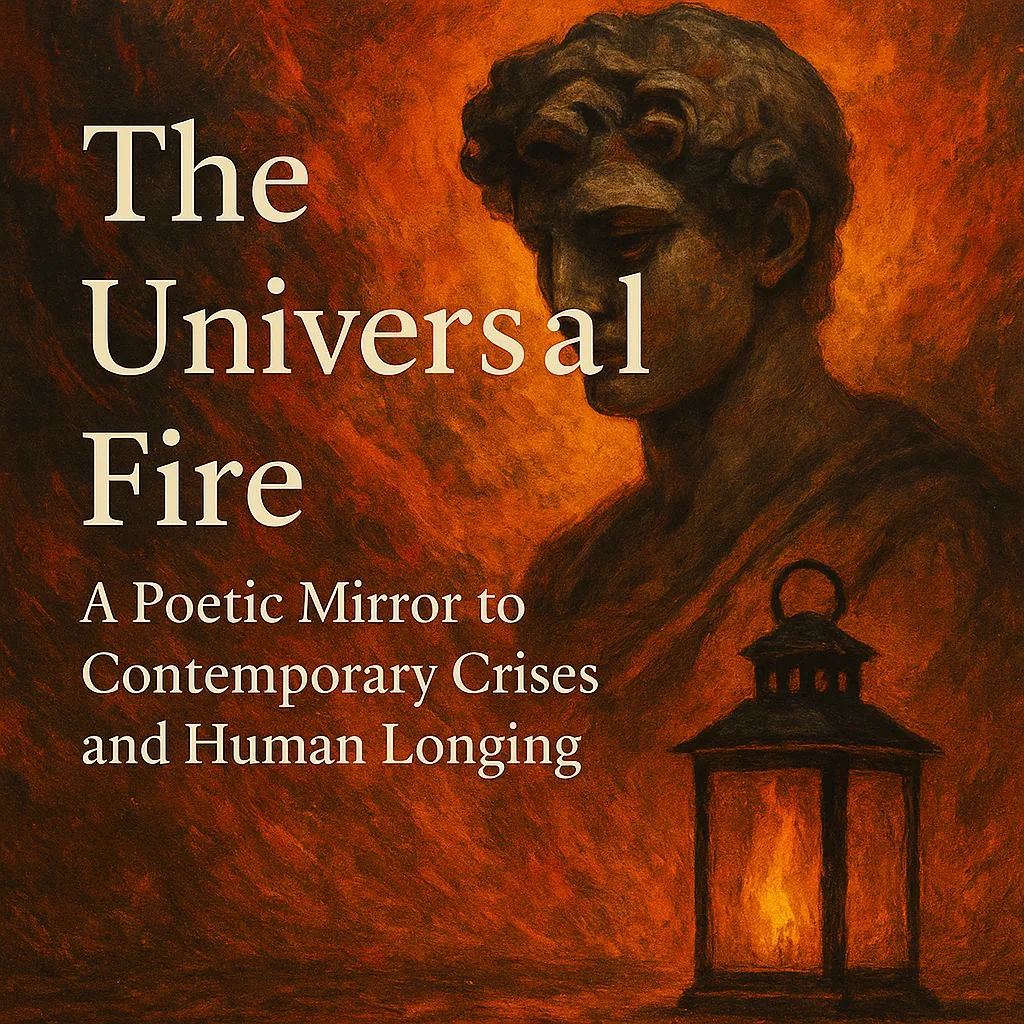
The Universal Fire : Raged Fire Shimmer Burn – A Poetic Mirror to Contemporary Crises and Human Longing
Stepping In: A Poem of Fire, a Time of Ashes
The poem in hand under examination is a blazing tapestry of allegorical symbolism, classical allusion, and stark realism. Through its invocation of fire – literal, metaphorical, existential, it presents a panorama of modern anguish: hunger, displacement, war, emotional disconnection, the death of mythic harmony, and the friction between power and love. The fire, thus, is not only a destructive element, but a luminous metaphor for awareness, burning across landscapes both inner and global.
The Hunger of the World: Scarcity in the Age of Plenty
‘A burning hunger grips the globe – an unseen, smothering awright light.’
This verse draws from the irony of our era, despite technological advancement and economic abundance, hunger still rages. According to the FAO’s 2024 reports, over 735 million people face food insecurity. The poet does not isolate hunger as a developing-world problem but frames it as a planetary crisis as hungry people are observable in so reportedly developed nations as well who sleep past nights in their cars, wash in public lavatories, and survive by collecting left overs in the local hotel and restaurants which is a result intensified by climate change, conflict, and economic disparity.
This hunger is not only of the body but of the soul, echoing the ‘existential vacuum’ Viktor Frankl once identified – a spiritual starvation wrought by alienation and consumption-driven culture.
Shattered Light: Cracked Dreams and Futile Faith
‘We live with faith in eyes aglow… Yet shattered lamps now weep aloud.’
Faith is questioned. Even as we strive to ‘live with light in our eyes, symbolic of hope and resilience, the reality around us is one of broken dreams – of institutions collapsing under their own contradictions, of distrust in democracy, of youth disillusioned, of truth shattered by propaganda and AI-manipulated media.
The ‘shattered lamps’ could well represent whistleblowers, artists, poets, or even small nations – weeping against the hardness of an unjust global order, the ‘cliff’ being the stone-hearted machinery of power.
Olympus and the Fall of the Gods: Myths Reimagined
‘I steal the beauty from Olympus… as Zeus and Prometheus burn.’
Here, the poet evokes a postmodern mythopoeia, where he becomes a thief of divine beauty – perhaps alluding to art, love, justice – now monopolised by power-structures (Zeus) and tortured rebels (Prometheus).
- Zeus, the ruler, may symbolize authoritarianism, technological monopolies, or global elite control.
- Prometheus, the fire-giver, is the modern scientist, rebel, or whistleblower, punished for empowering humanity.
Their simultaneous burning suggests that both power and rebellion are in crisis – a profound observation on our collapsing mythologies in a world of information overload and truth fatigue.
David and Goliath: Assymmetrical Warfare and Resistance
‘Like David-Goliath torn in limbs – where flesh and fury start.’
A direct allusion to asymmetrical warfare, Palestine vs Israel, Ukraine vs Russia, Indigenous vs Corporations, this line capures how modern battles are no longer about right and wrong but raw power vs resilient resistance! This fire is ancient – the fire of vengeance, retaliation, and misunderstood justice, and it consumes both the giant and the shepherd alike.
The Searing of Love and Legacy: Solomon’s Tale Retold
‘Of seven hundreds of queens and three hundreds of concubines, now burning in belief.’
Solomon, the wise king, becomes a figure of decadent wisdom and fractured love. His many lovers, once a symbol of romantic or strategic union, now stand inflamed – in resistance or anguish. This verse subtly touches upon:
- The objectification of women in patriarchal myth.
- The commodification of love in the modern world.
- The collapse of wise, temperate leadership in favour of populist excess.
Even the stories we once turned to for comfort are now subject to revision, fire, and feminist critique!
Tea, Love, and Fire: Intimacy in Crisis
‘My sweetheart’s goblet brims with flame – of silence bought and sold.’
The poem closes on a hauntingly modern note, turning something as warm and mundane as tea into a witness of emotional combustion. Love is no longer a sanctuary but a battlefield – held hostage by egos, digital miscommunications, fragile masculinities, and transactional identities.
This is the fire of lovers who no longer speak but argue, the warmth of intimacy replaced by anxiety, negotiations, and solitude.
Toward Constructive Poetic Guidance for Humanity
The poet does not simply lament. In illuminating these fires, he urges us to acknowledge their existence and act with mindful defiance:
- Reclaim compassion from chaos – Like Prometheus, share knowledge but not for domination.
- Channel the fire into community – The world’s wounds need collective healing, not more fences.
- Revive wisdom, not just informtion – Let Solomon’s tales be reborn in inclusive, egalitarian form.
- Speak love sincerely – Silence is seductive but corrosive. Dialogue is divine.
- Balance myth and modernity – Let art, science, and spirituality co-evolve instead of combust.
In FinE TunE: When Fire Becomes Light Again
This poem offers not merely a lamentation but a clarion call. The fire that the poet sees across myth and modernity, hunger and heartbreak, is not only destructive, it is also illuminative. It asks us: What are we burning? And what are we becoming in that blaze?

Next Read: Search of the Unseen